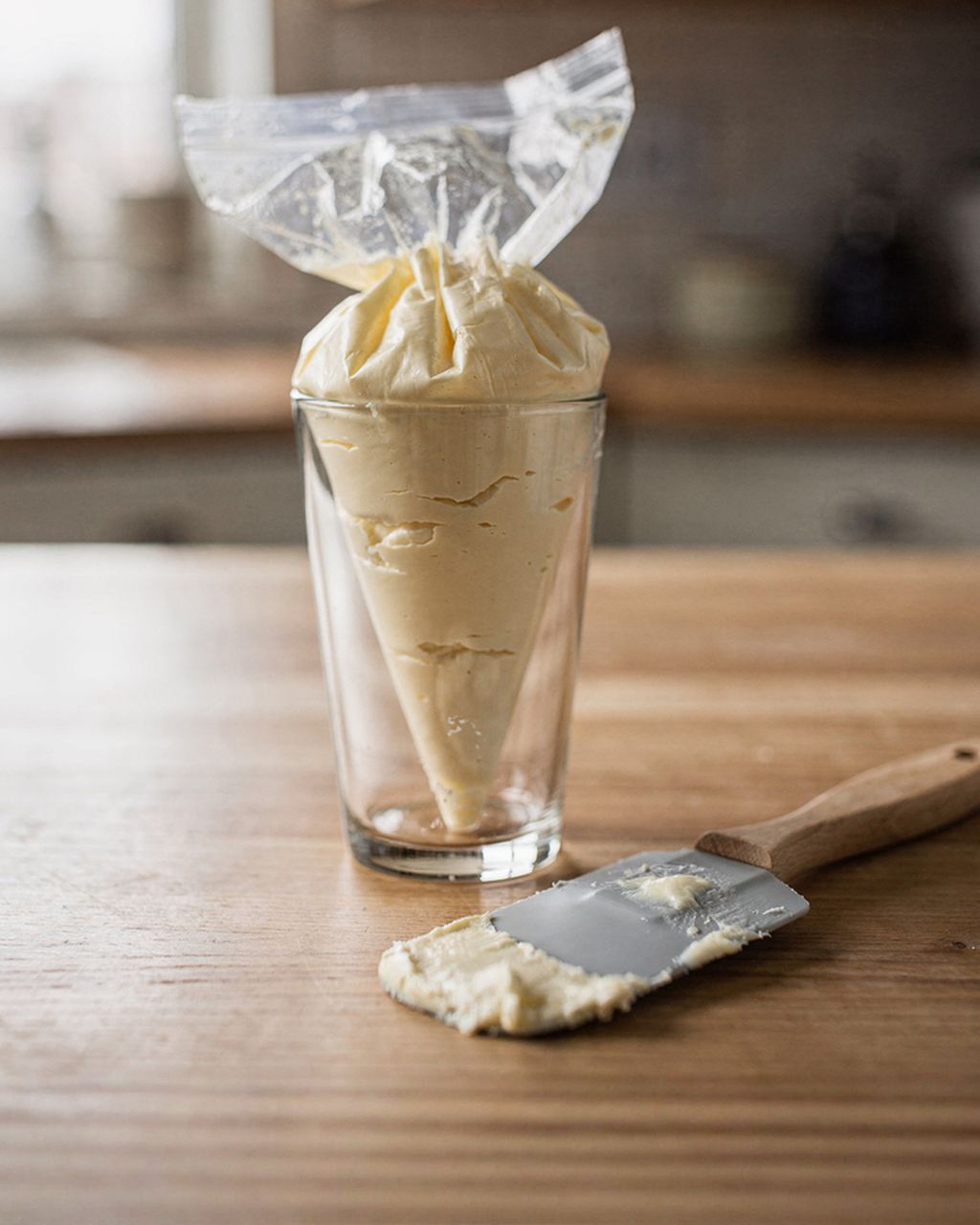
How to Fill a Piping Bag Without the Mess (and Decorate Like a Pro)
Cake Decorating Tips: Which One for What, and How to Choose
Updated Oct 4, 2026
Cake decorating tips fall into six main groups based on the shape of their opening: **round**, **open star**, **closed star**, **leaf**, **petal (rose)**, and **specialty** (twist, grass, basketweave). The shape of the opening determines how the filling comes out: a round opening gives you a smooth line, teeth create ridges, and a slit makes a flat ribbon. For home baking, five tips are all you really need. Below you'll find what each one does, which filling suits it, and where to start.
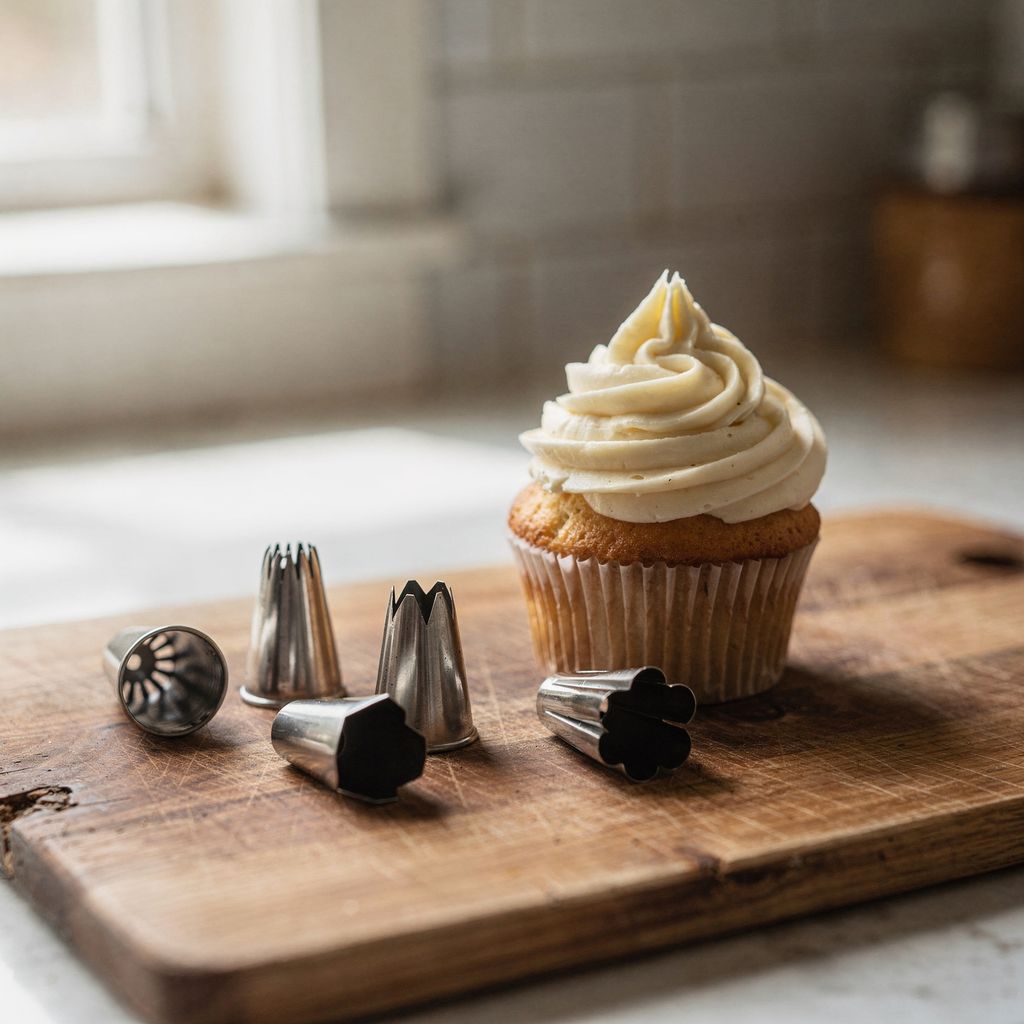
Cake decorating tips come in six main shapes: round, open star, closed star, leaf, petal (rose) and specialty.
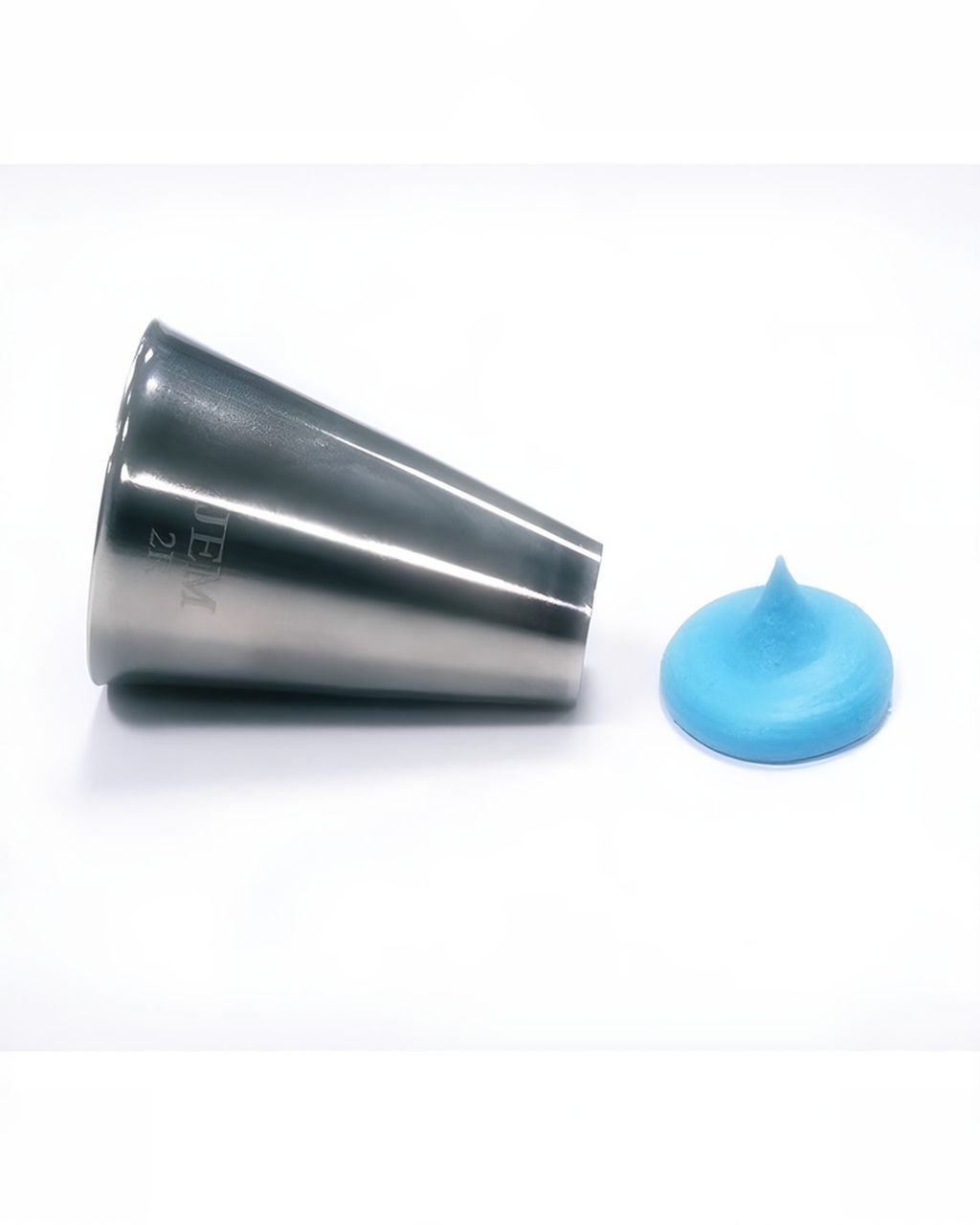
Round: lines, lettering, dots, mounds, cream puffs, éclairs, meringue kisses.
Open star: crisp ridges, rosettes, shells, the classic cupcake swirl.
Closed star: teeth curve inward for deeper ridges. Great for one-squeeze flowers.
Leaf tip: a V-shaped opening that pipes a leaf with a center vein.
Petal (rose) tip: a teardrop-shaped slit for petals, roses and ruffles.
Specialty: twist (spiral), grass/hair, basketweave, and filling tips.
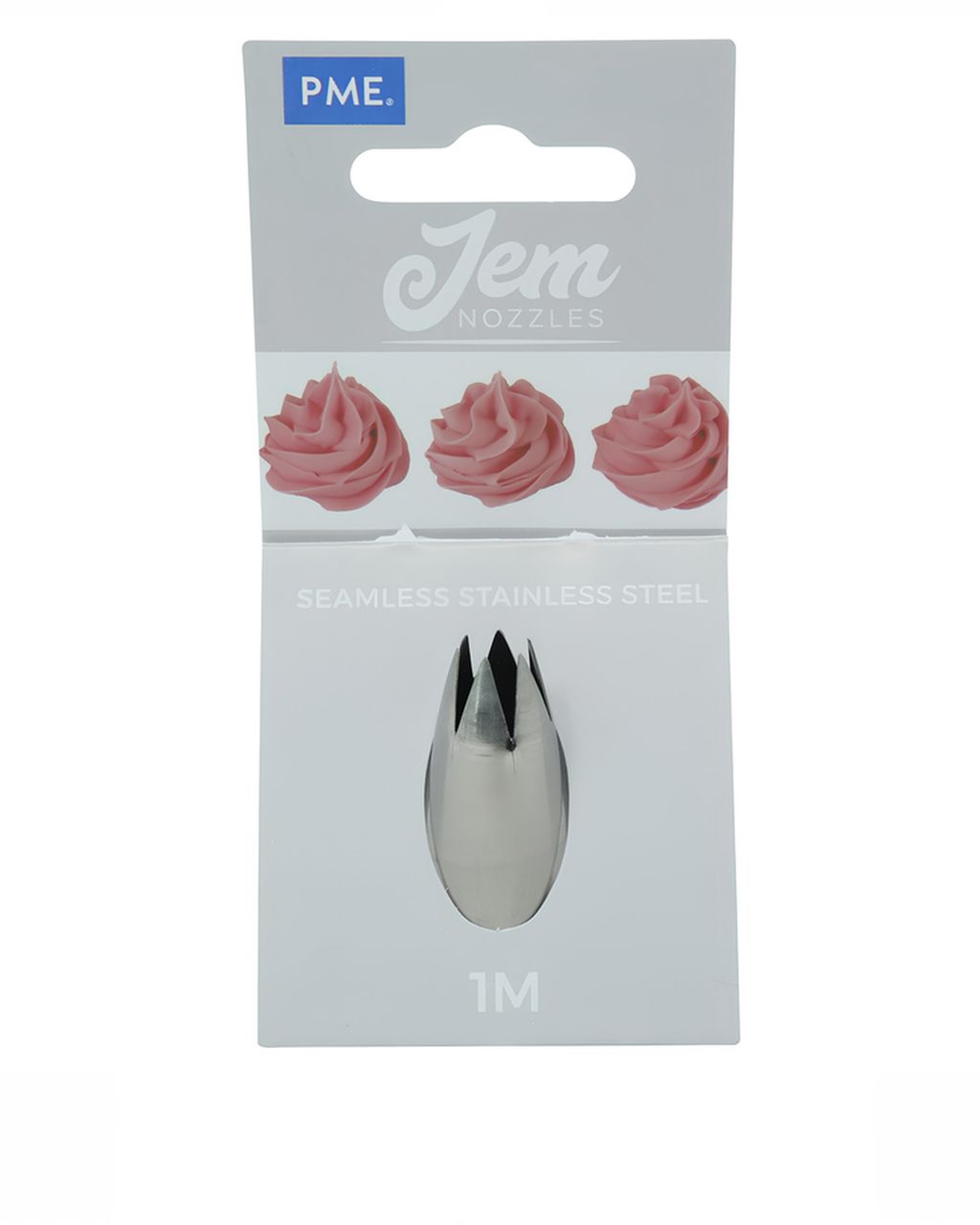
Tip numbering isn't standardized across brands. Wilton 1M and JEM 1M share a number but have different openings (roughly 12.7 mm vs. 14 mm). So choose by shape and opening size, not by number.
The round tip is used for lines, lettering, dots, mounds, kisses and piped choux pastry; what you get depends on the opening size, 1–15 mm:
1–3 mm: writing on cakes, outlines, lace and dots. Also for royal icing or thinner ganache.
5–8 mm: bead borders, small dollops of filling, filling pastries.
10–15 mm (the so-called Savoy tip): big piped mounds of frosting along the edge of a cake, lilac meringue kisses with lemon curd filling, or choux pastry for cream puffs or Ladurée-style éclairs.
Why it works: a round opening has no edges, so it pushes the filling out evenly and gives you a smooth cylinder. That makes it the most forgiving tip for thinner fillings and shaky hands. Try it on parchment paper: hold the tip straight up, 5 mm above the surface, squeeze, stop squeezing, then lift away. If you lift while still squeezing, you'll leave a little peak on top of the mound.
An open star tip has straight teeth and makes shallow, wide ridges. A closed star tip has teeth that curve inward, giving deep, sharp ridges that hold their shape better.
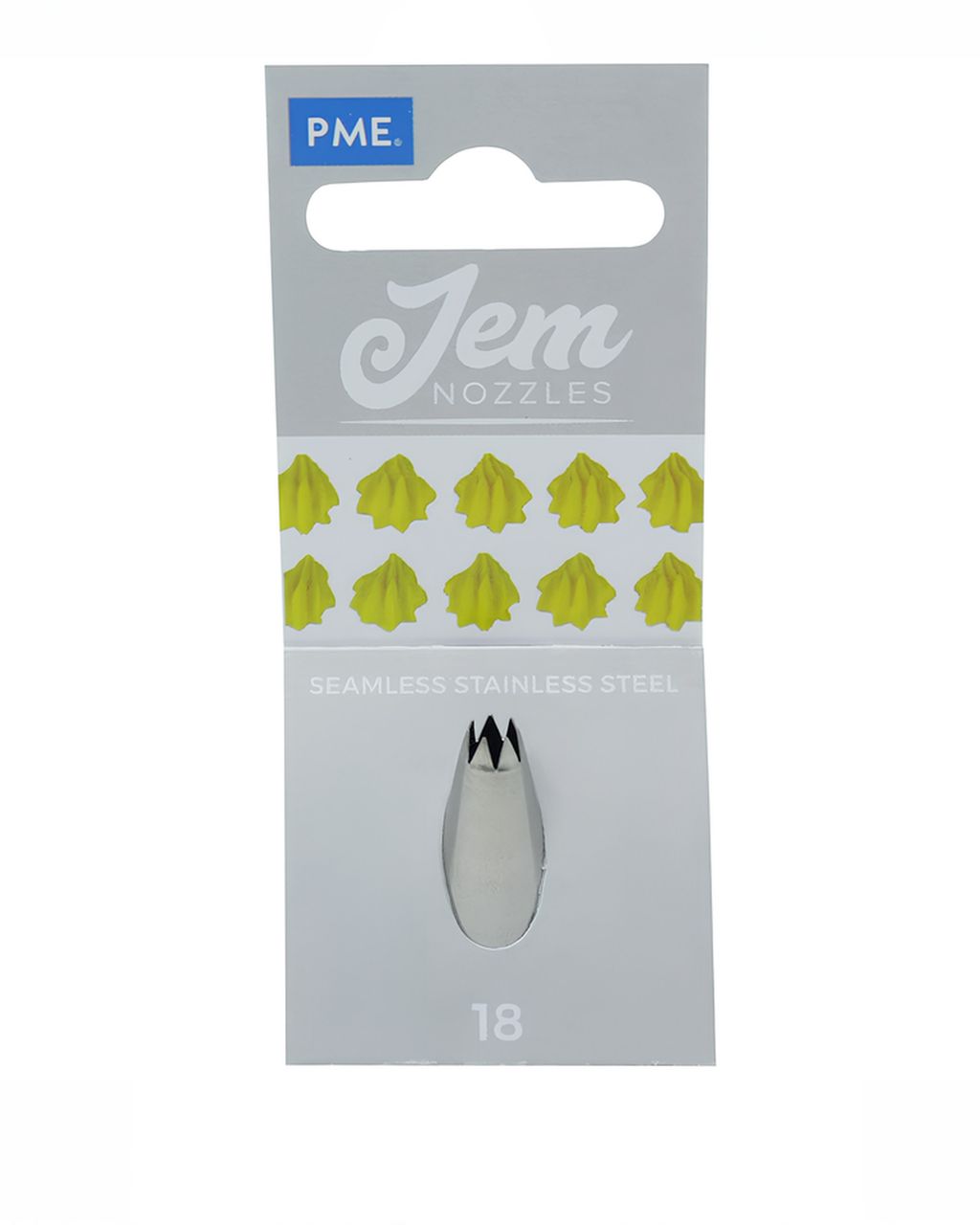
Open star (e.g. JEM #18 for small rosettes, JEM 1M with roughly a 14 mm opening for a big swirl): rosettes, shell borders, and tall cupcake swirls. For that bakery-style finish on chocolate cupcakes with caramel frosting, reach for a 12–15 mm opening.
Closed star (e.g. Wilton 2D): a one-squeeze flower, a bold rosette.
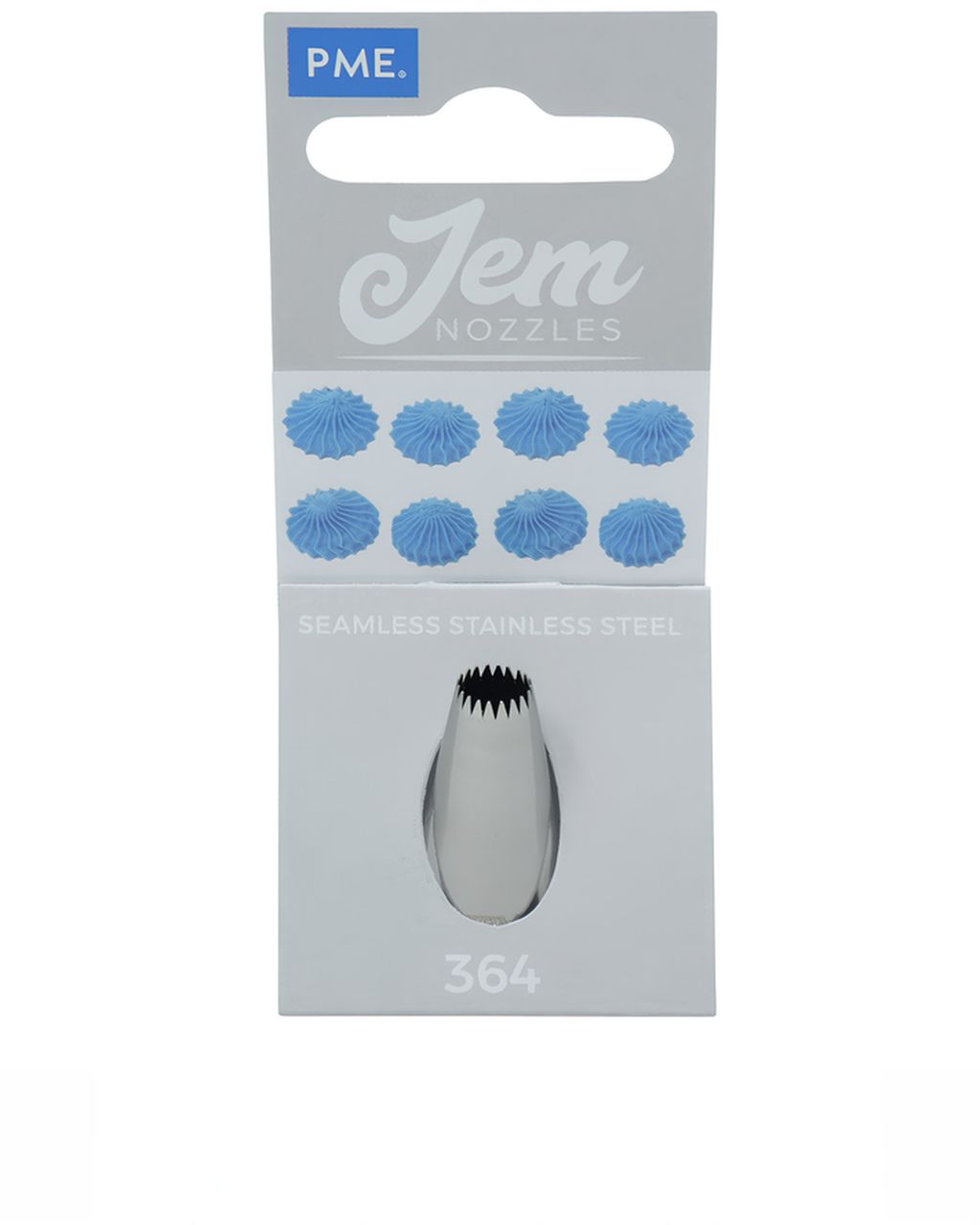
Fine-toothed star (e.g. JEM #364, 20 teeth, roughly a 6 mm opening): lots of fine ridges that look almost pleated. Great for elegant borders and shells.
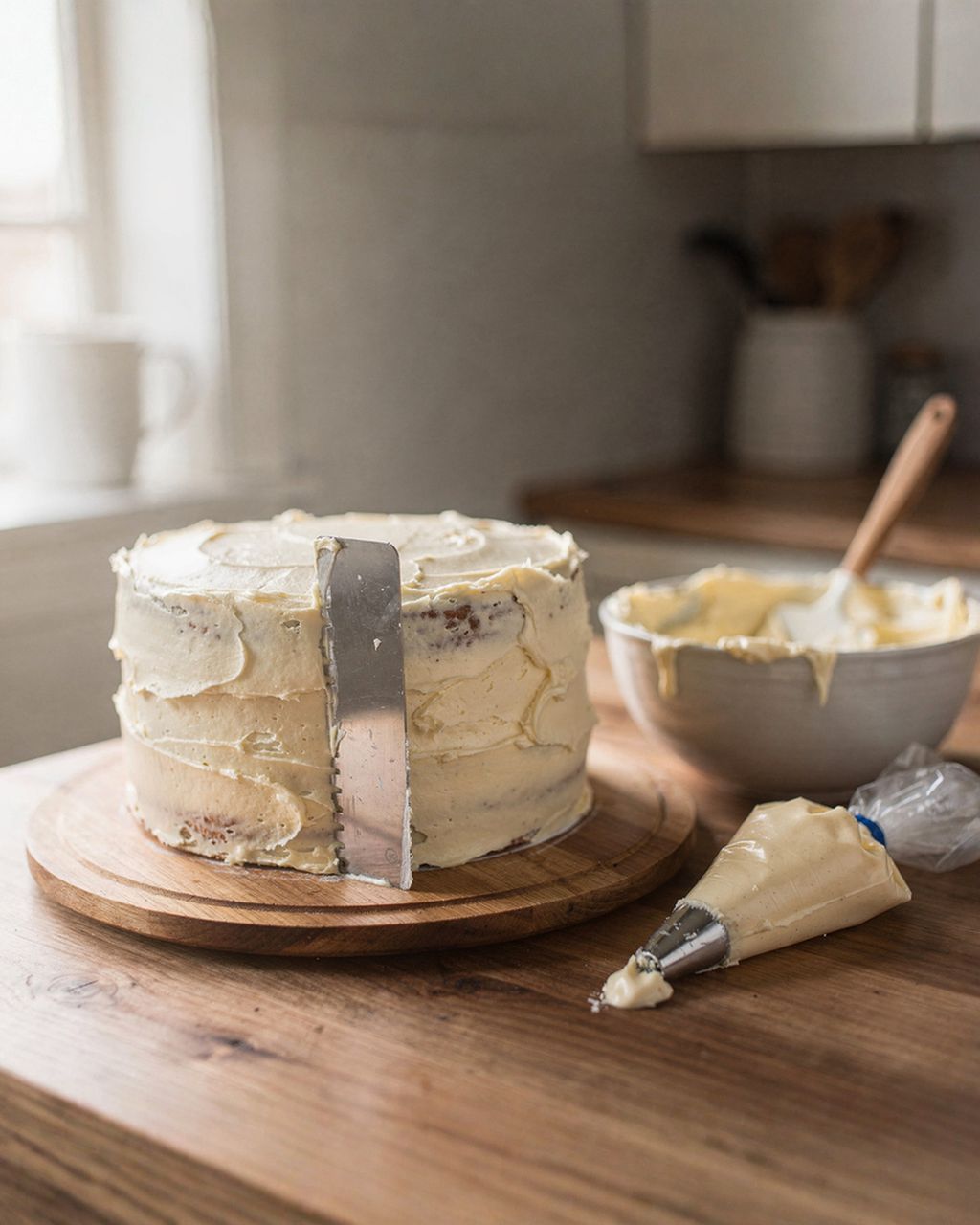
The most common mistake: frosting that's too soft. The ridges blur together after a few minutes and your star turns into a shapeless blob. Star tips need a filling that holds its shape, like buttercream, mascarpone cream, or stiffly whipped cream. For more, see our guide to types of cake frosting.
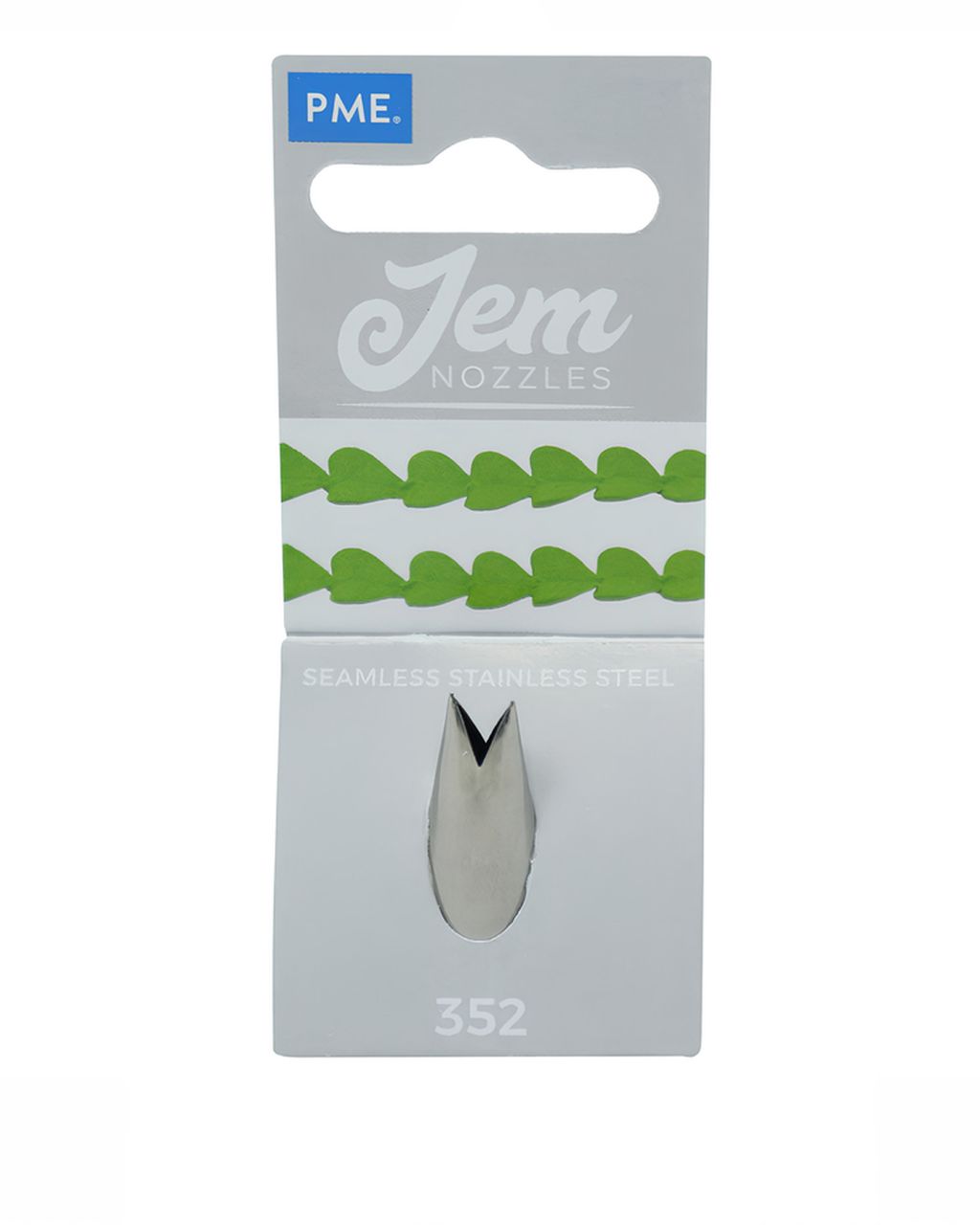
The leaf tip has a V-shaped opening that pipes a leaf with a center vein. The best-known is #352 (both JEM and Wilton), which can also pipe a Christmas-star shape.
How to do it:
Fit the tip so the points of the V face sideways.
Rest it at about a 45° angle where you want the leaf to start.
Squeeze, letting the filling spread a little to form the base, then pull away while gradually releasing pressure.
Stop squeezing completely and pull away sharply to form the tip of the leaf.
If the leaf's tip tears or splits in two, your filling is too stiff. Loosen it with a few drops of milk or cream.
The petal (rose) tip has a teardrop-shaped slit, wider at one end and narrower at the other. It's used for rose petals, ruffles, and ribbon borders around a cake.
Always keep the wider end down (toward the base or the center of the flower) and the narrower end up. That keeps the petal's edge thin and delicate.
Roses are piped on a flower nail and then transferred to the cake, or piped straight onto a cupcake.
A curved petal tip (such as the PME Supatube "chrysanthemum" tip) pipes curved petals, used for chrysanthemums and dahlias.
Buttercream for roses needs to be firm but smooth. If you bend it with a spoon, it should hold a sharp ridge. Chilling the piped flower for 15 minutes in the fridge makes it much easier to work with.
Specialty decorating tips include twist (spiral), grass/hair, basketweave, and filling (bismarck) tips. You won't need these to get started.
Twist (e.g. JEM Twist): wavy grooves inside the tip create a twisted spiral. Some have a center tube that leaves a hollow core for filling or decoration. Squeeze slowly while gently turning the piping bag.
Grass / hair: multiple small openings at once. Good for piping grass, or hair and fur on kids' cakes.
Basketweave: one side is smooth, the other serrated. Pipes a flat ridged strip for basketweave patterns and borders.
Filling (bismarck): a long narrow tube for filling jam-filled doughnuts, éclairs, and cupcakes from the inside.
Five decorating tips are plenty to start with. They'll cover almost everything you'd want to do at home:
Round, 2–3 mm: lettering, dots, fine details.
Round, 10–12 mm: mounds, kisses, piped choux pastry.
Open star, 12–15 mm: cupcake swirls, rosettes.
Smaller star, 6–8 mm: borders and shells.
Leaf tip, #352: leaves for flowers.
Add a petal (rose) tip and a twist tip once you're hooked. For all of them you'll need piping bags and a coupler. For large tips, use a bag at least 40 cm long. Small tips attach to the bag via a coupler, so you can swap them out without emptying the bag of filling.
When piping loses its shape, it's almost always down to the filling's consistency or temperature, not the tip. The most common mistakes:
The filling is too warm. Buttercream starts to soften above roughly 22°C/72°F, and the warmth of your hand keeps heating it further. Fill the bag only partway and hold it near the tip, not with your whole palm around it.
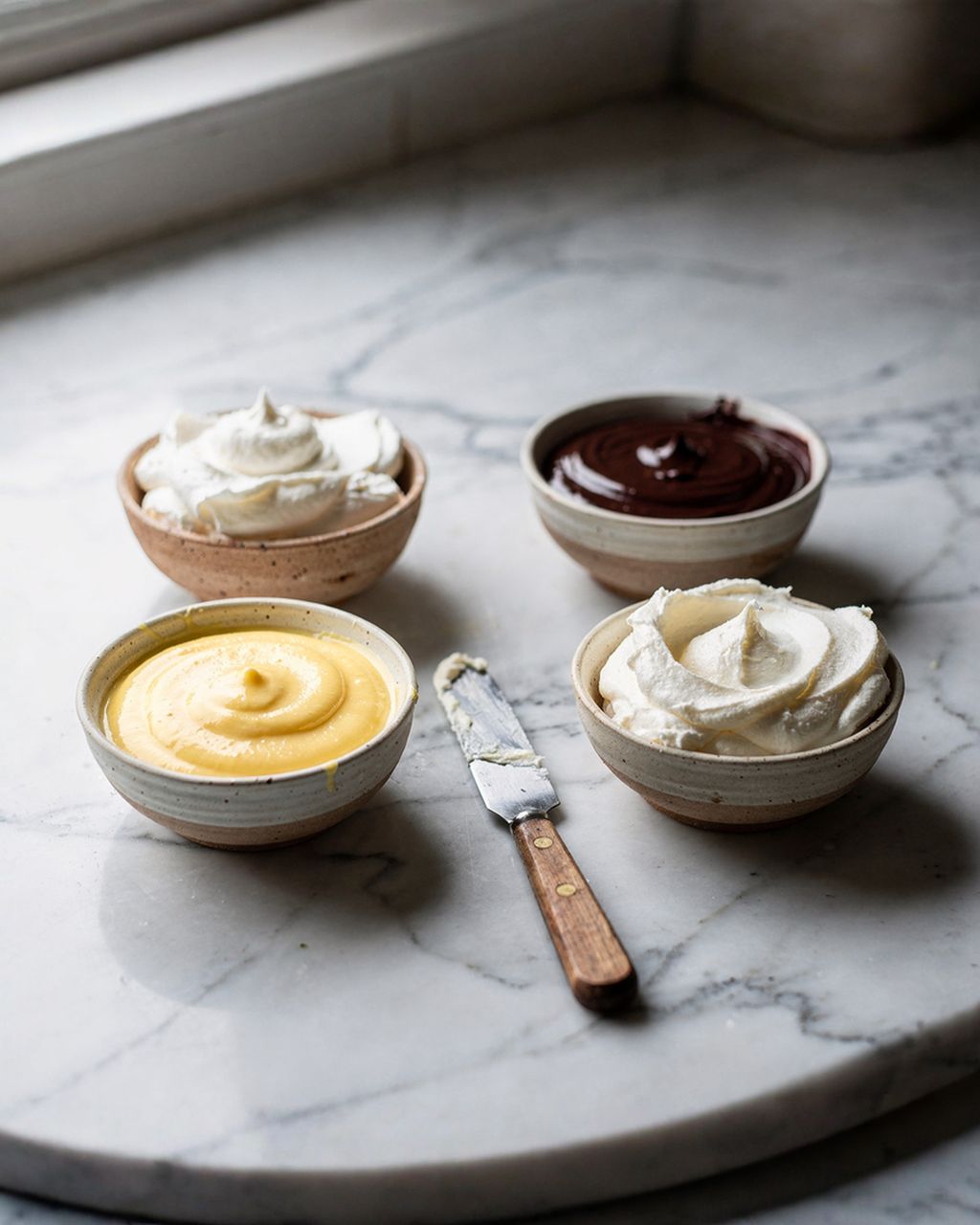
The filling is too thin. Ridges blur together. Thicken buttercream with powdered sugar, or stiffen whipped cream with mascarpone or a stabilizer. Plain whipped cream will deflate over time, especially in warm conditions.
The filling is too stiff. Edges tear and your hand tires quickly. Loosen it with a few drops of milk.
Air bubbles. Your piping "spits" or sputters. Beat the filling on low speed before piping, and tap the bag to settle it down.
The tip is held at the wrong angle. Hold it straight up for rosettes and mounds, and at a 45° angle for borders and leaves.
Wash decorating tips right after use in warm, soapy water, cleaning the teeth with a small brush, then let them dry completely, ideally in a warm oven for a bit. Stainless steel tips can usually go in the dishwasher, but tin-plated ones (the cheaper kind) will rust and darken in there, so wash those by hand.
Yes, you can drop the tip straight into a bag with the corner snipped off, but then you can't swap it out without emptying the filling first. Large tips, like a Savoy tip or a 12–15 mm open star, are commonly used without a coupler. A coupler is worth it for small tips you'll be switching between while decorating.
Metal decorating tips have sharper, more precise teeth, so they pipe cleaner ridges, which is why most professional bakers use them. Plastic tips are softer and safer for kids to use, but their edges aren't as crisp and they warp over time.
Yes, you can pipe both whipped cream and ganache with decorating tips, you just need to get the consistency right. Whip cream until stiff but only just past that point, since the warmth of your hand keeps whipping it further inside the bag and it can turn grainy; fill the bag in smaller batches. Let ganache cool at room temperature until it's the texture of soft butter: too warm and it runs, straight from the fridge and it cracks.
In a pinch, a bag with a corner snipped off will do: a small snip pipes a line like a round tip, and a V-shaped snip mimics a leaf tip. But nothing really substitutes for a star or petal tip, those need the real thing.
One recipe worth heating the oven for, one tip, and one deal from the shop. Nothing else.