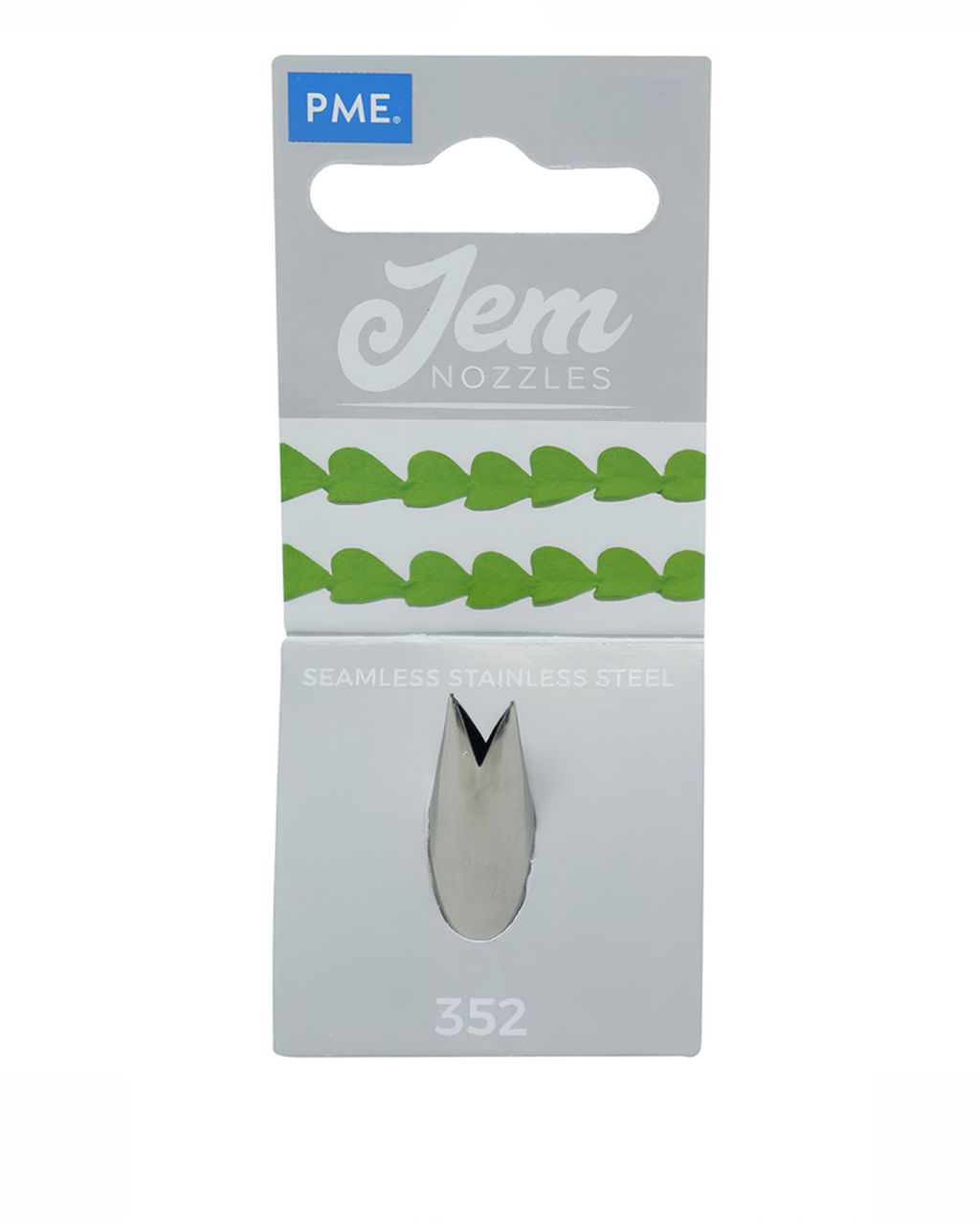
JEM Piping Tip – Leaf / Poinsettia #352 (leaves and Christmas star petals)
Piped Succulent and Cactus Cupcakes: Tips, Colors and Step-by-Step Technique
Updated Oct 15, 2026
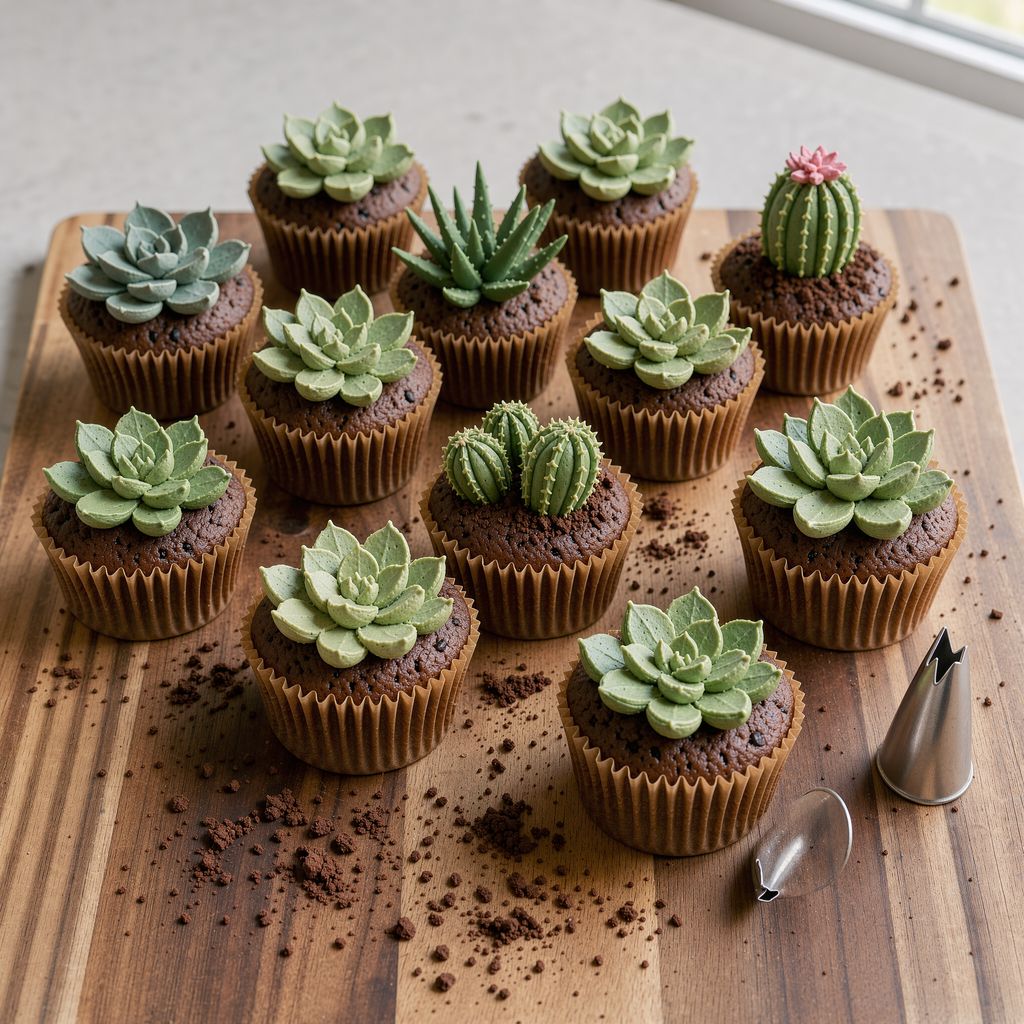
You can pipe buttercream succulents and cacti on cupcakes with just three tips: leaf tip 352 for aloe and agave, petal tip 104 for rosette-shaped echeveria, and a small open star tip 13 for ribbed cacti and tiny blossoms. A stiff buttercream does the rest, along with a green that looks like a real plant rather than a crayon: dusty, muted, with darker edges. Below, you'll find which tip to use for which plant, how to mix the colors, and how to turn one tray of cupcakes into a whole little garden.
Three tips are enough for buttercream succulents: leaf tip 352, petal tip 104 and a small open star tip 13. Each one makes a different type of plant:
Leaf tip 352 – pointed, slightly curved leaves. Aloe, agave and "star-shaped" succulents.
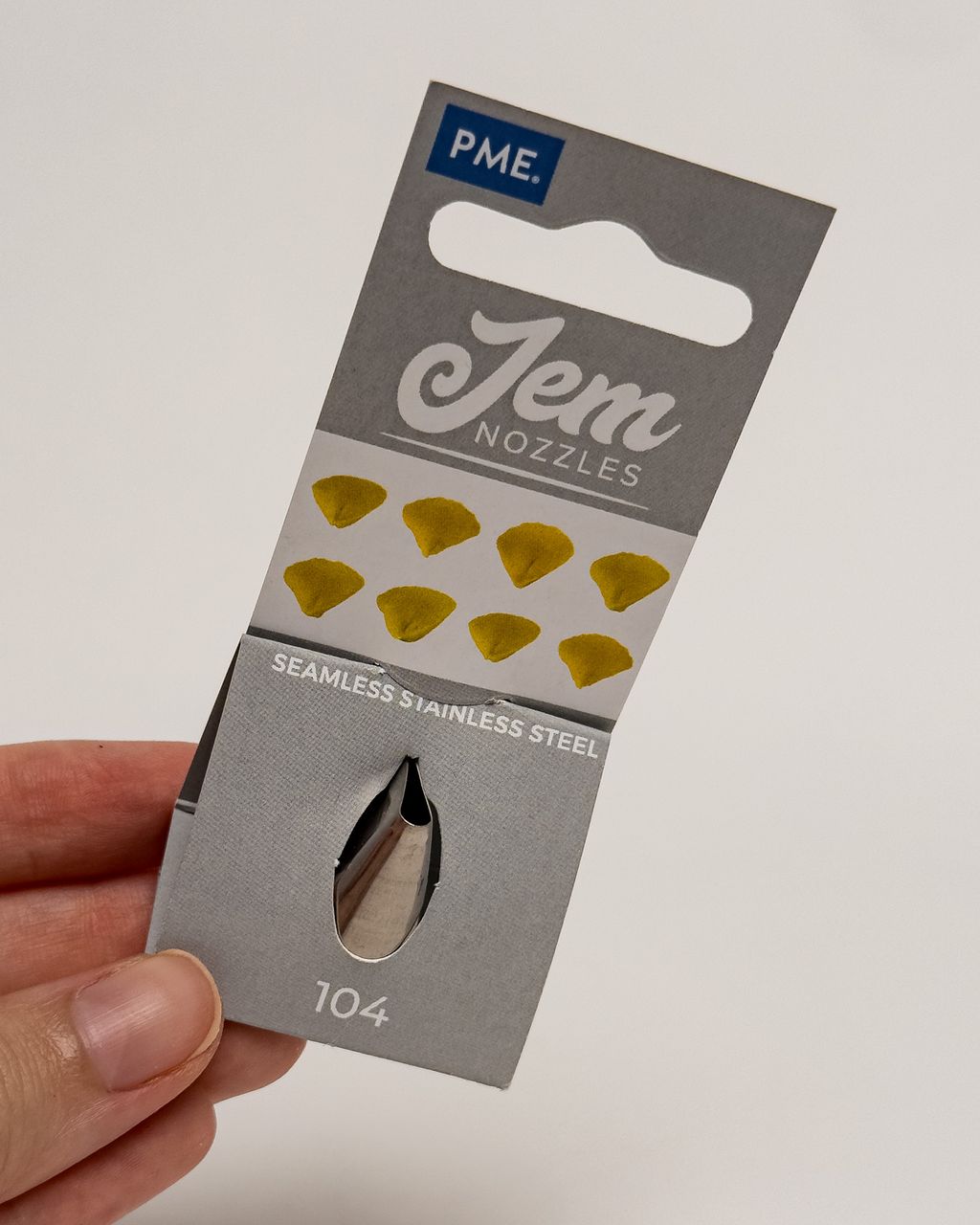
Petal tip 104 – wide, rounded petals. Rosette-shaped echeveria that look like stone roses.
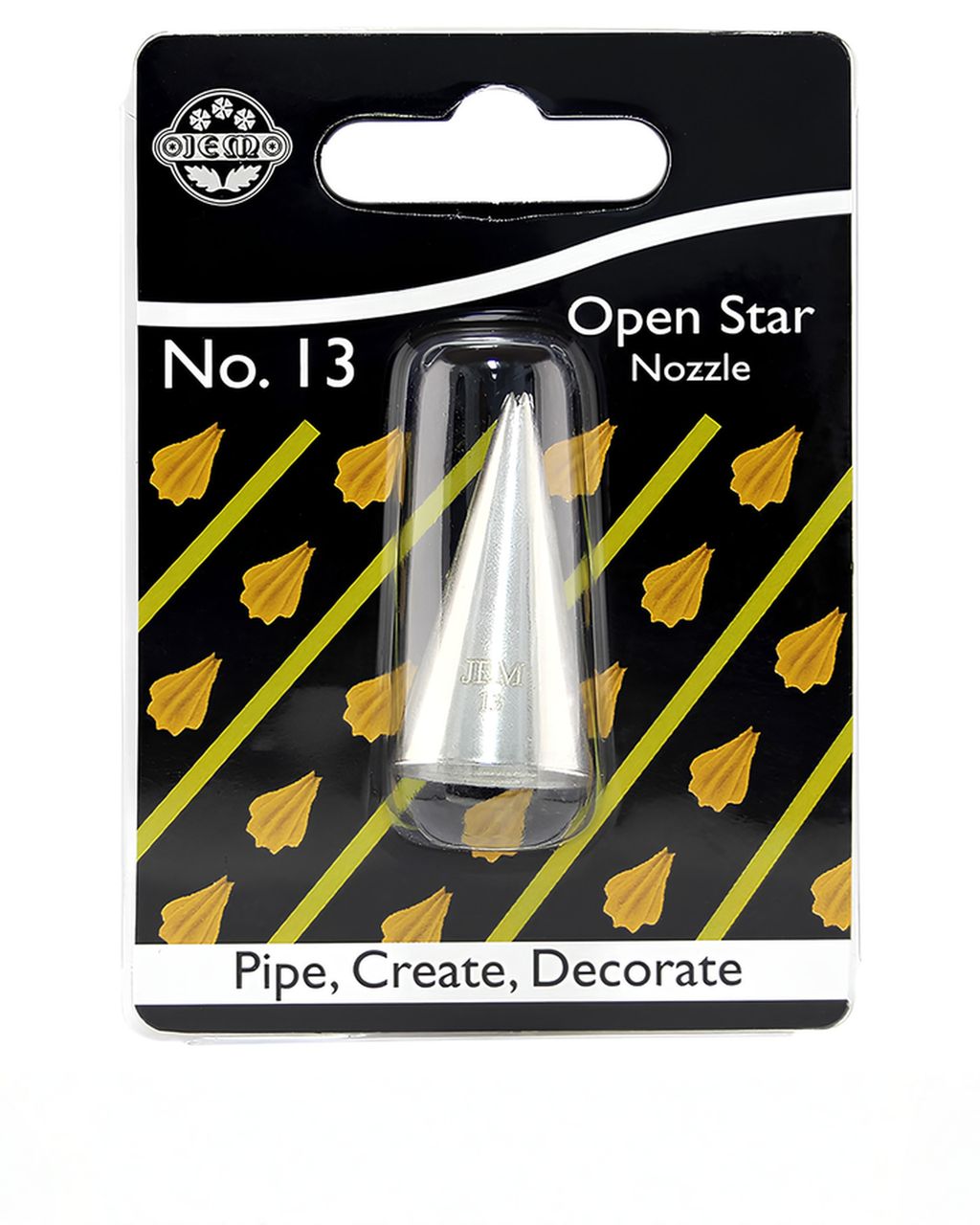
Small open star tip 13 – fine ribbed strips and little stars. Columnar and round cacti, cactus blossoms, and filler between plants.
From our range, these are the JEM Leaf 352 piping tip, the JEM 13 open star tip and the JEM Petal 104 piping tip. These are standard numbers, so tutorials you've seen elsewhere will work with them too – Wilton, for example, uses the same numbering.
Yes, you can build a buttercream cactus with the small star tip 13: first pipe a mound of buttercream, then wrap it in vertical ribs. It takes longer, but the cactus looks more delicate and more realistic.
Online, you'll also see large cacti piped in a single squeeze of a giant star tip (type 1M or 2D, with an opening over a centimeter wide). It's quick and impressive, but we don't currently sell a tip like that.
Here are other things that come in handy for a little garden but that you won't find in our range:
Grass tip (233) for moss and grass. Substitute: densely piped little stars from tip 13 in dark green.
Very fine round tip (no. 1–2) for cactus spines. Substitute: snip the corner off a small bag of white royal icing, or leave the spines out entirely. On a cupcake you'll hardly see them.
So our tips let you do everything that matters. Add the extras once you get hooked on making gardens.
Seasonal baking plans, tested recipes and kitchen tricks that save you time. Unsubscribe in one click.
A stiff buttercream holds its shape best: American (butter and powdered sugar at roughly 1:2) or Swiss meringue. Whipped cream and mascarpone frostings are too soft for sharp leaf tips and will melt together within minutes in a warm room.
Consistency: the buttercream should hold a sharp point in the bag without tearing. If the leaves from tip 352 come out ragged, add a teaspoon of milk. If the tips droop downward, mix in a tablespoon of powdered sugar or chill the buttercream in the fridge for 10 minutes.
Temperature: ideally 18–20 °C (64–68 °F). Warm hands soften the buttercream in the bag, so fill the bag with smaller amounts and alternate bags as you move between plants.
One batch: for 12 garden cupcakes, plan on roughly 500–600 g of finished buttercream. Most of it goes on the green leaves and filler.
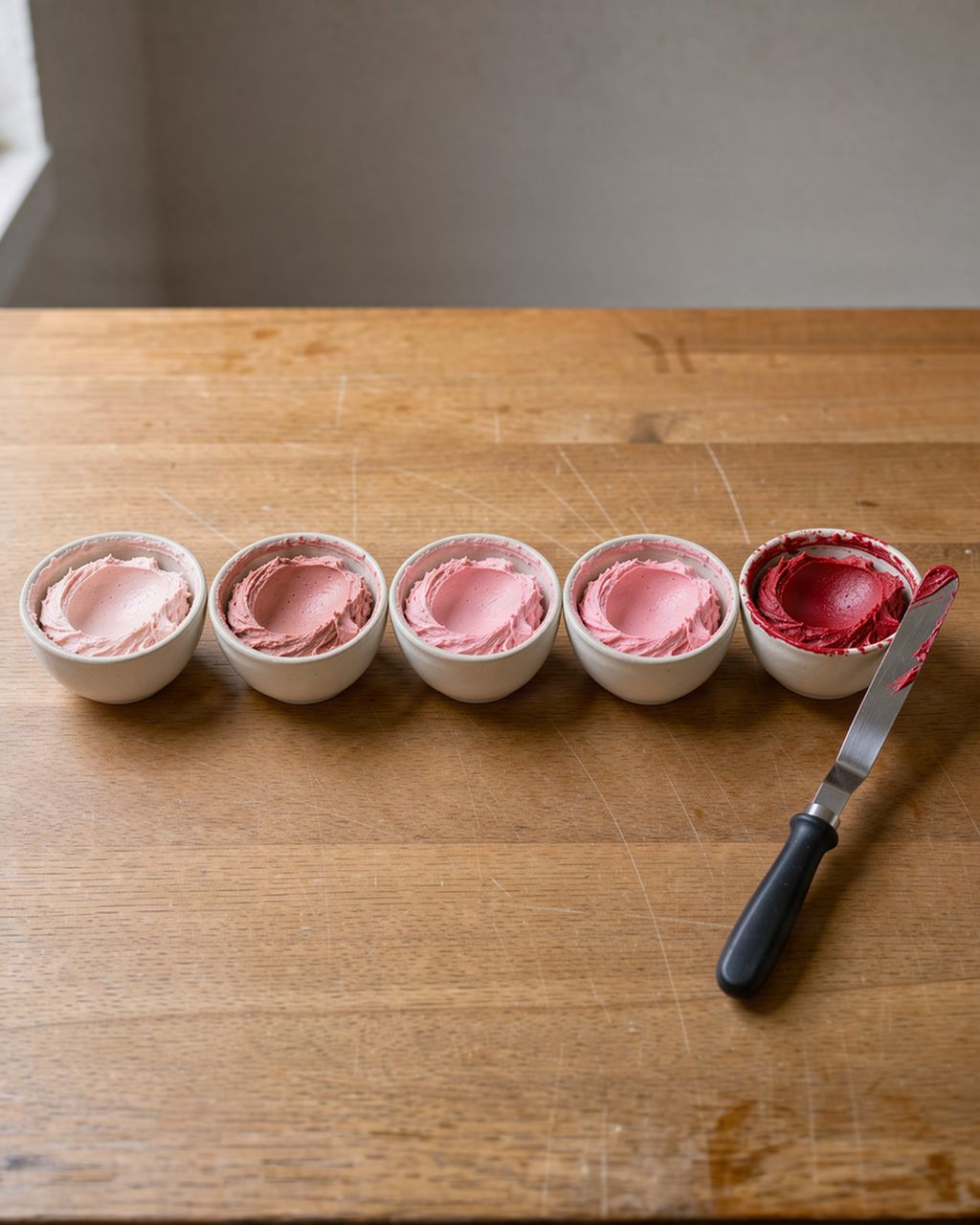
You mix green for buttercream succulents from white buttercream, mint green gel coloring and a pinch of black in three shades: sage for the echeveria, medium green for the aloe and cacti, and dark green for the edges. Real succulents are gray-green, not grass green, so you always tone the green down a little:
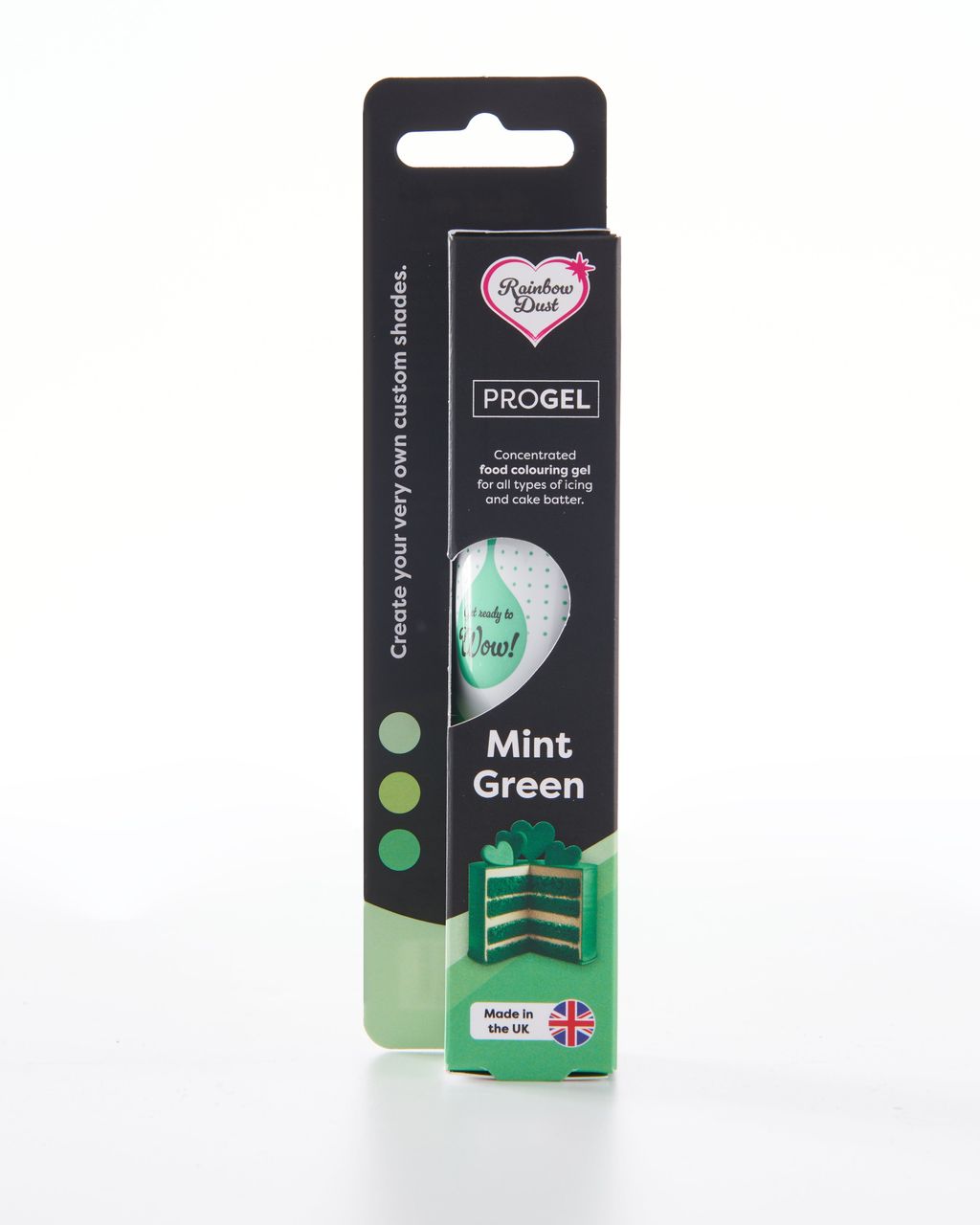
Sage (echeveria): white buttercream + a bit of ProGel Mint Green on the tip of a toothpick + an even smaller pinch of black. Mint green has a bluish undertone, which is why it works better for succulents than yellow-green shades.
Medium green (aloe, cacti): a higher dose of mint green, muted with a drop of black or brown.
Dark green for edges and shadows: some of the medium green + more black.
Gel colors darken after mixing, noticeably during the first hour or two. So color the buttercream a shade lighter than you want the final result, and let it rest for a while. For accents, set aside a few spoonfuls of buttercream and color them pink or purple for the edges of the echeveria and the blossoms on the cacti.
For a detailed guide to mixing pastel and dark shades from gel colors, see the article How to Color Buttercream.
What makes succulents look realistic is a darker or pink edge on the leaves. You can do it in two ways:
Brush stripe: with a thin brush, paint a lengthwise stripe of gel color (or buttercream in another shade) inside the piping bag, and only then fill the bag with green buttercream. Point the stripe toward the narrower side of tip 104 or toward one edge of tip 352.
Two buttercreams side by side: put a thin layer of pink buttercream along one wall of the bag and fill the rest with green. With tip 104, the pink belongs on the narrow side of the opening, because that forms the edge of the petal.
Pipe the first few centimeters into a bowl until the colors come out evenly.
You pipe an echeveria with tip 104 wide end down: a small bud in the middle, surrounded by 3–4 rows of short petals (3, 5, 7) that gradually fold outward. Here's how:
Hold tip 104 with the wide end down and the narrow end up.
Pipe a small cone in the center of the cupcake for the bud: a short turn of the tip all the way around.
Pipe the first row of 3 petals around it. Each petal is a short arc, about a third of the circumference. Hold the tip almost vertical so the petals stand up.
Gradually lay the next rows (5, then 7 petals) farther outward, to 45° and finally almost flat. Start the petals in each row between the petals of the previous row.
3–4 rows are enough. An echeveria should be compact, not fully open like a rose.
If piping directly onto the cupcake isn't working for you, pipe the echeveria onto a square of parchment paper on a flower nail, freeze it for 20–30 minutes, and then simply transfer it onto the cupcake.
Aloe and agave are the easiest of all the succulents: they're made up of nothing but pointed leaves, which you pipe from the edge toward the center.
Turn tip 352 so that both "teeth" of the opening are at the sides. That gives the leaf a ridge down the middle.
Start at the edge of the cupcake: touch down with the tip, squeeze the bag to form the base of the leaf, and pull outward and slightly up while gradually easing the pressure. At the end, release the pressure completely and pull the tip away. That forms the point.
Pipe a circle of 6–8 leaves, about 2–3 cm long.
Pipe the second row a little farther in, with shorter, steeper leaves. The third row is almost vertical.
In the center, add a few short, fully upright leaves.
If the tips tear or split, the buttercream is too stiff or there's dried buttercream in the tip. Loosen the buttercream and wipe the tip.
You build a cactus in two steps: first the body, then the ribs. Star tip 13 has a small opening, so the result is delicate and the ribbing is well defined.
Round cactus: pipe a mound of buttercream (no tip needed – just snip the bag), about 3 cm across. Then wrap it in vertical strips from tip 13, from the bottom to the top, right next to each other.
Columnar cactus: pipe vertical strips one over another until you have a column 4–5 cm tall. Pipe the arms the same way, only shorter and bent upward.
Blossom for the top: star tip 13 and pink buttercream, a short squeeze, then pull away. That makes a five-pointed little star.
Filler between plants: densely piped little stars in a darker green work like moss.
Once the cactus has formed a slight crust, you can lightly sprinkle it with tiny white sugar pearls. On a cupcake, they make good stand-ins for spines.
A garden looks best when each cupcake has one large plant and two or three small ones, not five of the same size.
Soil: spread a thin layer of buttercream over the top of the cupcake and sprinkle with crushed chocolate cookies or brown sugar. It instantly looks like soil in a flowerpot.
Main plant: place an echeveria or aloe slightly off center.
Accents: in the free space, add a small cactus and a few little stars of moss.
Finishing touch: one pink blossom. Any more will crowd the garden.
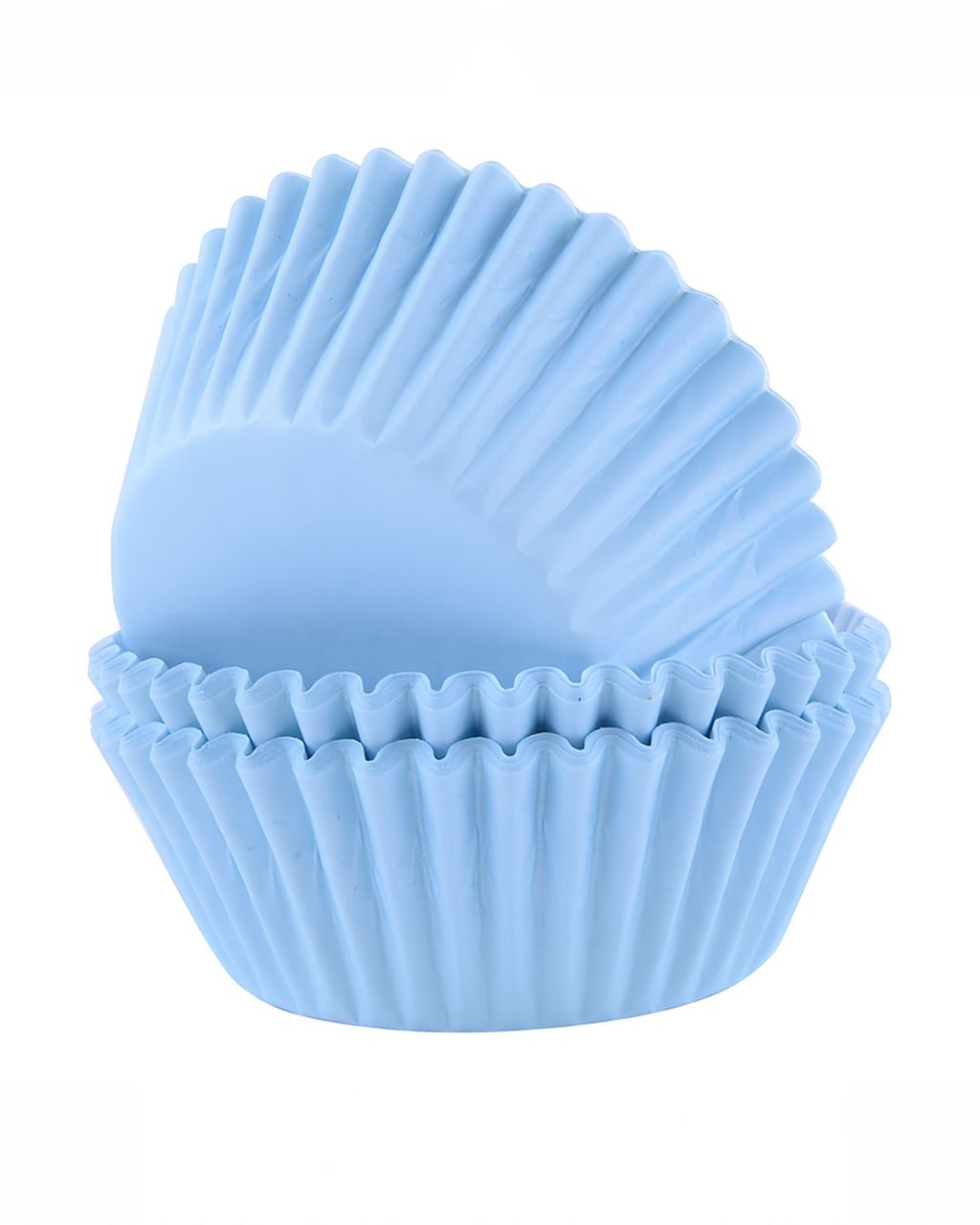
The cupcake liner is the flowerpot here, so it's worth choosing its color carefully. A brown or brick-colored "terracotta" liner looks the most natural. The green also stands out beautifully against light blue or purple PME paper cupcake liners. You'll find more colors and sizes among the cupcake liners. The cake can be any fairly sturdy kind, such as coffee cupcakes or pistachio cupcakes with mascarpone frosting. Green pistachio goes with succulents in flavor too – just use buttercream instead of mascarpone for the decorating.
You can also arrange cupcakes with gardens into a whole pull-apart cupcake cake. The plants then spill over the edges and form one big flowerpot.
Buttercream succulents most often go wrong in five ways: a green that's too bright, soft buttercream, tip 104 turned the wrong way, plants all the same size, and dried buttercream in the tip.
Green that's too bright. The succulents look plastic. Tone the green down with a drop of black or brown.
Soft buttercream. The leaves droop and melt together. Chill and thicken the buttercream, and decorate the cupcakes in a cooler room.
Tip 104 turned the wrong way. With the wide end up, you get drooping, limp petals. The wide end goes down.
All plants the same size. The composition looks flat. Combine one dominant plant with small accents.
Dried buttercream in the tip. The leaves split. Wipe the tip with a damp cloth after every few plants. For how to clean and store your tips after use, see the article Piping Tips: Cleaning and Storage.
You can pipe buttercream succulents a day ahead and store the cupcakes in a closed box in the fridge. Take them out an hour before serving so the buttercream softens and tastes creamy. Echeveria piped onto parchment paper keeps in the freezer for several weeks, and you transfer it to the cupcake still frozen.
Buttercream succulents last only a short time outdoors, and only in the shade: above 25 °C (77 °F) buttercream softens and the leaf tips droop. Swiss meringue buttercream handles heat a little better than American buttercream, but even it won't survive direct sun. Bring the cupcakes outside right before serving.
Yes, you can replace the echeveria with a rosette made with leaf tip 352. Just pipe it with shorter, more upright leaves. The result will be pointier, more like an agave, but still clearly a succulent.
Use gel food coloring for succulents, because it colors in small amounts and won't thin out the buttercream. Muted shades need only the tip of a toothpick of green and even less black. A bitter taste appears only with very dark shades, and you don't need those for succulents.
Yes, the same techniques work on a cake. Group the plants into one or two clusters near the edge and leave the rest of the surface plain or sprinkled with cookie "soil." For a 20 cm (8-inch) cake, plan on roughly 5–8 plants.
One recipe worth heating the oven for, one tip, and one deal from the shop. Nothing else.