Honey cake balls - last-minute christmas treats
Honey Cake: How Long to Bake the Layers (and Why You Make It Ahead)
Updated Sep 25, 2026
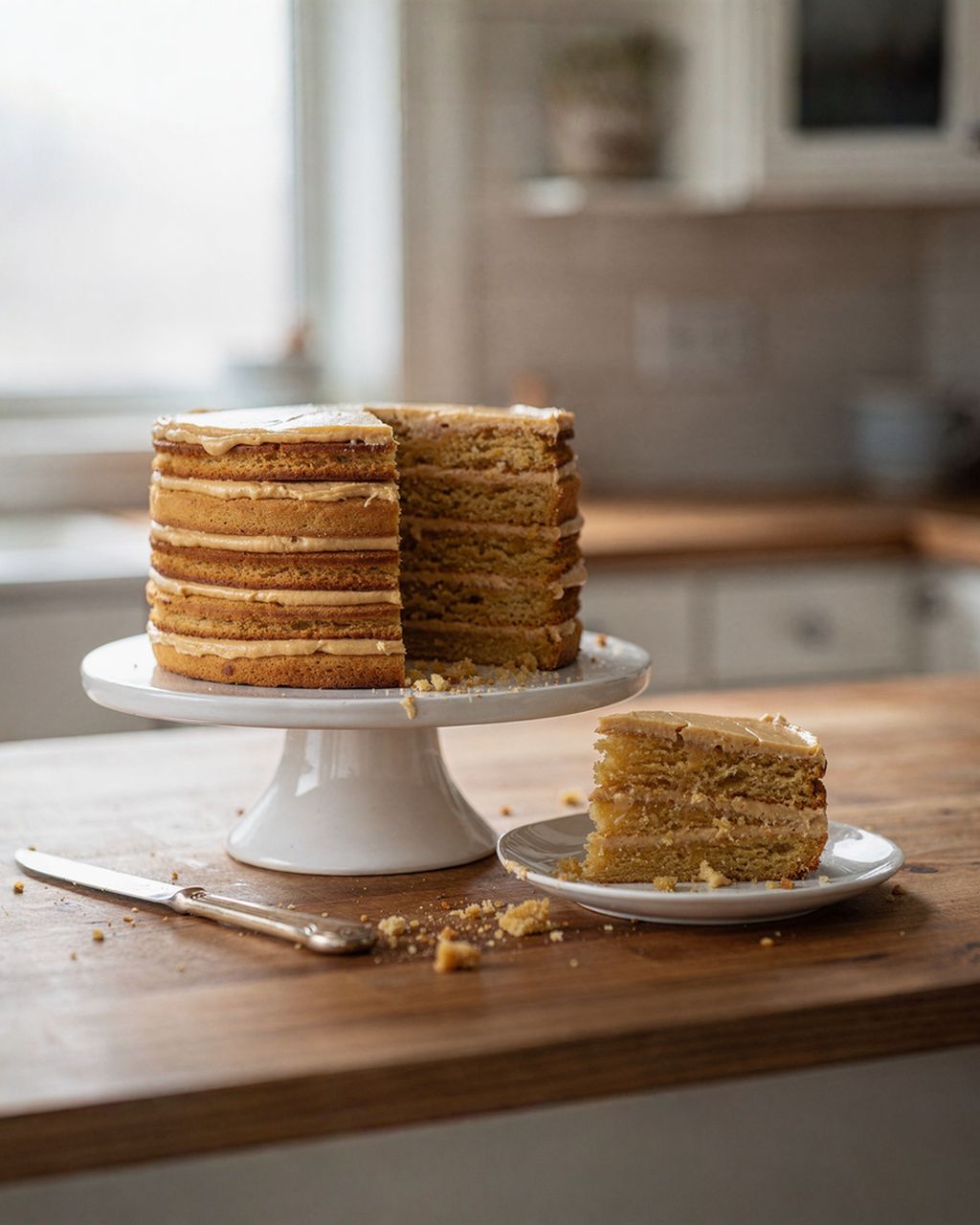
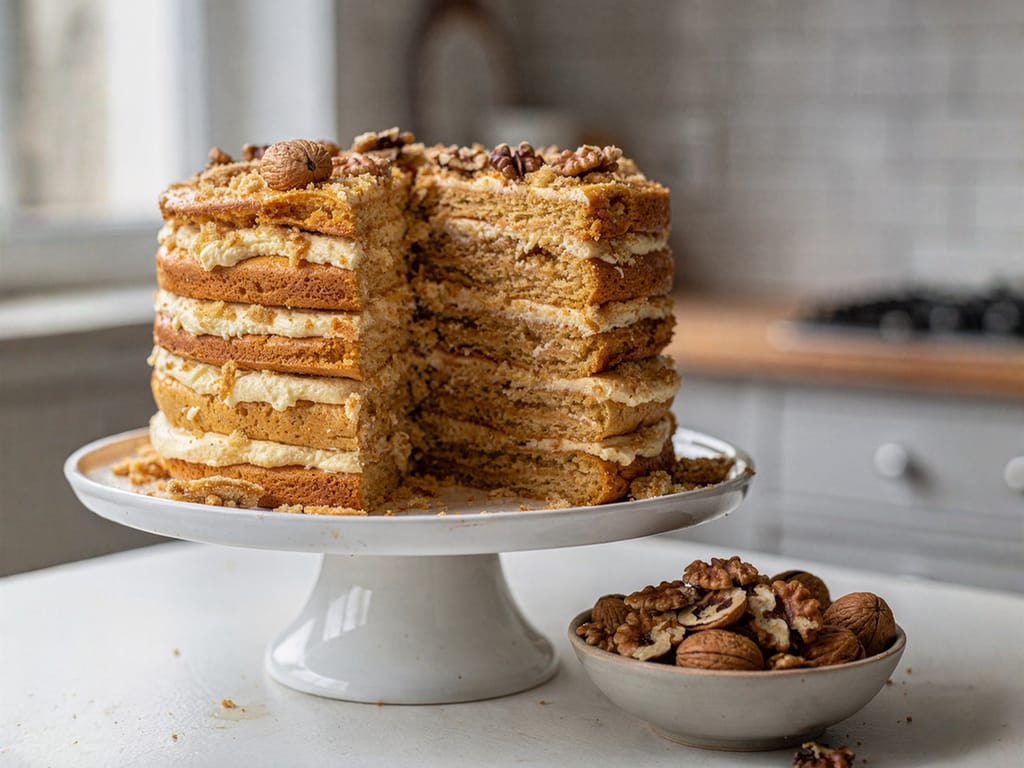
Honey cake bakes quickly but needs time to come together. The thin honey layers (2–3 mm) are done in the oven in just 5–8 minutes at 170–180°C (340–355°F), but once assembled, the cake needs to rest in the fridge for 24–48 hours. Only then do the firm layers soak up moisture from the frosting and turn soft. That's why honey cake should be baked and assembled a day or two ahead — never the morning of the party. Below you'll find baking times for different layer thicknesses, how to tell when a layer is done, and a timeline that gets your honey cake ready exactly when you need it.
A thin honey layer bakes for 5–8 minutes at 170–180°C (340–355°F) (conventional top/bottom heat), or in a fan oven at 150–160°C (300–320°F). The main factor is the thickness of the batter:
Thin layer, 2–3 mm (classic layered honey cake, 6–8 layers): 5–8 minutes.
Thicker layer, around 5 mm: 8–10 minutes.
Sheet-baked honey cake (one thick layer, sliced lengthwise afterward): 15–20 minutes at 170°C (340°F).
Bake the layers one at a time, in the middle of the oven. Honey batter is high in sugar, so the gap between "just right" and "bitter" is only a minute or two. Stay by the oven for the first layer and use it to set the timing for the rest.
A baked honey layer shows three signs: it's evenly golden-brown, springy to the touch, and smells of caramel and honey. Treat the minutes as a guideline only — every oven bakes differently.
Color: evenly golden-brown, like a darker honey. The edges may be a shade darker.
Touch: the surface is springy and bounces back when you press it lightly with a finger.
Smell: it smells of caramel and honey. As soon as you catch a sharp, bitter note, the layer is overbaked.
An overbaked layer stays bitter even after resting — the frosting won't fix it. A pale, underbaked layer, on the other hand, tastes more of flour than honey once it softens.
A honey layer firms up within a minute or two of coming out of the oven. Warm, it cuts like a soft biscuit; cooled, it shatters like glass. As soon as it's baked, set a cake ring or plate on top and trim it into a circle with a sharp knife.
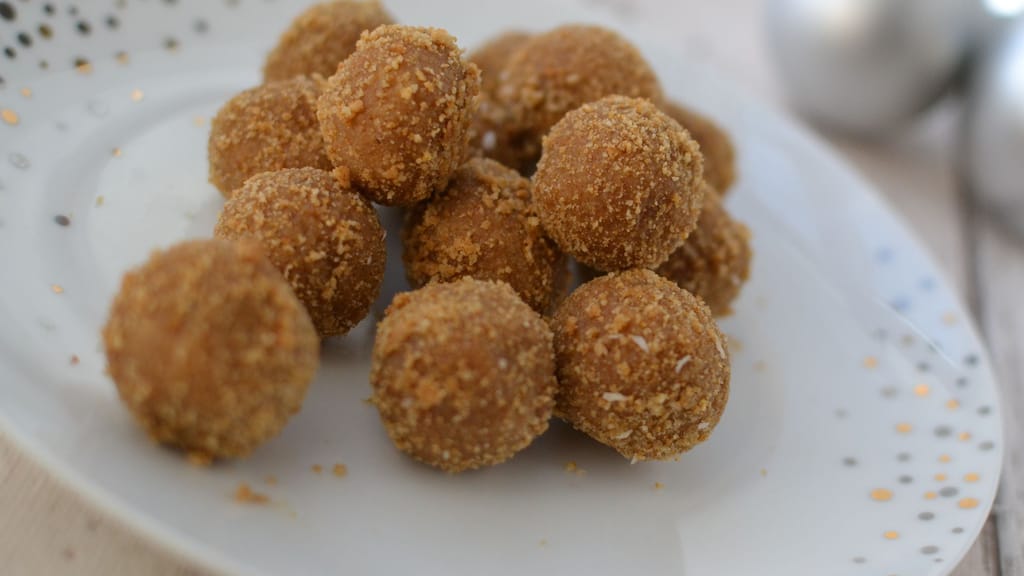
Don't throw away the trimmings. Let them dry out, crush them, and use them as crumb coating for the top and sides of the cake. If you end up with extra, turn them into honey cake truffles (recipe link below).
Seasonal baking plans, tested recipes and kitchen tricks that save you time. Unsubscribe in one click.
Honey cake layers come out of the oven hard as a board because the caramelized honey and sugar set into a brittle sheet as it cools. They only soften once they absorb moisture from the frosting. For honey cake, that's exactly how it should be: a hard layer isn't a mistake — it's just a half-finished piece waiting for its frosting.
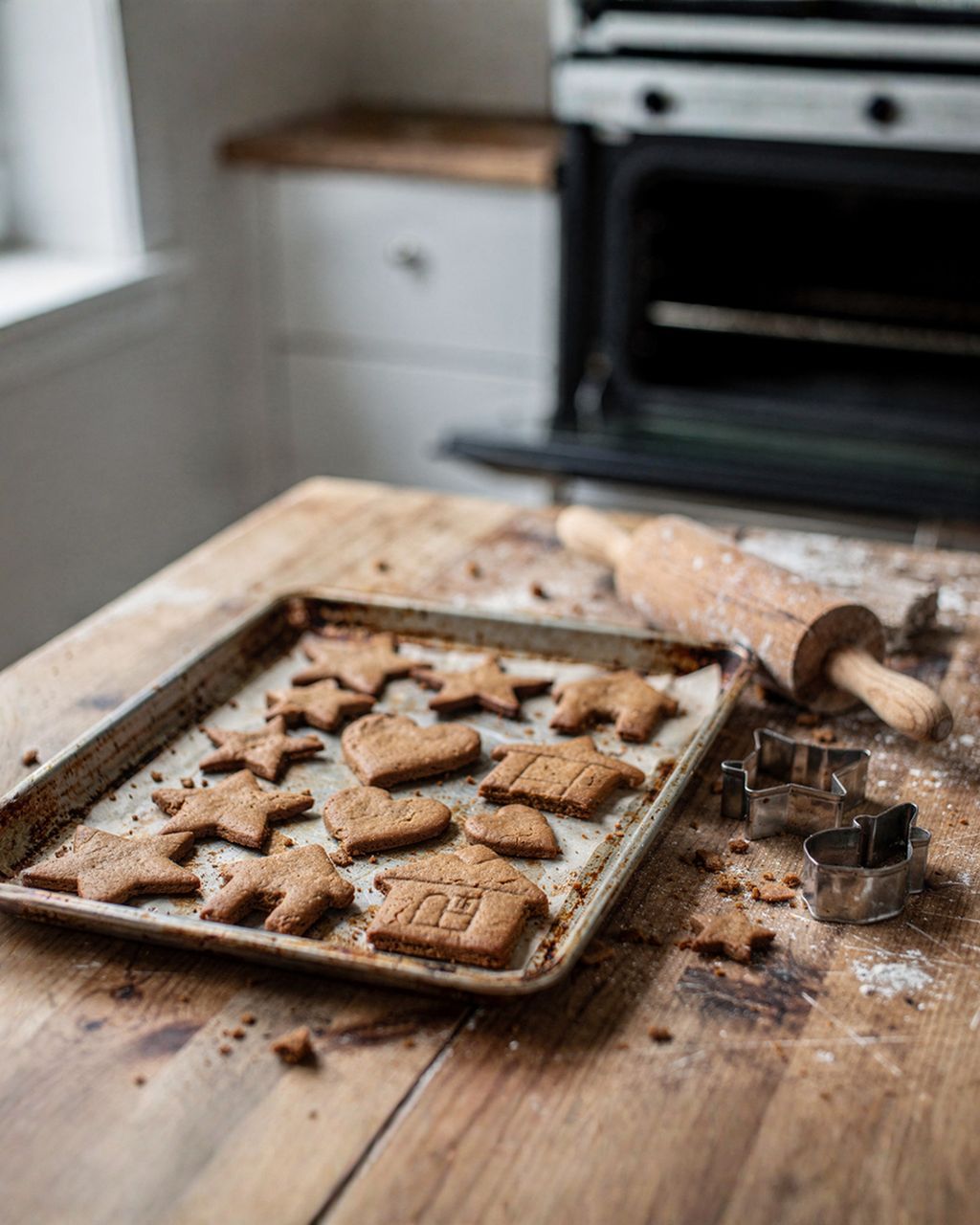
The same thing happens with honey-based gingerbread dough in general. Gingerbread cookies also soften only once they've had time and a bit of moisture in a storage tin. You'll find more details in How to Store Gingerbread Cookies So They Soften. Crisp shortbread-style cookies are the opposite case: they're meant to stay crisp, and moisture ruins them — see How to Store Christmas Cookies So They Stay Crisp.
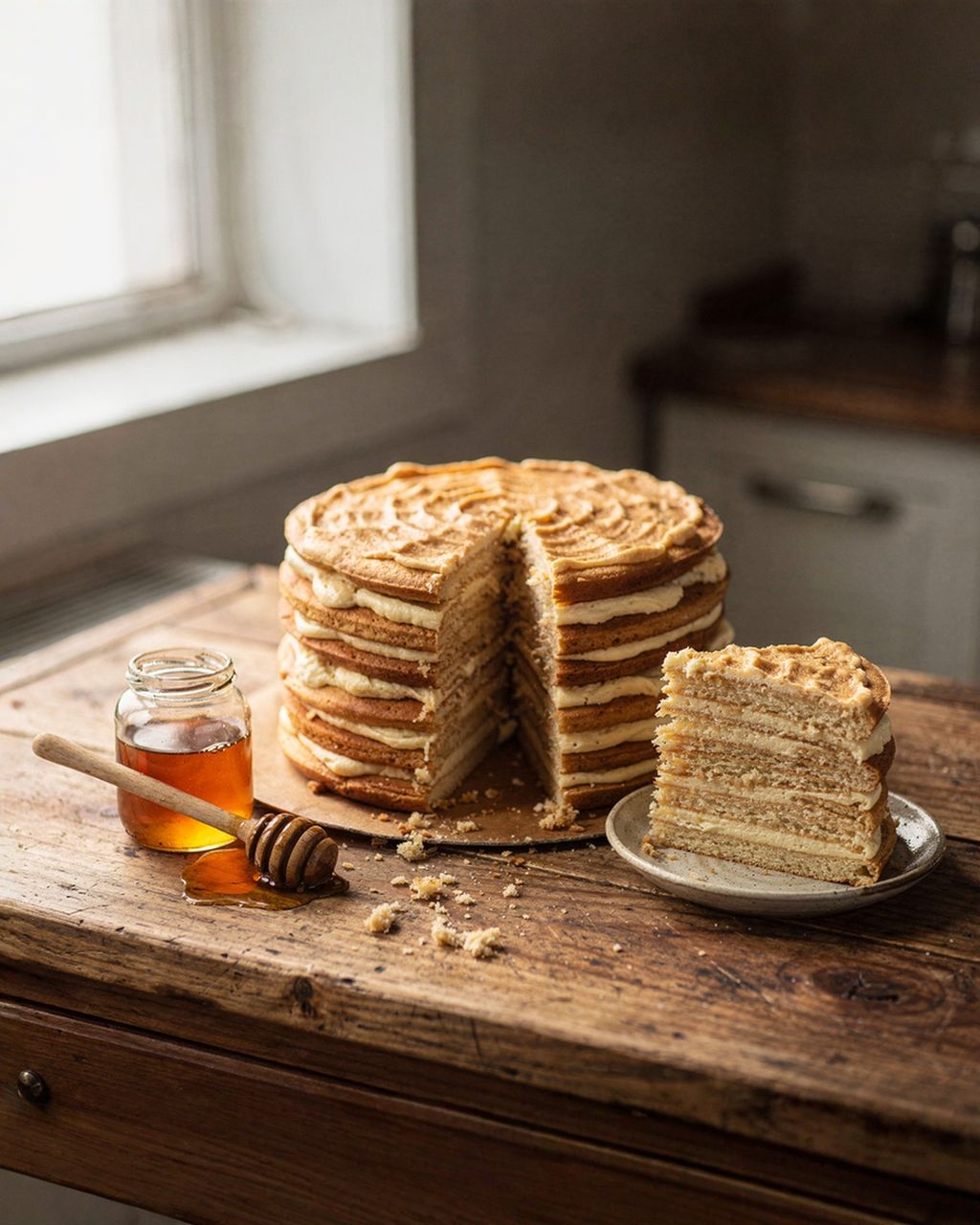
Honey cake is made ahead because the layers need 24–48 hours in the fridge to absorb moisture from the frosting and soften. A freshly assembled honey cake is hard, the frosting sits as a separate layer between the sheets, and the cake slides apart when you cut it.
Three things happen during resting: the layers soften, the flavors meld, and the cake firms up.
The layers soften. Moisture from the frosting (mainly from cream or sour cream) works its way into the layers, turning hard sheets into a moist, tender cake.
The flavors meld. Honey, caramel, spices, and frosting blend into one flavor instead of standing out separately.
The cake firms up. The chilled frosting holds the layers together, so slices come out clean and don't fall apart.
The bare minimum is 12 hours, but that's really an emergency fix. Honey cake is at its best between the 24th and 48th hour after assembly.
Assemble the honey cake 2 days before serving — you can bake the layers even earlier. If you want to serve it Saturday afternoon, assemble it Thursday evening. Here's a timeline that works:
Day −3 to −2: bake the layers. Plain layers without frosting keep for a good week in a dry, well-sealed container, so you can bake them even earlier.
Day −2: make the frosting, let it cool, and assemble the cake. Coat the top and sides with frosting and cover with crumbs from the trimmings.
Day −2 to 0: the cake sits in the fridge, covered (cake dome, container, or foil tented on skewers). Left uncovered, it dries out and picks up fridge odors.
Day 0: take it out 20–30 minutes before slicing. A chilled honey cake cuts more cleanly, but the frosting tastes better once it's warmed up slightly.
Baking honey cake for Christmas? Slot it in among the last batches, since with frosting it won't keep as long as dry cookies. For when to bake each type, check the Christmas cookie baking calendar.
An assembled honey cake keeps covered in the fridge for 2–10 days, depending on the frosting. With a frosting made from boiled condensed milk and butter, 7–10 days; with sour cream, 3–4 days; and with whipped cream, just 1–2 days — the more water and less sugar a frosting has, the sooner it spoils. It's best between the 24th and 48th hour after assembly; after that the layers gradually get wetter and the cake loses its structure.
Yes, you can freeze honey cake. Ideally after it's rested, cut into slices, each wrapped separately in foil and placed in a sealed container. It keeps for 2–3 months this way. Thaw it slowly overnight in the fridge, not on the counter. Cream-based frostings can weep a little water after thawing, so honey cake freezes better with a thicker, butter- or caramel-based frosting.
You'll find general freezing methods in How to Freeze Cookies and Dough and how long other sweets keep in the cookie shelf-life guide by type.
There are six mistakes people make most often with honey cake: overbaked layers, layers that are too thick, trimming cold layers, too little or too thick a frosting, cutting it the same day, and assembling with warm frosting.
Overbaked layers. One extra minute and the honey turns bitter. Watch the oven closely for the first layer.
Layers that are too thick. A thick layer won't soften all the way through, so the cake stays dry in the middle even after two days. Roll it out to 2–3 mm.
Trimming cold layers. A cooled layer shatters. Trim it right after baking.
Too little frosting, or frosting that's too thick. Layers only soften if there's enough moisture for them to draw on. Spread each layer with a solid, even coat.
Cutting it the same day. A cake cut too soon slides apart and tastes like biscuits with frosting on them. Let it rest.
Assembling with warm frosting. Buttercream will melt on warm layers. Let both the layers and the frosting cool completely before assembling.
From trimmings and crumbs, you can make quick no-bake truffles. Soft gingerbread cookies have that same honey flavor and soften in a similar way to honey cake.
Honey cake balls - last-minute christmas treats
Honey Cake Truffles: Quick No-Bake Treats from Cake Trimmings
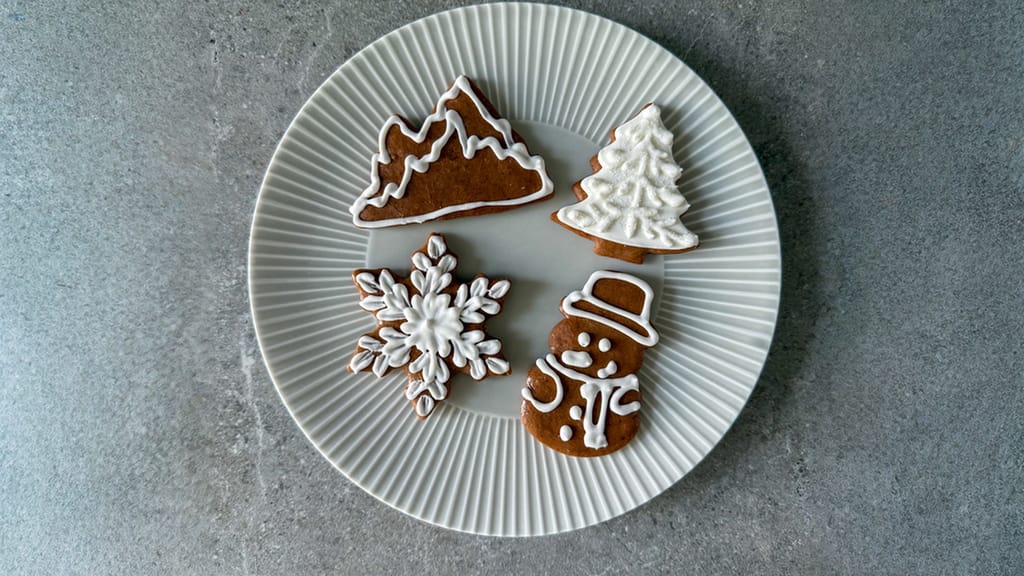
Soft honey gingerbread cookies that never go hard
Soft Honey Gingerbread Cookies That Never Go Hard
Honey cake with frosting must rest in the fridge, since the frosting contains milk, cream, or butter and spoils at room temperature. Only bare layers without frosting can sit in the pantry or on a cool balcony. An assembled cake belongs in the fridge and should be covered.
Honey cake batter foams up in a bain-marie because of the baking soda, which releases carbon dioxide when it hits the warm mixture of honey, sugar, and butter. The mixture puffs up, lightens in color, and foams — that's exactly what should happen, since it's what makes the layers light. Keep stirring until the mixture is pale and foamy, then add the eggs and flour.
Mild floral honey works best for honey cake, since it gives the layers a honey flavor without overpowering the spices or frosting. Forest (honeydew) honey is darker and stronger, so the layers will bake darker too, making it harder to judge doneness by color alone. If you use it, keep a close eye on your first layer.
Yes, honey cake travels well because once it's rested, it's firm and the chilled frosting holds the layers together. Transport it well-chilled in a box, ideally still uncut. For trips longer than an hour, pack a cooling pack in the bag.
One recipe worth heating the oven for, one tip, and one deal from the shop. Nothing else.