Homemade gingerbread spice: the best fragrant recipe
Gingerbread Spice Substitutes: Ratios That Actually Work
Updated Sep 17, 2026
You can replace gingerbread spice with three things you almost certainly already have: cinnamon, cloves, and star anise (or aniseed), in a 2:1:1 ratio. For one teaspoon of blend, that's ½ teaspoon ground cinnamon, ¼ teaspoon ground cloves, and ¼ teaspoon ground star anise. It works because these three notes are exactly what make gingerbread taste like gingerbread — sweet warmth, a warming bitterness, and an aniseed sweetness underneath. Below you'll find ratios for a full homemade blend, substitutes based on whatever's in your cupboard, how much to use in dough, and a few swaps that will reliably ruin your gingerbread.
You can replace gingerbread spice with three ratios: an emergency 2:1:1 (cinnamon, cloves, star anise), a solid 4:2:1:1:1 with ginger and allspice added, or a full homemade blend from eight ingredients. All three go into dough exactly the same way as store-bought gingerbread spice — pick whichever matches what you've got on hand.
Choose your "part" based on how much you need: for one teaspoon of blend, a part is ¼ teaspoon; for a batch to last the whole Advent season, a part can be a full tablespoon. The ratio stays the same — only the scale changes.
The fastest gingerbread spice substitute is three ingredients in a 2:1:1 ratio:
2 parts ground cinnamon
1 part ground cloves
1 part ground star anise, aniseed, or fennel seed
If you also have ginger and allspice in the cupboard, mix five ingredients in a 4:2:1:1:1 ratio — you won't be able to tell it from a store-bought blend once it's in the gingerbread:
4 parts ground cinnamon
2 parts ground ginger
1 part ground cloves
1 part ground star anise or aniseed
1 part ground allspice
Ginger makes up a bigger share here than in the full eight-ingredient blend (2 parts out of 9, or about 22%). That's deliberate: this five-ingredient version has no nutmeg, coriander, or pepper, and the bite of ginger keeps the mix from tasting flat.
The full homemade blend uses eight ingredients, and the amounts below add up to about 30 g — enough for 2–4 batches of gingerbread:
15 g ground cinnamon
4 g ground cloves
3 g ground star anise
1 g ground aniseed or fennel seed
3 g ground ginger
2 g ground allspice
1 g ground nutmeg
1 g ground coriander
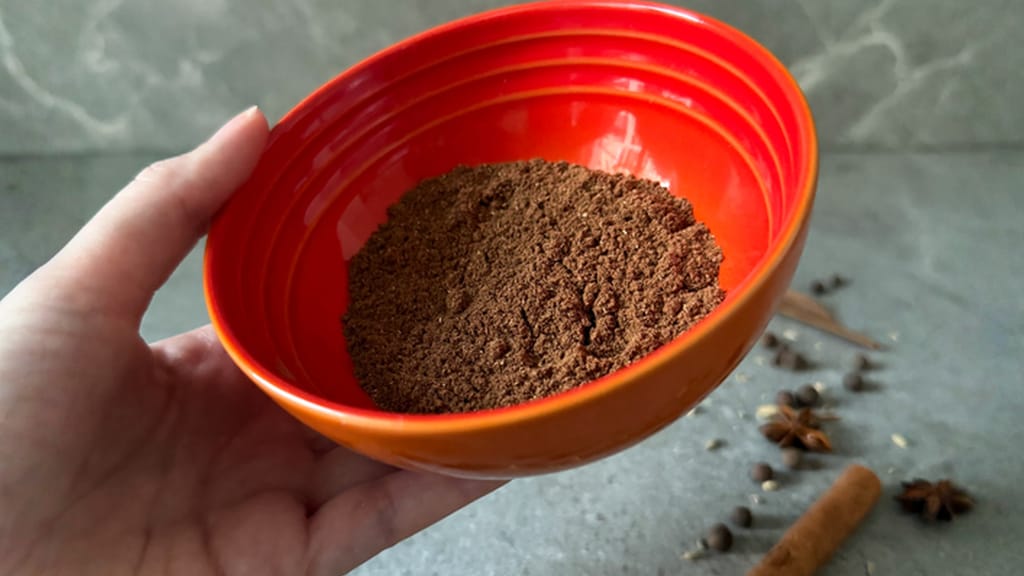
Homemade gingerbread spice: the best fragrant recipe
Homemade gingerbread spice with exact ratios — mix it in five minutes and it'll smell better than store-bought.
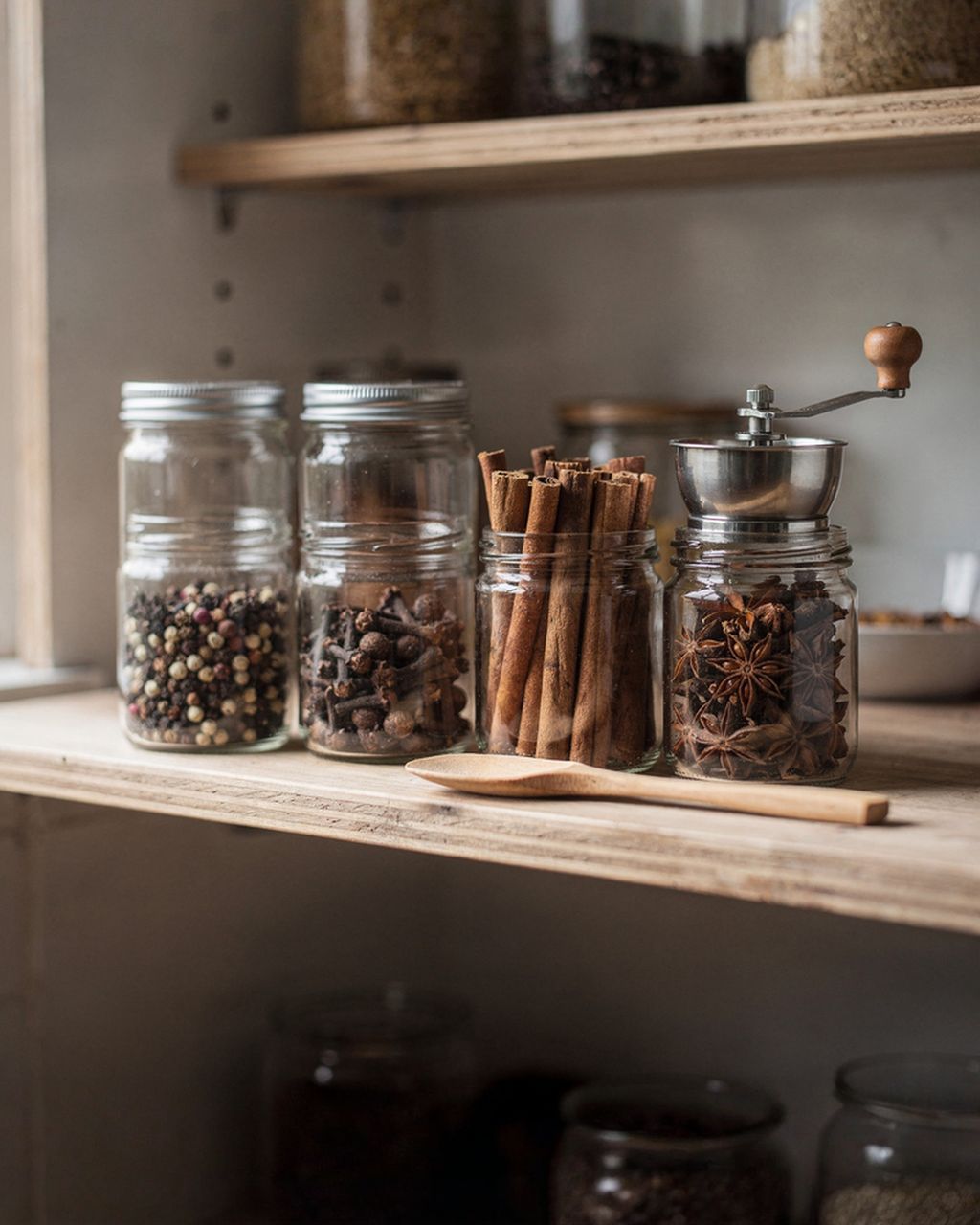
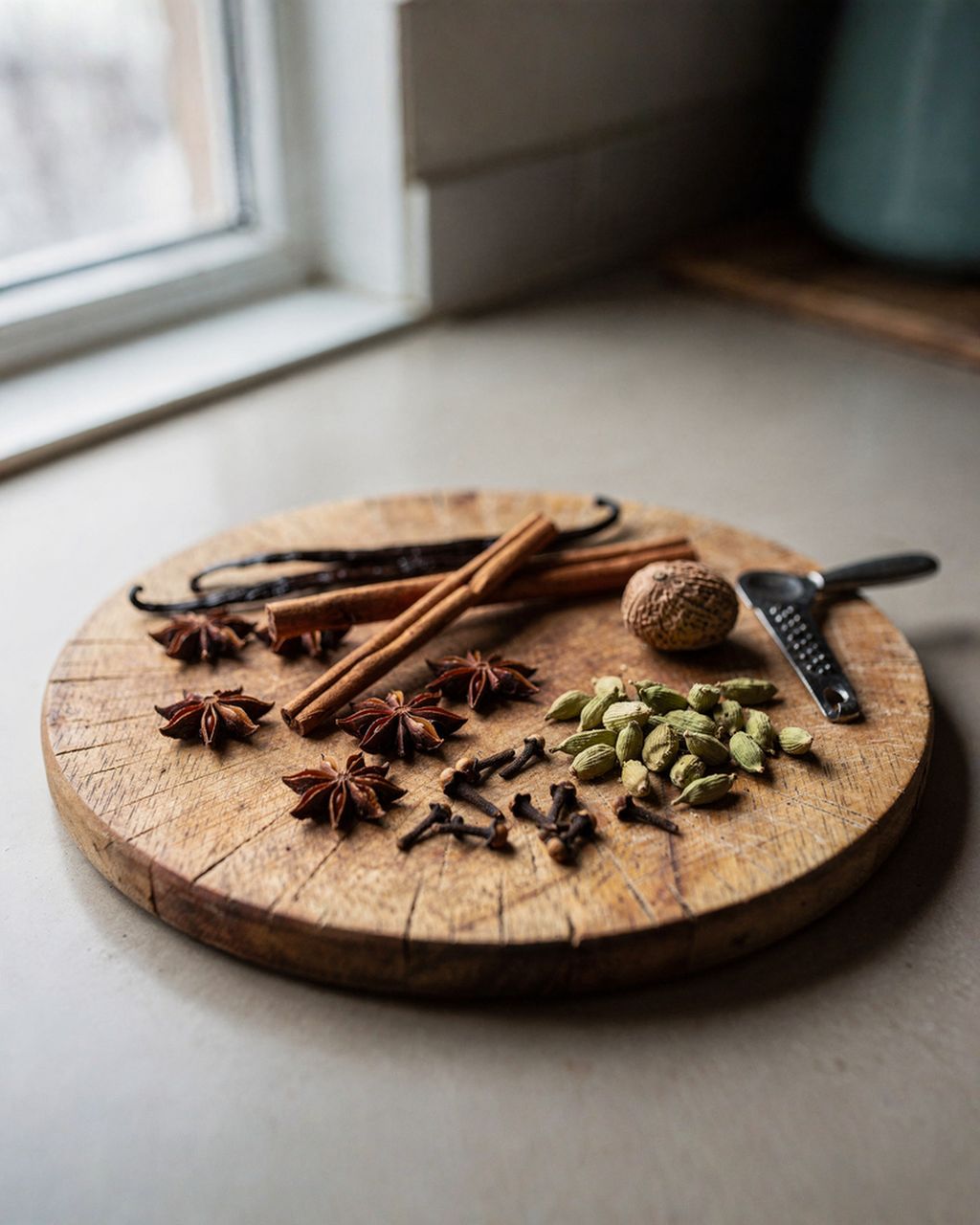
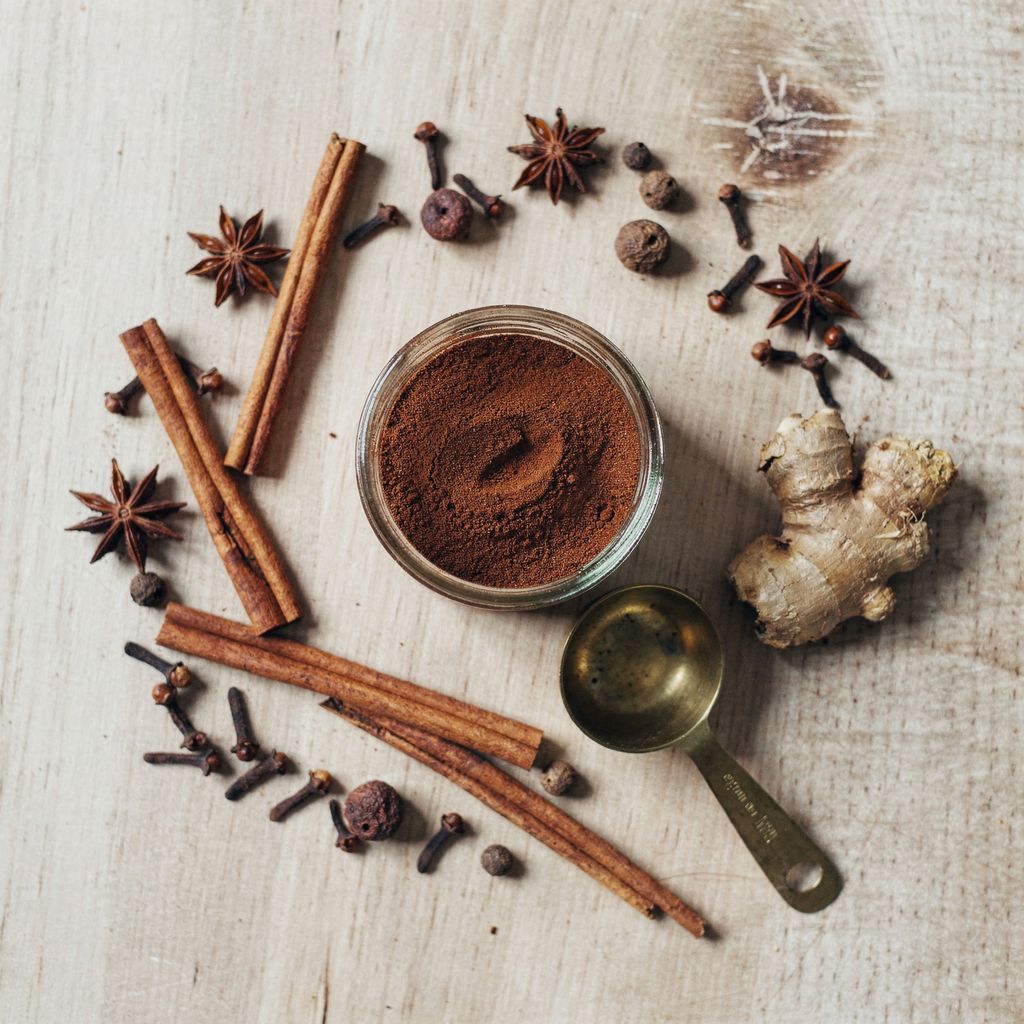
Gingerbread spice rests on three pillars: cinnamon, cloves, and a spice containing anethole — star anise, aniseed, or fennel. Everything else is fine-tuning, which is exactly why you can build a substitute from just three ingredients. Here's what each ingredient does in the blend, and roughly how much of it belongs in a full eight-ingredient mix:
Cinnamon (40–50% of the blend) — carries the sweet warmth and that basic "gingerbread" smell. It's the one ingredient you shouldn't skimp on; below 40% the blend starts to taste sharp and herbal instead.
Cloves (10–15%) — adds a warming, slightly numbing bitterness that lingers on the tongue. It's also the most aggressive ingredient in the mix: over 15% and it steamrolls everything else, and your gingerbread starts tasting like a trip to the dentist.
Star anise, aniseed, or fennel (10–15%) — all three contain anethole and can be swapped for one another. This is the note that tells your nose "gingerbread," not "strudel." Leave it out and all you're left with is generically sweet spice.
Allspice (5–10%) — bridges cinnamon and cloves and adds a peppery undertone.
Ginger (5–10%) — brings the sharpness and a lively finish. Czech tradition tends to use less of it than German or Scandinavian gingerbread does; Swedish pepparkakor cookies, by contrast, are built quite deliberately around ginger and pepper. The fewer ingredients a blend has, the more ginger and allspice it can handle — which is why the five-ingredient 4:2:1:1:1 version leans on them so much harder than this one does.
Nutmeg, coriander, cardamom, orange zest, a pinch of pepper (up to 10% combined) — this is where you get to put your own signature on it. Coriander adds a citrusy lift, cardamom pushes the blend toward Scandinavian territory, and orange zest brightens the whole thing.
A pinch of salt — it won't taste salty, it just sharpens everything else. A level pinch is enough for 30 g of blend.
Most ready-made sweet spice blends can stand in for gingerbread spice — some just need a top-up. What matters is one thing: whether they already contain star anise, aniseed, or fennel. If they do, swap 1:1. If not, you'll need to add that anethole note yourself.
Cinnamon on its own works, but the gingerbread will taste flat — it's missing both the depth and that aniseed finish. Use the same amount as you would gingerbread spice, and top it up with whatever else you actually have:
Zest of half an orange per 500 g flour — the single most effective patch; it gives the blend some spark.
A pinch of nutmeg (about ⅛ teaspoon) — brings back a warm, rounded base note.
A teaspoon of cocoa in the dough — won't rescue the aroma, but deepens both flavour and colour, so the gingerbread doesn't taste hollow.
What not to do: don't double the cinnamon hoping it'll make up for the missing spices. In larger amounts cinnamon just turns astringent and drying, and it won't save the gingerbread.
Christmas spice, mulled wine spice, and speculaas spice can all replace gingerbread spice 1:1 with no adjustment needed. They only differ in the finer notes:
Christmas spice and mulled wine spice are built on cinnamon, cloves, and star anise, usually with more citrus zest and cardamom added. That's no problem at all in sweet baking — it just makes the gingerbread a bit brighter. The same logic works in reverse, too: homemade gingerbread spice is a great base for mulled wine syrup.
Speculaas spice (the Dutch blend) additionally includes coriander and orange zest. Check the ingredient list on speculaas spice — it's typically built on cinnamon, cloves, nutmeg, mace, and ginger, and if it has neither aniseed nor star anise in it, add ¼ teaspoon ground star anise per teaspoon of blend.
Lebkuchengewürz is the German equivalent, with more pronounced ginger. Use it 1:1 and expect a sharper gingerbread.
Use pumpkin spice or chai spice 1:1, but add ¼ teaspoon ground star anise or aniseed per teaspoon — both are missing that anethole note.
Pumpkin spice is cinnamon, nutmeg, ginger, cloves, and allspice — basically the entire gingerbread spice base minus the anethole note. With that top-up, the substitute is practically indistinguishable.
Chai spice blend is cinnamon, cardamom, ginger, cloves, and pepper. It works surprisingly well, just with more cardamom in the mix. Check the label to make sure it's not a "chai latte" blend with black tea in it — those usually also contain sugar and milk powder, which have no place in gingerbread dough.
Whole spices are actually the best option, since the essential oils stay locked inside and only release once ground. Crush them in a mortar and pestle or a coffee grinder, then sift through a fine sieve — bits of unground star anise are unpleasant to bite into in gingerbread.
Handy conversions to know:
1 star anise pod ≈ ½ teaspoon ground star anise (¼–¾ teaspoon depending on the size of the pod)
1 whole nutmeg ≈ 2–3 teaspoons grated
1 teaspoon ground cinnamon ≈ 2.5 g of bark. Cassia is dense — about 4 cm of stick is enough; Ceylon bark is light and papery, so you'll need 3–4 times as much (up to 10–15 cm) for the same teaspoon. Weighing the bark is your safest bet.
whole cloves and allspice grind roughly volume-for-volume
Grind cinnamon bark last, and ideally on its own — it's fibrous, clogs up grinders, and is the hardest thing to crush in a mortar. Ceylon cinnamon is soft and papery and will grind fine even in a mortar; cassia is thick and hard, so reach for a coffee grinder for that one.
Per 500 g flour, use 1–2 teaspoons (3–6 g) of blend for soft, tray-baked gingerbread, and 2–4 teaspoons (6–12 g) for the harder cookies meant to mature for a few weeks. The difference isn't about the baker's taste — it's about time: in a moist dough eaten quickly, the spice comes through right away, while gingerbread that sits in the pantry for a month gradually loses its aroma and needs more of a head start.
Three things that shift how much you should use:
Freshly ground homemade blend is noticeably stronger than store-bought. Start at the lower end of the range and add more next time.
Honey, fruit butter, and dark sugar partly mask the spice. In a honey-based dough, feel free to go with the higher end — try it out on soft tray-baked gingerbread.
Don't rely on tasting the raw dough. Gingerbread dough contains egg. Bake one test cookie from it, taste that, and only then adjust the rest of the batch.

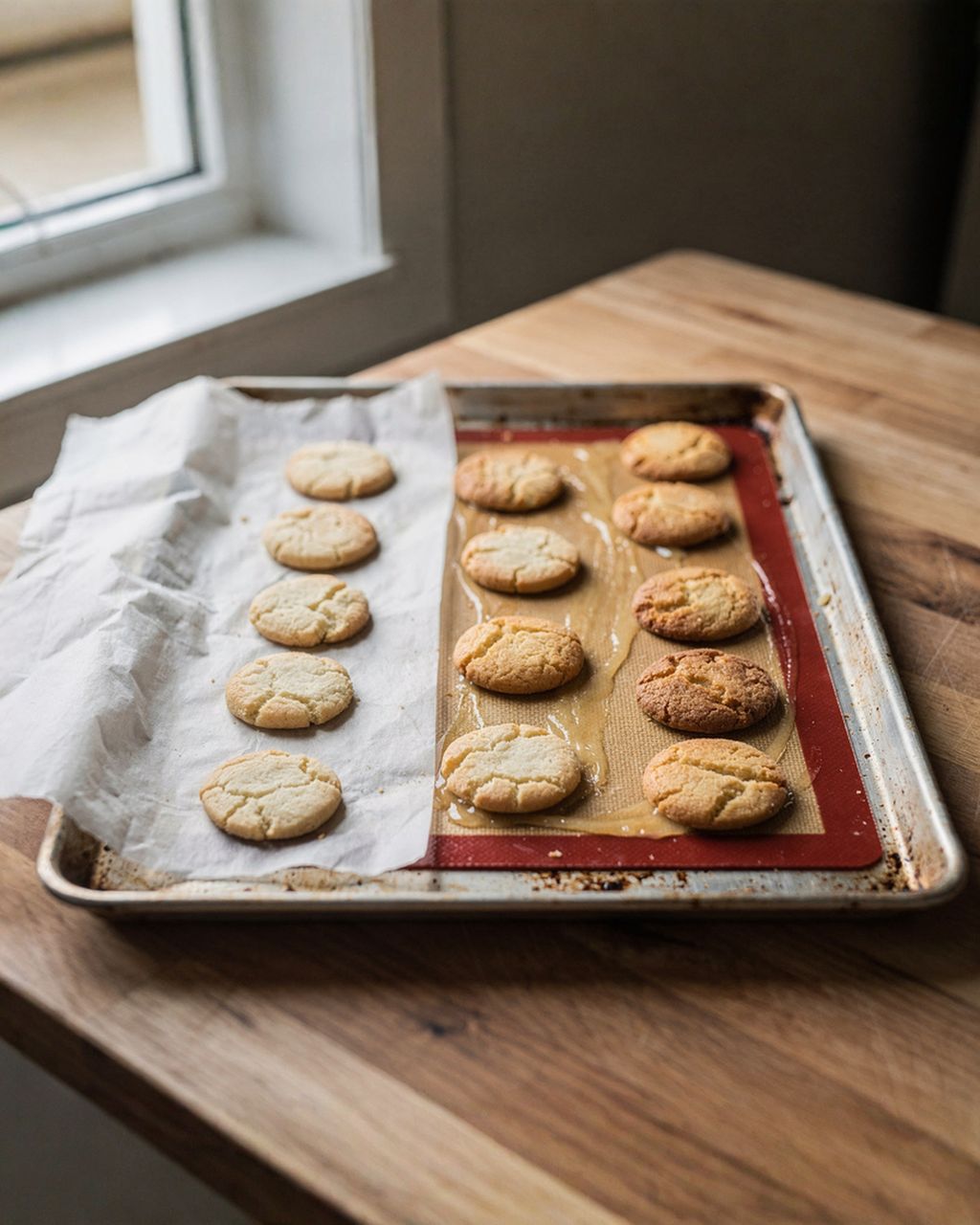
Soft honey gingerbread cookies that never go hard
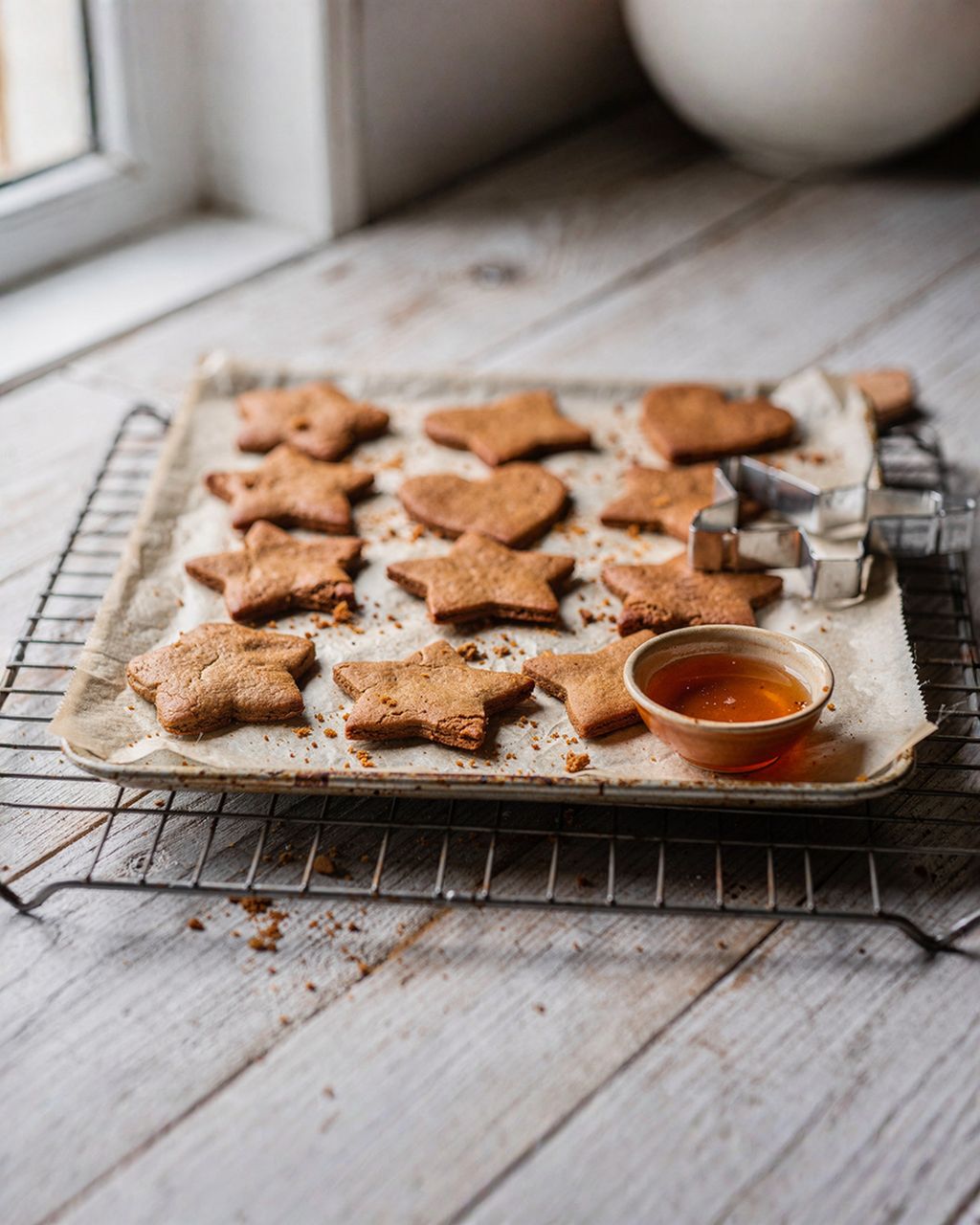
Soft honey gingerbread cookies that stay soft — the perfect dough for trying out your homemade gingerbread spice.
Gingerbread baking powder is baking powder mixed with gingerbread spice, so it makes the dough rise. Gingerbread spice is just spice — it won't leaven anything. Mix them up and you'll end up with either flat gingerbread, or cookies that spread into each other on the tray.
How to fix it either way:
The recipe calls for gingerbread baking powder, but all you have is spice. Mix 1 teaspoon of gingerbread spice with 1 sachet (about 12 g) of regular baking powder. That gives you a leavening dose equivalent to one sachet of gingerbread baking powder (which is usually sold in 20 g sachets, also meant for 500 g flour).
The recipe calls for gingerbread spice, but all you have is gingerbread baking powder. Don't use the full amount called for — you'd be adding extra leavening to the dough and the cookies would spread. Use at most a third of the amount, and make up the flavour with extra cinnamon and cloves.
Watch out for baking soda. Classic Czech gingerbread is leavened with baking soda, not baking powder, because the soda needs the acidity of honey to work — and it's also what gives that characteristic dark colour and soft centre. If a recipe calls for soda, gingerbread baking powder won't fully replace it.
Cinnamon sugar, gingerbread flavouring, and cloves on their own won't work as substitutes for gingerbread spice — each one throws something else off balance.
Cinnamon sugar is overwhelmingly just sugar. To get the flavour hit of one teaspoon of cinnamon, you'd need to add several extra tablespoons of sugar, throwing off both the sweetness and the texture of the dough. As a rough guide, 1 tablespoon of cinnamon sugar is roughly equivalent to ⅛ teaspoon of cinnamon.
Cloves alone, in a larger dose. It's the strongest ingredient in the whole blend, and too much of it tastes medicinal, even bitter. Never let it exceed 15% of the total spice volume.
Gingerbread flavouring or essence. It smells wonderful in the raw dough, but breaks down or evaporates during baking — and it adds no real flavour structure at all, just a flat, one-note sweetness.
Cardamom as the lead flavour. It's lovely, but dominant. Use too much and your gingerbread turns into Scandinavian spice cookies — a nice result, just not gingerbread.
Stale ground spice, doubled up. Cinnamon that's lost its punch doesn't get stronger with more of it — just more bitter and dusty-tasting. This is the single most common reason gingerbread "doesn't smell like anything, even though I used plenty of spice."
A ground homemade blend holds its full aroma for about 6 months; whole, unground spices keep for 2–3 years. Store it in a sealed jar somewhere dark and dry — never in an open tin above the stove, since heat, light and moisture break down the essential oils far faster than time alone does. It lasts longest if you mix the whole spices together and only grind as much as you need at a time.
Yes, and in small amounts it works really well — about ½ teaspoon in roasted meat, braised vegetables, or dark meat sauces. Stay under one teaspoon per potful; the blend is sweetly aromatic, and any more starts making the dish taste like dessert. Allspice and cloves, both part of the mix, have a natural affinity with roasted meats anyway, so it's not as odd a pairing as it sounds.
Not for gingerbread spice — feel free to skip it. A quick toast in a dry pan (30–60 seconds, just until you catch the aroma) helps whole coriander, fennel and aniseed, but cinnamon, cloves and star anise don't need it and scorch into bitterness easily. If you do toast any of them, let the spices cool completely before grinding — warm spices steam up in the grinder and clump into a sticky mess.
Pure spices are gluten-free — cinnamon, cloves, star anise and allspice aren't grains. With store-bought blends, though, check the label: some contain an anti-caking agent or filler, and many are packed in facilities that also handle grains and nuts, so they'll carry a may-contain-traces warning. If you're baking gluten-free or for someone with allergies, a homemade blend made from whole spices is the safest route.
You can, but you'll be missing the very note that makes gingerbread taste like gingerbread. The closest substitute for that anethole flavour is fennel seed, which is milder and sweeter — use 1.5 times the amount you'd use of star anise. If you don't have fennel either, increase the allspice and add some orange zest; the blend will still be good, just closer to American-style gingerbread cookies than to Czech perníčky.
One recipe worth heating the oven for, one tip, and one deal from the shop. Nothing else.