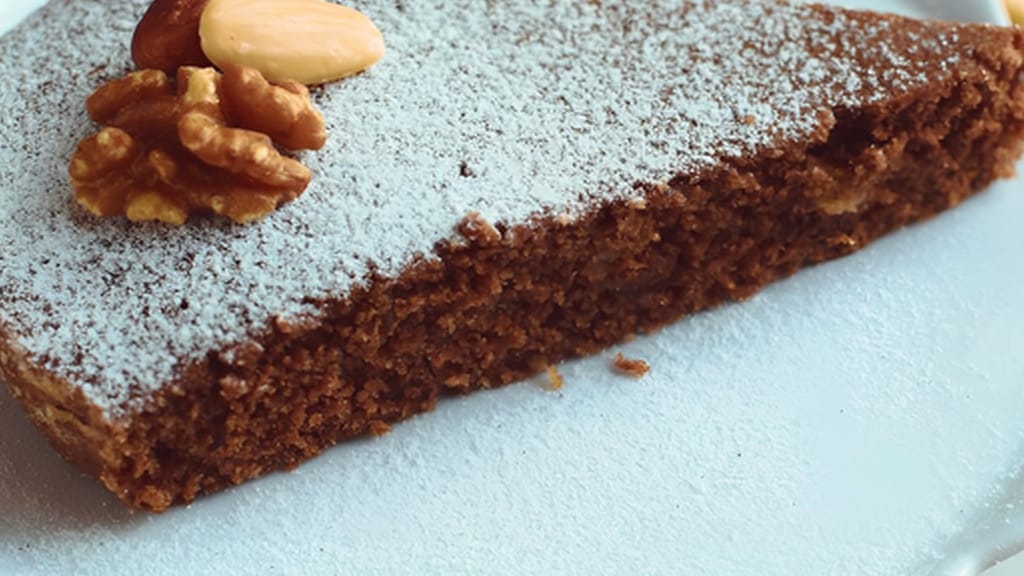
Lactose-free sheet pan gingerbread cake. quick and really good!
Gingerbread Sheet Cake Icing: Chocolate Ganache, Lemon Glaze and How to Make It Glossy
Updated Oct 15, 2026
Icing for a gingerbread sheet cake usually comes in two kinds: chocolate, made from cream and chocolate, or lemon, made from powdered sugar and juice. Chocolate ganache is soft, glossy and doesn't crack under the knife. Lemon glaze is quicker and fresher, and the gingerbread underneath stays moist. Below you'll find exact amounts for a 30 × 40 cm (12 × 16 in) baking tray, the right temperatures and the main thing: what makes icing glossy, and why it sometimes turns dull or cracks.
For a gingerbread sheet cake you can choose from five icings: cream-based chocolate ganache, lemon glaze, chocolate with fat, store-bought cocoa icing and homemade cocoa icing. Ganache is best if you want shine and a soft slice, and lemon glaze if you want something quick and fresh. The others work too, but each one has its price:
Chocolate + cream (ganache): glossy, creamy, doesn't crack and tastes of chocolate. It needs good chocolate and 2–3 hours to set.
Lemon glaze (powdered sugar + juice): ready in 5 minutes, and the tartness balances the spices and honey nicely. It dries white, and dull without glucose syrup.
Chocolate + fat (coconut oil or vegetable shortening): shines well and sets quickly, but once cooled it's hard and shatters into shards when you cut it.
Store-bought cocoa icing in a pouch or block: the easiest option, and you can't go wrong. But it's vegetable fat with cocoa, so it tastes more of fat than of chocolate.
Homemade cocoa icing (butter, cocoa, sugar, milk): cheap and made from ingredients you already have at home. It's rather matte and quite sweet.
If you're not sure, reach for ganache. It's the safest route to an icing that shines, slices cleanly and tastes great.
For a 30 × 40 cm tray you need 250 g dark chocolate, 170 ml whipping cream (30–33% fat) and 25 g glucose syrup. That's a ratio of roughly 3 : 2, which makes about 450 g of icing and a 3 mm layer. It sets softly, so you can slice it without smearing.
Chop the chocolate or use chocolate chips or callets, which melt evenly, and put it in a bowl.
Heat the cream with the glucose syrup until the first bubbles appear around the edge (80–90 °C / 175–195 °F). Don't boil it for long, or the water evaporates and the ratio shifts.
Pour the hot cream over the chocolate and leave it alone for 1 minute so the heat can work its way in.
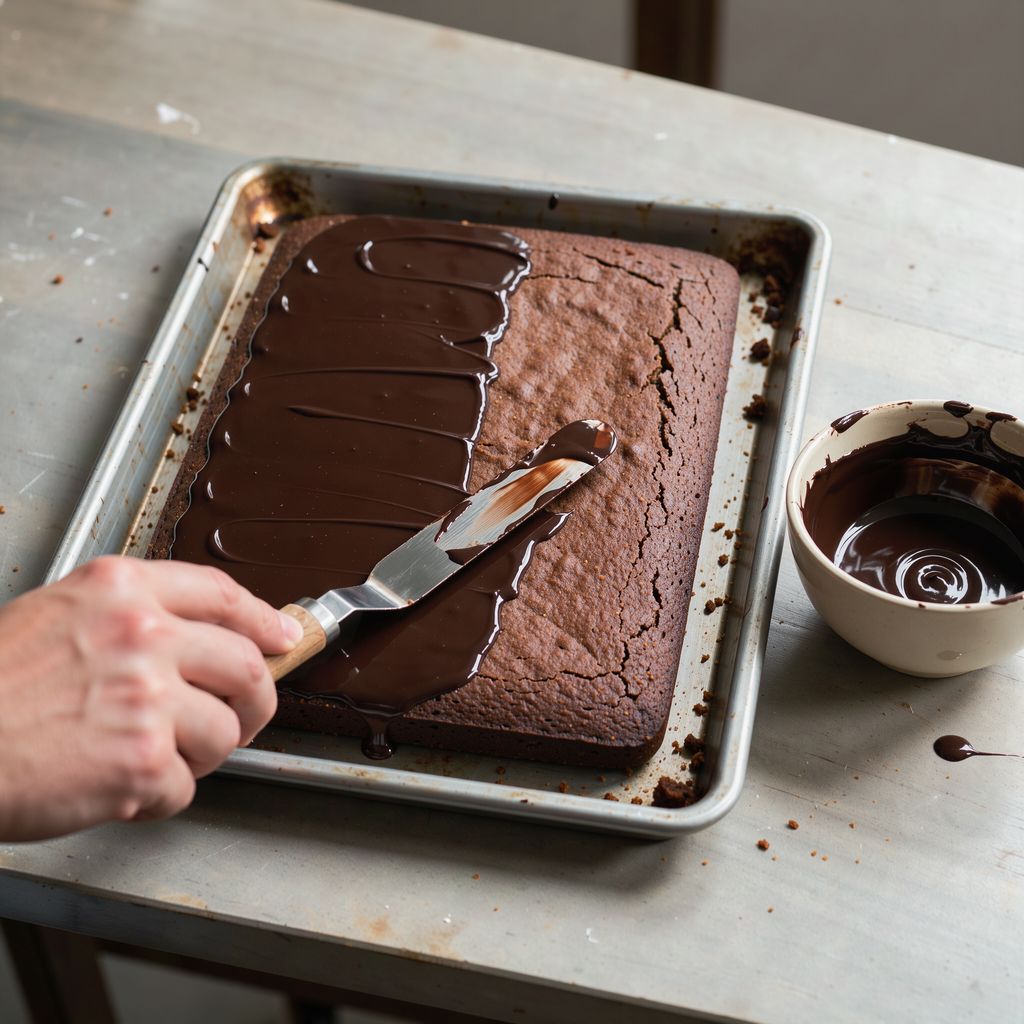
Stir with a spatula in small circles from the center outward until you get a smooth, glossy emulsion. Don't whip it or use a whisk, which would create bubbles.
Let the icing cool to 32–35 °C (90–95 °F). On your lip it should feel just lukewarm. Only then pour it over the gingerbread.
For a 20 × 30 cm tray, half the amount is enough. Want a softer, almost creamy icing? Add an extra 30 ml of cream.
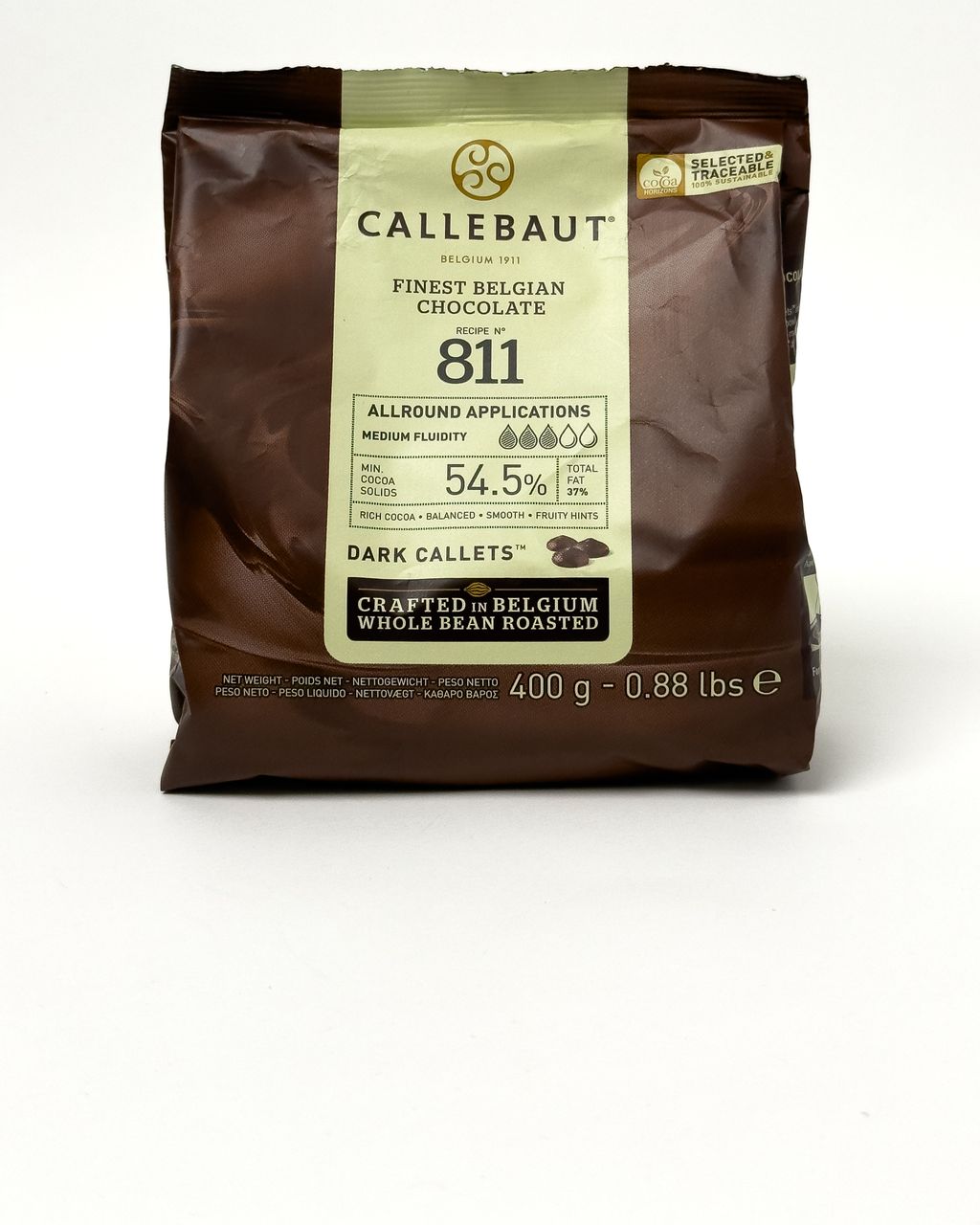
For classic gingerbread, dark chocolate with around 55% cocoa suits best. It's bold enough not to get lost next to cinnamon, cloves and honey, yet not bitter. That's why we use Callebaut 811 dark chocolate, which has 54.5% cocoa solids according to the manufacturer and medium fluidity. It emulsifies nicely in ganache and holds its shine.
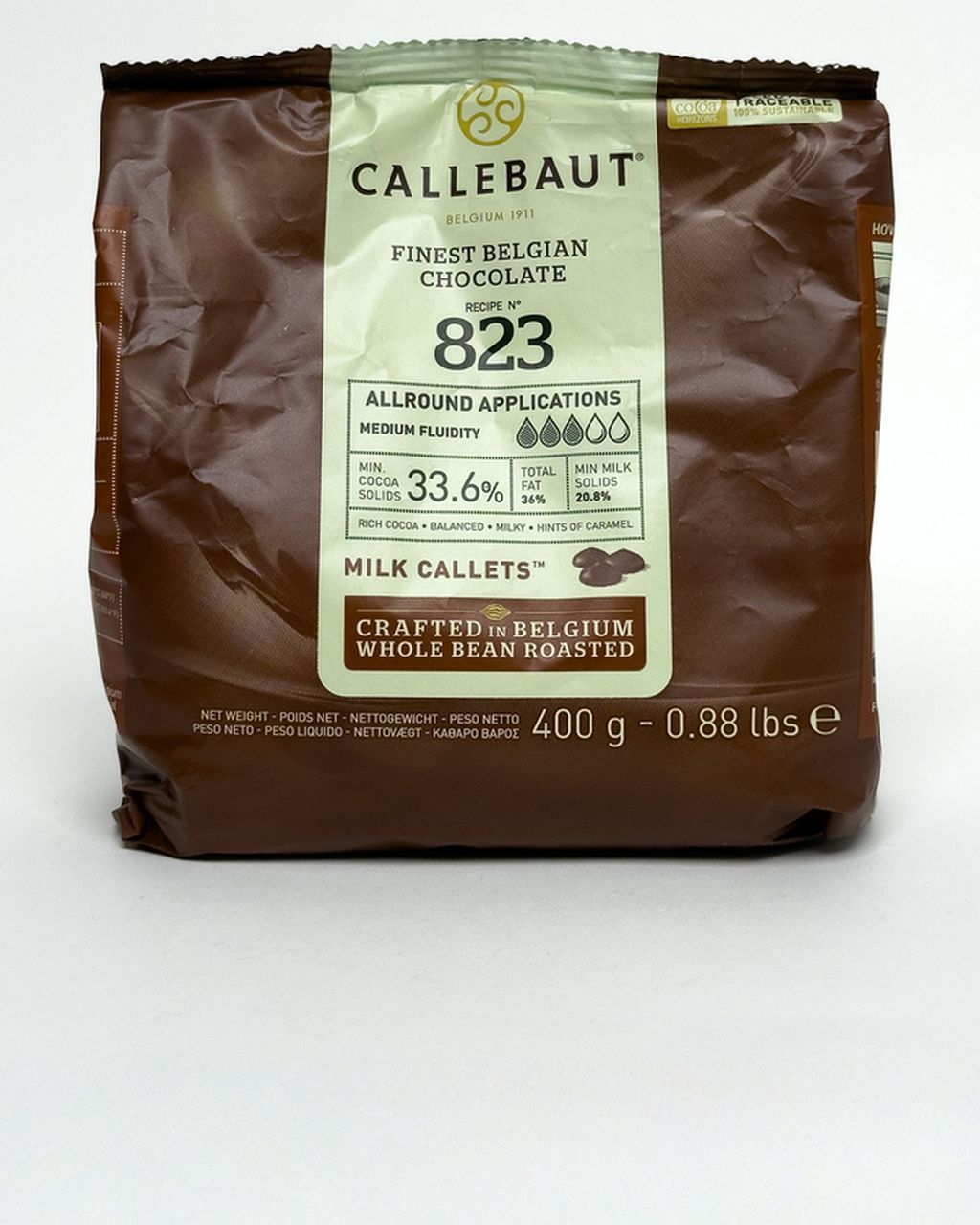
Milk chocolate makes the icing sweeter and more caramelly, which kids especially appreciate. But it has less cocoa butter and more sugar and milk solids, so it sets softer. Use less cream with it, a 2 : 1 ratio: 300 g Callebaut 823 milk chocolate (33.6% cocoa), 150 ml cream and 25 g glucose syrup.
A proven compromise is half and half: 125 g dark and 125 g milk chocolate with 160 ml cream. It gives a mellow icing that still tastes of chocolate.
Ordinary dark baking chocolate bars work too. They often contain less cocoa butter, though, so the icing turns out duller and thicker. In that case add 10–15 g butter, which softens it and gives it shine.
For a 30 × 40 cm tray, mix 250 g powdered sugar, 45–55 ml lemon juice (roughly 1½ lemons) and 1 heaped teaspoon (about 10 g) glucose syrup. Add the juice a spoonful at a time and stir until the glaze runs off the spoon like thick honey. A trail drawn through it should flow back together in 8–10 seconds.
On warm gingerbread: the glaze partly soaks in and dries into a thin, translucent, slightly sticky coating. The gingerbread stays moister and you can taste the lemon in the cake itself.
On cooled gingerbread: you get an opaque white layer that looks like it came from a bakery and can be decorated.
Glucose syrup prevents the sugar from crystallizing. Thanks to it the glaze stays glossy and flexible, doesn't go dull and doesn't flake off. Careful, don't confuse it with powdered glucose (dextrose), which behaves differently in icing.
Zest from the same lemon (only the yellow part) adds aroma without extra acidity.
Thicken a glaze that's too thin with a spoonful of sugar; fix one that's too thick with a few drops of juice or hot water. Lemon glaze dries on the surface in about 30–60 minutes and sets fully in roughly 2 hours.
Six things make icing glossy: glucose syrup, a temperature of 32–35 °C (90–95 °F), a smooth base, stirring without air, pouring it all at once and setting at room temperature. In detail:
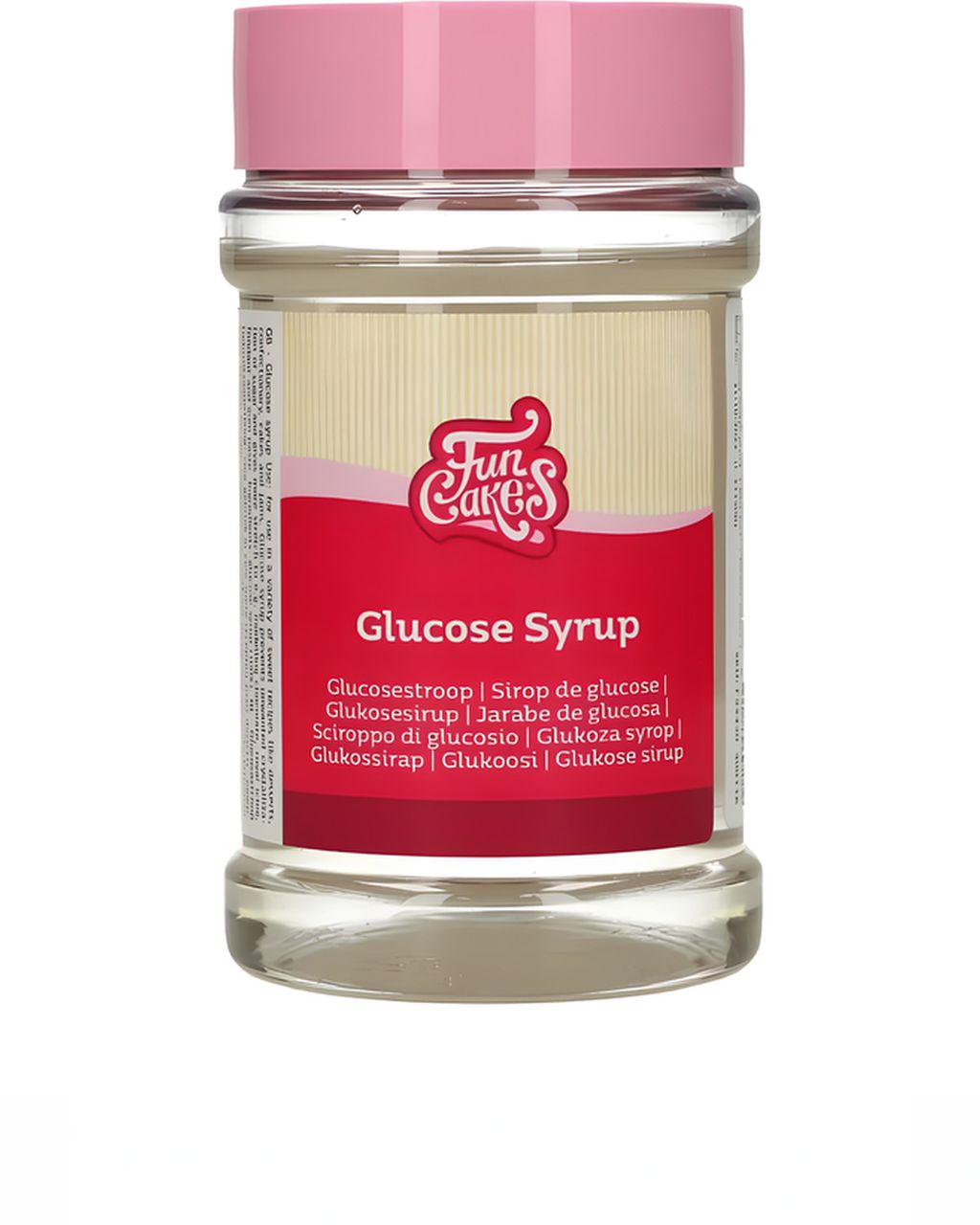
Glucose syrup, roughly 3–6% of the icing's weight. In our recipes that's 25 g in the ganache and a heaped teaspoon in the lemon glaze. It slows sugar crystallization and holds moisture in the icing, so the surface stays mirror-like even the next day. We use FunCakes glucose syrup. For ganache you add it to the cream, for lemon glaze straight to the sugar.
A temperature of 32–35 °C (90–95 °F) for ganache. Warmer icing runs off the edges and ends up as a thin, translucent layer. Cooler icing drags, shows spatula marks and goes dull.
A smooth base. Brush the cooled gingerbread with a thin layer of warmed plum butter or apricot jam and let it dry for 15 minutes. It glues down crumbs, evens out the surface and stops the icing from sinking into the pores.
No air. Stir with a spatula, not a whisk. Prick any bubbles on the surface with a toothpick right after pouring.
Pour it all at once and spread as little as possible. Pour all the icing into the center and spread it with 3–4 strokes of a long spatula. Every extra stroke leaves grooves in the surface.
Let it set at room temperature, not in the fridge. In the cold, moisture condenses on the icing and the shine disappears. It sets in 2–3 hours.
For cakes where you want a mirror finish, check out glazes for cakes and desserts.
Icing cracks when it's too hard compared with the soft gingerbread beneath it. Typically that means chocolate with fat or chocolate without cream. When you cut, the soft cake flexes but the hard layer won't give, so it breaks. Ganache in a 3 : 2 ratio doesn't suffer from this because it stays flexible.
Other common causes:
Icing on warm gingerbread (chocolate): the cake underneath is still working and releasing steam, so the icing ripples or weeps. Pour chocolate icing only on fully cooled gingerbread.
The fridge: cold icing hardens and cracks when sliced. Take the gingerbread out at least 30 minutes ahead.
Too thick a layer: above 5 mm even ganache turns brittle under the knife.
How to slice: dip the knife in hot water, wipe it dry and cut in one stroke from top to bottom. Reheat and wipe it after every cut. Wait to slice until 2–3 hours after icing, when it has set. For a clean cut, this is the most important trick.
You can ice any sheet-cake gingerbread, but icing shows off best on a dense, honeyed, properly spiced batter with a flavor of its own. If you're looking for a base, try our lactose-free gingerbread sheet cake. If you want it lactose-free with the icing too, use lactose-free whipping cream and dark chocolate in the ganache. Check the label, though, as some dark chocolates contain milk fat or milk. Another option is whole grain gingerbread. It's denser and pairs well with lemon glaze.
To keep the gingerbread under the icing from turning out hard or sinking, the right raising agent helps. We explain why gingerbread uses baking soda rather than baking powder in the article Baking soda in gingerbread: why not baking powder.
Lactose-free sheet pan gingerbread cake. quick and really good!
Lactose-free gingerbread sheet cake, a quick base for both chocolate and lemon icing
Store gingerbread with cream ganache covered with foil or in a container in the fridge, because the icing contains cream. Take it out at least 30 minutes before serving, otherwise the icing hardens and turns dull. Gingerbread with a lemon glaze that has no cream can stay covered at room temperature.
You can freeze iced gingerbread for 2–3 months, but the icing usually loses its shine after thawing. It's better to freeze the gingerbread without icing, well wrapped, thaw it overnight in the fridge and ice it fresh. If you do freeze it with the icing, thaw it in the fridge while still wrapped so moisture doesn't condense on the surface.
Make a cocoa icing by heating 50 g butter, 3 tablespoons cocoa, 100 g powdered sugar and 3–4 tablespoons milk together until smooth. It's cheap and quick, but compared with ganache made from real chocolate it's sweeter, duller and less intense. A teaspoon of glucose syrup adds a little shine.
Allow about 35–40 g of icing per 100 cm² of surface for a 3 mm layer. A 30 × 40 cm tray (1,200 cm²) needs roughly 450 g, a 20 × 30 cm tray about half of that, and a 26 cm round tin roughly 200 g. The ratio of ingredients stays the same, you just scale it up or down.
The best substitute for glucose syrup is invert sugar in the same amount. Honey works too, although it brings its own flavor to the icing, which suits gingerbread. Corn syrup is basically the same thing as glucose syrup. Powdered glucose (dextrose) is not a substitute. Without any syrup the icing will still set, just duller, and a lemon glaze may crumble.
One recipe worth heating the oven for, one tip, and one deal from the shop. Nothing else.