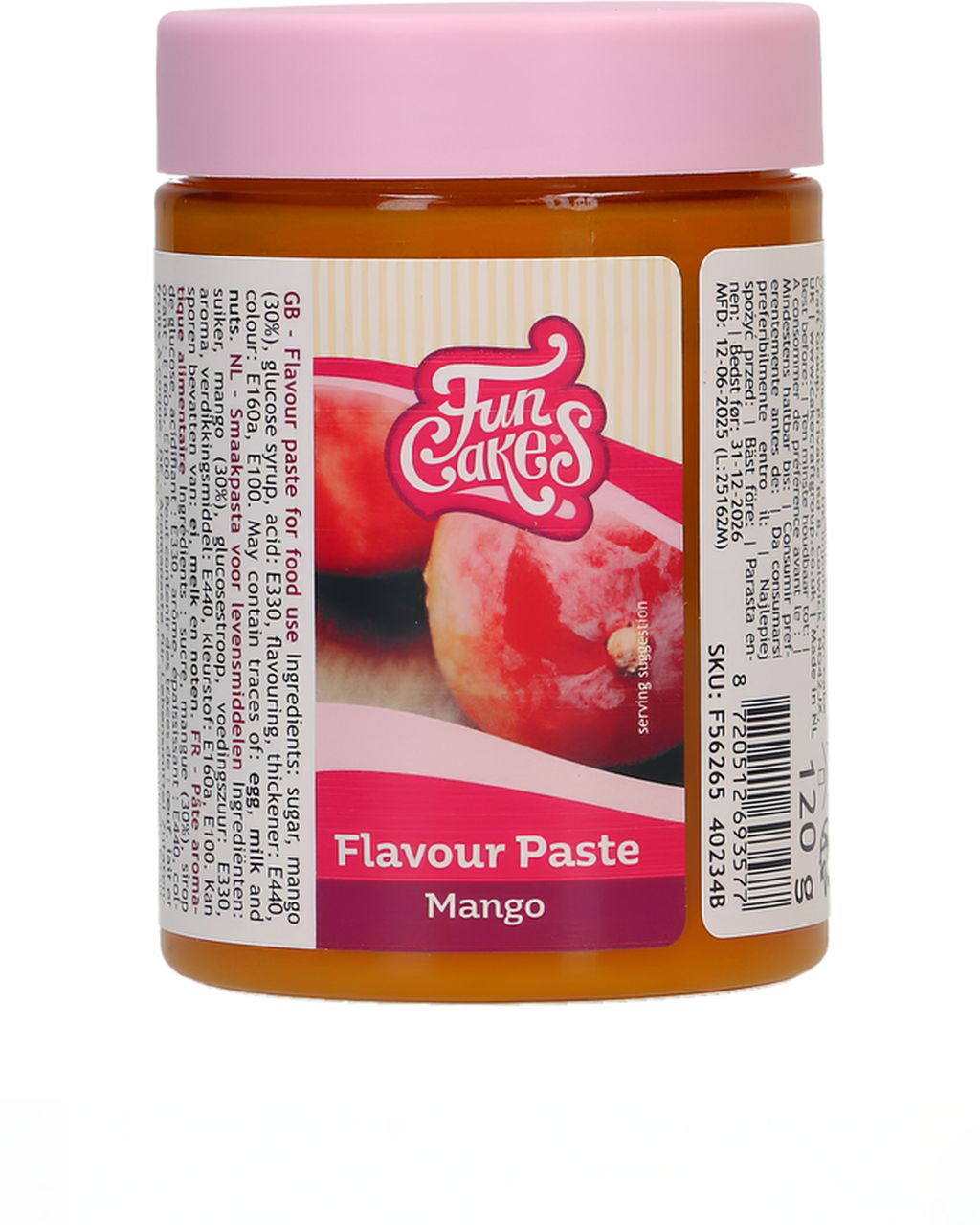
FunCakes Mango Flavouring Paste for Creams and Doughs (120 g)
Mango Frosting for Cakes and Cupcakes: Made with Flavor Paste, Purée, or Both
Updated Oct 15, 2026
There are three ways to make mango frosting for cakes and cupcakes: with flavoring paste (bold flavor and color, and the frosting holds its shape), with mango purée (fresh fruit flavor, but you're adding water, so the frosting needs firming up), or with both, which tastes best. Here's how much of each to use, how to thicken the purée so the frosting doesn't turn runny, and what to use between cake layers versus for piping.
Paste adds flavor without water; purée adds real fruit, water included. This is the main thing that decides how your frosting behaves.
Flavoring paste is a concentrate of flavoring, sugar, and coloring. You only add a few percent to the frosting, so the texture barely changes. The frosting stays firm, pipes sharply, and has a rich orange-yellow color. The flavor is bold but "bakery-style," more like a mango candy than freshly cut fruit.
Mango purée tastes like real mango: rounder, tangier, and slightly resinous. But it's around 80% water. Pour it into buttercream or whipped cream and the frosting softens, may curdle, and the color stays pale.
The combination gives you both: a little thickened purée brings real fruit flavor, the paste adds intensity and color, and the frosting still holds its shape.
For a quick decision: for cupcakes and decorating, paste is enough; for the filling between cake layers, purée works well; and for a cake that should taste like it came from a pâtisserie, use both.
Use 60 g of paste per 1 kg of frosting, which is 30 g per 500 g, and start with half. The manufacturer of FunCakes mango flavoring paste recommends exactly this ratio. Pastes vary from batch to batch, though, and everyone perceives flavor differently, so add it gradually and taste between additions.
Paste is ideal for frostings where water would cause problems:
buttercream (Swiss, Italian, or American): mix in the paste at the end, once the buttercream is smooth,
whipped mascarpone and cream frosting: stir the paste into the mascarpone before whipping,
Bavarian cream and mousses: stir the paste into the warm base before folding in the whipped cream.
The color comes by itself. 30 g of paste tints 500 g of white buttercream a warm apricot shade. If you want a deeper yellow, a drop of gel food coloring is enough. For more detailed dosing of all the flavors and combination ideas, see the article Flavoring Pastes for Frostings and Batters: How Much to Use.
One thing to watch: if you add more paste than the recommended amount, the frosting won't taste "more mango," just bitter and perfumey. If 60 g per kg still isn't enough flavor for you, don't add more paste. Add purée instead (see below).
First reduce the purée by half, then add it to the frosting at no more than 15–20% of the frosting's weight, with both at the same temperature. That way you get real mango flavor in the frosting and it still holds up.
Reduce it. Simmer 200 g of purée in a wide pot over low heat until it comes down to 100 g. This takes roughly 10–15 minutes, and you need to stir constantly because it likes to scorch on the bottom. You can weigh it right in the pot: weigh the empty pot first and subtract. The finished purée is as thick as plum butter, and a spoon leaves a trail in it for a moment.
Cool it. Let the reduced purée cool to room temperature, about 20 °C (68 °F). Cold purée from the fridge will make buttercream curdle into a grainy mess, and warm purée will melt it.
Add it. Mix 75–100 g of reduced purée into 500 g of buttercream, a spoonful at a time. The same amount of frosting can take no more than 50 g of unreduced purée, or water will start to separate out.
Adjust the flavor. The purée tones down the sweetness, which is a good thing. A drop of lemon or lime juice (½ teaspoon per 500 g) brings out the mango flavor even more.
If the frosting curdles anyway, it's usually too cold. Melt a small portion (about 2 tablespoons) in the microwave until liquid, pour it back in, and briefly whip the frosting. The method is the same as for any curdled buttercream.
Ready-made purée, either frozen or canned, is the most reliable option. Fresh mango only works if it's truly ripe.
Frozen pastry purée (such as Ponthier or Les vergers Boiron) has consistent flavor and sweetness. Some brands (Ponthier) add around 10% sugar, while others (Boiron) have no added sugar, so check the label. It's the most convenient and predictable option. We don't sell it ourselves, so look for it from pastry suppliers.
Canned Alphonso mango purée is sold in Asian and Indian grocery stores. It's very aromatic, thick, and sweeter because it's usually sweetened, so use a little less sugar in the frosting.
Fresh mango should be ripe only: it gives slightly when pressed and smells fragrant near the stem. One 400 g mango yields roughly 250–280 g of flesh. Blend it and press it through a sieve so no fibers are left in the purée to clog your piping tip.
Unripe mango or a large amount of purée won't give the frosting more flavor, just more water.
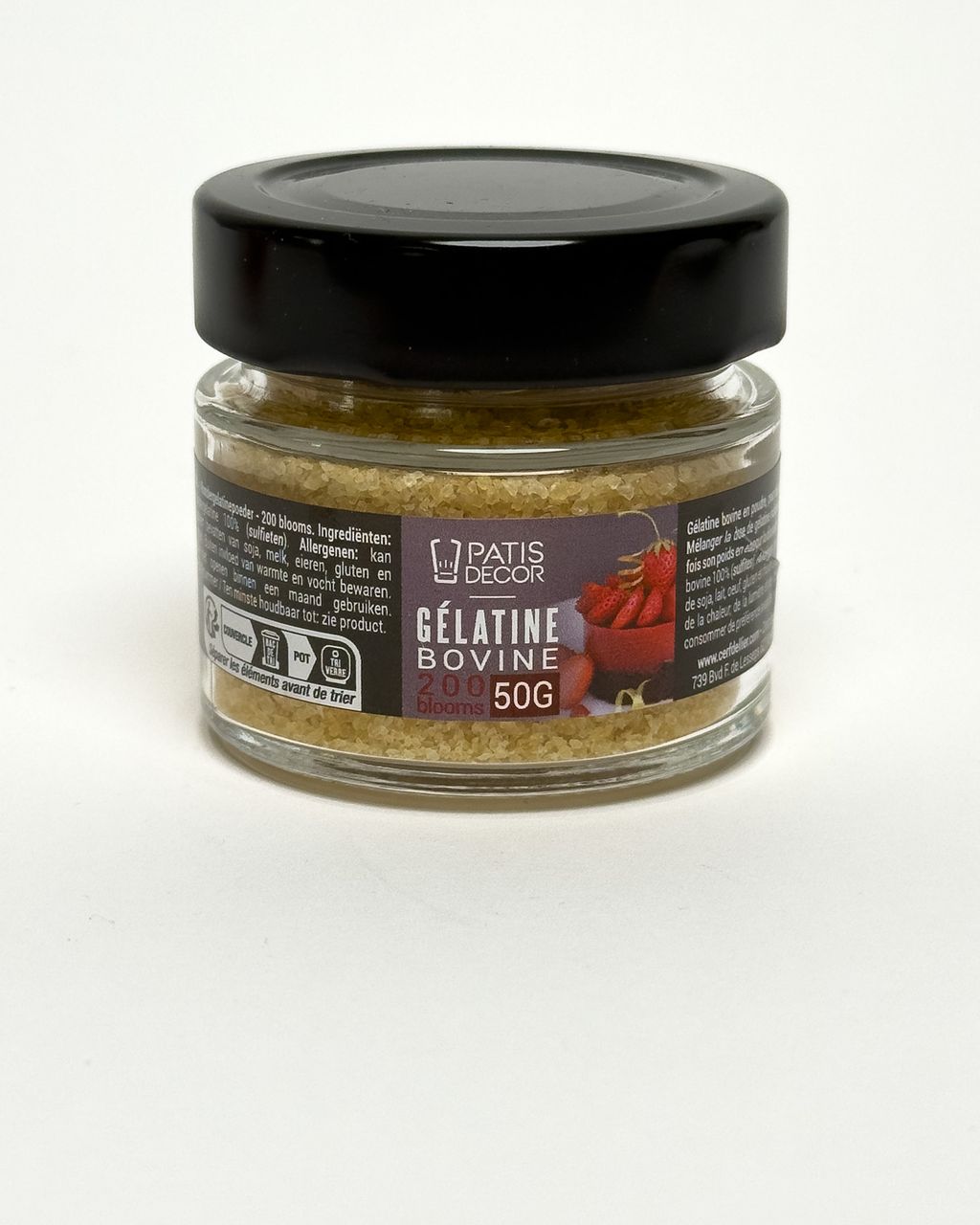
For a separate mango layer between cake tiers, use 250 g of purée, 25 g of sugar, and 4–5 g of gelatin. You get a firm, sliceable gel (an insert) that gives the cake the most true mango flavor.
Stir 4–5 g of powdered gelatin (200 bloom) into 25 ml of cold water and let it bloom for 10 minutes.
Bring the purée and sugar to a boil, then take it off the heat. There's a second reason for boiling: with fresh mango, sources disagree on whether its enzymes weaken gelatin (unlike pineapple or kiwi, where it's certain). Cooked purée doesn't carry that risk.
Stir the gelatin into the hot (not boiling) purée, pour it into a ring 2 cm (about ¾ in) smaller than the cake, and let it set for at least 4 hours. Ideally freeze it, since a frozen disc is easier to handle.
When assembling the cake, first pipe a border (a dam) from the firmer frosting and set the mango layer inside it. The frosting around it keeps the layer from showing through the side and stops juice from leaking out.
A paste-based frosting suits the frosting around the mango layer. That way the mango flavor shows up twice in the cake. If you want to stabilize the whole frosting with gelatin, you'll find the ratios for whipped cream in the article Stabilized Whipped Cream Frosting for Cakes. For a finished cake where mango meets cream cheese-style quark, see the recipe for mango quark cake.
For 500 g of buttercream, use 60 g of reduced purée and 10–15 g of mango paste. The purée gives the frosting the juicy, slightly tangy flavor of real fruit, while the paste adds an aroma you notice from the first bite, plus color. The frosting still holds its shape for piping.
Why it works: the two flavor sources cover for each other. Purée alone is mild and a bit flat in frosting, because the fat mutes the fruit flavor. Paste alone tastes one-dimensional. Together they taste like ripe mango, and you never cross the line of too much water (purée) or too much perfumey flavor (paste).
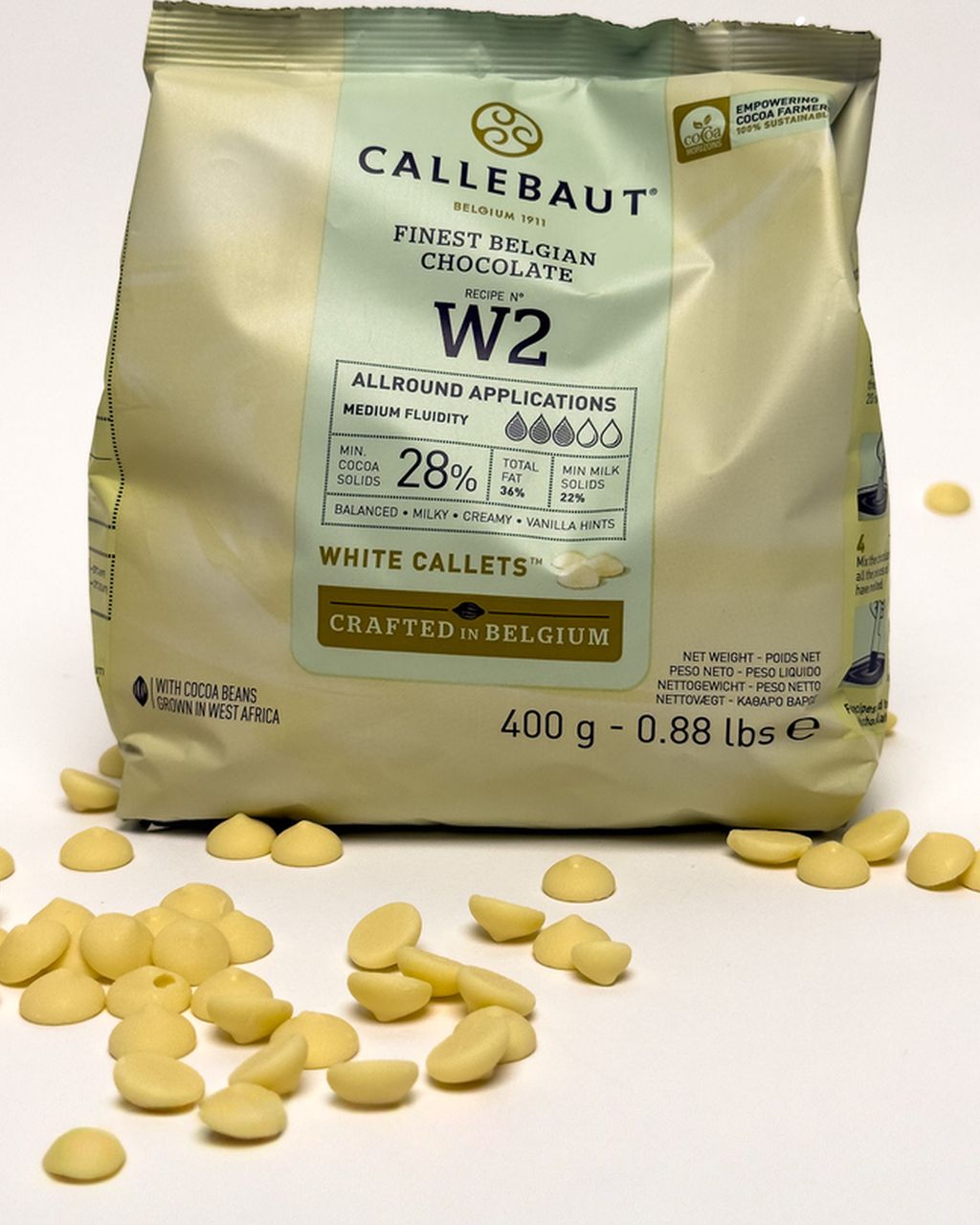
The same principle works for ganache. White chocolate and mango purée in a 2:1 ratio (200 g chocolate, 100 g purée warmed to 50 °C / 122 °F) make a thick ganache for fillings. Adding 5 g of paste brings the flavor forward. For a whipped ganache for cupcakes, use 100 g white chocolate, 50 g purée, and 200 g of 33% cream, let it rest overnight in the fridge, then whip it. The article How to Flavor White Chocolate explains why white chocolate with fruit sometimes thickens or seizes. For a firm mascarpone frosting that's easy to flavor with purée, see the article Mascarpone and White Chocolate Cake Frosting.
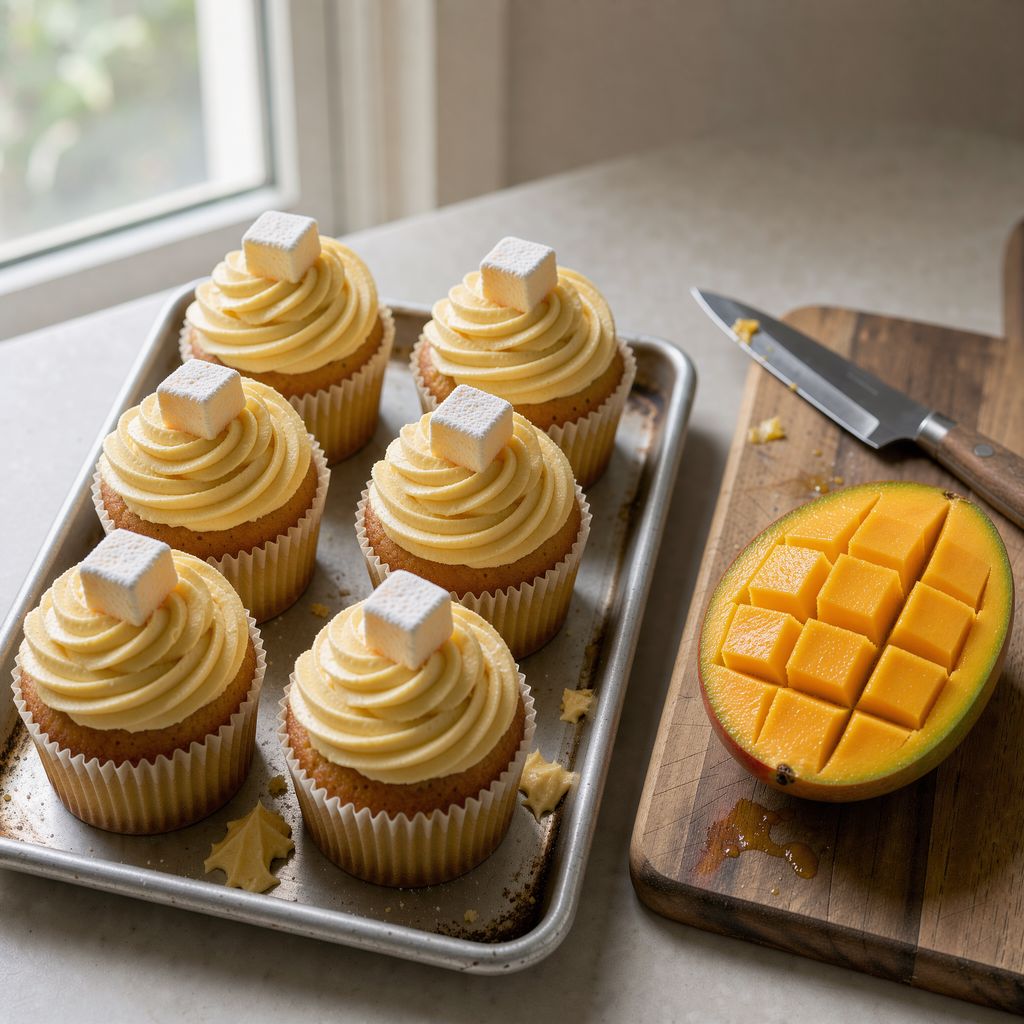
For cupcakes, use a paste-based buttercream, or a combination with no more than 60 g of reduced purée per 500 g of frosting. Cupcakes sit at room temperature, and the frosting has to hold the sharp lines of the piping tip. A frosting with a lot of purée starts to slump after an hour.
How much frosting: for 12 cupcakes with a tall swirl, you need about 500–600 g of frosting.
Consistency: if the frosting is too soft after adding the purée, put it in the fridge for 15 minutes and whip it again. If it's still soft, mix in 30–50 g of powdered sugar.
Filling inside: cut a well in the baked cupcake and spoon in a teaspoon of thick purée or mango ganache. The purée's properties don't matter here, since it doesn't have to hold anything up.
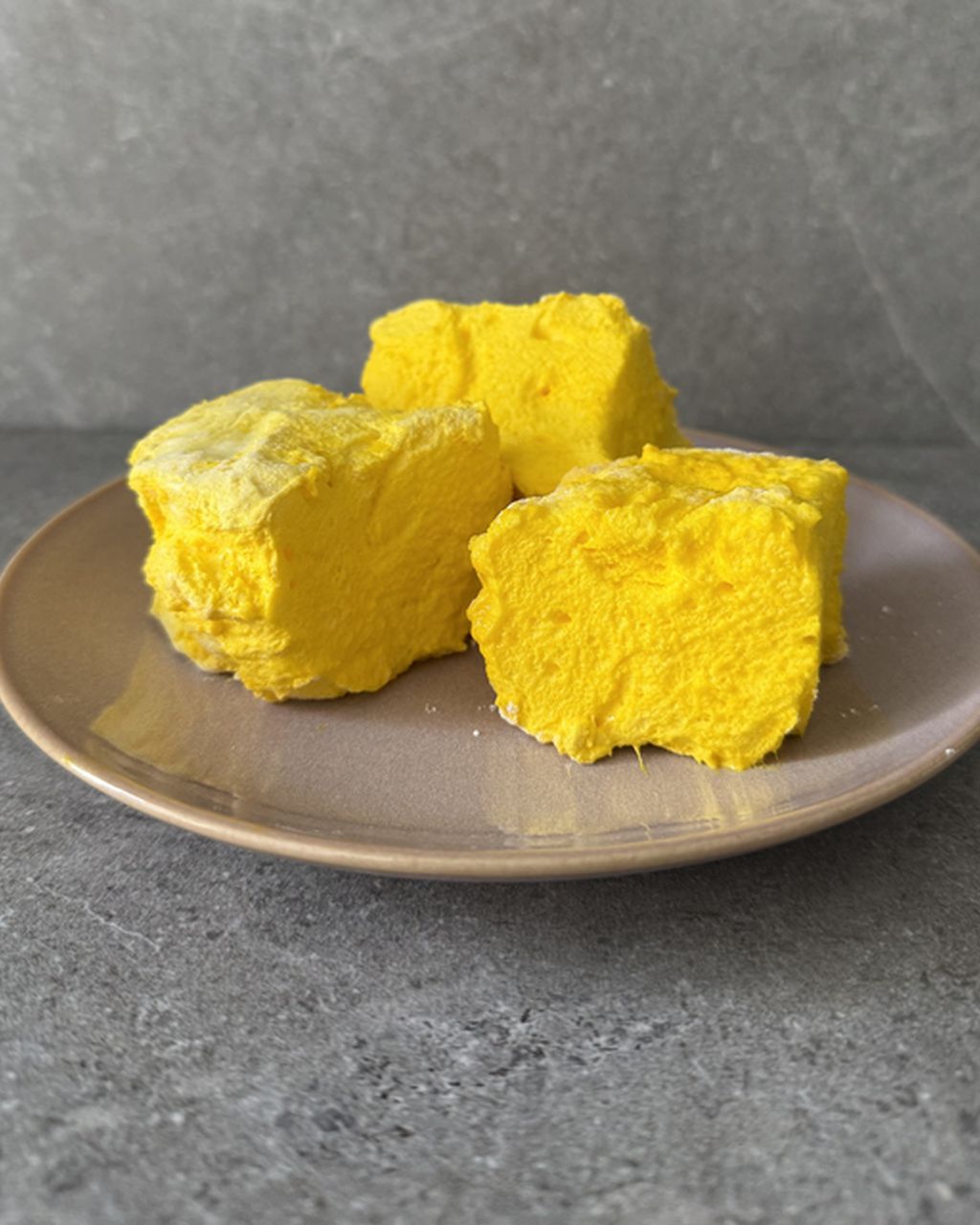
Topping: a cube of homemade mango marshmallows on top of the swirl matches the frosting and echoes the mango flavor in a different texture. You can make them yourself or buy our ready-made Yumsto mango marshmallows.
For the complete method with the cake base, frosting, and decorating, see the article Flavored Cupcakes from Paste: Cherry, Mango, and Mint.
You can use canned mango in mango frosting if you drain it well first and blend it into a purée. The syrup would add extra water and sugar to the frosting. Canned mango tastes milder than fresh mango or Alphonso purée, so you'll almost always need a little mango paste as well.
For filling and covering a cake under fondant, use a mango buttercream made only with flavoring paste, no purée. The paste doesn't add water, so the frosting stays firm and holds sharp edges. Save the true mango flavor of the purée for the inside of the cake, in a filling or a gelatin-set mango layer.
Yes, both mango buttercream and paste-based frosting keep in the freezer for up to 3 months. Thaw it overnight in the fridge, let it come up to room temperature, then re-whip it. Whipped cream and mascarpone frostings made with purée release water once thawed, so it's best not to freeze those.
The closest substitute for mango paste is reduced mango purée. It tastes more natural but gives less color, and you can add less of it to the frosting. A little passion fruit or lime zest also boosts the mango flavor nicely. Mango flavoring without the paste can be harsh, so add it a drop at a time.
One recipe worth heating the oven for, one tip, and one deal from the shop. Nothing else.