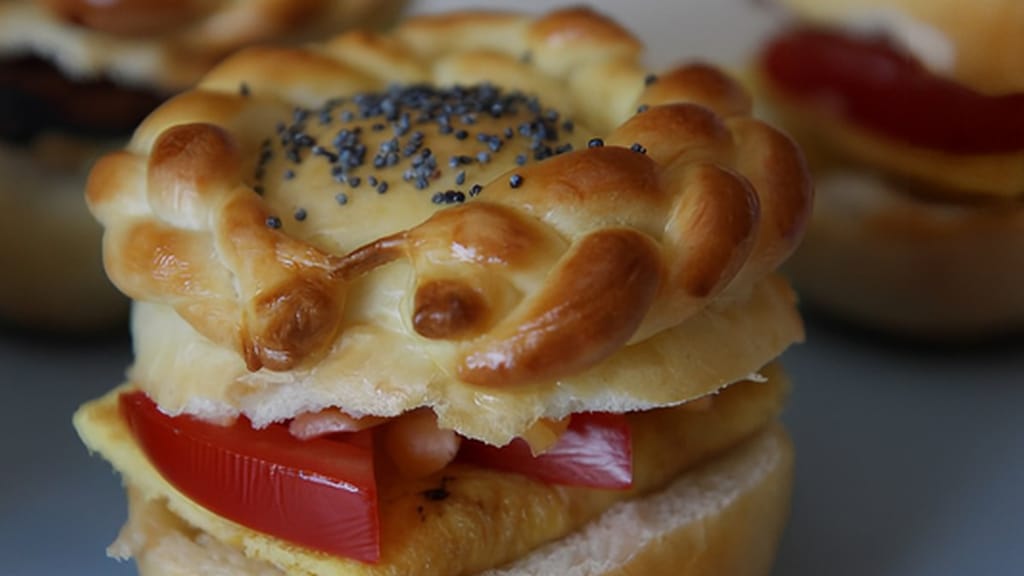
Soft homemade bread rolls, great for burgers
Homemade Rolls: Soft Rolls, Burger Buns, Rohlíky, Toast Bread and Focaccia
Updated Nov 20, 2026
You can make homemade rolls with just four ingredients: flour, water or milk, yeast and salt. Soft rolls, rohlíky (Czech crescent rolls) and focaccia all come together in about two hours, and the dough does most of its rising on its own. A few decisions separate a rubbery roll from a tender one: which flour you use, how much fat and liquid you add, how tightly you shape the dough and how long you let it rise. Here it all is in one place, from the basic method through soft rolls, lard rohlíky, burger buns and toast bread to focaccia, grissini and rolls with no yeast at all.
Yeast rolls always follow six steps: mix, knead, let rise, divide and shape, let rise again, bake. Only the proportions and the shape change.
Mix the dough. Combine the flour with the salt and yeast and add lukewarm liquid, about 30–40°C (86–104°F). It should feel pleasantly warm to a fingertip; hot water kills yeast.
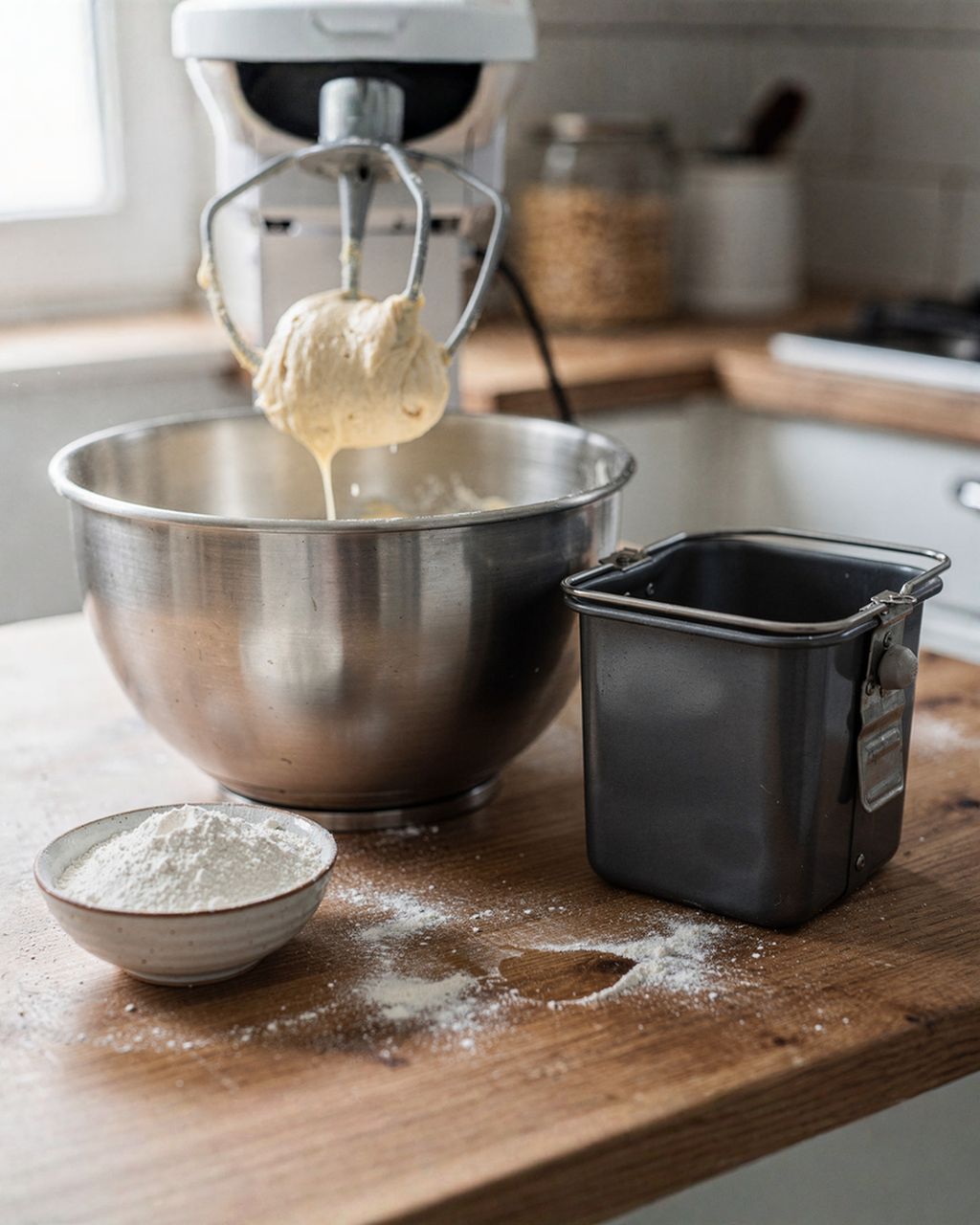
Knead until the dough is smooth and elastic. By hand this takes about 10 minutes, a little less in a stand mixer with a dough hook. Finished dough pulls away from the bowl, and a small piece stretched between your fingers forms a thin membrane that doesn't tear right away. That's the gluten, which will later hold in the gas from the yeast.
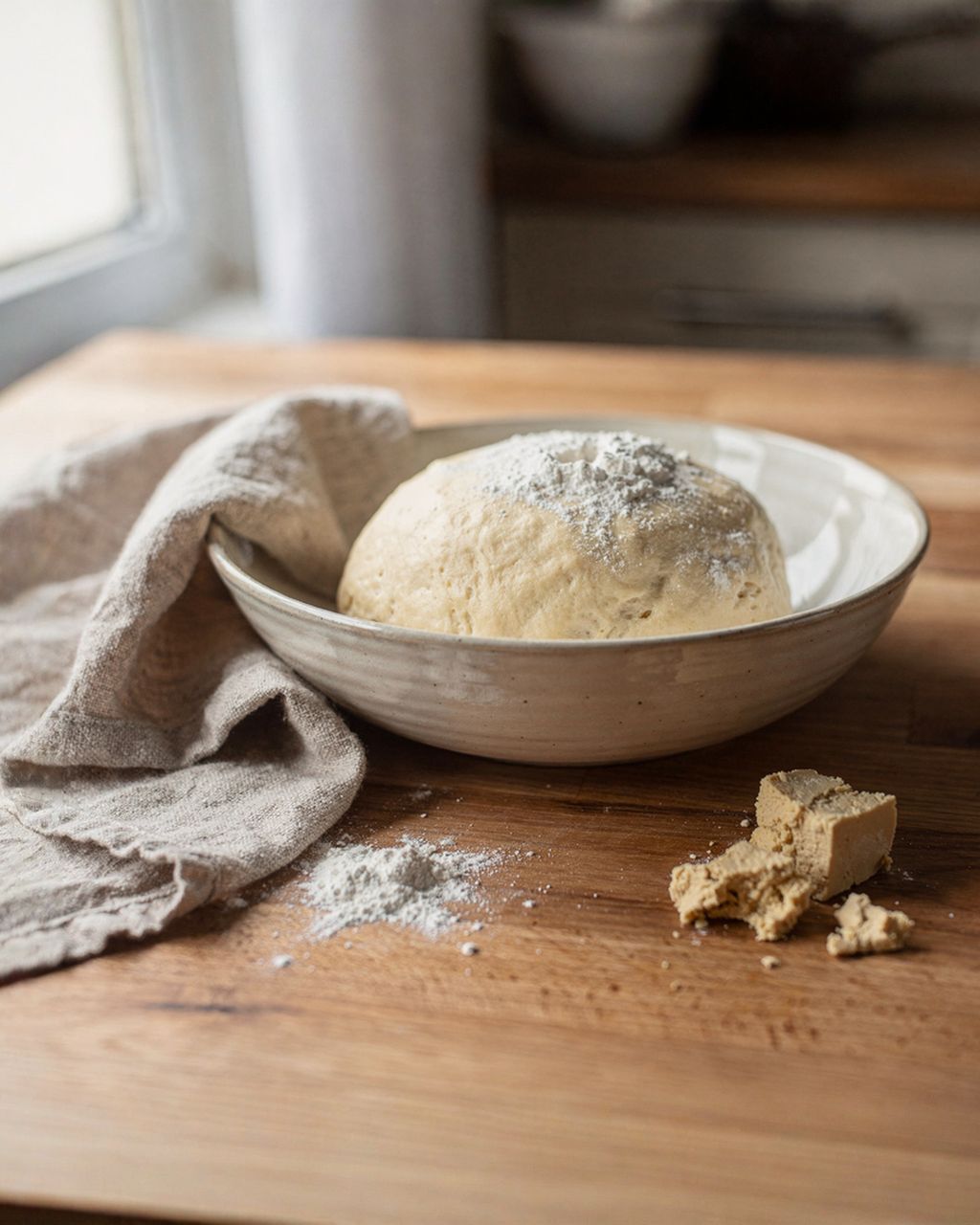
Let the dough rise, covered and in a warm spot, until it has roughly doubled in size. This usually takes one to two hours, longer in a cool kitchen.
Divide and shape. Weigh the pieces on a scale for the most accurate result, so they bake in the same time. Pull each piece into a tight ball: a taut surface holds its shape and rises up in the oven, not out to the sides.
Let them rise again on a baking sheet, spaced apart, under a kitchen towel. They're ready when a finger poke springs back slowly. If it bounces back right away, wait longer; if it stays dented, bake immediately.
Bake until golden in a preheated oven. Finished rolls are deep golden and sound hollow when you tap the bottom.
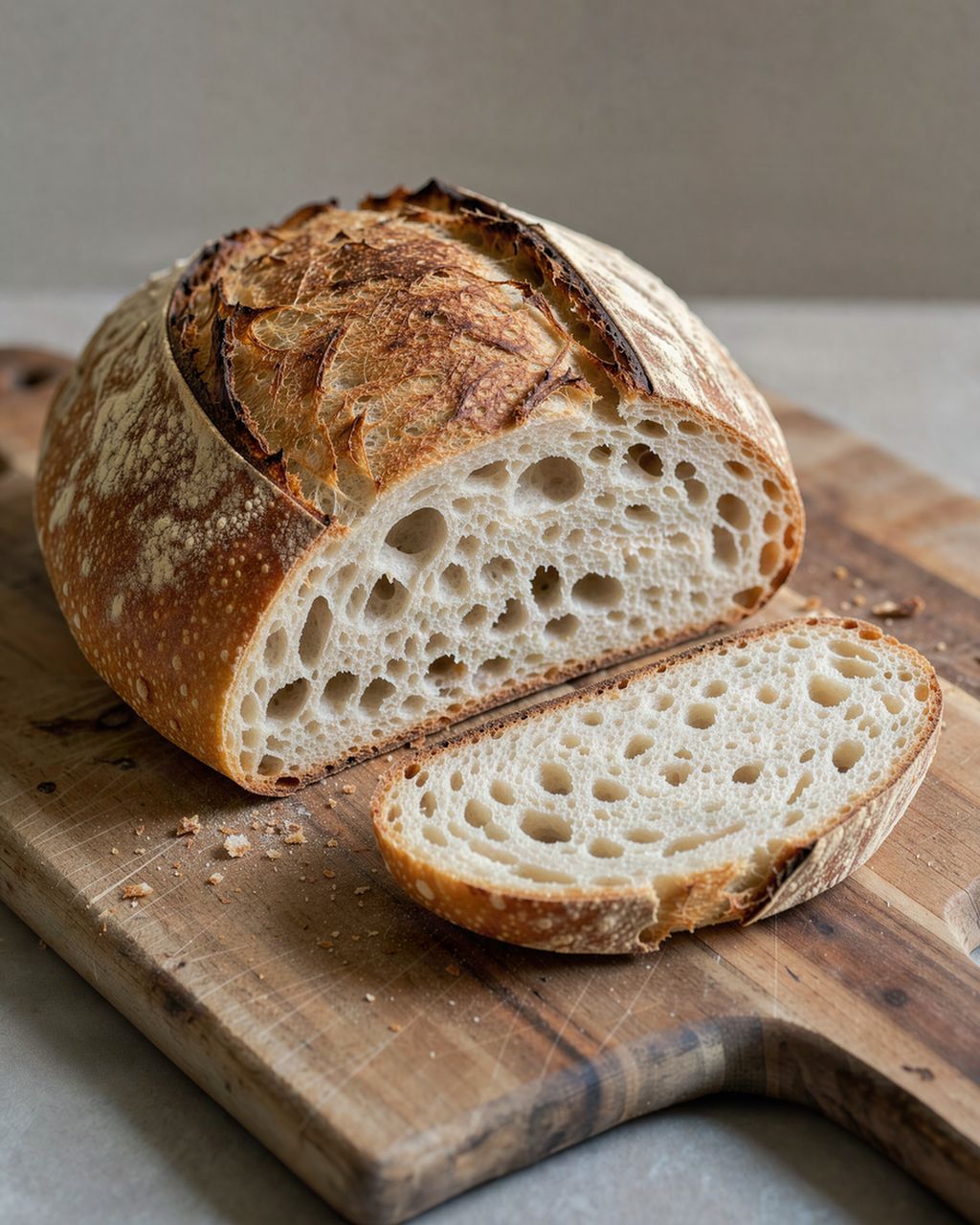
The method is the same for soft rolls, rohlíky and buns. Bread works on the same principle, only with a longer rise and a higher temperature; you'll find it in our guide to how to bake bread at home.
Seasonal baking plans, tested recipes and kitchen tricks that save you time. Unsubscribe in one click.
For everyday rolls, all-purpose (plain) wheat flour (Czech hladká) is enough; semi-coarse flour (Czech polohrubá, slightly grittier than all-purpose) makes a firmer dough that sticks less and holds its shape, and bread flour (Czech chlebová) adds a darker color and a stronger flavor.
All-purpose flour is the most finely milled, absorbs water quickly and gives a soft, delicate dough. It's the base for soft rolls, burger buns, toast bread, focaccia and grissini.
Semi-coarse flour has coarser grains that take up water more slowly. The dough sticks less as you knead, rolls out well and doesn't spread in the oven. That's why it's the traditional choice for rohlíky, vánočka (Czech braided Christmas bread) and braided rolls (pletýnky).
Wheat bread flour is darker, contains more of the grain's outer layers and tastes fuller, slightly nutty. Rolls made entirely with it will be denser; it works best replacing a third to a half of the all-purpose flour in caraway rolls or rolls with seeds.
Adding too much flour is the most common reason homemade rolls turn out hard and dry. Slightly sticky dough that pulls away from the sides of the bowl on its own after kneading is just right.
You can bake both soft rolls and rohlíky with semi-coarse flour with no trouble, but the dough needs a little while to absorb the water. If it seems loose after a few minutes of kneading, don't reach for more flour right away: knead another two or three minutes and only then decide. A tried-and-true trick is to weigh out a small reserve of flour and add it by the spoonful, only if you really need it. That's exactly how the lard rohlíky recipe below works, which combines all-purpose and semi-coarse flour.
Rolls made purely with semi-coarse flour have a firmer, slightly coarser crumb and a crispier crust. If you like a soft, fluffy roll, stick with all-purpose flour or mix the two half and half.
You can make them with either and get the same result; only the amount and the way you add the yeast differ. One cube of fresh yeast (42 g) equals roughly 14 g of dried yeast, or two 7 g packets, so the usual ratio is 3 : 1.
Dried yeast should be used before the date on the packet. You don't need to dissolve it: just add it straight to the flour and mix it in dry. It's the easiest route for anyone who doesn't bake every week. One packet is normally enough for 500 g of flour.
Fresh pressed yeast is crumbled into lukewarm liquid, often with a pinch of sugar, and left for a few minutes until it starts to work. Use it before the date on the packet; rolls made with it have a stronger, bakery-style aroma. Traditionally one cube is used per kilogram of flour.
And one rule for both kinds: don't put salt and yeast in the same spot or leave them sitting together, because salt slows yeast down. Mix the salt into the flour before you add the yeast and liquid.
Rolls made with dried yeast and semi-coarse flour are baked just like those with all-purpose flour, except the dough needs slightly longer kneading and a few more spoonfuls of liquid, because semi-coarse flour absorbs more slowly. Mix the dried yeast with the flour dry, add the salt separately and pour in the liquid gradually. The rolls will be firmer, with a crispier crust and less "fluffy." Shaping, the second rise and baking stay the same as for the soft rolls below.
Yeast rolls with no rising don't exist: the rise is exactly when the yeast produces the gas that puffs the roll up. But you can shorten it. Dried yeast mixed straight into the flour starts working immediately, lukewarm liquid and a warm spot speed up the rise, and small pieces finish rising faster than a big loaf. If you truly don't have time to wait, reach for rolls without yeast, which are raised with baking powder; they're covered in a chapter below.
You can bake soft homemade rolls in under two hours from all-purpose flour, lukewarm water, dried yeast and a small amount of butter and milk. Our recipe for soft homemade rolls, great for burgers too takes about 100 minutes and makes about 10 standard-size rolls or 20 smaller ones.
Why it works: butter and milk coat the gluten and soften the crumb, and sugar feeds the yeast and helps the golden color. An egg beaten with a little water gives the rolls a shine and also acts as glue for the poppy and sesame seeds. Turn each ball in your palm into a taut shape, then press it down only lightly so the roll is round but not tall like a bun.
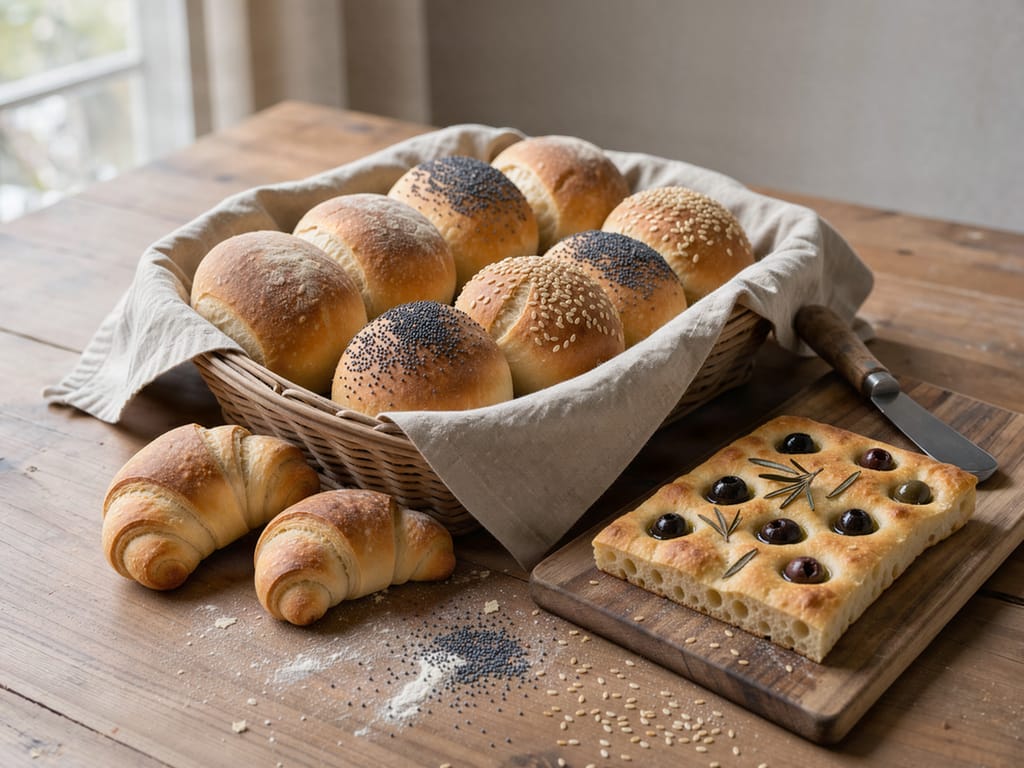
Soft homemade bread rolls, great for burgers
Soft homemade rolls made with all-purpose flour and dried yeast, topped with poppy and sesame seeds
Rolls go stale mainly because the starch in the crumb gradually crystallizes after baking and pushes water out. You can slow that down with three things:
Fat and milk in the dough. Rolls with butter and milk stay tender longer than rolls made with just water and flour.
Don't overbake them. As soon as they're golden and the bottom sounds hollow, take them out. Every extra minute dries out the crumb.
Store them properly. Let them cool completely on a rack (warm rolls would steam in a bag), then put them in a bag or bread box. Not in the fridge: studies on bread staling show that starch crystallizes fastest at temperatures around 4°C (39°F), so rolls in the fridge go stale faster than on the counter. Whatever you won't eat by the next day, freeze on the day you bake it, since freezing almost stops staling.
On day two, revive the rolls with a few minutes in a hot oven. How to get frozen rolls crisp again is in our article on how to thaw bread and rolls.
Burger buns are softer and more tender than rolls thanks to tangzhong: part of the flour cooked with milk into a paste that holds more water in the dough. Our recipe for ultra-soft homemade burger buns is built entirely around it; it takes roughly 2½ hours and makes 4 large sesame buns.
Why the butter goes in last: fat coats the gluten and slows its development. If you add it to dough that's already developed, the gluten network is already standing and the butter just softens it. That's why the buns hold their shape and are still feather-light.
What to watch for: when shaping, gather the edges of the dough into the center like a pouch, flip it over and drag it across the counter with the edges of your palms so the bottom pulls taut. A tight surface is what turns a bun into a regular dome.
Slice the cooled buns and briefly toast both halves until golden; the toasted surface soaks up less juice from the meat and sauce. What to put in them is covered in our article on the homemade burger.
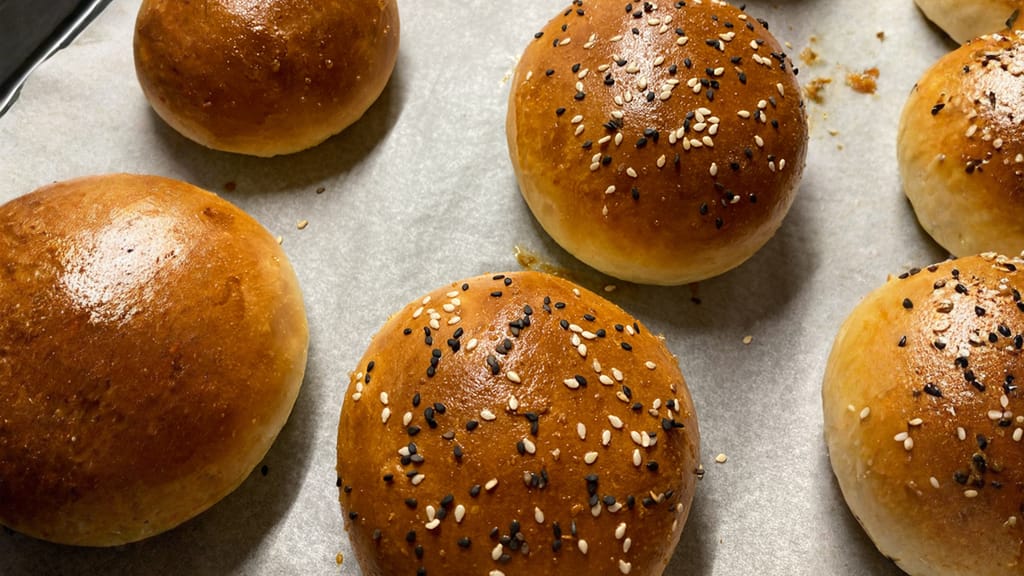
Super soft homemade burger buns
Ultra-soft homemade burger buns made with tangzhong and sesame seeds
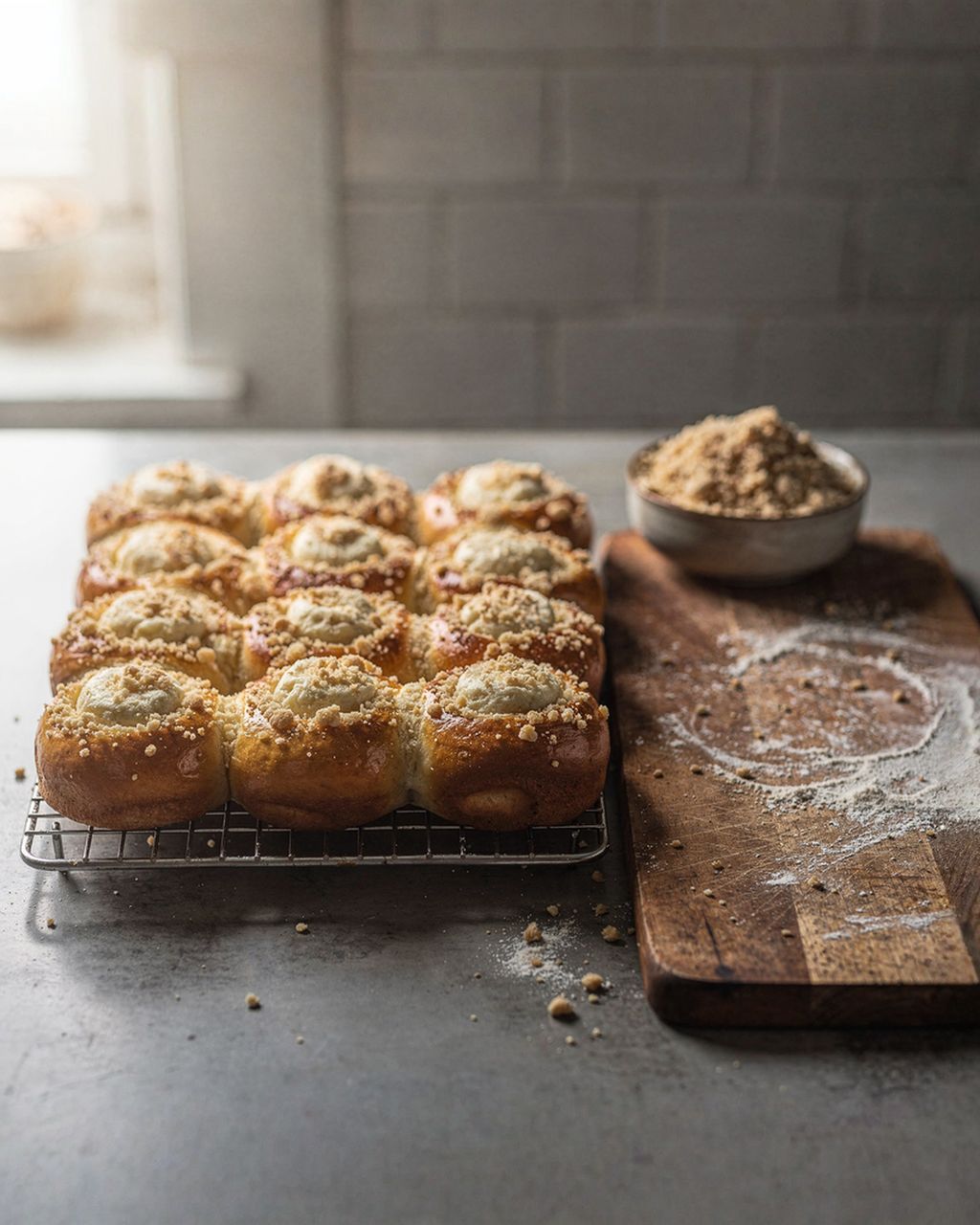
Lard gives rolls a fine, slightly tender crumb and the typical flavor of old-style bakeries; for homemade lard rohlíky you need only 80 g for just under a kilogram of flour. The recipe for lard rohlíky uses fresh yeast and a combination of all-purpose and semi-coarse flour; it makes 24 rohlíky and takes about 2¼ hours in total.
What to watch for: rohlíky are shaped from triangles rolled up from the wide end toward the tip, and the tip has to end up underneath on the baking sheet. That's not cosmetic: if it stays on top, it unrolls in the oven and the rohlík flattens out. Start rolling loosely and pull gently toward the end so the rohlík gets even spirals.
The same dough also works for homemade rolls with lard: instead of triangles, shape it into balls as for the rolls above. Lard rolls aren't vegetarian, though. If you want a similar tenderness without lard, try the same amount of butter instead; the flavor will be milder and less "bakery."
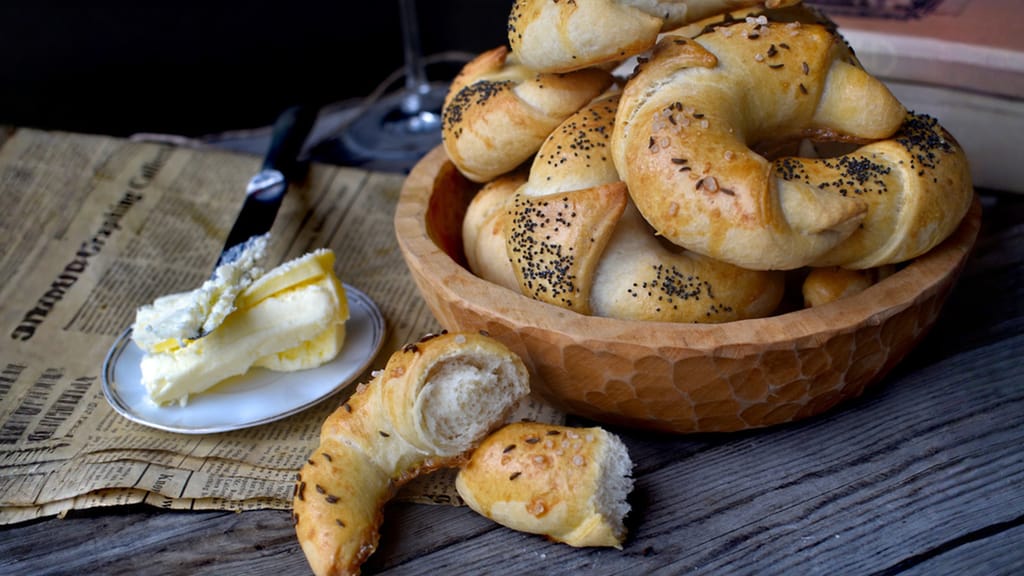
Lard rolls
Homemade lard rohlíky made with all-purpose and semi-coarse flour
Homemade toast bread is a yeast bread enriched with milk, butter and sugar, and the easiest way to bake it is in a bread machine, which kneads, proves and bakes it for you. The recipe for great homemade toast bread in a bread machine takes a little over 3 hours, but your work is five minutes.
Why so much milk and sugar: milk and butter make a fine, tight crumb without big holes that slices thinly. Sugar helps the slices turn golden quickly and evenly in the toaster.
What to watch for: choose the light crust setting; toast bread should have a thin, soft crust. Without a bread machine, knead the dough in a stand mixer and bake it in a loaf pan. Wait to slice the cooled loaf until the next day, when the crumb has settled and won't squash. What to make with it in the morning is in our article on savory breakfasts.
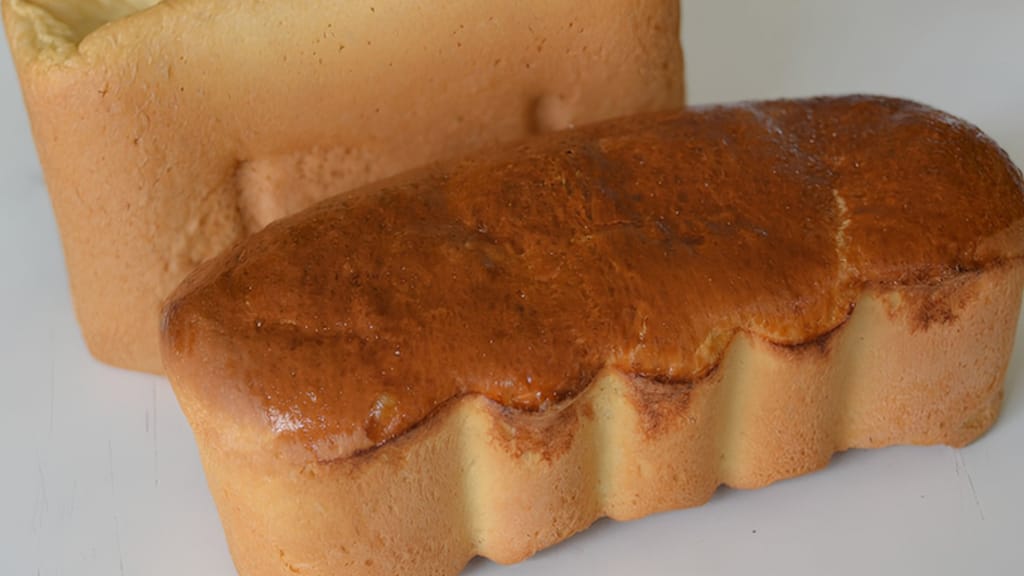
Amazing homemade toast bread
Homemade toast bread from a bread machine, made with milk and butter
Focaccia and grissini are both made from a simple dough of flour, water, yeast, salt and olive oil, with no milk, butter or eggs; both are vegan. They differ mainly in the amount of water: focaccia dough is so loose it almost pours, while grissini dough is firm so it can be stretched into thin ropes.
Homemade focaccia is a flat, tender bread with a lot of water in the dough: 800 ml of water for 1 kg of all-purpose flour, which is 80%. That's why it has big irregular holes and a moist crumb. It's topped with black olives, fresh oregano and coarse sea salt, and takes about 1¾ hours in total.
What to watch for: the dough is so loose it can't be kneaded in the classic way, and that's as it should be; mixing it with a wooden spoon is enough. On the baking sheet, press it out with fingers dipped in oil, otherwise it will stick to you.
Why the dimples: fingers pressed into the dough make little wells that hold the oil and salt, and they also stop the focaccia from puffing up like a pillow in the oven.
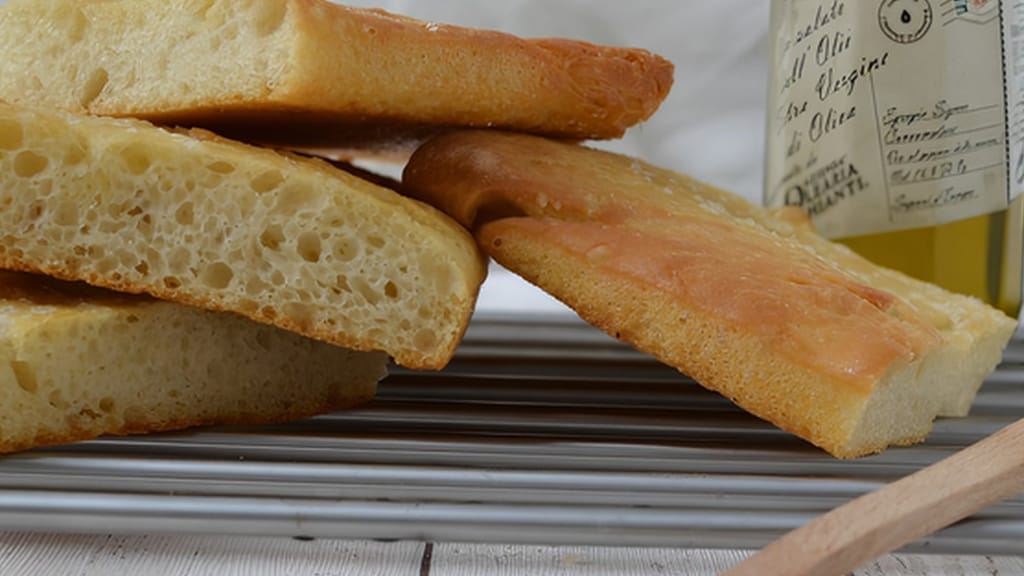
Homemade focaccia
Homemade focaccia with olives and oregano, vegan Italian bread
Grissini, homemade Italian breadsticks, are made from all-purpose flour, water, dried yeast, salt and olive oil and take just under 3 hours in total, of which 1.5–2 hours is rising.
What to watch for: the thinner the sticks, the crisper they get; thick ones stay soft inside like a rohlík. Have the oven properly hot from the start, since thin dough bakes quickly. For a crisp bottom on breadsticks, rolls and focaccia, a perforated silicone baking mat helps: the tiny holes let hot air reach the base of the bread.
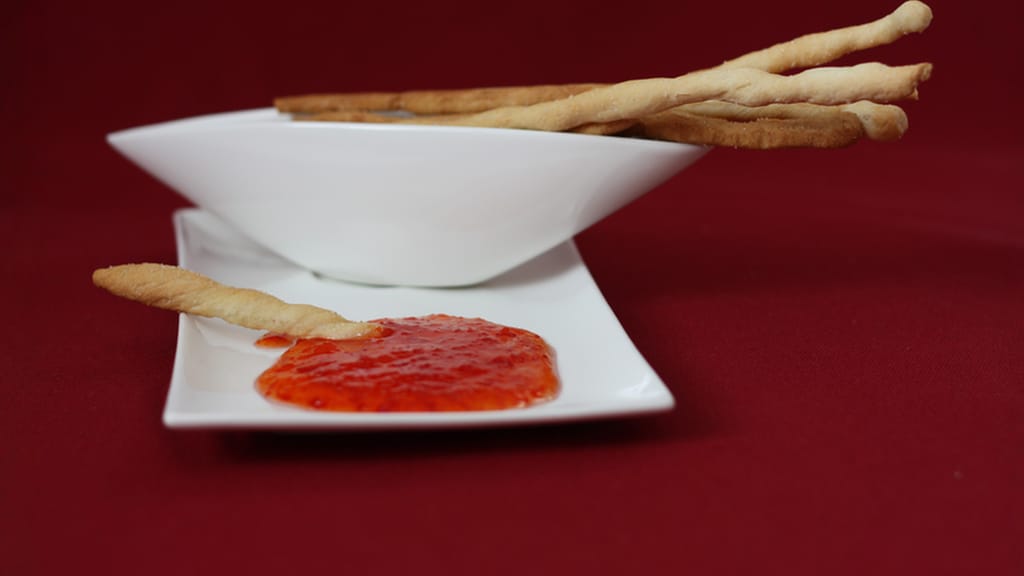
Grissini – homemade italian breadsticks
Grissini, homemade Italian breadsticks with olive oil
Homemade rolls without yeast are raised with baking powder, so they don't need to rise, and the quickest ones are on your table in under an hour. The crumb is more tender and crumbly than soft and elastic. It's a different kind of bread, not a worse substitute. They're handy when you decide at five in the afternoon that you want something freshly baked for dinner.
Cheddar chili biscuits are the quickest homemade rolls we have: about 48 minutes from start to finish. The dough is made from all-purpose flour, butter, cheddar, an egg, buttermilk and baking powder, seasoned with pepper and ground chili.
Why you don't knead: dough without yeast doesn't need gluten, quite the opposite. The more you mix it, the tougher the biscuits get. Just rub the butter into the flour with your fingertips until crumbly and stir in the liquid with a wooden spoon until combined; sticky dough is right. Serve them warm, when the cheddar smells best.
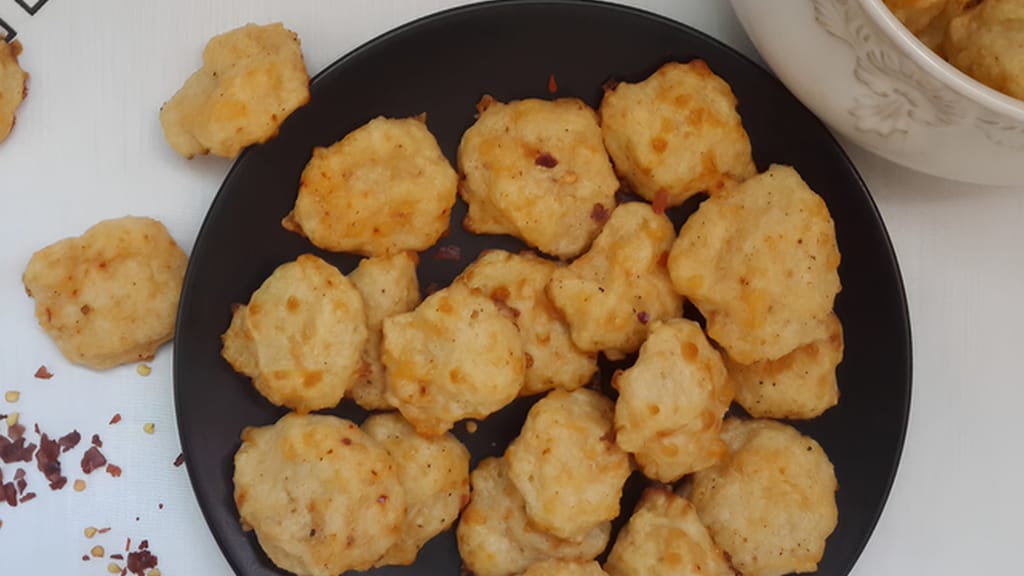
Cheddar and chilli bites
Cheddar chili biscuits, quick homemade rolls without yeast
Yeast-free pan-cooked naan has no yeast, but it isn't without waiting: the dough of all-purpose flour, baking powder, full-fat yogurt and olive oil rests for 2–3 hours. It's cooked in a cast-iron pan and brushed with garlic butter with cilantro and sesame seeds.
Why water on the underside: the flatbread is brushed with water and laid wet side down. It sticks to the hot cast iron right away, and the bread starts puffing up with bubbles instead of sliding around. The rest relaxes the gluten, so the dough rolls out thin and doesn't shrink back. Naan goes well with the curry and dal from our article on Indian dishes at home.
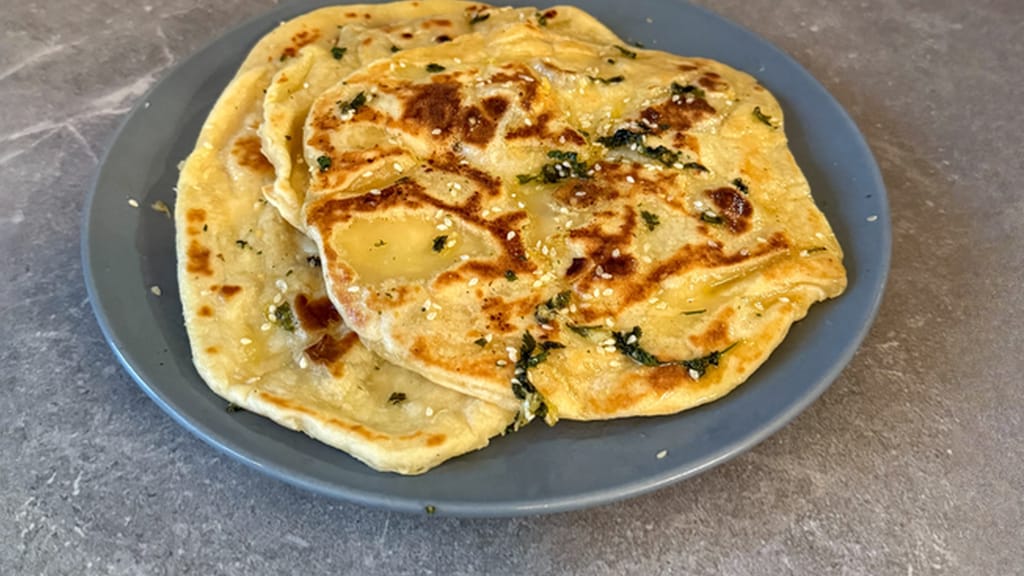
Skillet naan bread (no yeast)
Yeast-free pan-cooked naan with garlic butter
You can bake rolls with spelt flour just as you would with wheat flour, but they need shorter kneading, slightly less water and closer attention during the rise. Spelt gluten is finer and more delicate: if you overknead it, the dough turns slack instead of springy.
Start by replacing part of the flour. In a roll recipe, swap a third to a half of the all-purpose flour for spelt. The rolls will taste stronger and stay tender. Pure spelt rolls work too, just expect a flatter shape.
Knead for less time. It's enough for the dough to be smooth. Don't expect the thin membrane you get with wheat.
Add the liquid gradually. Spelt flour usually absorbs less water than wheat flour, so hold some of the liquid back.
Don't let the dough overproof. Spelt rises faster, and overproofed dough collapses in the oven. Check it earlier than the recipe says.
Rolls made with whole grain spelt flour will be denser and darker than those with all-purpose flour, and the dough needs more liquid and a 20–30 minute rest before kneading. The reason is the bran: it absorbs a lot of water and also cuts through the gluten network, so you have to give it time to take up the water. A half-and-half mix with all-purpose wheat flour or all-purpose spelt flour gives the most balanced result: the flavor of whole grain flour and still a roll that holds its shape.
Homemade spelt rolls without yeast are raised with baking powder together with buttermilk or yogurt, and the dough is mixed only briefly, never kneaded. Spelt flour suits this kind of dough well, because its delicate gluten doesn't get in the way here; in yeast-free baking you don't need it anyway. We don't have a dedicated yeast-free spelt recipe yet, and we're working on one.
Most failed homemade rolls come down to one of five causes: hot liquid, too much flour, too little kneading, a poor rise, an oven that wasn't preheated.
Hot liquid. Water or milk above roughly 50°C (122°F) damages yeast, and the dough then rises sluggishly or not at all. Lukewarm, around 30–40°C (86–104°F), is safe.
Too much flour. Slightly sticky dough is fine. Every extra spoonful of flour means drier, tougher rolls.
Too little kneading. Underkneaded dough can't hold gas, so the rolls come out low and dense. Do the membrane test between your fingers.
A poor rise. Underproofed rolls crack in the oven and are heavy; overproofed ones collapse and taste yeasty. Go by the finger poke, not the clock.
A cold oven. Rolls need a hot oven to spring up in the first minutes. Preheat for at least 15–20 minutes.
Yes. Roll dough can rise overnight in the fridge, and the rolls will even have a fuller flavor. The cold slows the rise, so the dough grows slowly all night. In the morning, let it warm up to room temperature for about an hour, then shape, leave to rise (prove) and bake. For an overnight rise you can use a little less yeast so the dough doesn't overproof by morning.
You make them exactly the same way, you just knead the dough by hand for about 10 minutes. First bring the ingredients together in a bowl with a wooden spoon, then turn the dough out onto a lightly floured surface and knead it by pushing it away with the heel of your hand, folding it over and repeating. It's ready when it's smooth, elastic and stretches between your fingers into a thin membrane. Go easy on the flour on the counter so the rolls don't turn out dry.
Put it in a little lukewarm water with a pinch of sugar and wait 5–10 minutes: if it starts to foam and smell yeasty, it's working. This applies to both dried and fresh yeast. With dried yeast, check the date on the packet and use an opened packet soon. Fresh yeast should be pale beige, moist and crumbly; if it's dark, dry or smells off, throw it out.
Use an enriched dough with more milk, butter, sugar and often an egg. Fat and sugar slow the yeast, so this dough rises more slowly and needs more time. Serve the finished rolls or slices of toast bread with butter, honey or jam.
Brush with milk, cream or a mix of water and olive oil instead. Milk gives a gentle shine and brown color, while water with oil gives a more matte golden crust, like on grissini. Seeds and toppings stick with all three; just brush right before baking.
Freeze them on the day you bake them, if you can. Let them cool completely, put them in a bag and press out the air. Before eating, let them thaw on the counter and warm them briefly in a hot oven so the crust crisps up again.
One recipe worth heating the oven for, one tip, and one deal from the shop. Nothing else.