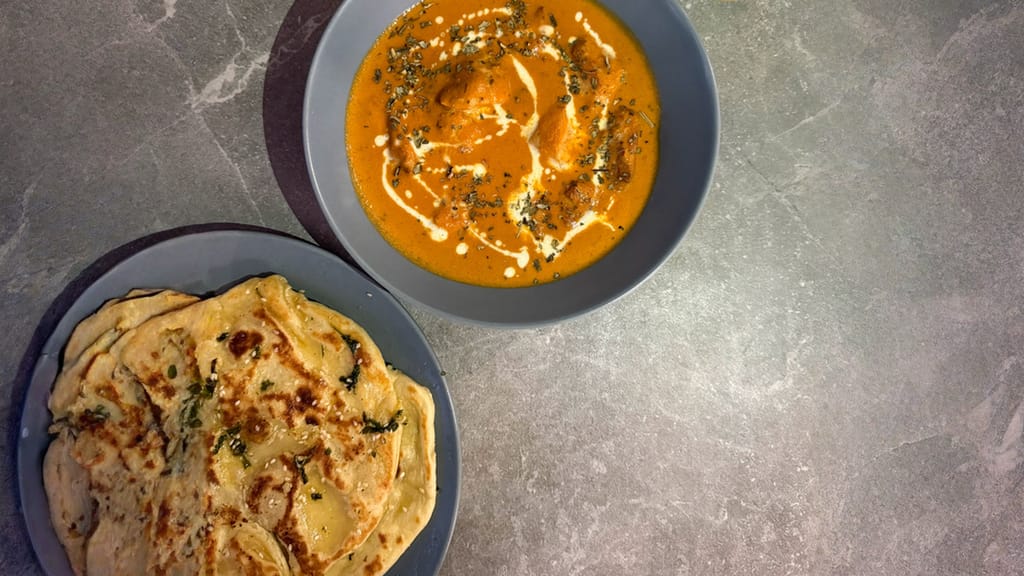
Restaurant-style butter chicken (murgh makhani)
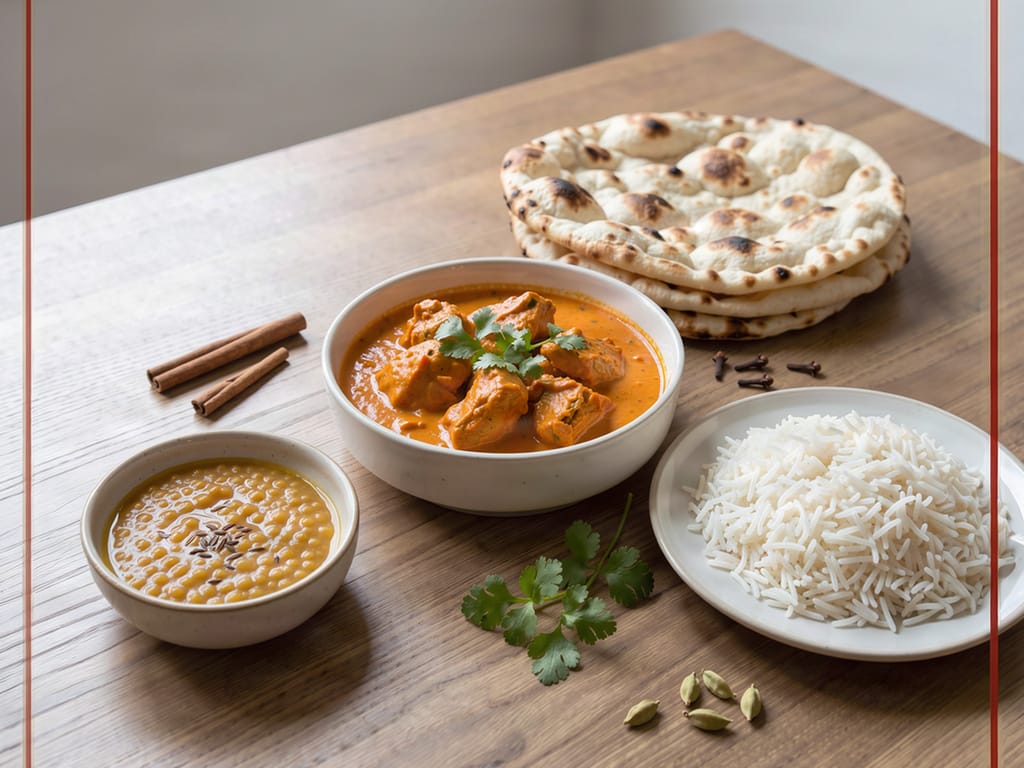
Indian Food at Home: Curry, Dal, Butter Chicken and Naan
Updated Nov 20, 2026
You can cook Indian food at home without a tandoor or a specialty shop: all you need is a pot, a skillet, a few spices and one method that repeats in almost every recipe. Bloom the spices in fat, add onion, garlic and ginger, then the main ingredient, pour in liquid and let it simmer. That's how chicken curry, butter chicken, lentil dal and vegetable curry come together. Here you'll find the names of the best-known Indian dishes, how to choose them by heat level, curry recipes with cream, with coconut milk and without meat, plus skillet naan, rice and masala chai.
Typical Indian dishes fall into a few groups: braised sauces with meat, legumes or vegetables (what we collectively call "curry"), lentil stews called dal, rice, flatbreads and yogurt sides. Most of what's on a family's table is made up of exactly these: one or two curries, dal, rice or bread, and something cooling made with yogurt.
Curry – a sauce in which meat, chickpeas, potatoes or vegetables are slowly simmered. The base is onion, garlic, ginger, tomatoes and spices.
Dal – legumes (lentils, peas, mung beans) cooked into a thick, spiced stew. In India it's an everyday dish, not a special-occasion one.
Rice – in the north mostly long-grain basmati, in the south various local varieties.
Flatbreads – the best known is naan, a leavened bread traditionally baked in a clay tandoor oven.
Yogurt – as a side, a marinade and a thickener for sauces.
India is huge, and "Indian cuisine" is really many regional cuisines. To simplify a lot: the north cooks with butter, ghee (clarified butter), cream and wheat flatbreads, the south with rice, coconut and coconut milk. Most of the dishes you know from restaurants in the Czech Republic come from the north.
One more thing about the word "curry". You'll hardly find it in Indian dish names; you'll see masala (a spice blend), makhani (with butter), korma or vindaloo instead. The British spread the word curry as a catch-all name for saucy dishes, and according to culinary sources the ready-made curry powder in a packet is also a British invention: an attempt to capture the taste of India in a single blend. In Indian kitchens, spices are mixed to suit each dish.
Seasonal baking plans, tested recipes and kitchen tricks that save you time. Unsubscribe in one click.
The best-known Indian dishes are butter chicken (murgh makhani), chicken tikka masala, chana masala, palak paneer, korma, vindaloo, biryani, samosa, dal and naan. Here's what hides behind each name and how to cook it at home.
Butter chicken (murgh makhani) – chicken in a velvety tomato sauce with butter and cream, one of the mildest Indian dishes. The meat is marinated in spices, seared over high heat and then finished in a blended sauce of tomatoes, onion and nuts. You'll find the full method below under chicken curries.
Chicken tikka masala – pieces of chicken marinated in yogurt and spices, browned until golden and finished in a spiced tomato-cream sauce. At home, leave the meat in the marinade in the fridge for at least an hour, sear it in a very hot pan, and simmer the sauce of onion, garlic, ginger and tomatoes separately before returning the meat to it. Compared with butter chicken, it's bolder, more heavily spiced and more onion-based, with less butter.
Chana masala – chickpeas simmered in a spicy onion and tomato sauce. Cook the onion slowly until golden, add garlic, ginger, ground cumin and coriander, then the tomatoes and cooked chickpeas, and let it bubble for 15–20 minutes. Finish with garam masala and a squeeze of lemon.
Palak paneer – a thick spinach sauce with cubes of paneer, a fresh cheese. Briefly blanch and blend the spinach, bloom cumin in fat and cook the onion, garlic and ginger, stir in the spinach purée and finally add seared paneer, which you only need to heat through.
Korma – a mild, creamy sauce thickened with nuts, yogurt or cream, most often made with chicken or vegetables. Cook the onion slowly until soft, add mild spices such as cardamom and cinnamon, then the meat and finally a paste of soaked cashews. Cook only gently so the yogurt doesn't curdle.
Vindaloo – a very hot and sour dish from Goa, where the meat is marinated in a paste of chilies, garlic and vinegar. Leave the meat in the marinade in the fridge, ideally overnight, then sear it, add liquid and braise until tender. It's one of the hottest dishes on Indian menus.
Biryani – layered basmati rice with spiced meat or vegetables. Parboil the rice only halfway, braise the meat or vegetables in spices with yogurt, layer both in a pot and let it finish in the steam for 20–30 minutes over low heat under a tight lid.
Samosa – fried triangular pastries filled with spiced potatoes and peas. The dough is made from flour, fat and water, and the filling from cooked potatoes with cumin and peas. Fry them slowly in medium-hot oil so the dough turns crisp and cooks through.
Dal – a lentil stew with coconut milk; the full recipe is below.
Naan – a soft, bubbly flatbread you can bake in a dry skillet at home; the method is below under sides.
Which are the best? For your first Indian dinner at home, the most rewarding are butter chicken, dal and naan: they aren't hot, almost everyone likes them, and they teach you the basic techniques you'll then use for everything else.
By heat level, Indian dishes fall roughly into three groups: mild (korma, butter chicken, dal), medium-hot (chicken tikka masala, chana masala, palak paneer) and hot (vindaloo). It always depends on the cook, though, because the heat comes from chili, and you control how much you add.
Mild – sauces with cream, butter, coconut or nuts. Dairy and creamy ingredients tame the heat, and the flavor is sweet and spiced rather than sharp.
Medium-hot – tomato and onion sauces with fresh or dried chili. They warm you up but don't sting.
Hot – dishes where chili is the main ingredient of the marinade or paste.
What the heat at home really depends on:
The type of chili. Kashmiri chili, used in the butter chicken recipe, is there mainly for its deep red color; it's much milder than ordinary crushed chili.
Spices aren't chili. Garam masala and turmeric aren't hot. Garam masala is warming thanks to pepper, cinnamon or cloves, but it won't make a dish fiery.
What tames the heat. Yogurt, cream, coconut milk, butter, a little sugar or lime. Capsaicin, the hot compound in chili, doesn't dissolve in water, so water won't help; yogurt or milk eases the burn better.
If you're cooking for children or for someone who doesn't eat spicy food, add the chili only at the end on your own plate, or serve it separately as pickled chilies or chili oil.
Every curry rests on five steps: bloom the spices in fat, cook the onion, garlic and ginger, add the main ingredient, add liquid and simmer, then finish with something sour and something fresh. Once you understand this method, you can make curry from anything you have in the fridge.
Spices into the fat. Put whole spices (cardamom, cinnamon, cumin) into hot oil, butter or ghee and let them release their aroma for a few dozen seconds. The aromatic compounds of spices dissolve in fat, which is why curry starts with fat, not water. In India this is called tadka.
Onion, garlic, ginger. Cook the onion until translucent or golden; the darker it gets, the sweeter and deeper the sauce. Add the garlic and ginger after it and only briefly, because burnt garlic turns bitter and you can't get the bitterness back out of the curry.
Ground spices and the main ingredient. Let curry powder or ground cumin and coriander sizzle in the fat for just a few seconds, then add the meat, legumes or vegetables and turn them in the spices for a moment.
Add liquid and simmer. Tomatoes, water, stock, coconut milk. Curry shouldn't boil hard, only bubble gently; the meat stays juicy and the sauce comes together.
Season. Salt, acidity (lime, lemon, vinegar), garam masala for north Indian dishes and finally fresh cilantro. Acidity gives curry freshness; without it, it tastes flat.
Curry powder, garam masala and curry paste aren't the same thing. Curry powder is a ready-made blend with turmeric, which is why it's yellow, and it's added early so it blooms in the fat. Garam masala is a warming blend without turmeric, added mainly at the end of cooking or sprinkled over the dish. Curry paste (red, yellow, green) is a wet mix of chilies, garlic and herbs, more typical of Thai cooking. If you run out, our article on what to substitute for curry paste and other Asian ingredients will help.
For chicken curry we have two tried-and-tested recipes: butter chicken with a creamy tomato sauce and a quick chicken curry with coconut milk and vegetables. The first is a north Indian weekend classic, the second a finished dinner in under half an hour.
Restaurant-style butter chicken serves 2 and takes about 78 minutes. Method:
Marinade. Cut 300 g chicken breast into cubes and toss with grated ginger and garlic, Kashmiri chili, salt and oil. While the meat marinates, chop the onion, grate the garlic and dice the tomatoes.
Searing. Sear the meat in oil over high heat on all sides until golden, then set it aside.
Sauce. In the same pan, cook the onion in butter and oil until golden, add 500 g tomatoes and 50 g unsalted cashews. Add water, garlic, salt, white wine vinegar, sugar, garam masala and chili, and let it simmer under a lid for about 15 minutes.
Velvety texture. Blend the mixture in a countertop blender until smooth and strain it. The cashews thicken and soften the sauce, and straining removes the tomato skins.
Bringing it together. Return the meat to the sauce, add butter, whipping cream and dried fenugreek leaves (kasoori methi), and simmer for 5–7 minutes. The chicken must be cooked through, at least 74°C (165°F) inside. Kasoori methi gives butter chicken that typical slightly bitter, herbal aroma you know from restaurants.
Serve with naan or rice. The dish's origin is still debated: sources such as the South China Morning Post describe how the Delhi restaurant Moti Mahal made it famous after 1947, and how two families of its founders are fighting in court over who really invented it.
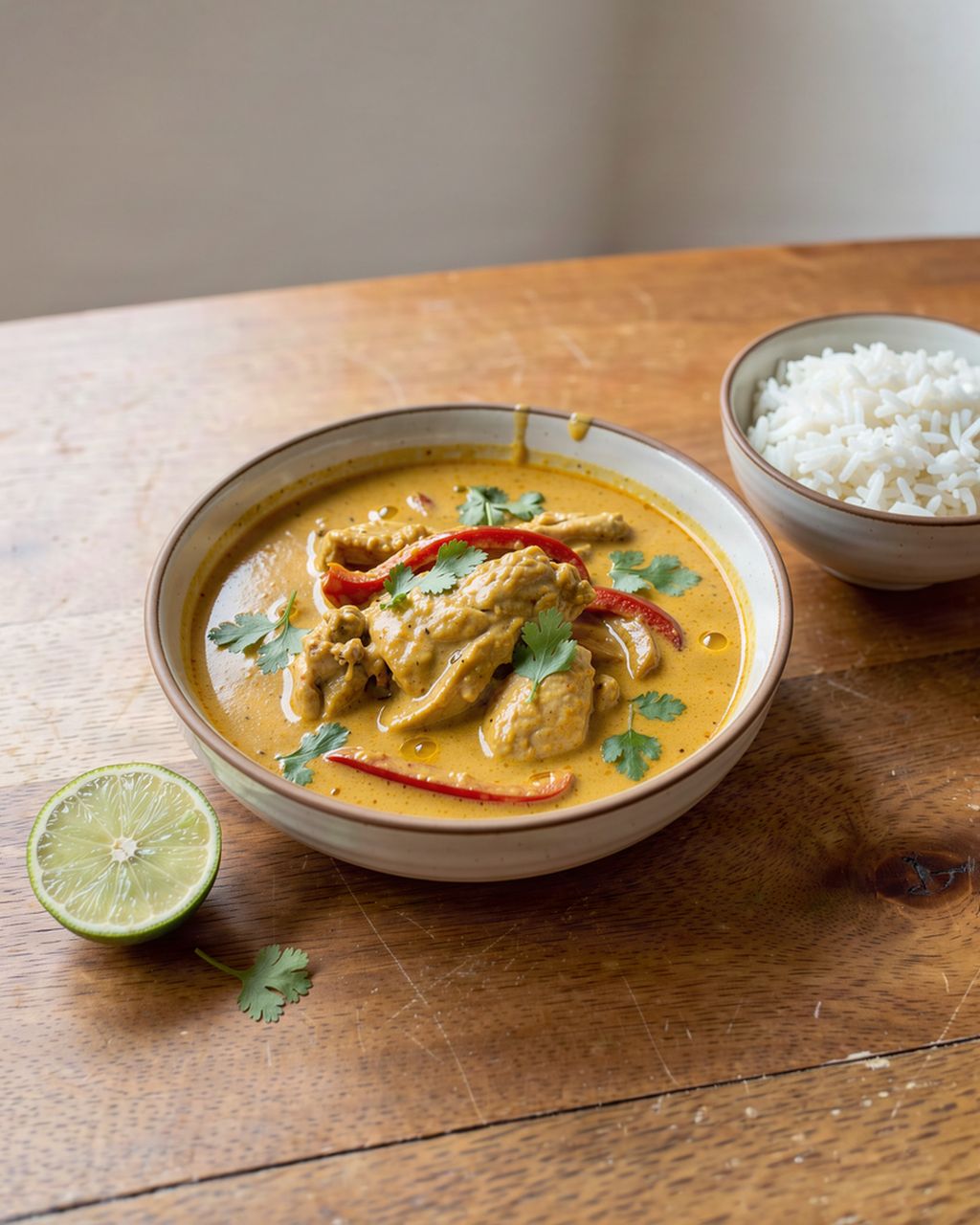
Restaurant-style butter chicken (murgh makhani)
Butter chicken with cashews and kasoori methi
Chicken curry with coconut milk is ready in 27 minutes and serves 4. Its flavor sits between Indian and Thai cooking: besides curry powder and turmeric, it has lemongrass, fish sauce and lime.
Base. Briefly fry chopped ginger and garlic in oil in a wok or deep skillet, just until fragrant. Then stir in 25 g curry powder and 10 g ground turmeric and let them bloom for a few seconds.
Coconut milk in two stages. Pour in half of the 800 g coconut milk, stir so the spices disperse, and let it bubble for 5 minutes.
Meat. Add chopped lemongrass and 700 g chicken breast in pieces, pour in the rest of the coconut milk and cook for about 5 minutes.
Vegetables. Add button mushrooms, cherry tomatoes and red bell pepper and cook for another 5 minutes, until tender but not falling apart.
Seasoning. Sugar, fish sauce and lime juice. Fish sauce also salts the curry, so start carefully and taste as you go.
The chicken must be cooked through, at least 74°C (165°F) inside; check with an instant-read thermometer, because color at the cut isn't reliable. Serve with rice and fresh cilantro.
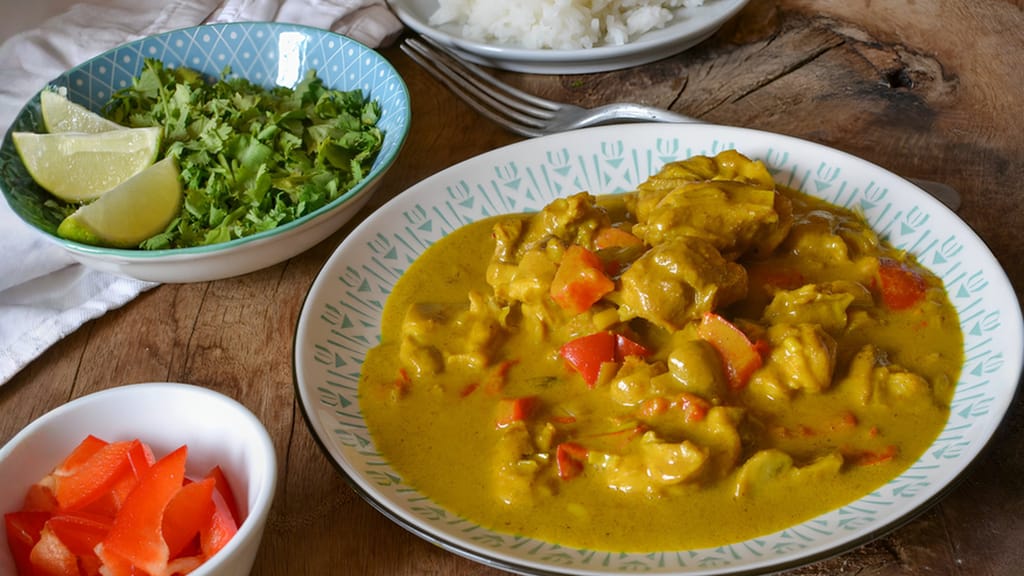
Chicken curry with coconut milk
Chicken curry with coconut milk, mushrooms and bell pepper
Cream belongs mainly in north Indian sauces: butter chicken, korma, tikka masala. It's added at the end and simmered with the sauce only briefly, so it softens and brings the curry together without curdling.
Which cream. Whipping cream (at least 30% fat), as in the butter chicken recipe. Rich cream can handle a short boil; sour cream or yogurt curdles easily in hot curry.
Yogurt off the heat. If you want to soften the curry with yogurt, take the pan off the burner, stir a few spoonfuls of hot sauce into the yogurt to warm it, and only then return it to the pot.
How much. For two servings, a few tablespoons are enough. Cream should round the curry off, not turn it into a cream sauce; taste and add a spoonful at a time.
Butter at the end. In butter chicken, butter goes in twice: at the start with the onion and again at the end with the sauce. That second addition gives the sauce its shine and richness.
The vegan counterpart of cream is the thick top layer of coconut milk (coconut cream). It's added the same way, at the end, and you'll find it in the chickpea curry below in the meatless recipes.
Coconut milk turns curry into a creamy, lightly sweet sauce that tames the heat; it's typical of southern India and Southeast Asia. Among our recipes you'll find it in the chicken curry above, in the lentil dal and in the vegetable curry with cashews.
Full-fat. Light versions are heavily diluted and won't thicken the sauce.
Shake or stir. In the can, the milk separates into thick cream and water.
In two stages. Simmer the first part with the spices for a while, then add the second with the meat or vegetables, as in the chicken curry.
Sour at the end. Coconut is sweet and rich; lime or lemon balances it.
Vegetable curry with cashews is vegan, serves 3 and takes 37 minutes. Eggplant and potatoes play the lead role, with cashews and coconut milk adding creaminess.
Cook the shallot in canola oil until translucent, add a cinnamon stick and cardamom and let them release their aroma. Then briefly add the garlic and ginger.
Add the eggplant, stir in the curry powder, salt lightly and add the cashews. Pour in water or stock.
Add diced potatoes and 90 ml coconut milk and simmer gently for about 15 minutes, until the potatoes are tender.
Season with lemon juice and salt. Fish out the cinnamon stick and cardamom pods before serving; they aren't meant to be eaten.
Serve on its own, with rice or with flatbreads; the recipe suggests adding chickpeas or tofu if you want a more filling meal.
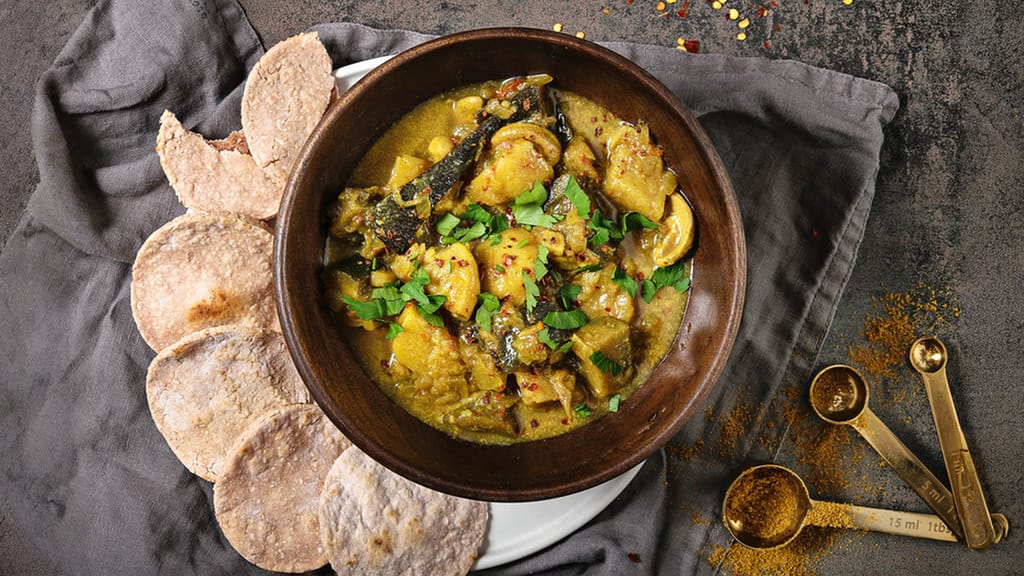
Vegetable curry with cashews
Vegan vegetable curry with eggplant, potatoes and cashews
Without meat, you can make curry from legumes, sweet potatoes or vegetables: red lentils and chickpeas thicken curry and give it body, while sweet potatoes and potatoes add sweetness and creaminess. Indian cooking has a huge number of meatless dishes. All three of our recipes are vegan: the vegetable curry with cashews above and the two curries below.
A few rules so meatless curry doesn't taste empty:
More time for the onion and spices. Meat brings flavor on its own; vegetables don't. Cook the onion properly and let the spices bloom in the fat.
Tomatoes or tomato paste. They add acidity and depth.
Sour and fresh at the end. Lime, lemon, cilantro.
Texture. Cut vegetables the same size so they soften at the same time, and feel free to mash some of the legumes; it thickens the sauce.
Sweet potato curry with red lentils is vegan, serves 4 and is ready in 43 minutes.
Sauté chopped scallions, garlic and ginger in canola oil.
Stir in curry paste, whole cardamom, cumin and lemongrass and fry briefly with the scallions; they release far more aroma in hot fat.
Add 400 g diced sweet potatoes and carrots cut into half-moons and sauté with the paste for a few minutes.
Pour in about 750 ml water, stir in tomato purée and simmer under a lid for 10–15 minutes. Then add 250 g rinsed red lentils and broccoli and cook until the lentils are tender.
Season with salt and add lime to balance the sweetness of the sweet potatoes. Sprinkle with scallions and cilantro.
The recipe also offers a variation with tofu or meat if you'd like a more filling curry.
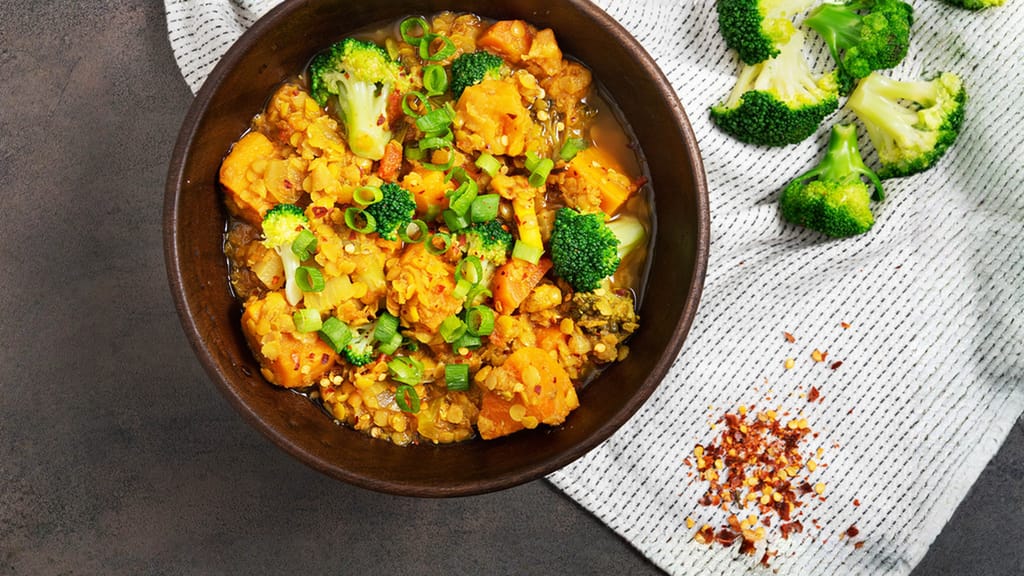
Sweet potato curry with red lentils
Vegan sweet potato curry with red lentils and broccoli
Chickpea curry with coconut cream and apple juice is vegan, serves 2 and takes an hour. The unexpected ingredient is apple juice, which gives the sauce a fruity sweetness.
In olive oil, cook the shallot, ginger, peeled lemongrass and chili. Add cumin and ground coriander, and add the oil gradually so the cumin doesn't burn.
Stir in a spoonful of tomato paste and 400 g drained chickpeas, salt and sauté for about 8 minutes.
Add chopped tomatoes, pour in the apple juice, toss in a bay leaf and simmer for 30 minutes.
At the end, stir in the coconut cream (the thick top layer of coconut milk), adjust the salt, add pepper and cilantro.
It's served with ciabatta toasted in olive oil. For more ideas on using chickpeas, see our article what to cook with chickpeas.
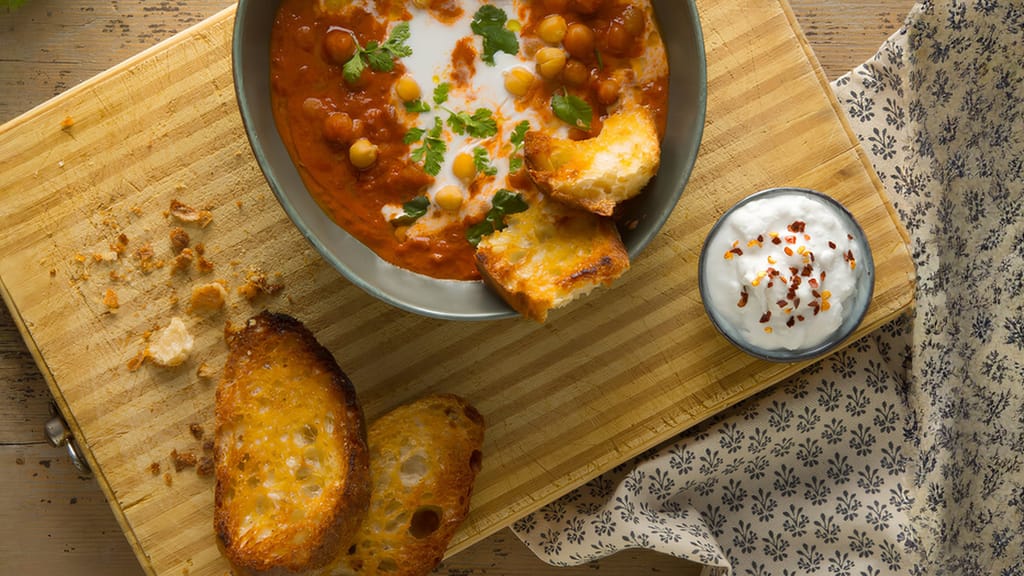
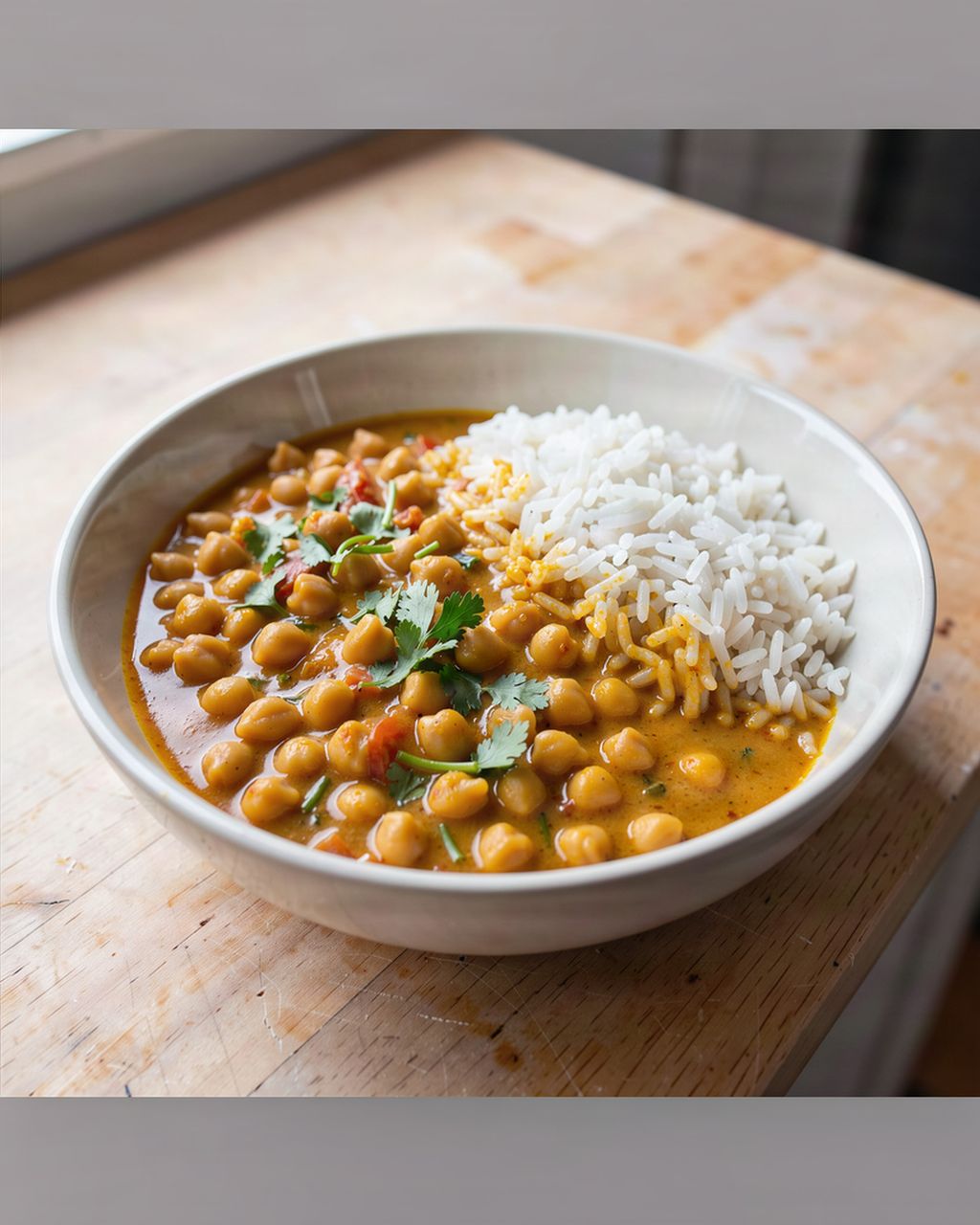
Chickpea curry with coconut cream and fresh apple juice
Vegan chickpea curry with coconut cream and apple juice
Dal is a legume cooked into a thick, spiced stew, most often from red lentils, which break down on their own and need no soaking. In India it's the basis of everyday meals, served with rice or flatbread.
Lentil dal with coconut milk serves 4 and takes 47 minutes:
Base. Cook finely chopped onion in coconut oil until translucent, then add garlic, ginger, turmeric, cumin and garam masala.
Lentils. Rinse 500 g red lentils in a sieve until the water runs clear; this washes off dust and starch, so the lentils foam less as they cook. Add them to a pot with canned chopped tomatoes with their juice, cover with water, salt and cook until tender.
Cream. When the lentils have absorbed almost all the liquid, pour in the coconut milk, season with cinnamon and let it bubble briefly until it comes together in a thick cream.
Topping. The recipe serves the dal with seared carrots and shrimp, cilantro, lettuce, mung bean sprouts, scallions and lime, plus naan.
Note that because of the shrimp in the topping, this recipe isn't meat-free. Finished dal thickens even in the pot, so thin it with a spoonful of water when reheating.
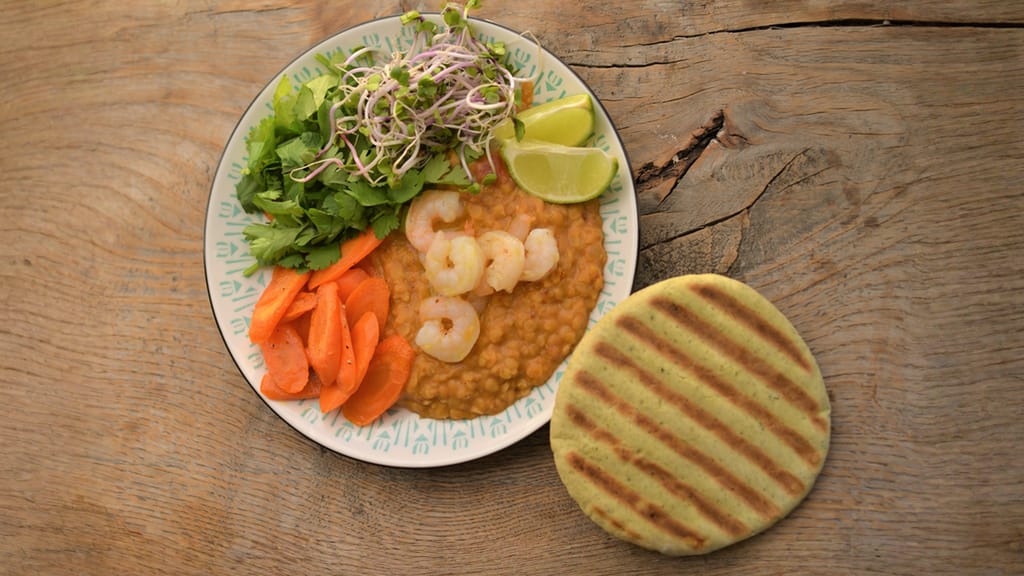
Lentil dhal with coconut milk
Lentil dal with coconut milk, carrots and shrimp
Indian dishes are served with basmati rice, naan and cooling yogurt raita; the rice and bread soak up the sauce, and the raita cools the heat.
Basmati rice. Basmati rice is long-grain, fragrant and fluffy once cooked. Rinse it several times until the water is almost clear, cook it at roughly 1 part rice to 1.5 parts water under a lid for about 10–12 minutes over low heat, then let it steam off the burner for 10 minutes. Don't lift the lid in the meantime.
Raita. Grate 1 cucumber (about 200 g) and squeeze out the water, mix it with 250–300 g plain yogurt, a pinch of salt and ½ teaspoon ground cumin, and add 5–6 chopped mint leaves. Serve chilled alongside hot dishes.
Skillet naan. Yeast-free skillet naan serves 2. Most of the 182 minutes is resting time for the dough; the actual work is short:
Mix 120 g all-purpose (plain) flour with baking powder, salt and sugar, then add oil and 60 g full-fat plain yogurt at room temperature.
Gradually add lukewarm water and knead until you have a soft dough that doesn't stick to your fingers. Brush it with oil and leave it to rest in a warm place for 2–3 hours.
Divide it into balls and roll out into thin flatbreads. Meanwhile, melt butter with chopped cilantro, pressed garlic, a pinch of salt and sesame seeds.
Heat a cast-iron skillet dry. Brush one side of a flatbread with water and place it wet side down in the pan: it will stick and start to form bubbles.
As soon as it releases by itself after 1–2 minutes, flip it and brush the hot side right away with the garlic butter.
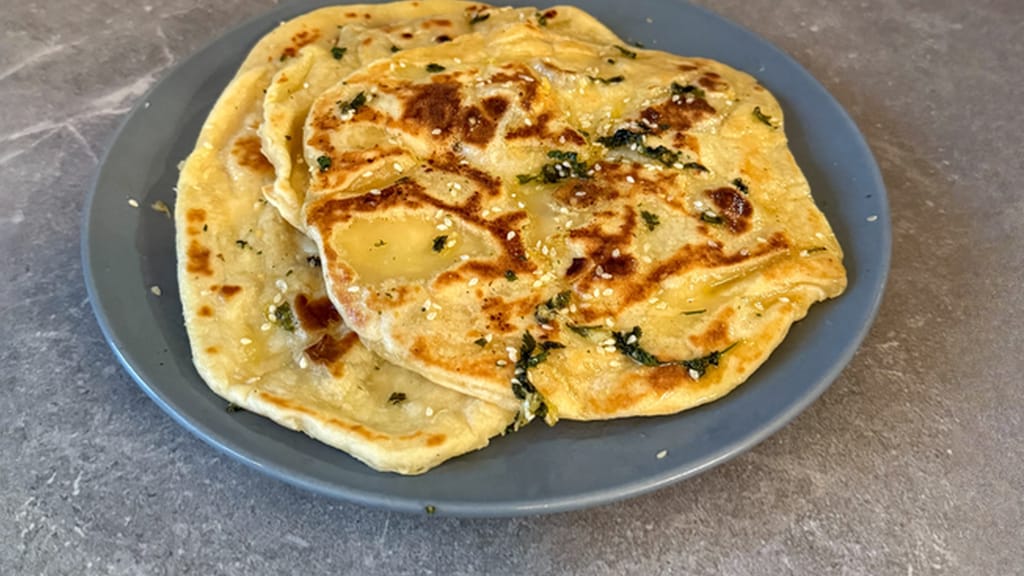
Skillet naan bread (no yeast)
Yeast-free skillet naan with garlic butter and cilantro
Masala chai is black tea simmered with spices, ginger, milk and sugar; in India it's drunk several times a day, and it makes a fitting finish to a spiced dinner.
Authentic masala chai with spices and ginger makes one large serving in 25 minutes:
Lightly crush cardamom, cloves, star anise, black pepper and a piece of cinnamon in a mortar. Don't grind to a powder; just crack the husks so the aroma is released.
Simmer the spices with slices of fresh ginger in 250 ml water for 5–10 minutes.
Take the pot off the heat and let it cool for a moment so the tea doesn't turn bitter, then add a spoonful of loose Assam tea and let it steep for 5 minutes.
Strain, return to the heat, add 250 ml whole milk and cane sugar. Bring to a boil and take it off the heat right away, three times in a row.
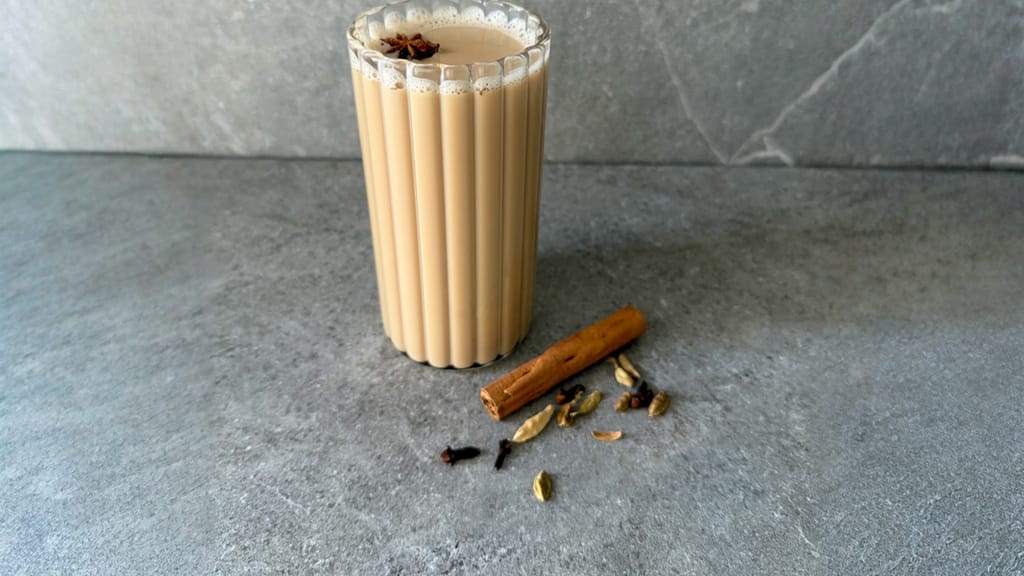
Authentic masala chai with spices and ginger
Masala chai with cardamom, star anise and ginger
You can eat most Indian dishes during pregnancy. Mainly watch out for raw sprouts, cheese made from unpasteurized milk and undercooked meat. As always, talk to your doctor if you have specific concerns.
Raw sprouts. The US CDC and the government portal FoodSafety.gov list raw or only lightly cooked sprouts, including mung bean sprouts, among foods pregnant women should avoid; only thoroughly cooked sprouts are safe. For dal, leave them out of the topping or cook them thoroughly until steaming hot all the way through.
Paneer. The Northern Irish health portal nidirect lists pasteurized soft cheeses, paneer among them, as fine to eat in pregnancy. Check on the package that it's made from pasteurized milk.
Hot dishes. You can add chili at the end on your own plate, so you control the heat yourself.
Chicken. The meat must be cooked through; how to check that is described above under chicken curry with coconut milk.
Butter chicken and chicken tikka masala aren't the same: butter chicken is milder, with a buttery, creamy sauce, while tikka masala is bolder and more heavily spiced. Butter chicken is built on tomatoes, butter, cream and often nuts. Chicken tikka masala uses chicken marinated in yogurt and seared separately, and its sauce is more onion-based, with less butter.
Kari and curry mean the same thing: curry is the English name and kari is the Czech spelling of it. Both refer to saucy, spiced dishes. The word is also used for the ready-made turmeric spice blend, which according to culinary sources was invented by the British and isn't much used in Indian kitchens.
You can replace ghee with clarified butter, regular butter or a neutral oil. Ghee is butter with the water and milk solids removed, so it handles higher heat and doesn't scorch; with regular butter, watch that it doesn't brown, or mix it with a little oil.
Curry most often turns bitter because of burnt garlic or spices. Add garlic after the onion and only briefly, leave ground spices in the fat for just a few seconds, then add liquid right away. You can soften mild bitterness with a little sugar, cream or coconut milk and the acidity of lime, but you can't fix a burnt taste.
Kasoori methi, dried fenugreek leaves, can be left out. The sauce will still be good, but it will lack the typical slightly bitter, herbal aroma you know from an Indian restaurant. You can buy it in Indian grocery stores and it keeps for a long time.
One recipe worth heating the oven for, one tip, and one deal from the shop. Nothing else.