- Season
- Available all year; it is a milled pantry staple with no harvest season in the shop.
- Price
- Low
Calories and nutrition per 100 g
- 353 kcal
- 13.2 g protein
- 1.7 g fat
- 69.1 g carbs
High-Extraction Wheat Flour (T1050)
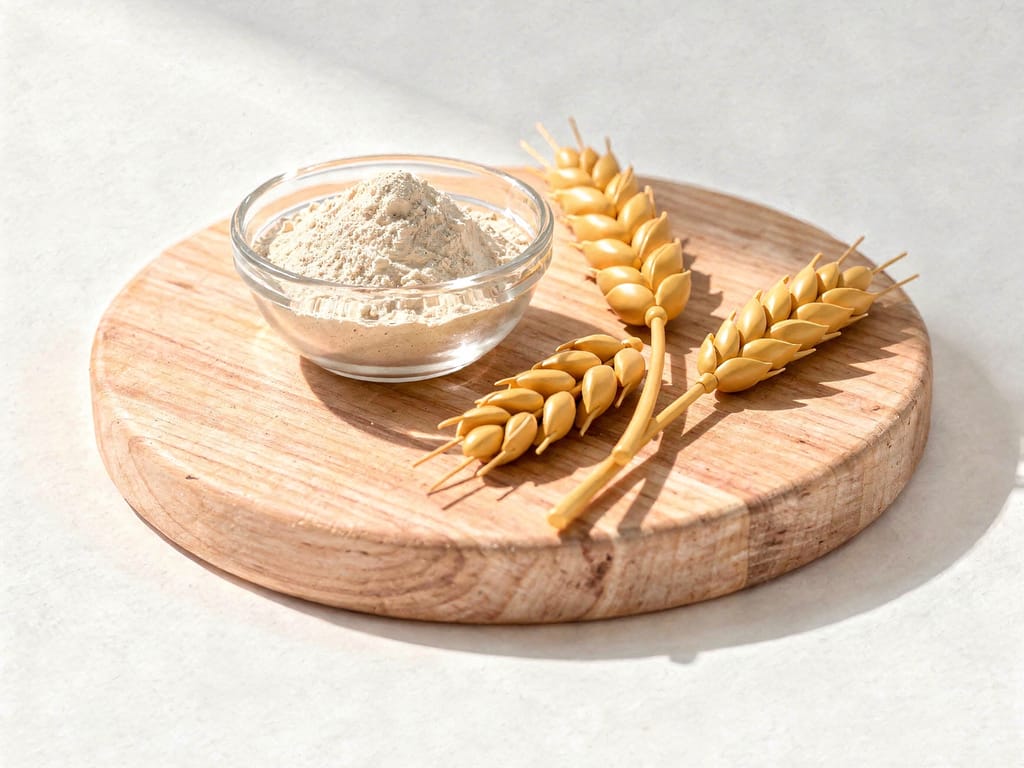
Czech bread flour (pšeničná chlebová, sold as T1000 or T1050) is the darkest finely milled wheat flour short of wholemeal: Czech Decree 18/2020 allows it at most 1.15% ash in dry matter. It is used mainly for bread and darker rolls.
Keep it in a dry, cool, dark cupboard in a tightly closed container, away from moisture and strong smells. Use it by the best-before date on the pack. It holds more of the outer grain than light flour, so use an opened bag within a few months. Throw out flour that smells bitter or musty or shows moths.
Not necessary. In a warm, humid kitchen you can keep it in the fridge in an airtight container so it does not take up moisture or odours. Let it come to room temperature before making dough.
It freezes in an airtight bag for several months. Let it come to room temperature in the closed bag before use so no condensation gets into the flour.
Look for "pšeničná chlebová" or "chlebová" on the pack. Mills label it T1000 or T1050; both are the same legal category. It is sold finely milled (hladká). Do not confuse it with "chlebová směs", a ready bread mix often containing rye flour, yeast and spices, or with rye bread flour (žitná chlebová). The protein figure is in the nutrition table, around 12 g per 100 g for typical bread flours. Choose a dry, intact bag with no lumps, musty smell or signs of moths.
Mix 3 parts semi-light T650 or plain light T530 flour with 1 part wholemeal wheat flour; it comes close in colour and flavour. In Germany and Austria the equivalent is Weizenmehl Type 1050.
Semi-light T650 or plain light T530 on its own. The bread will be paler and milder, and the dough may need a little less water.
It usually needs no preparation; sift it only if it has settled into lumps. It absorbs a little more water than light flour, so when you use it in place of plain light flour, expect a few extra spoonfuls of water. Add water gradually, or rest the flour and water for 20–30 minutes before adding salt and leaven (autolyse) so the dough kneads more easily. Raw flour is not a ready-to-eat food: do not eat raw dough or batter, and wash your hands and the worktop after handling it.
Use the end of a bag to dust proofing baskets and the worktop, or for a darker roux (jíška) in sauces and soups, where its nutty taste fits.
Roughly what one measure weighs, scooped the way you normally would in the kitchen.
Mainly baking: wheat and wheat–rye bread (often with caraway), dalamánky rolls, rustic loaves and baguettes. Some of it can go into pizza or focaccia dough for a more rustic taste. It does not suit sponge, vánočka or delicate sweet yeast doughs, where its flavour overpowers butter and vanilla; use light plain or semi-coarse flour there.
Czech bread flour (pšeničná chlebová, sold as T1000 or T1050) is the darkest finely milled wheat flour short of wholemeal: Czech Decree 18/2020 allows it at most 1.15% ash in dry matter. It is used mainly for bread and darker rolls. Ash is what remains when flour is burned, in other words its minerals. Most of them sit in the bran and the aleurone layer beneath it, so more ash means more of the grain's outer layers. That is why chlebová flour is creamy beige rather than white and tastes stronger than light flour. The legal grade tells you how much of the grain is in the flour, not how much protein it has or how strong its gluten is.
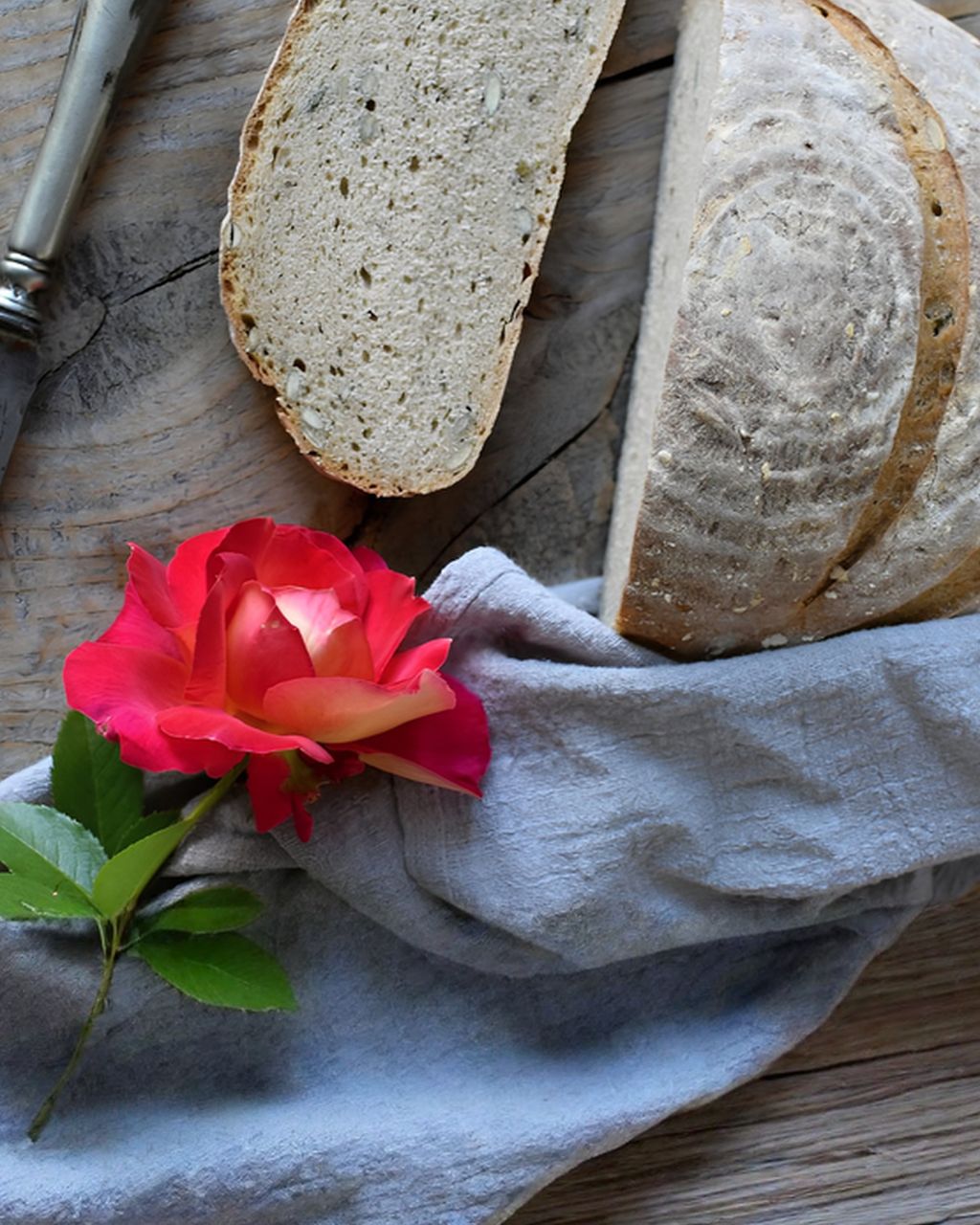
It tastes fuller and more of grain than light flour, with a slightly nutty note. Bread made with it has a darker, creamy crumb, a darker crust and a stronger aroma than bread from T530 or T650 flour.
Seasonal baking plans, tested recipes and kitchen tricks that save you time. Unsubscribe in one click.
3 min read
Czech Ministry of Agriculture Decree 18/2020 grades finely milled wheat flours by maximum ash in dry matter: light (světlá) at most 0.60%, semi-light (polosvětlá) 0.75% and bread flour (chlebová) 1.15%. Wholemeal may have up to 1.90%. All flours may contain at most 15% moisture.
The type number on the pack, such as T650 or T1050, is the mills' own label derived from ash: roughly the ash percentage times a thousand. The decree itself sets no numbers, which is why the same bread flour is T1000 at one mill and T1050 at another. For an overview of all Czech types, see types of flour and what they are for.
On the shelf, chlebová flour is most often confused with three others. Each suits a different job.
Semi-light T650 has at most 0.75% ash and is paler and finer. It suits light bread, rolls and pizza. Bread flour is darker and more flavourful, and bread made with it stays moist longer.
Wholemeal flour contains the whole grain, bran and germ included. Bread flour is still sifted, so it has less bran and feels fine to the touch. It is darker than light flours but paler and lighter than wholemeal.
Rye bread flour comes from a different grain and does not form elastic gluten on its own, which is why rye bread is raised with sourdough. The classic Czech wheat–rye loaf mixes both bread flours.
Literally yes, "chlebová" means "bread", but the products differ. Czech bread flour is graded by ash, that is, by how much of the grain it contains. American and British bread flour (strong flour) is a white flour with high protein and strong gluten.
If an English recipe calls for bread flour and you shop in Czechia, take plain light or semi-light flour with the highest protein on the label. Use Czech chlebová only where you want a darker, rustic loaf. How to convert foreign labels such as 405, 550 or 00 is covered in flour numbers explained: 00, T650, 405 and 1050.
A plain wheat loaf from chlebová flour comes out darker and tastier than one from light flour. More often, though, it is mixed with rye flour and raised with sourdough, yeast or both. How to start and feed a sourdough is explained in sourdough starter.
Try it in sourdough bread with kefir, where it is combined with rye flour, or in yeasted crusty fennel rolls. Dough made with bread flour is a little less extensible than dough from light flour, so let it rise fully and add the water gradually.
Bran particles and fibre from the outer layers bind more water and partly interrupt the gluten network. The dough is less elastic and the crumb denser, but the bread stays moist longer. More protein and sugars from the outer layers give the crust a darker colour and stronger aroma.
Flour is dry but not sterile. It can carry bacteria such as E. coli that only baking or cooking destroys, so do not taste raw dough. It contains wheat gluten, which is declared as an allergen on the pack. Keep it dry and closed, because moisture and moths are the most common problems with flour.