At a glance
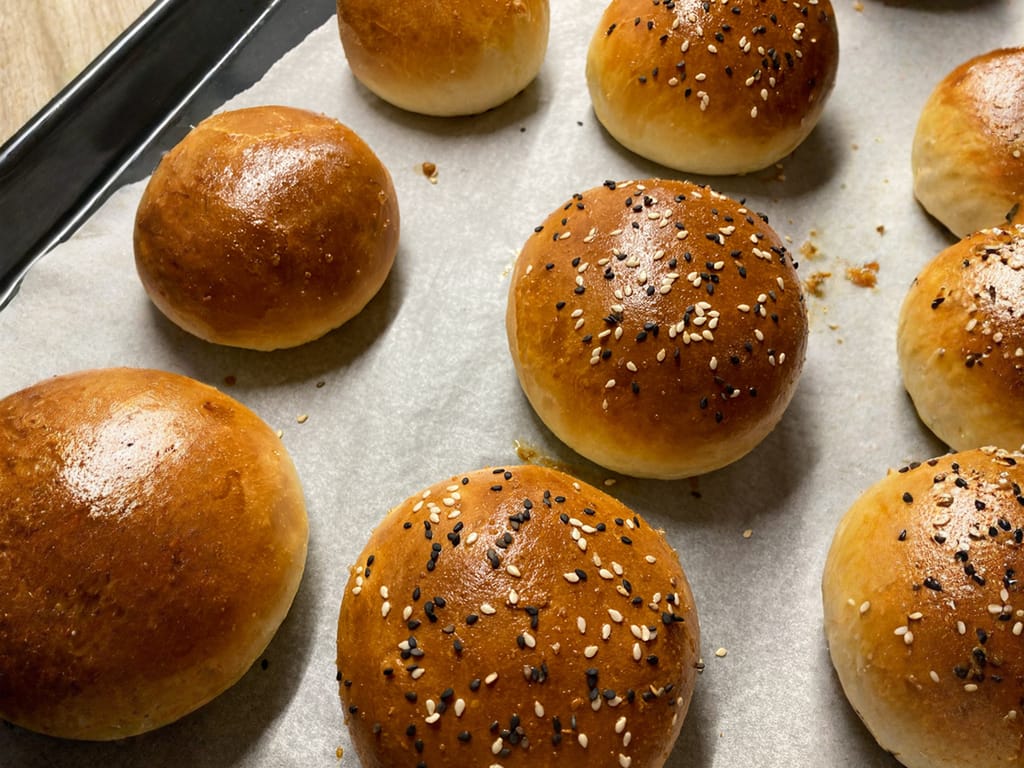
You're making pillowy-soft burger buns using the Japanese tangzhong method, which involves creating a flour and milk paste that locks in moisture and guarantees incredible softness. The process includes making the dough, letting it rise twice over about 3 hours total, and shaping the buns to rise upwards — the most important (and slightly tricky) part is perfecting that pinch-and-drag technique so your buns bake tall and fluffy rather than flat.
1/9
The secret to softness: tangzhong
Take out your butter and eggs. Put the flour and milk into a small saucepan. Heat over medium heat, stirring constantly, until the mixture thickens into a smooth paste. Then transfer it to the bowl you'll use for mixing the dough.
For this step
0/42/9
Making the dough
Pour the milk into a saucepan and warm it slightly. Add the sugar, yeast, milk powder, salt, half of the beaten egg (save the rest for brushing later) and the flour. Knead everything together (ideally in a stand mixer on medium speed) for about 12–15 minutes.
For this step
0/63/9
Finishing the dough and first rise
Once the dough is smooth and elastic, gradually work in the softened butter. Knead for a further 5 minutes. Shape the dough into a ball using a dough scraper, place it in a greased bowl, cover and leave to rise in a warm spot for about 1.5 hours.
How it went
Nobody has tried this recipe yet
Be the first to say how it went.
Anyone can answer, without signing in or buying. Answers aren't verified. The percentage is the share of “Worked out” answers, shown from 5 answers.
Tips from the Yumsto kitchen
Why it works
With the tangzhong method you cook part of the flour with milk into a thick paste. Cooked starch holds more water, so the buns are soft and stay fresh longer. Milk powder adds tenderness and helps the crust brown. Shaping each piece into a pouch and tightening the base builds surface tension, so the buns rise up instead of spreading out.
Tips
Cook the paste only until the whisk leaves trails in the pan, then let it cool so it doesn't harm the yeast. The finished dough should stretch into a thin membrane without tearing straight away. If it tears, knead a few more minutes. Keep the leftover egg in the fridge for brushing.
If something goes wrong
Flat buns: the base wasn't tightened enough, or the dough over-proofed. Dense buns: the dough was under-kneaded or under-proofed. Pale buns: no egg wash, or the oven runs cooler than it says.
Substitutions
You can leave out the milk powder; the buns will be a little less soft and paler. Swap sesame for poppy seeds, or leave them plain. Instead of 4 large buns, make 6–8 small ones for sliders; shorten the bake and watch the color.
Storage
Keep cooled buns in a closed bag at room temperature; they stay soft for about 2 days. For longer, freeze them sliced and toast them straight from frozen.
Common questions
Can I make the dough without a stand mixer?
Yes, but expect longer kneading and a sticky dough. Don't add much flour; knead until smooth and elastic.
Can I bake them a day ahead?
Yes. Thanks to the tangzhong they stay soft the next day; slice and toast them before serving, as the method suggests.
Why toast the buns at the end?
A toasted surface absorbs less burger sauce, so the bun doesn't go soggy.
Want a recipe like this every Thursday?
One recipe worth heating the oven for, and one tip that saves you time. Nothing else.