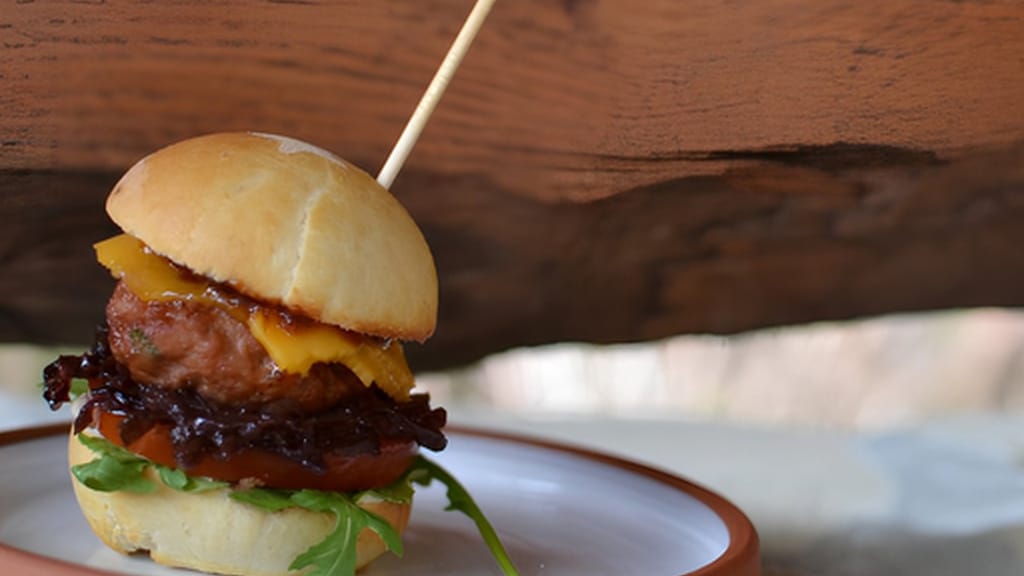
Homemade burgers with cheddar and onion
Homemade Burgers: Meat, Buns, Sauce and Recipes from Classic Cheddar to Chicken and Halloumi
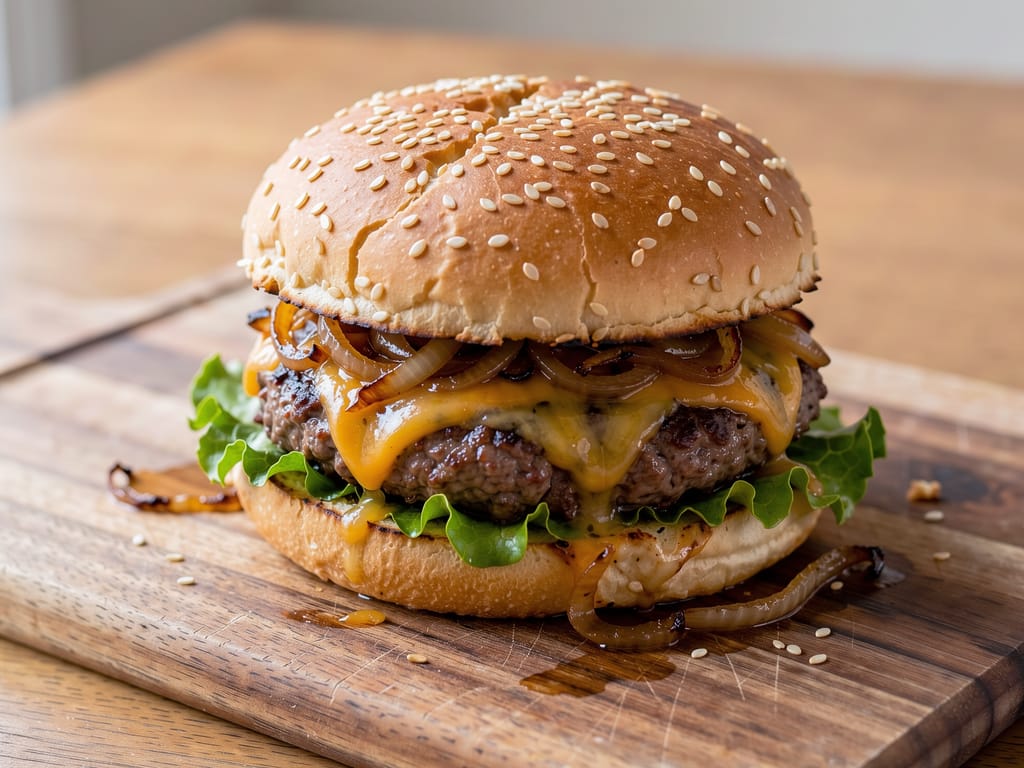
Updated Nov 20, 2026
A homemade burger is a patty of freshly ground meat, seared hard to a dark crust, cooked through to 71°C (160°F) in the center as the US USDA recommends, and tucked into a soft bun toasted on the cut side, with sauce, cheese and something crunchy. There's not much more to the secret: good meat with enough fat, salt only once it's in the pan, a blazing-hot cast-iron skillet, a bun that holds in the juices and a sauce that ties it all together. Below you'll find a step-by-step method, which meat to buy, how to bake buns and rolls, how to mix the sauce, and five burger recipes from the classic with cheddar to chicken, duck and halloumi, plus buns and rolls.
You make a homemade burger in six steps: buy meat with 15–20% fat, shape the patties, chill them, salt them just before cooking, sear hard until cooked through, and assemble in a toasted bun. Here's the whole method, whichever recipe below you go on to try.
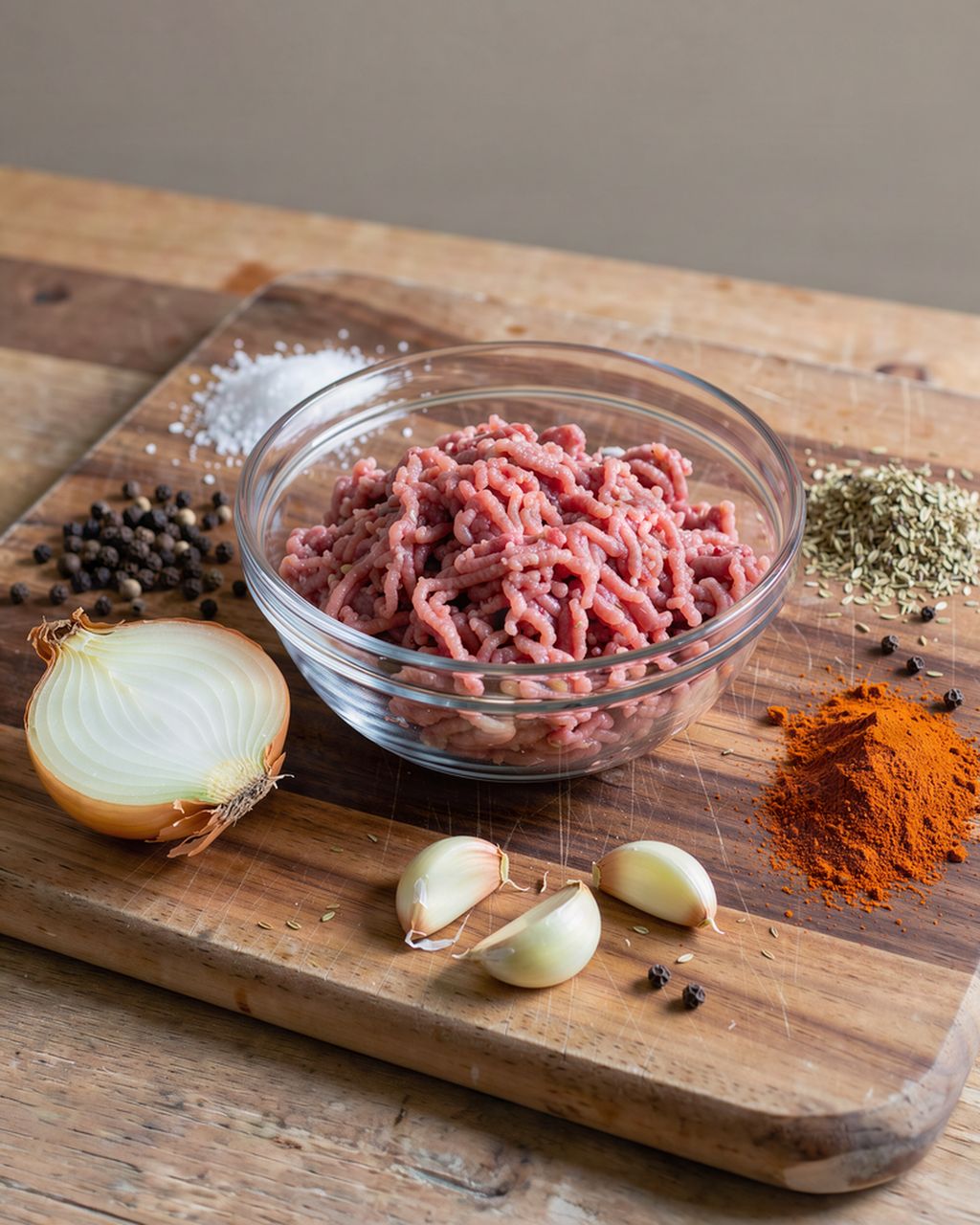
Meat. For four burgers, count on 600–700 g (about 1⅓–1½ lb) of ground meat, or 150–180 g (5–6 oz) per burger. Ground beef from neck or chuck is ideal, with about a fifth fat naturally.
Shaping. Divide the meat into equal portions and lightly form patties between your palms, about 1.5–2 cm (½–¾ inch) thick and a centimeter wider than the bun. Don't press or knead: the more you work the meat, the tougher the finished patty.
Dimple. Press a shallow dimple into the center of each patty with your thumb. The meat contracts as it cooks and bulges in the middle; the dimple evens it out, so the patty stays flat and holds the cheese and sauce.
Chill. Put the patties on parchment paper and refrigerate for 20–30 minutes. Cold fat holds the meat together, so the patty won't fall apart in the pan.
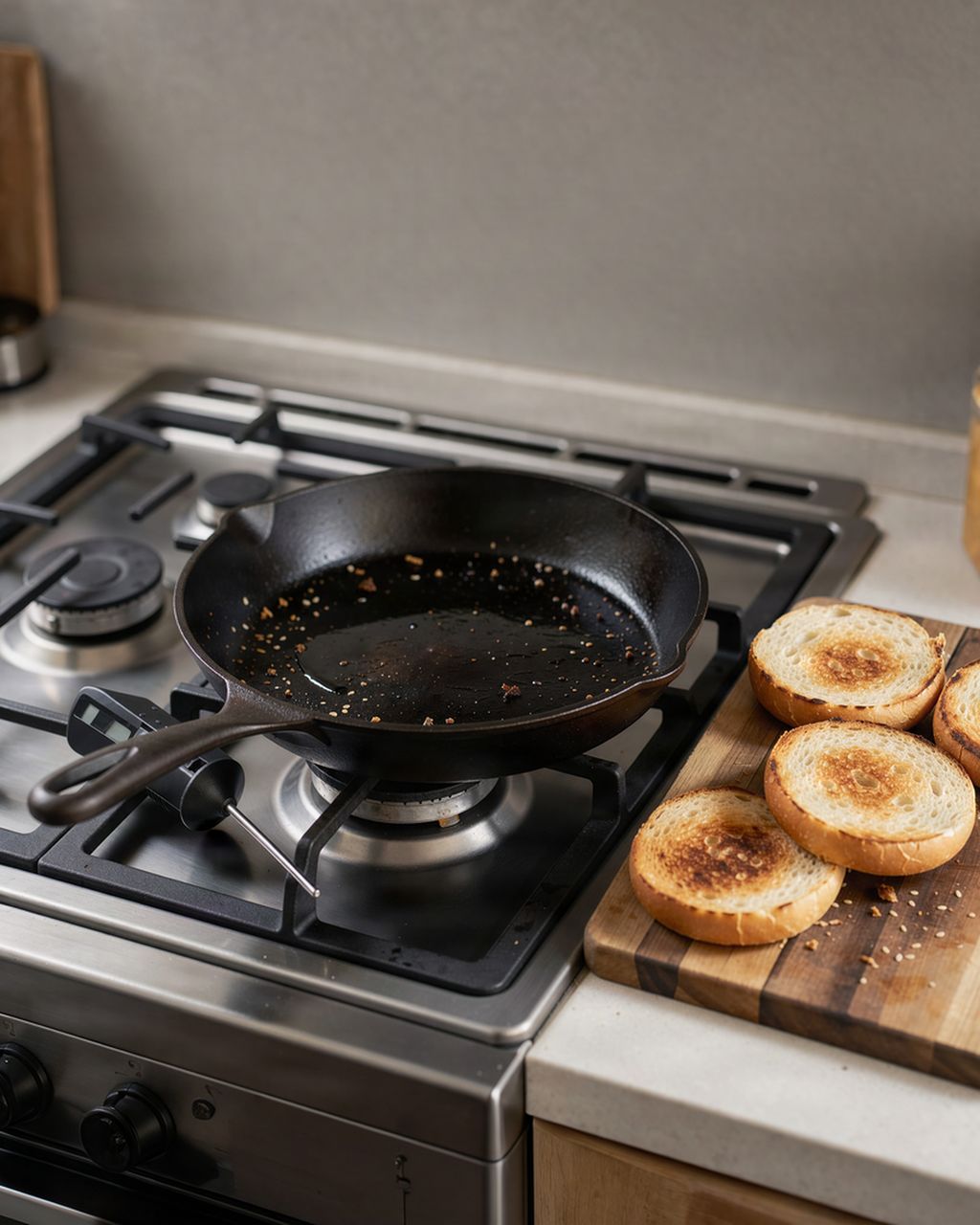
Salt and cook. Salt and pepper the patties on both sides only just before they go in the pan. Get the pan properly hot, add a little oil, and flip the patty only once, when it has a dark crust. We spell out the minutes per side in our article on how long to fry burgers and meat patties. Add the cheese a minute before the end and cover the pan briefly so it melts.
Assembly. Halve the bun and toast it cut side down in a dry pan until golden. Spread sauce on the bottom half, add lettuce, the patty with cheese, the vegetables, and cap it. Serve right away.
Why this way? Salt dissolves some of the muscle proteins in meat. If you salt ground meat an hour ahead and mix it, the proteins bind and the patty turns into a springy, slightly rubbery mass, more like a sausage. Salt on the surface just before cooking helps the crust instead, and the inside stays loose and juicy.
Seasonal baking plans, tested recipes and kitchen tricks that save you time. Unsubscribe in one click.
Yes, a homemade hamburger and a homemade burger are the same dish: a ground meat patty in a round bun. The word hamburger came first, and burger is the shortened form that later spread to versions without beef too, such as chicken, duck or halloumi. So if you're looking for a homemade hamburger recipe, everything in this article applies.
These days the difference is mostly about what's inside. Most people picture a hamburger as the classic with beef, cheese, onion and pickle, while burger is a broader term for anything in a bun that you can comfortably eat with your hands. In the kitchen, though, the same rules apply to both: the patty must be juicy and cooked through, the bun soft and toasted on the cut side, and the sauce thick enough not to run down your sleeves.
One thing sets both apart from a Czech karbanátek or fašírka (meat patty): a burger has no bread roll, egg or onion in the meat. A karbanátek is a mixture held together by a binder. A burger is pure meat with salt and pepper, which holds together by itself when it has enough fat and is cold. Added bread would turn the patty into a soft, tender meatball-style patty that tastes good, but different.
For a homemade burger, buy ground beef with 15–20% fat, ideally from neck, chuck or sirloin (rib-eye). Lean meat, such as from the round, is too dry for a burger: fat melts during cooking, carries flavor and holds the juices, and without it the patty dries out before it's cooked through.
Neck and chuck: cheaper, around 20% fat, with a strong beef flavor. The most dependable choice.
Sirloin (rib-eye): marbled, juicy, pricier. Great when you want a burger a step above.
Beef brisket: lots of fat and deep flavor. Often mixed with neck at roughly 1:1.
Mixed ground meat (beef and pork): softer, milder and cheaper. It's also what the cheddar hamburgers below are made with.
It's best to have the butcher grind the meat in front of you, or to grind it coarsely at home. A coarse grind gives the patty a looser structure that holds more juice. Ground meat from a supermarket tray is fine, just check the date and the fat content on the label.
Don't dawdle with ground meat (the box on doneness below explains why). Ideally buy it the day you'll cook, and keep it in the fridge until then. When shaping the patties, work quickly with cold hands so the fat doesn't melt in your palms.
Plain beef needs only salt and freshly ground pepper. If you want more, add a dash of Worcestershire sauce, some smoked paprika or chopped herbs. You'll find inspiration for what goes with ground meat in our article on how to flavor ground meat. Just don't overdo it: a burger should taste mainly of meat.
The pure beef burger is the simplest of all: 600 g (about 1⅓ lb) ground beef from the neck, salt, pepper and nothing else. Divide the meat into four 150 g (5 oz) portions, lightly form them into dimpled patties, chill, salt just before cooking, and sear in a hot cast-iron skillet to a dark crust on both sides and 71°C (160°F) in the center. A minute before the end, lay a slice of cheddar on the patty and cover the pan so it melts. Assemble in a toasted bun with sauce, pickles and raw onion, and you have the classic every other version is measured against.
A hot cast-iron or heavy steel skillet gives a homemade burger the best crust, a grill adds smoky flavor, and the oven is a fallback for a big batch. The crust comes from the Maillard reaction on a hot, dry surface, which needs full contact between meat and metal and a temperature a thin non-stick pan can't hold.
Pan: heat it over medium-high to high heat until a drop of oil starts to smoke. Space the patties well apart; if the pan is crowded, the temperature drops and the meat begins to stew in its own juices. Don't move them around or press them with a spatula, or you'll squeeze out the juice.
Grill: clean the grate first and brush it with oil, or the meat will stick. Cook over strong direct heat until the patty has a dark crust and releases from the grate on its own, and flip it only once. If the patty is thick, finish it to the side over indirect heat until a thermometer in the center reads 71°C (160°F). Toast the buns on the grate at the end, just a few seconds.
Oven: set the patties on a rack over a baking sheet and cook in an oven heated to 220–250°C (425–480°F) until a thermometer in the center reads 71°C (160°F). The crust will be weaker, so you can sear them briefly in a pan first, 1–2 minutes per side, and just finish them in the oven. This is handy when you're making burgers for ten people at once.
Whichever you choose, let the cooked patties rest a minute or two before they go in the bun. The juices settle inside and won't run out at the first bite.
A homemade burger most often goes wrong in six ways: lean meat, an overworked mixture, salt added to the meat long beforehand, a lukewarm pan, an untoasted bun, and a patty the same size as the bun. All are easy to fix.
Lean meat. Beef from the round or "extra lean" is too dry for a burger. Go back to neck or chuck with 15–20% fat.
Overworked mixture. Kneading and pressing turns the patty into a dense, tough disk. Just lightly bring the meat together in your palms; the edges can stay a little ragged.
Salt too early. Salted ground meat waiting in the fridge changes to a springy, sausage-like texture. Salt belongs on the surface, just before cooking.
Pan not hot enough. The meat turns gray, releases juice and never forms a crust. Let the pan get properly hot and cook in smaller batches.
Untoasted bun. Without a toasted surface it soaks up the juices, sauce and tomato, and the bottom falls apart. A minute in a dry pan fixes it.
Patty the same size as the bun. The meat shrinks by a fifth or more as it cooks and ends up as a little island in the middle of the bread. Shape patties a centimeter wider than the bun.
On Yumsto you'll find seven recipes for homemade burgers and the bread to go with them: a classic hamburger with cheddar and caramelized onion, a burger with mushrooms and veal, a halloumi burger, a crispy chicken burger, a pulled duck burger, plus buns and rolls to bake at home. Each shows a different approach to the same dish. We go through the five burgers here, and the two kinds of bread have their own sections on buns and rolls.
Homemade hamburgers with cheddar and caramelized onion are a classic from start to finish, rolls included. You make the dough from semi-coarse flour (Czech polohrubá, slightly grittier than all-purpose), milk, egg and yeast in a bread machine or by hand, divide it into ten balls, leave to rise (prove) in an oven at 30–40°C (85–105°F), and bake at 200°C (400°F), brushed twice with egg yolk and sprinkled with seeds. For the patties, 500 g (about 1 lb) of mixed ground meat with salt, pepper and parsley is enough, briefly mixed and chilled. The recipe mixes the salt into the meat; if you'd like a looser texture, follow our method and salt only the surface of the patties just before cooking. Slowly caramelize seven onions in butter for about half an hour and deglaze with 1–2 dl (about ½–1 cup) red wine, grill the patties until cooked through, and finish with cheddar on top. Spread the rolls with mayonnaise and assemble with lettuce and onion.
Homemade burgers with cheddar and onion
Homemade hamburgers with cheddar, caramelized onion and homemade rolls
Homemade mushroom burgers are the quickest of the lot: they're ready in 36 minutes. They aren't made from ground meat but from slices of veal leg, which you lightly pound, season with salt and pepper, and sear hard in a pan or on the grill. Fry the mushrooms in butter with fresh thyme in a wide pan so they don't steam, then pour in cream and cook it down almost dry. Make a dip from mayonnaise and crème fraîche 1:1 with chili and parsley, dress lamb's lettuce and arugula with olive oil, and assemble it all in a toasted hamburger bun.
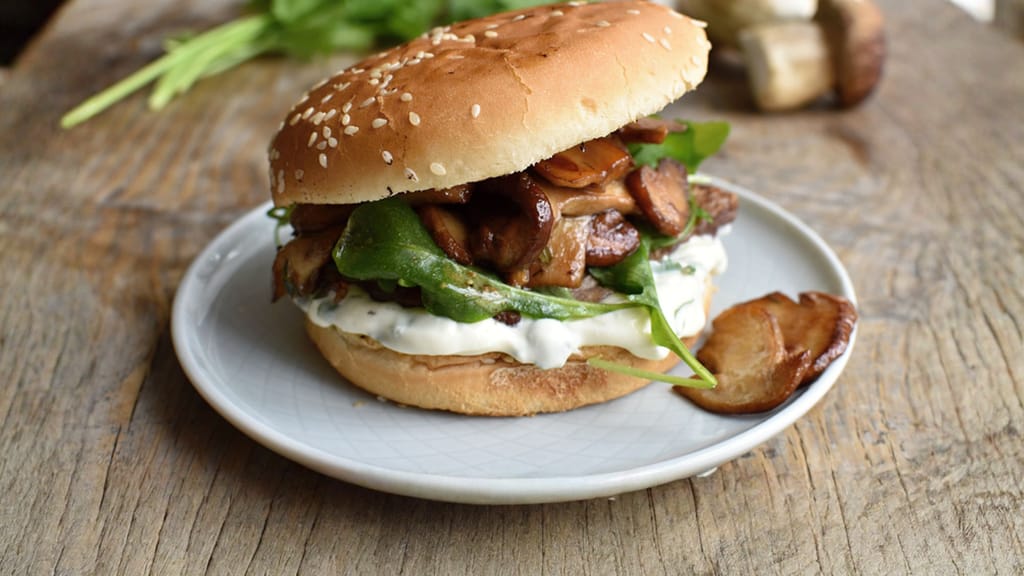
Homemade mushroom burgers
Homemade veal burgers with thyme mushrooms and creamy dip
Sun-dried tomato and halloumi burgers are a vegetarian version in which grilled cheese plays the lead instead of meat; for vegetarians, choose halloumi made with microbial rennet, since traditional halloumi is often set with animal rennet. Marinate the halloumi slices and zucchini rounds in olive oil with grilling seasoning and cook them on a hot grill until the cheese has golden-brown stripes, flipping it only once. An avocado cream replaces the sauce: avocado mashed with žervé (a Czech soft fresh cheese), a little mayonnaise and chopped sun-dried tomatoes from the oil. Serve right away while the halloumi is warm: once cooled, it turns firm and rubbery. The recipe also has a meat variation, where you mix the sun-dried tomatoes into ground meat and grill the patties until they reach at least 71°C (160°F) in the center.
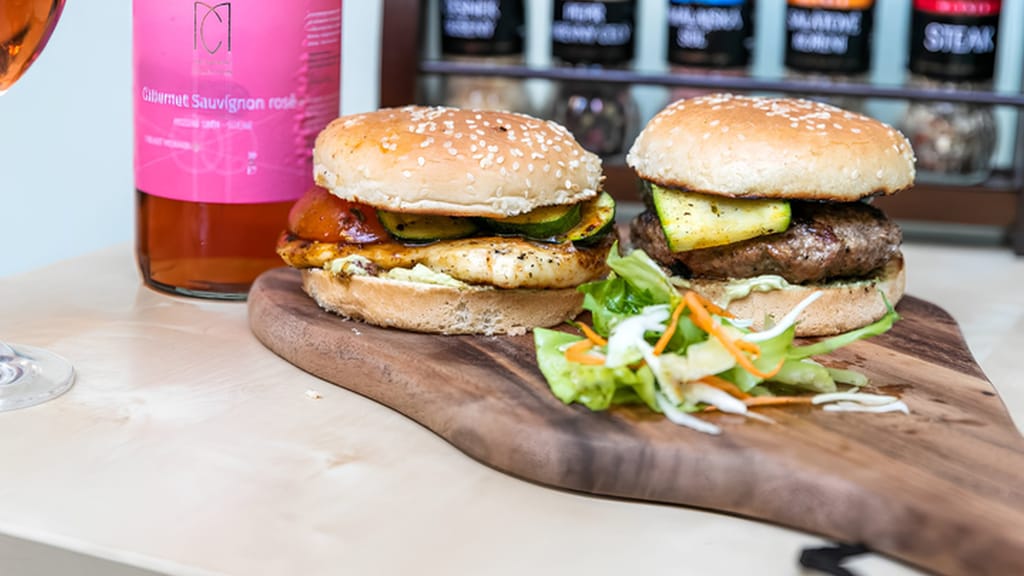
Sun-dried tomato and halloumi burgers
Homemade burger with grilled halloumi, zucchini and avocado cream
The crispy chicken burger in a homemade bun is an all-day project, but every step has a reason. Slices of chicken breast sit for at least 4 hours in the fridge in buttermilk with vinegar, egg, lemon juice and seasoning, which tenderizes the meat. Into the seasoned flour you work a few spoonfuls of the marinade so small clumps form, and these are what make an extra-crispy coating once fried in peanut oil. Fry them until they reach at least 74°C (165°F) in the center. The buns are tangzhong buns, so soft and springy, and there are two dips: an herb one made from ricotta, cottage cheese and sour cream, and a honey-mustard one made from mayonnaise. On top go cheddar melted with a kitchen torch, sprouts and red onion.
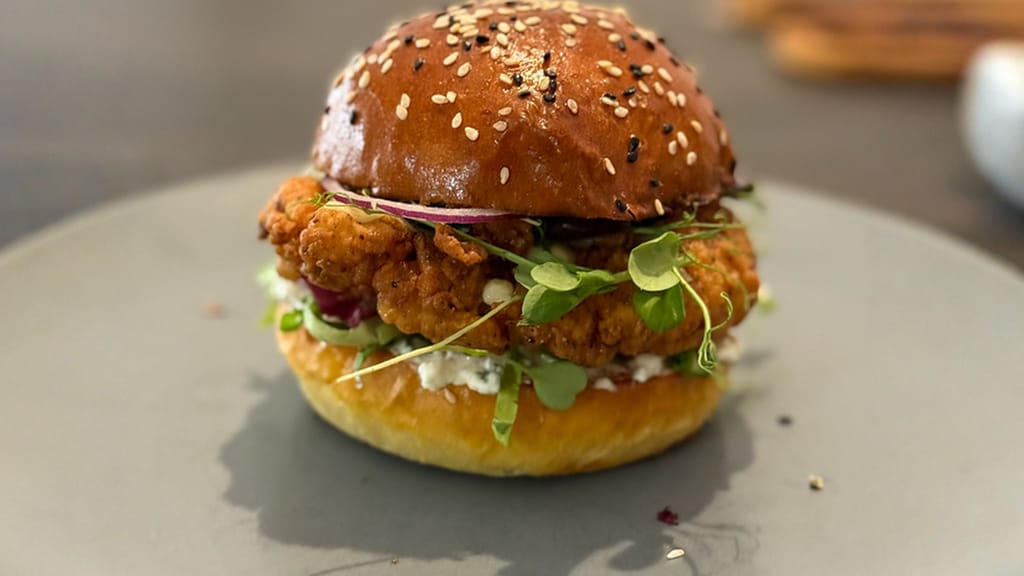
Crispy chicken burger in a homemade bun
Crispy buttermilk chicken burger in a homemade tangzhong bun
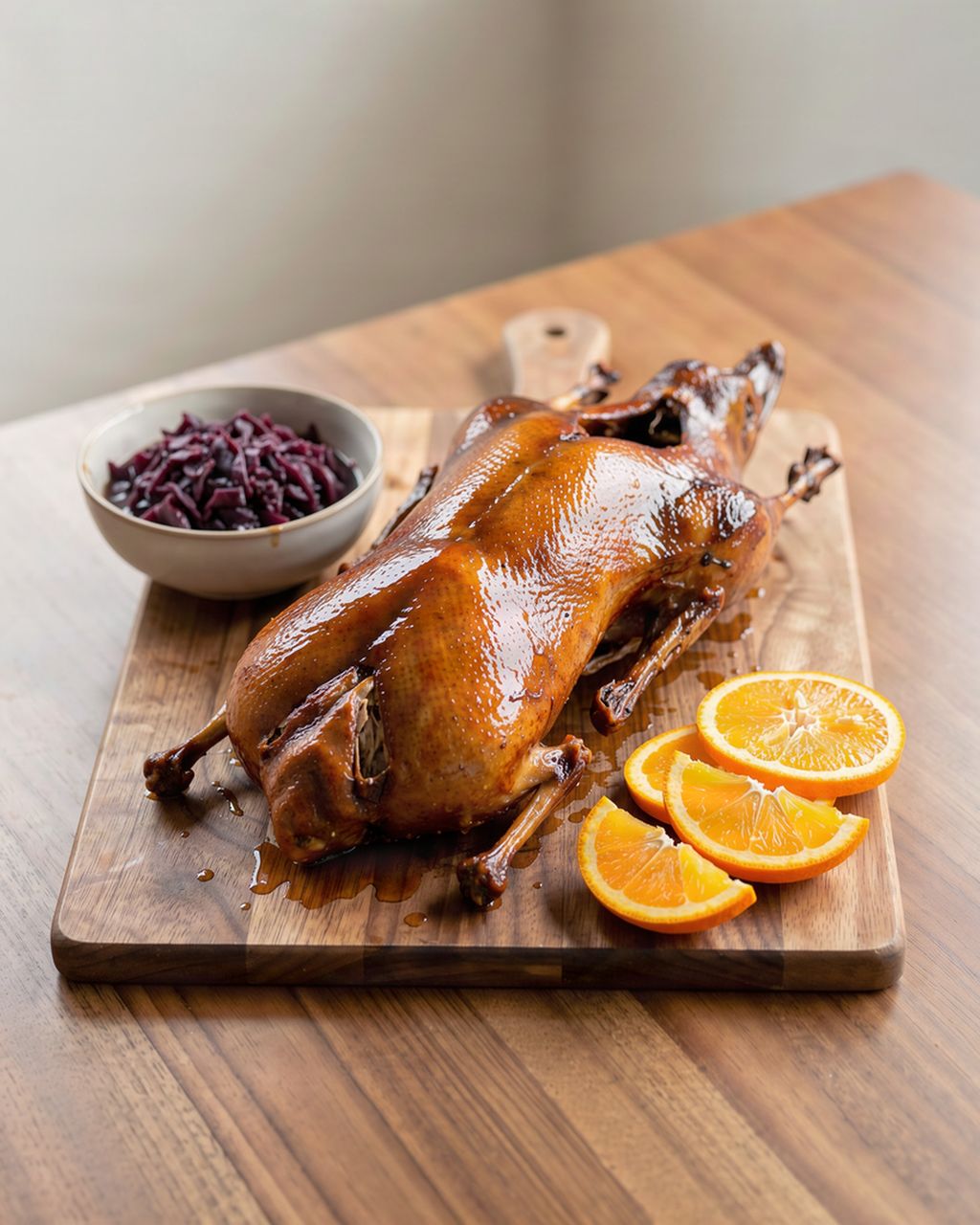
The pulled duck burger in a homemade roll is a weekend project where the oven does most of the work. The duck is roasted covered for 5 hours at 150°C (300°F), then brushed with a mixture of honey, soy sauce and sweet white wine and finished at 220°C (425°F) for about 30 minutes to crisp the skin. Shred the meat, and meanwhile slowly braise onions for an hour until brown and soft, finishing with red wine. Bake the rolls from a sesame yeast dough and assemble the burger with tartar sauce, Gouda, lamb's lettuce and the shredded duck; if you like, add crispy bacon or a fried egg.
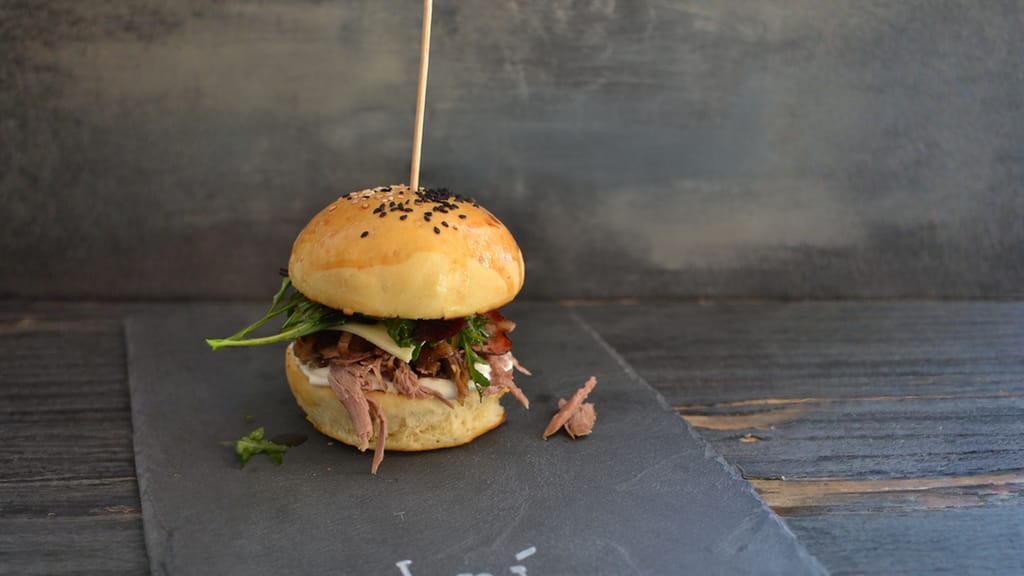
Pulled duck burger on homemade buns
Pulled roast duck burger with braised onion in a homemade sesame roll
You bake homemade burger buns from a yeast dough with milk, butter and egg; they come out softest with tangzhong, a pre-cooked paste of flour and milk that holds water in the dough. That's why they stay tender the next day and don't fall apart under juicy meat.
The recipe for soft homemade burger buns is built on tangzhong. You heat part of the flour with milk, stirring constantly, until it thickens into a paste, and only then add it to the dough with dried milk, sugar, yeast and half an egg. Work in the butter once the dough is smooth and elastic, so it doesn't hold back the gluten. The dough rises, you divide it into four portions and roll each into a pouch shape, then "tighten" it with the edges of your pinkies along the counter so the bun grows tall, not wide. After 1.5 hours of second rise, brush with egg, sprinkle with white and black sesame, and bake 15–18 minutes until golden. While still warm, brush with melted butter so they shine.
A few signs that your buns turned out well:
Height: a good bun is taller than you'd expect and springs back under your hand. A flat bun means the shaping wasn't tight enough or it over-proofed.
Crust: thin, glossy and soft, not crisp. A crisp crust shatters when you bite and the burger falls apart.
Crumb: fine and densely holed. Big holes let the sauce out onto the plate.
Before using the buns, let them cool completely, halve them and toast the cut sides until golden. The toasted layer acts like a dam: it stops the meat juices and the sauce, so the bottom doesn't get soggy.
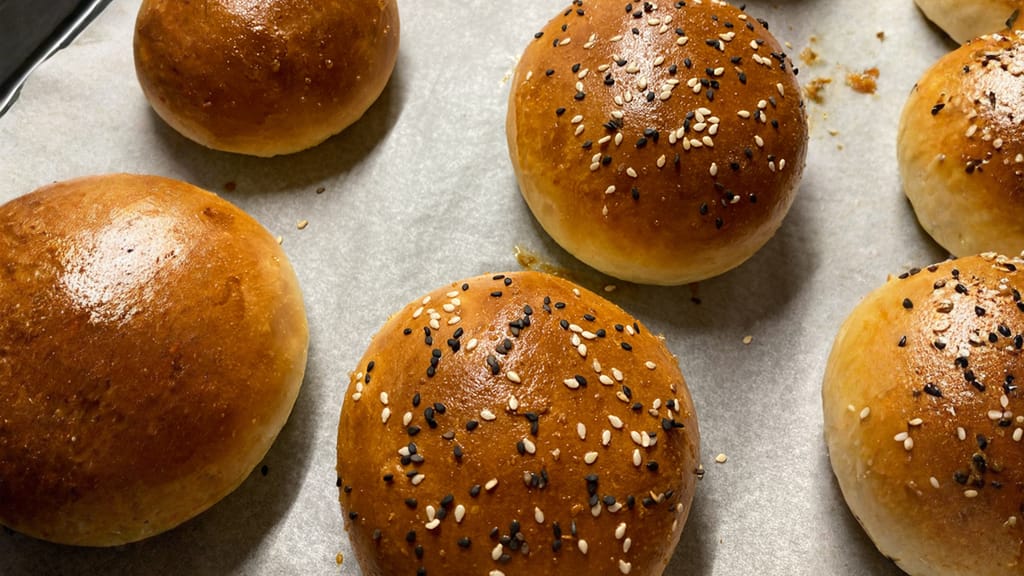
Super soft homemade burger buns
Soft homemade burger buns with tangzhong and sesame
Both work for a homemade burger: a bun is softer and sweeter, while a plain homemade roll is simpler and ready faster. The difference is mainly in the dough. A bun has more milk, butter and egg, so it's tender like brioche, while a roll is more bread-like and better handles heavy fillings such as pulled meat.
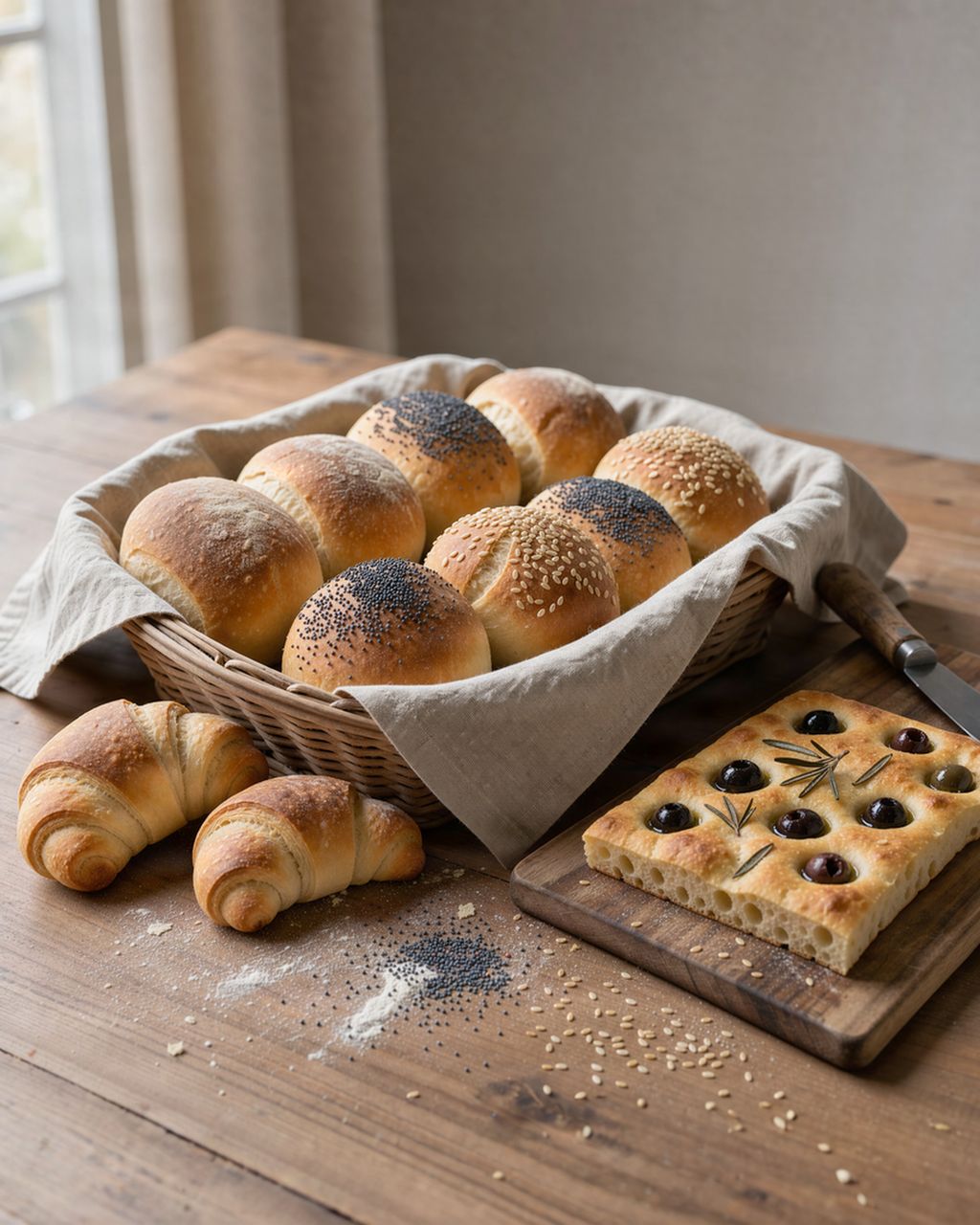
Soft homemade rolls, also for hamburgers are the easiest route to your own bread: the whole thing takes 100 minutes and makes about ten rolls. Knead the dough of all-purpose flour (Czech hladká), lukewarm water, a little milk, butter, sugar and dried yeast by hand, in a stand mixer or in a bread machine, leave to rise and divide into equal pieces. Roll each into a taut ball in your palm, press lightly, leave to rise again, brush with egg and water and sprinkle with poppy or sesame seeds. They bake at 185°C (365°F). If you make twenty smaller rolls from the dough, you have bread for party mini burgers right away.
If you'd rather not bake at all, reach for a store-bought hamburger bun. Toast it on the cut side too; it takes a minute and the burger will be a class better. Watch the size: the bun should be about the same diameter as a raw patty shrunk by cooking, so roughly 10 cm (4 inches).
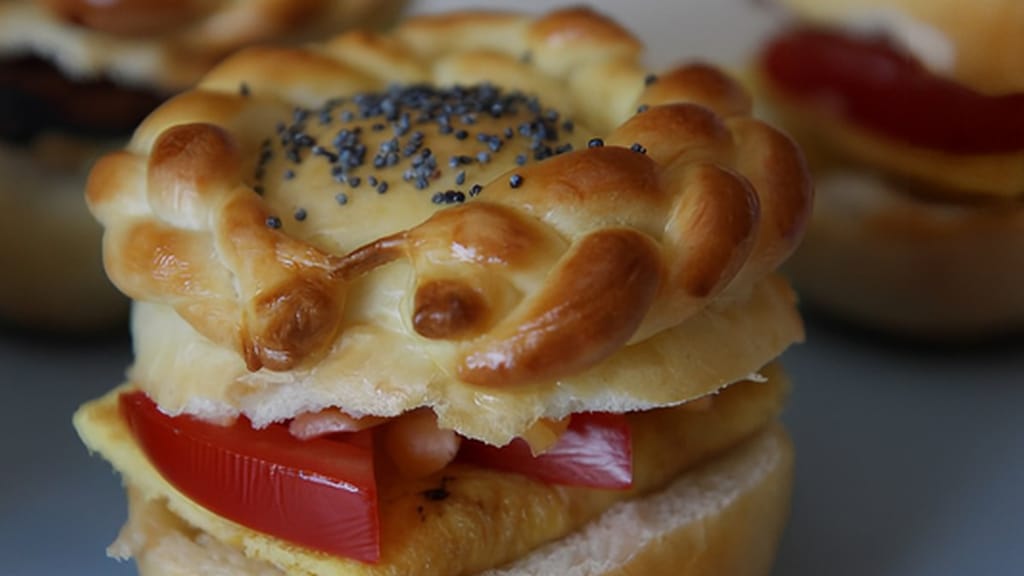
Soft homemade bread rolls, great for burgers
Soft homemade rolls for hamburgers and mini burgers
Burger sauce is almost always mayonnaise flavored with something sour, something sharp and something sweet. Mayonnaise gives fat and creaminess, acid (pickles, vinegar, lemon) cuts through the rich meat, mustard or chili add heat, and ketchup or honey adds rounded sweetness.
A simple homemade base: for 4 burgers, mix 4 tablespoons mayonnaise, 1 tablespoon ketchup, 1 teaspoon whole-grain mustard and 1 tablespoon finely chopped pickle with a splash of its brine. Let the sauce rest for 15 minutes so the flavors come together. Thickness matters: the sauce should stay on a spoon, not run off. A thin sauce soaks the bun and runs down your hands.
The recipes in this article show more routes:
Creamy crème fraîche dip: mayonnaise with crème fraîche 1:1, chili and parsley, as in the mushroom burger.
Honey-mustard: mayonnaise, honey and mustard, for crispy chicken.
Herb: ricotta, cottage cheese and sour cream with garlic, dill and lemon, fresh and tangier.
Avocado cream: avocado mashed with žervé and sun-dried tomatoes, for halloumi.
Tartar sauce: ready-made and tangy, for sweet glazed duck.
Spread sauce on both halves of the bun, but thinly. The bottom layer holds the lettuce in place, and the top adds flavor to every bite. If you're adding caramelized onion or mushrooms, treat them as another sauce and use less of the main one.
Mini burgers are the same homemade burger at a two-bite size: a 50–60 g (about 2 oz) patty in a roll about 6 cm (2½ inches) across. They suit standing-up parties and kids, for whom a big burger is hard to hold.
The bread is covered by the soft homemade rolls recipe: if you shape twenty smaller rolls from the whole batch instead of ten, you get exactly the right size. Small rolls bake a few minutes less, so watch them by color. Shape the patties as you would big ones, only thinner, about 1 cm (⅜ inch), and don't skip the dimple in the middle. They cook faster in the pan, and because they're thin, the crust forms before the meat dries out.
For a party, it's practical to prepare everything separately in advance: rolls baked and halved, sauce in a bowl, vegetables sliced, patties shaped and chilled on paper in the fridge. Only when the guests arrive do you cook the patties, toast the rolls on the cut side and let everyone build their own. For kids, leave out sharp mustard and raw onion; cheese and ketchup-style sauce are usually enough. One more advantage: small patties cook through evenly, so you reach the safe temperature in the center without the edges drying out.
Besides the meat, a homemade burger needs a cheese that melts, something sour, something fresh and crunchy, and at most one standout extra such as caramelized onion, bacon or mushrooms. More layers doesn't mean a better burger: every added item must have its role in the bite.
Cheese: cheddar is the classic because it melts well and has a strong, slightly nutty flavor. Gouda is milder and melts just as readily.
Sour: pickle slices, pickled red onion, or just a splash of vinegar in the sauce.
Fresh: a lettuce leaf, a slice of tomato, lamb's lettuce or arugula. Salt the tomato, or it tastes of water.
Onion: raw in rings for sharpness, or slowly caramelized for sweetness. Caramelizing takes half an hour or more and can't be rushed.
The stacking order affects whether the burger holds up: bottom bun, sauce, lettuce (as insulation between the juicy meat and the bread), patty with cheese, sour and fresh items, top bun with sauce. Serve the burger right after assembling. Ten minutes on the plate and a toasted bun turns into a sponge.
If you have ground meat left over, it doesn't have to end up in a burger. You'll find ideas for other dishes in our article on what to cook with ground meat.
Yes, raw ground meat patties can be frozen; the USDA says ground meat keeps its quality in the freezer for 3 to 4 months. Shape the patties with the dimple, layer them with parchment paper, freeze them loose on a tray first and then move them to a bag. Thaw them overnight in the fridge and salt them only just before cooking. You can freeze homemade buns too; once thawed, just toast them on the cut side.
A homemade burger usually falls apart because the meat is too warm, too lean, or you moved the patty too soon. Chill the patties in the fridge before cooking, use meat with 15 to 20 percent fat, and flip them only once they have a crust and release from the pan on their own. The crust holds the patty together.
No, a classic homemade burger has no egg, breadcrumbs or bread roll in it. Meat with enough fat holds together on its own, and a binder turns it into a soft meatball-style patty. Add egg and breadcrumbs only if you're making patties from very lean or poultry ground meat, which doesn't hold together by itself.
Besides cheddar, any cheese that melts well works on a homemade burger: Gouda, Emmental, Gruyère, provolone or smoked cheese. Strong cheeses such as blue cheese or goat cheese are better crumbled on top in small amounts. Halloumi and similar grilling cheeses don't melt; they're cooked as a separate slab.
Raw ground meat for burgers keeps in the fridge only briefly: the USDA says 1 to 2 days, and the use-by date on the package always applies. The UK Food Standards Agency explains that mincing spreads bacteria from the surface through the whole of the meat. If you won't get to cooking it, freeze the shaped patties instead.
One recipe worth heating the oven for, one tip, and one deal from the shop. Nothing else.