Puff pastry parcels with salmon and goat cheese
What to Bake With Puff Pastry: Savory and Sweet Ideas, Fast and Store-Bought
Updated Nov 18, 2026
What can you bake with puff pastry when you want something fast and store-bought? Savory: cheese straws, ham and cheese pinwheels, spinach turnovers, pizza pinwheels or a savory tart. Sweet: apple turnovers, strudel, věnečky (Czech pastry rings), croissants and cream horns. Almost everything bakes at 200–220°C (400–425°F) for 12–25 minutes, and a single sheet gives you a whole tray of food. Puff pastry, savory or sweet, works when you stick to four things: the pastry and the filling are cold, the filling is as dry as possible, you seal the edges with egg wash and keep filling out of the seam, and you bake the base on a hot baking sheet in a preheated oven. Below you'll find the method, temperature and time for each idea, party appetizers, what to do when the pastry didn't rise or stayed raw inside, and how to store the baked pieces.
Store-bought puff pastry is enough for everything in this article. Homemade tastes a notch better, but it takes half a day, and with cheese straws, pinwheels or turnovers you'll barely notice the difference.
When buying store-bought, look at two things:
Fat. All-butter puff pastry smells and tastes noticeably better, especially in sweet bakes. Pastry made with vegetable fat is more forgiving when it warms up and usually rises nicely, but the flavor is neutral.
Chilled or frozen. A chilled sheet rolled up with paper is ready to use right away. Frozen blocks have to be thawed in the fridge, but they keep for months in the freezer.
When it's worth making your own, how much work classic puff pastry is and what the quick "rough puff" version can do are covered in Puff pastry: store-bought, homemade or rough puff. If you don't want to laminate at all, try the tender quark (tvaroh, a Czech fresh curd cheese) dough known as mock puff pastry.
Seasonal baking plans, tested recipes and kitchen tricks that save you time. Unsubscribe in one click.
Work with puff pastry cold, cut it with a sharp knife in one stroke and brush only the top. These three rules decide whether it rises into layers or stays flat.
Keep it cold. Puff pastry rises on steam from the butter between the layers. If the butter softens, it soaks into the dough and the layers merge.
Take a chilled sheet out of the fridge about 5–10 minutes before unrolling so it doesn't crack as you unfold it. Don't leave it out longer.
Work quickly. As soon as the pastry turns sticky or shiny, put it back in the fridge for 10–15 minutes, even mid-shaping.
Chill shaped pieces for 15–20 minutes before baking. Cold butter in a hot oven gives the most steam.
Cutting. A dull knife squashes the edges and glues the layers together, so the pastry won't rise there.
Use a sharp knife, pastry wheel or pizza cutter and cut in one stroke, not by sawing.
Press a cutter straight down and don't twist it.
Place cut pieces (rounds, věnečky) on the baking sheet upside down. The edge the knife pressed down is then on top and the layers separate better as they bake.
Don't crumple scraps into a ball, as that breaks the layers. Stack them on top of each other and roll them out again.
Brushing. You brush for color and shine, not for flavor.
An egg yolk with a spoonful of milk or cream gives the darkest, glossiest crust.
A whole beaten egg gives a golden color and a mild shine; it's the all-purpose choice.
Milk or cream gives a paler, matte crust.
Brush a thin layer with a pastry brush and leave a few millimeters free along the cut edges. Egg that runs over the edge glues the layers together.
For sweet bakes, sprinkle the brushed top with coarse or cane sugar; for savory, with seeds, coarse salt or cheese.
For a detailed look at what to brush on puff and stretched-dough pastries and what each wash does to the crust, see What to brush on strudel: egg, milk, butter and the perfect crust.
Puff pastry needs a filling that is as dry as possible and cooled. Drain or thicken a wet filling before you fill the pastry, otherwise the pastry soaks it up.
Dry fillings (use straight away): hard cheese, ham, bacon, poppy seeds or nuts with sugar, marzipan, ground meat fried until dry.
Wet fillings (they need adjusting):
Spinach and mushrooms: sauté until no more water evaporates from the pan, then squeeze the spinach out in a kitchen towel.
Tomatoes and zucchini: slice, salt and leave to drain in a sieve for 15–20 minutes, then pat dry with a paper towel.
Quark (tvaroh, a Czech fresh curd cheese) and ricotta: use a fattier quark and add an egg yolk and 1–2 tablespoons of semolina or breadcrumbs. Let a runny quark drain overnight in cheesecloth in the fridge.
Apples, plums, cherries: simmer them briefly or mix with 1 tablespoon of starch per 500 g of fruit, or first sprinkle the base with a layer that absorbs the juice (see below).
Frozen fruit: let it thaw and pour off the juice. If you put it in the pastry frozen, it releases water straight onto the base.
The filling must be cold. A warm filling softens the butter in the pastry layers before baking and the pastry then won't rise.
Line the base of the pastry with a thin absorbent or waterproof layer that catches the juice before it reaches the dough. What works:
sweet: 2–3 tablespoons of ground nuts, sponge cake crumbs or breadcrumbs mixed with sugar, and for fruit pockets also a thin layer of marzipan,
savory: grated Parmesan, breadcrumbs or a thin layer of mustard or pesto under tomatoes,
for anything: brush the base with beaten egg white and let it dry for a minute.
We describe the same principle for strudel in Apple strudel: a complete guide to the homemade roll. Here you can use it on any puff pastry.
Blind-baking pays off when the pastry is only on the bottom and the filling is wet or liquid: puff pastry pizza, an open apple tart, a savory tart with an egg and cream custard. Closed turnovers and parcels aren't blind-baked; a drier filling and a hot baking sheet do the job there.
How to do it:
Place the sheet on a baking sheet and score a border 2 cm (¾ in) from the edge with a knife (don't cut through). This makes a rim that rises.
Prick the inside thoroughly with a fork so it doesn't puff up.
Bake for 10–12 minutes at 200°C (400°F) until it starts to turn light golden.
If the center still puffs up, gently press it down with a spoon right after taking it out.
Add the filling and finish baking.
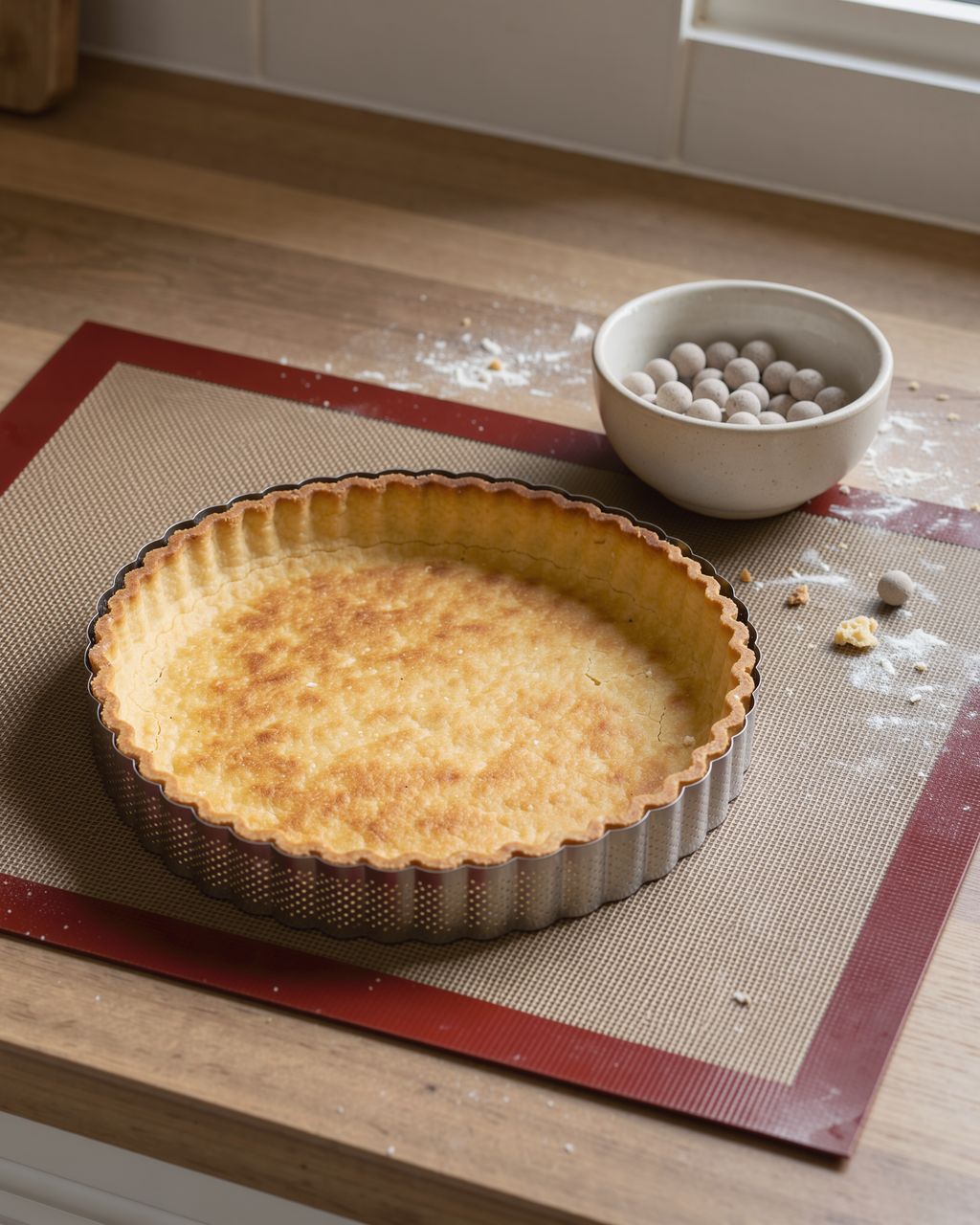
For a liquid custard, go further: weigh the inside down with parchment paper and dried beans, bake for 15 minutes, remove the paper and bake for another 5 minutes. Shortcrust under tarts is treated the same way; there's more on it in Pâte sablée: buttery shortcrust step by step.
Edges hold when there's no filling or flour in the seam, you glue them with egg and press them down with a fork. Here's how:
Leave a 1–1.5 cm (½ in) border and don't overfill. For a 10 × 10 cm (4 × 4 in) square, 1–1.5 tablespoons of filling is enough.
Brush the border with beaten egg or water. Only the seam, not the whole surface.
Press the folded edges down firmly and then crimp them with a fork.
Make a vent: 1–2 small slits on top so steam from the filling has a way out and doesn't push the filling out of the seam.
Chill the shaped turnovers for 15–20 minutes. Cold butter in the oven gives more steam, and the seam won't come apart during baking.
Egg on the surface mustn't run over the cut edges. The layers would stick together and the pastry wouldn't rise on that side. So brush only the top and leave a few millimeters free at the edge.
These are the quickest savory things to bake from puff pastry, almost all at 200°C (400°F):
cheese straws – 12–15 minutes,
ham and cheese pinwheels – 15–18 minutes,
spinach and feta turnovers – 18–22 minutes,
pizza pinwheels – 15–18 minutes,
savory tart with a custard filling – 20 minutes blind-baking, then 25–30 minutes at 180°C (350°F),
sheet-pan pizza, parcels and puff pastry shells.
A savory filling for puff pastry should be dry and boldly flavored: hard cheese, smoked meat, sautéed vegetables. The times are for a preheated oven with top and bottom heat and for one standard chilled sheet.
Cheese straws are the fastest thing you can make from puff pastry: brush the sheet, sprinkle with cheese, cut, and they're done in 15 minutes.
Use finely grated hard cheese (Parmesan, Emmental, aged Gouda) and press it into the pastry with a rolling pin so it doesn't fall off while you twist.
Twist strips 1.5–2 cm (about ¾ in) wide like a corkscrew and press the ends onto the baking sheet so they don't untwist.
Chill them for 15 minutes and bake 12–15 minutes at 200°C (400°F) until golden brown, including the center of the twists.
More cheese than the pastry can carry will melt across the baking sheet and burn. Moist cheese (mozzarella, fresh Edam) makes the straws soggy.
Savory pinwheels work when you let the roll firm up in the cold before slicing and don't overfill.
Spread the sheet with just a thin layer of mustard, pesto or cream cheese, scatter with finely diced ham and grated cheese, and leave 1 cm (½ in) free along one long side.
Put the roll in the freezer for 15–20 minutes or in the fridge for 30 minutes. Once firm, it slices without squashing.
Lay 1.5 cm (½ in) slices cut side down, 3 cm (1¼ in) apart, and bake 15–18 minutes at 200°C (400°F).
Pizza pinwheels are made just like savory pinwheels, except instead of mustard you spread a thick tomato base.
Spread 2–3 tablespoons of tomato paste or a very thick sauce flavored with oregano. A thin tomato sauce would make the pinwheels soggy.
Sprinkle with grated pizza mozzarella (the firm block kind, not fresh from brine) and sliced salami or ham.
Roll up, chill until firm, slice to 1.5 cm (½ in) and bake 15–18 minutes at 200°C (400°F).
Sheet-pan pizza is a faster variation: blind-bake the sheet for 10 minutes at 200°C (400°F) and thicken the tomato base until it's as thick as tomato paste. Tear the mozzarella, let it drain and pat it dry. Finish baking for 10–12 minutes.
Spinach turnovers only work with well-squeezed, cooled spinach, otherwise the bottom turns wet.
Sauté the spinach with garlic until no more water evaporates from the pan, then squeeze it out in a kitchen towel and let it cool. Add salt carefully, as feta is salty.
For a 10 × 10 cm (4 × 4 in) square, 1–1.5 tablespoons of filling is enough. Glue the edges with egg, crimp with a fork and cut a slit on top (method above).
Chill for 15 minutes and bake 18–22 minutes at 200°C (400°F) until deep golden, including underneath.
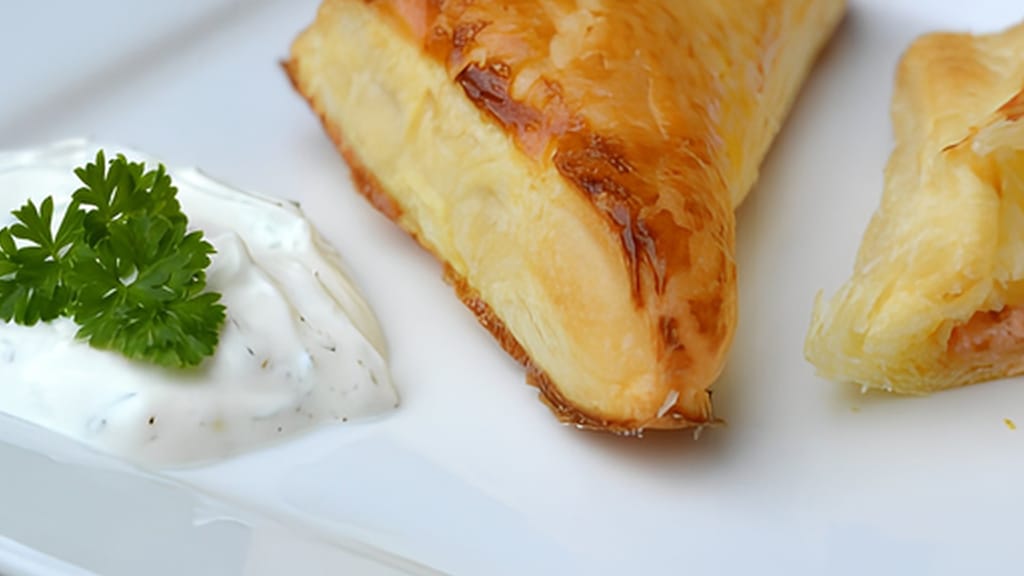
You fill parcels (šátečky) in a similar way: fill them cold and put just 1–1.5 tablespoons of filling in the center. For inspiration, see the recipe for puff pastry parcels with salmon and goat cheese.
Puff pastry parcels with salmon and goat cheese
Puff pastry parcels with salmon and goat cheese
For a savory puff pastry tart, you first have to blind-bake the shell with weights and pour the custard into the baked, still warm shell.
Prick the base with a fork and blind-bake with weights: parchment paper and dried beans, 15 minutes at 200°C (400°F), then another 5 minutes without the paper (method above).
Spread a dry filling on the base (sautéed bacon, leek, squeezed-out spinach, cheese) and pour the egg and cream custard over it only then.
Bake 25–30 minutes at 180°C (350°F) until the custard in the middle just barely wobbles (at least 71°C/160°F inside). It finishes setting as it cools; slice after 15 minutes.
Here you can lower the temperature to 180°C (350°F): the shell is already baked through, and an egg custard stays creamy in gentler heat instead of curdling. For filling ideas, take a look at the spinach quiche with chicken or the savory asparagus tart with bacon. Both use a different pastry, but the fillings work in puff pastry too.
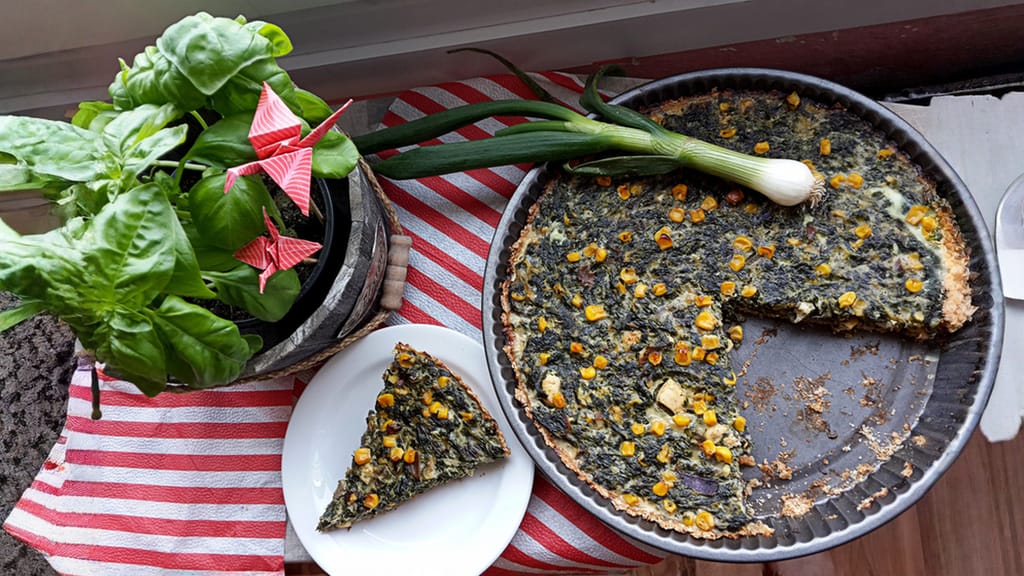
Spinach and chicken quiche
Spinach quiche with chicken – a filling for a savory tart
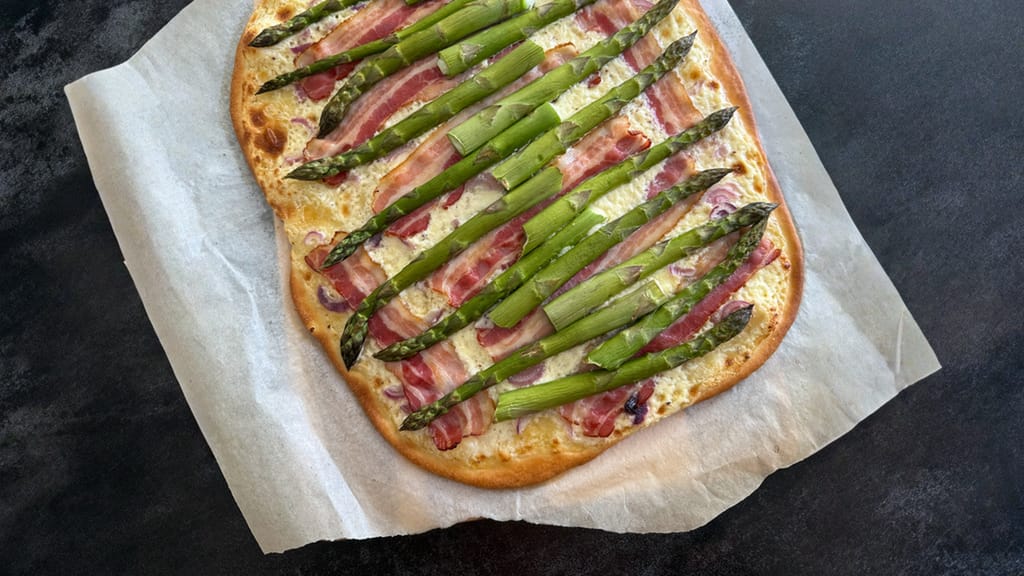
Savory asparagus tart with bacon and yogurt
Savory asparagus tart with bacon and yogurt
Bake puff pastry shells empty and fill them only after baking, right before serving. You'll find the method in the recipe for puff pastry shells.
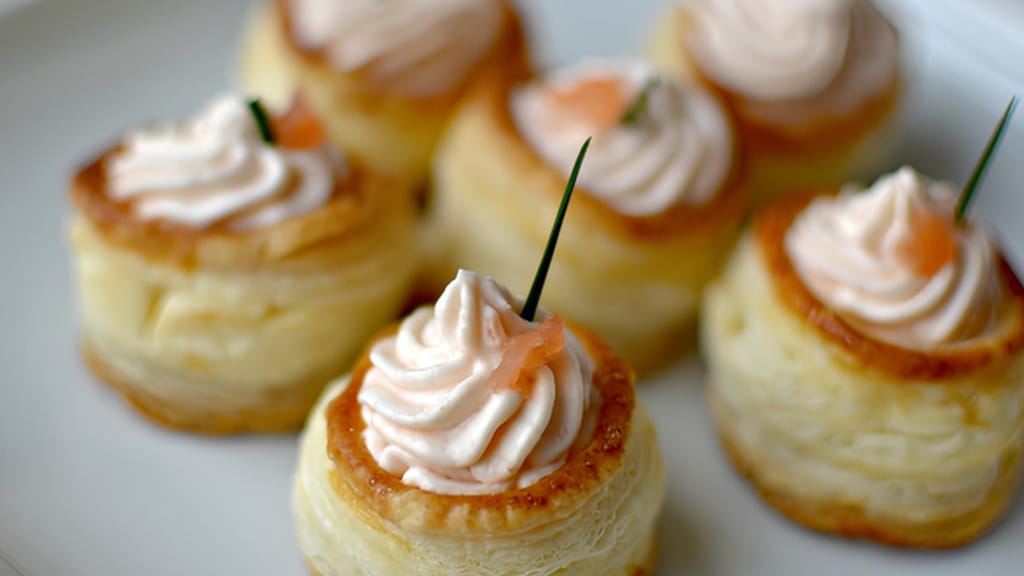
Puff pastry bites
Puff pastry shells filled after baking
For sweet bakes, puff pastry gives you mainly:
apple turnovers – 18–22 minutes at 200°C (400°F),
puff pastry strudel – 25–35 minutes at 200°C (400°F),
puff pastry věnečky – 12–15 minutes at 200°C (400°F),
puff pastry croissants – 15–18 minutes at 200°C (400°F),
cream horns – 12–15 minutes at 200°C (400°F),
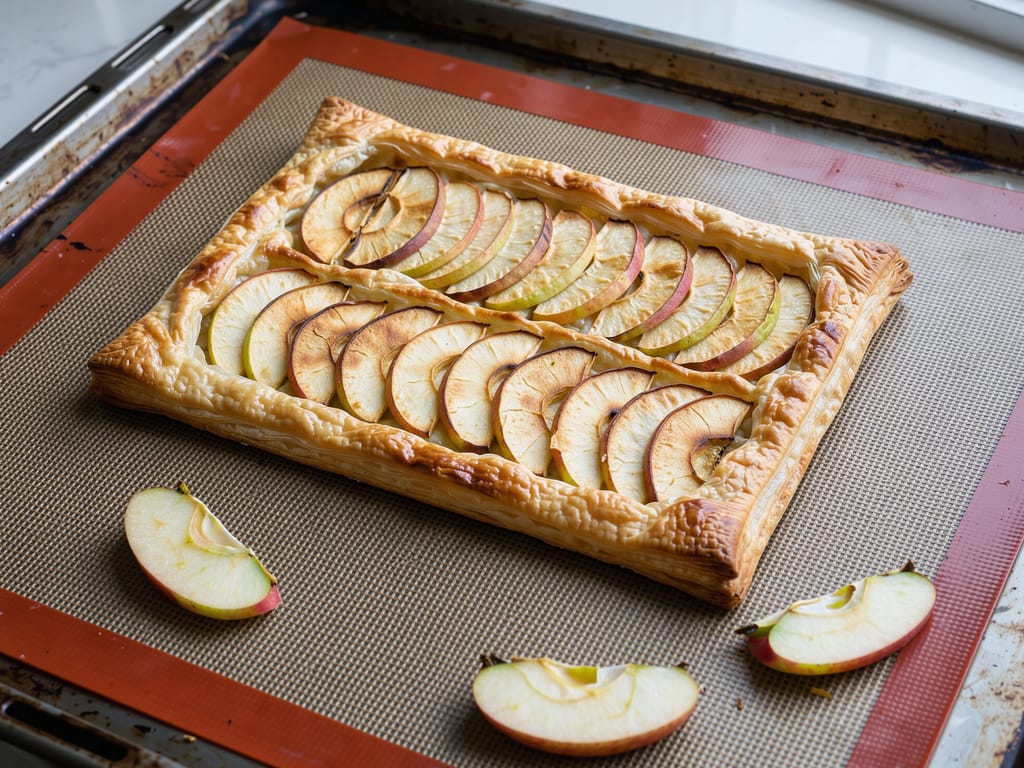
sheet-pan fruit tart, quark pockets and plum turnovers.
A sweet fruit filling in puff pastry can release a lot of water, because added sugar draws juice out of the fruit. So sweeten the fruit only right before filling and line the base.
You can bake apple turnovers in 20 minutes if you briefly simmer the apples beforehand and let them cool.
Briefly simmer finely diced apples with sugar, cinnamon and a little starch stirred into water, which thickens the juice. Put them in the pastry completely cooled.
Put a teaspoon of ground nuts or breadcrumbs under the apples; they catch the juice before it reaches the base.
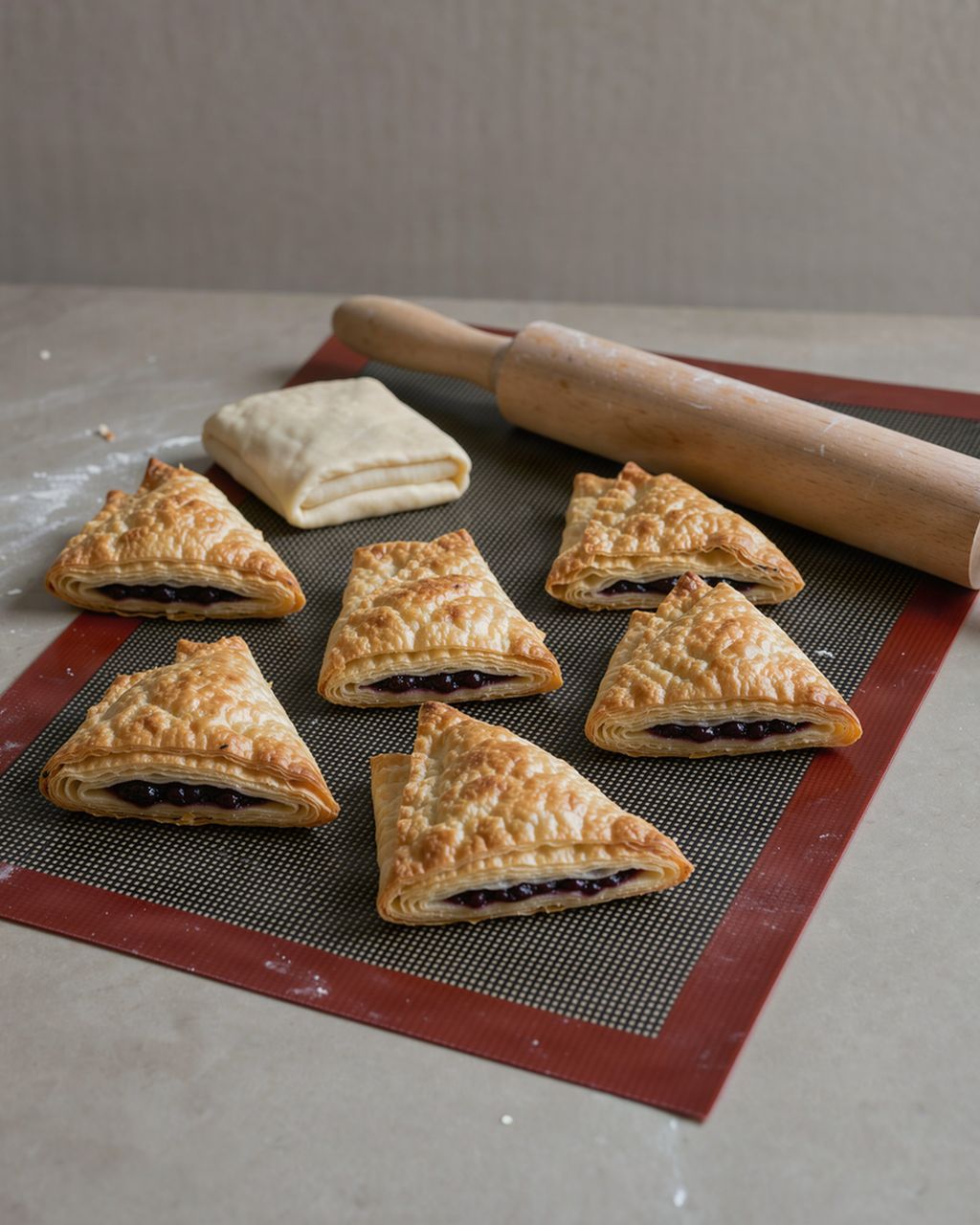
Fold into a triangle, seal, crimp with a fork and cut a slit. Brush with egg, sprinkle with sugar and bake 18–22 minutes at 200°C (400°F).
Variations on the same principle:
Quark pockets: thicken the quark with an egg yolk and semolina, and soak and dry the raisins beforehand.
Plums and cherries: halve and pit them and place them cut side up, with crumbs or marzipan sprinkled under them on the base.
Sheet-pan fruit tart: blind-bake, brush with a thin layer of apricot jam and arrange the fruit tightly.
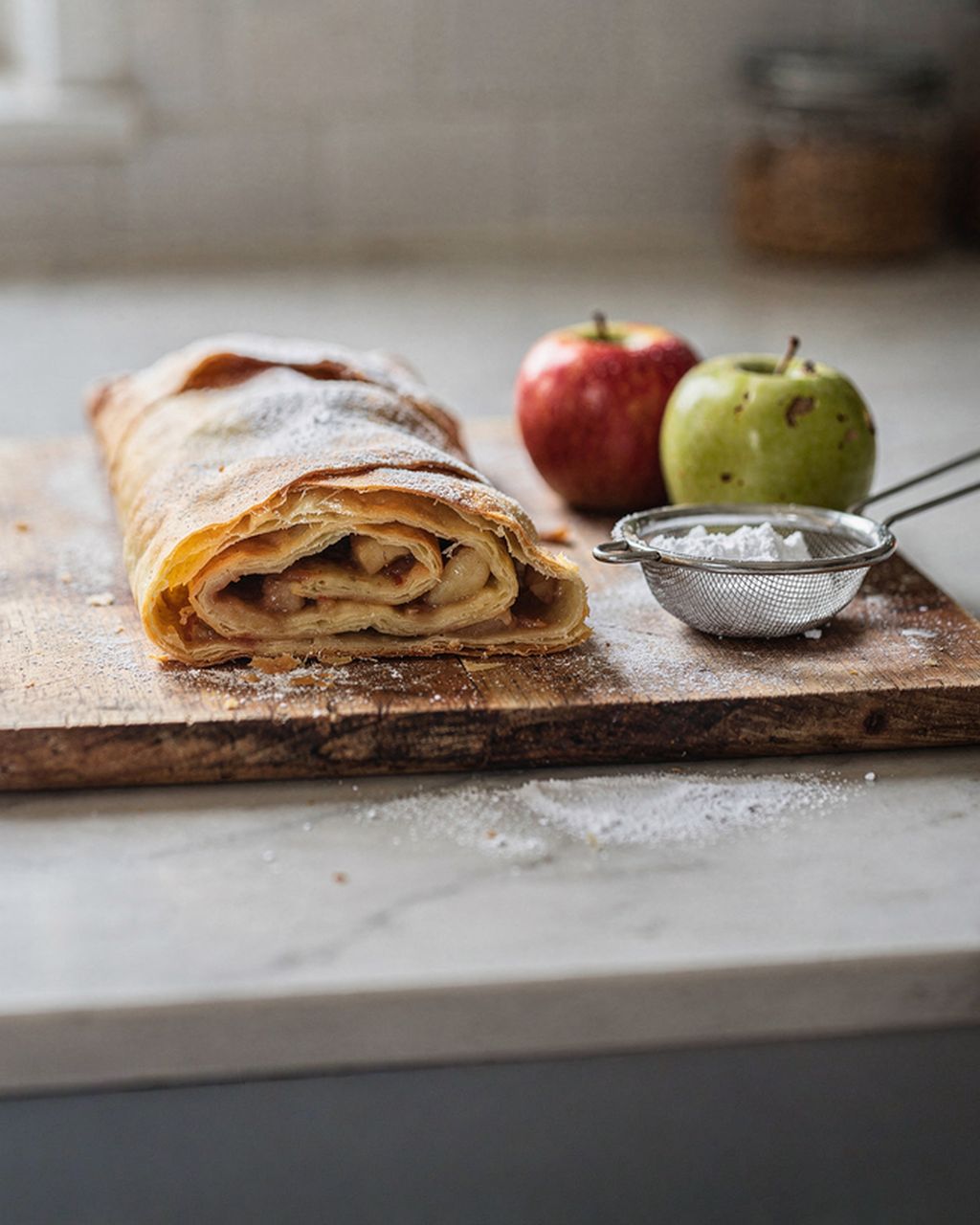
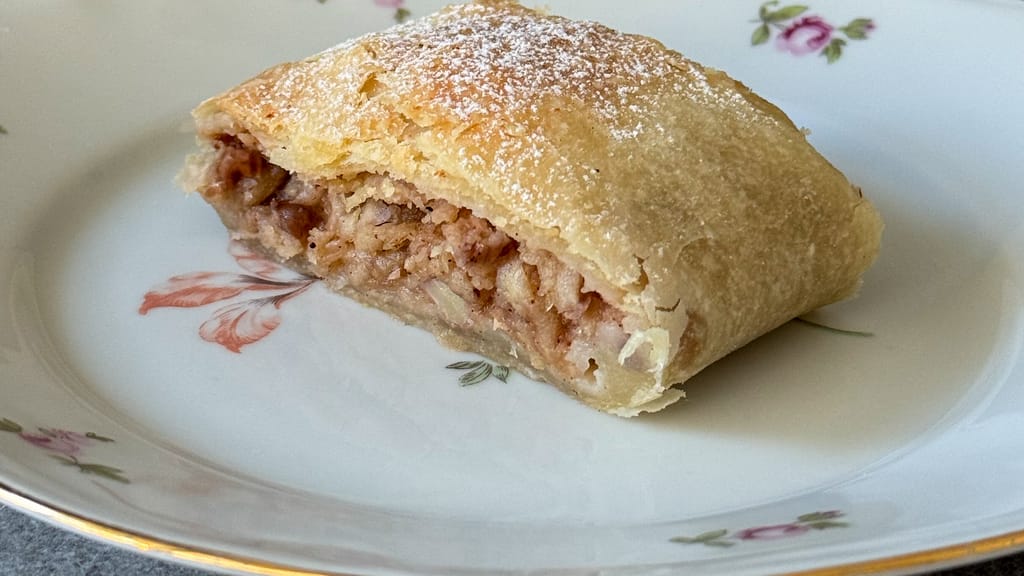
Puff pastry strudel is the quickest route to a strudel: instead of stretching dough, you unroll a sheet, fill it and it's baked in half an hour.
Scatter a strip of breadcrumbs or ground nuts over the middle third of the sheet, and top with grated and squeezed-out or thinly sliced apples with sugar, cinnamon and raisins.
Wrap the sheet over the filling, or cut the side thirds diagonally into 2 cm (¾ in) strips and braid them over the filling.
Place it seam side down, brush with egg and bake 25–35 minutes at 200°C (400°F) until deep golden brown, including underneath.
You'll find the full method in the recipe for quick apple strudel from puff pastry. If you want the classic, see apple strudel from homemade stretched dough, and the article Apple varieties: which for strudel, which for apple butter will tell you which apples to use.
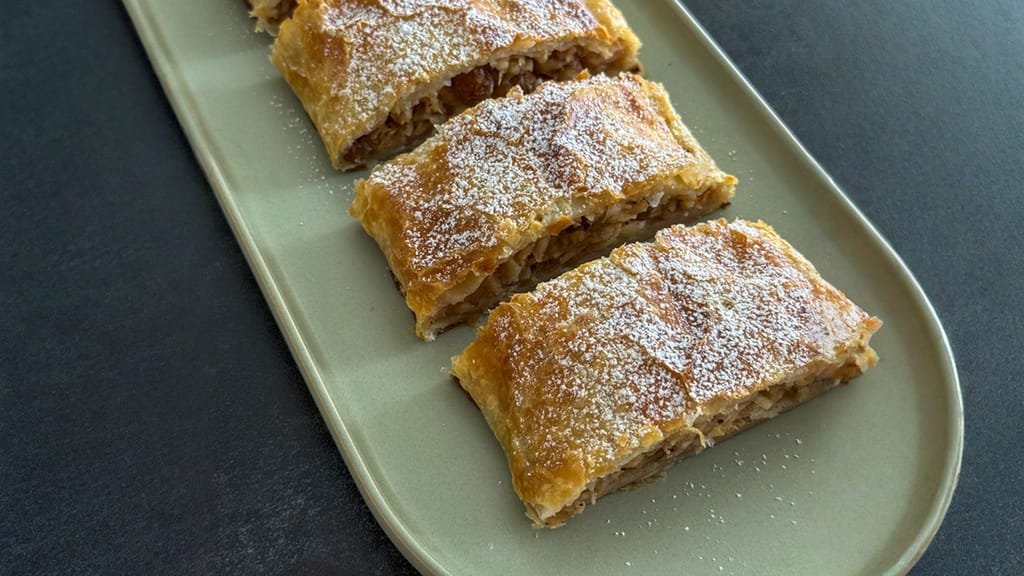
Apple strudel from puff pastry (quick version)
Quick apple strudel from puff pastry
Apple strudel with homemade stretched pastry
Classic apple strudel from homemade stretched dough
Puff pastry věnečky are rings baked golden that you fill with cream once cooled, or just dust with powdered sugar. Careful: the classic pastry-shop věneček is made of choux pastry, which we describe in Choux pastry with oil, lard or butter: what each fat does to věnečky. The puff pastry version is quicker and crunchier.
Cut out rounds 7–8 cm (about 3 in) across. From half of them, cut out a 4 cm (1½ in) center to make rings.
Brush the edge of the whole rounds with water and place the rings on top. The rim then rises higher than the center.
Brush only the top of the ring with egg and bake 12–15 minutes at 200°C (400°F).
Once cooled, fill the hollow with vanilla cream or whipped cream with fruit, or just dust the věnečky with powdered sugar.
Refrigerate filled věnečky and eat them the same day, as the cream gradually softens the pastry.
You roll puff pastry croissants from triangles and bake them in 15–18 minutes, just don't expect a classic croissant. That is made from a yeasted laminated dough and has a soft crumb; puff pastry gives a crunchier, flakier crescent without the yeasty aroma.
Cut the sheet into long triangles with an 8–10 cm (3–4 in) base.
Put the filling by the wide side: a piece of chocolate, a strip of marzipan, a teaspoon of Nutella, or for savory, ham and cheese. Don't overfill.
Roll from the base to the tip, leave the tip underneath and curve the ends slightly into a crescent.
Chill for 15 minutes, brush with egg and bake 15–18 minutes at 200°C (400°F).
For cream horns you wind strips of puff pastry around metal cones, bake them in 12–15 minutes and fill them only once cooled.
Lightly grease the metal cream horn molds (about 2–2.5 cm / 1 in across) with butter.
Cut the sheet along the longer side into strips 2 cm (¾ in) wide.
Wind a strip around a mold in a spiral from the narrow end so that each turn overlaps the previous one by about a third. Press the end underneath.
Brush with egg, sprinkle with sugar and bake 12–15 minutes at 200°C (400°F) until golden.
Remove the molds while the horns are still warm, with a slight twist. It's harder once they've cooled.
Fill only when completely cooled, ideally right before serving.
Traditionally they're filled with whipped egg white cream (meringue made by whisking in hot sugar syrup), or more simply with whipped cream or vanilla cream. Empty baked horns stay crisp for 2–3 days in an airtight container; filled ones belong in the fridge and should be eaten the same day.
You can also make mille-feuille slices from puff pastry: two fully baked, weighted sheets with vanilla cream between them. We cover the whole method in Mille-feuille: crisp puff pastry and cream step by step. For a quick version, a sheet pricked with a fork, weighted with a second baking sheet and baked for 20–25 minutes at 200°C (400°F) doesn't rise but stays crisp and flat.
For a party, the best puff pastry appetizers are cheese straws, mini pinwheels, pigs in a blanket, small turnovers and puff pastry shells. You can shape everything ahead and bake just before guests arrive.
Shape and freeze raw. Spread straws, pinwheels and turnovers on a baking sheet, freeze, then transfer to a bag. Bake straight from frozen, 5–10 minutes longer depending on size. Raw shaped pieces keep better in the freezer than baked ones.
Pigs in a blanket: wind strips 1.5–2 cm (about ¾ in) wide in a spiral around halves or thirds of frankfurters, brush with egg, sprinkle with sesame seeds and bake 15–18 minutes at 200°C (400°F).
Mini pinwheels and mini turnovers: the same method as above, just smaller. Turnovers made from 6 × 6 cm (2½ × 2½ in) squares with a teaspoon of filling bake in roughly 12–15 minutes.
Puff pastry shells can be baked in the morning and filled only when serving, see puff pastry shells.
Bake 30–60 minutes before guests arrive, ideally in two batches. Puff pastry is best lukewarm. Put the second batch in the oven when the first comes out.
Put out a mix of savory and sweet: stand the straws in a glass so they take up no space, and stack pinwheels and turnovers on a board.
Puff pastry doesn't rise when it was warm, when a knife or egg wash glued its edges, or when the oven wasn't hot enough. It stays raw inside and underneath because not enough heat reaches it before the water from the filling soaks it.
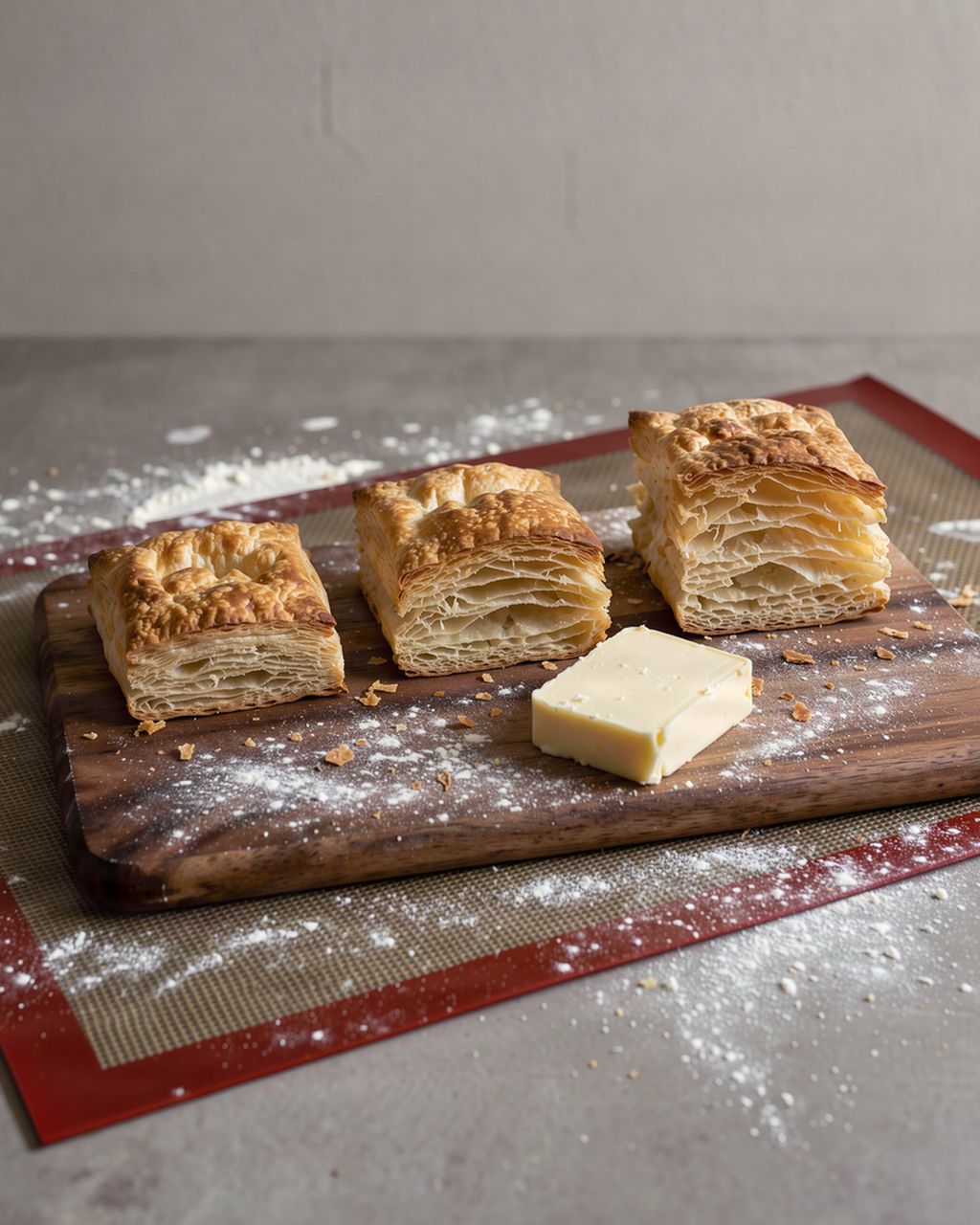
Puff pastry doesn't rise like yeast dough at all, as it has no yeast in it. It rises on steam: between hundreds of thin layers of dough there's butter, its water evaporates sharply in the oven and lifts the layers apart. For that it needs a quick blast of heat and cold, unglued layers.
The pastry didn't rise because:
the pastry was warm and the butter soaked into the dough before it went in the oven,
the edges were squashed by a dull knife or glued by egg that ran over the edge,
the oven wasn't preheated or runs cooler than the dial shows, so the butter just leaks out instead of making steam,
scraps were crumpled into a ball and the layers broke.
It stayed raw inside and underneath because:
the filling releases water and the pastry soaks it up before it can set,
the filling weighs it down and the layers under it have nowhere to rise,
the baking sheet heats the bottom more slowly than the air above, especially a cold sheet or one with paper,
the pastry was too thick or overfilled, typically a double layer at the seam or a big turnover,
you took it out too early: a golden top doesn't mean a baked center.
You'll recognize the result when you cut it: a golden crust on top, and inside and underneath a grayish, sticky layer that stretches. If that happens, return the pieces to the oven for 5–10 minutes at 200°C (400°F), covering the top with aluminum foil.
The bottom of puff pastry bakes crisp when it gets heat from the very first minute: an oven preheated to 200–220°C (400–425°F), a hot baking sheet and baking in the lower third of the oven. Specifically:
Preheat the oven with the baking sheet in it for at least 20 minutes. Then slide the sheet of pastry onto the hot baking sheet, along with its paper or mat.
Bake on the lowest or second-lowest rack with top and bottom heat on. Fan heat browns the top before the bottom is baked through.
Don't lower the temperature because of the filling. If the edges darken too fast, cover them with aluminum foil, but don't turn the oven down. The only exception is an egg custard in an already blind-baked shell, where 180°C (350°F) helps.
Bake longer than you think. It's done when the pastry is deep golden brown underneath too and the base is dry and firm when you lift the edge.
After baking, leave the pastry on a wire rack, not on the baking sheet. Steam trapped underneath would soften the base again.
The base of puff pastry bakes best on a perforated mat or on a hot stone; parchment paper on a regular baking sheet is only enough for dry fillings and small pieces. The difference is whether steam can escape from underneath:
Parchment paper on a regular baking sheet. Steam under the pastry has nowhere to go, so with large sheets and wet fillings the base goes soft the most.
A perforated aluminum pan (for pizza, say) lets heat and steam through, but without paper the pastry sticks to it and butter drips into the oven.
A pizza stone or steel plate gives the base the most heat. It's worth it if you already have one and mostly bake pizza. But it has to preheat for roughly 45–60 minutes (a thin steel plate needs less time). In an America's Test Kitchen test, a regular stone was only about 233°C (451°F) after 45 minutes and around 265°C (509°F) after an hour. You move the pastry onto it with a peel.
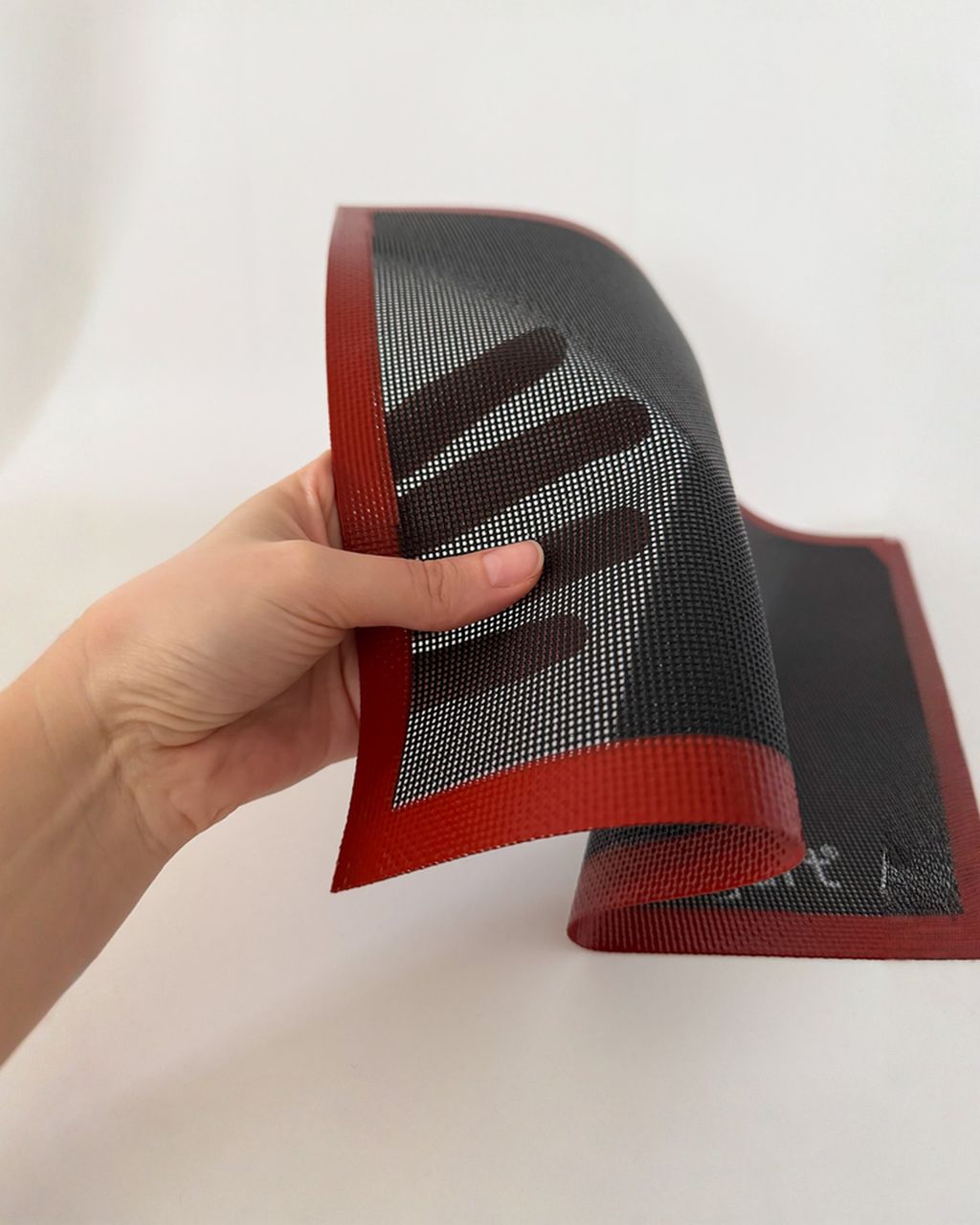
A perforated silicone mat laid on a rack or perforated pan works like paper that breathes. Tiny holes let steam out and heat in, the pastry doesn't stick and the butter stays on the mat. That's why we sell the Silikomart perforated silicone mat.
If you have none of these, heat an upside-down baking sheet in the oven and slide the pastry onto it with its paper. It's the cheapest way to add heat to the base.
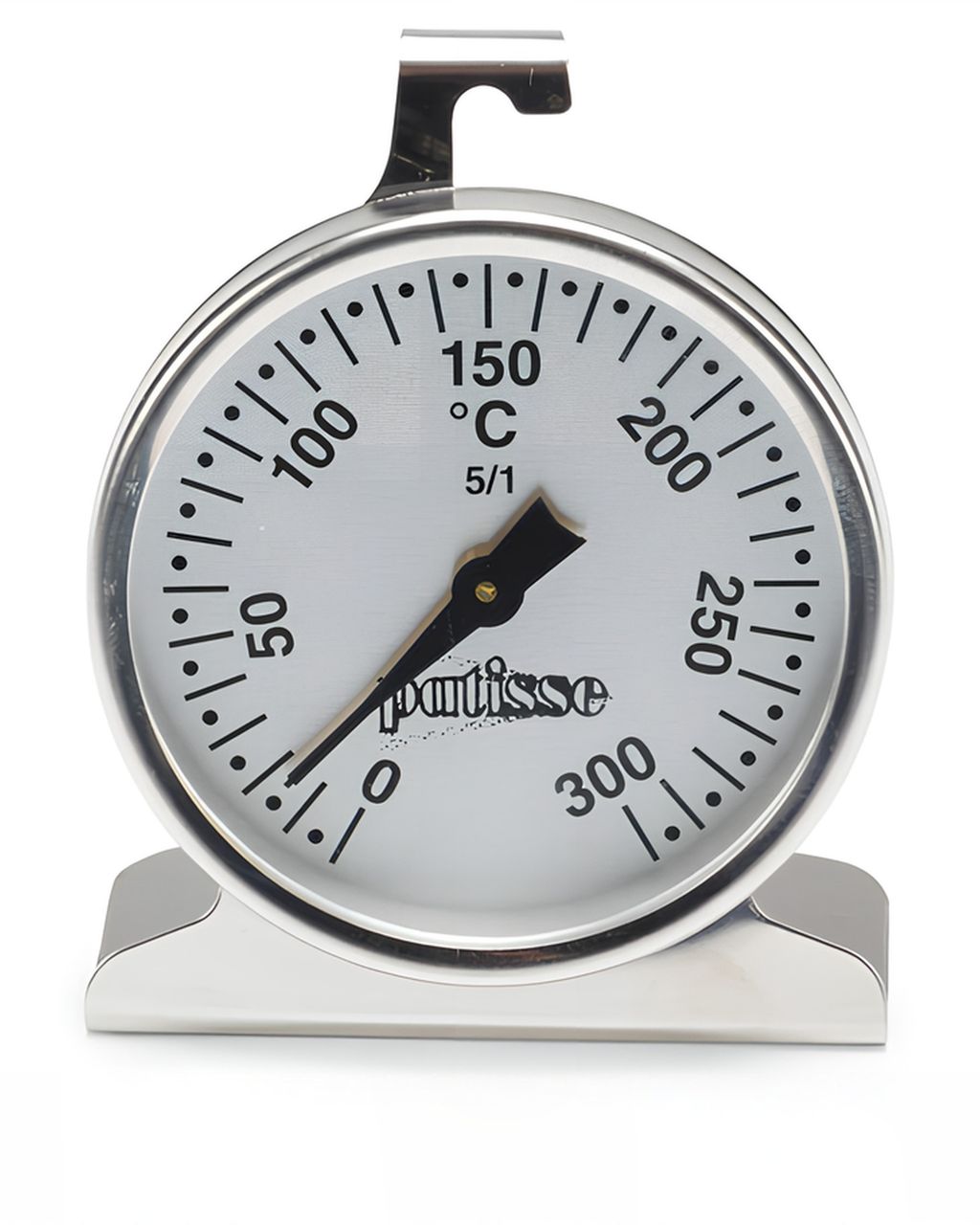
An oven thermometer shows whether your oven really reaches the 200–220°C (400–425°F) that puff pastry needs to rise and bake through the base. If the thermostat says 200°C (400°F) but the oven is well below that, the water in the butter doesn't evaporate fast enough. The butter then leaks out and the base stays greasy, even if you did everything right with the filling.
Put the thermometer in the middle of the rack where you'll bake and wait until the temperature settles. Then adjust the dial number accordingly. A simple dial-type Patisse oven thermometer hung on the rack is enough. You only need to check once, and then you know how far off your oven runs. You'll find more baking sheets, pans and tools in the pans and baking tools category.
Baked puff pastry without a perishable filling (cheese straws with baked-on hard cheese, pieces sprinkled with sugar, empty cream horns) keeps 1–3 days at room temperature in a paper bag or box. Pieces filled with fresh or soft cheese, meat, eggs, quark or cream belong in the fridge within 2 hours.
Room temperature: don't put it in a plastic bag or a tight container while it's warm, as steam would soften it. Let it cool completely on a wire rack.
Fridge: according to the US Food Safety and Inspection Service (USDA FSIS), perishable food should go into the fridge within 2 hours of baking (within 1 hour if the temperature is above 32°C/90°F). It recommends using fridge leftovers (at 4°C/40°F) within 3–4 days.
Cream-filled pieces (cream horns, filled věnečky) are best the same day. If you want them ahead, store the baked pastry and the cream separately in the fridge and fill just before serving.
Freezer: you can freeze baked pieces without cream in a sealed bag. But you'll get a better result by freezing them raw and baking as needed.
Crispness is lost in the fridge. Reheat baked pieces for 5–8 minutes at 180°C (350°F) in the oven (about 10 minutes from frozen), or 3–4 minutes in an air fryer, not in the microwave, which turns them rubbery.
Bake puff pastry in a preheated oven at 200–220°C (400–425°F) with top and bottom heat. Small pieces like cheese straws, pinwheels or cream horns need 12–18 minutes, filled turnovers 18–22 minutes, and a large strudel or tart 25–35 minutes. It's done when it's deep golden brown on the bottom too, not just pale golden on top.
You can prepare filled raw puff pastry only a few hours ahead, with a dry filling only, and keep it in the fridge. Overnight, even a dry filling will make the underside of the pastry damp. If you want a head start, make the filling the day before, chill it in the fridge and fill the pastry just before baking. Alternatively, freeze the filled turnovers raw and bake them straight from frozen, 5–10 minutes longer depending on size.
Frozen puff pastry has to be thawed, but only until it can be unrolled without cracking. Ideally leave it in the fridge overnight. Don't thaw it on a radiator or in the microwave: the butter in the layers would soften and the pastry wouldn't rise. It should still be cold when you fill it.
Use opened store-bought puff pastry as soon as possible, as manufacturers recommend on the package. If you have leftovers, wrap them tightly in plastic wrap so they don't dry out and use them by the next day, never after the use-by date. Store unopened chilled pastry at 2–8°C (36–46°F) according to the package. For longer storage, freeze the leftovers, ideally already cut or shaped.
Yes, you can reuse puff pastry scraps, but don't crumple them into a ball, which breaks up the layers. Stack the trimmings so the layers lie flat, roll them out briefly and chill for 15 minutes. They rise a little less, so they suit cheese straws, a base under a tart or decorations for the top of a pie.
From one standard chilled sheet of puff pastry you can make roughly 20–25 cheese straws, 20–25 pinwheels, 8–10 turnovers from 10 × 10 cm (4 × 4 in) squares or 10–12 cream horns. For a party of 8–10 people, plan on 2–3 sheets if the appetizers are only one of the dishes on the table.
One recipe worth heating the oven for, one tip, and one deal from the shop. Nothing else.