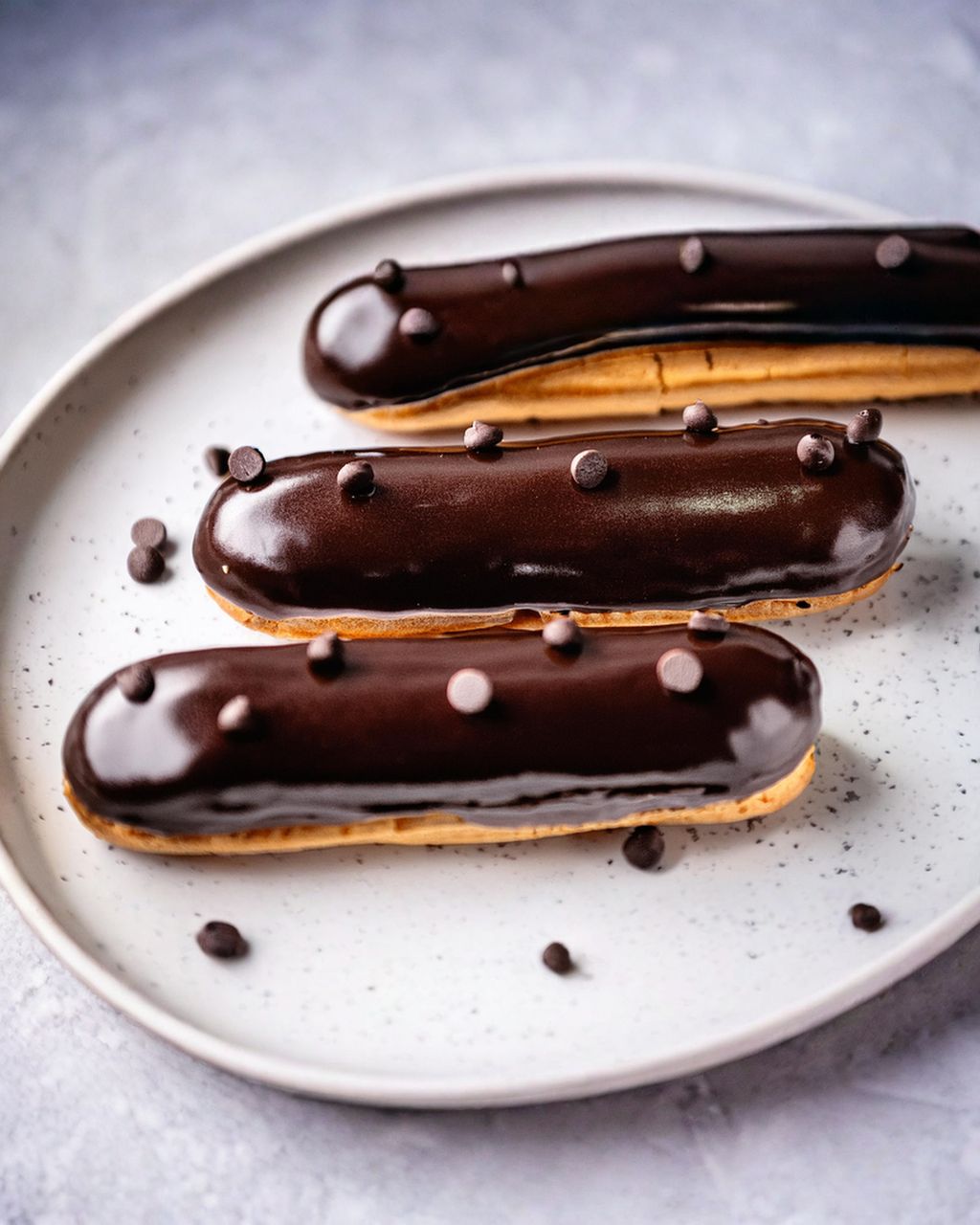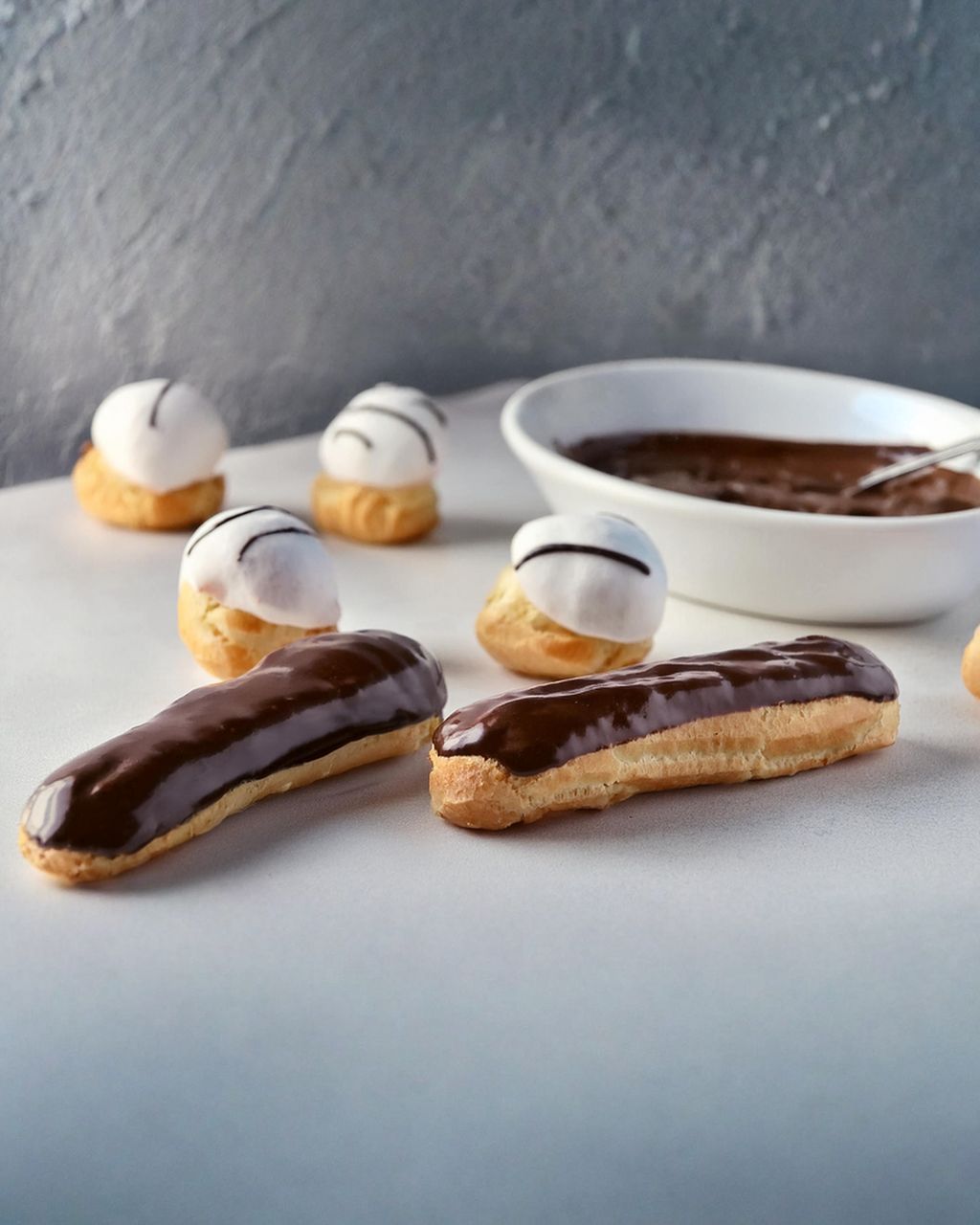
Profiteroles vs. éclairs: differences and how to make them at home
Choux Pastry with Oil, Lard or Butter: What Each Fat Does to Your věnečky
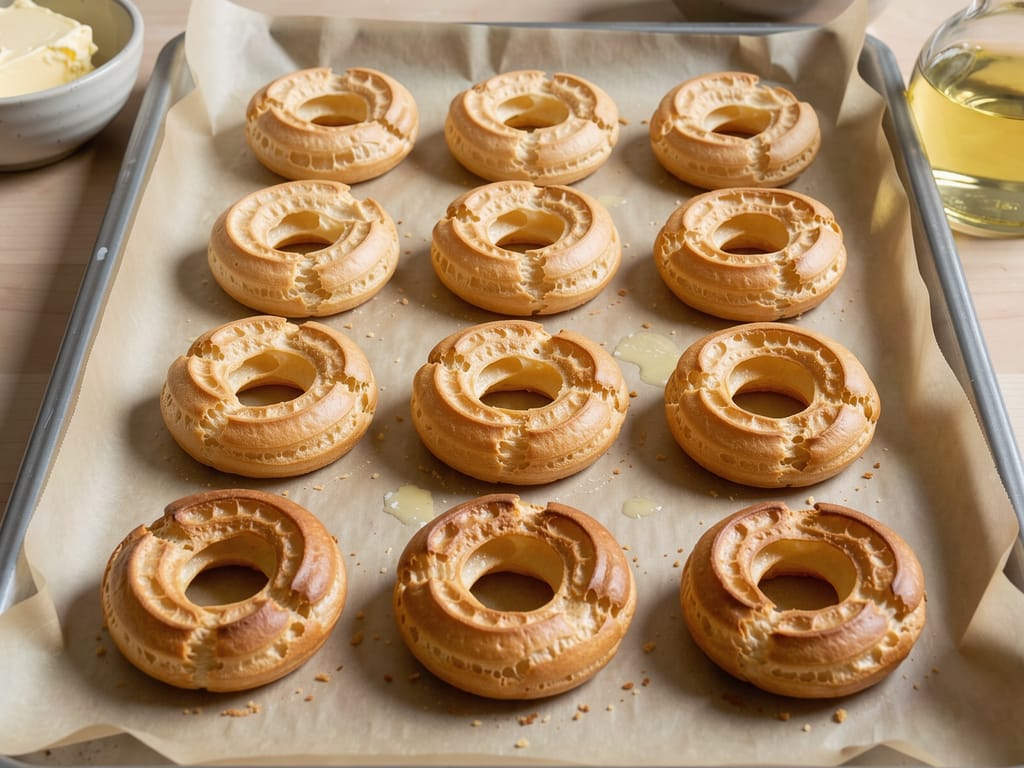
Updated Nov 17, 2026
You can make choux pastry with oil or lard, not just butter. Your věnečky (Czech cream-filled choux rings) will puff up and hold, because steam and eggs lift them, not the fat. For every 100 g of butter, use 80–85 g of oil or lard plus an extra 15–20 ml of water. The fat does decide how the shells taste, how crisp they are and how long they stay that way. Butter gives flavor and a golden color, lard gives the most crispness, and oil gives a soft, springy shell that sometimes rises the highest.
Choux pastry works with all three fats. What changes is the flavor, color, crispness and how long the shells last. Here is how they compare when you convert each fat correctly (see below):
Butter – ratio: the base recipe. Rise: good. Crispness: a delicate, thin shell. Flavor: buttery, the fullest. Color: the most golden. Keeping: softens first, but tastes best. Good for větrníky (Czech cream-filled choux buns), věnečky, éclairs.
Lard – ratio: 80–85 g per 100 g of butter + 15–20 ml water. Rise: good. Crispness: the crispest, a firm shell. Flavor: neutral (refined), more pronounced with homemade rendered lard, which tastes of cracklings. Color: paler. Keeping: stays crisp the longest. Good for věnečky, savory puffs, cheese profiteroles.
Oil – ratio: 80–85 g per 100 g of butter + 15–20 ml water. Rise: sometimes the highest. Crispness: a soft, springy shell. Flavor: neutral. Color: the palest. Keeping: soft from the start, so it has nothing to lose. Good for dairy-free věnečky, savory choux pastry.
If you can't decide: for sweet pastries use butter, and if you want longer-lasting crispness, replace half the butter with lard.
Seasonal baking plans, tested recipes and kitchen tricks that save you time. Unsubscribe in one click.
For every 100 g of butter, use 80–85 g of oil or lard and add 15–20 ml of water (or milk). That's because butter isn't pure fat. Under EU dairy rules (Regulation (EU) No 1308/2013), it must contain at least 80% fat and at most 16% water. Oil and lard are almost pure fat.
If you swap butter for oil 1:1, you put about a quarter more fat into the dough and lose water. That water turns to steam in the oven, and the steam puffs up the shell. The result is a greasier dough that runs more and holds its shape less well.
50 g butter → 40–42 g oil/lard + 8–10 ml water
100 g butter → 80–85 g oil/lard + 15–20 ml water
125 g butter → 100–105 g oil/lard + 20–25 ml water
Leave the flour, the water in the base recipe and the eggs as they are. You still fine-tune the thickness with the eggs at the end, by how the dough falls from the spatula. For what it should look like and why it collapses after baking, see the article choux pastry consistency and why it collapses.
Choux pastry made with oil rises well, sometimes even higher than with butter, but the shell stays softer and paler. In a test by the pastry blog Kitchen Projects, where butter was replaced with olive oil, the choux puffed up "extremely well, better than with butter." Oil is liquid at room temperature, so the shell doesn't firm up and turn crisp as it cools. It stays springy, a bit like a soft bread roll.
What you can do about it:
Choose a neutral oil, such as sunflower or rapeseed. Olive oil only suits savory choux.
Milk helps with color. Replace a third to a half of the water with milk, or brush the věnečky with beaten egg before baking. Without the milk sugar and proteins from butter, the shell browns more slowly.
Don't go by color alone. You can tell a finished shell more by the fact that it's light and sounds hollow when tapped than by its color.
Lard gives you the crispest věnečky of all three fats, and they stay crisp the longest. Lard is solid at room temperature, like butter, so the shell firms up as it cools. In practice a lard shell stays crisp longer than a butter one. That's why it suits old-fashioned Czech věnečky and savory puffs with cheese or ham.
For sweet pastries, use refined lard from the store. It's white and almost flavorless.
Homemade rendered lard smells of cracklings. That's an advantage in cheese profiteroles, but not in věnečky with cream filling.
The color will be paler than with butter. The same trick as with oil helps: replace part of the water with milk or brush the věnečky with egg.
A worthwhile compromise: half butter and half lard (convert the lard using the ratio above). You keep the buttery flavor and the shell stays crisp longer.
Thinking of clarified butter (ghee)? It's almost pure fat, so convert it the same way as lard: 80–85 g per 100 g of butter plus 15–20 ml of extra water.
Choux pastry with butter tastes the best and turns the loveliest golden color. That's why it's the classic for větrníky. The milk solids in butter (protein and milk sugar) brown during baking, which gives the shell its golden color and nutty aroma. The water in butter also adds a little steam, which puffs up the shell.
The downside: the shell is thin and delicate, so it softens fastest from the filling or damp air. That's why you fill věnečky and větrníky just before serving, whichever fat you use.
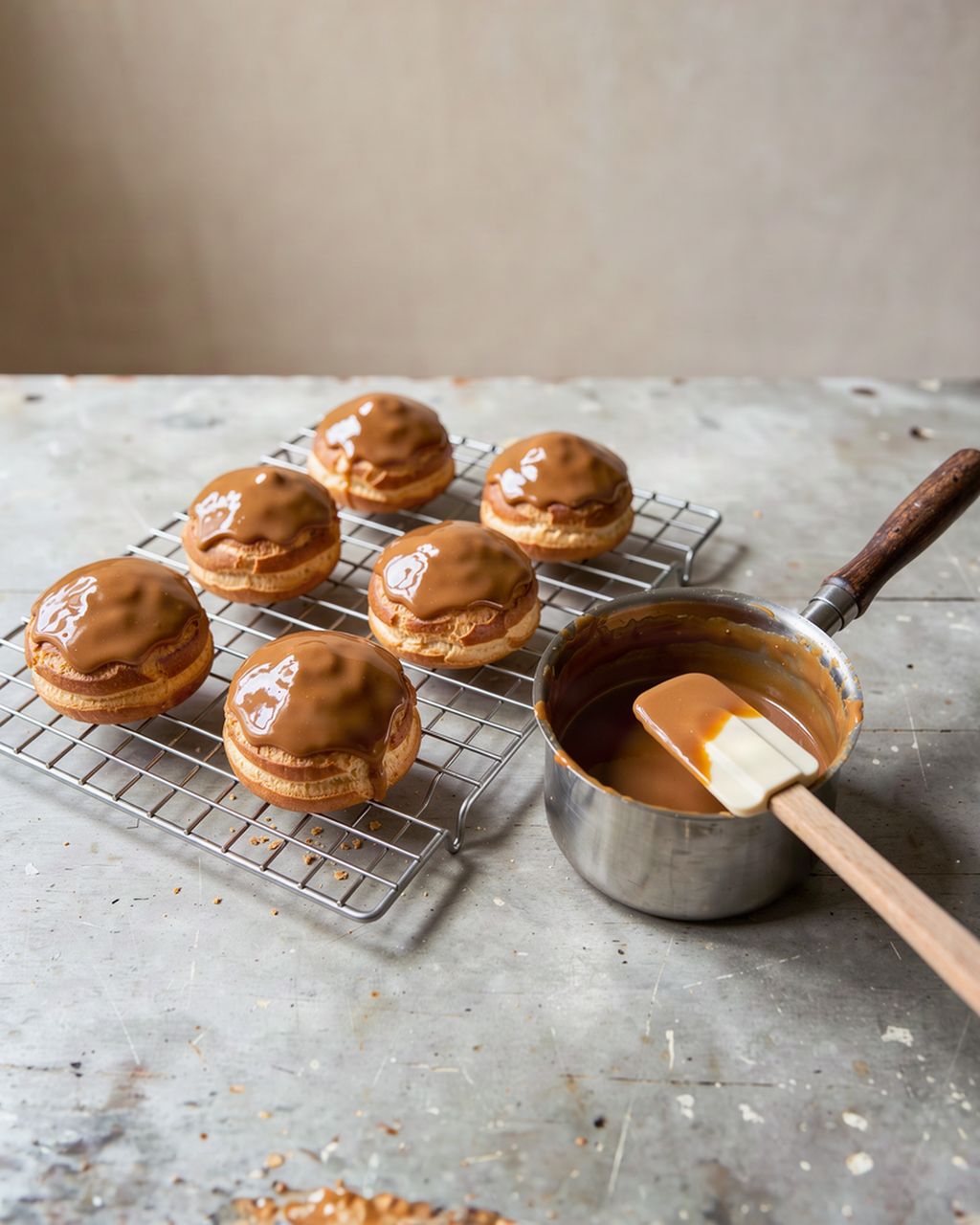
Finished větrníky call for caramel. For the temperature and method that keep it from turning bitter, see the article how to make caramel from sugar. And if you'd like to see how pastry chefs work with choux, try the recipe for Ladurée-style éclairs.
Věnečky without butter mostly go wrong in three ways: too much fat, too little drying out of the dough on the stove, and opening the oven too early. Here's how to avoid them:
Too much fat. A 1:1 swap gives a dough that spreads on the baking sheet, and the ring loses its shape. Use 80–85% of the butter amount.
Too little drying out. Stir the dough on the stove until it pulls away from the sides of the pan and starts to look glossy. If it looks greasy, see the question about greasy dough below.
Opening the oven too early. This applies to every fat. Don't open the oven for the first 20 minutes, or the steam escapes and the věnečky collapse.
A word on the glaze: a soft oil shell is more flexible under fondant and cracks less. For how to warm fondant so it shines, see the article fondant for věnečky. Choux pastry is also used for dumplings, which are boiled in water and follow different rules. For a comparison of doughs, see the article which dough to use for plum dumplings.
Filled věnečky and větrníky belong in the fridge. They shouldn't stay at room temperature for more than 2 hours (USDA/FSIS rule for perishable foods; above 32°C / 90°F it's only 1 hour). According to USDA/FSIS, the fridge should be at 4°C (40°F) or below. Milk and egg creams are exactly the kind of filling this rule applies to.
The fat in the shell has no effect on the safety of the filling. It only affects how quickly the shell softens in the fridge: lard shells stay crisp the longest, butter shells soften first, and oil shells are soft from the start. That's why you fill them just before serving and keep empty shells dry and covered separately.
Yes, it works best to freeze baked but unfilled shells. Let them cool, put them in an airtight container, and after thawing return them to an oven heated to 160–180°C (320–355°F) for 5 minutes so they dry out again. Lard shells crisp up again, while oil shells stay softer, as they are when fresh.
Yes, but a plant-based spread like Hera has about 70% fat and almost twice as much water as butter (about 29 g versus 16 g per 100 g). Use the same amount as the butter and cut about 10–15 ml of water from the base recipe for every 100 g of Hera. Always check the fat content on the package. The flavor will be neutral and the color a little paler than with butter.
Yes, coconut fat is almost pure fat, so convert it the same way as lard: 80–85 g per 100 g of butter plus 15–20 ml of extra water. For sweet věnečky, choose refined coconut fat, which doesn't smell of coconut.
A shell made only with oil and water contains no milk fat or milk, but the filling usually does. If you avoid dairy for health reasons, check the ingredients of the filling and the glaze, and don't replace the water with milk.
Oil doesn't combine with water as easily as butter does, so the dough needs more stirring on the stove. Until the flour goes in, the oil floats on top, so bring the water and oil to a boil and add the flour all at once. Then stir over moderate heat until the dough is glossy and pulls away from the sides of the pan. If the oil still separates, you probably used more than 85% of the butter amount.
One recipe worth heating the oven for, one tip, and one deal from the shop. Nothing else.