Puff pastry bites
Puff Pastry: Store-Bought, Homemade, or Rough Puff — When Each Is Worth It
Updated Oct 17, 2026
There are three ways to get puff pastry: store-bought (ready right away and fine for most savory baking), classic homemade (half a day with chilling, of which 1–1.5 hours is hands-on work; the tallest, most even layers and a buttery flavor) and rough puff (about two hours, great flavor, a lower and more uneven rise). Which one you choose depends on what you're baking and how much time you have. Below you'll find a comparison of when each route pays off, plus the rules even the best pastry needs to rise: cold, clean cuts and resting.
The short answer: store-bought is enough for savory baking and quick desserts, classic homemade is worth it for mille-feuille and vol-au-vents, and rough puff is the one to reach for when you want buttery turnovers and pies without a whole day's work.
Store-bought: 0 minutes of work (chilled is ready to use, frozen needs thawing overnight), even layers, and a flavor that depends on the fat, which is usually plant-based. Good for turnovers, savory sticks, strudel and quick pies.
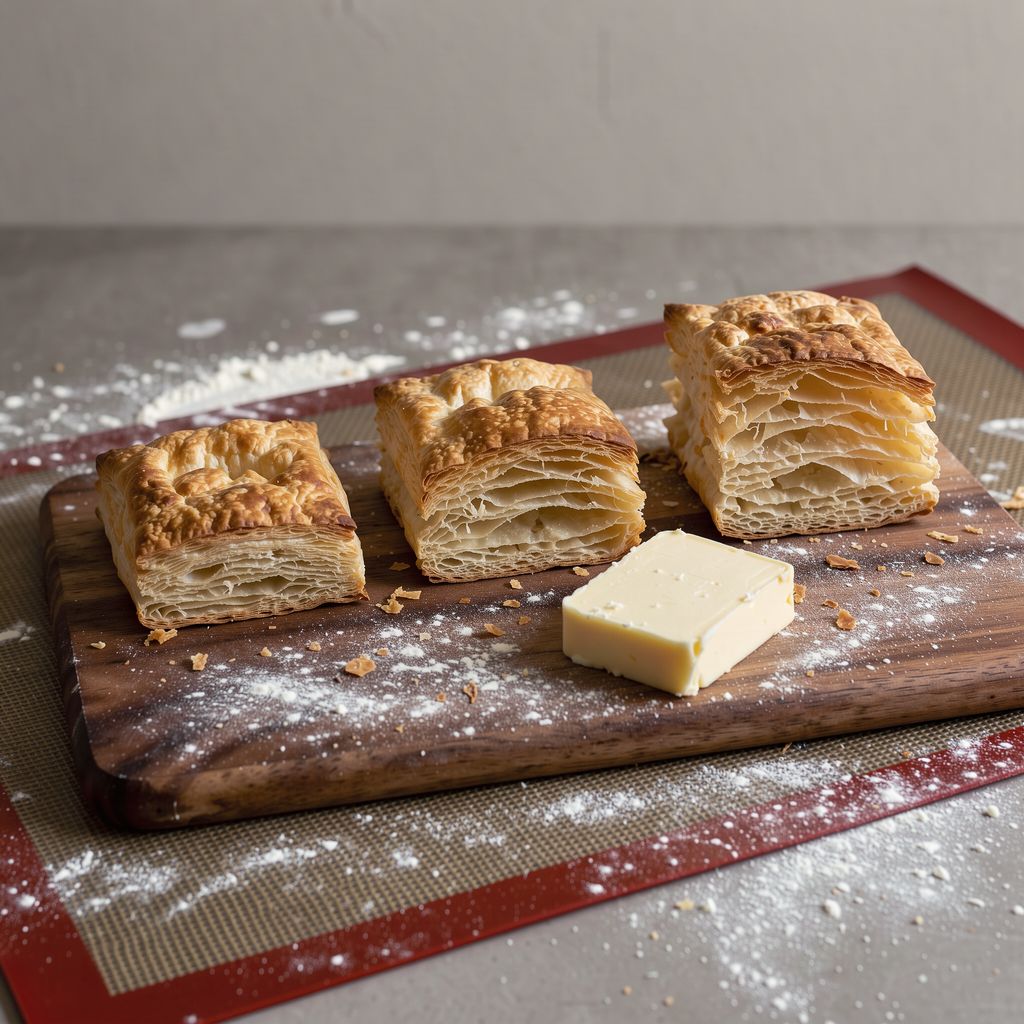
Classic homemade: 1–1.5 hours of work spread over 5–6 hours (or overnight) because of the chilling. With six turns in thirds you get, in theory, 729 layers of fat between layers of dough, the tallest and most even rise, and a pure butter flavor. Good for mille-feuille, vol-au-vents, palmiers (elephant ears), and anything where the layers are the star.
Rough puff: about 30 minutes of work and 1.5–2 hours in total, with less regular layers. It rises noticeably less, and less evenly, than classic puff pastry, but the flavor is buttery. Good for turnovers, pies, savory pastries and a topping for baked dishes.
If you want to know how to build the dessert itself, we have a detailed guide to mille-feuille step by step. Here we look at the decision that comes before it: where to get your pastry.
Store-bought puff pastry is enough wherever the pastry carries a filling and doesn't need to shine on its own, and one thing decides its quality: the fat in the ingredients list.
Most rolls in stores are made with palm or another plant-based fat, and you'll only find butter in some products labeled "butter." Products labeled "with butter" often contain palm fat too, so look for butter as the only fat in the ingredients. Plant-based fat has a higher melting point, so the pastry is easier to handle even in a warm kitchen and rises well. It just tastes neutral to bland. Store-bought all-butter puff pastry tastes noticeably better, and for sweet baking it's worth paying extra.
Short ingredients list: ideally just flour, butter, water and salt.
Chilled vs. frozen: chilled rolls are ready to use right away. Thaw frozen blocks overnight in the fridge, not on the counter, because at room temperature the butter at the edges melts before the middle softens.
When store-bought isn't enough: when you want tall, straight layers as the main effect, and for desserts where the pastry has almost no filling and the flavor of the fat stands out.
Classic homemade puff pastry is worth it when the layers are the main feature on the plate (mille-feuille, vol-au-vents, palmiers/elephant ears) and when you want a pure butter flavor that no store-bought roll can give you.
The principle is simple: you wrap a slab of cold butter inside a dough of flour, water, salt and a little butter (the détrempe), most often at a ratio of about 1 part flour to 0.7–1 part butter. Then you repeatedly roll the dough into a rectangle and fold it into thirds. Each of these folds is called a tour. After six turns you get, in theory, 3⁶ = 729 layers of fat between layers of dough. In the oven, the water in the dough turns to steam, which pushes the layers apart, while the butter "fries" them crisp.
What it all depends on:
Temperature of the butter and dough. Both must have a similar firmness: cold but pliable, around 13–16 °C (55–61 °F). Butter that's too cold shatters into shards when rolled, and butter that's too warm blends into the dough and the layers disappear.
Chilling between turns. After every two turns, wrap the dough and chill it for 30–60 minutes. That's why it takes half a day, even though the active work is only 1–1.5 hours.
Real butter. Use butter (at least 80% fat, typically 82%), not a spreadable plant-based fat or a dairy spread. They contain more water and the slab made from them won't hold up.
A bonus: you can freeze the finished block and have a stash for several bakes.
Rough puff gives you the buttery flavor of homemade pastry in a fraction of the time, but it rises noticeably less and less evenly than classic puff pastry. It's ideal for turnovers and pies, but not for mille-feuille.
The difference is in how the butter gets into the dough. Instead of one slab, you cut it into 1–1.5 cm (about ½ in) cubes, briefly mix it with the flour and salt so the pieces stay visible, bring it together with ice-cold water, and then roll and fold the dough 4–5 times. The pieces of butter roll out into irregular flakes, so the layers are shorter and in places merge together.
What it can do: a pronounced buttery flavor, tender, flaky layers and quick preparation (chilling twice for 20–30 minutes is enough).
What it can't do: tall, straight columns of layers and a regular shape. Vol-au-vents come out crooked, and sheets for slices rise unevenly.
Typical mistake: working the butter into crumbs as you would for shortcrust pastry. Then it's no longer puff pastry but shortcrust, so the cubes have to stay large.
Puff pastry rises when you follow six rules: keep it cold, cut straight down, don't brush the edges, let it rest, stack your scraps, and bake in a hot oven. This applies equally to store-bought, classic and rough puff.
Keep it cold. Work with pastry straight from the fridge, and as soon as it gets sticky or shiny with butter, put it back for 15–20 minutes. Warm butter soaks into the dough, and then the steam has nothing to separate.
Cut with a sharp knife, straight down. One firm cut, no sawing or dragging. A dull knife or a cutter you twist will seal the edges together, and the pastry won't rise at the cut.
Don't brush egg on the edges. Egg that runs down the cut glues the layers together. Brush only the top surface, in a thin layer.
Let it rest. Put shaped pieces in the fridge for 20–30 minutes. The gluten relaxes, and the pastry won't shrink or warp in the oven.
Stack scraps, don't squash them. Lay the trimmings on top of each other in layers and roll them out again. Balled up, they lose their layers and are only good for savory sticks.
Bake in an oven preheated to 200–220 °C (390–430 °F). Without immediate high heat, the butter melts before steam can form.
Homemade puff pastry is worth the effort more the more the pastry shows and the less filling it carries.
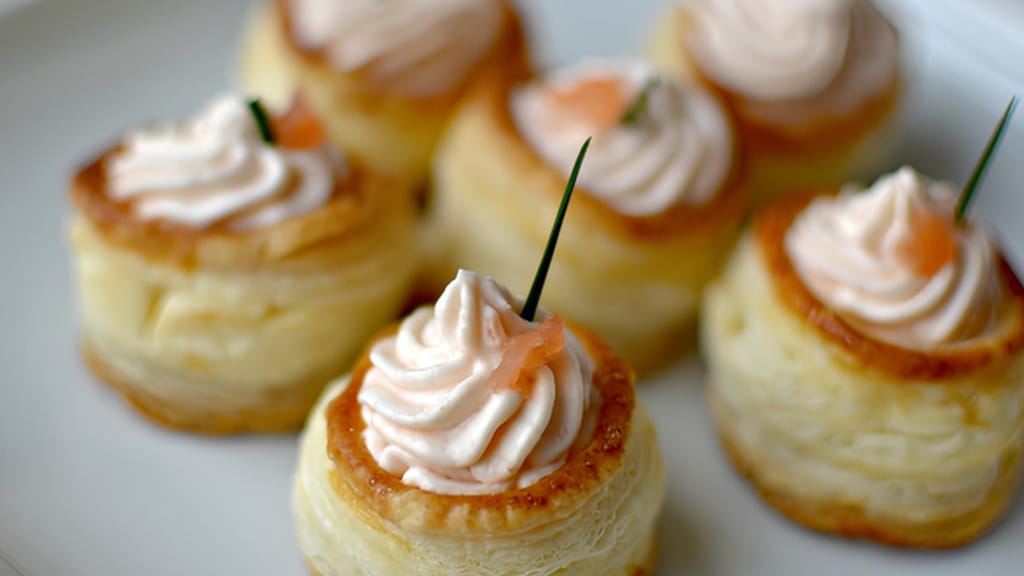
Vol-au-vents: classic homemade, or a good all-butter store-bought one, since they need tall, straight walls. Try puff pastry vol-au-vents.
Mille-feuille and slices: classic homemade, with sheets baked flat.
Palmiers (elephant ears): classic homemade or all-butter store-bought. There's almost no filling here, so the flavor of the fat stands out.
Puff pastry strudel: store-bought is enough, as the filling has the main say, for example a quick apple strudel with puff pastry.
Turnovers, pockets, pies: rough puff if you want buttery flavor, store-bought if you're in a hurry.
Savory sticks, pizza pinwheels, toppings for baked dishes: store-bought or leftover scraps, since the layers matter less here.
Puff pastry bites
Puff pastry vol-au-vents: tall layers as the main attraction
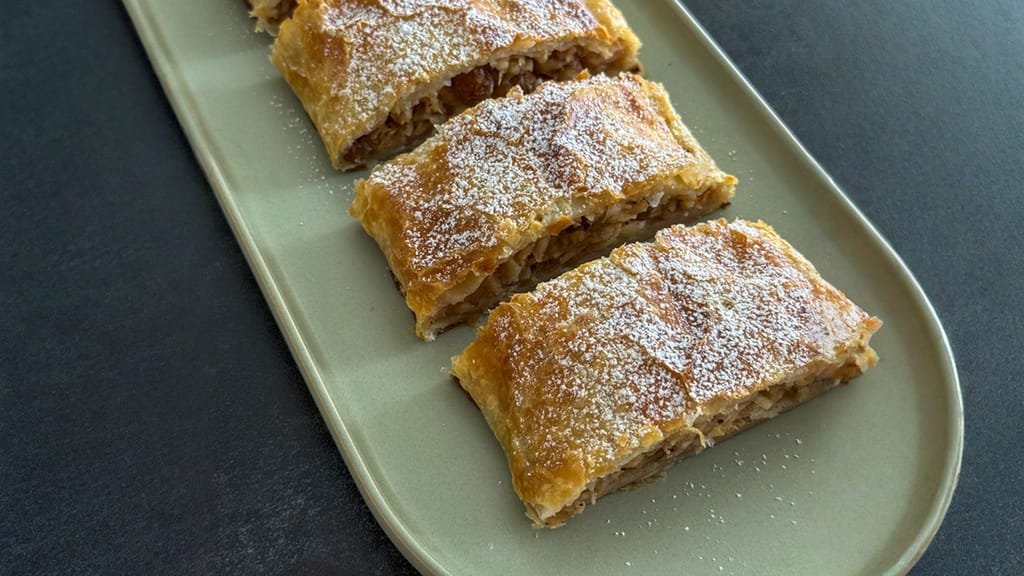
Apple strudel from puff pastry (quick version)
Quick apple strudel with store-bought puff pastry
Bake puff pastry at 200–220 °C (390–430 °F) on a surface that lets steam escape from underneath. The actual oven temperature matters more to the result than the recipe does.
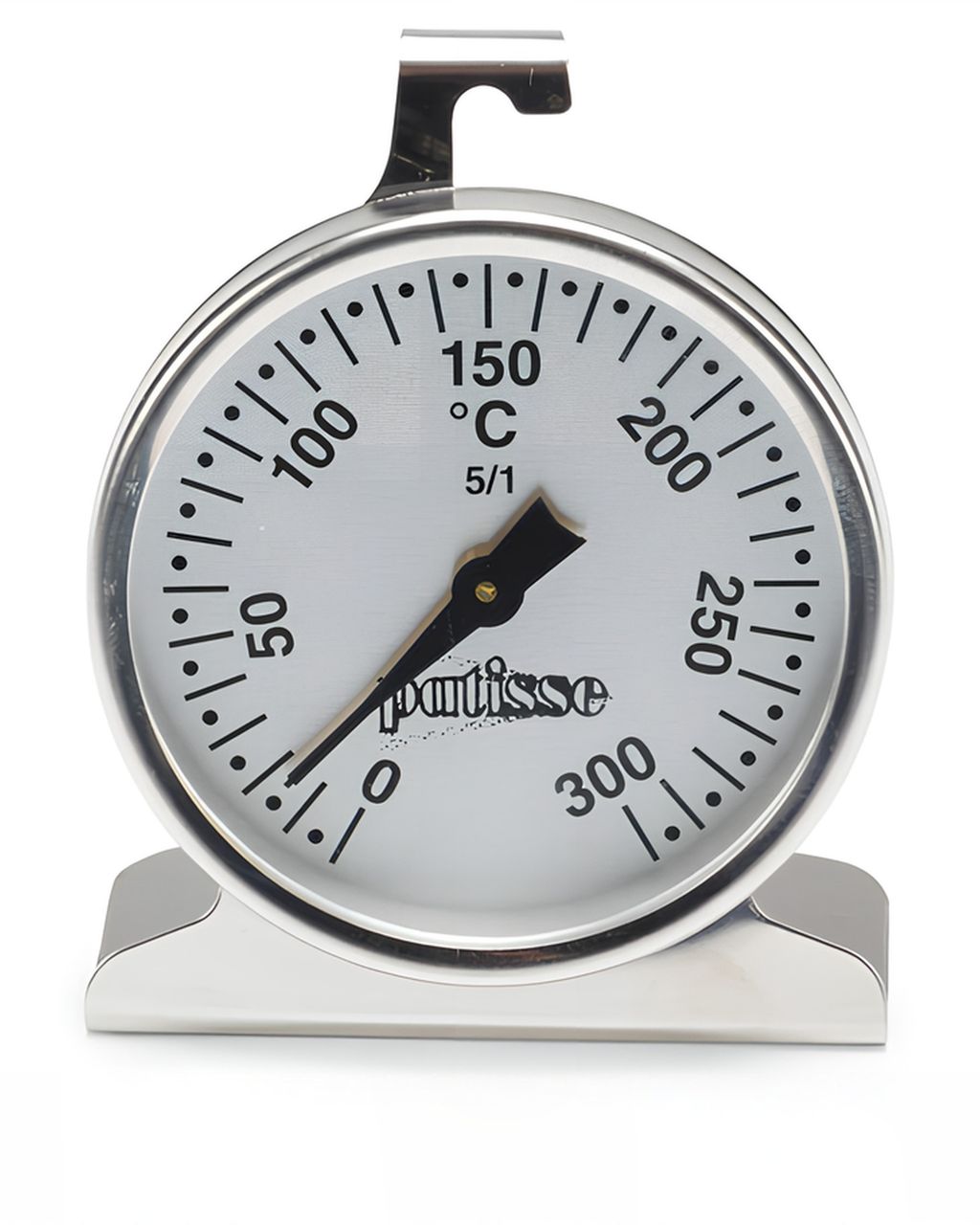
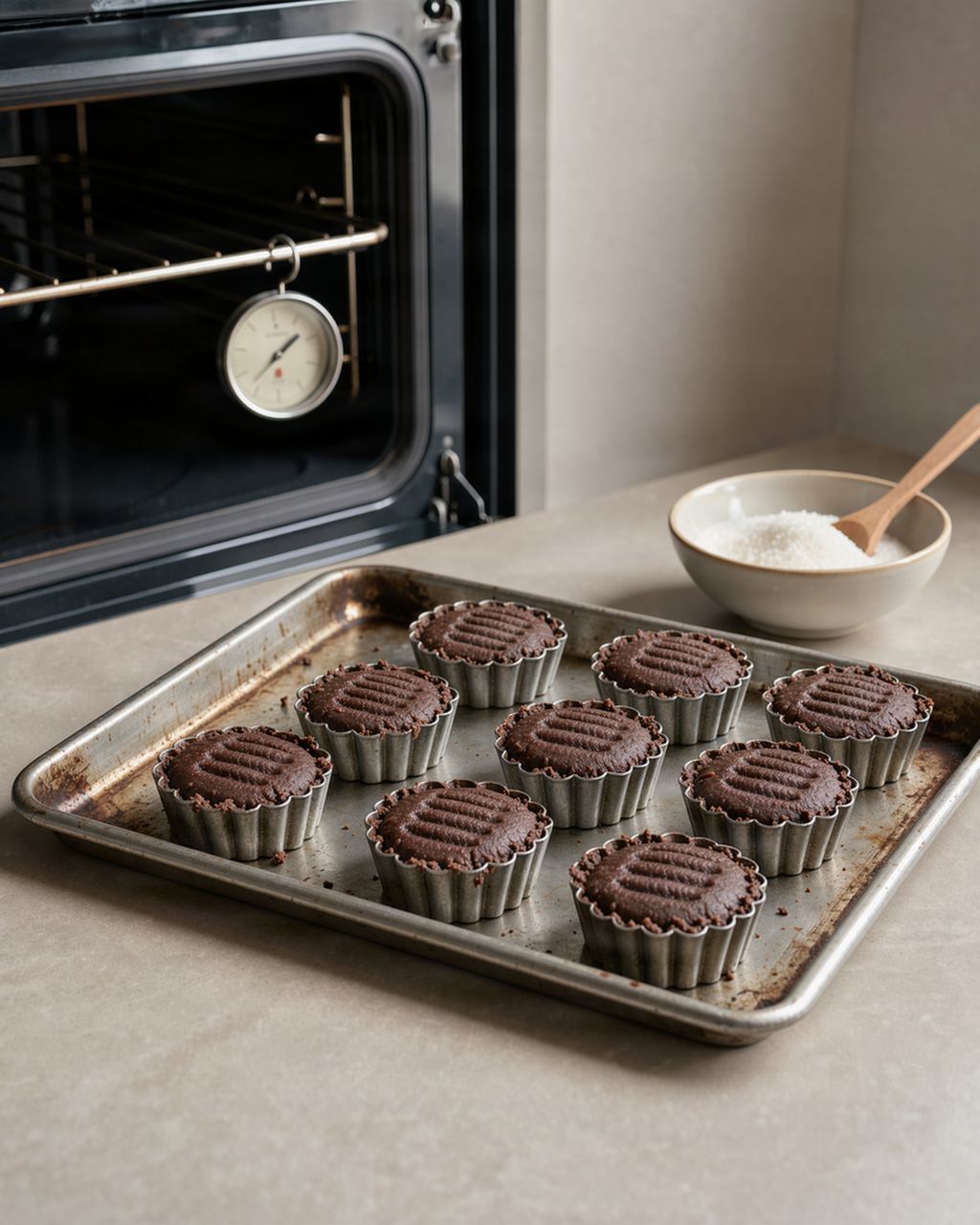
Temperature. The real temperature in your oven often differs from the one you set by tens of degrees, and many ovens don't heat evenly either. For puff pastry, that's the difference between puffed-up layers and a greasy slab: at a low temperature the butter runs out before the steam can lift the layers. An inexpensive Patisse oven thermometer hung in the middle of the rack will tell you what the temperature really is, and whether you need to set it a notch higher.
Choose your surface according to what you want:
You want the pastry to rise (vol-au-vents, turnovers): baking paper or a silicone mat on the tray, with nothing placed on top of the pastry.
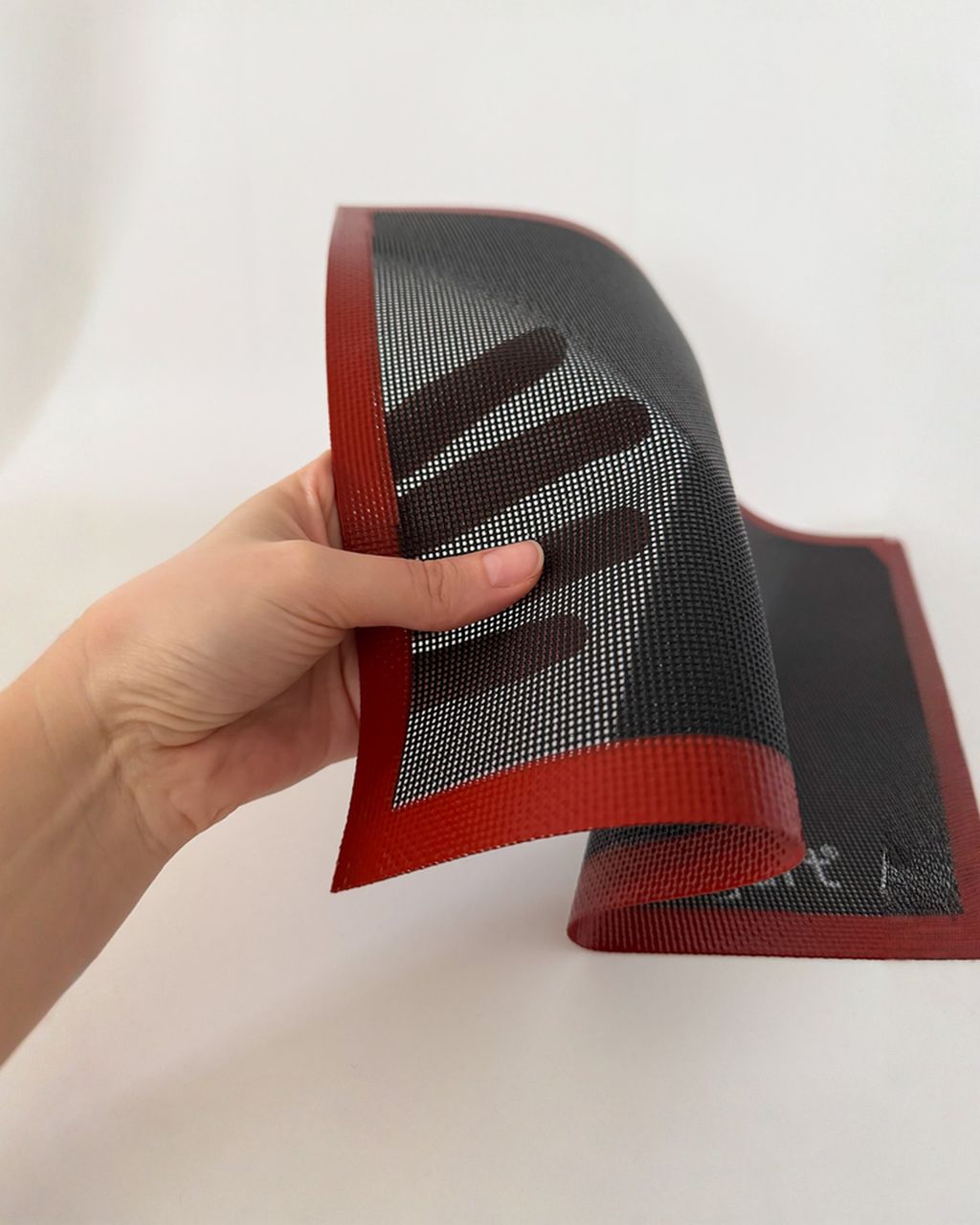
You want a flat, crisp sheet (mille-feuille, the base for a tarte tatin or fruit pie): a perforated silicone baking mat. The tiny holes let steam and fat escape from underneath, so the bottom doesn't get soggy and bakes up dry. Place a second tray or a rack on top of the pastry, and the layers will only rise as high as you allow. The sheet comes out flat and densely layered.
Without a perforated mat: baking paper and pastry pricked with a fork also work, but the bottom will be a little less crisp and the sheet a little less flat.
You'll find more trays, rolling pins and baking tools in the baking pans and tools category.
Homemade puff pastry keeps in the fridge for 1–2 days, 3 at most, and in the freezer for roughly 2–3 months. Wrap it tightly in plastic wrap so it doesn't dry out or pick up odors, and thaw it overnight in the fridge.
It's best not to refreeze thawed store-bought puff pastry, because the layers won't rise as well afterward. It's better to bake your pastries from the thawed dough and freeze those instead, or to freeze shaped raw pieces right after you make them.
Use plain (all-purpose) wheat flour for homemade puff pastry, ideally one with a higher protein content (around 11–12%). The gluten holds the layers together.
Yes, you can make puff pastry with firm baking margarine or a plant-based fat made for puff pastry. It rises well because it melts at a higher temperature than butter, but the flavor is more neutral. A soft spreadable plant-based fat from a tub isn't suitable: it has little fat, a lot of water and is too soft.
One recipe worth heating the oven for, one tip, and one deal from the shop. Nothing else.