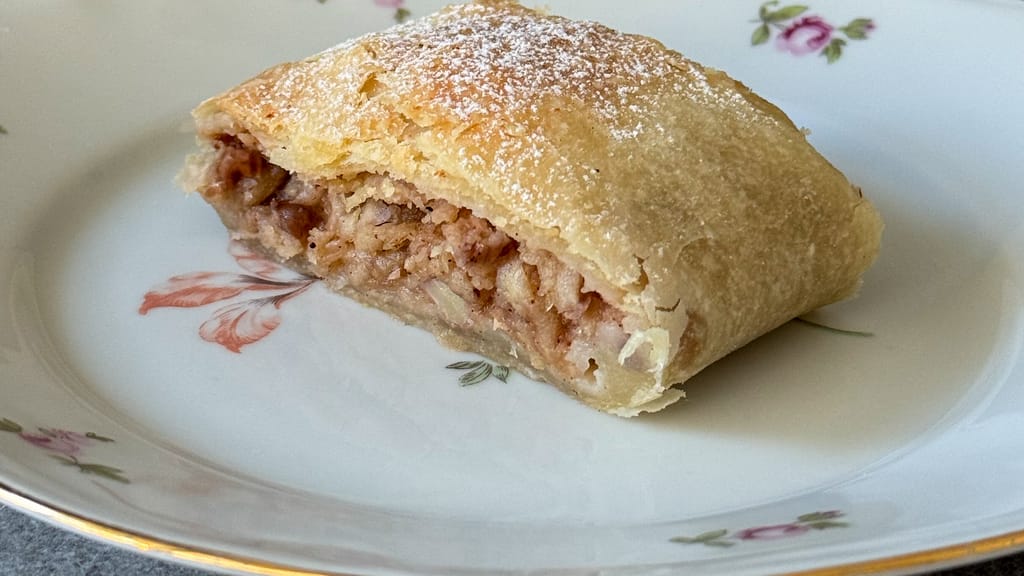
Apple strudel with homemade stretched pastry
Apple Strudel: The Complete Guide to Homemade Strudel
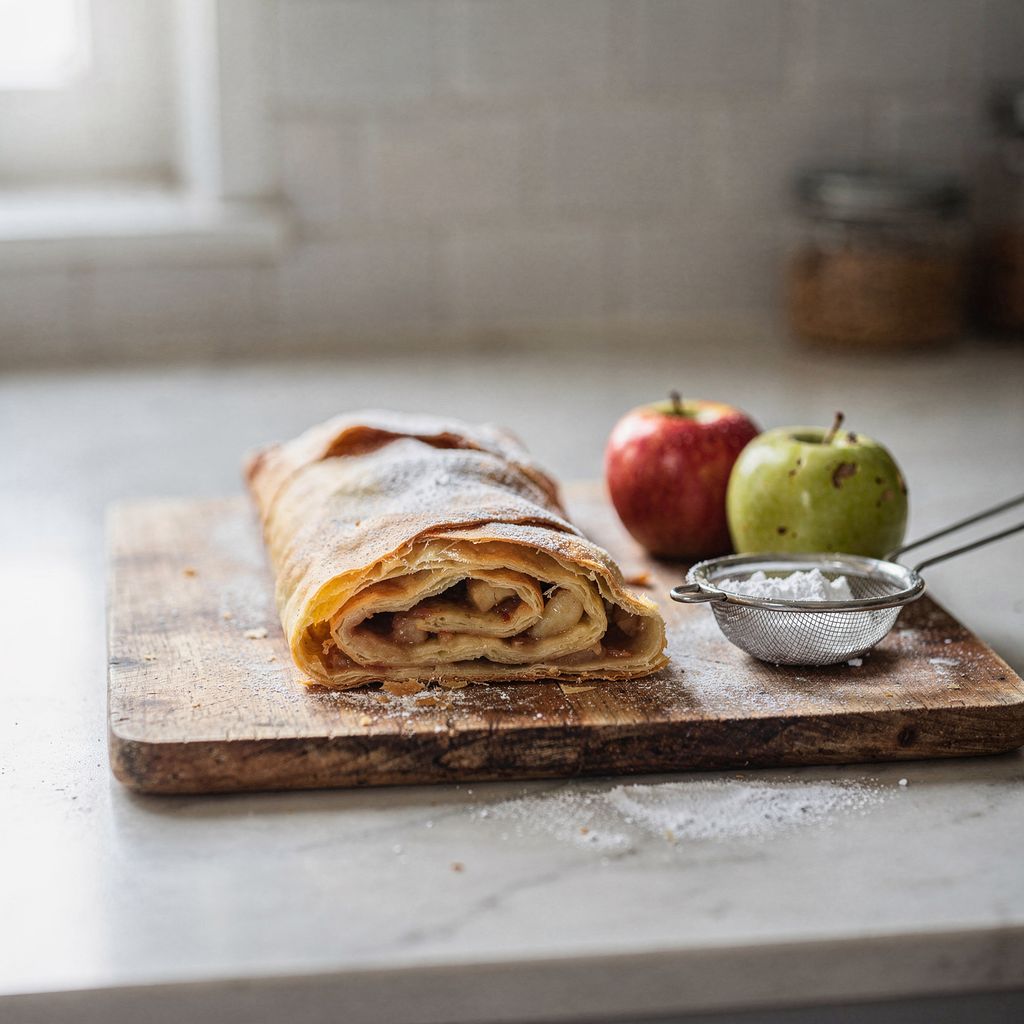
Updated Aug 23, 2026
Apple strudel lives and dies on three things: dough pulled almost see-through, apples that hold their shape in the oven instead of collapsing into mush, and a layer of buttery breadcrumbs that soaks up the juice before it can turn the base soggy. Everything else comes down to care and technique. We'll walk through both types of dough — stretched and puff pastry — the apple varieties that keep their shape, how to roll the strudel using a tea towel, the right oven temperature, and how to store it afterwards.
Strudel is thin dough rolled into several layers around a filling and baked until crisp — in the Czech tradition, most often with apples, cinnamon and nuts. The technique of stretching paper-thin sheets of dough traces back to Ottoman cuisine and baklava; it travelled into Central Europe via Hungary, and in Habsburg Vienna it became the strudel we know today.
According to Vienna's city library, the oldest surviving strudel recipe is a manuscript from 1696 — and it wasn't apple, but a cream-and-milk filling (Millirahmstrudel. Apples came into fashion later; a detailed recipe for Apfelstrudel was published by Anna Dorn in a Viennese cookbook in 1827.
In Czech it's called závin, or colloquially štrůdl or štrúdl. It's the same pastry — just different words for it.
Stretched dough gives you a strudel that's thin, crisp and holds together neatly when sliced. Puff pastry gives you a layered, buttery strudel that's ready an hour sooner, but crumbles more easily. Both are perfectly legitimate choices — the real difference is how much time you're willing to put in.
Stretched dough — flour, lukewarm water, oil, a pinch of salt and a splash of vinegar. No fat worked into it; it relies purely on gluten. It gets pulled until see-through, and once baked it's paper-thin yet holds together. Plan on 20 minutes of active work plus 30–60 minutes of resting time.
Puff pastry — the fat is layered between the sheets of dough; as it bakes, the water in it evaporates and the layers puff apart. The result is airy and distinctly buttery, but it can't hold as much filling and crumbles once sliced. Store-bought puff pastry from the chiller cabinet gets you a strudel in 40 minutes flat.
Filo pastry — the closest shortcut to stretched dough. Brush each sheet with melted butter and stack 5–6 layers on top of each other.
The strong gluten that's a problem in cakes is an advantage here: it gives the dough enough elasticity to stretch it thin enough to read a newspaper through. Resting is the key step — 30 minutes somewhere warm, brushed with oil, is enough to relax the gluten so the dough stops springing back. If it keeps shrinking back under your hands, cover it and give it another five minutes. You'll find the full method in our step-by-step guide to stretched strudel dough.
Strudel calls for tart, firm-fleshed apples — Idared, Boskoop, Ontario, Granny Smith, Jonagold, Rubín or Šampion (or similar firm, tart varieties like Braeburn or Bramley where those aren't available). They hold their shape in the oven, don't collapse into mush, and their acidity balances out the sugar in the filling.
Firm and tart: Idared, Boskoop, Ontario, Granny Smith, Jonathan. Best texture, fullest flavour, least juice released.
Sweet-tart middle ground: Jonagold, Rubín, Šampion. A safe, all-purpose choice when you want a sure thing.
Sweet and softer: Golden Delicious, Gala. Smell wonderful, but release noticeably more juice. Use these only as part of a mix, never on their own.
The best strudel comes from a blend of two varieties — one tart for structure and flavour, one sweeter for aroma. Aim for roughly a 2:1 ratio in favour of the tart one.
Slice, don't grate. Slices 2–3mm thick hold their shape in the filling and release far less juice than grated apple, which breaks down into wet mush in the oven. For one strudel, plan on 700–900g of peeled, sliced apples — roughly 1kg whole.
A soggy bottom happens because the apples release juice in the oven that has nowhere to go, so it soaks straight into the dough. The fix is a absorbent layer between the dough and the apples that catches the juice before it reaches the dough — classically, breadcrumbs toasted in butter. Six things that actually work:
Buttery breadcrumbs. Toast 60–80g of breadcrumbs in 40g of butter until golden, then let them cool. Sprinkle them in a strip on the buttered dough, underneath the apples. Besides soaking up juice, they add a nutty flavour and a bit of crunch.
Ground nuts. 50g of ground walnuts or hazelnuts mixed into the breadcrumbs. The fat in the nuts repels extra moisture, so the barrier lasts longer.
Crushed sponge biscuits or grated gingerbread. A sweeter take on the same idea. Gingerbread also adds a spiced flavour that pairs nicely with apple.
Add the sugar at the last possible moment. Sugar draws water out of the apples through osmosis. Leave them sitting in sugar for half an hour and you'll end up with a puddle. Mix the apples with sugar and cinnamon right before you assemble the strudel.
Drain off any juice that forms anyway. Don't roll it in, hoping it'll bake off. It won't.
Bake with heat from below. Place the tray in the lower third of the oven, ideally on a preheated tray or a perforated baking sheet. Heat from below dries out the bottom faster than the juice can soak through it.
Strudel is rolled with the help of a tea towel: you lift the edge of the cloth and the dough rolls itself over the filling, so you never need to touch the thin sheet with your hands. Step by step:
Lay the dough out on a floured tea towel and brush the entire surface with melted butter. The butter between the layers is what separates them once baked.
Sprinkle the breadcrumbs in a strip along the longer edge, about 5cm in from the side. Layer the apples mixed with sugar, cinnamon, raisins and lemon zest on top.
Fold the side edges in over the filling. Skip this step and the filling will leak out the sides in the oven.
Lift the tea towel and roll slowly, tucking as you go. Roll it snugly but not too tight — too tight and it splits in the oven; too loose and it falls apart.
Transfer to the tray seam-side down.
Brush with melted butter or beaten egg, then cut 3–4 diagonal slashes across the top. This gives steam somewhere to escape, so the strudel doesn't split open in the worst possible spot.
We cover exactly what to brush strudel with and what kind of crust each option gives you in our article on the best strudel glaze for a perfect crust.
Bake apple strudel at 180–190°C (355–375°F) in the lower third of the oven: 35–45 minutes for stretched dough, 25–30 minutes for puff pastry. A lower temperature would leave the dough soft and pale; a higher one would burn the crust before the apples inside are properly heated through.
Fan/convection oven: drop to 170°C (340°F) and cut the time by about five minutes.
Brush with butter twice during baking — roughly at the 15- and 30-minute marks. This gives a deeper golden colour and a crisper crust.
It's done when the crust is golden-brown and sounds hollow when tapped. Any juice that seeps through the slashes should be thick and bubbling slowly, not running watery.
Let it cool for at least 20 minutes on a wire rack, not on the tray. A hot strudel falls apart when sliced because the juices and starches in the filling haven't set yet. Slice with a serrated knife using a gentle back-and-forth motion, not by pressing straight down.
Using a wire rack instead of leaving it on the tray is a small detail worth sticking to: on the tray, steam gets trapped underneath the strudel, and within ten minutes it softens exactly the bottom you worked so hard to get crisp.
Apple strudel with homemade stretched pastry
Apple Strudel with Homemade Stretched Dough — The Full Step-by-Step Recipe
You can wrap almost anything in the same dough: pears with ginger, plums with walnuts, curd cheese with raisins, rhubarb with strawberries, poppyseed filling — or even a savoury version with braised cabbage and bacon. The rules stay the same: an absorbent layer on the bottom, sugar added last, filling covering only a third of the surface.
For juicier fruit (rhubarb, plums, apricots), add a third more breadcrumbs and go coarser rather than fine. For savoury fillings, breadcrumbs can be swapped for toasted bread cubes or cooked rice, which work just as well.
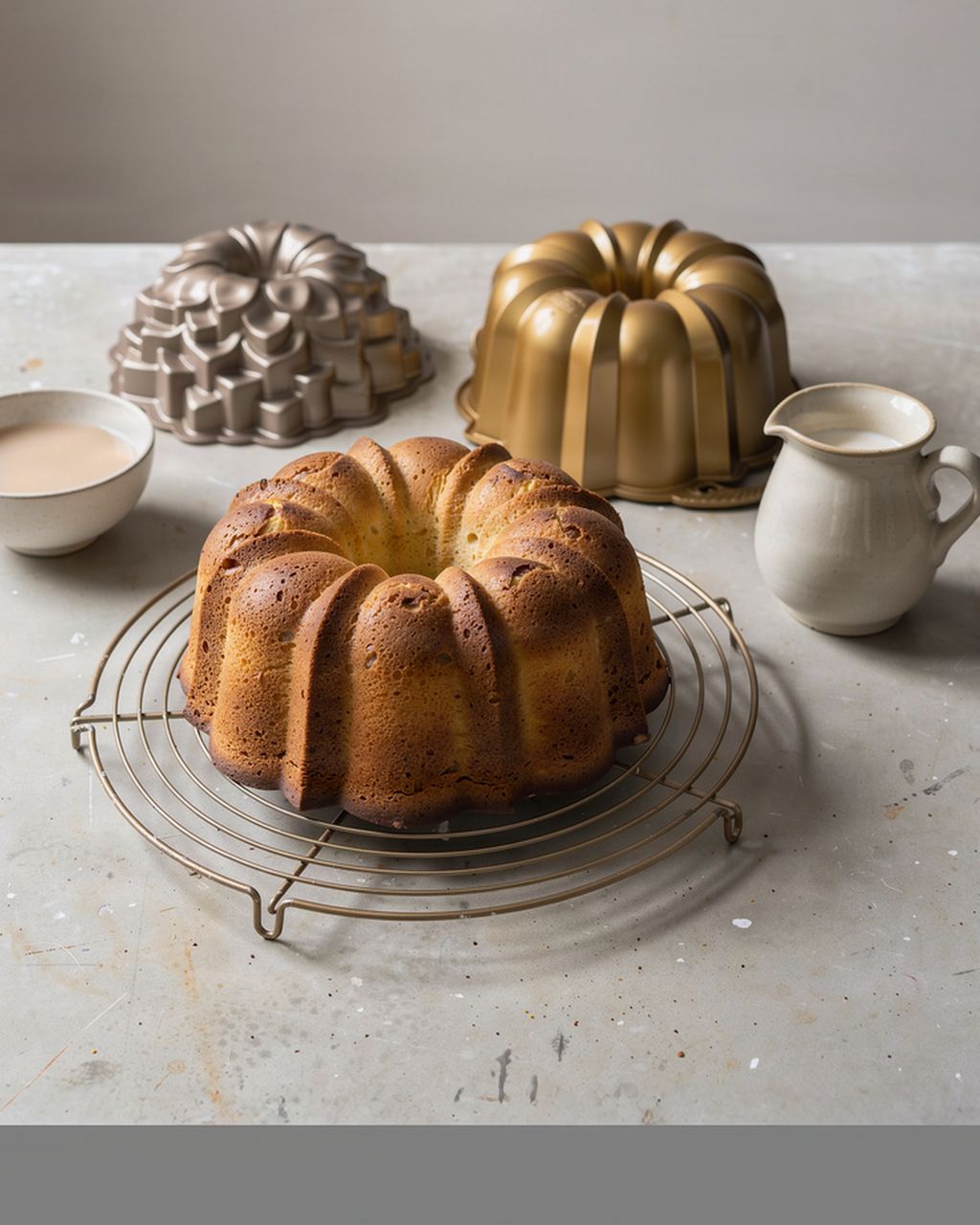
Got leftover apples from making strudel? Turn them into a quick apple bundt cake with coconut oil.
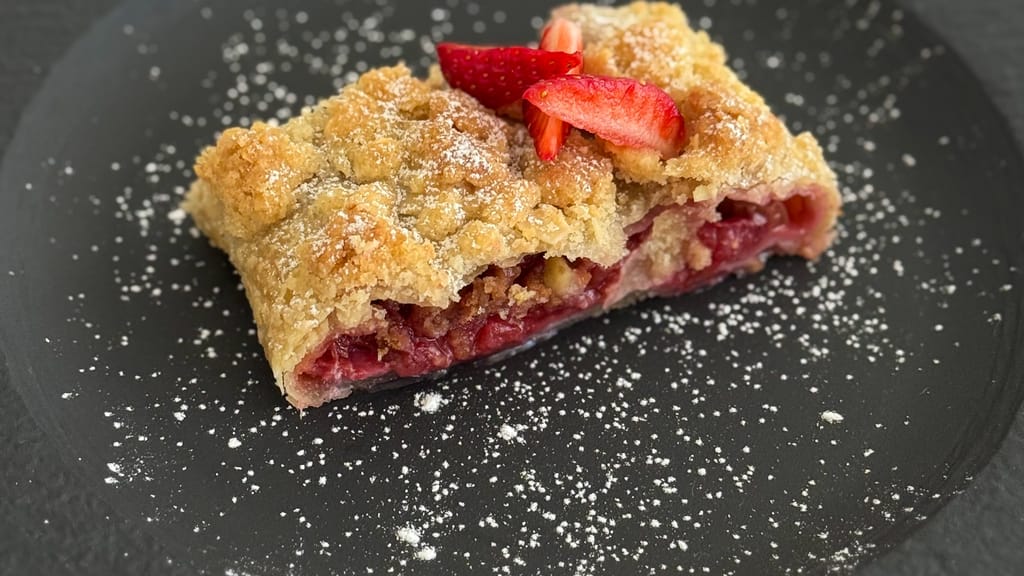
Strawberry-rhubarb strudel with buttery crumble
Rhubarb and strawberry strudel with buttery crumble — a sweet spring twist
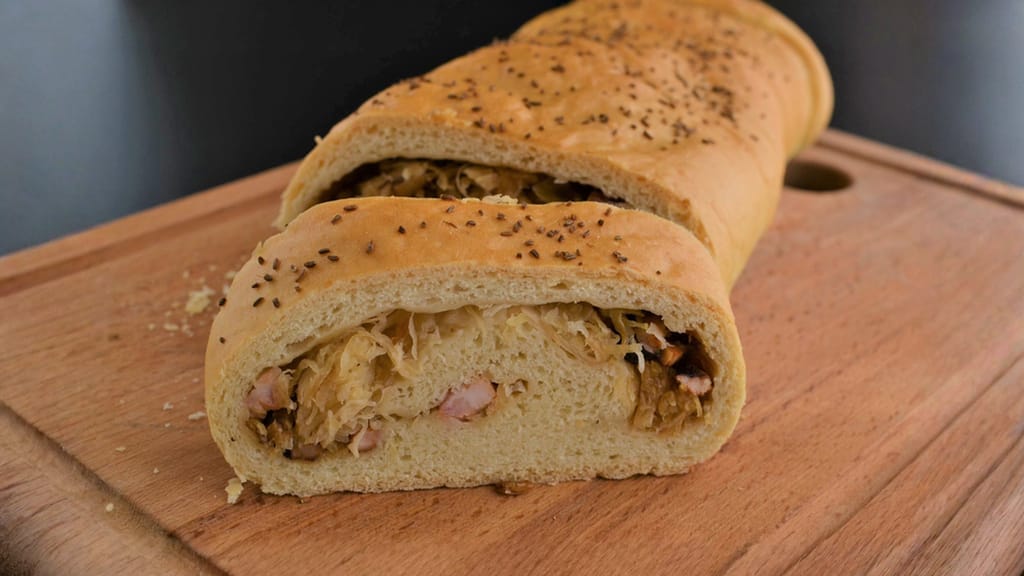
Autumn cabbage and bacon strudel
Autumn cabbage and bacon strudel — the savoury version of the same classic
Baked strudel keeps for 2 days at room temperature, loosely covered with a tea towel. Don't put it in the fridge — the cold speeds up staling of the dough, and moisture from the filling will soften the crust in the meantime. Don't seal it in an airtight container either, for the same reason.
Reheating: 8–10 minutes at 160–170°C (320–340°F), uncovered and never in the microwave. A microwave will turn a crisp strudel into rubber in thirty seconds flat.
Freezing baked strudel: up to 3 months. Bake straight from frozen, 20 minutes at 170°C (340°F).
Freezing unbaked strudel: wrap the rolled, unbaked strudel in plastic and freeze. Bake straight from frozen, just adding 10 minutes. This version actually tastes noticeably better than a baked one that's been thawed.
Serve warm, dusted with icing sugar. Whipped cream, vanilla sauce or a scoop of ice cream are the classic pairings — with a warm strudel, try vanilla ice cream with peanut butter, whose salty edge plays nicely off the tart apples.
Yes — strudel and 'závin' (the Czech word for it) refer to the exact same pastry: thin dough rolled around a filling and baked until crisp. 'Štrůdl' is simply the Czech spelling of the German 'Strudel', while 'závin' is the Czech translation of the same word. The terms are used interchangeably in recipes, though 'závin' tends to show up slightly more often for savoury versions.
For a standard strudel, plan on 700–900g of peeled, sliced apples — roughly 1kg of whole apples, or about 5–6 medium ones. Don't be tempted to add more filling: an overstuffed strudel tears while rolling and the juice leaks straight into the dough. If you have apples left over, slice them for a second strudel and freeze it raw.
Yes, always peel the apples. The skin only softens on the outside in the oven, leaving tough, stringy bits in the finished filling — far more noticeable in a thin strudel than in a cake. Peel just before assembling, and toss the sliced apples with lemon juice straight away so they don't brown.
Don't leave a rolled, unbaked strudel in the fridge overnight — the apples release juice as they sit, and it will soak into and soften the bottom of the dough. Instead, prep it ahead and freeze it straight away: wrap the rolled strudel in plastic, freeze it, then bake it straight from frozen at 180°C (355°F), adding 10 extra minutes to the bake time. Stretched dough on its own, however, keeps perfectly well in the fridge wrapped in plastic for up to 24 hours — just let it come back to room temperature for half an hour before stretching it.
Reach for a plain flour with a higher protein content for stretched dough — bread flour or one labelled specifically for strudel, roughly 12% protein or above. More protein means stronger gluten, and that's what holds the dough together even when you're pulling it paper-thin. Standard all-purpose or cake flour won't form as strong a gluten network, so the dough will tear as you stretch it. A splash of vinegar or lemon juice in the dough softens the gluten slightly, making it easier to work and stretch.
Most often because it hasn't rested long enough or has gone cold — the gluten isn't relaxed, so instead of stretching smoothly, it tears. Let it rest at least 30 minutes somewhere warm, brushed with oil and covered with a bowl, and never try to stretch dough straight from the fridge. Pull it using the backs of your closed fists, not your fingers or fingernails — a nail will puncture the thin sheet instantly. Work from the centre outward and turn the sheet regularly so it thins out evenly; holes form wherever you've pulled the same spot twice. A small hole isn't a problem — it'll be covered by another layer once you roll, or you can patch it with a scrap cut from the thicker edge.
One recipe worth heating the oven for, one tip, and one deal from the shop. Nothing else.