Slow-roasted honey duck – juicy and crispy
How Long to Roast a Duck, and at What Temperature, for Crispy Skin
Updated Nov 3, 2026
How long do you roast a duck? Roast a whole duck at 160–170 °C (320–340 °F) for about 60–75 minutes per kilogram, mostly covered, then finish it uncovered for another 20–30 minutes at 200–220 °C (400–430 °F) so the skin crisps up. A 2 kg duck therefore needs 2–2.5 hours plus that final crisping time. It's done when a thermometer in the thickest part of both the thigh and the breast reads at least 74 °C (165 °F), the figure the US agency USDA FSIS gives for poultry.
Roast the duck at 160–170 °C (320–340 °F) with top and bottom heat for most of the time (use 10–20 °C less with a fan oven), then briefly at 200–220 °C (400–430 °F) at the end. Each of the two stages has its own job:
160–170 °C (320–340 °F), covered: the fat under the skin renders slowly and the legs become tender. At a higher temperature the skin would burn before the fat has rendered out.
200–220 °C (400–430 °F), uncovered, for a final 20–30 minutes: the skin dries out and turns crisp.
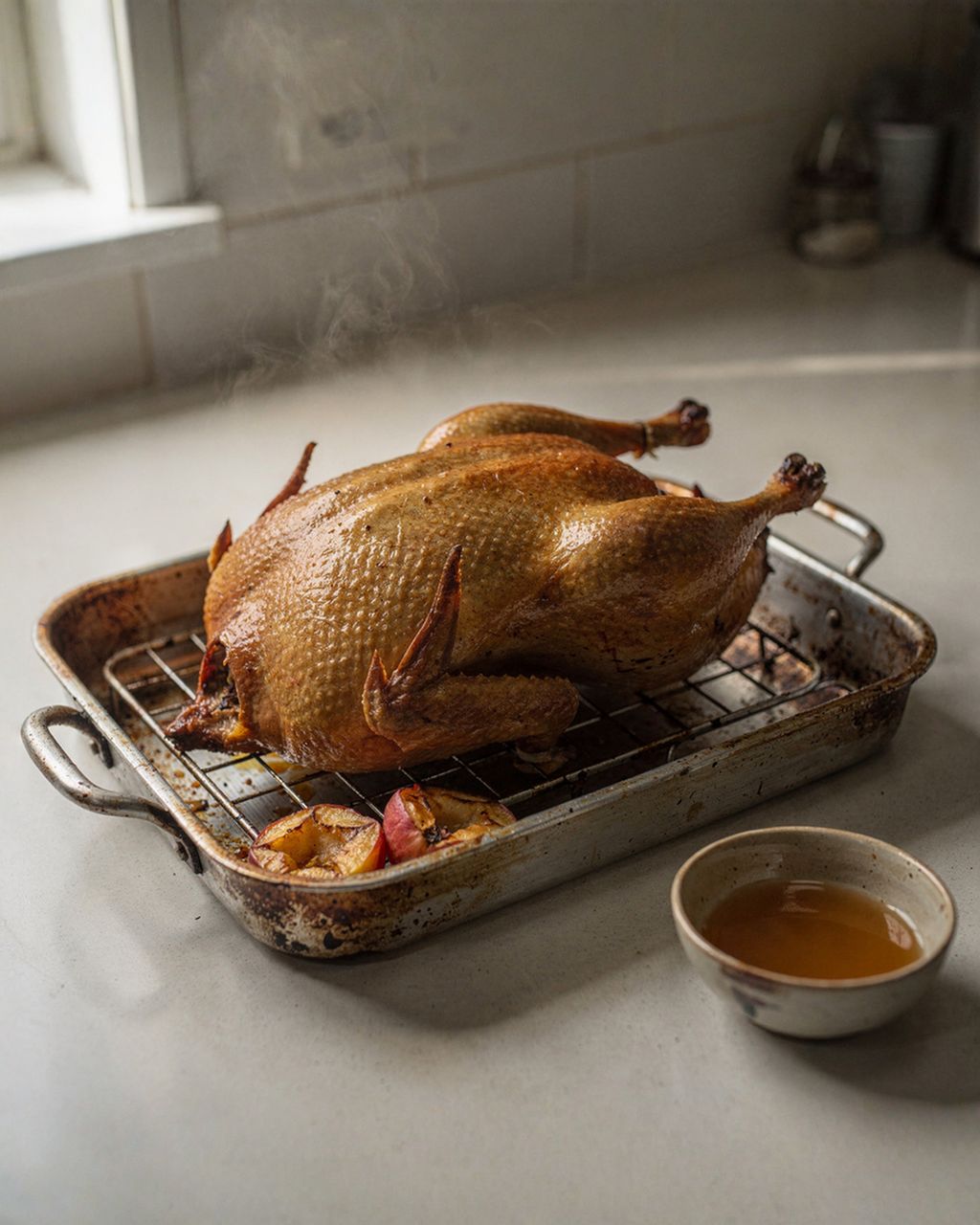
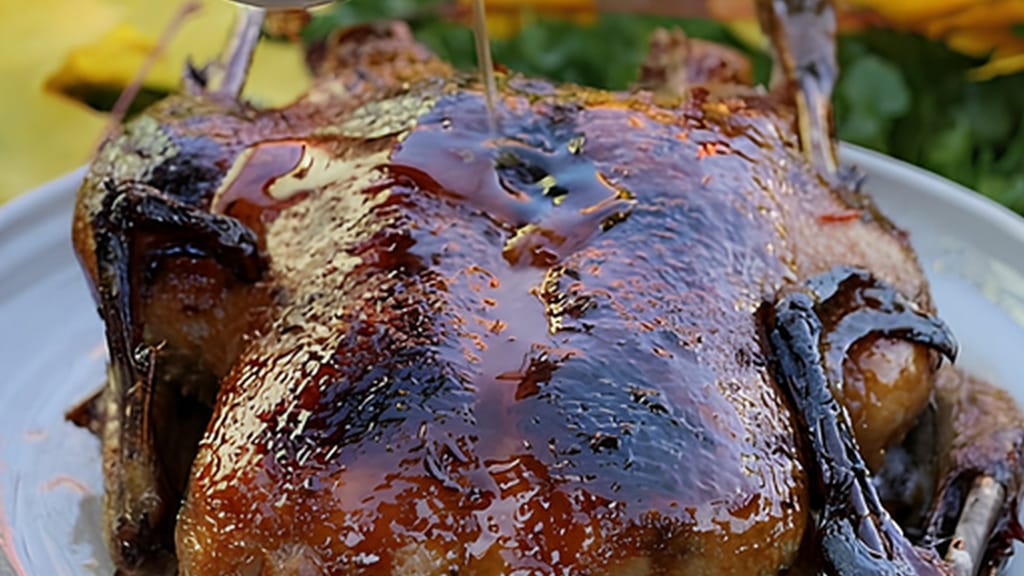
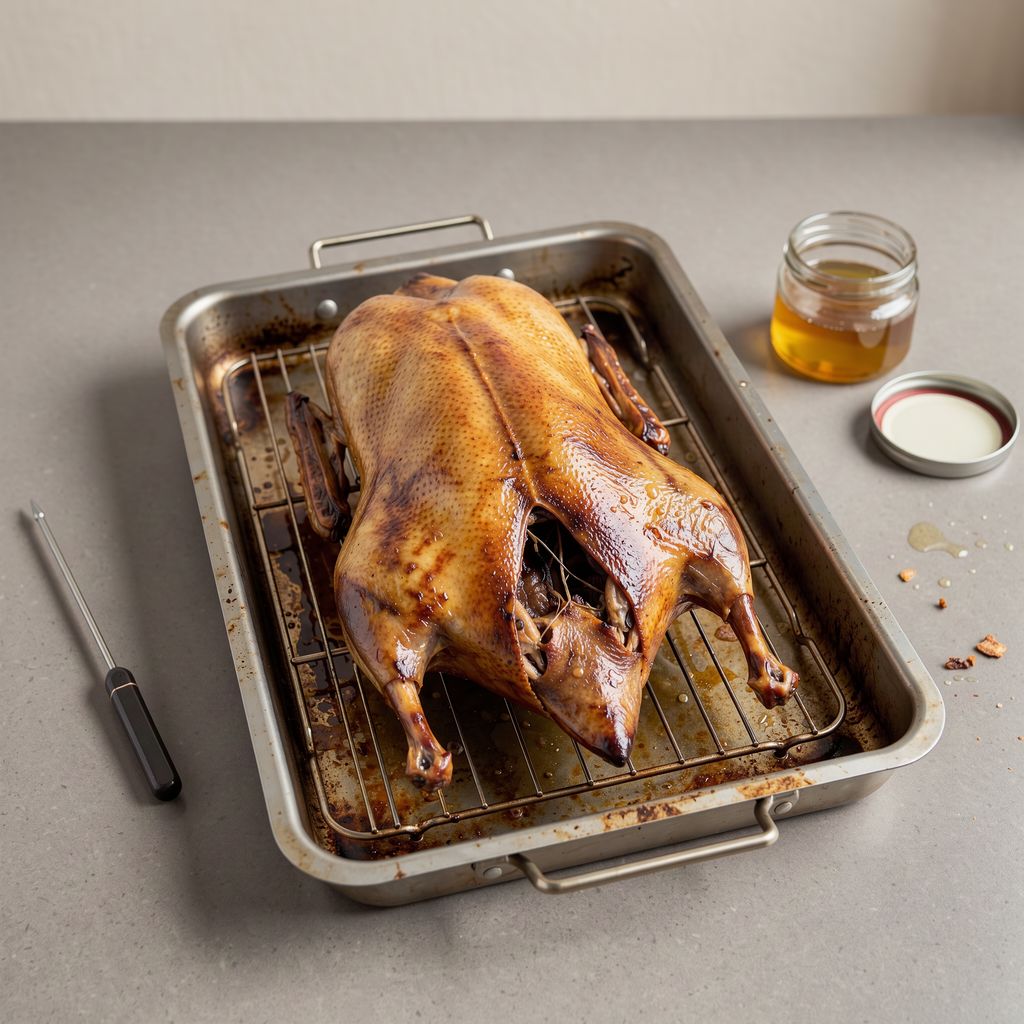
Slow roasting works too: 4–5 hours at 150 °C (300 °F) followed by a short blast at 220 °C (430 °F). That's how, for example, this slow-roasted honey duck is made. The meat ends up very tender and falls off the bone.
Seasonal baking plans, tested recipes and kitchen tricks that save you time. Unsubscribe in one click.
For a whole duck, allow 60–75 minutes per kilogram at 160–170 °C (320–340 °F), plus 20–30 minutes of crisping at 200–220 °C (400–430 °F). These are approximate times for an unstuffed duck taken out of the fridge about half an hour beforehand:
1.5 kg: 1 h 30 min – 1 h 50 min, then 20 minutes of crisping
2 kg: 2 h – 2 h 30 min, then 20–30 minutes of crisping
2.5 kg: 2 h 30 min – 3 h, then 20–30 minutes of crisping
3 kg: 3 h – 3 h 45 min, then 30 minutes of crisping
A stuffed duck needs roughly 15–30 minutes longer, and the center of the stuffing must also reach 74 °C (165 °F). Start checking the temperature at about two-thirds of the time. Ovens heat differently, and the temperature of the meat matters, not the timer.
Crispy skin needs three things: a dry surface, rendered fat and high heat at the end.
Dry and salt it a day ahead. Pat the duck dry with paper towels, salt it and leave it uncovered in the fridge overnight on a rack, on the bottom shelf and away from other foods. The skin dries out and won't steam in the oven.
Score the skin on the breast in a crosshatch pattern, cutting only through the skin and fat, not into the meat. Prick the legs and sides with a skewer, again through the skin only. This gives the fat a way out.
Pour off the fat. After the first hour, drain the excess fat from the roasting pan, then keep pouring it off as you go. A duck sitting in a pool of fat fries on the bottom and its skin won't crisp.
Uncover and raise the heat to 200–220 °C (400–430 °F) at the end. Don't baste the skin with the pan juices any more; if you like, brush it with honey or a marinade in the last few minutes, since sugar burns quickly.
Save the rendered duck fat: it's excellent for roasting potatoes and keeps in the fridge for a long time.
The duck is done when an instant-read probe thermometer in the thickest part of both the thigh and the breast reads at least 74 °C (165 °F). That's the temperature the US food safety agency USDA FSIS gives for all poultry, duck included. Place the probe so the tip doesn't touch bone.
Legs: they're safe at 74 °C (165 °F), but they only turn tender at around 80–85 °C (175–185 °F), when the connective tissue melts.
Juices: the UK Food Standards Agency (FSA) advises checking that poultry, duck included, runs clear juices when the thickest part is pierced and that the meat isn't pink.
Joint: the leg moves freely at the joint.
Color alone isn't reliable, though. Meat near the bone can stay pinkish even when it's safely cooked, and the reverse can happen too. That's why a thermometer is the surest way.
Roast duck turns out tough when it's undercooked in the legs or roasted briefly at high heat. Duck legs have a lot of connective tissue, which only softens with longer cooking and a higher temperature inside the meat.
Short and hot: at 200 °C (400 °F) the whole time, the skin browns and the meat stays tough. Roast it longer and at a gentler heat.
Not enough time: legs below 80 °C (175 °F) tend to be rubbery even though they're safe to eat. Leave them in the oven longer and, if needed, cover the breast with foil.
Carving straight out of the oven: the juices run out onto the board. Let the duck rest for 15 minutes, loosely covered with foil.
The same rules apply to goose, which just roasts even longer. If the skin or the meat of your goose didn't turn out right, see Why roast goose is tough and the skin isn't crispy.
Home ovens commonly deviate from the set temperature by 10–20 °C (18–36 °F), and over several hours of roasting that's the difference between a tender duck and a dried-out one. You can check it with a separate thermometer, such as the Patisse oven thermometer, which hangs on the oven rack. An oven thermometer measures the air in the oven; for the temperature inside the meat you need a probe thermometer, which we don't sell.
Slow-roasted honey duck – juicy and crispy
Slow-roasted honey duck – juicy and crispy
Roast the duck covered for most of the time so the fat renders slowly and the meat stays juicy, then uncover it for 20–30 minutes and raise the heat to 200–220 °C (400–430 °F). Left uncovered the whole time, the outside would dry out and the skin would burn before the thighs turn tender.
Roast duck legs at 160–170 °C (320–340 °F) for about 1.5–2 hours covered, then 15–20 minutes uncovered at 200–220 °C (400–430 °F) to crisp the skin. They're done at an internal temperature of at least 74 °C (165 °F), and they turn tender at around 80–85 °C (175–185 °F), when the meat starts to pull away from the bone.
Plan on roughly 500–600 g of whole bone-in duck per person, so a 2 kg duck feeds 3–4 adults. A duck has a lot of bone and fat that renders away, so you end up with less meat on the plate than the weight suggests.
Roast duck keeps in the fridge for 3–4 days in a sealed container, as long as you refrigerate it within 2 hours of roasting. Reheat it until it's hot all the way through, to at least 74 °C (165 °F). For ideas on what to do with leftovers, see our article on leftover roast goose and duck.
One recipe worth heating the oven for, one tip, and one deal from the shop. Nothing else.