Sunday lunch: perfect homemade beef sirloin in cream sauce
Why Is Svíčková Sauce Sour, and How to Balance It
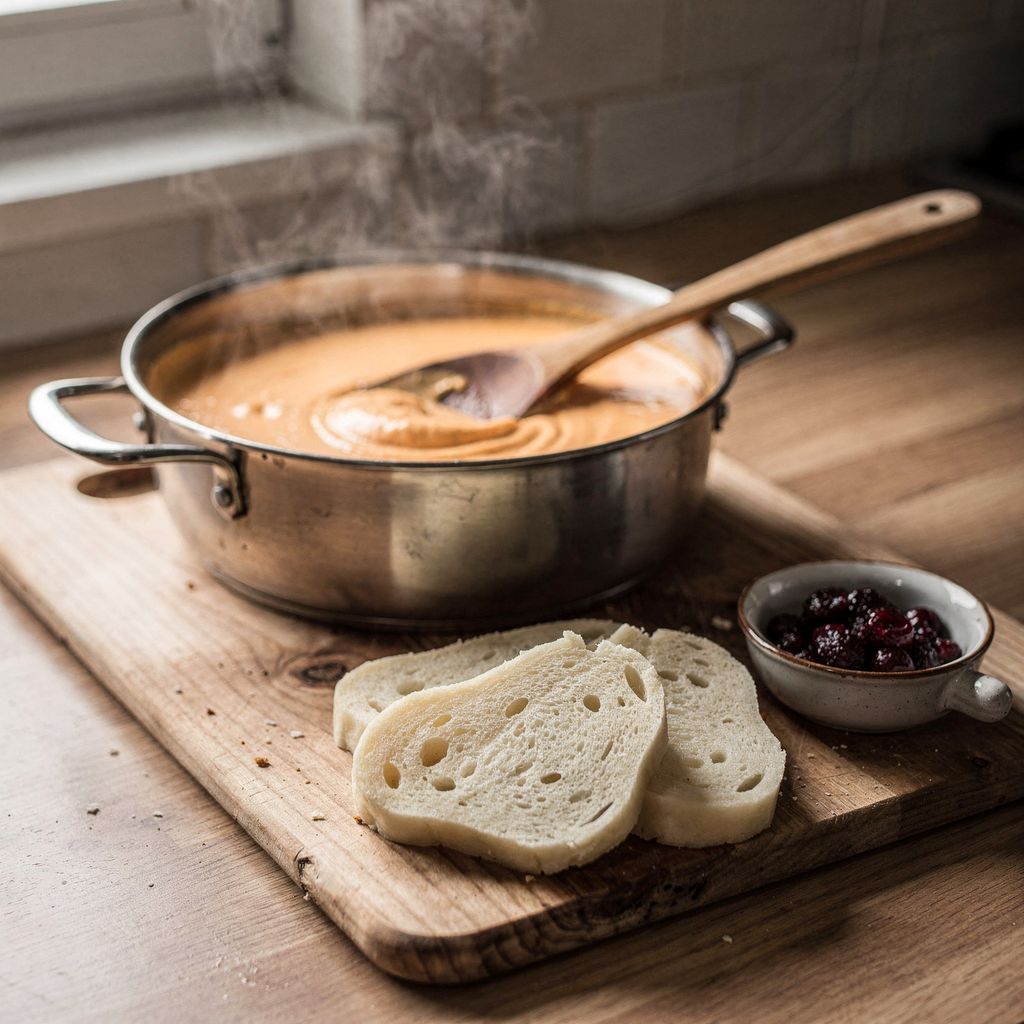
Updated Oct 6, 2026
Svíčková sauce usually turns out sour because the vinegar or lemon went in too late or in too large a dose, and the sauce doesn't have enough of what balances it out: caramelized sugar, browned root vegetables, cream and salt. The good news is that it can almost always be fixed. Here's where the sourness comes from, how to balance it step by step, and how much vinegar actually belongs in svíčková.
Sour svíčková sauce almost always comes down to one of five things: vinegar added too late, too much vinegar in the marinade, too little sugar and caramelization, weak or soured cream, and extra lemon or mustard added when seasoning at the end.
The vinegar went in too late. If you pour it into the finished sauce, it doesn't get a chance to cook down, so it stays sharp and "vinegary".
The meat sat in a vinegar marinade. Some family recipes marinate the meat for 1–3 days in vinegar with vegetables. If the sauce is then made using that marinade and vinegar is also added as the recipe calls for, the acidity stacks up.
There's no sweetness to balance it. Svíčková relies on a balance of sweet, sour and creamy. If the vegetables don't brown and the sugar doesn't caramelize, there's nothing to offset the sourness.
Too little cream, or the wrong kind. Whipping cream (at least 30% fat, typically 31–33%) rounds out the sourness. Soured cream or sour cream, on the other hand, adds to it.
Seasoning "by eye". Lemon juice, full-fat mustard and an extra splash of vinegar on top of everything else just piles sourness on sourness. Each ingredient is fine on its own, there's just too much of it all together.
Vinegar belongs in svíčková right at the start, with the sautéed root vegetables, not stirred into the finished sauce. If you let the vinegar cook with the root vegetables and then simmer with the meat for 2–3 hours, the sharp vinegary smell mellows and the sourness blends with the sugar and vegetables. Simmering barely reduces the acidity itself (acetic acid doesn't boil off until around 118°C/244°F, so it's mainly the water that evaporates), which is why you need to get the vinegar amount right from the start.
The right order is:
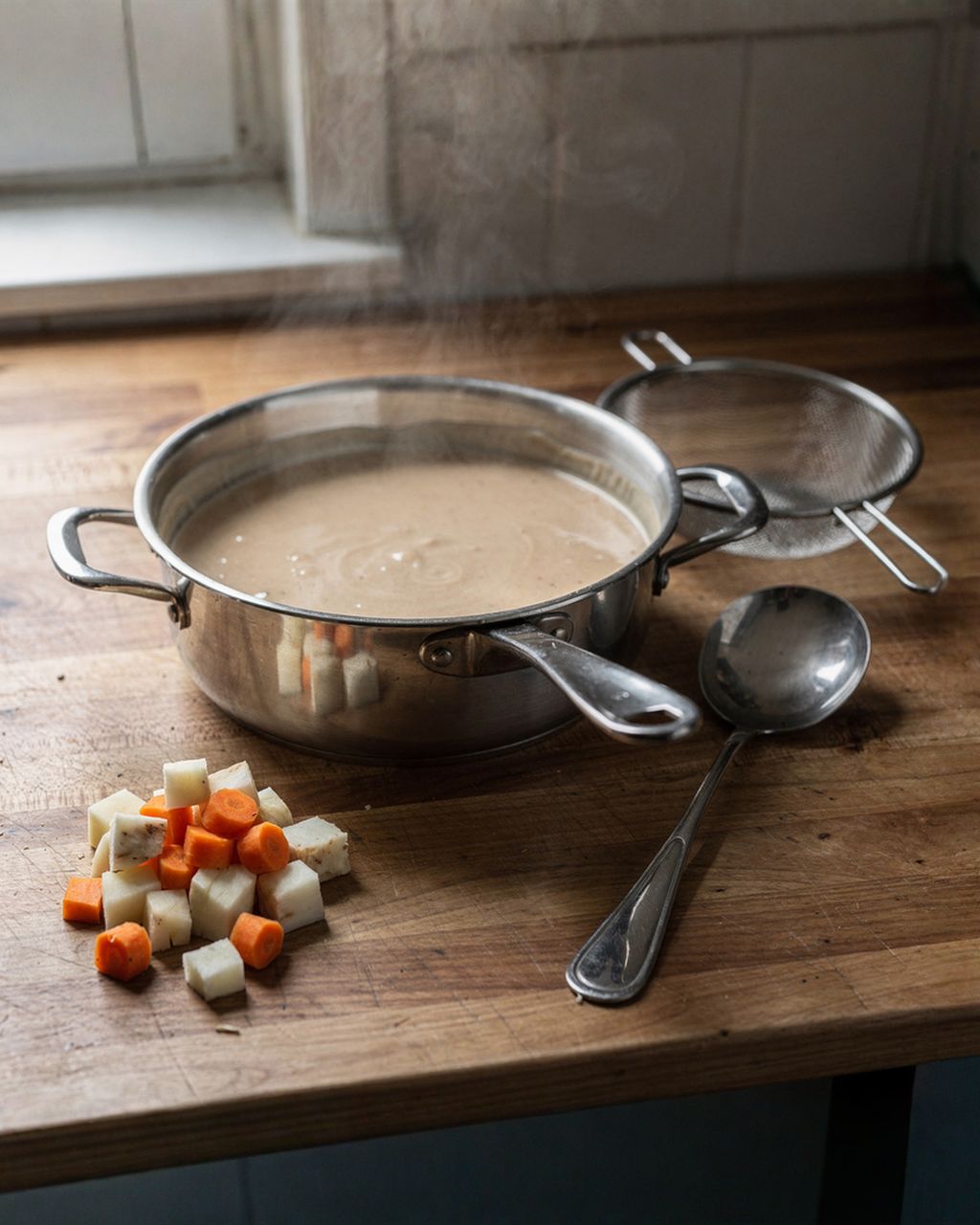
sauté the root vegetables (carrot, celeriac, parsley root, onion) until they brown in places,
sprinkle in the sugar and let it caramelize to a light brown, stirring constantly,
pour in the vinegar and let it cook for 1–2 minutes,
only then add the stock and simmer with the meat.
Vinegar added at the end has a completely different character, it's sharp and biting. If you need to adjust the sourness right at the end, use a few drops of lemon instead and let them cook in properly.
Fix a sour svíčková sauce in this order: salt, cream, sugar, butter, and only as a last resort, a pinch of baking soda. After each step, let the sauce simmer for 2 minutes and taste it. The flavour only settles after it's had a moment to cook.
Check the salt first. An under-salted sauce tastes flat, which makes the sourness stand out more. Add it a pinch at a time, it often fixes more than you'd expect.
Add more cream. For 1 litre of sauce, start with 50–100 ml of whipping cream (at least 30% fat, typically 31–33%). The fat rounds out the sourness and softens the sauce.
Sweeten it gradually. Add 1 teaspoon of sugar, let it cook in, then taste. Repeat until the sauce is sweet-and-sour, not sweet. Granulated sugar works better than honey, which brings its own flavour note along with it.
Stir in cold butter. A tablespoon (about 15 g) of cold butter at the end rounds out the sauce and gives it a nice sheen.
Baking soda as a last resort. It neutralizes acidity chemically, but just a tiny pinch is enough (no more than ¼ teaspoon per litre). The sauce will foam up, and if you overdo it, you'll lose that pleasant sourness too and the sauce will turn bland, even soapy.
If the sauce is very sour, diluting it can help: cook a fresh, smaller batch of root vegetables with stock, blend it, and stir it in. This will thin the sauce out. For how to thicken it back up without flour, see our article on svíčková without a roux: how to thicken the sauce.
For svíčková made with around 1 kg of meat, traditional recipes typically use 2–3 tablespoons of vinegar (8% distilled vinegar) and 2–3 tablespoons of sugar, plus 1 tablespoon of full-fat mustard and a splash of lemon juice to finish.
Vinegar: 2–3 tablespoons (30–45 ml) per 1 kg of meat, added to the vegetables at the start.
Sugar: 2–3 tablespoons, caramelized with the vegetables. A roughly 1:1 ratio of sugar to vinegar is a good starting point, then adjust to taste.
Mustard: 1 tablespoon. This also adds sourness, so factor it in.
Lemon: only at the end, a few drops at a time. It's optional.
Cream: 200–250 ml whipping cream.
If you marinate the meat in a vinegar brine, cut the vinegar used in cooking by half, or leave it out altogether, and adjust at the end to taste. Apple cider vinegar or white wine vinegar are milder than distilled vinegar, so you can use a touch more.
Season svíčková only after it's been blended and the cream added, in small amounts, tasting it alongside whatever you'll be eating it with.
Season the finished sauce. Before the cream goes in, it's hard to judge the sourness accurately, and the cream will mellow it further anyway.
Half a teaspoon at a time. Add sugar and lemon in ½ teaspoon increments, letting the sauce cook briefly in between each addition.
Taste it with dumplings. A spoonful of sauce on its own tastes stronger than sauce served on a plate with dumplings and meat. That contrast is, after all, the whole point of svíčková.
Factor in the garnish. Cranberry sauce and lemon-whipped cream add another sweet-sour note on the plate, so the sauce itself can afford to be a touch milder.
Let it rest. After 10–15 minutes off the heat, the flavours come together. Taste it again before reaching for another spoonful of vinegar.
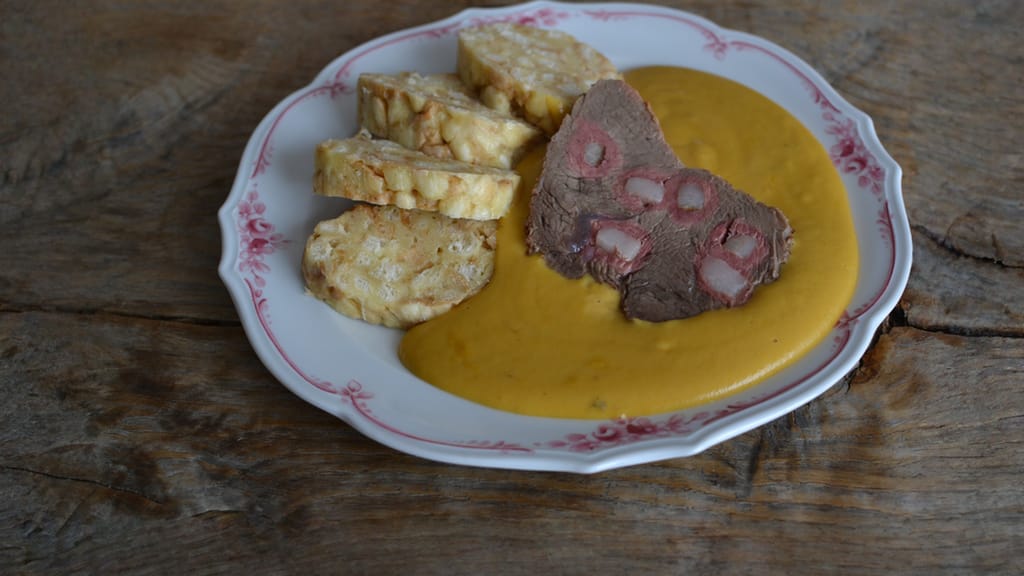
Sunday lunch: perfect homemade beef sirloin in cream sauce
Homemade creamy svíčková recipe, step by step
Plain 8% distilled vinegar is the most common choice for svíčková, since it's clean and neutral in flavour. Apple cider vinegar or white wine vinegar are milder and fruitier, so you can use a touch more. Balsamic vinegar isn't a good fit, as it will darken the sauce and overpower it.
You can replace the vinegar in svíčková with lemon juice, in roughly the same amount. Lemon is fresher and less sharp, but add it gradually and let it cook in. Some people use citric acid instead, though it's very concentrated, so a pinch is all you need.
Svíčková turns out too sweet when more sugar goes in than the vinegar can balance, or when there's a lot of carrot and caramel in it. Fix it with a teaspoon of vinegar or a few drops of lemon, letting it simmer for 2 minutes, plus a pinch of salt. Add it in small amounts and taste as you go, so you don't tip it over into sour.
A bitter svíčková is usually down to burnt sugar, root vegetables browned too darkly, or a scorched pot bottom. Sugar and cream won't fix that. Carefully pour the sauce into a clean pot without scraping the bottom, taste it, and if it's still bitter, cook a fresh batch of the vegetable base and stir in only as much of the old sauce as the flavour can take.
Yes, a cream-based svíčková sauce can spoil in the fridge. You'll notice a sour, almost musty smell that's different from the vinegary sourness from cooking. Once cooked, cool it quickly, store it in a sealed container, and eat it within 2–3 days. If the smell has changed or you spot any bubbles, throw it out.
One recipe worth heating the oven for, one tip, and one deal from the shop. Nothing else.