The best christmas cookies? vanilla crescents, of course!
What Temperature to Bake Vanilla Crescent Cookies So They Stay Pale and Tender
Updated Oct 24, 2026
What temperature should you bake vanilla crescent cookies at? Bake at 300–320 °F (150–160 °C) with a fan oven, or at 340–355 °F (170–180 °C) with conventional top and bottom heat, for roughly 8–15 minutes depending on size (classic crescents take 10–12 minutes). They're done when the tips and bottoms are a light straw color and the tops stay pale. Roll them in vanilla sugar while still warm, not hot, after 2–5 minutes on the baking sheet. Below you'll find baking times by size, the differences between oven modes, and the most common mistakes that make crescents brown or break.
Bake vanilla crescents low and short: fan oven 300–320 °F (150–160 °C), conventional top and bottom heat 340–355 °F (170–180 °C). A higher temperature won't speed them up. It just scorches the tips before the center is baked through.
Fan oven 150–160 °C — bakes more evenly, and you can bake 2 trays at once. Lower the temperature by 15–20 °C compared with a conventional setting. Use the lower end, 150 °C, for small, thin crescents.
Top and bottom heat 170–180 °C — one tray on the middle rack. This is the surest way to an even color.
Bottom heat only — don't use it, as the bottoms darken before the tops finish baking.
Always preheat the oven fully, for about 15 minutes. Crescents only spend a few minutes in the oven, so a cold start shows right away: the first tray bakes longer and unevenly.
Vanilla crescents bake for 8–15 minutes, and the time depends mainly on how thick they are, not how long. As a guide, at 300–320 °F (150–160 °C) fan oven / 350 °F (175 °C) conventional:
Small (about 5 g, pencil-thin): 8–10 minutes
Classic (8–10 g, about 1 cm / ½ inch thick): 10–12 minutes
Large (12–15 g, grandma's size): 12–15 minutes
Treat the first tray as a test: set a timer for the lower end of the range, then check every minute from there. Bake the remaining trays by what you learn. If your crescents vary in size, put only one size on each tray, since the small ones would burn before the large ones are done.
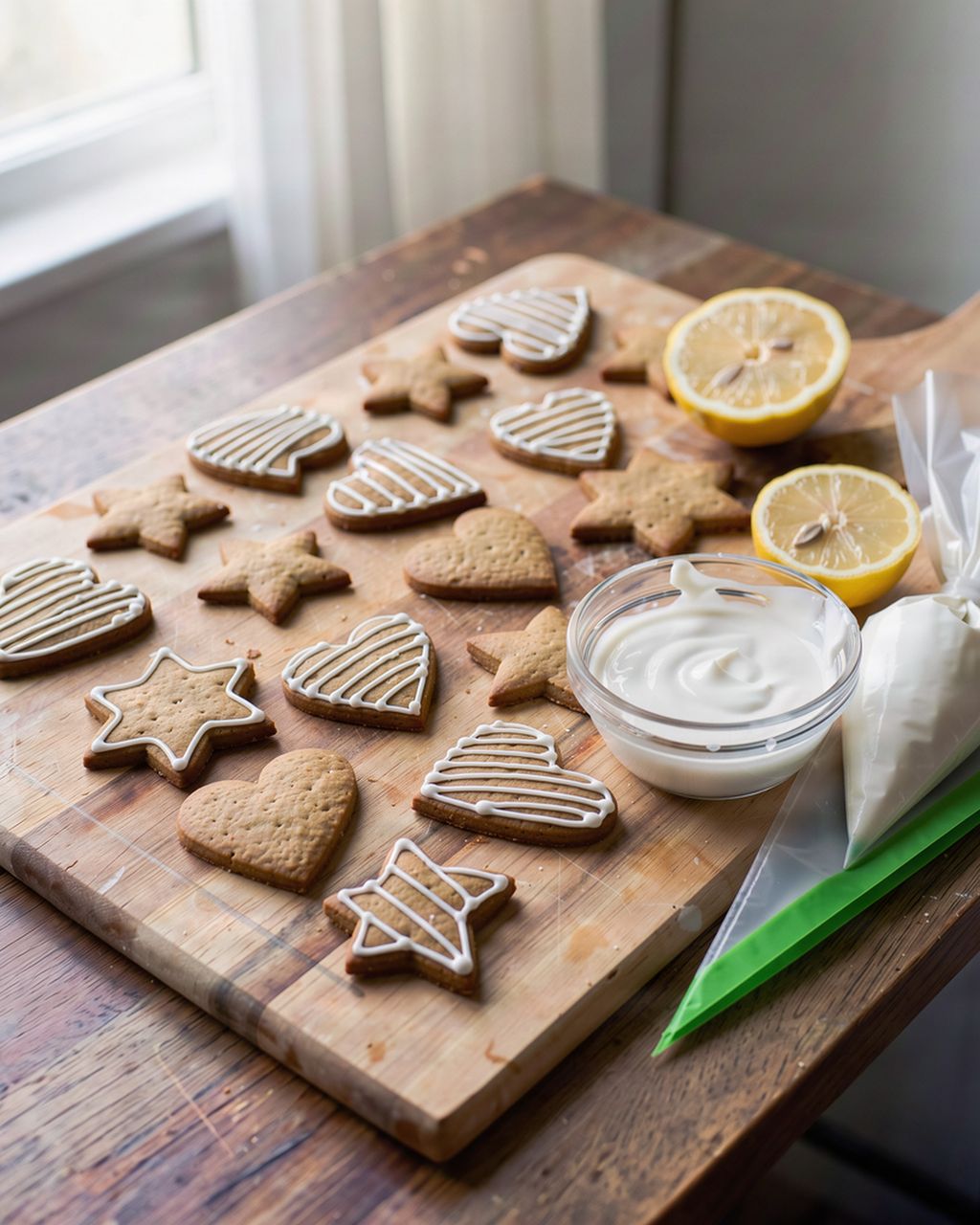
Cut-out cookies (from rolled dough, using a cutter) are usually thinner and flatter, so they're typically done in 7–9 minutes.
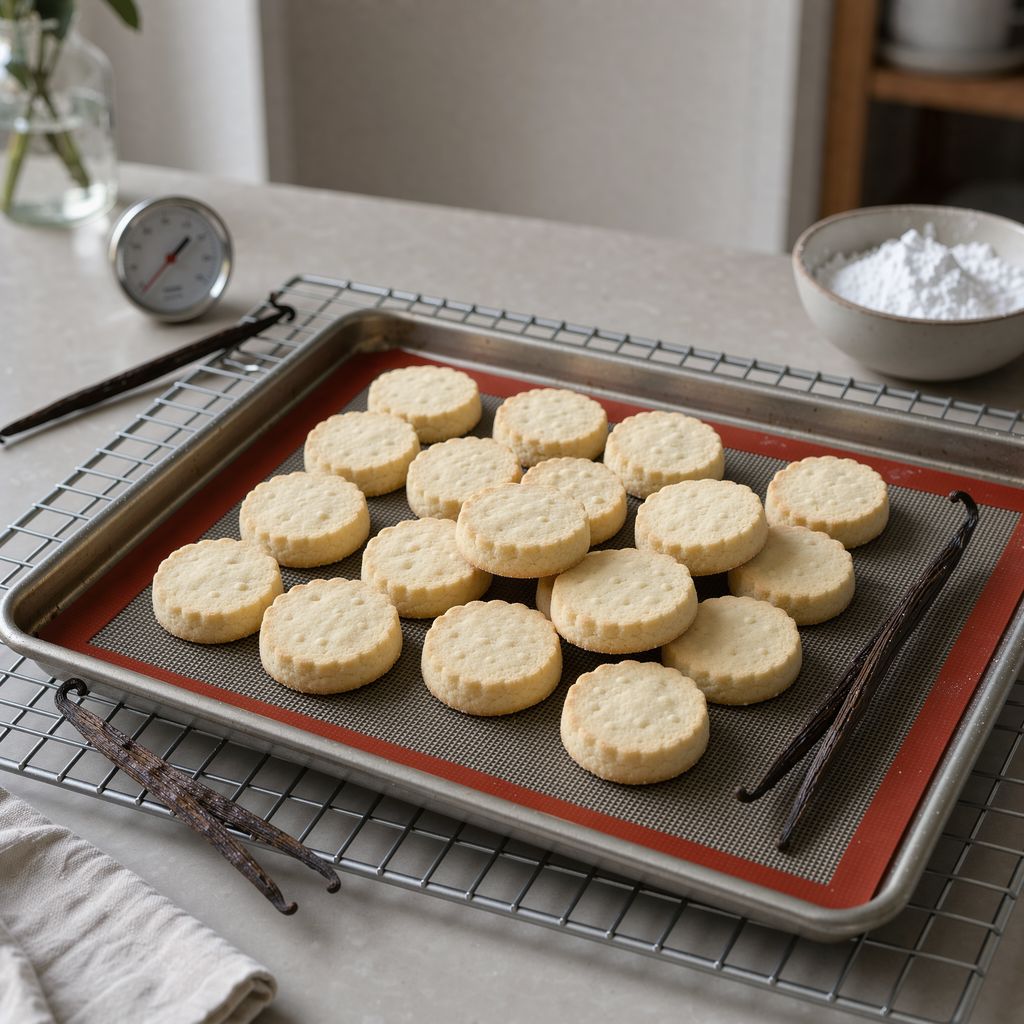
A baked crescent has tips and bottoms that are a light straw color, a pale, matte top, and dough that no longer looks moist. Don't wait for the top to color. If the whole cookie turns golden, it's overbaked and will be hard and slightly bitter once cool.
What to check:
Bottom: carefully lift one crescent with a spatula. It should have a light golden tinge, not brown.
Tips: the first place color appears. As soon as they turn golden, take the tray out.
Surface: it goes from shiny and moist to matte and dry.
Touch: on the tray they're still soft and fragile. That's right, because they firm up as they cool.
The most common mistake is baking them "until they harden." A hot crescent made with buttery dough will never be hard. If you wait for firmness in the oven, you'll pull out dry cookies.
Vanilla crescents darken too early for 4 reasons: the oven runs hotter than it shows, a dark baking tray, warm dough, and too much sugar in the dough.
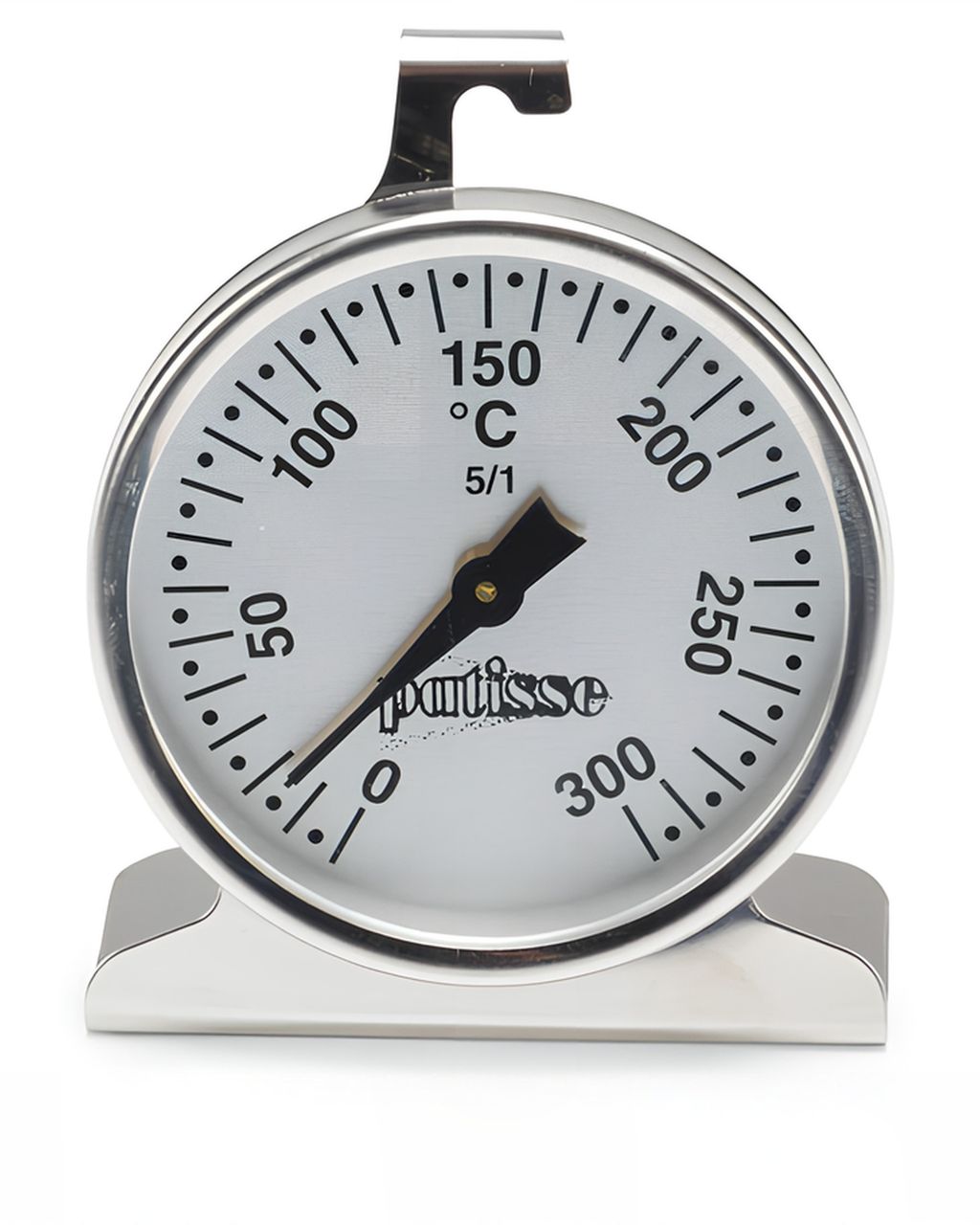
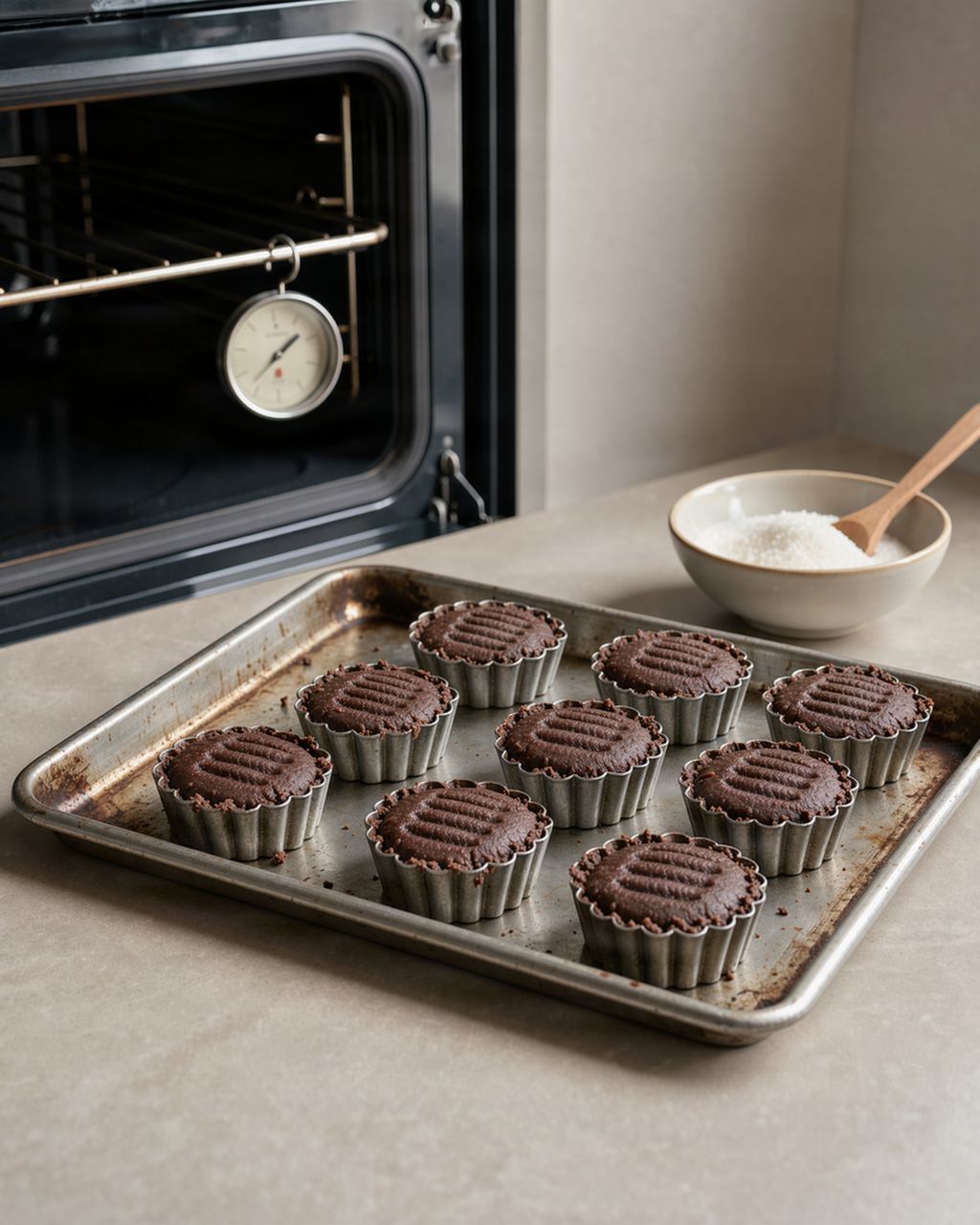
The oven shows a different temperature than it actually has. Home ovens often drift from the set temperature, easily by more than 10 °C (about 18 °F). It's worth checking once: put an Patisse oven thermometer on the middle of the rack and after 15 minutes of preheating you'll know what your oven is really giving you. Then adjust the dial and you won't have to guess with every tray.
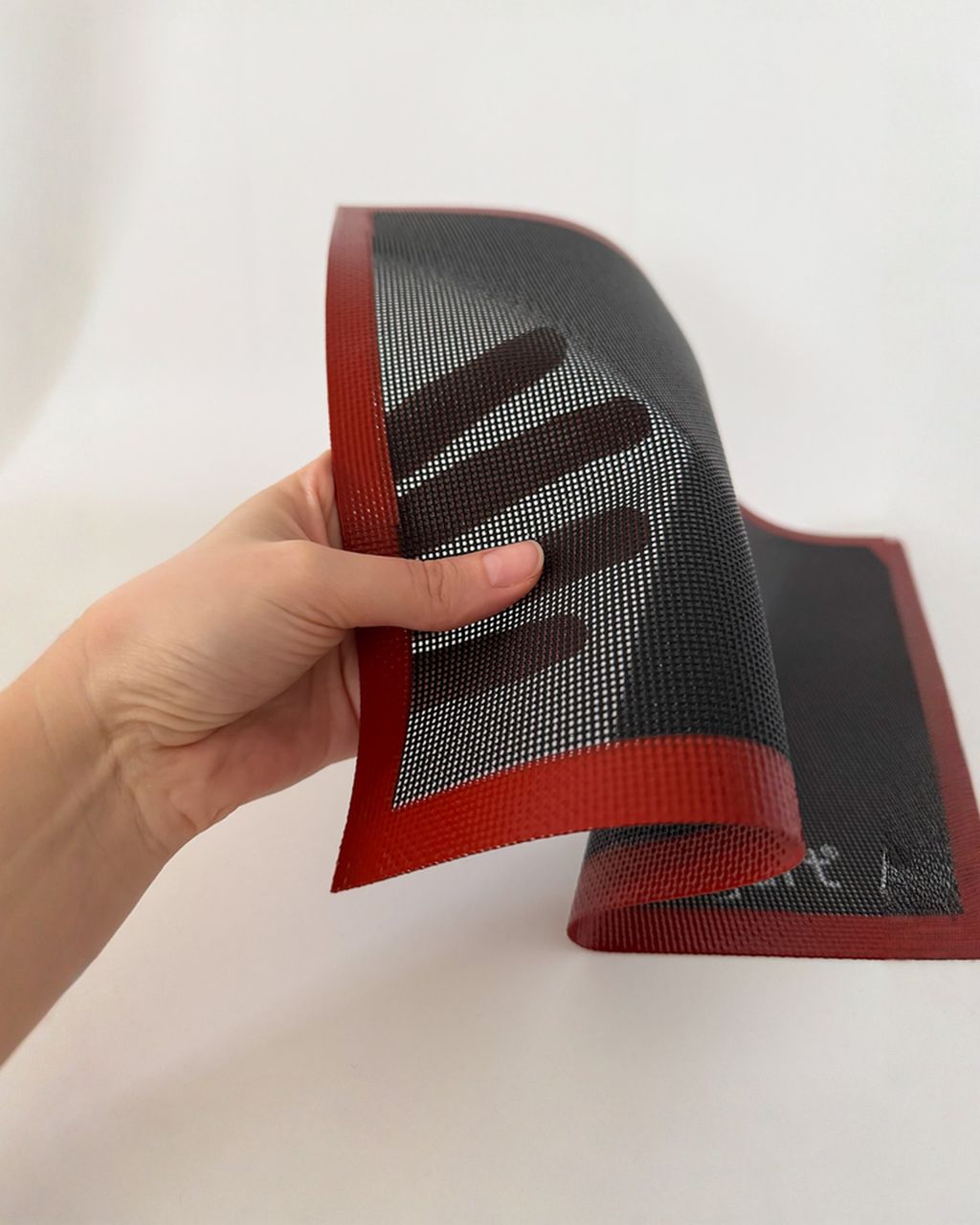
A dark baking tray. A dark enameled tray absorbs more heat and scorches the bottoms. A light-colored tray, baking parchment, or a silicone mat helps.
The dough was warm. Soft butter in the dough melts, the crescents lose their shape, and the thin edges brown. Put the shaped crescents on the tray and chill them in the fridge for 15–20 minutes before baking.
Too much sugar in the dough. More sugar in the dough means faster browning; the classic ratio is about 70 g sugar to 280 g flour. You can make up the sweetness with the coating.
Baking parchment works well and is enough for most people. If you bake a lot of trays, a perforated silicone mat is worth it: steam escapes through the tiny holes, the bottoms bake evenly without scorching, and you can reuse the mat for the next batch.
Roll vanilla crescents in sugar while warm, after 2–5 minutes of cooling on the tray. Hot ones break, and cold ones won't hold on to the sugar.
Take the tray out and let the crescents rest for a moment. They need to firm up a little so you can pick them up with your fingers.
Carefully roll them a few at a time in a bowl of vanilla sugar, or simply sprinkle them generously with sugar and shake the tray.
Let them cool completely on a wire rack.
For a thicker white layer, roll them once more after they've cooled.
The first coating melts slightly on the warm surface and "sticks," and the second gives that snowy look. If you only coat them cold, the sugar rubs off during storage.
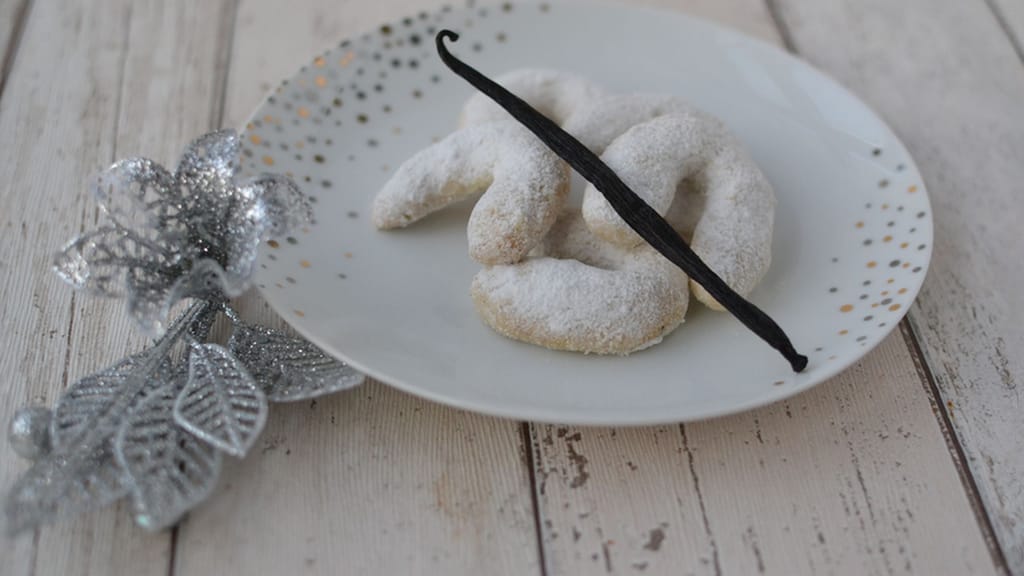
The most fragrant coating is made with powdered sugar and real vanilla. Common vanillin sugar from a packet tastes of synthetic vanillin, so its scent is simpler and sweeter. The ingredients matter, not the name: look for vanilla or vanilla extract on the package. Vanillin sugar contains only flavoring (vanillin or ethyl vanillin) and no vanilla. Read more in our article vanilla sugar vs. vanillin sugar.
Packet sugar with real vanilla — convenient and a good compromise.
Vanillin sugar — cheap and strong, but flat.
Homemade vanilla sugar — scrape the seeds from one pod into 200–250 g of powdered sugar and rub them in with your fingers. Put the scraped pod into the sugar jar and it will scent it within a week.
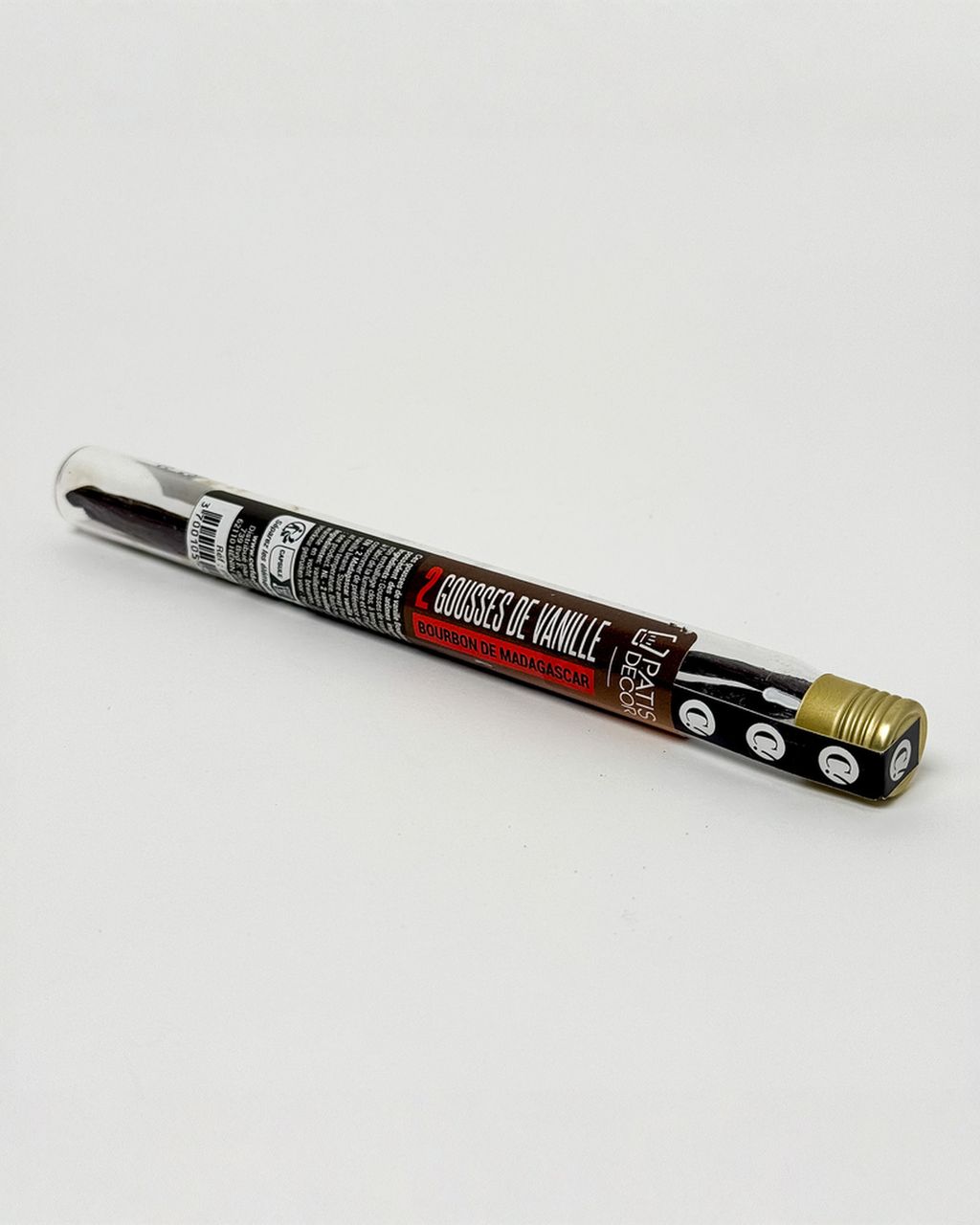
One pod is enough for the sugar for 1–2 trays of crescents; if you have two, split the second between the dough and the sugar. Madagascar Bourbon vanilla pods suit this well: Bourbon vanilla has a full, creamy aroma that pairs best with butter and nuts. You can put vanilla paste or extract in the dough, but not in the coating sugar, as it would dampen it and make it clump.
This article covers the baking; you'll find the dough itself and the method in our recipe The Best Christmas Cookies? Vanilla Crescents, of Course!. Temperatures and times for other types are laid out clearly in the article what temperature to bake Christmas cookies at. For more inspiration, browse our Christmas cookie recipes.
The best christmas cookies? vanilla crescents, of course!
Vanilla Crescent Cookies: A Classic Christmas Cookie Recipe
Vanilla crescent dough usually cracks while shaping because it's too cold from the fridge. Let it soften at room temperature for a few minutes and knead each piece briefly in your palms before rolling it into a log.
Vanilla crescents most often break when you roll them in sugar while still hot, or when the dough is too dry. Let them cool on the baking sheet for 2–5 minutes and move them with a spatula. If the dough itself is crumbly, add a spoonful of cold butter or an egg yolk.
Vanilla crescents keep for 3–4 weeks in an airtight tin in a cool place. Separate the layers with baking parchment to protect the sugar coating. Don't store them with soft cookies, because the crescents will draw moisture from them.
You can freeze baked, uncoated vanilla crescents for up to 2–3 months. After thawing at room temperature, warm them briefly for 3 minutes at 300 °F (150 °C) and then roll them in sugar. You can also freeze the shaped raw dough and bake it straight from frozen, adding 1–2 minutes.
In an air fryer, bake vanilla crescents at 300–320 °F (150–160 °C) for about 6–8 minutes, in a single layer on parchment paper. An air fryer bakes more intensely than an oven, so start checking the tips from minute 5.
One recipe worth heating the oven for, one tip, and one deal from the shop. Nothing else.