What Temperature to Roast a Chicken, and for How Long: Times by Weight and How to Tell It's Done
What to Cook With Chicken: Whole, Roasted, Grilled, Leftovers, and How to Cut It Up
Updated Nov 18, 2026
What can you cook with chicken? One whole bird gives you a Sunday roast, a stock from the bones, and leftover meat for a salad, risotto, or tortillas over the next few days. All you need is to know how to cut it up and what to do with each part. Below you'll find step-by-step instructions for cutting up a chicken, the temperature and time for a whole chicken in the oven, stock, specific dishes made with roasted, grilled, smoked, and boiled chicken, a "one chicken, three meals" plan, and the rules for how long leftovers keep and how to reheat them safely.
You can cut a whole chicken into 8 pieces (2 breasts, 2 thighs, 2 drumsticks, 2 wings) plus a carcass for stock in ten minutes. All you need is a sharp knife and a large cutting board. Cut through the joints and don't hack through bone. Cutting it up pays off: a whole bone-in, skin-on chicken usually costs less per kilo than breasts or thighs bought separately, and you get the bones for free.
Set up your space. Unwrap the chicken, pat it dry with a paper towel, and place it breast side up on the cutting board. Put a damp towel under the board so it doesn't slide. Don't rinse the chicken under the tap. You'll find out why in the questions below.
Remove the thighs. Pull the leg away from the body and cut through the skin between the leg and the breast. Then bend the leg outward until the hip joint pops out of its socket, and cut through it. Run the knife close along the backbone so the "oyster" stays on the thigh, that little nugget of the juiciest meat on the back.
Separate the thigh and drumstick. Lay the leg skin side down. You'll see a thin white line of fat marking the joint between the thigh and the drumstick. Cut right along it and the knife will go through without resistance.
Cut off the wings. Pull the wing away from the body, feel for the shoulder joint, and cut through it. Save the wing tips for stock.
Separate the breasts from the back. Stand the chicken on its neck end and use poultry shears or a knife to cut through the ribs on both sides, from the tail to the neck. The back with the backbone goes into the stock.
Debone or halve the breasts. For boneless breast cutlets, run the knife along the breastbone and then down along the ribs, and the fillet will come away in one stroke. For roasting on the bone, just halve the breast along the breastbone. Left on the bone, they stay juicier.
Tidy up the bones. Put the carcass, neck, and wing tips in a bag and straight into the freezer, or simmer them for stock that same day.
A 1.5 kg chicken gives you roughly four adult portions of meat and about 400–500 g of bones for a pot of stock. Whole legs and what to do with them are covered in chicken thighs: what to cook with them. For breast fillets and how to keep them from drying out, see what to cook with chicken breast.
Thighs and drumsticks suit long roasting and braising, breasts suit a quick sear over high heat, wings suit roasting until crisp, and the carcass with the neck and wing tips goes into stock.
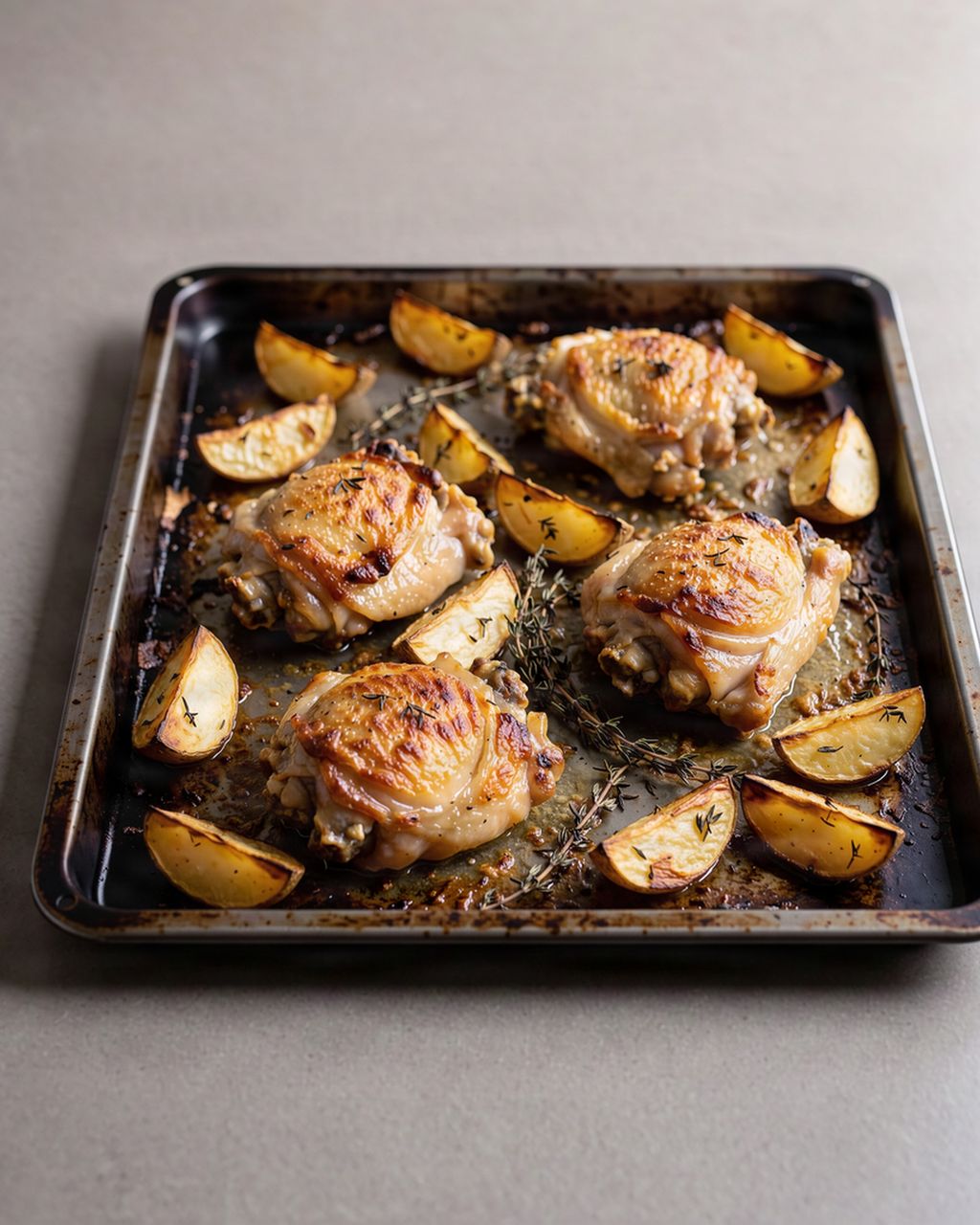
Thighs and drumsticks stand up to long roasting and braising without drying out. They're a good fit for a roasting pan with vegetables, such as chicken pieces roasted on carrot logs: the meat roasts on the carrots under a lid at 160°C (320°F) for about an hour, then finishes uncovered at 180°C (350°F). For a sauce, try butter chicken. The recipe calls for breasts, but thighs will make it juicier: the meat is marinated with ginger, garlic, and chili, seared, and warmed through in a tomato sauce with butter and cashews. Serve it with basmati rice or flatbread.
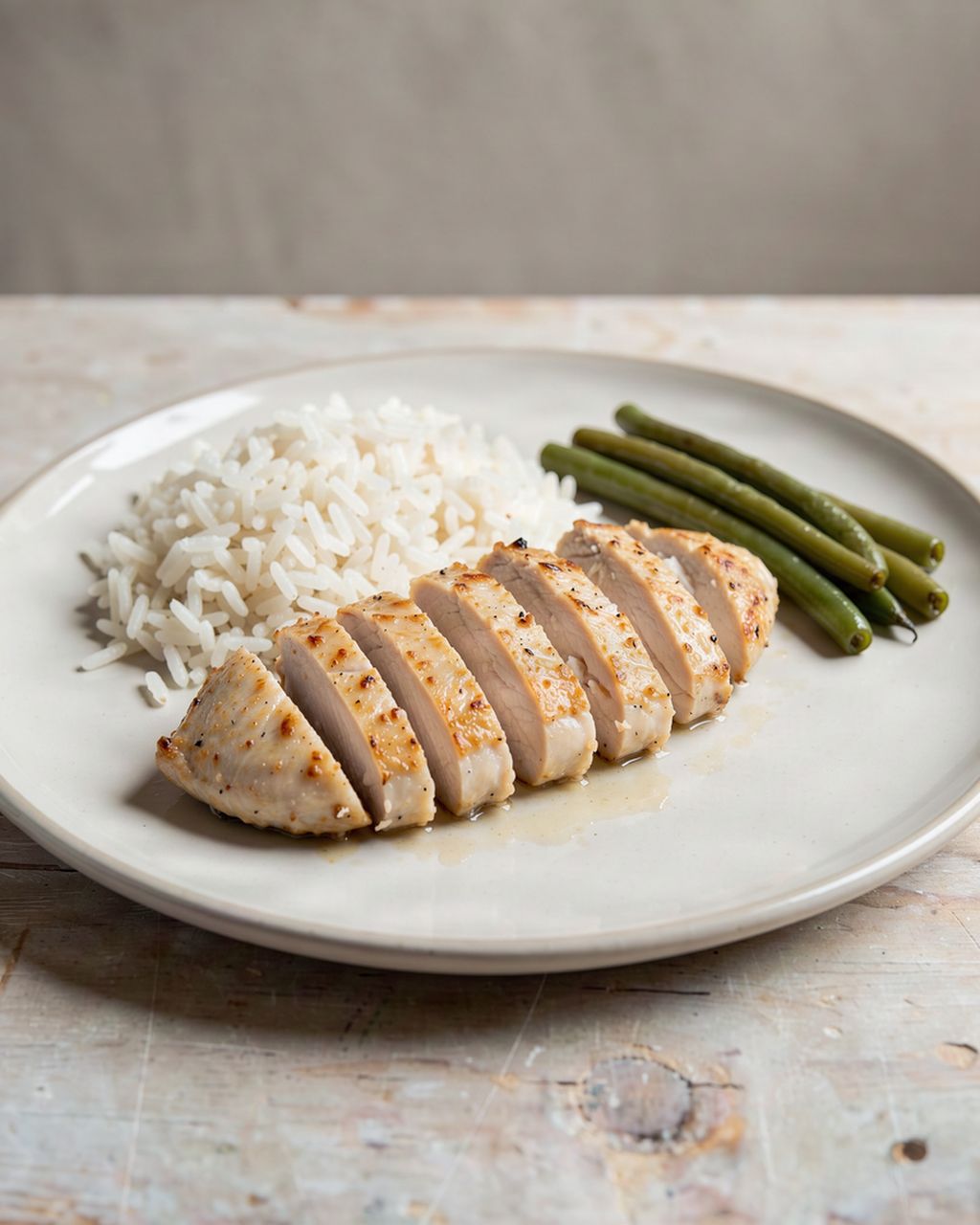
Breasts need a short time and high heat. Sear them in a pan over high heat for 3–4 minutes per side and let them rest for five minutes. The marinade from the grilled chicken with lemon and oregano recipe also works well on breasts; serve the meat with roasted potatoes or a salad.
Wings need time for the skin to crisp. Roast them at 200–220°C (400–425°F) for about 40 minutes, turning them halfway. For a main course, try lightly spicy wings with perfect fried rice.
The carcass, neck, and wing tips belong in stock. They give it both flavor and the gelatin that makes the stock set once it cools.
We send seasonal cooking and baking plans and recipes made from everyday ingredients. Unsubscribe in one click.
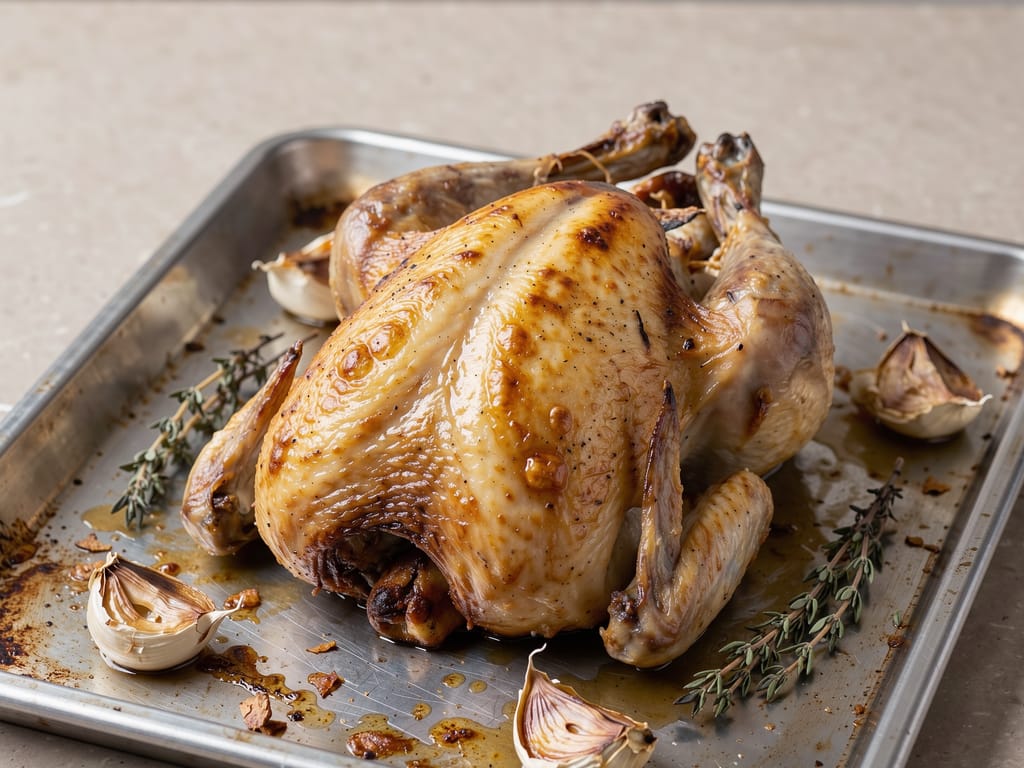
Roast a whole chicken at 190–200°C (375–400°F) for about 40–45 minutes per kilo, plus an extra 15–20 minutes. A 1.5 kg chicken will therefore need about 80–90 minutes. It's done when a thermometer inserted into the thickest part of the thigh (not touching the bone) reads 74°C (165°F). That's the minimum safe temperature for poultry according to the US agency USDA FSIS. Time per kilo is only an estimate; the thermometer decides.
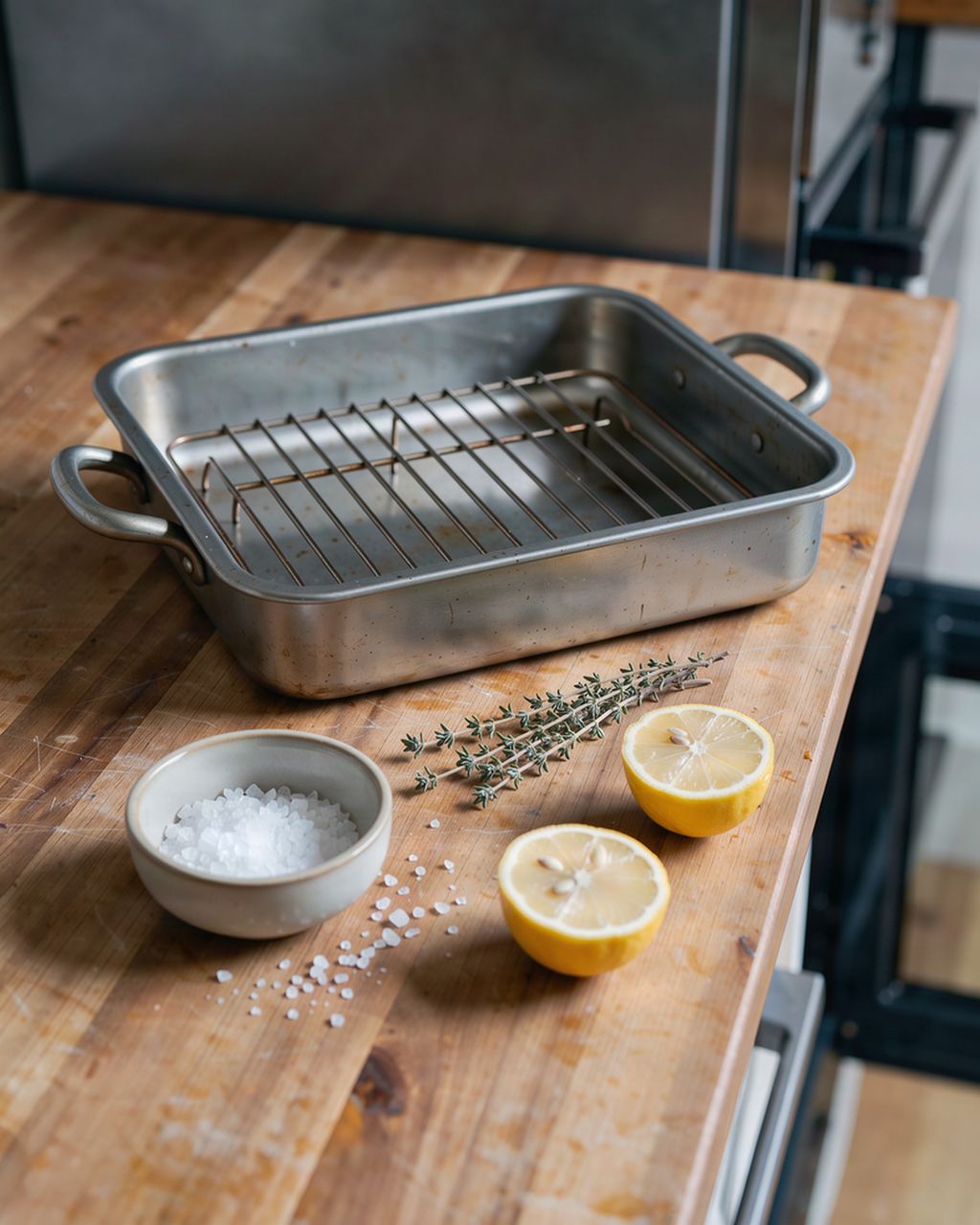
Dry and salt ahead of time. Pat the chicken dry with a paper towel, salt it, and ideally leave it uncovered in the fridge overnight. The skin dries out and then crisps in the oven instead of steaming.
Fat under the skin. Carefully loosen the skin over the breast with your fingers and spread a tablespoon of softened butter mixed with garlic and thyme underneath. The breast is the driest part of the chicken, and the butter protects it.
Aromatics in the cavity, not stuffing. Half a lemon, a few garlic cloves, a sprig of rosemary. Dense stuffing slows down cooking through the center.
On vegetables. Set the chicken on coarsely cut onion, carrots, and potatoes. The vegetables soak up the pan juices and you have a side dish ready.
Rest. Let the roasted chicken rest for 10–15 minutes under loosely draped foil. The juices soak back into the meat instead of ending up on the cutting board.
Dry breasts and undercooked thighs have the same cause: the breasts finish first. It helps to spatchcock the chicken. Use shears to cut out the backbone, open the bird out, and press it flat onto a baking sheet. It then roasts more evenly and about a third faster, around 45–55 minutes at 210°C (410°F) for 1.5 kg. A roast chicken with a distinctive side is roast chicken with mushroom tarhonya (tarhonya is Czech egg barley): the chicken roasts on tomatoes while the tarhonya with mushrooms is cooked separately.
Ovens often bake differently from what the dial says. To check whether yours does, use an oven thermometer. Detailed times by chicken size and oven type are in the article what temperature to roast chicken at and for how long.
Make chicken stock from one carcass (about 400–500 g of bones) and 2–2.5 liters of cold water. Simmer it for 2–3 hours, very gently, so the surface barely trembles. You'll get 1.5–2 liters of stock for soups, risotto, and sauces. Both the raw bones from cutting up the bird and the leftovers from a roast chicken work. Each gives a slightly different flavor:
Raw bones give a light, clear stock. Cover them with cold water, bring slowly to a boil, and skim the first foam with a ladle. That keeps the stock clear.
Roast chicken bones give a darker stock with a roasted flavor. Sauces and risotto benefit from it most. Feel free to add leftover skin and the drippings from the roasting pan to the pot.
Vegetables go in after an hour: carrot, a piece of celery root, parsley root, and an onion halved and charred cut side down in a dry pan (this turns the stock golden). Add a few peppercorns, allspice berries, and a bay leaf.
Salt at the end. The stock reduces, and if you salt it at the start it could end up too salty.
Strain and chill quickly. Strain the stock through a fine sieve, divide it into smaller containers, and refrigerate within two hours. The fat that solidifies on top can be lifted off and used for frying potatoes.
Chilled stock that sets into a jelly is a sign that enough gelatin has come out of the bones. That's the real foundation. If you need stock right away and have none at home, reach for clear chicken broth and improve it by simmering it with root vegetables for ten minutes.
A quick dish made from stock and leftover meat is thickened chicken soup with meat and mushrooms. You sauté mushrooms in butter, dust them with flour, pour in the stock, and after 15 minutes of gentle simmering add the shredded meat. With a slice of bread, it's a full dinner.
From leftover roast or grilled chicken you can make five types of dishes in 15–30 minutes: salad, risotto, soup, tortillas or quesadillas, and quiche or fried rice. The meat is already cooked, so you only warm it through or use it cold. Add it at the very end so it doesn't dry out a second time.
Before you start, pull the meat off the bones. It comes away from the bone most easily while it's still lukewarm. Remove the skin, shred the meat by hand into bite-size pieces, and set the bones aside for stock right away. Store-bought grilled chicken is usually more strongly seasoned and saltier, so add salt to dishes made with it only after tasting.
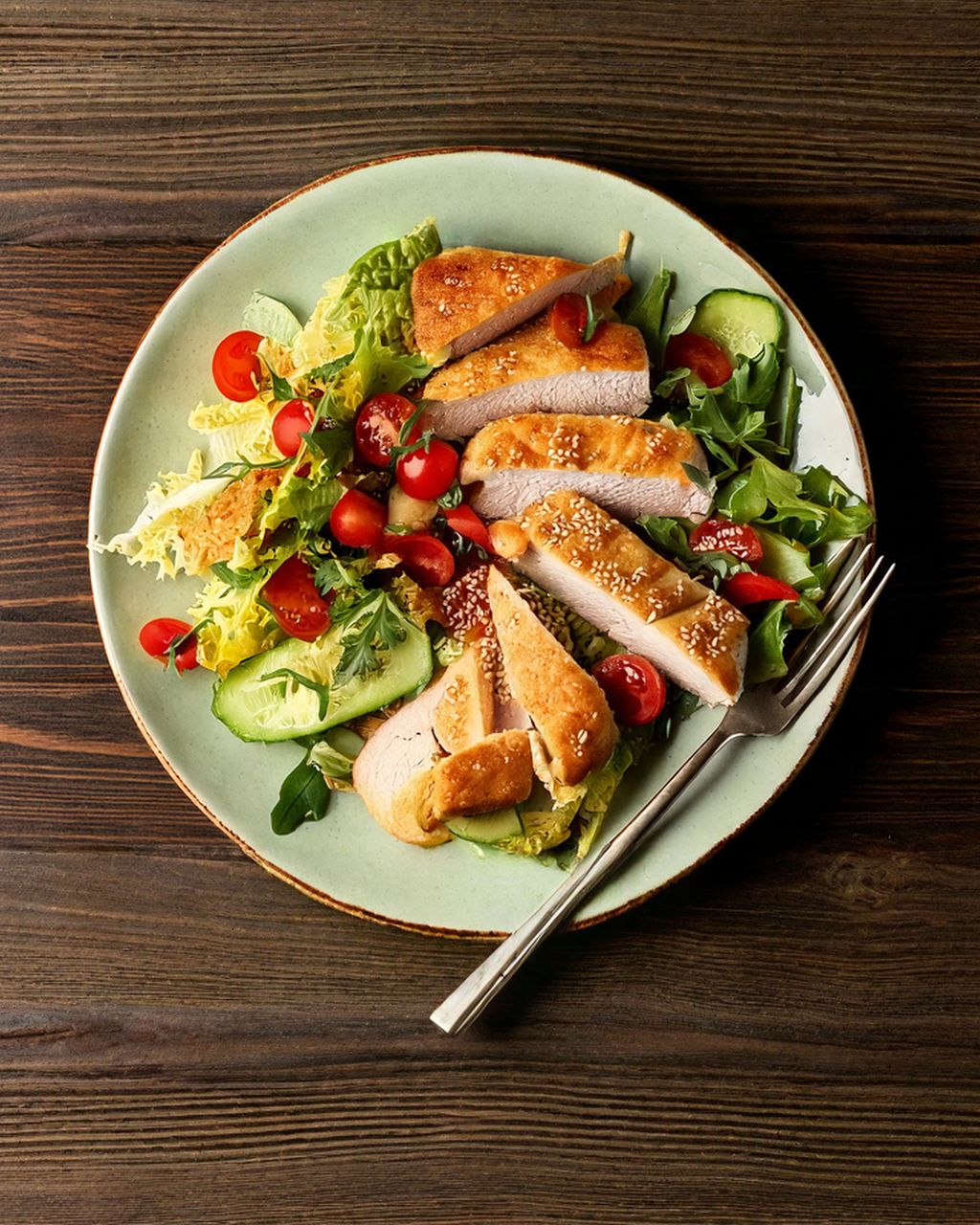
Cold roast chicken makes a better salad than a freshly cooked breast because it has more flavor and juice. Mix the shredded meat with yogurt or mayonnaise, a teaspoon of mustard, lemon juice, diced celery, and scallions. Leave it in the fridge for 20 minutes so the flavors come together. Serve it in a baguette, on toast, or on lettuce leaves.
For a light dinner or a lunchbox, try pasta salad with chicken strips, tomatoes, and arugula. Freshly seared strips replace the leftover meat in it; just toss them with still-warm pasta and the dressing. If you want a really loaded sandwich, use your leftovers in a chicken and cheese club sandwich. Toasted bread, chicken, bacon, cheese, and vegetables in three layers, with fries on the side.
Risotto is the best way to use up chicken and stock at the same time. The stock flavors the rice, and the meat only needs to be stirred in at the end, so it just warms through and doesn't dry out.
The easiest route, with no standing at the stove, is baked risotto with chicken and vegetables. The rice, vegetables, and stock go into the oven covered, and no stirring is needed. Add the leftover chicken only once you take the pan out, and let it warm through for five minutes under the lid. If you also have leftover rice and want more ideas, check out what to cook with rice.
A quick chicken soup from leftovers is ready in 25 minutes if you already have stock. Put diced carrot, parsley root, and celery root into the pot of stock and simmer for 15 minutes until tender. Then add a handful of thin noodles and, 3–5 minutes later, the shredded meat. Finish with plenty of chopped parsley and a few drops of lemon. The acidity brightens the soup and balances the saltiness.
If you have carrots and noodles but no stock, cover the roast chicken bones with a liter of water and simmer for at least 40 minutes. That quick stock with its roasted flavor is enough for a soup. For a thicker winter soup, stir a spoonful of roux or a grated potato into the stock and simmer for 10 minutes more.
A chicken tortilla is the fastest dinner from leftovers, on the plate in 10 minutes. Briefly fry the shredded meat in a pan with a teaspoon of ground paprika and cumin so the edges crisp. Wrap it in a warm tortilla with sour cream, lettuce, tomatoes, and grated cheese. For inspiration, see the recipe for tortilla with grilled chicken and wild garlic, where the grilled meat is just like what you have left from the weekend. Out of season, replace the wild garlic with a handful of spinach and a clove of garlic.
For a quesadilla, put the meat with cheese and beans on only half of the tortilla, fold it over, and cook in a dry pan for 2–3 minutes per side until the cheese melts. Serve it cut into triangles with salsa and avocado.
Quiche is the best way to turn leftover roast chicken into a weekend lunch. Spinach quiche with chicken bakes for about 35–40 minutes at 180°C (350°F), until the egg filling in the center has just a slight wobble. Serve it warm with a green salad. It's good cold the next day, too.
Rice from the day before and the last of the chicken make spicy fried rice with meat and vegetables. Cold rice is drier, so it won't clump together in a hot pan. Add the chicken with the soy sauce at the end, and it's ready in five minutes.
Smoked chicken is strong, salty, and smoky, so it works best in dishes that lack a smoky note: legumes, potatoes, grains, and thick soups. Store-bought smoked chicken is usually already heat-treated. Still, follow the information on the package. You only need to warm the meat through, and you add salt to the dish at the end.
Millet patties. Smoked chicken and millet patties with potato and carrot is a smart weekday meal. Millet and mashed boiled potatoes with carrot come together into patties, fried until golden, and the smoked meat adds a salty, smoky flavor. A dill pickle or a yogurt dip goes well with them.
Lentil soup or sour lentils. Sauté diced smoked meat with onion, add lentils, cover with water or stock, and simmer for 25–40 minutes depending on the type of lentil. Season with vinegar and mustard. Smoked chicken replaces the classic smoked pork belly here. Which lentils suit soup is covered in what belongs in lentil soup.
Bean goulash. Smoked chicken, onion, paprika, tomato paste, and canned beans are stewed for 20 minutes. Serve with bread and a spoonful of sour cream.
Potato salad or baked potatoes. Stir a few cubes of smoked meat into potato salad instead of ham. Or layer potato slices, smoked meat, and cream in a baking dish and bake for 45 minutes at 190°C (375°F), until the potatoes are tender and the top is golden.
A smoked chicken carcass works for stock for pea soup or bramboračka (Czech potato soup). It's too smoky for a clear soup, but great for a thick one.
Boiled chicken is tender and delicate but mild in flavor. That's why it suits dishes where the sauce provides the flavor: chicken paprikash, pasta ragù, and baked crepes or tortillas. As a bonus, you get the broth the meat was cooked in.
Chicken paprikash. Sauté onion in lard or oil until golden, stir in sweet paprika off the heat, add stock, and simmer for 10 minutes. Thicken the sauce with cream mixed with a spoonful of all-purpose (plain) flour and simmer another 5 minutes. The shredded meat just warms through in the sauce. Serve with bread dumplings (houskový knedlík) or pasta.
Pasta ragù. Shred the meat, add it to a tomato sauce with garlic and basil, and simmer for 10 minutes under a lid. The fibrous meat soaks up the sauce like pulled pork, only it's ready much faster.
Baked crepes or tortillas. Mix the meat with béchamel, spinach, and cheese, fill crepes, and bake at 200°C (400°F) for 15–20 minutes until golden.
How to cook chicken so it isn't rubbery, how long it keeps, and five more ideas are in the article boiled chicken: how to cook, store, and use it.
One chicken weighing 1.6–1.8 kg can feed a family of four three times: roast chicken on Sunday, risotto or soup from the stock on Monday, tortillas or salad from the leftover meat on Tuesday. The carcass also gives you stock for the freezer. It works because each meal builds on the one before and nothing gets thrown away.
Sunday: whole roast chicken. Roast it on vegetables as described above for 80–100 minutes, until the thigh reads 74°C (165°F). The family eats the thighs, wings, and part of the breast. Right after lunch, within two hours at most, pull the leftover meat off the bones, put it in a container, and refrigerate it. There's usually 250–400 g left.
Sunday evening: stock. Put the carcass, skin, and leftover vegetables from the roasting pan into a pot, cover with 2 liters of water, and simmer gently for 2–3 hours. Strain the stock, divide it into smaller containers, and refrigerate within 2 hours; in the morning, lift off the solidified fat.
Monday: risotto or soup. Risotto for four uses about 1.2 liters of stock and half of the leftover meat. If you're in the mood for soup, make a noodle soup from the stock. Freeze the rest of the stock in smaller portions.
Tuesday: tortillas or salad. Fry the other half of the meat with spices for tortillas, or make it into a salad for a lunchbox. Tuesday is two days after roasting, so still within the 3–4 day limit.
The plan assumes the leftover meat gets into the fridge quickly after roasting. If the chicken stays out on the counter longer than 2 hours, don't use the leftovers; throw them out. You'll find the reason in the next section.
Refrigerate leftovers of roasted or cooked chicken within 2 hours of cooking, eat them within 3–4 days, and reheat them to 74°C (165°F) before eating. These three rules come from the US food safety agency USDA FSIS. If the room is above 32°C (90°F), for example at an outdoor grill, FSIS shortens the storage limit to 1 hour.
Chill quickly. A whole warm chicken takes a long time to cool in the fridge. Divide the pulled meat into shallow containers so it cools evenly.
Separate the meat from the bones. It takes up less room in the container, cools faster, and is ready to use in the following days.
Store-bought grilled chicken is counted from the moment you bought it. If you won't eat it within two hours, refrigerate it just like your own roast chicken.
Reheat until it's steaming hot all the way through, not just lukewarm. In a sauce or soup, let the chicken simmer properly. In the microwave, cover it and stir halfway, because a microwave heats unevenly. If you have a probe thermometer, check for 74°C (165°F) in the middle of the thickest piece.
For details on raw, cooked, and thawed chicken, see the article how long chicken keeps in the fridge.
No, don't wash raw chicken before cooking. USDA FSIS warns that tap water splashes bacteria from the surface of the meat around the sink and countertop, and recommends only patting the chicken dry with a paper towel. Cooking to 74°C (165°F) safely kills the bacteria on the surface. After handling raw chicken, wash your hands, knife, and cutting board with hot water and dish soap.
Yes. According to USDA FSIS, roast chicken keeps its best quality for 2–6 months in the freezer at −18°C (0°F). It stays safe longer, but over time it loses flavor and juiciness. Pull the meat off the bones and freeze it, ideally in flat bags with as little air as possible. Thaw it in the fridge, then use it right away in a soup, risotto, or sauce, where it dries out the least.
You can refreeze thawed chicken, even raw, if it was thawed in the fridge. According to USDA FSIS, the meat only loses a little quality. Chicken thawed in water or in the microwave should be cooked first and refrozen only once it's done.
Roast a half chicken at 200°C (400°F) for about 45–60 minutes, until a thermometer in the thigh reads 74°C (165°F). Set it skin side up on top of vegetables so the underside doesn't scorch. For the last 10 minutes, you can switch on the broiler to crisp the skin.
No, you don't need to let chicken warm up before roasting, and leaving it out on the counter for a long time isn't recommended. Simply take it out of the fridge about 20–30 minutes ahead, while the oven heats up, and use that time to pat it dry and season it. A longer wait on the counter won't change the result. It only extends the time the meat spends at a temperature where bacteria multiply.
You can use both the chicken skin and the pan fat instead of throwing them away. Spread the skin on a baking sheet lined with parchment paper, salt it, and roast at 200°C (400°F) for about 15–20 minutes, until it turns into crisps for salads. Pour the fat into a jar, where it keeps in the fridge for a few days. Roasted potatoes or onions taste noticeably better cooked in it than in oil.
One recipe worth heating the oven for, one tip, and one deal from the shop. Nothing else.