Lentil salad
What Goes in Lentil Soup? Lentil Types, Spices and Ratios That Work

Updated Jul 19, 2026
Lentil soup needs four things: lentils, root vegetables (onion, carrot, celery), something to thicken it, and seasoning to tie it all together — bay leaf, garlic, marjoram and a splash of vinegar at the end. Everything else is just variation. In this guide we'll cover which lentils to pick depending on whether you want a thick, soft soup or one with grains that hold their shape, how much of each ingredient to use, and how to dodge the two most common problems: lentils that refuse to soften and post-soup bloating.
Lentil soup is built from lentils, root vegetables (onion, carrot, celery), something to thicken it (potato, or a blitzed portion of the soup itself), seasoning (bay leaf, garlic, marjoram), and a final splash of something acidic — vinegar or lemon. There's one key ratio worth remembering: for a litre of water or stock, use roughly 120–150g of dried lentils for a medium-thick soup — the lower end for a thinner soup, the higher end for something heartier. After that, it's all down to detail:
Lentils – brown for the classic version, green when you want the grains to hold their shape, red for a smooth, creamy texture.
Root vegetables – onion, carrot and celery form the aromatic base.
Potato – breaks down as it cooks and thickens the soup naturally.
Seasoning – bay leaf, garlic, marjoram and a pinch of ground cumin.
A hit of acid – a spoonful of vinegar or a squeeze of lemon at the end to wake the flavour back up.
Everything else — smoked meat, sausage, coconut milk, chilli — is just a spin on this same base. Let's go through each part one by one.
The best lentils for soup depend on the texture you're after: brown lentils partially break down for a classic thick soup, green lentils hold their shape, and red lentils cook down completely into something velvety smooth. Cooking times differ by almost double, so the type really does matter — and you can happily combine two varieties.

Brown lentils are the classic pick and the most versatile all-rounder. They have a mild, earthy flavour, break down partially as they cook, and give the soup body and thickness. They take about 20–25 minutes to cook. Soaking isn't essential, but a few hours in water will shorten the cooking time and make them easier on the stomach.
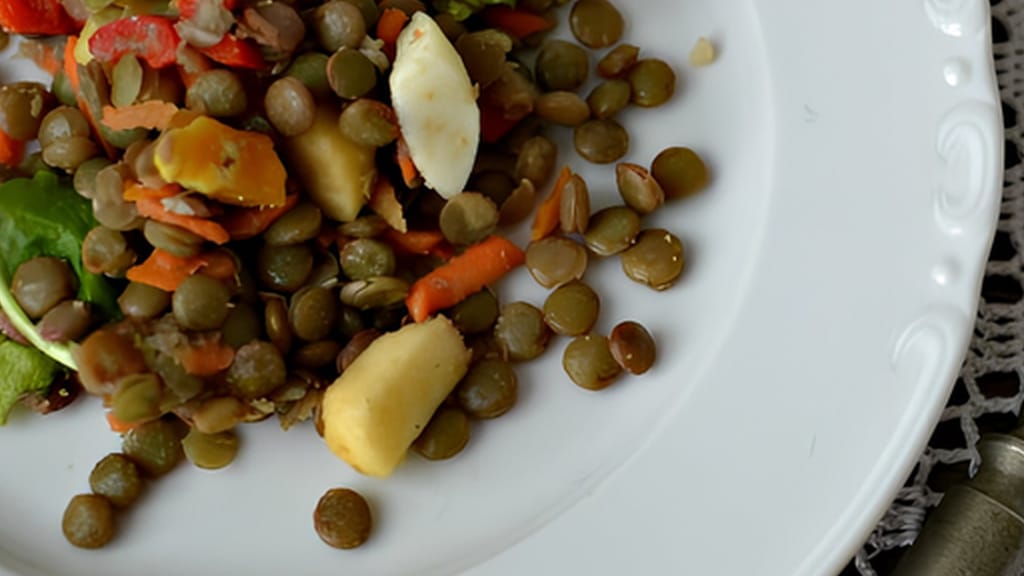
Green lentils keep their shape even after longer cooking and have a slightly peppery bite, making them ideal when you want distinct grains in your soup. They take roughly 25–30 minutes to cook. French Puy lentils are their finer, pricier cousin with the same behaviour — they hold their shape just as well. The same shape-holding lentils also make a great salad.
Lentil salad
Green lentil salad, made with lentils that hold their shape
Red lentils have no skin, so they only need 10–15 minutes to cook, breaking down completely into a smooth, creamy soup even without blending. They're also the easiest to digest and cause almost no bloating — no soaking required. They pair beautifully with coconut milk, tomatoes and curry spices. We covered them in detail in our step-by-step guide to red lentil soup.
The aromatic base of lentil soup is onion, carrot and celery softened in fat — this trio is where the flavour really begins to build. Carrot brings sweetness and colour, celery brings earthiness and aroma, and onion provides the foundation everything else builds on.
Finely chop the vegetables and let them turn translucent in oil or butter for a few minutes before adding the lentils and water. Sweating them this way brings out sweetness and depth you simply can't get from boiling alone. If you like a heartier soup, add one or two diced potatoes — their starch does the thickening work a roux would otherwise do.
Lentil soup works well with bay leaf, garlic, marjoram, thyme, ground cumin, and a finishing touch of vinegar. There's no need to throw everything in at once — three or four is enough, as long as you know what each one does:
Bay leaf – one or two leaves added during cooking give a woody depth. Fish them out before serving.
Garlic – added early with the onion for a mellow flavour, or crushed in at the end for a sharper kick.
Marjoram – the classic pairing with pulses, and it also helps ease bloating.
Thyme – an earthy aroma that holds up even after long cooking.
Ground cumin – a pinch adds a warm note; whole cumin seeds push the soup in a more Middle Eastern direction.
Vinegar or lemon – a spoonful right at the very end brightens up the whole dish.
Both work — it really comes down to how hearty you want the soup. Smoked meat, sausage or bacon add smoky depth and turn the soup into a full meal; the meat-free version is lighter, cheaper, and you can dress it up with vegetables and spices. The classic Czech version builds on a piece of smoked meat.
Add smoked meat right at the start so the stock simmers with smoky flavour the whole time; sausage or bacon, on the other hand, should be fried separately and added right at the end so it stays crisp. If you're eating lighter, skip the meat altogether — according to nutrition tables, a portion of cooked lentils provides roughly 9g protein and 8g fibre per 100g, so even the meat-free version is properly filling. With cured meats, you pay for it with extra fat and salt.
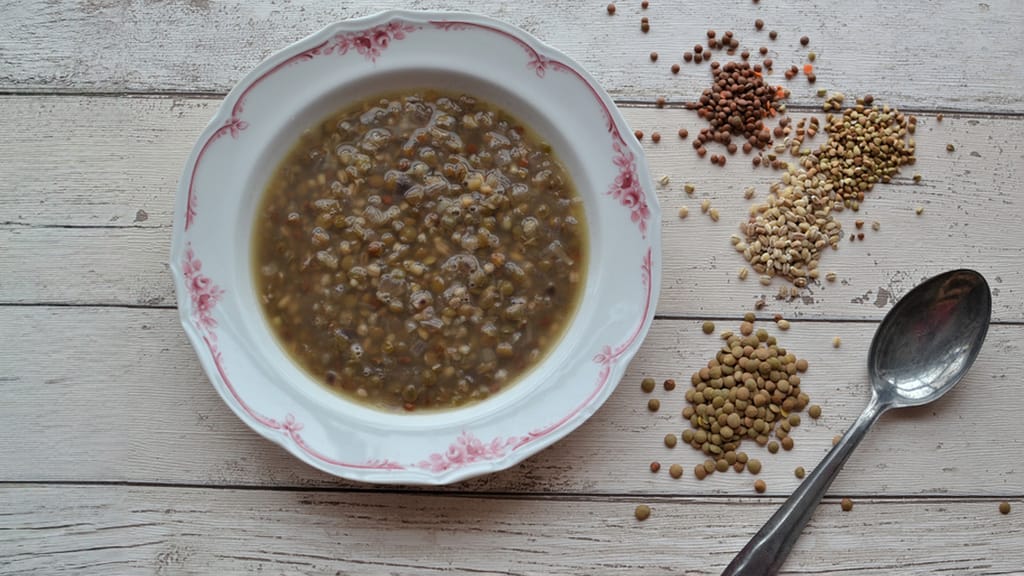
Perfect handful-style lentil soup
Classic hearty lentil soup with smoked meat
You can make a creamy lentil soup with no cream or meat at all: red lentils form the base, coconut milk or blended cashew cream gives it a velvety texture, and vegetable stock with seasoning brings the depth of flavour. The result is thick, creamy, and entirely plant-based.
Coconut milk – the easiest cream substitute; adds creaminess and a subtly exotic note, pairs well with curry and chilli.
Cashew cream – soak a handful of cashews and blend with a little water until smooth; it thickens and softens the soup without adding a strong flavour of its own.
Sweet potato or potato – cooked down and blended, they add body and natural sweetness.
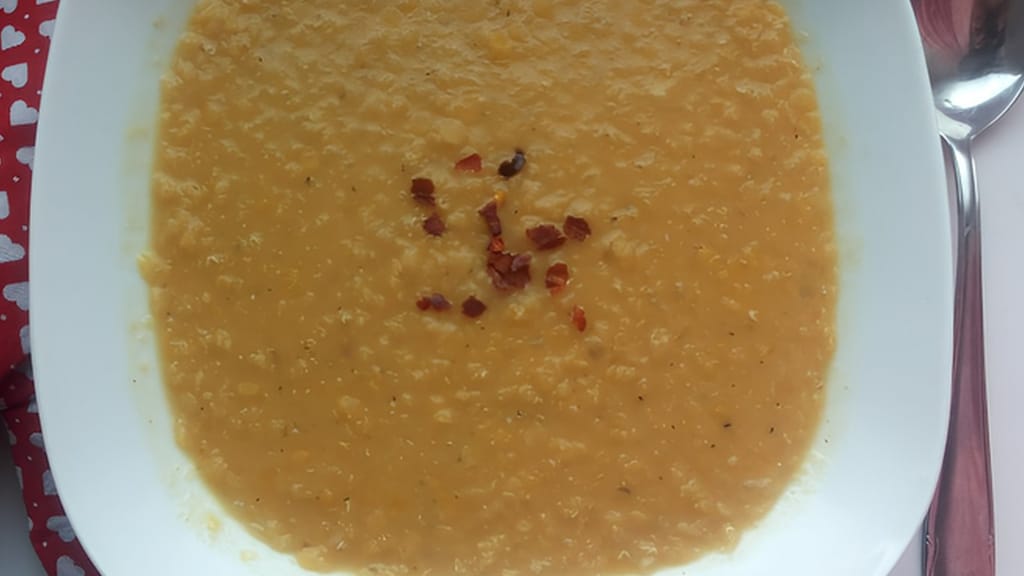
Red lentil soup with coconut milk and chilli
Creamy red lentil soup with coconut milk and chilli
There are four ways to thicken lentil soup — the simplest and cleanest is the first:
Blend a portion of it and stir it back into the pot; the ingredients bind together and the soup thickens without any added ingredient.
Add a well-cooked potato or a handful of rice — their starch thickens the soup and adds to how filling it is.
Reach for red lentils, which break down on their own and turn creamy without any blending.
Make a roux from flour and fat; let it cook through properly so no floury taste remains.
But the main lever for thickness is the lentil-to-water ratio: around 120g of lentils per litre gives a thinner soup, 150g or more makes it properly thick. Thickness is easy to fix either way: if you overdo it, just add a splash more stock or water.
Bloating after eating lentils comes down to oligosaccharides in the skin — sugars the body can't fully break down. Red lentils, having no skin, are the easiest to digest and cause almost no bloating. For brown and green lentils, soaking and the right seasoning both help.
Soak brown and green lentils for 4–8 hours (overnight works well), then drain, rinse, and cook in fresh water — a large share of the indigestible sugars leach out into the soaking water. Herbs help further with digestion too: marjoram, winter savory, thyme or cumin. That's exactly why the classic Czech version almost always includes marjoram.
For a litre of water or stock, use roughly 120–150g of dried lentils for a medium-thick soup. For a thicker soup, go for the higher end or add potatoes; red lentils thicken more than brown because they break down completely.
Red lentils don't need soaking — they cook in just 10–15 minutes. Brown and green lentils don't strictly need it either, but soaking for 4–8 hours will shorten the cooking time and significantly reduce bloating — just drain the soaking water and cook in fresh water.
The usual culprit is salt or an acidic ingredient added too early — salt, vinegar and tomatoes all toughen the skin, leaving the lentils firm no matter how long you cook them. Add these right at the end. Hard water and old, dried-out lentils can also be to blame.
Lentil soup keeps for 3–4 days in the fridge in a sealed container, and it's often even better the next day once the flavours have had time to meld. You can freeze it for 2–3 months; it will likely thicken up after thawing, so loosen it with a splash of water or stock.
Yes — in a pressure cooker, brown and green lentils turn tender in about 8–10 minutes once pressure is reached, with no soaking needed. Red lentils don't really need the pressure cooker treatment — they cook just as fast in a regular pot, and under pressure they can easily turn to mush.
One recipe worth heating the oven for, one tip, and one deal from the shop. Nothing else.