Pasta salad with chicken strips, tomatoes and arugula
How Long Does Chicken Last in the Fridge? Raw, Cooked and Thawed
Updated Oct 24, 2026
How long chicken keeps in the fridge depends mainly on whether it's raw or cooked. At 32–39°F (0–4 °C), raw chicken keeps for 1–2 days, ground chicken and giblets for 1 day (use them no later than the day after you buy them), and cooked chicken for 3–4 days. That puts raw poultry among the shortest-lived meats – only raw ground meat, fresh sausages and raw fish last as briefly. Poultry is high in water, has a higher pH than beef (around 5.8–6.4, lower in the breast and higher in the thigh, versus 5.4–5.7 for beef), and according to monitoring by the Czech State Veterinary Administration it commonly carries Campylobacter, so bacteria multiply in it faster than in pork or beef. Below you'll find exact times by type of meat, what "use by" on the label really means, how vacuum-packed and thawed chicken fare, where to store chicken in the fridge, and when it's no longer worth trying to save.
At 32–39°F (0–4 °C), raw chicken keeps in the fridge for 1–2 days, ground chicken and giblets for 1 day, and cooked chicken and broth for 3–4 days. Here's a quick overview:
Raw chicken (whole chicken, breasts, thighs, wings, cutlets) – 1–2 days
Ground chicken and giblets (liver, gizzards, hearts) – 1 day (use no later than the day after you buy them)
Raw marinated chicken – 1–2 days; the marinade doesn't extend the time
Thawed raw chicken (thawed in the fridge) – 1–2 days from when it's fully thawed; ground chicken and giblets 1 day (use no later than the day after thawing)
Cooked chicken (roasted, boiled, fried) – 3–4 days
Chicken broth and soup with meat – 3–4 days
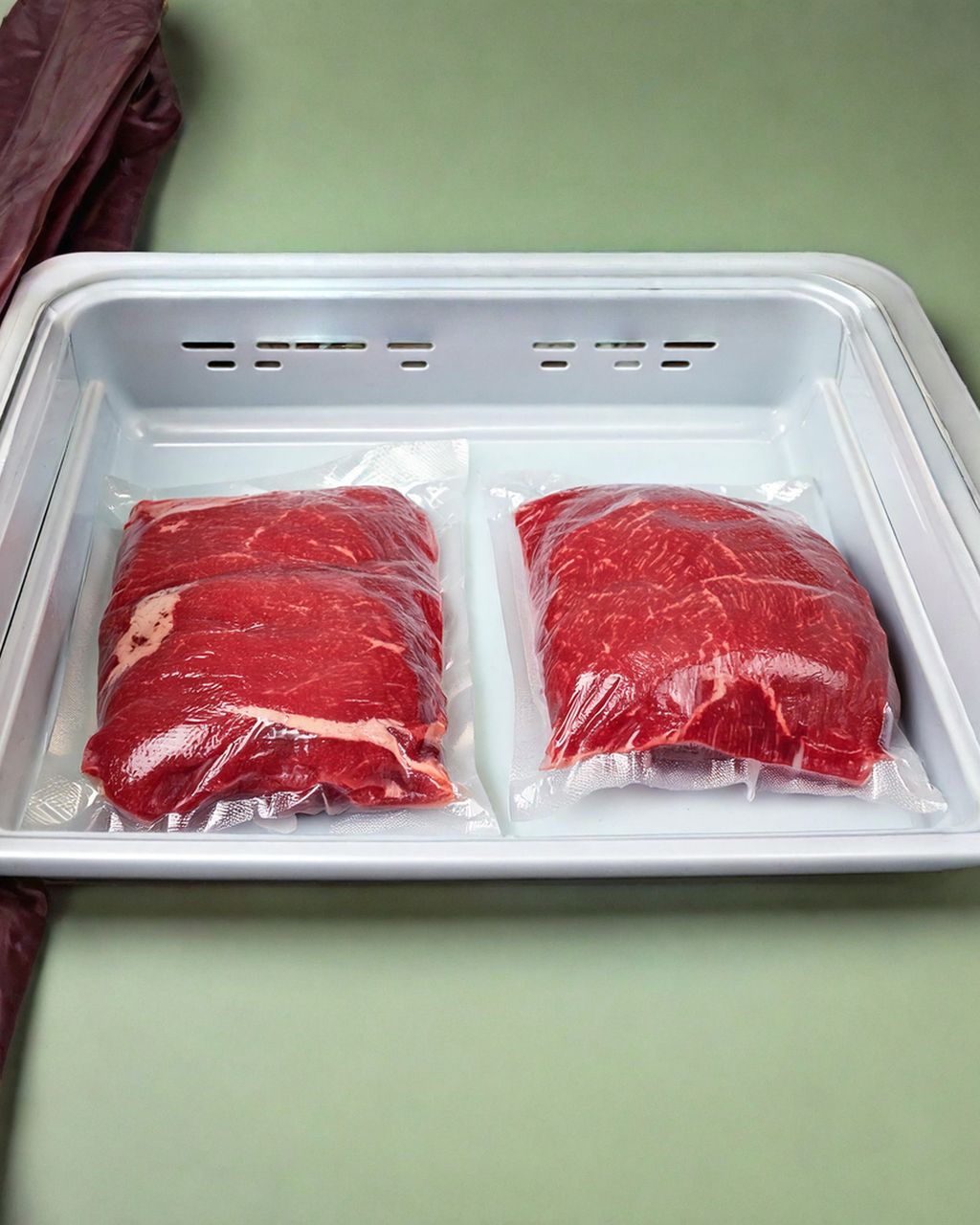
Unopened vacuum-packed or modified-atmosphere chicken – until the "use by" date on the package; 1–2 days once opened
Count the 1–2 days from the moment you bring the chicken home (for meat from the butcher counter) or open the package – and never past the "use by" date. I explain what that date means in the next section.
These times are based on guidance from the US Department of Agriculture's Food Safety and Inspection Service (USDA FSIS); for ground meat and giblets they're deliberately stricter. They apply to a fridge that truly keeps 39°F (4 °C) or colder. In a fridge that actually sits at 45–46°F (7–8 °C), bacteria multiply much faster and these times no longer hold – check the temperature with a thermometer.
Seasonal baking plans, tested recipes and kitchen tricks that save you time. Unsubscribe in one click.
Don't eat chicken after its "use by" date, not even the day after. Fresh chilled poultry carries a use-by date, not a best-before date, and under EU food information rules (Regulation (EU) No 1169/2011) a food is considered unsafe once its use-by date has passed.
You'll see two different dates on packaging, and each means something different:
"Use by…" = the use-by date. It's used for foods that spoil quickly from a microbiological point of view and can become dangerous after a short time, typically fresh meat and poultry. It's a safety limit: after it, don't eat the meat, don't freeze it, and shops are not legally allowed to sell it.
"Best before…" = the best-before date. This is a quality guarantee covering flavor, texture and aroma. You'll find it on things like frozen chicken or canned foods. Past that date the food may still be perfectly fine, but the manufacturer no longer vouches for it.
Here's how this fits with the 1–2 day rule:
Unopened pack stored at the temperature shown on the label: follow the "use by" date.
Meat from the deli counter or an opened pack: 1–2 days from purchase or opening, but never beyond the use-by date. Whichever comes first applies. If you buy chicken that's dated for tomorrow, you have one day, not two.
Not going to get to it? Freeze it no later than the use-by date, ideally right after buying. In the freezer the clock stops, and once thawed, 1–2 days from complete thawing applies regardless of the date on the pack.
The manufacturer's date only holds if you store the meat at the temperature printed on the pack (usually 0–4 °C / 32–39 °F for poultry). An hour in a hot car or a fridge running at 8 °C (46 °F) eats into that time, even though the number on the label stays the same.
Commercially vacuum-packed chicken, or chicken in a modified atmosphere (labeled "packed in a protective atmosphere", or MAP), keeps unopened until its "use by" date, as long as you store it at the temperature stated on the pack. Once opened, the usual 1–2 days at 0–4 °C (32–39 °F) applies, but never beyond the date on the pack.
The manufacturer sets the time limit, not you. It depends on the gas mixture used, hygiene at the plant and storage temperature, so don't guess or stretch it. Read the label.
The longer shelf life comes from the packaging, not from better meat. Less oxygen slows down the bacteria that spoil meat, but it doesn't stop the ones that cause food poisoning. Once you open the pack, the advantage is gone.
A puffed-up, torn or loose pack means the protection has failed. Throw that meat away, even if the date is fine.
A home vacuum sealer is not the same thing. Raw chicken vacuum-sealed at home lasts only slightly longer in the fridge, because it lacks industrial hygiene and a protective gas mix. I cover this in more detail in the article vacuum-packed meat in the fridge: how long it lasts and what to watch for.
After you open a vacuum pack, the meat may smell briefly sour. You'll find how to tell that apart from spoiled meat below, in the section on recognizing spoiled chicken.
Chicken spoils faster because it gives bacteria better conditions than other meats: more water, a pH of around 5.8–6.4 (lower in breast, higher in thighs) compared with 5.4–5.7 for beef, and a soft structure that microbes easily grow through.
Three more things come into play:
Contamination is common. According to monitoring by the Czech State Veterinary Administration and the National Reference Laboratory for Campylobacter, campylobacter is repeatedly confirmed in roughly 70% of samples of chilled poultry on the market and in about 60% of broiler caecum samples at slaughterhouses. This isn't a defect of one particular pack; it's a characteristic of raw poultry.
Chilling only slows bacterial growth, it doesn't stop it. At 4 °C (39 °F) most bacteria divide slowly, but they still divide. That's why your fridge's real temperature matters so much. You'll find how to check it below, in the section on storage.
Large surface area. Sliced cutlets or strips have many times more surface than a whole chicken, and the surface is where bacteria live. That's why slices keep for a shorter time than a thigh left whole.
Cooking resets this: heat kills the surface bacteria, which is why cooked chicken lasts 3–4 days instead of two. But you can't rescue spoiled meat by cooking it. More on that below.
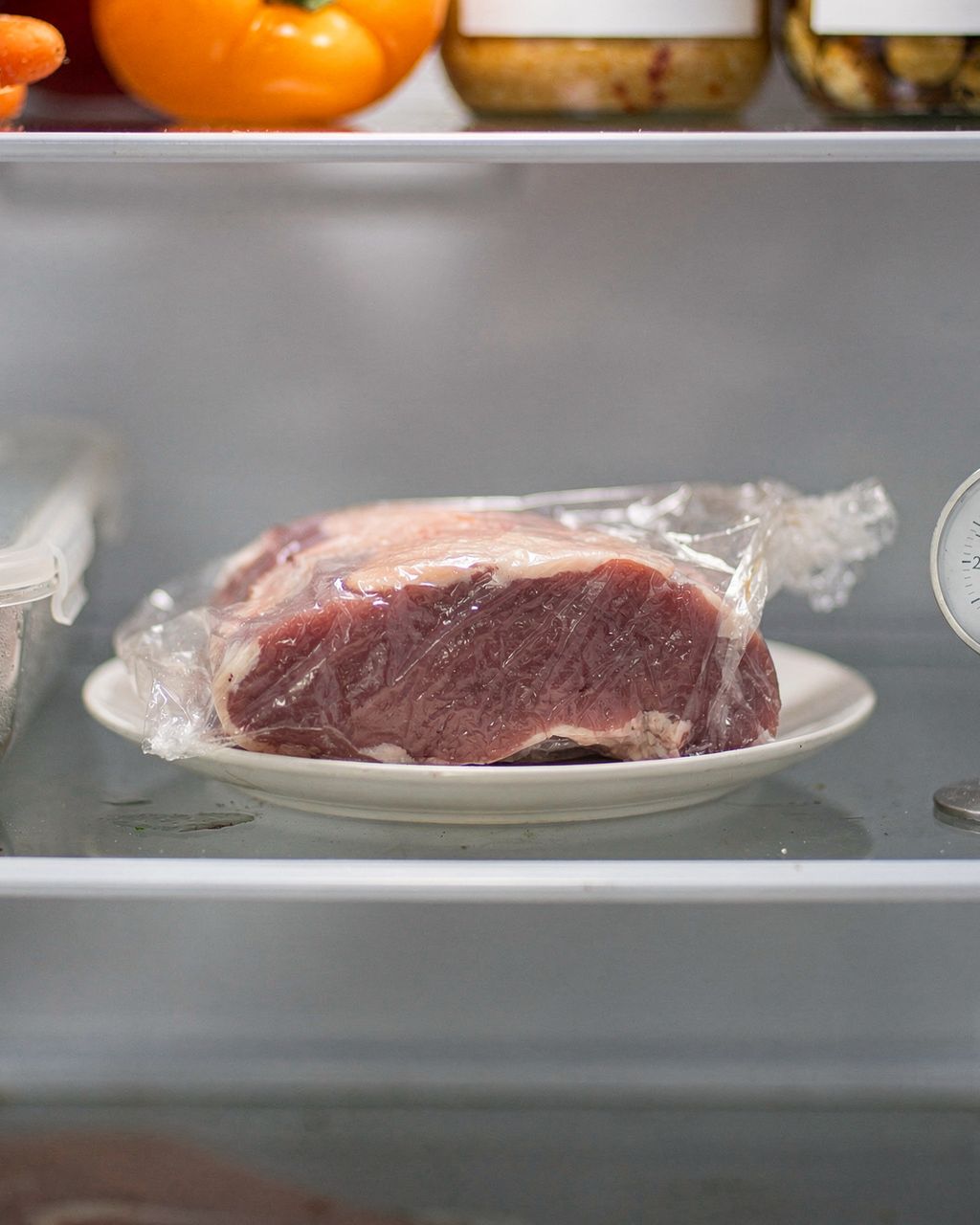
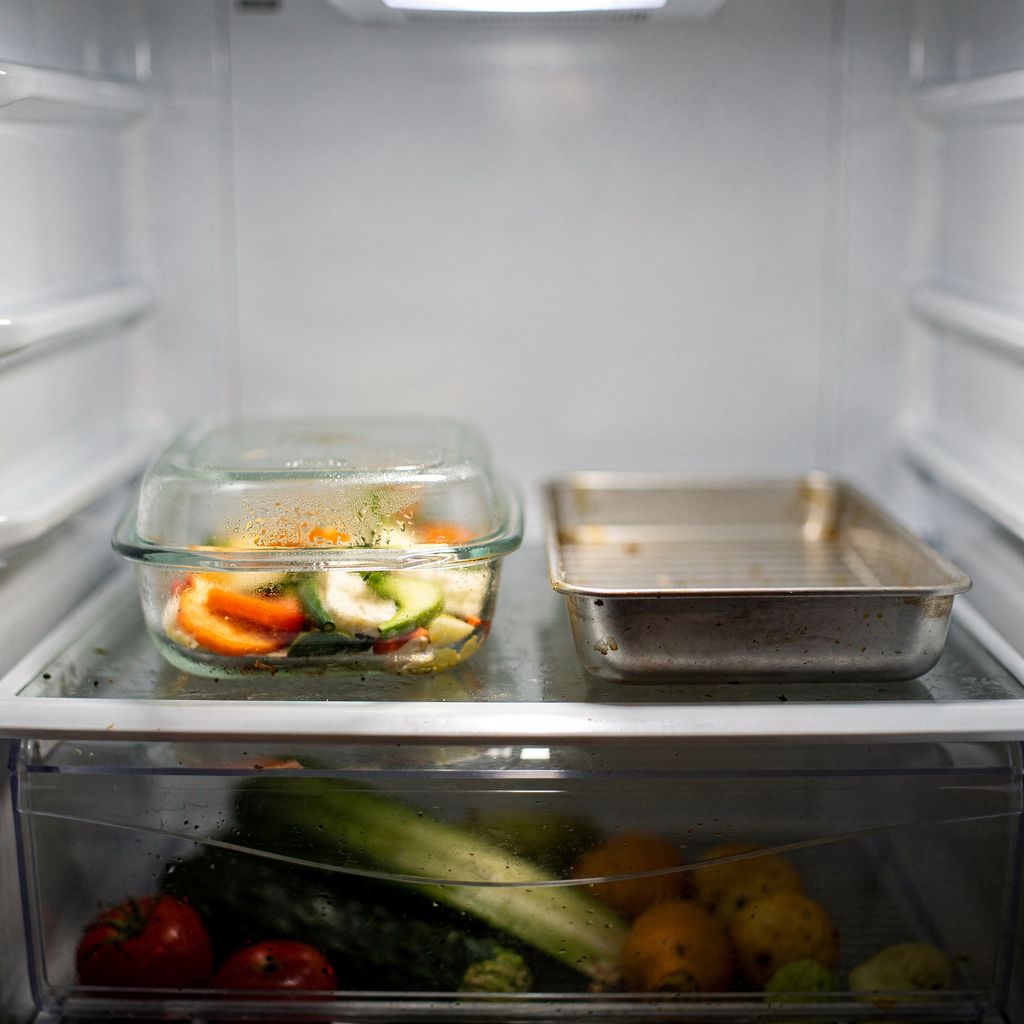
Raw chicken belongs on the lowest shelf, above the vegetable drawer. That's usually the coldest spot (0–4 °C / 32–39 °F), and nothing can drip from there onto food that won't be cooked again.
Keep it in its original packaging until you need it. Vacuum-packed and modified-atmosphere meat is in a better environment inside the pack than anything you can create at home.
Put the pack on a plate or tray. Chicken juice is the most common source of cross-contamination in a home fridge.
Move opened meat to a lidded container, not a bowl covered with cling film. This reduces evaporation and contact with air.
Don't put it in the door. That's where the temperature fluctuates most.
Don't wash it. Water doesn't kill bacteria; it just splashes them around the sink, cutting board and dish towel. They're reliably killed only by cooking to 75 °C (167 °F) at the center. I explain how to get there without drying out the meat in the article what temperature to roast chicken at and how to tell when it's done.
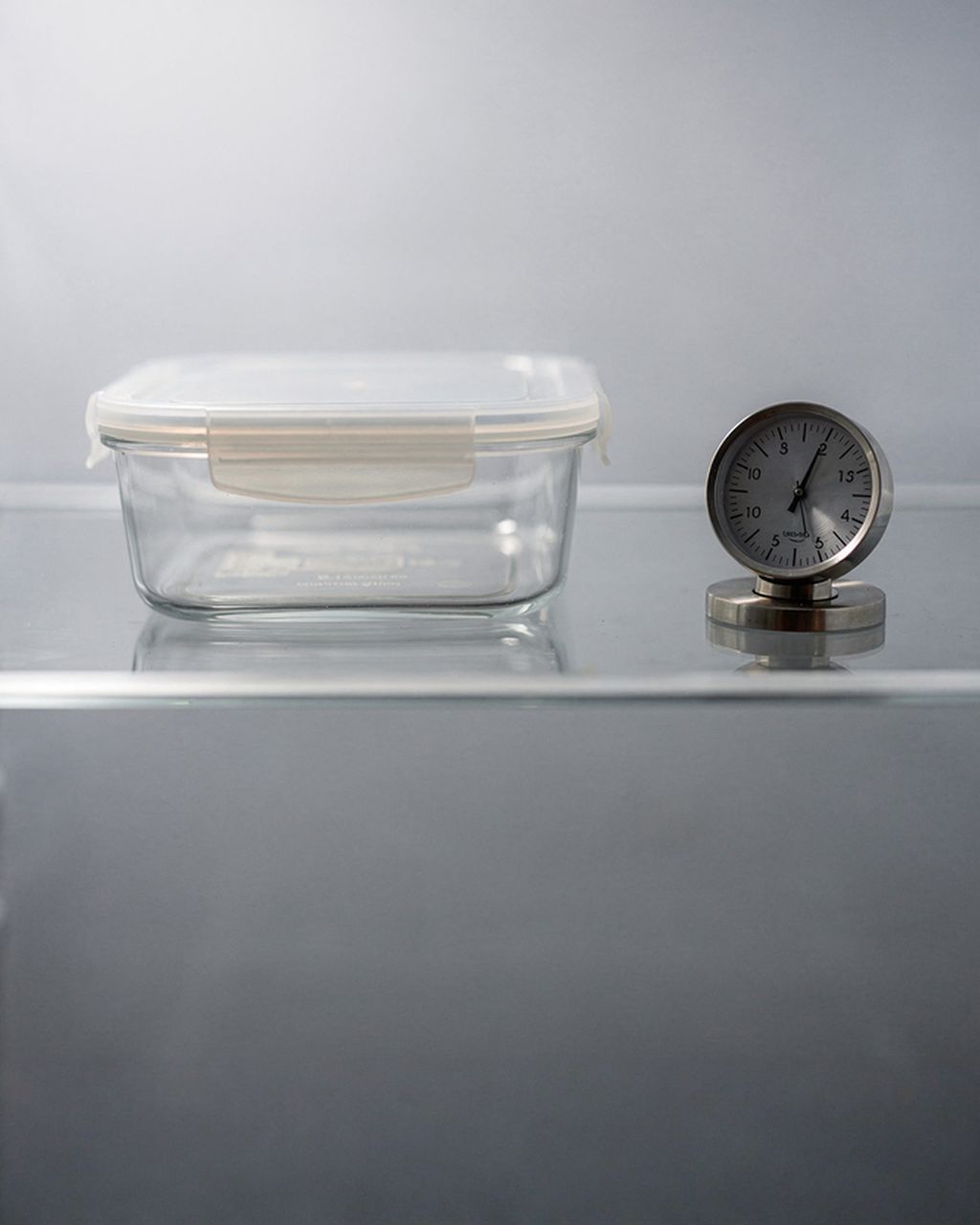
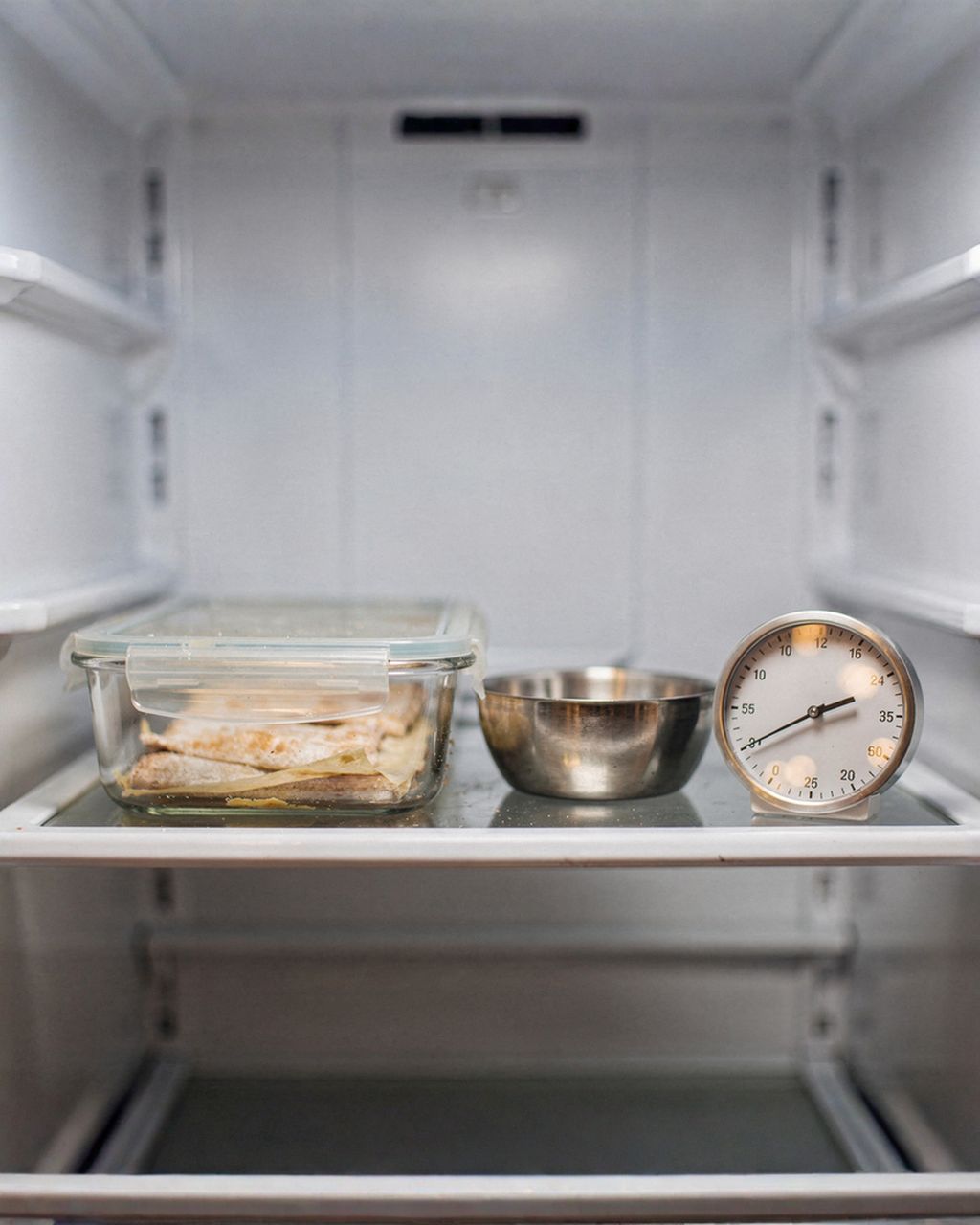
Check your fridge's temperature with an inexpensive thermometer placed on the middle shelf. Most people's fridges are warmer than they think, and a dial setting like "3" says nothing about the real temperature.
Raw and cooked chicken can stay out of the cold for 2 hours at most, and only 1 hour when the temperature is above 32 °C (90 °F): a hot kitchen, a car, a summer garden. The range of roughly 5–60 °C (41–140 °F) is the zone in which bacteria multiply fastest, and time in it adds up over the whole day: the trip home from the shop, an hour on the counter while marinating, cooling after lunch.
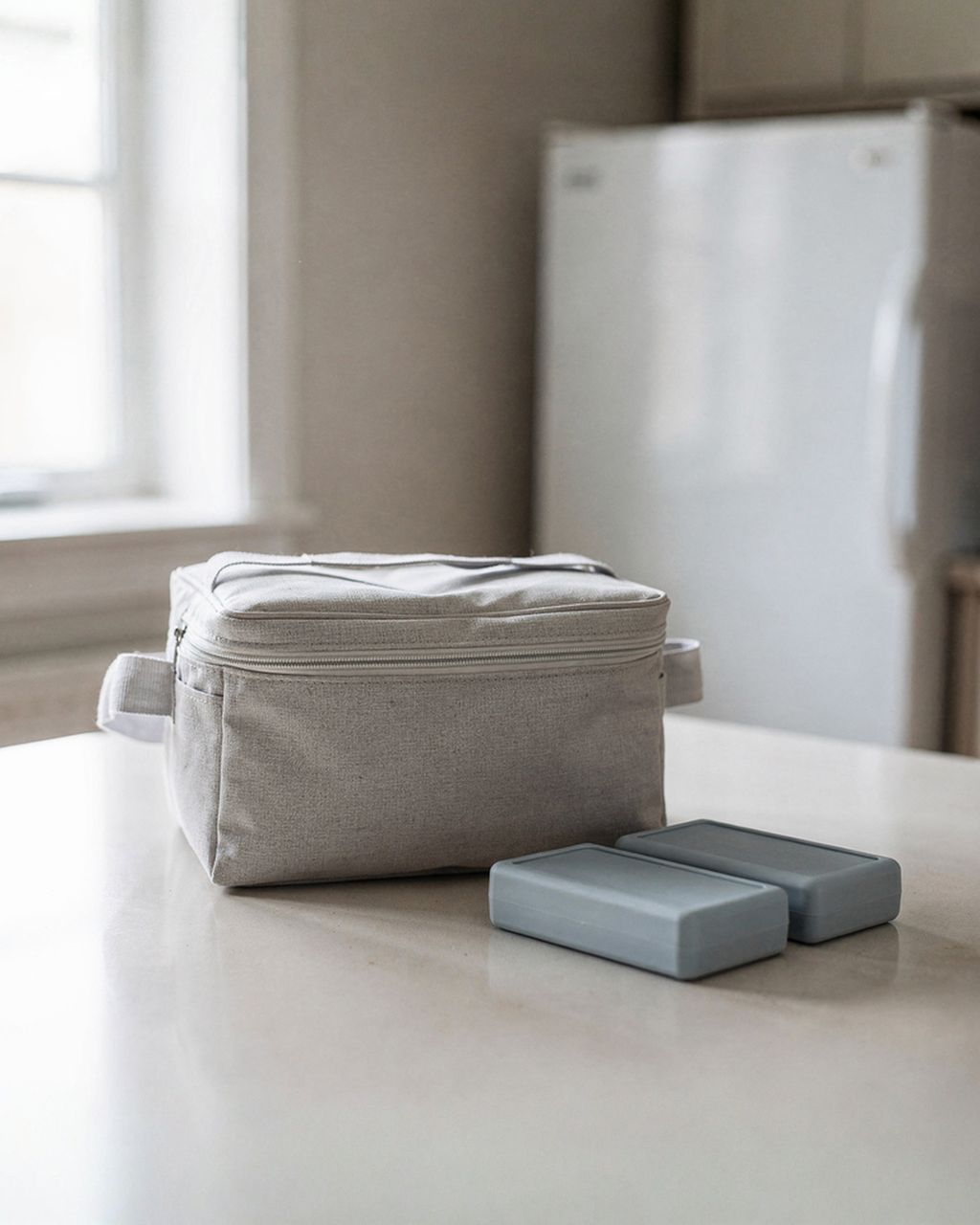
In practice: buy chicken last, and carry it home in a bag with a cooler pack. If your shopping trip takes more than an hour in the warmth, subtract that time from the two days in the fridge.
You can tell spoiled chicken by three things: surface, smell and color. Just one of them is enough reason to throw it out.
Surface. Fresh chicken is moist but smooth and springy. A sticky to slimy film that stretches as you pull your finger away is a clear sign that bacteria have multiplied on the surface.
Smell. Fresh poultry has only a faint, fairly neutral smell. A sour, ammonia-like or sweetish odor means it's finished, and rinsing or seasoning won't get rid of it.
Color. Fresh meat is pink to pinkish-white. A gray, dull or greenish tinge, especially around the edges and where it was cut, means throw it out. Cloudy, thick liquid at the bottom of the pack is the same message.
Two more things people overlook:
Vacuum-packed chicken smells for a moment after opening, sour or "cheesy", and this clears after a few minutes in the air. If the smell doesn't disappear after several minutes in the air, it isn't a packaging effect. Throw the meat away.
No smell ≠ safe meat. Campylobacter and salmonella don't change the look or smell of meat. That's why you go mainly by the date and the time limit, not your nose. Your senses only reveal the part of the problem that's already visible.
Cooked, roasted or fried chicken keeps in the fridge for 3–4 days, but only if you cool it quickly. Leave leftovers on the counter for two hours at most, then put them in the fridge, even if they're still lukewarm. The worry that warm food will "ruin the fridge" is a myth that's behind a lot of spoiled leftovers.
Cool it smartly:
Divide the meat into smaller portions in shallow lidded containers. A shallow layer of up to 5 cm (2 in) cools in the fridge much faster than a full, deep roasting pan, which can take all night to cool.
Meat taken off the bone keeps better than a whole chicken, which cools from the outside in over many hours.
Reheat only once and thoroughly, until the meat is piping hot all the way through, about 75 °C (167 °F). Reheating the same portion repeatedly takes it through the temperature zone where bacteria multiply each time.
The 3–4 days count from cooking, not from buying the raw meat. If you roast a chicken the day after buying it, it then has another 3–4 days in the fridge.
Leftover roast chicken is also the best ingredient for a quick dinner: strips for a salad, meat for risotto, or a proper stock from the carcass. You'll find more ideas, and how to cook chicken so it stays juicy, in the article cooked chicken: how to cook, store and use it.
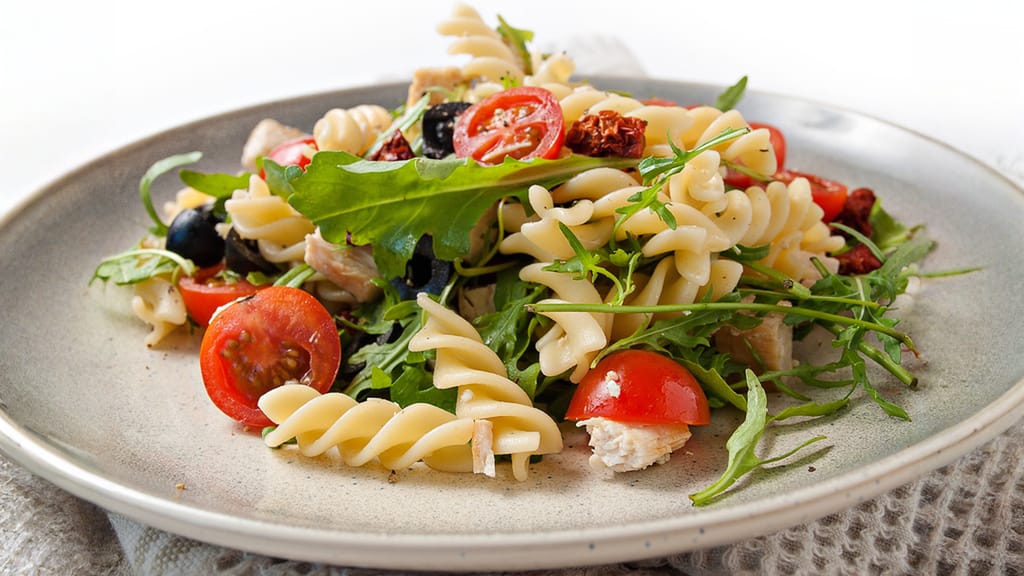
Pasta salad with chicken strips, tomatoes and arugula
Pasta salad with chicken strips: the quickest way to use up leftover chicken
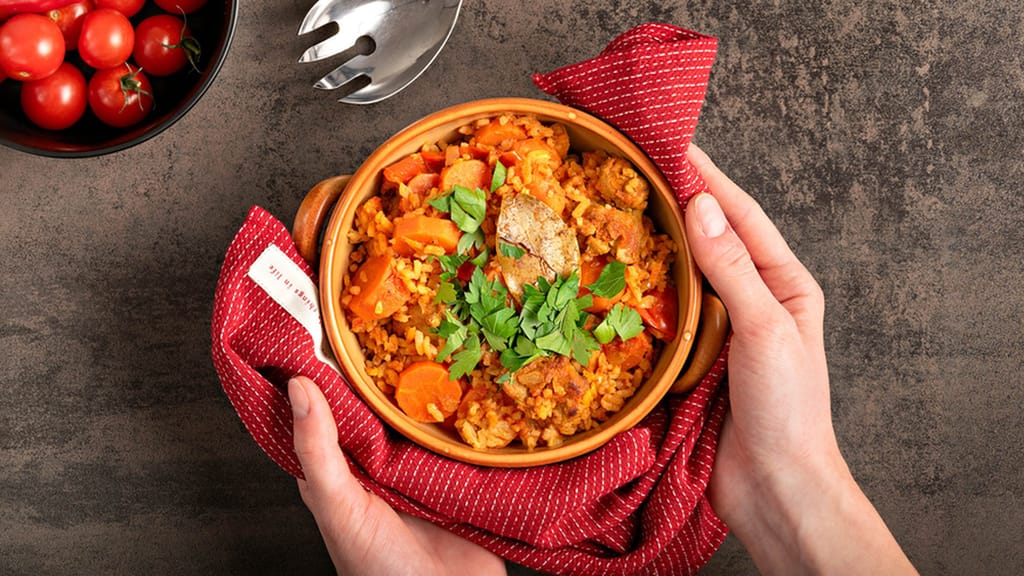
Baked risotto with chicken and vegetables
Baked risotto with chicken and vegetables: a great place to hide leftover roast chicken
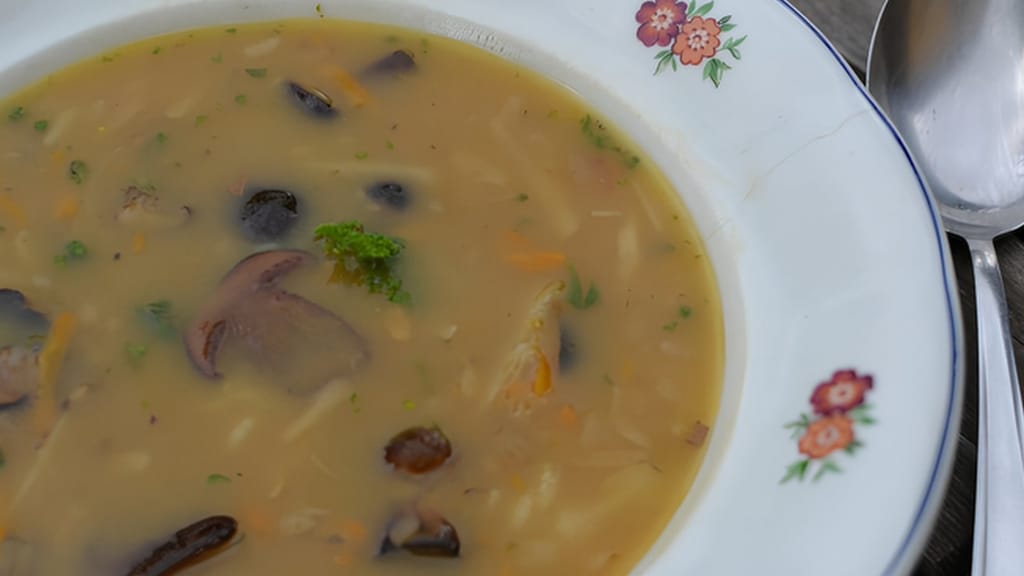
Thickened chicken broth with meat and mushrooms
Thickened chicken soup with meat and mushrooms, made from a roast chicken carcass
No, marinated raw chicken keeps in the fridge for the same 1–2 days as unmarinated chicken. A marinade is flavoring, not preservation. The acid from lemon or yogurt slows bacterial growth slightly, but not by days, and oil only limits evaporation.
What this means in practice:
Always marinate in the fridge, not on the counter. A few hours on the kitchen counter eats up your entire safety margin.
Marinate in a sealed container or bag, not in an open bowl covered with a dish towel.
Never use a marinade that raw chicken sat in as a sauce. If you want to use it, it has to be boiled first.
Longer marinating doesn't improve chicken. Breasts in an acidic marinade for more than about 4 hours turn mealy and fall apart, so with poultry, shorter is better.
The time limit doesn't reset. If you marinate chicken that has already spent a day in the fridge, you have one day left at most, counted from purchase, not from marinating.
If you know you won't get to freshly marinated meat within two days, it's better to freeze it right away. You can marinate in the freezer too, and the meat takes on the flavor as it thaws.
Chicken keeps in the freezer at −18 °C (0 °F) for 2–12 months depending on the type: whole raw chicken longest, ground and cooked chicken for the shortest time.
Raw whole chicken: 9–12 months at −18 °C (0 °F)
Raw pieces and cutlets: 6–9 months
Ground chicken: 3–4 months
Cooked chicken: 2–4 months
At −18 °C (0 °F) bacteria don't multiply, so these time limits are mainly about quality: flavor, juiciness and freezer burn (gray, dried-out patches on the surface). They're our guideline times for best quality, deliberately a little shorter than the maximum recommendations. Freeze the meat as soon as possible after buying, and no later than the day of the "use by" date. The freezer preserves quality, but it doesn't bring it back. Write the freezing date on the bag.
Raw chicken thawed in the fridge keeps for 1–2 days after it has completely thawed (ground chicken and offal 1 day, so use it no later than the day after thawing), and within that time you can also refreeze it without cooking. That's what the US agency USDA FSIS states, but quality drops with repeated freezing: the meat releases more juice and turns drier.
What matters is how you thawed the meat:
In the fridge: 1–2 days in the fridge, and you may refreeze it raw.
In cold water: cook or roast it right away. You can refreeze it only after cooking.
In the microwave: use it immediately, because parts of the meat have already started to warm up during thawing. Refreeze only after cooking.
On the counter at room temperature: don't thaw it this way at all. The surface spends many hours in the temperature zone where bacteria multiply, while the center is still frozen.
So thaw in the fridge overnight, on a plate on the bottom shelf. Pieces and cutlets need about 12–24 hours; for a whole chicken, allow about 24 hours for every 2 kg (4.4 lb). Only put meat in water in an airtight bag, and change the water every 30 minutes so it stays cold.
Two more rules:
After thawing, a new 1–2 day limit applies, not the date on the pack. Once thawed, 1–2 days from complete thawing applies regardless of the date on the pack.
Cooked chicken made from thawed meat keeps in the fridge for 3–4 days, and you can freeze it again, this time as a finished dish.
No. Chicken breasts and thighs keep for the same length of time in the fridge: 1–2 days at 32–39°F (0–4 °C). Thighs have a little more fat, so they go rancid sooner in the freezer over the long term, but in the fridge the difference is negligible. Size matters more: a whole bone-in thigh keeps slightly better than sliced strips because it has less surface area.
A rotisserie chicken from the store keeps for 3–4 days in the fridge, just like any other cooked chicken. The condition is that you eat it or refrigerate it within 2 hours of buying it, or within 1 hour if it's hotter than 90°F (32 °C). Take the meat off the bones and store it in shallow, airtight containers so it cools faster.
No, you can't rescue spoiled chicken by cooking it. Cooking does destroy the bacteria themselves, but some of them have already left behind heat-resistant toxins that survive high temperatures and can make you ill even from thoroughly cooked meat. Throw out chicken that is past its date or shows signs of spoilage.
Throw out chicken from a fridge that has been without power for more than about 4 hours, or that feels lukewarm to the touch. A closed fridge keeps a safe temperature for about 4 hours; according to USDA FSIS and the FDA, a full freezer holds for up to 48 hours and a half-full one for only 24 hours. Raw chicken from the freezer that still has ice crystals or is at 39°F (4 °C) or below can be refrozen, but the quality will drop.
Chicken broth and finished soup with chicken keep for 3–4 days in the fridge if you cool them quickly and store them in a covered container. You can speed up cooling by pouring the soup into smaller containers or setting the pot in a cold water bath. For longer storage, freeze the broth – it keeps for 2–3 months in the freezer.
One recipe worth heating the oven for, one tip, and one deal from the shop. Nothing else.