Apple strudel with homemade stretched pastry
How Long Do Apples Keep? Storing Them Right Through Winter
Updated Sep 25, 2026
On the counter at room temperature (around 20°C/68°F), apples keep for roughly 1–2 weeks. In the fridge at 1–4°C (34–39°F), you're looking at about 4–6 weeks — good keeper varieties like Idared or Granny Smith can go even longer. Winter varieties stored in a cool cellar at 2–4°C (35–39°F) with humidity around 90% typically last until February or March, and the toughest ones make it to April. What determines where you land on that scale comes down to four things: temperature, humidity, variety, and how carefully you sort the apples before putting them away. Below you'll find exact timeframes, a step-by-step method, and a clear line for when an apple is no longer worth saving.
Apples last 1–2 weeks on the counter, about 4–6 weeks in the fridge at 1–4°C, and in a cellar at 2–4°C, winter varieties keep until February or March — the toughest ones even into April. The rule of thumb: the colder (but above freezing) and more humid the storage spot, the longer apples last. Here are rough timeframes for healthy, unbruised apples:
On the counter or kitchen (18–22°C / 64–72°F): 1–2 weeks. After that they soften, wrinkle, and lose their juiciness.
In a cool pantry or hallway (8–12°C / 46–54°F): roughly 3–6 weeks.
In the fridge's crisper drawer (1–4°C / 34–39°F): about 4–6 weeks; good keeper varieties (Idared, Granny Smith) can go longer.
In a cellar (2–4°C, max 7°C / 35–45°F, humidity ideally around 90% or more): winter varieties typically last until February or March, with the best keepers (e.g. Topaz, Idared) holding until April. Autumn varieties keep roughly until Christmas.
In the freezer (−18°C / 0°F), sliced: about 8–12 months, after which they start losing flavour.
These timeframes only apply to apples free of bruises, rot, and mould. One damaged apple can shorten the life of an entire crate — more on that below.
Three things damage apples in storage: heat, which speeds up ripening; dry air, which dries them out; and frost, which damages the flesh.
Apples soften faster in warmth because heat speeds up their respiration and production of ethylene, the gas that drives ripening. Once picked, an apple keeps 'breathing' — burning through its own sugars and acids — and according to orchard storage guidelines, it softens several times faster at 20°C than at 0°C. That's why a week on the counter does more damage than a month in the fridge.
The second enemy is dry air. Apples are mostly water, and in low humidity that water evaporates through the skin — the fruit shrivels and turns mealy. Aim for humidity around 90% or higher; that's exactly the difference between a damp cellar and a dry, heated storage room.
And third: frost. Apples freeze at around −1.5 to −2°C. The flesh cracks, browns once thawed, and breaks down quickly. So don't let them get below 0°C.
Only winter varieties make it through winter — summer and autumn varieties simply aren't built for long-term storage, no matter how well you keep them.
Summer varieties (harvested July–August, e.g. Discovery): eat them right away; they keep for days to a couple of weeks even in the fridge.
Autumn varieties (harvested in September): keep in a cellar at 2–4°C roughly until Christmas.
Winter varieties (harvested late September–October): keep in a cellar at 2–4°C, usually until February or March. Jonagold typically holds until around February, Gloster or Boskoop until March, and the best keepers like Topaz or Idared last until April. Other winter varieties include Golden Delicious and various regional heirloom types.
Winter varieties tend to have firmer flesh and thicker skin, which loses less water through evaporation. Many of them also taste best only after a few weeks in storage — Jonagold is picked in October but doesn't hit peak eating quality until around December. So don't expect much straight off the tree; it's normal for them to start out hard and tart.
Good storage comes down to six steps: gentle picking, skipping the wash, strict sorting, letting them cool down first, storing in a single layer, and checking regularly.
Pick gently, stem and all. Lift and twist the apple off the branch rather than yanking it. Without the stem, the fruit is left with a wound that mould can get into. Set apples down gently rather than dropping them — a bruise you can't see today will turn brown in three weeks.
Don't wash or wipe them. The natural waxy coating protects the apple from drying out. Wash it only right before eating.
Sort into three piles. Flawless apples go into storage. Bruised ones, ones missing a stem, or with minor skin blemishes go straight to the kitchen to be eaten now, not into the cellar. Anything with rot or mould goes straight into the compost.
Let them cool first. Give freshly picked apples a day or two to cool down in the shade outside or in a cool room before moving them to the cellar. Warm, freshly picked fruit brings heat and moisture into storage that leads to condensation.
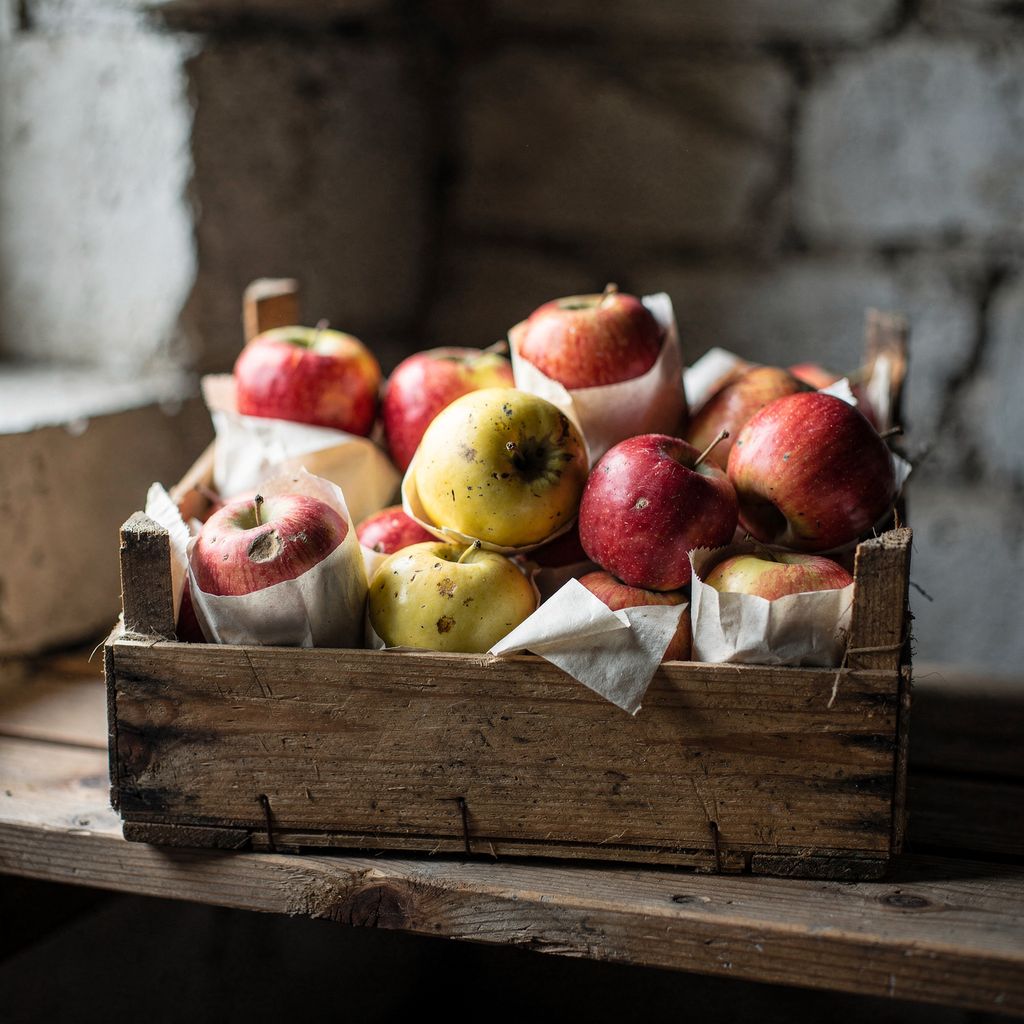
One layer, stem down. Shallow wooden or plastic crates with ventilation holes work best; apples shouldn't touch each other. For extra protection, wrap each one individually in clean paper — if one goes bad, it won't spread to its neighbours.
Check weekly. Pull out any apple that's softening, has a spot, or smells fermented. Remove it from the crate that same day, not next weekend.
Apples do best in a cellar with a steady 2–4°C and around 90% humidity; in a flat, the fridge is your best bet.
A cellar is ideal: a steady 2–4°C (up to 7°C is still fine) and humidity ideally around 90% or higher. If your cellar runs dry, set a bucket of water next to the crates or occasionally mist the floor.
A balcony, garage, or attic work fine as long as the temperature doesn't drop below 0°C. Cover the crates with a blanket or cardboard, and bring them inside if frost is forecast. Watch out for swings — a day at 12°C followed by a night at 1°C is worse for apples than a steady 5°C.
The fridge (1–4°C) is the best option for smaller amounts in a flat. Keep apples in the crisper drawer, ideally in a bag with a few holes punched in — it holds in moisture while letting ethylene escape so it doesn't build up. Keep them separate from other vegetables, in a different drawer or on a different shelf, so the ethylene doesn't speed up their ageing.
A heated flat (20°C and above) is the worst place. Only keep there what you'll eat within a week.
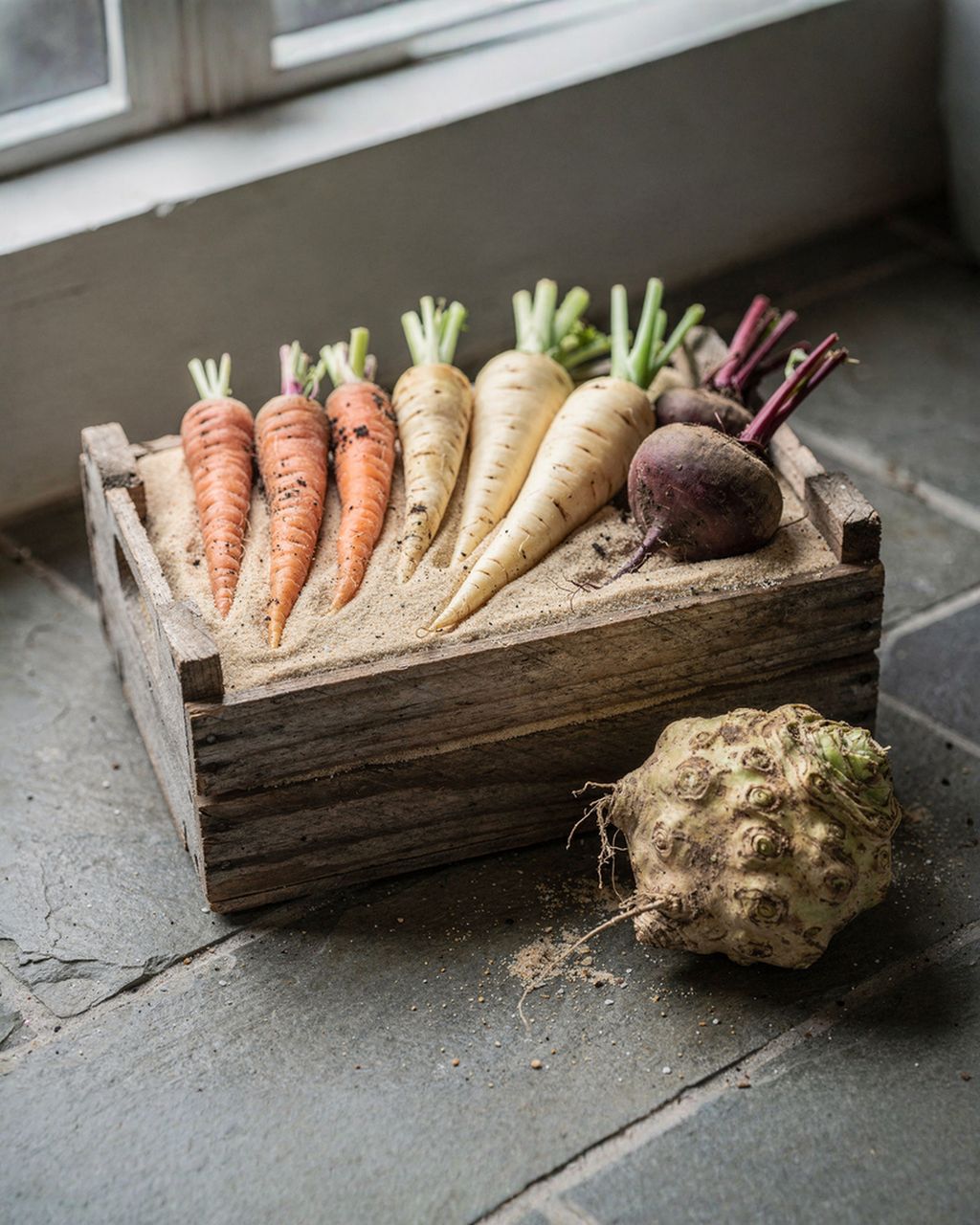
Don't store apples next to vegetables — they release ethylene, which speeds up ripening and ageing in everything nearby. Carrots turn bitter, and cabbage and leafy greens yellow faster. So in the cellar, keep apples in a separate section, or at least on a different shelf from vegetables — ideally above them, with good airflow.
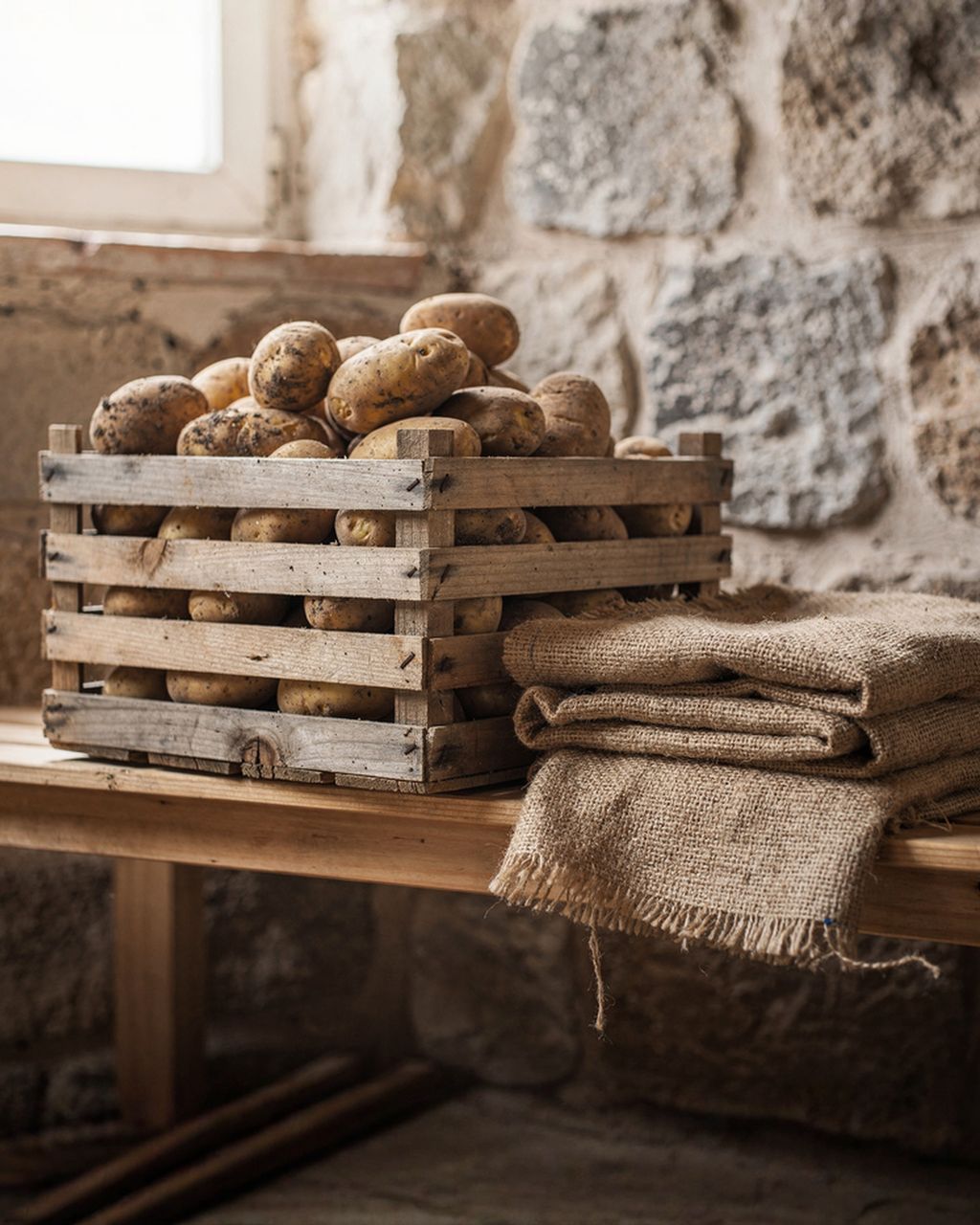
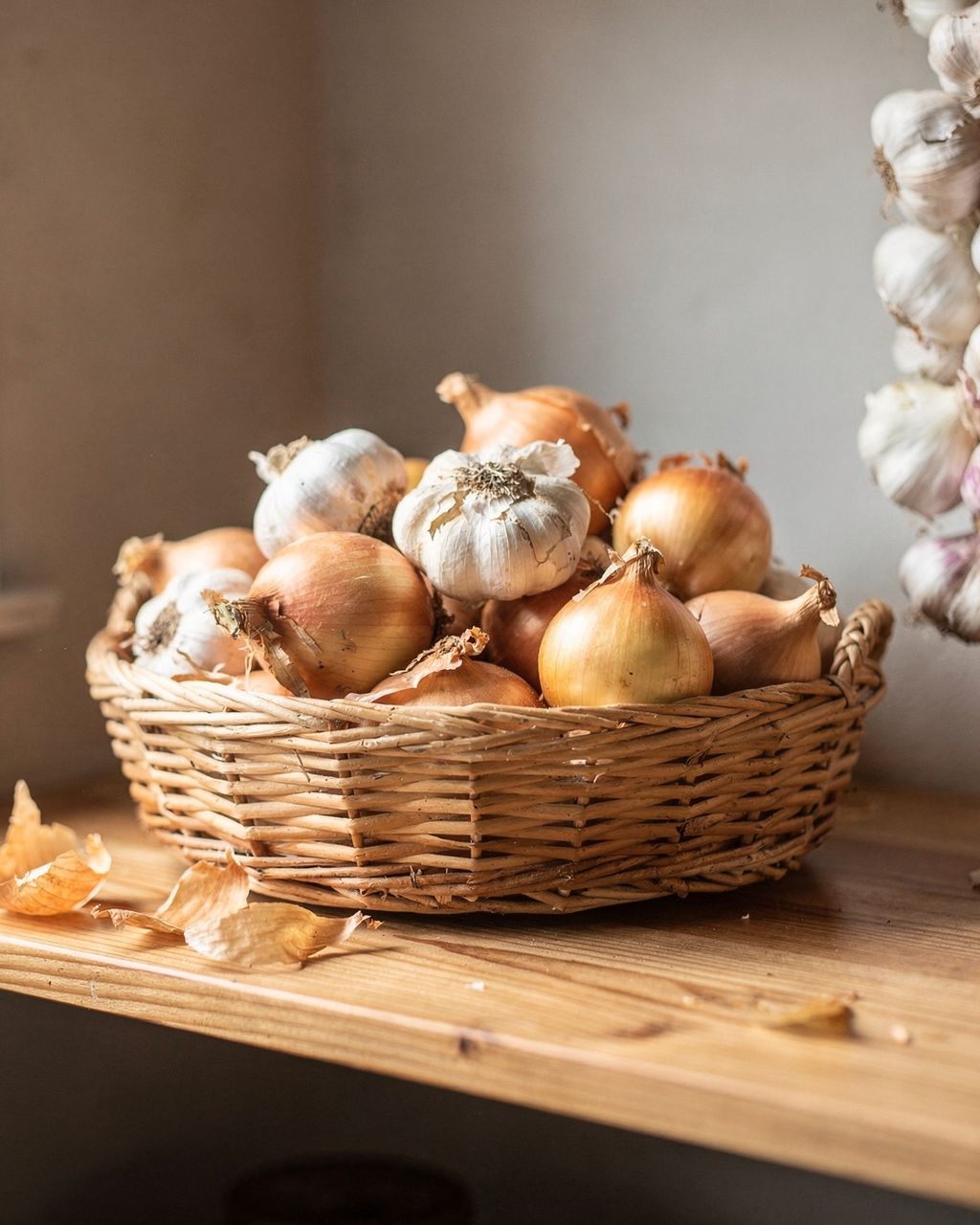
With potatoes, it's mainly about smell: apples easily pick up the scent of potatoes, onions, or garlic. A few metres of distance and decent airflow solves both problems.
An apple that's going bad will show a soft, watery brown spot, mould, or a fermented/boozy smell; a wrinkled skin and mealy flesh just mean it's ageing. So it's worth telling the difference between ageing (still safe, just past its best) and spoiling (goes in the bin).
Ageing — eat or use it up soon:
the skin wrinkles slightly, and the flesh is less crisp and a bit mealy
the flavour is duller and less tart
a small bruise: a brown spot that's dry and firm, with no odour
Spoiling — throw the whole apple away:
a soft, watery brown spot that gives under your finger and spreads quickly
any mould growth — white, grey-green, or blue-green, often in concentric rings
a sour, fermented, or boozy smell
sticky or leaking juice, with brown flesh reaching down to the core
If you can't tell whether it's just a bruise or the start of rot, bin it. One apple isn't worth the risk — or a contaminated crate.
Healthy apples that are just a bit wrinkled or mealy are perfect for the oven — heat turns them into a soft, fragrant filling, and crispness doesn't matter there. They're great in strudel, bundt cake, tarts, or alongside meat. If you've got a lot left over towards the end of winter, slice them and dry them into apple rings, or cook them down into a purée and freeze it.
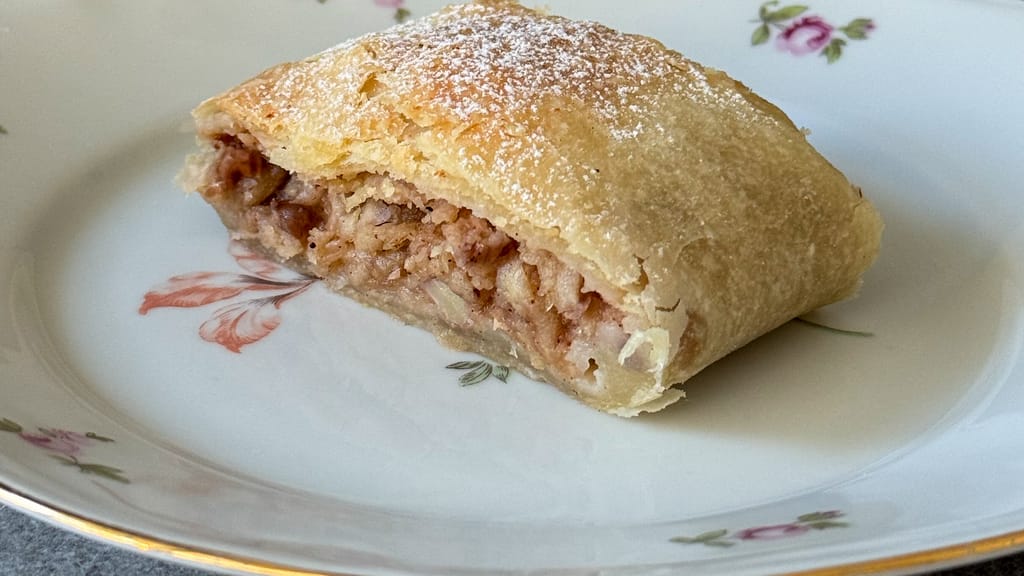
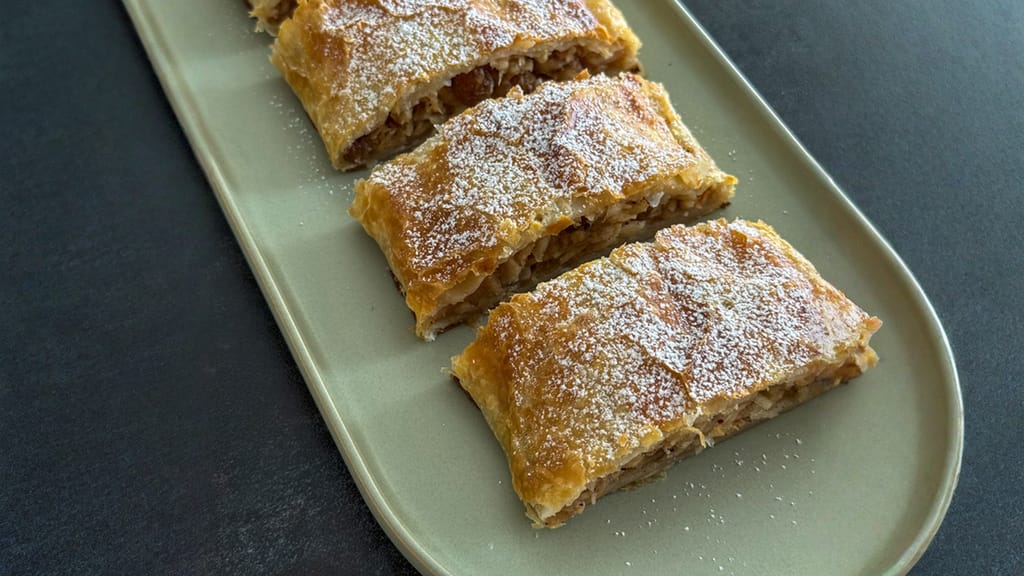
Apple strudel with homemade stretched pastry
Apple strudel with homemade stretched pastry — the best way to use up winter apples
Apple strudel from puff pastry (quick version)
Quick apple strudel with puff pastry, for when you need to use up apples right away
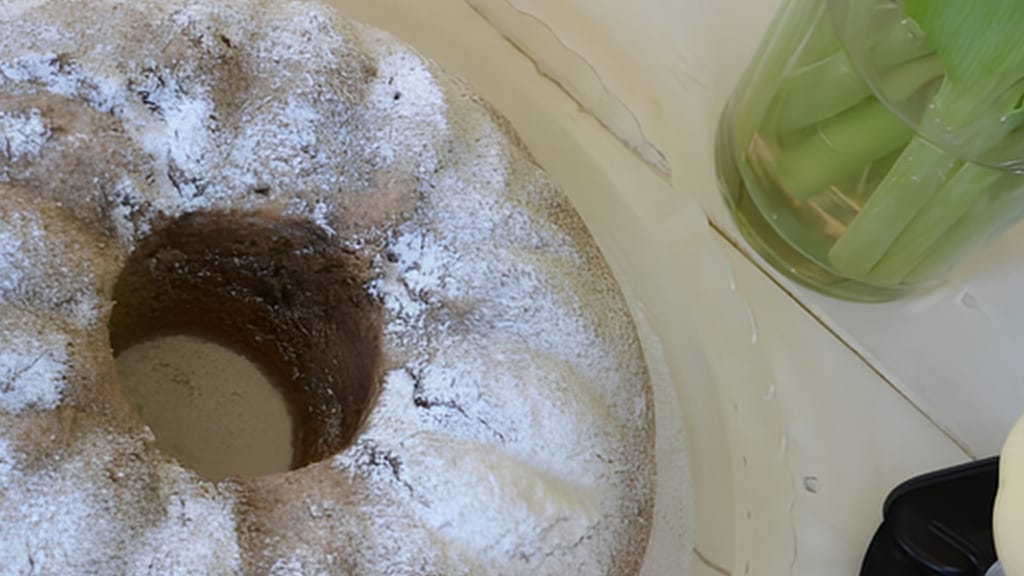
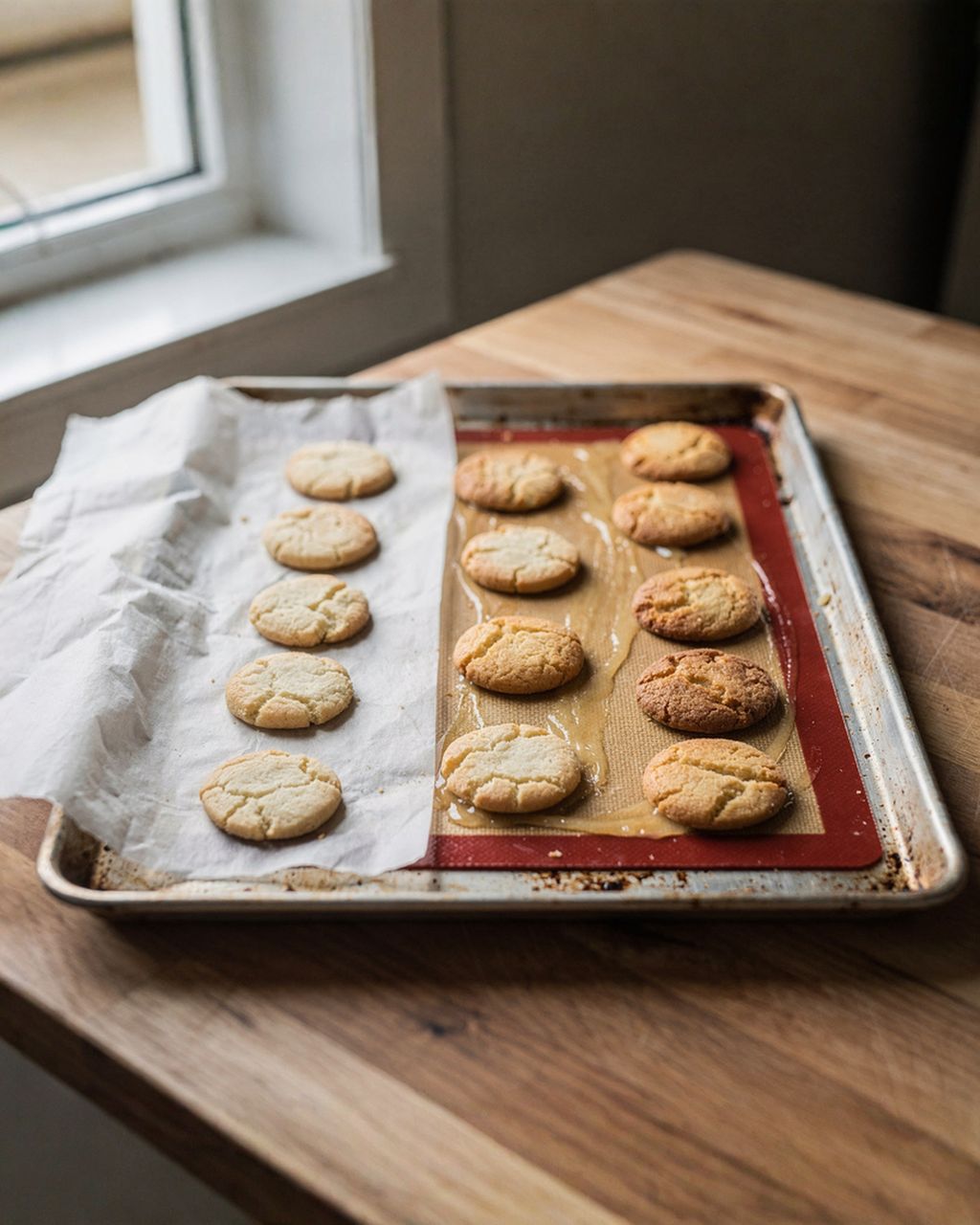
Apple bundt cake with coconut fat
Apple bundt cake with coconut fat — good even for mealier apples
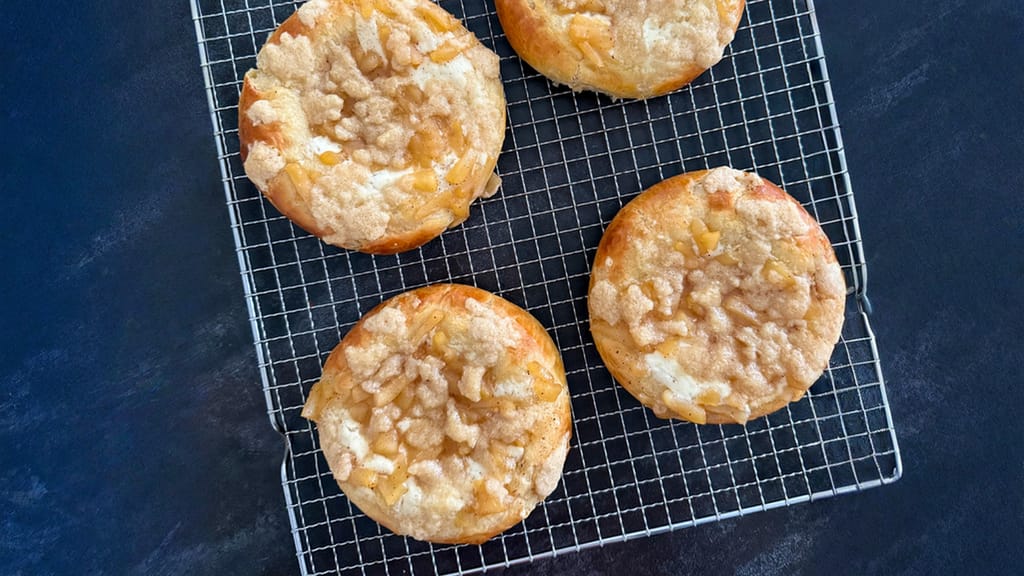
Yeasted apple buns with curd cheese and crumble topping
Yeasted apple buns with curd cheese and crumble — for apples that are past eating raw
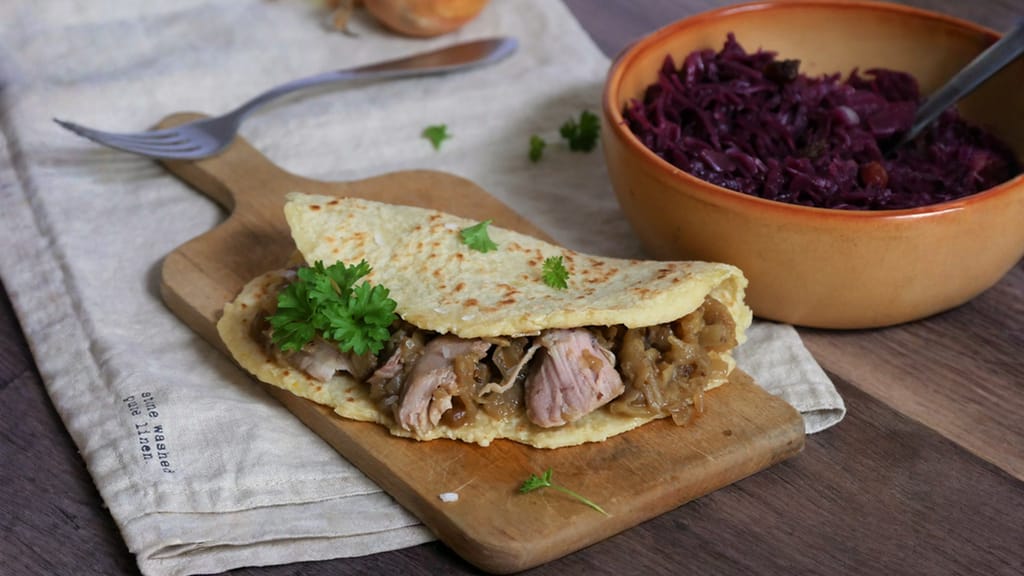
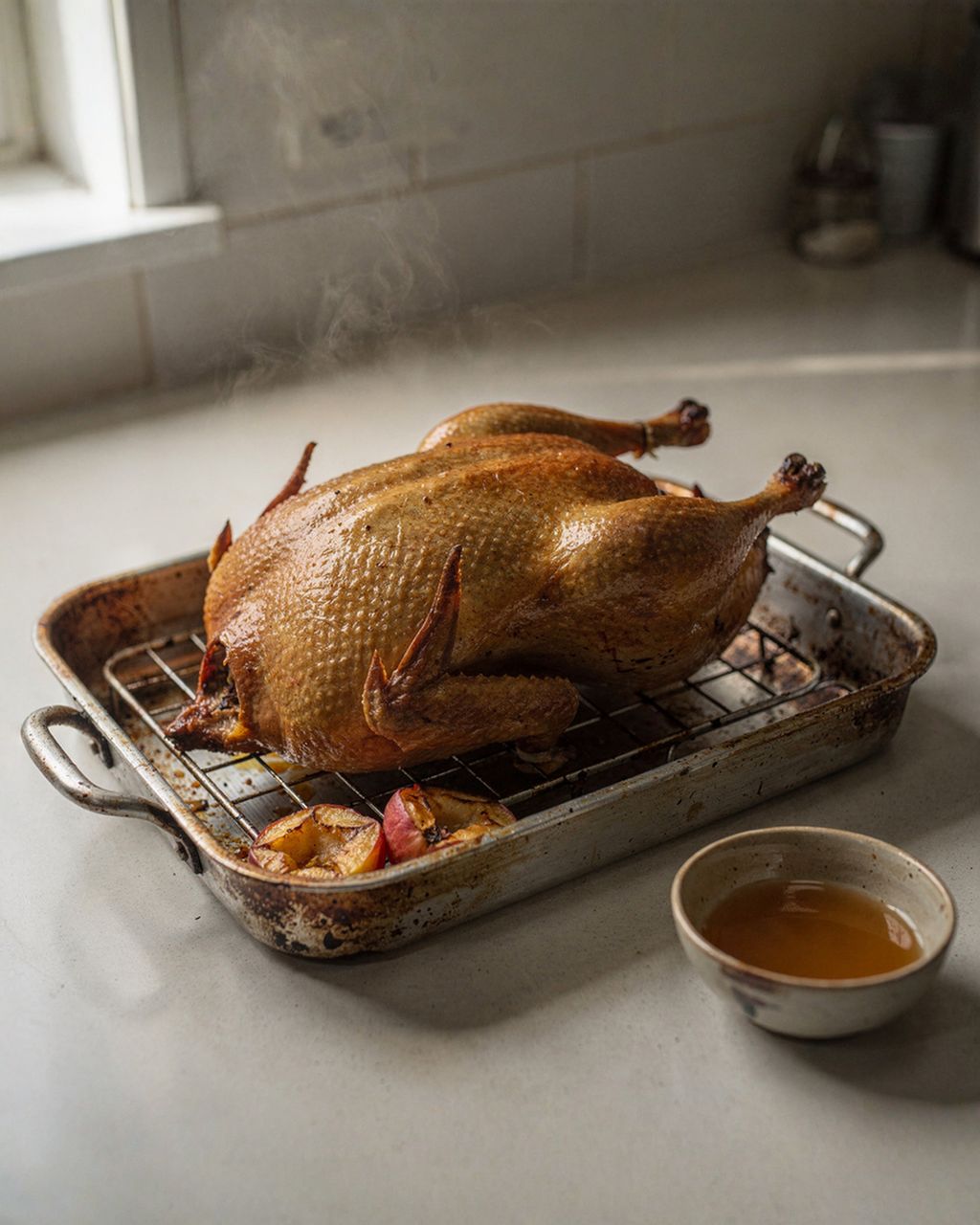
Goose breast on apples with potato lokše
Goose breast with apples and potato pancakes — apples as a side to meat
Sliced apples keep for 3–5 days in the fridge, frozen ones for about 8–12 months, and dried apple rings for 6–12 months.
Sliced raw apple in the fridge (1–4°C): 3–5 days in a sealed container. Sprinkle with lemon juice — the acid slows down enzymatic browning. Browning on its own isn't spoilage, just cosmetic.
Frozen slices (−18°C): about 8–12 months, after which they start losing flavour — that's a quality limit, not a safety one. Freeze them loose on a tray first, then transfer to a bag so they don't clump together. Once thawed, they're soft, so use them for baking or cooking rather than eating raw.
Apple purée or compote in the fridge (1–4°C): 3–5 days; frozen at −18°C, about 8 months.
Dried apple rings, kept dry and dark (below 20°C): about 6–12 months in a sealed jar. They should feel dry to the touch — damp slices go mouldy in warmth.
Baked apple cake or strudel: 1–2 days at room temperature under a tea towel, or 3–4 days in the fridge at 1–4°C. A moist fruit filling is a perfect breeding ground for mould, so warmth shortens its shelf life.
You can store apples in a plastic bag, but only in the fridge, and only in a bag with a few holes poked in it to let moisture stay put without trapping too much. In a sealed bag at room temperature, condensation builds up and ethylene accumulates, so the apples soften and grow mould faster.
You can tell a winter variety mainly by harvest time and taste: winter apples ripen on the tree from late September into October and are typically hard and tart right off the tree. Apples that are already sweet and juicy in September are more likely autumn varieties, which only keep until around Christmas — eat or process those first.
Supermarket apples often last longer because they've been through professional controlled-atmosphere storage (around 0–1°C, low oxygen, higher CO2), and some are treated with 1-MCP, a compound that blocks the effects of ethylene. Garden apples go straight from the tree to you, often with small bruises, and without that treatment they ripen faster. So eat or use up any bruised garden apples first.
Let frozen apples thaw slowly somewhere cool, around 2–5°C, and use them that same day — frost damages the flesh, so they brown and soften quickly afterwards. They're still fine for baking or purée as long as there's no mould, rot, or a boozy smell; if there is, throw the whole apple out.
You can freeze apples whole, but once thawed they'll be soft and watery, so they're only good for baking or purée at that point. It's more practical to peel and slice them before freezing — they take up less space and you can use them straight away. At −18°C (0°F), they hold their flavour well for about 8–12 months; after that they lose aroma, but it's a quality issue, not a safety one.
One recipe worth heating the oven for, one tip, and one deal from the shop. Nothing else.