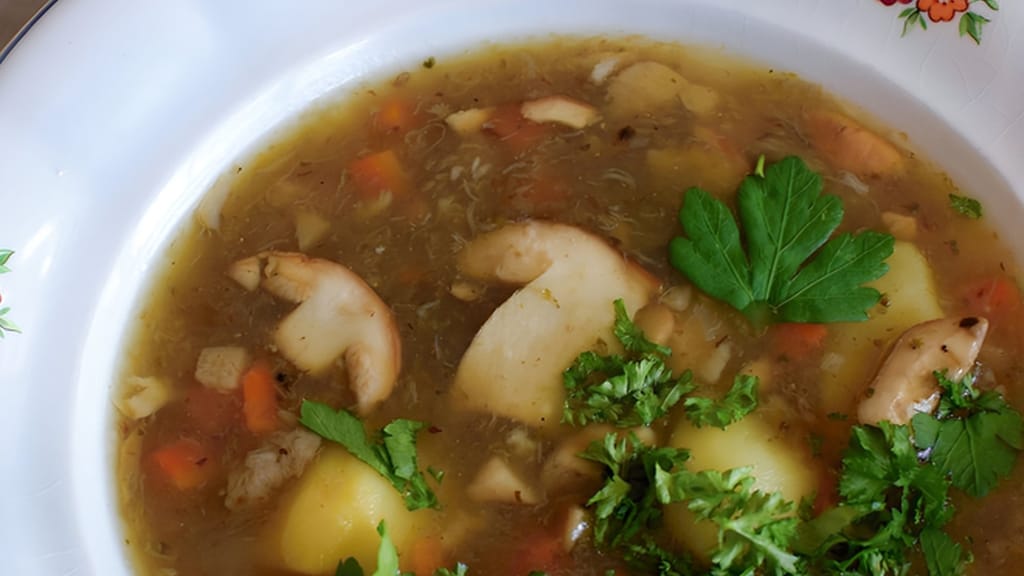
Hearty garlic soup with potatoes and bacon
Thick Winter Soups: Garlic, Caraway, Tomato Rice, Potato and French Onion
Updated Nov 23, 2026
Thick winter soups are soups that count as a main course: they get their body from potatoes, roux, legumes, cooked-down vegetables or egg, and a spoon almost stands up in them. Among the best are garlic soup (česnečka) with potatoes and bacon, caraway soup with croutons, tomato soup with rice, potato soup with mushrooms, French onion soup, lentil and barley soup, winter red soup with smoked meat, chestnut and vegetable soup, and a thickened chicken broth. Below you'll find what thickens each one and why, plus general tricks for thickening any soup without making it floury or gluey.
The best thick winter soups are these: garlic, caraway, tomato with rice, potato with mushrooms, onion, lentil and barley, winter red, chestnut and vegetable, and thickened chicken broth. Each one thickens a little differently, which is good news: you can choose based on what you have at home.
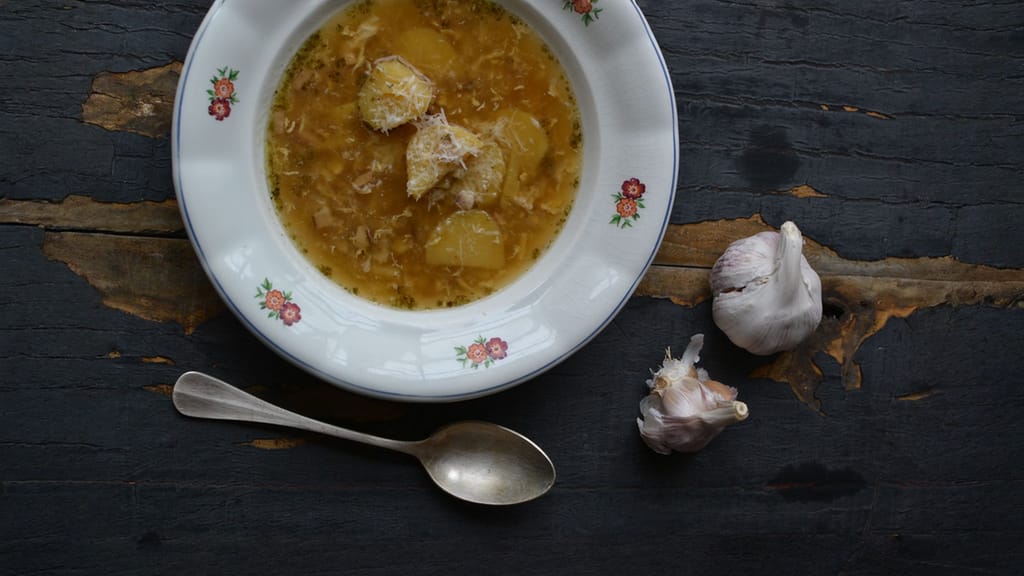
Garlic soup with potatoes and bacon: thickened with potatoes and egg, ready in 30 minutes.
Caraway soup with croutons: thickened with a light roux, ready in 35 minutes.
Potato soup with mushrooms: thickened with potatoes and cornmeal (kukuřičná krupice), about 45 minutes.
Thickened chicken broth with meat and mushrooms: thickened with roux and grated vegetables, around 70 minutes.
Winter red soup: thickened with potatoes and tomato paste, with smoked ribs and sauerkraut, 50 minutes.
Tomato soup with rice: the body comes from vegetables, tomatoes and rice, just under an hour.
Chestnut and vegetable soup: thickened with half-blended chestnuts and potatoes, around 85 minutes.
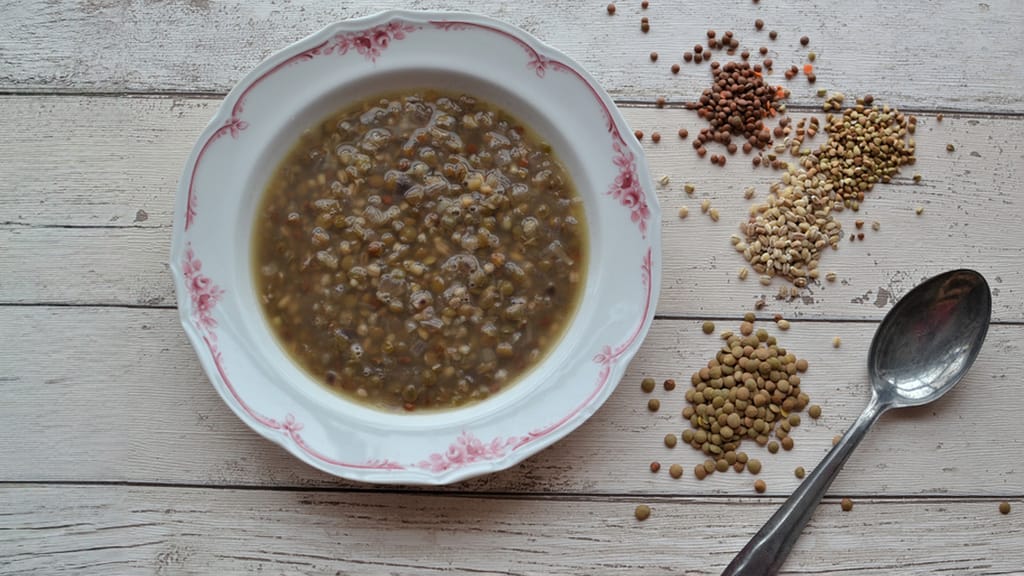
Hearty lentil soup: thickened with lentils and barley; the brown lentils are soaked the day before.
French onion soup: the body comes from slowly caramelized onions and baked croutons with cheese; it simmers for over three hours, but takes almost no effort.
If you're looking for a broader guide to all kinds of soups, from grandma's classics to quick fixes, see our overview of types of soup and grandma's recipes. Here we go deep only on the thick, wintery ones.
Recipe of the week, one tip that saves you time and one deal from the shop. Unsubscribe in one click.
The next issue goes out on Thursday, November 26.
The best winter soup is the one that fits your evening: garlic soup in under half an hour, caraway or potato soup in under 45 minutes, and onion or chestnut soup for the weekend. Here's a quick guide by situation.
You have 30 to 45 minutes and a nearly empty fridge: caraway (butter, onion, caraway, flour, broth) or garlic soup (potatoes, garlic, egg, broth).
You want soup as a main course: winter red with smoked ribs, thickened chicken broth with meat and mushrooms, or hearty lentil.
You're cooking for a crowd: the chicken broth makes eight portions and the chestnut soup six, and both can be made ahead.
You have a weekend and want a project: onion soup simmers slowly for three hours, and the chestnuts are roasted first.
You're cooking without meat: tomato with rice, caraway and chestnut; all three recipes use vegetable broth. The hearty lentil soup is meat-free if you make it with vegetable broth or water.
You want a soup without wheat flour: garlic soup, potato soup with cornmeal and winter red soup all thicken without a roux.
Winter soups share one trait: they're usually better the next day. The flavors meld overnight and the spices settle in. That's why it pays to cook a big pot and plan on leftovers.
You can thicken soup in five ways: with a roux, cooked-down potatoes, legumes or grains, blended vegetables, and egg. Each gives a different texture, so it's worth knowing when to reach for which.
Roux. Flour toasted in fat is the foundation of the Czech hearty soup. The key is color: a light golden roux thickens and smells nutty, while a dark brown one turns bitter and ruins the soup. Stir constantly after adding the flour and cook it only a few minutes, until the raw smell is gone. Then add the liquid gradually, whisking, preferably cooled or lukewarm, because hot broth added to a hot roux makes lumps. And finally, patience: a soup with roux needs about twenty minutes at a gentle simmer, or it tastes of flour. For ratios, you can go by the recipes below: the caraway soup uses 10 g of flour per half liter (about 2 cups) of broth (lightly thickened), the chicken broth 50 g per 1.5 liters (noticeably thicker, because the flour also binds the butter and vegetables).
Potatoes. A cooked-down potato thickens soup on its own, with no flour. Floury potatoes (type C) do this best: they're high in starch, fall apart at the edges and release a creamy mash into the soup. All-purpose (type B) potatoes hold their cubes, so the soup stays clearer and the pieces distinct. Want both? Cook the soup with type B potatoes and, at the end, mash a few pieces against the side of the pot with a fork, or give it three or four short pulses with an immersion blender.
Legumes and grains. Red lentils cook down almost to a purée and thicken the soup with no extra effort; brown lentils hold their shape and give you something to bite into. Barley and rice release starch, and soup made with them keeps thickening in the fridge. That's why rice and noodles are best cooked separately and added to the bowl, or the next day you'll fish porridge out of the pot.
Blended vegetables. Root vegetables, chestnuts or pumpkin give soup a creamy thickness once blended, without a spoonful of flour. A trick that works for most vegetable soups: take out half, blend the rest until smooth, and return the reserved part. You get cream and chunks in one.
Egg. A beaten egg poured in a thin stream into boiling soup while stirring forms fine ribbons and thickens and softens the soup. It traditionally belongs in garlic and caraway soup. The soup must really be boiling so the egg sets at once and spreads out.
For a thick winter soup, use a broth that matches its main flavor: beef for garlic and onion soup, chicken for the thickened broth, vegetable for caraway, potato, tomato and chestnut soups. The recipes in this selection do exactly that, and it's no accident.
Beef broth has a full, slightly sweet flavor that stands up to a lot of garlic and onions caramelized for an hour. Vegetable broth is neutral and lets the caraway, mushrooms or tomatoes shine. Chicken broth gives a gentle body that combines with roux and mushrooms into a hearty yet clean soup. Store-bought broth tends to be salty, so go even easier on the salt. Use water instead of broth where something else carries the flavor: winter red soup builds on smoked meat and bacon, so water is enough.
If you make broth at home, cook it a day ahead and let it cool. Cooled broth is what you add to roux soups, which is exactly what prevents lumps, and from cold broth you can easily lift off the solidified fat.
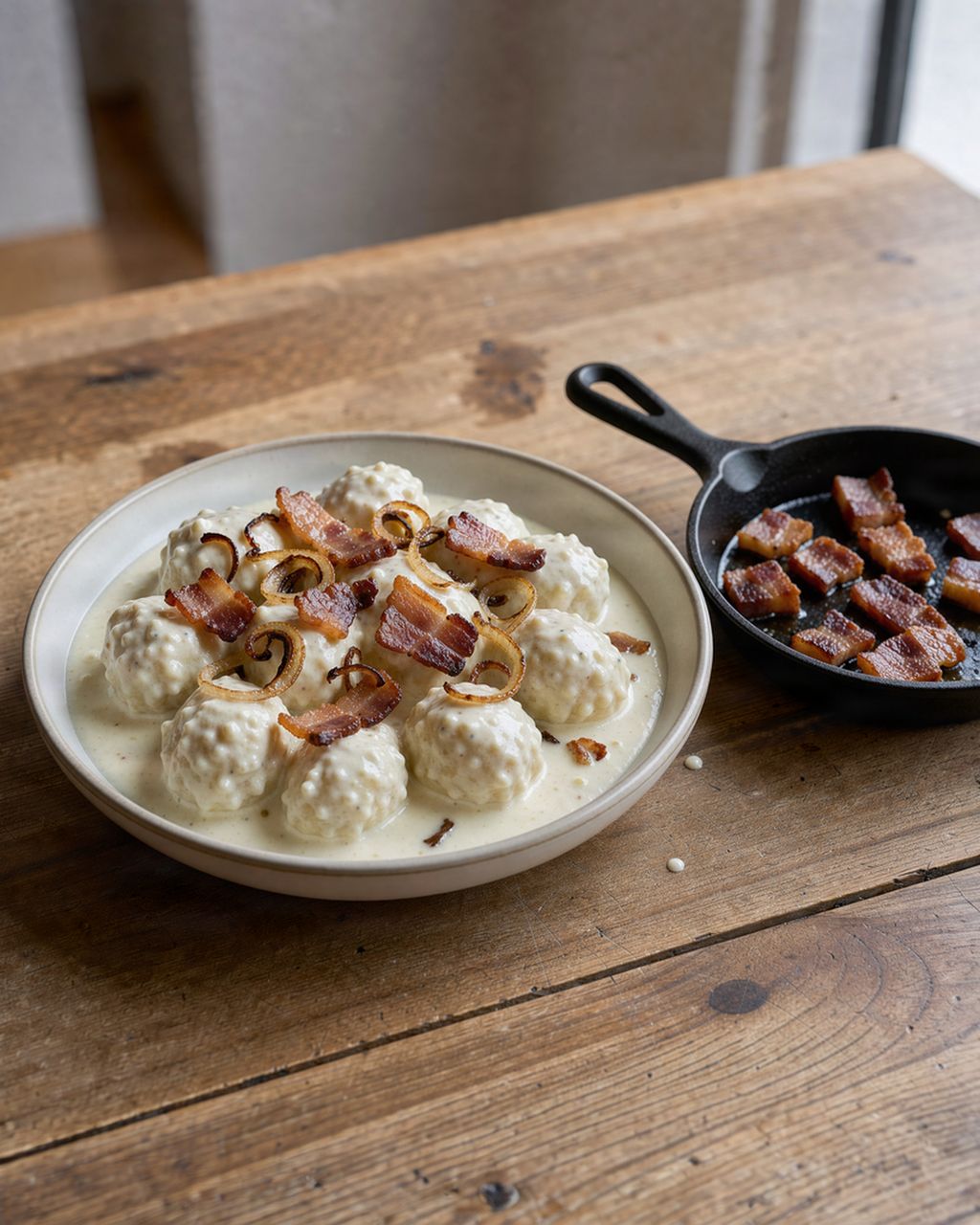
Garlic soup is thickened by potatoes and by egg poured into the boiling soup, which spreads into ribbons and gives it a velvety body without a roux. The fat from rendered bacon carries the garlic flavor through the whole soup; the garlic just must not brown, as burnt garlic turns bitter (more about this in garlic in our ingredient encyclopedia). Hearty garlic soup with potatoes and bacon is the fastest soup in this selection, ready in 30 minutes.
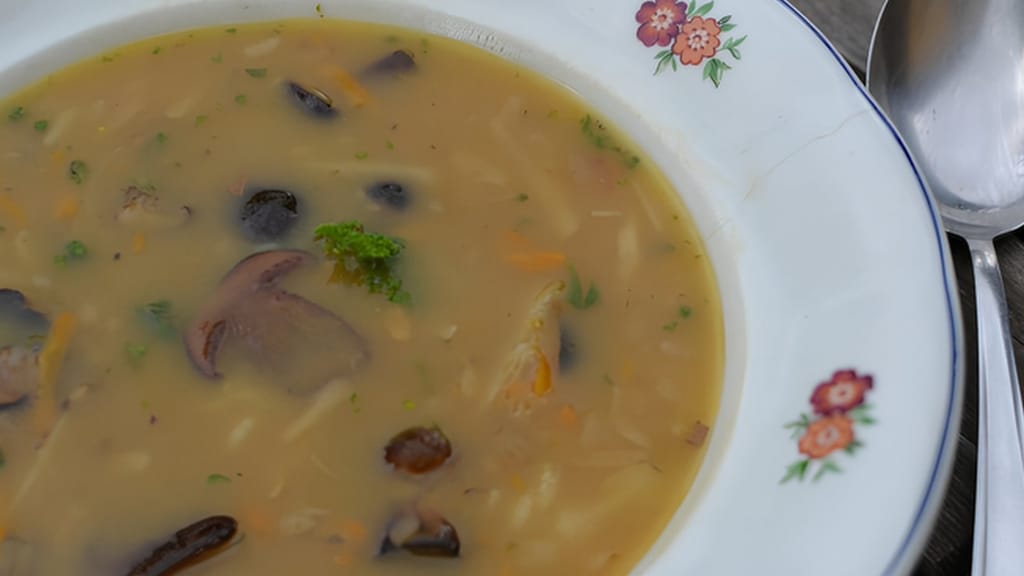
Caraway soup is thickened with a light roux of butter and all-purpose (plain) flour, cooked only until golden and simmered for about twenty minutes so it doesn't taste of flour. Caraway is toasted in the fat before the broth goes in, because its aromatic oils dissolve better in fat than in water; whole and crushed seeds together give both aroma and little bursts of flavor. Grandma's caraway soup with croutons takes 35 minutes and gets by on pantry staples.
Bramboračka (Czech potato soup) is thickened by cooked-down potatoes and a little cornmeal (kukuřičná krupice), which swells without lumps and does away with wheat flour. Onion fried until golden gives it sweetness and color, and mushrooms give it depth. The Czech classic: potato soup with mushrooms is ready in about 45 minutes. If you want the classic version, you can use a roux instead of the cornmeal, first whisking it with a ladleful of soup; but then the soup is no longer free of wheat flour.
A clear chicken broth becomes a hearty soup thanks to a roux and coarsely grated root vegetables, which almost dissolve into the soup and add body and sweetness. Cooled broth added to the hot roux while stirring prevents lumps, and noodles cooked separately don't release starch into the soup. Thickened chicken broth with meat and mushrooms makes eight portions and takes around 70 minutes.
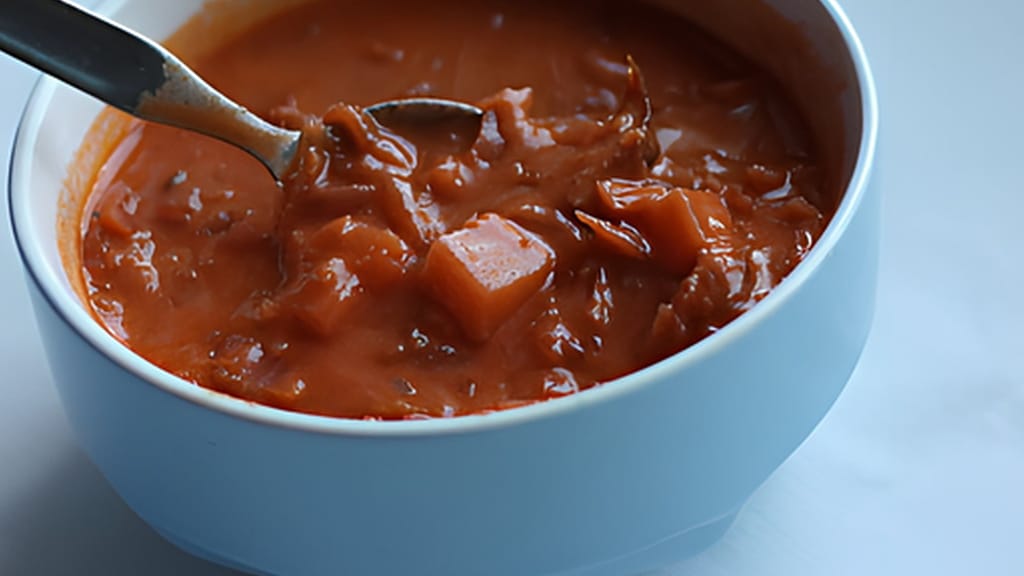
Winter red soup is thickened by cooked-down potatoes and tomato paste, with flavor from smoked ribs, bacon, red sauerkraut and beets. The sauerkraut and beets go in near the end on purpose: an acidic environment slows the softening of potatoes, so let them soften first. Go easy on the salt, since the smoked meat and sauerkraut are salty themselves; winter red soup is ready in 50 minutes.
French onion soup isn't thickened with a roux; its body comes from three-quarters of a kilo (about 1.7 lb) of slowly caramelized onions and croutons baked with cheese. Low heat is the whole magic: the onions caramelize instead of burning, and the sugars they release build a deep, sweet flavor. French onion soup with almost no effort simmers for over three hours in a heated food processor (kuchyňský robot s ohřevem), but the same principle works in a heavy-bottomed pot over the lowest flame; just stir more often.
Thick vegetable soups get their body from root vegetables, chestnuts, legumes or grains. According to their recipes, the tomato soup with rice and the chestnut soup use vegetable broth and contain no meat; the hearty lentil soup recipe doesn't specify the broth, so if you're cooking without meat, make it with vegetable broth or water.
Tomato soup with rice is thickened by tiny cubes of carrot and celery that cook down, and by rice, which adds bite. The recipe cooks the rice separately and adds it at the end so the soup doesn't thicken into porridge; you balance the acidic tomatoes with salt and a little sugar. Tomato soup with rice takes just under an hour, and you'll find more ideas in our article what to cook with tomatoes.
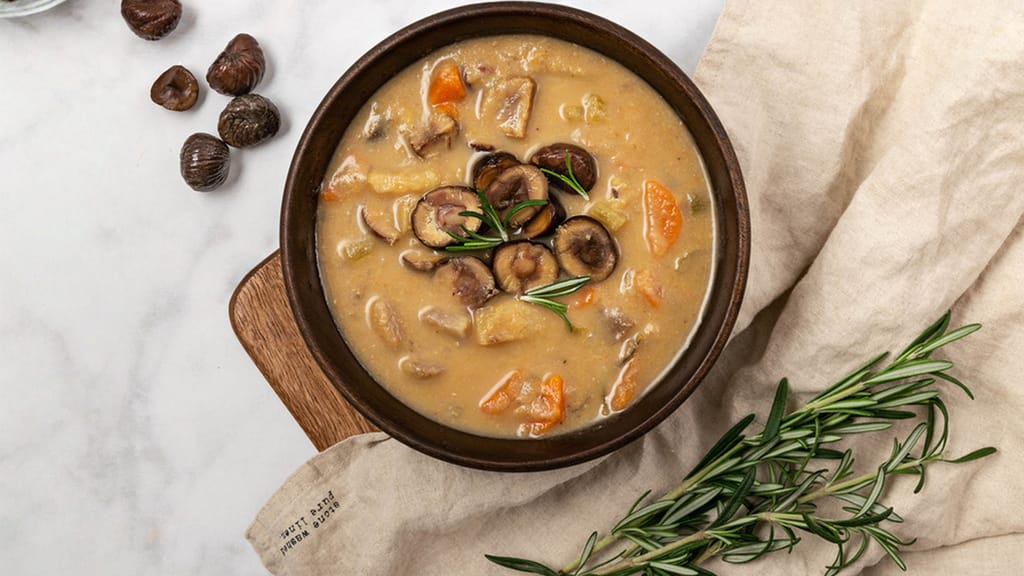
Chestnut soup is thickened by roasted chestnuts and potatoes: half is blended until smooth and mixed with the chunky part. Chestnuts are rich in starch and give the soup a velvety thickness you'd otherwise look for in cream. Chestnut and vegetable soup serves six, and you can save time with store-bought roasted or precooked chestnuts.
The hearty soup is thickened by red lentils, which cook down, while the brown lentils hold their shape and the pearl barley is pleasantly chewy. You control the thickness yourself, by the handful and by adding water or broth. Sweat three onions in butter, one chopped coarsely and two as finely as possible: the fine ones disappear into the hearty lentil soup and add sweetness, while the coarse one stays noticeable.
A thick cream soup is made by blending a soup with enough starch or fiber: potatoes, chestnuts, lentils, root vegetables. Blending it all gives a smooth cream; a half-blended soup stays thick and still has something to chew.
From this selection, the ones you can turn into a cream are mainly the chestnut and vegetable soup (the recipe itself suggests it) and the potato soup, if you don't want chunks. A few rules so the cream doesn't turn gluey: blend potatoes only briefly, because long blending releases so much starch that the cream turns rubbery. Fish out herbs and bay leaf before blending. And add cream or milk only to hot, not boiling, soup so they don't curdle.
We cover cream soups in detail in a separate article, cream soups from pumpkin, lentils and broccoli, where you'll also find how to get a velvety smooth result.
For kids, the best thick soups are mildly flavored with no big pieces: caraway, tomato with rice and half-blended chestnut. The thickness helps in a practical way too: the soup doesn't run off the spoon as much.
You can strain the caraway soup so no seeds are left in it, and serve the croutons separately so the child can sprinkle them on. With tomato soup and rice, put the rice in the bowl to taste, as some kids want more rice than soup. Blend the chestnut soup completely if they refuse the chunks. Garlic soup and winter red soup can be too strongly flavored for little ones, but that's a matter of getting used to it.
You'll find more soups for kids and quick tips in the soup overview mentioned above.
A thick soup is most often ruined by a dark roux, a scorched bottom, salt at the start, undercooked flour, potatoes blended into glue, rice and noodles cooked right in the soup, and egg poured into soup that isn't boiling. All are easy to avoid.
A browned roux. Dark flour turns bitter, and you can't get the bitterness out of the soup. Cook it only to golden and keep stirring.
A scorched bottom. Thick soup circulates poorly, so heat builds up at the bottom and the starch sticks. Cook over gentle heat in a heavy-bottomed pot and stir from the bottom with a wooden spoon.
Salt right at the start. Broth, bacon, smoked meat and sauerkraut bring their own salt, and the soup gets thicker and saltier as it cooks down. Season at the end.
Undercooked flour. A roux soup needs at least twenty minutes at a gentle simmer, or it tastes of raw flour.
Potatoes blended into glue. The blender breaks the starch granules and makes a sticky mass. A few short pulses are enough.
Rice and noodles cooked in the soup. They soak up the broth, release starch, and the next day you have porridge in the pot. Cook them separately.
Egg in soup that isn't boiling. It spreads out and clouds the soup instead of forming nice ribbons. The soup must boil, and you keep stirring.
Thick winter soups go best with something crunchy and something fresh: croutons or toasted bread and chopped herbs. A thick soup is soft and dense, so a contrast of texture and fresh flavor lifts it.
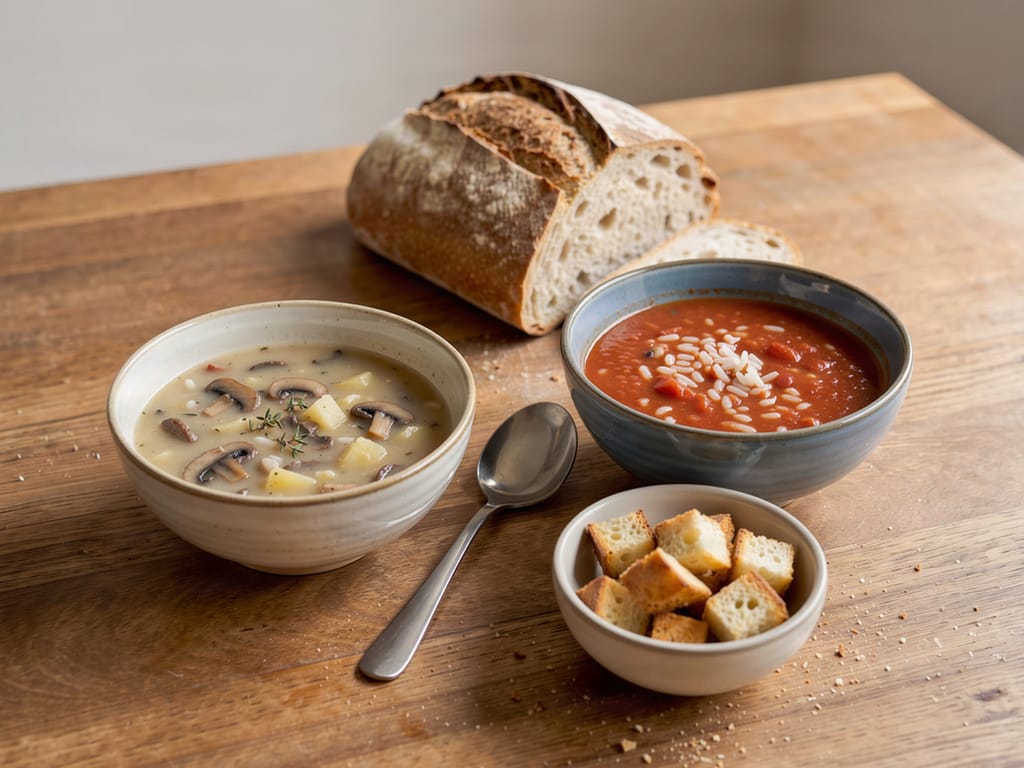
Make croutons from cubed bread in a dry pan or in the oven, and add them to the bowl only just before eating so they don't go soft. Ciabatta cubes suit caraway soup, and for onion soup the croutons are baked with cheese right in the bowl. For garlic soup, freshly grated Parmesan or another hard cheese is enough. Parsley, chives or thyme added at the end bring back the aroma that long cooking took away. For more acidic soups, like winter red, a spoonful of cream in the bowl softens the acidity.
And if the soup is your main course, it needs nothing more than a slice of bread. That's the best thing about thick winter soups: one pot, one spoon, done.
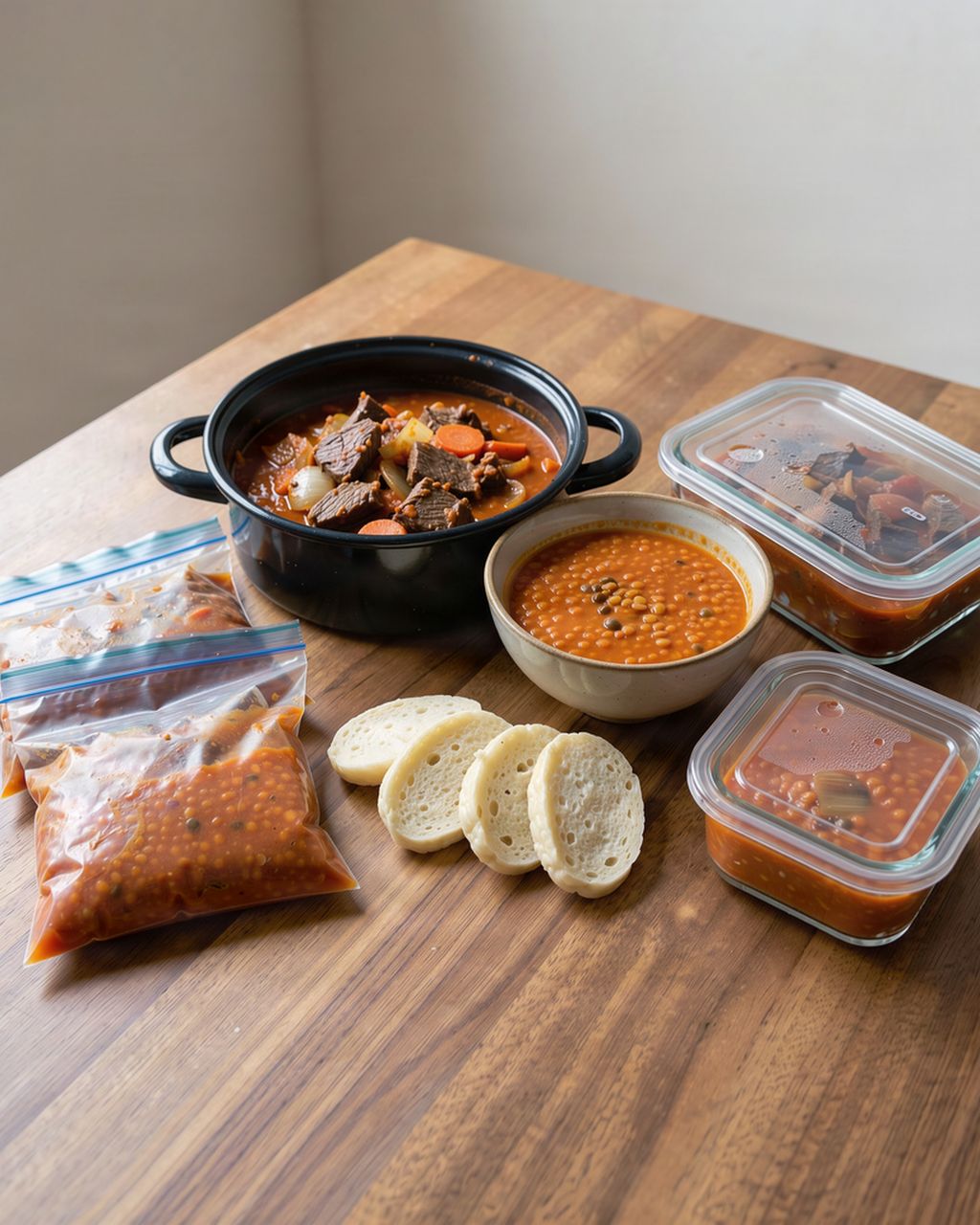
Put thick soup in the fridge within two hours of cooking, divided into smaller containers so it cools quickly. According to the US Food Safety and Inspection Service (USDA FSIS), refrigerated leftovers should be used within 3 to 4 days; in the freezer they stay safe indefinitely, according to the same agency, but soups keep their best quality for roughly 2 to 3 months. A big pot cools slowly, which is why the USDA advises dividing soup into smaller containers.
Thick soups thicken further in the fridge, because the starch from potatoes, flour and grains sets as it cools. When reheating, add a little water or broth and warm it slowly while stirring, since thick soup scorches on the bottom easily. As with chicken broth, store rice and noodles separately; in the soup they would swell by the next day.
Potatoes tend to be softer and mealier after freezing, so you can freeze potato soup and garlic soup, but expect a finer texture. Soups with egg stirred into ribbons usually lose their look after thawing. You'll find how long other foods keep in the fridge, freezer and pantry in the article food shelf life: a chart by type.
Yes, you can freeze soup made with a roux. It may be a little thinner after thawing, or some fat may separate on the surface. Thaw it in the fridge, reheat it slowly while stirring, and let it simmer briefly so the flour's starch comes back together. If it's still grainy, a few short pulses with an immersion blender will help.
Thin a soup that's too thick gradually with hot broth or water, a little at a time, and bring it briefly back to a boil. Oversalted soup can only be rescued by diluting it with unsalted broth or water and adding more unsalted ingredients, such as potatoes or vegetables, which you cook in it.
Cream most often curdles when you pour it in cold into boiling soup, or when soup with cream keeps boiling hard. Warm the cream first, or stir a few spoonfuls of hot soup into it, and add it only once the soup is off a rolling boil. Acidic soups, such as those with sauerkraut, are more prone to curdling.
As a starter, allow about one bowl, roughly 1/4 liter (about 1 cup) per person; as a main course, double that. Thick soups with meat or legumes are more filling, so a smaller portion is often enough. It's better to make extra, since most winter soups taste even better the next day.