Mushroom sauce with cream
What to Cook with Cream and Sour Cream: Sauces, Mushroom Bake, Rabbit, Soups and Cakes
Updated Nov 23, 2026
What can you cook with cream? Best of all a sauce, a bake, a soup or a cake, depending on which cream you happen to have in the fridge. Cooking cream suits sauces thickened with a roux and quick bakes. Whipping cream stands up to long simmering and an hour in the oven. Sour cream gives dill sauce, pea soup and cake batter a gentle tang. Below you'll find nine tested recipes from Yumsto, with the key point about the cream in each one (which to use and when to add it), plus five rules for keeping cream from curdling.
Cream works best in sauces, bakes, soups and cakes. Specifically, these nine dishes from Yumsto:
creamy mushroom sauce
creamy dill sauce
creamy mushroom bake
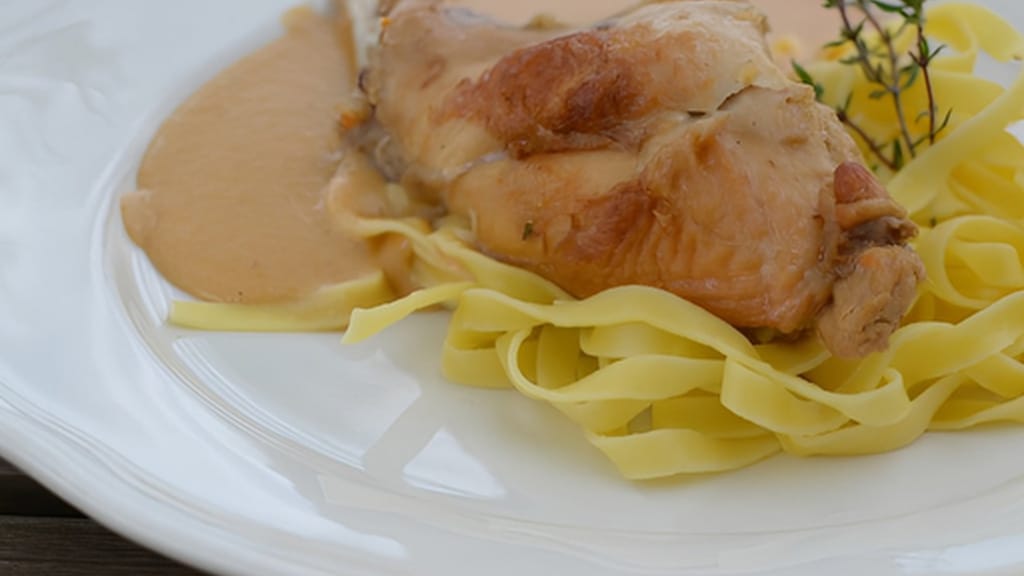
rabbit in cream sauce
baked pickling cucumber with cream
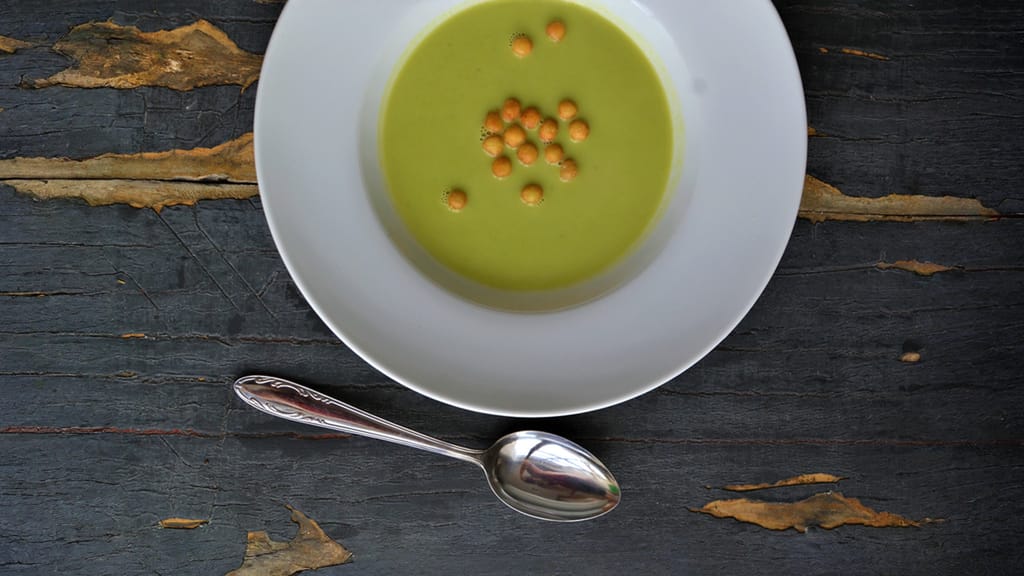
fresh pea soup with sour cream
cherry cake with sour cream
raspberry white chocolate Bundt cake with sour cream
coconut cake with a crisp cream crust
Cream does three things in a dish. It carries flavor, because the aroma of mushrooms, dill and spices dissolves in fat. It softens sharp and sour notes, so a sweet-and-sour sauce doesn't taste like a pickle brine. And it thickens, either on its own as water evaporates while it simmers, or together with flour or starch. In baking it also keeps the batter tender and forms a golden crust on top in the oven.
Before you reach for the first recipe, check which cream you actually have in the fridge. That matters more than how much of it there is. The chapters below follow that order: cooking cream first, then whipping cream, and finally sour cream. Some dishes combine two creams, and I explain why in each case.
If you'd like a broader overview, including sauces that do without cream altogether, see our article Czech sauces with recipes.
We send seasonal cooking and baking plans and recipes made from everyday ingredients. Unsubscribe in one click.
The quickest cream dishes are the pea soup (24 minutes) and the baked pickling cucumber (28 minutes). The slowest is the rabbit in cream sauce (about 160 minutes). These are total times from the recipes, including baking and braising:
under 30 minutes: fresh pea soup with sour cream (24 min), baked pickling cucumber with cream (28 min)
under an hour: creamy dill sauce (39 min), coconut cake with a crisp cream crust (52 min), creamy mushroom sauce (53 min)
under an hour and a half: creamy mushroom bake (76 min), cherry cake with sour cream (84 min)
for the weekend: raspberry white chocolate Bundt cake with sour cream (140 min), rabbit in cream sauce (160 min)
With the longer dishes, though, you spend most of that time away from the stove. The oven does the work for the hour the mushroom bake cooks, the rabbit braises under a lid, and the Bundt cake mostly needs time to cool before you finish it with the glaze. A weeknight bake is perfectly doable if you put it in the oven as soon as you get home.
For one cream dish for four people you usually need 200 to 700 g of cream, depending on whether the cream is the main ingredient of the sauce or just seasons it. Here are the amounts straight from the recipes:
mushroom sauce: 500 g cooking cream and 200 g whipping cream, serves 4
dill sauce: 200 g whipping cream and 200 g sour cream, serves 4
mushroom bake: 250 g whipping cream per kilo of mushrooms, serves 4
rabbit in cream sauce: 200 ml whipping cream, serves 4
baked pickling cucumber: 200 ml cooking cream, serves 4
pea soup: 250 ml sour cream, serves 4
cherry cake: 400 g sour cream, serves 8
raspberry Bundt cake: 150 g sour cream, serves 8
coconut cake: 300 ml whipping cream, makes 16 pieces
Whipping and cooking cream are commonly sold in 200 ml or 250 ml cartons, so check the label for the exact volume. One 200 ml carton covers the rabbit, the dill sauce, the baked cucumber or the whipping cream for the mushroom sauce, but for the cooking cream in the mushroom sauce you'll need several cartons. The mushroom bake needs a 250 ml carton, and if you only have 200 ml ones, you'll have 150 ml left over. The coconut cake takes 300 ml, so from two 200 ml cartons you'll have 100 ml left.
Sour cream is mostly sold in cartons of around 200 g, but check the label here too. One is enough for the dill sauce, and the cherry cake takes two. The pea soup needs 250 ml, so the second carton leaves you with roughly what the raspberry Bundt cake calls for.
It comes down to fat content and acidity: richer cream stands up to boiling and the oven, while sour cream is tangy and goes into hot food only at the end. In practice, it looks like this:
Cooking cream, 12% is thinner and mild. It suits sauces thickened with flour or starch and quick bakes, where it meets the roux in the pan and then only simmers briefly.
Whipping cream, 33% is the most resilient. It lasts an hour in the oven, a long simmer, and being poured over a hot cake, and it thickens by reducing on its own. That's why it's in the mushroom bake, the rabbit and the coconut cake.
Sour cream is cream soured with lactic cultures, which is why it's pleasantly tangy. The recipes below use it at 15 to 30% fat, and the same rule applies to all of them: in a hot dish, just warm it through and never boil it hard. In batter for cakes and Bundt cakes, on the other hand, it works beautifully, making it tender and creamy.
Why is that? Food scientist Harold McGee, in his book on kitchen science, describes how rich cream can even take a hard boil without curdling, while sour cream curdles much more easily in heat. The acid from fermentation weakens the milk proteins, so heat quickly turns them into flecks. Rich whipping cream has little protein and a lot of fat, so even if something does curdle, you can't tell in the thick cream.
The practical rule is simple. If a recipe calls for long cooking or baking, reach for whipping cream. If you only want to soften a sauce thickened with roux, cooking cream is enough. And treat sour cream as a seasoning that adds freshness at the end, or as an ingredient for batter.
Cooking cream is best for sauces and bakes where the cream joins flour or starch: typically mushroom sauce and baked pickling cucumber. A roux or starch stabilizes thinner cream, so the sauce holds together and doesn't run.
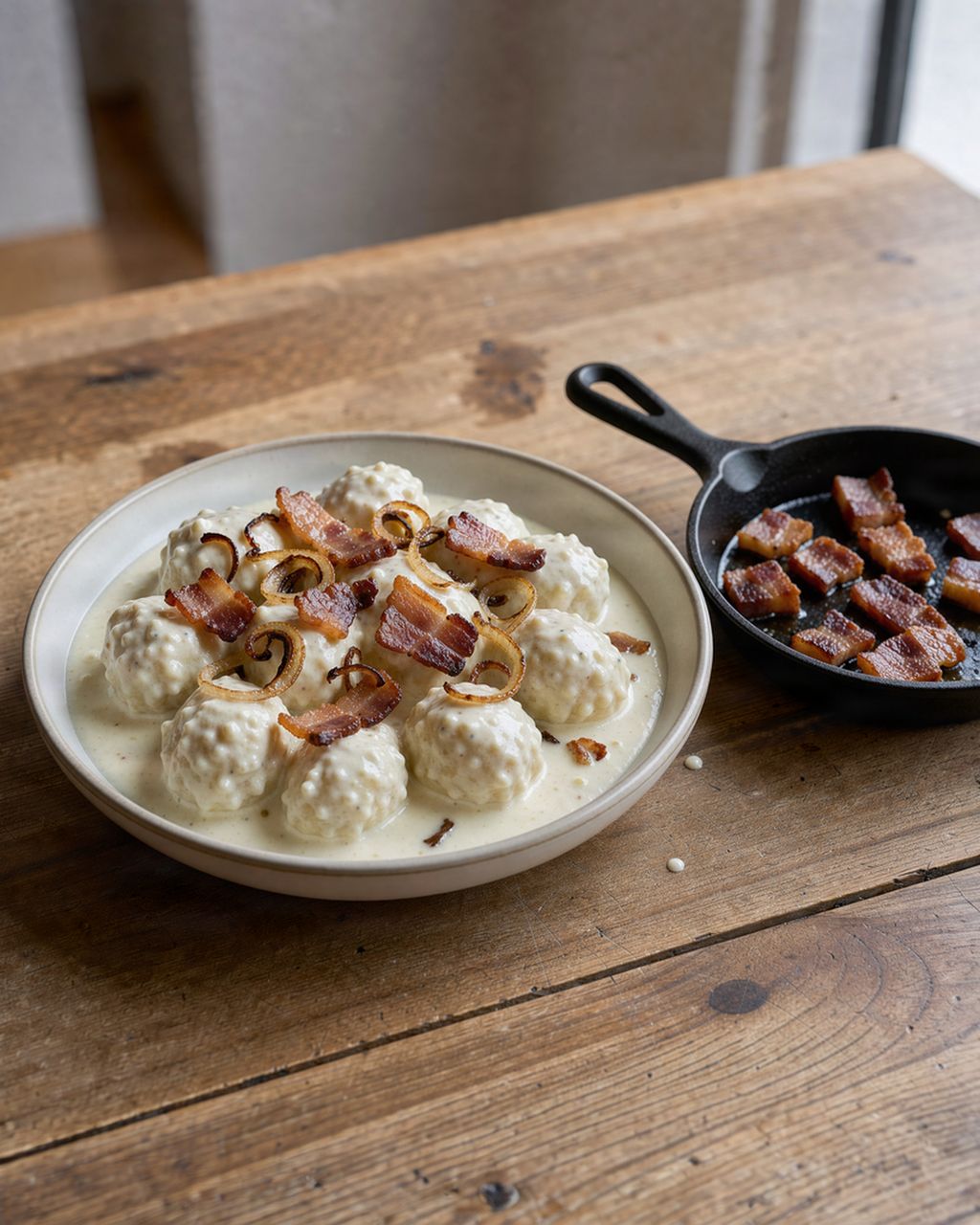
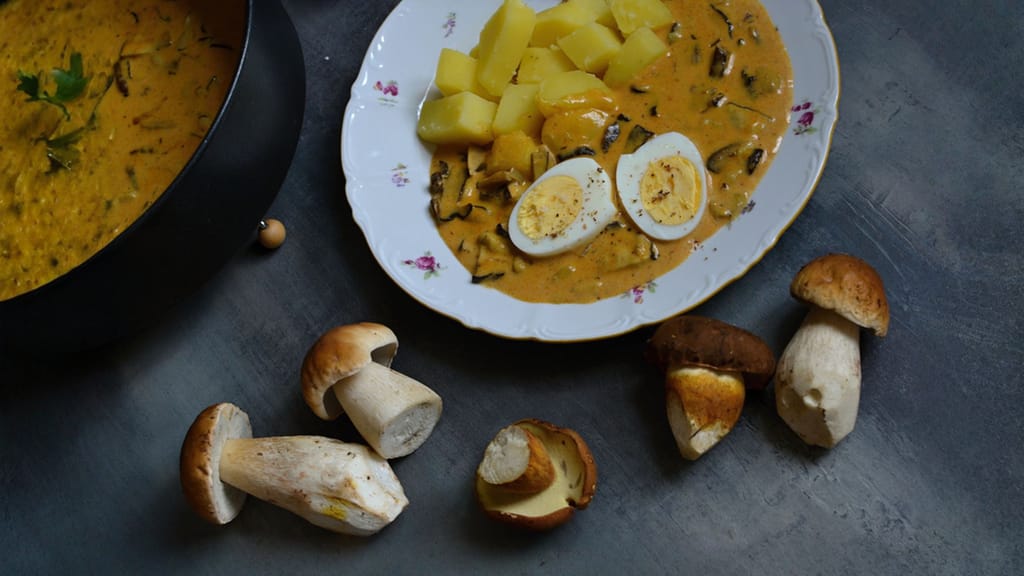
In creamy mushroom sauce two creams meet: cooking cream adds volume and mildness, whipping cream adds richness and resilience. You pour both in once the mushrooms are braised until tender, and thanks to the rich whipping cream the sauce can simmer briefly without curdling. It's thickened at the end with potato starch, which you stir into cold water, because in warm water it would clump straight away.
Mushroom sauce with cream
Mushroom sauce with both cooking and whipping cream, ready in about 53 minutes
For baked pickling cucumber with cream, you stir mustard into cooking cream and pour it over cucumber and bacon that you've dusted with flour. The flour stabilizes the thinner cream, so it doesn't run in the oven under the Gouda and forms a golden, lightly bubbling layer. Before you start, taste a small piece of the raw flesh and spit it out: don't use a bitter fruit, because according to the recipe the bitter compounds in cucurbits can cause poisoning.
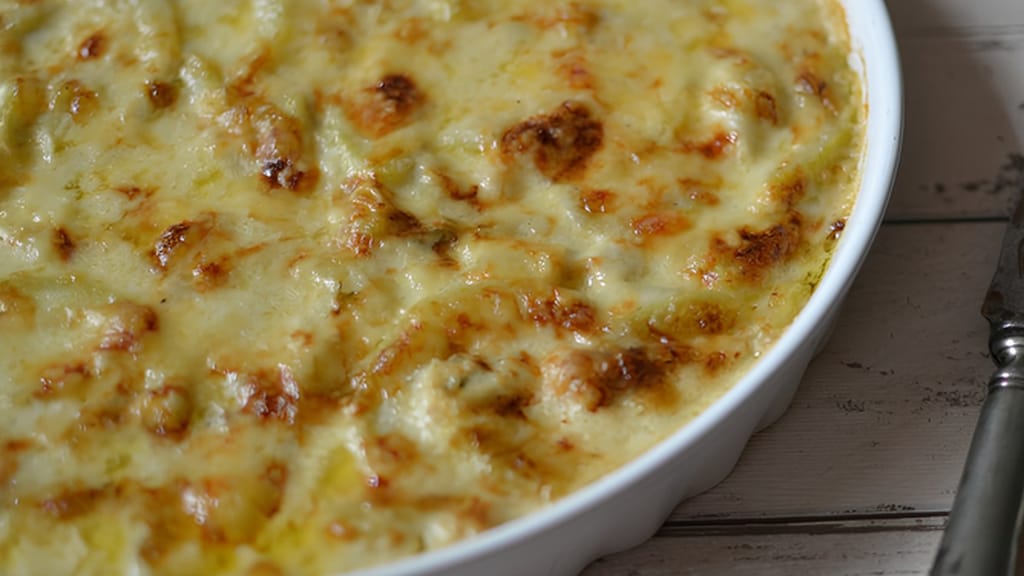
Baked bottle gourd (indian cucumber) with cream
Baked pickling cucumber with cooking cream, bacon and Gouda in 28 minutes
Whipping cream at 33% is the most resilient, so you can bake a mushroom bake with it, finish rabbit in cream sauce with it, and pour it over a hot coconut cake. It handles an hour in the oven and simmering, and it thickens by reducing on its own, which is why the recipes choose it wherever thinner cream wouldn't last. You'll also find it in the mushroom and dill sauces, where it adds richness.
Creamy mushroom bake shows why whipping cream belongs in long baking. Seasoned, you pour it over the mushrooms, and for about an hour it reduces in the oven with the mushroom juices into a thick, fragrant sauce; thinner cream would be more likely to separate in that time. How much you use depends on the dish: a wide, shallow one needs more, a smaller, deeper one less.
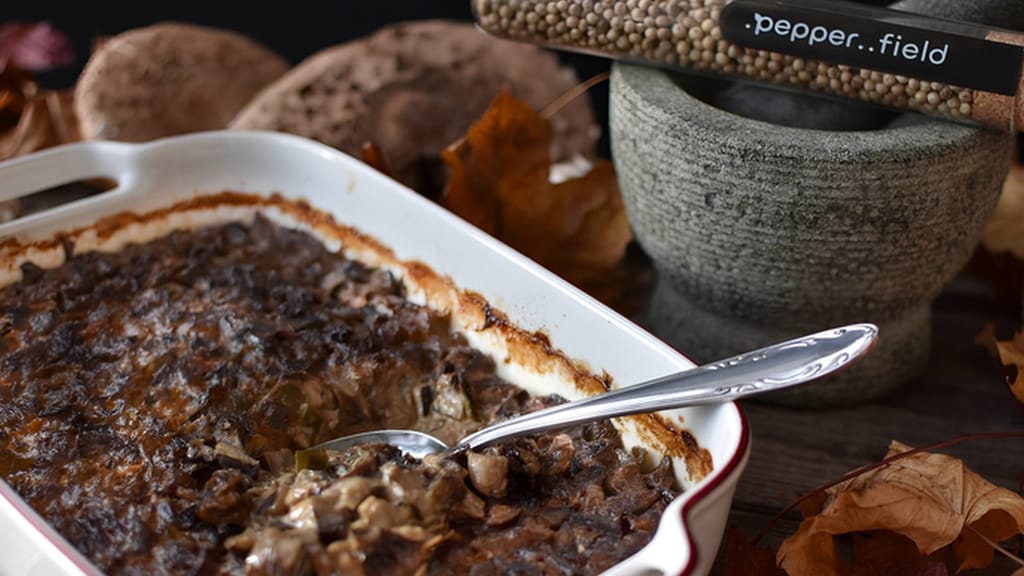
Mushroom bake with cream
Mushroom bake with whipping cream, an hour in the oven
In rabbit in cream sauce, the whipping cream goes into the sauce right at the very end: after the roux has thickened it, it has simmered and the vegetables have been pushed through a sieve, you only warm the cream through gently. It doesn't need to cook for long, so it has no chance to curdle. The seasoning with warmed vinegar and sugar comes after it.
Coconut cake with a crisp cream crust proves that whipping cream doesn't belong only in sauces. You pour it over the cake straight out of the oven, as evenly as possible across the whole surface. It soaks into the hot coconut topping and with the sugar forms a crisp crust, while the bottom stays tender; on a cooled cake it would only make it soggy.
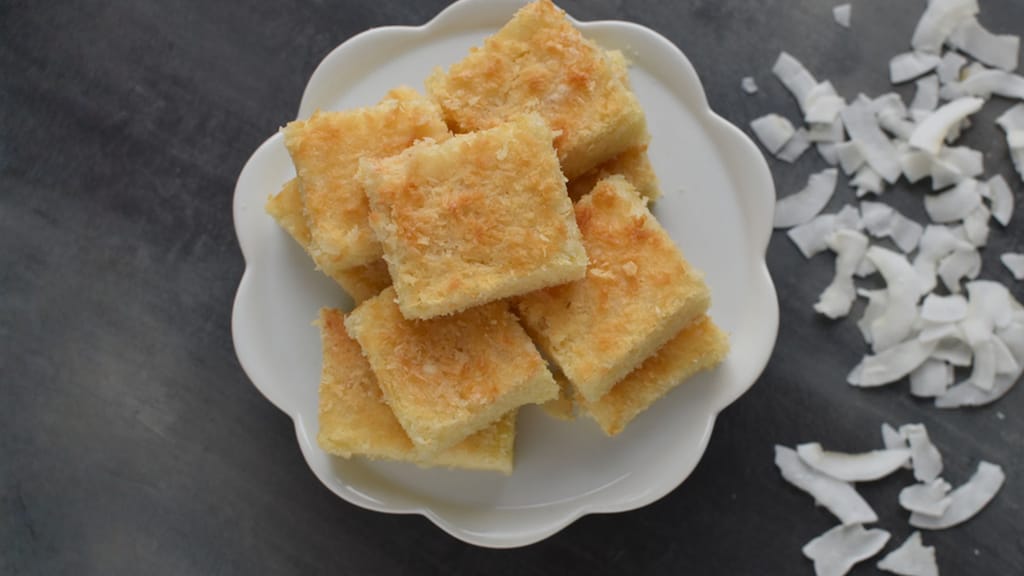
Coconut sheet cake with a crunchy cream crust
Coconut cake topped with whipping cream, 16 pieces from a baking sheet
With sour cream you can make dill sauce and pea soup, and bake a cherry cake or a tender Bundt cake. It adds gentle tang and creaminess everywhere; in a pot you only warm it through, and in batter it becomes a secret ingredient that keeps the cake juicy.
Creamy dill sauce combines whipping cream with sour cream: the sour cream brings the tang you expect from dill sauce, and the whipping cream brings richness. Both go into the pot after roughly twenty minutes, once the roux and stock have cooked together, and then you just warm the sauce through over low heat. You don't need to boil it hard, which is why the cream doesn't curdle.
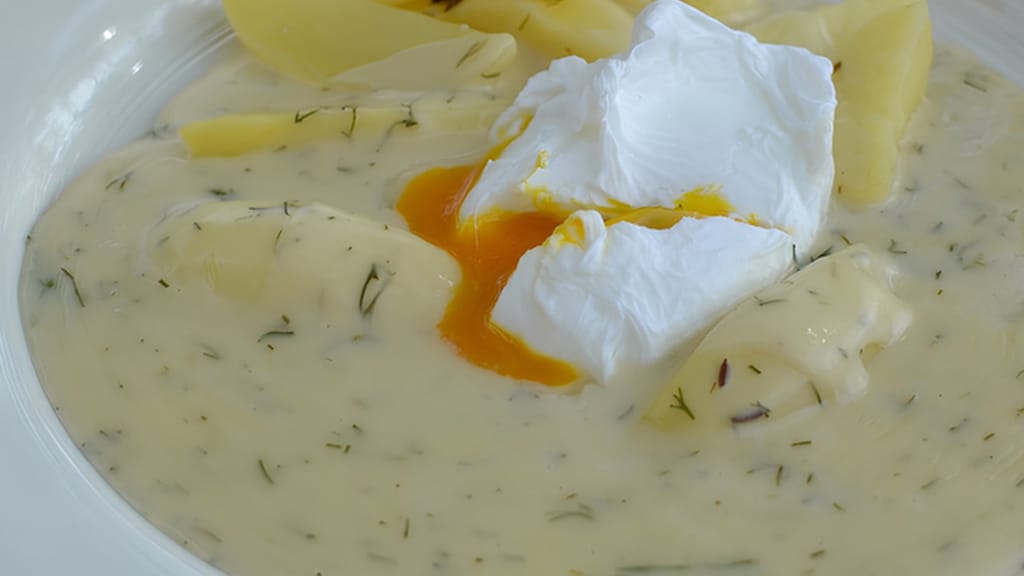
Dill sauce with cream
Dill sauce with sour cream and whipping cream in 39 minutes
In fresh pea soup with sour cream, the sour cream goes in after ten minutes of boiling and the soup is blended at once into a smooth cream. It adds fresh tang and creaminess, and because the soup is finally pushed through a fine sieve, any tiny flecks disappear along with the pea skins.
Cherry cake with sour cream is more creamy than floury: 400 g of sour cream goes with just 60 g of flour. You combine the sour cream with egg yolks whipped with sugar and with the flour, so it has no way to curdle in the oven and the cake stays tender. Only the whipped egg whites make it fluffy.
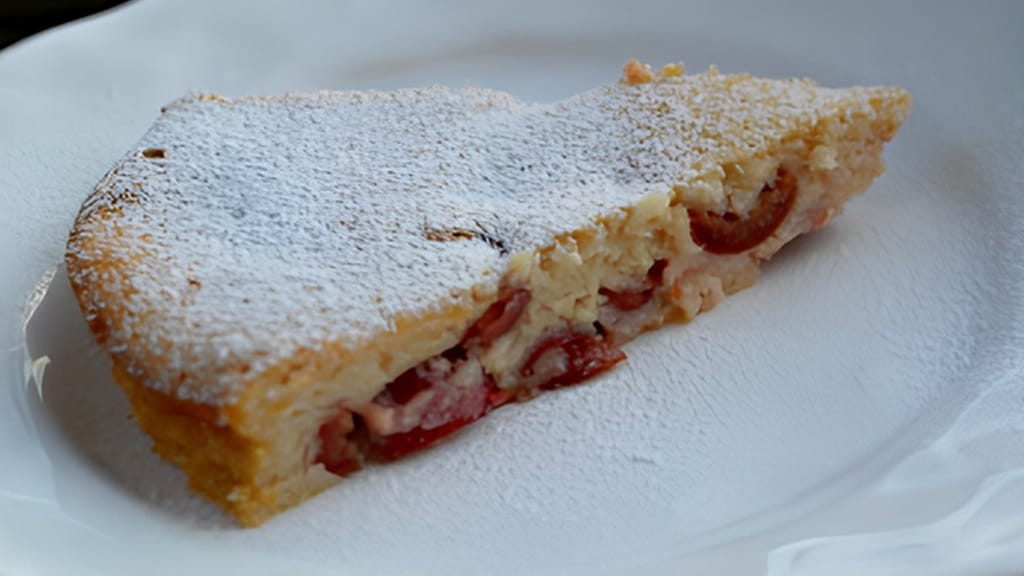
Cherry cake with sour cream
Cherry cake with sour cream and whipped egg whites
Raspberry white chocolate Bundt cake with sour cream is a festive Bundt cake in which the sour cream keeps the batter tender. It needs only 150 g, mixed briefly into the butter-and-yolk foam before the flour goes in. If you have sour cream left over from the pea soup, that's exactly the amount.
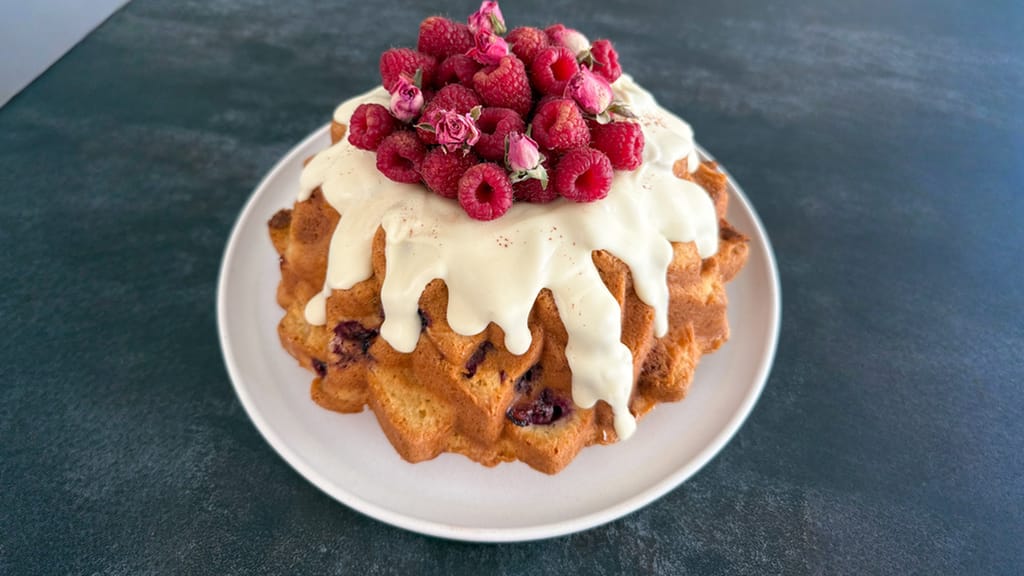
Raspberry bundt cake with white chocolate and sour cream
Festive raspberry white chocolate Bundt cake with sour cream
Cream curdles when it meets a hard boil, acid or a big temperature shock, and the less fat it has, the more easily it happens. Curdling most often hits sour cream and cooking cream; according to McGee, whipping cream is the most resilient. Five rules that solve it:
Temper it. Stir a few spoonfuls of hot sauce or soup into a bowl of the cream, and only then pour this mixture into the pot. The cream warms gradually and the shock doesn't curdle it.
Don't pour cream straight from the fridge into a bubbling sauce. According to cooks' experience, temperature shock is the most common reason flecks appear in a sauce.
Add sour cream at the end and only warm it through. That's how the dill sauce does it: the sour cream goes in after twenty minutes, once the roux and stock have cooked together.
Add acid after the cream, or stabilize it beforehand with flour. That's why the rabbit is seasoned with warmed vinegar right at the end, and why in the dill sauce the vinegar is in the roux before the cream goes in.
Thicken with flour or starch. Both a roux and starch stirred into cold water stabilize cream in a sauce, which is why cooking cream is mainly paired with them.
If a sauce does curdle, cooks in practice rescue it by heating it briefly, blitzing it with an immersion blender and straining it through a fine sieve. The flavor stays the same and the texture mostly evens out. The article cream sauce curdled: why and how to save it covers this in detail.
And one more thing people mix up: cooking cream won't whip. For whipped cream you need whipping cream, ideally well chilled.
The best way to use leftover cream is in more cooking: pour it into a soup, a sauce or a bake. A few spoonfuls of whipping cream soften almost any creamy soup, and a spoonful of sour cream can go on top once the soup is in the bowl, where it won't curdle.
Most often you'll have whipping cream left after the mushroom bake or the coconut cake, where you don't use two full 200 ml cartons: 100 to 150 ml is enough to soften a soup or sauce, or to go into baked pasta or potatoes. Sour cream left from the pea soup exactly covers the raspberry Bundt cake, and in batter you don't need to worry about curdling at all.
For ideas on what to bake with cream in one dish, see the article baked potatoes and baked pasta. Whether you can freeze cream and what happens to it after thawing is covered in can you freeze milk, cream and yogurt. And if you run out of cream completely, what to substitute for cream in a sauce will help.
Under Czech regulations, kysaná and zakysaná smetana are the same thing: cream soured with lactic cultures, with at least 10% fat. Only individual products differ: some are thinner and pourable, others are thick. Check the fat content and consistency on the label. Add it to hot dishes at the end, off the boil. In batter, a thinner product brings more liquid.
Yes, whipping cream replaces cooking cream with no problem, and it curdles even less in a sauce. The sauce will be richer and thicker, so thin it with a little water or stock if needed. The other way around works less well: cooking cream doesn't hold up to long baking or a hard boil as well as whipping cream does.
You can, but the sauce will be noticeably tangier, and the sour cream must go in at the end, tempered and without further boiling. First stir a few spoonfuls of the hot sauce into it, then pour it into the pot and just heat through. Thicken the sauce with starch before adding the sour cream.
Reheat a cream sauce slowly over low heat, stirring often, and never bring it to a hard boil. If it has thickened in the meantime, add a spoonful of water or stock. Sauces with sour cream, such as dill sauce, are the most delicate. If one does curdle, blitzing it with an immersion blender helps.
Without meat you can make a mushroom bake with cream and a fresh pea soup with sour cream. The bake is just mushrooms, whipping cream, seasoning and a little butter for the dish. The soup is built on frozen peas, vegetable stock and sour cream. For something sweet, there's the cherry cake, the raspberry Bundt cake and the coconut sheet cake, all meat-free.
One recipe worth heating the oven for, one tip, and one deal from the shop. Nothing else.