Thickened chicken broth with meat and mushrooms
Updated Sep 18, 2026
Food shelf life is measured in days in the fridge, months in the freezer, and years in the pantry — and the differences between foods are huge: ground meat lasts 1–2 days in the fridge, lunch leftovers 3–4 days, hard cheese 3–4 weeks, eggs in the shell 3–5 weeks. Below you'll find the numbers broken down by food type, always for a fridge at 4°C (39°F) and a freezer at −18°C (0°F). One key distinction to remember right away: fridge times are about safety, freezer times are about quality. At −18°C food won't spoil — it just gradually loses flavour and texture.
Every time listed in this article assumes a fridge set to 4°C (39°F) or below and a freezer at −18°C (0°F) or below. If your fridge runs two or three degrees warmer, shave roughly a day off the times given for meat and fish — at 7°C bacteria multiply many times faster than at 4°C.
Why these exact numbers:
5°C to 60°C (41°F–140°F) is the danger zone. Bacteria multiply fastest in this range — food safety experts say their numbers can double roughly every 20 minutes. The whole point of refrigeration is staying below it.
−18°C is the internationally recognised reference temperature for frozen food — it's set out in the Codex Alimentarius and in EU rules on quick-frozen foods. At this temperature, bacterial growth essentially stops. Enzymatic and oxidative changes keep going, though — which is why freezer times are about quality, not safety.
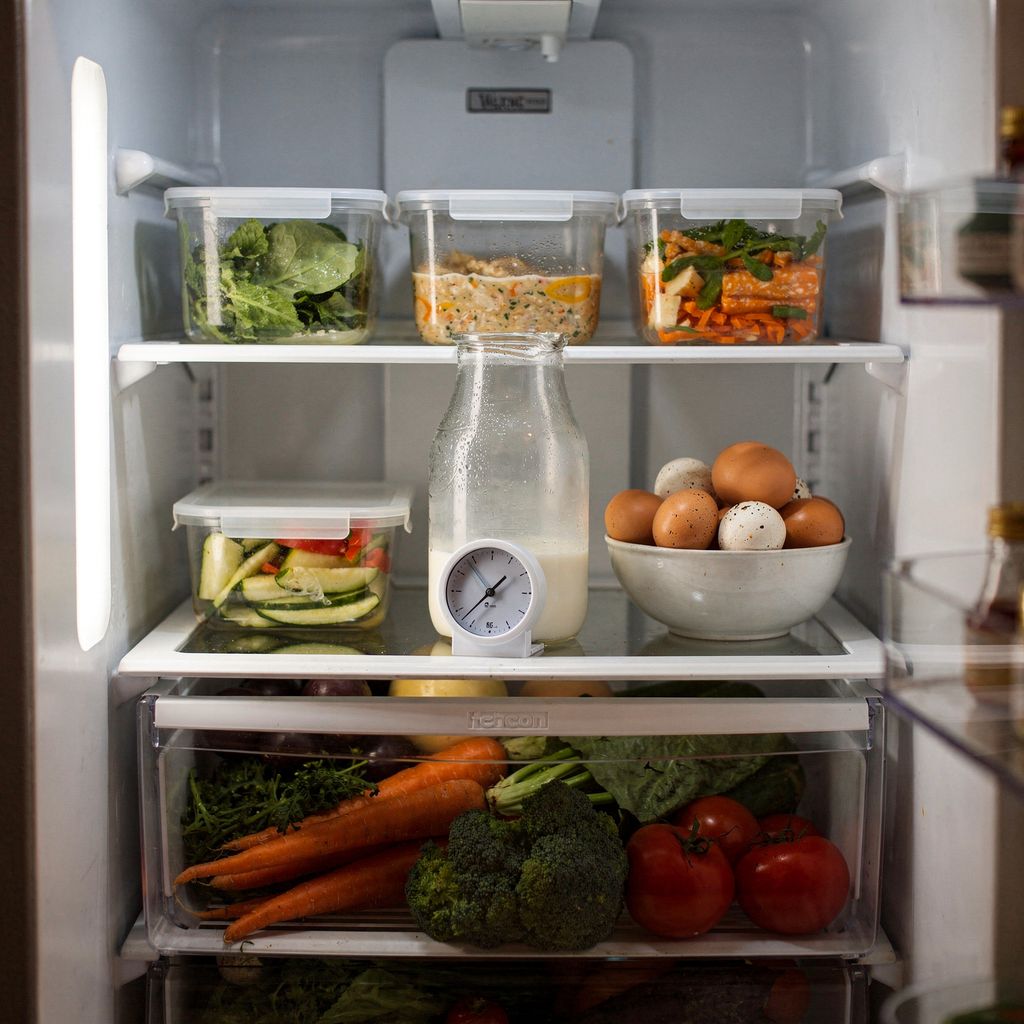
Your fridge doesn't have one single temperature. It's coldest at the bottom, above the veg drawer — that's where meat and fish belong. It's warmest in the door (typically 5–10°C/41–50°F), so neither milk nor eggs should ever go there. We cover this in detail in our article on where to store food in the fridge by temperature zone.
The clock starts at purchase or cooking, not at storage. And opening a package resets the clock too — regardless of what's printed on it.
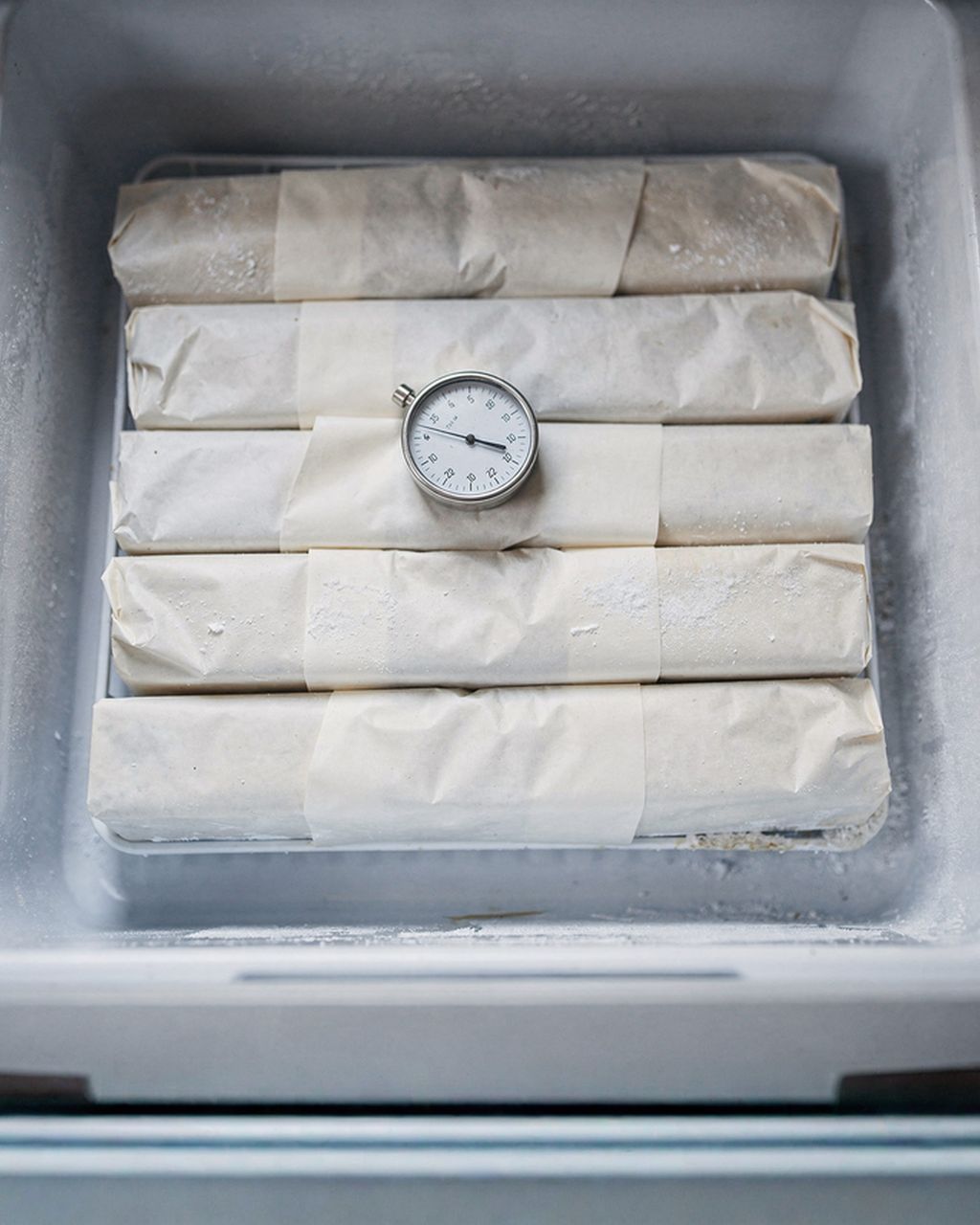
Get one thing, even if you skip the rest of this article: a cheap fridge thermometer. A dial set from 1 to 5 tells you nothing about the actual temperature, which shifts depending on how full the fridge is and how often you open the door.
Raw meat is the fastest-spoiling category in the whole fridge: ground meat and raw sausages 1–2 days, poultry 1–2 days, fresh fish 1–2 days, whole cuts of beef and pork 3–5 days.
Meat and fish shelf life by type (fridge at 4°C / freezer at −18°C):
Ground meat and meat mixes: 1–2 days / 3–4 months
Raw sausages and fresh sausage links: 1–2 days / 1–2 months
Steaks, chops and roasts (beef, pork, lamb): 3–5 days / 4–12 months
Whole raw poultry: 1–2 days / 12 months
Poultry pieces (breasts, thighs, wings): 1–2 days / 9 months
Offal (liver, kidneys): 1–2 days / 3–4 months
Lean fish (cod, pike-perch, pike, trout): 1–2 days / 6–8 months
Fatty fish (salmon, mackerel, herring): 1–2 days / 2–3 months
Bacon: 7 days after opening / 1 month
Ham and deli meats from the counter: 3–5 days / 1–2 months
Frankfurters/hot dogs: unopened 2 weeks, opened 1 week / 1–2 months
Smoked meat: 1–2 weeks / 1–2 months
Cooked or roasted meat: 3–4 days / 2–6 months
Why ground meat has such a short shelf life. Bacteria live on the surface of meat. A whole cut has a small surface area, and searing sterilises it. Grinding smears that surface throughout the entire volume — inflating it a hundredfold. That's why ground meat needs to be cooked through completely, and why it lasts two days, not five. We go into this in detail in our article on ground meat storage in the fridge.
Why salmon lasts less time in the freezer than cod. Unsaturated fats oxidise even well below zero. That's why fatty fish start smelling fishy and slightly bitter after two or three months, even though they're still safe to eat. Lean cod doesn't have that problem and stays at good quality two to three times longer.
Dairy products last 3–5 days in the fridge after opening (milk and fresh cheeses), fermented dairy 5–7 days, and hard cheese 3–4 weeks; eggs in the shell last 3–5 weeks.
Fresh milk after opening: 3–5 days / freezer 3 months
UHT milk after opening: 3–5 days — heat treatment stopped mattering the moment you opened the carton
Whipping cream after opening: 5–7 days
Yoghurt, kefir, sour cream: until the use-by date; after opening 5–7 days
Cottage cheese, cream cheese, mozzarella, ricotta: unopened until the use-by date, after opening 3–5 days
Hard cheese (Emmental, Gouda, Parmesan): 3–4 weeks after opening / freezer 6 months
Blue and soft-rind cheeses (blue cheese, Camembert-style): 1–2 weeks
Butter: 1–2 months in the fridge / freezer 6–9 months
Eggs in the shell: 3–5 weeks; don't freeze them in the shell
Hard-boiled eggs: 1 week; eat peeled ones as soon as possible — they dry out fast and pick up other smells
Freezing dairy comes with a catch. You can freeze milk and cream, but once thawed the emulsion breaks and separates into flecks — after that it's only good for cooking and baking, not for your coffee. Frozen hard cheese crumbles, so only freeze it when you know you'll be grating it. Don't freeze fresh cheeses or yoghurt at all — the water in them forms ice crystals and turns the whole thing watery.
Eggs don't belong in the fridge door. Temperature swings every time the door opens shorten their shelf life more than almost anything else. For more on where to store eggs and how to check freshness, see our article on egg storage.
Most cooked meals last 3–4 days in the fridge and 2–3 months in the freezer. Mayo-based salads are the exception on the lower end — give those only 2–3 days — and cooked rice is its own category entirely.
Soups and stocks: 3–4 days / 2–3 months
Stews, casseroles, sauces: 3–4 days / 2–3 months
Cooked pasta: 3–4 days / 1–2 months
Cooked rice: cool quickly and eat by the next day, reheat only once / freezer 6 months
Roasted meat and poultry: 3–4 days / 2–6 months
Bakes, lasagne, pizza: 3–4 days / 1–2 months
Mayo-based salads (potato, Waldorf-style): 2–3 days; not worth freezing — the mayo will break
Spreads with mayo or egg: 2–3 days
Legume dishes, lentils, hummus: 3–5 days / 3 months
Sliced bread: 2–3 days wrapped in paper at room temperature / freezer 3 months
Rice plays by its own rules. Spores of Bacillus cereus survive boiling and multiply quickly in warm rice, which is why the UK's Food Standards Agency recommends cooling cooked rice as fast as possible, keeping it in the fridge for no more than a day, and reheating it only once. A sweetish smell from cooked rice is a sign that needs no further investigation — just bin it.
Don't store bread in the fridge. It sounds counterintuitive, but starch in bread firms up (retrogradation) fastest at around 4°C — so it actually goes stale quicker in the fridge than on the counter. Either eat it within two days, or slice it, freeze it, and toast it straight from frozen.
Reheating doesn't reset the clock.Three to four days is counted from when it was cooked, no matter how many times you've reheated it — and every round of reheating and cooling drags the whole pot back through the 5–60°C danger zone. So only reheat the portion you're about to eat, and heat it right through to 75°C at the core.
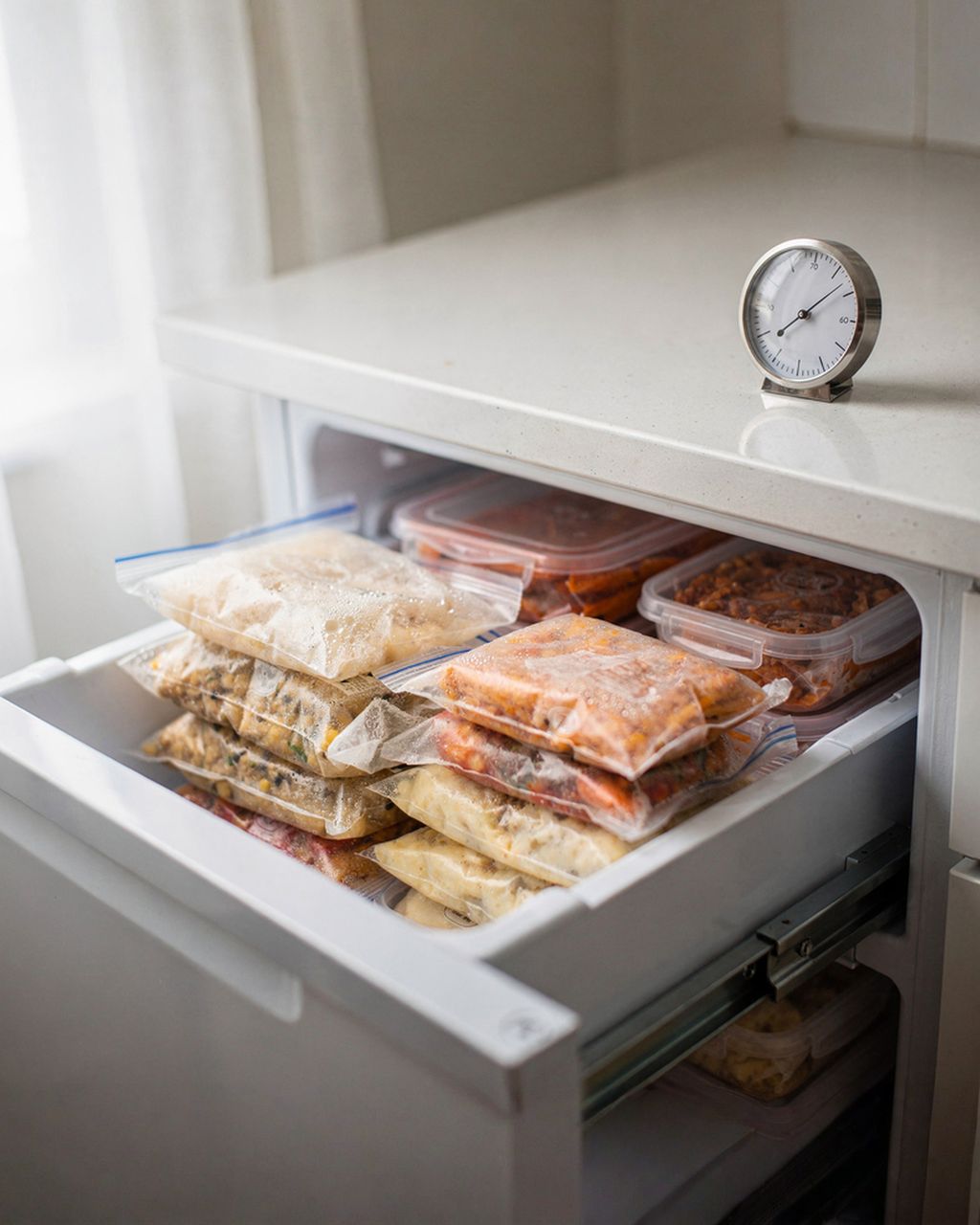
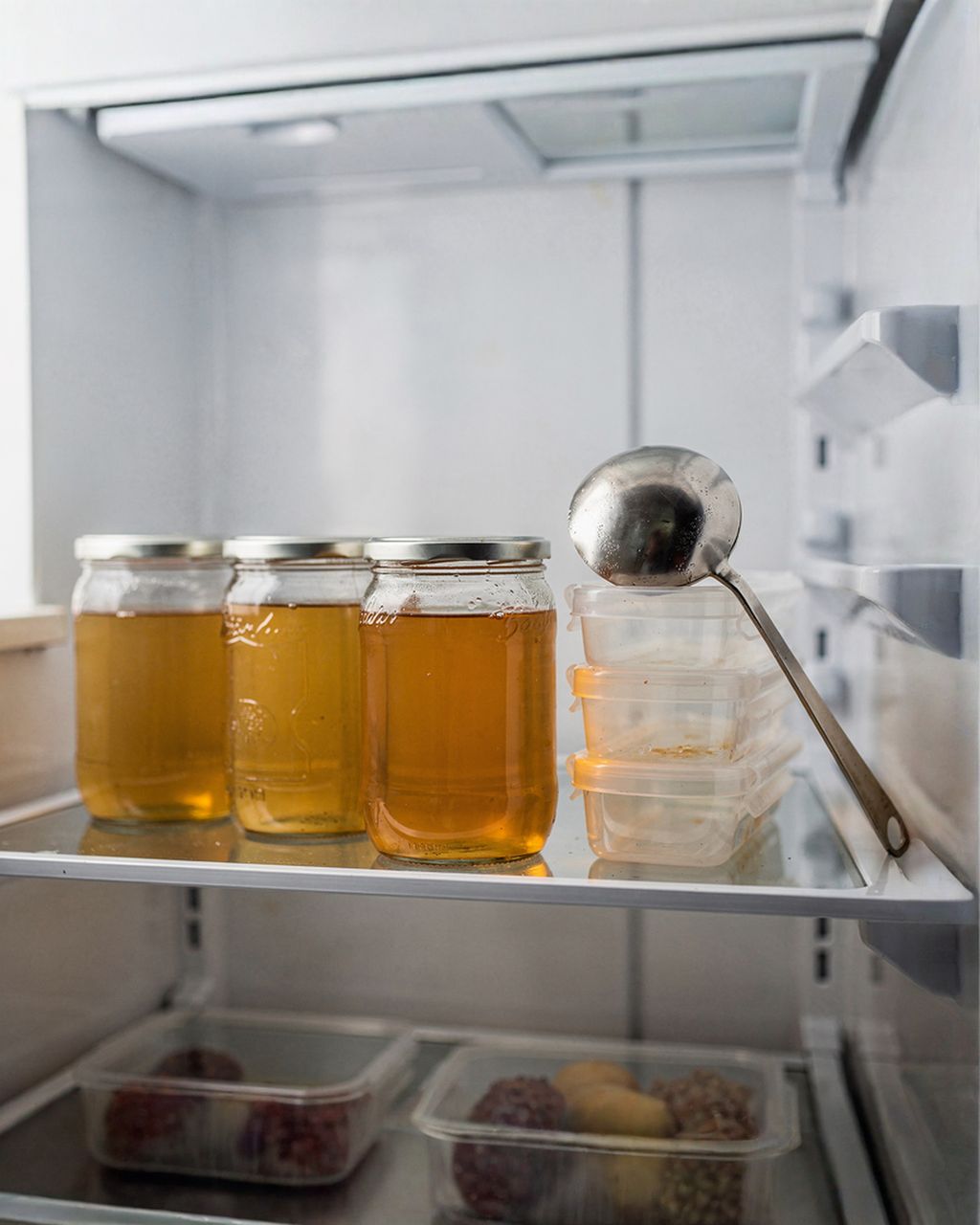
Soups and stocks are the best freezer candidates. They don't have a delicate structure that ice crystals can wreck, and they thaw straight in the pot. Pour them into shallow containers or flat freezer bags — a thin layer freezes and thaws far faster. A thick reduced chicken stock handles this perfectly, as does potato salad with green beans and smoked mackerel, which, on the other hand, belongs strictly in the fridge and only for up to three days.
Thickened chicken broth with meat and mushrooms
Reduced chicken stock with meat and mushrooms — keeps 3–4 days in the fridge, 2–3 months in the freezer
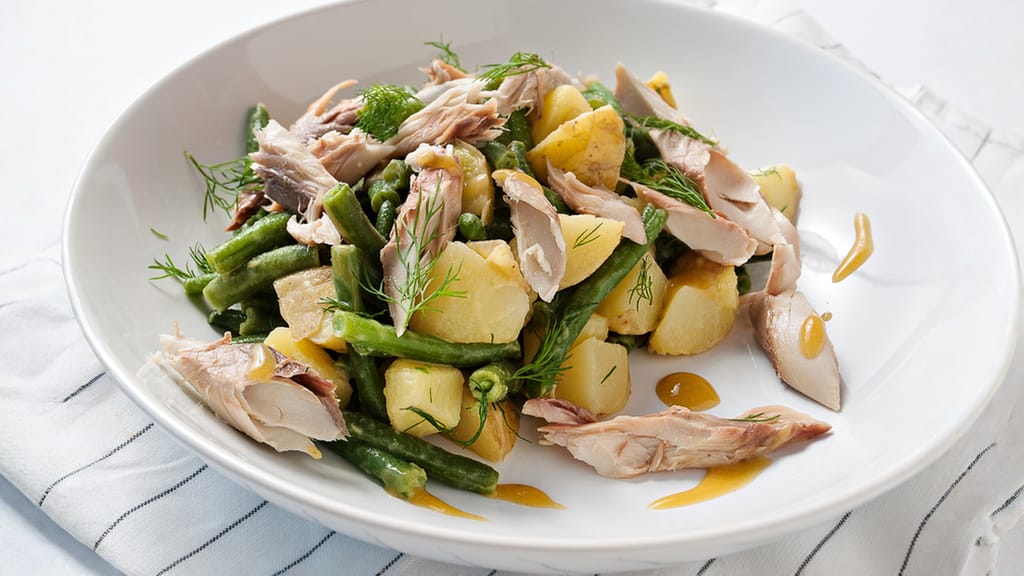
Potato salad with green beans and smoked mackerel
Potato salad with green beans and smoked mackerel — max 3 days in the fridge, don't freeze
Fruit and vegetables last anywhere from a few days to a few weeks in the fridge: leafy greens 3–5 days, soft fruit 3–7 days, root vegetables 3–4 weeks. Potatoes, onions, and tomatoes shouldn't go in the fridge at all.
In the fridge:
Lettuce, spinach, rocket, fresh herbs: 3–5 days
Broccoli, cauliflower, cabbage, kale: 1–2 weeks
Carrots, parsnips, celery, beetroot (leaves removed): 3–4 weeks
Cucumber, courgette, peppers: 1 week
Apples and pears: 1–2 months in the crisper drawer
Strawberries, raspberries, blueberries: 3–7 days; don't wash them before storing
Mushrooms: 3–5 days in a paper bag, never in plastic
Cut fruit and vegetables: 1–3 days
Outside the fridge:
Potatoes: 2–3 months somewhere dark at 7–10°C (45–50°F). Below 7°C the starch converts to sugars, so potatoes turn sweet and go unpleasantly dark when fried.
Onions and garlic: 1–3 months somewhere dry and dark — but kept away from potatoes, since they speed up each other's sprouting.
Tomatoes, bananas, avocados, squash: room temperature. The cold ruins their flavour, and for tomatoes, their texture too.
Ethylene is why things go off faster when stored together. Apples, bananas, pears, and tomatoes release ethylene, the ripening gas. Leafy greens, broccoli, and potatoes are sensitive to it — keep them apart and they'll last noticeably longer.
Herbs behave like cut flowers. Stand parsley, coriander, and basil in a glass of water. Basil is the one exception that should stay out of the fridge — it turns black in there.
Dry goods keep for months to years: plain flour 8–12 months, pasta and white rice 1–2 years, low-acid tinned food 2–5 years, acidic tinned food 12–18 months, honey and salt practically indefinitely.
Plain and all-purpose flour: 8–12 months
Wholemeal flour and oats: 3–6 months — the germ contains fat, which turns rancid
White rice, pasta, couscous: 1–2 years
Dried legumes: 1–2 years; older ones are still edible but take much longer to cook
Nuts and seeds: 3–6 months in the pantry, 1 year in the fridge, 2 years in the freezer
Oils: unopened 6–12 months (check the bottle's date), after opening 3–4 months (extra virgin olive oil goes fastest)
Ground spices: flavour holds for 6–12 months; whole spices 2–4 years
Baking powder: 3–6 months after opening; baking soda: 6 months after opening
Dried yeast: unopened 1–2 years, after opening 3–4 months in a sealed container in the fridge; fresh yeast 2 weeks in the fridge
Honey, salt, sugar: practically indefinite; honey will just crystallise
Low-acid tinned food (meat, legumes, vegetables): 2–5 years; acidic tinned food (tomatoes, fruit, compotes): 12–18 months
This isn't about safety here — it's about performance. Flour past its date won't poison you, but any nuts in it will go rancid and give baked goods a slightly bitter edge. Baking powder doesn't become unsafe, it just loses its punch — and your cake won't rise properly. Test it in ten seconds: drop a teaspoon into a mug of hot water. It should fizz up instantly and vigorously. If it just bubbles lazily, buy a new tin.
Heat and light are the pantry's real enemies. A cupboard above the cooker or a shelf near a window can easily cut these timeframes in half. Keep nuts, wholemeal flour, and oils as far from heat as possible — and put nuts straight in the fridge if you can.
Opened sauces and preserves last very different lengths of time in the fridge: mayonnaise 2 months, ketchup 6 months, mustard up to 1 year, store-bought jam 6–12 months, homemade jam 3–4 weeks, and pesto 5–7 days; an opened tin, meanwhile, lasts only 3–4 days.
Mayonnaise: 2 months
Ketchup: 6 months
Mustard: up to 1 year, though the flavour fades gradually
Soy sauce after opening: 6–12 months in the fridge; vinegar: practically indefinite
Store-bought jam and preserves: 6–12 months in the fridge, follow the label's guidance
Homemade jam after opening: 3–4 weeks — the less sugar, the shorter it lasts
Pesto: 5–7 days; top it with a layer of oil in the jar
Opened tinned food (tomatoes, legumes, fish): 3–4 days
Always transfer an opened tin's contents. Not for safety, but for flavour — exposed metal gives the contents a metallic taste within a few hours. A jar or lidded container solves it.
Sugar, salt, vinegar and oil all act as preservatives. That's why mustard lasts a year and fresh pesto only a week. Cut the sugar in a homemade jam, and you cut its shelf life too — a low-sugar jam will last closer to two weeks after opening than a month.
"Use by" is about safety and it's a hard limit. "Best before" is about quality, and food is usually still fine to eat after that date. Mixing up these two labels is behind a huge amount of wasted food.
"Use by" is used for foods that spoil easily — fresh meat, fish, dairy, chilled salads, and deli items. It's the absolute cut-off for when a food is safe to eat. After that date, it shouldn't be sold or eaten, even if it looks and smells completely fine. The riskiest bacteria, like listeria, don't cause any smell or visible mould — you simply can't detect them with your senses.
"Best before" is used on things that spoil slowly: pasta, rice, coffee, tea, chocolate, tinned goods, dried and frozen food. The manufacturer is only guaranteeing peak quality — flavour, aroma, colour, texture — not that the product becomes inedible the day after. Shops can legally sell this stock past the date, but must label and separate it clearly.
Both dates only hold under two conditions: the packaging stays unopened, and storage instructions are followed. Opening it resets the clock to whatever's printed on the pack ("once opened, use within 3 days"), and if that yoghurt spent the afternoon in a hot car, the date on the lid means nothing any more.
Rely on a combination of date, smell, and touch — and for meat, fish, or anything with egg or cream past its use-by date, don't investigate further, just throw it out.
What to look for by food type:
Meat: a sticky or slimy surface, a sweetish sour or ammonia-like smell, a greyish-green tint. Note: browning on its own is just pigment oxidation, not spoilage — the surface and smell are what matter.
Fish: an ammonia-like smell. Fresh fish smells like the sea or barely anything at all; the moment you catch that ammonia note, it's done.
Milk and cream: a sour smell, flecks when poured into coffee, thickening texture.
Yoghurt and fermented dairy: a pink, orange, or greenish film on the surface, a bulging lid, a fizzy taste.
Hard cheese: cut off any mould with at least a 2.5cm (1in) margin all around and underneath it, and don't let the knife touch the mould itself so you don't spread it. Low water content stops the mould reaching deep.
Soft and fresh cheese, grated cheese, cottage cheese: throw out the whole pack at the first sign of mould. The watery texture lets it spread far deeper than you can see.
Cooked rice and potatoes: a sweetish or alcohol-like smell is a clear stop sign.
Bread and baked goods: don't just cut the mouldy bits off a loaf. The porous texture means it's spread all the way through.
Tinned food: a bulging lid, hissing or spurting when opened, an unusual smell. Don't taste-test a tin like this — bin it, contents and all — botulinum toxin doesn't change the taste or appearance.
Tasting isn't a test. The amount of bacteria needed to make you sick is often well below the threshold you'd notice by taste, so "I had a bite and it seemed fine" proves nothing. When in doubt between binning it and risking it, bin it — a single portion of food costs less than two days off sick.
The best tool against second-guessing yourself is a label. A sticker or piece of tape with the cooking date on every container answers the question before you've even opened the lid.
Five things extend food's shelf life the most: a fridge thermometer (keeping it at 4°C), transferring food to airtight containers, cooling it fast in shallow layers under 5cm, labelling with the date, and portioning food into the freezer with the air pressed out.
Check your fridge's temperature with a thermometer. The gap between 4°C and 7°C cuts roughly a day off the shelf life of meat and dairy. A dial numbered 1–5 won't tell you the real temperature.
Transfer opened packaging into an airtight container. Oxygen turns fats rancid, dries out the surface, and spreads smells through the whole fridge. A sealed glass container is the cheapest storage upgrade you can make.
Cool food fast, in shallow layers. A 5cm layer cools many times faster than a full pot. The same goes for the freezer — a bag frozen flat freezes and thaws in a fraction of the time.
Label with the date. A cooking date on the container is the cheapest tool in the kitchen, and it saves you all the guesswork.
Portion food for the freezer and press out the air. Freezer burn is just surface dehydration — it's not dangerous, but it reliably wrecks flavour and texture. Portioning also means you only thaw as much as you'll eat, so you never have to deal with refreezing.
And one extra tip: rotate your stock. New items go to the back, older ones move to the front. It sounds like warehouse advice because it is warehouse advice — and it works exactly the same way at home.
A closed fridge keeps food safe for roughly 4 hours, a full freezer for up to 48 hours, and a half-full one for about 24 hours. The key is not opening the door — every time you open it, that window shrinks fast. Once power's back, check the freezer: if food is still hard or has ice crystals on it, you can safely refreeze it. Anything that thawed and spent more than 2 hours above 4°C should be thrown out — even if it still looks fine.
Yes, but only if it thawed in the fridge and never rose above 4°C — expect a noticeable drop in quality though, since a second freeze-thaw cycle tears up the structure with ice crystals and the meat loses its juices. Anything thawed at room temperature, in warm water, or in the microwave should not be refrozen. A better option: cook the thawed meat first and freeze the finished dish instead — that'll keep for another 2–3 months.
Yes, mainly in the freezer — without oxygen, fats don't turn rancid and you avoid freezer burn, so quality holds up noticeably longer than in a regular bag. It doesn't solve everything, though: anaerobic bacteria still multiply inside a vacuum seal, so vacuum-packed meat still belongs in the fridge at 4°C, and the use-by date still applies unchanged. Once opened, follow the normal timeframes for that food, not the date printed on the packaging.
Don't wash fruit and vegetables before storing them — wait until just before you eat them. Leftover surface moisture is exactly what triggers mould and rot. This matters most for berries, grapes, mushrooms, and tomatoes. The exception is leafy greens you want ready to use: wash those, but dry them thoroughly and store them with a paper towel to soak up any moisture.
Food in a lunchbox without cooling is safe for a maximum of 2 hours at room temperature, and just 1 hour above 30°C (86°F). With a cooling pack in an insulated bag, lunch stays safe for 4–6 hours; a thermos above 60°C (140°F) works similarly. The safest bet is popping the lunchbox straight into the fridge at work first thing in the morning. The riskiest foods are mayo-based salads, egg dishes, rice, and chicken — a dry sandwich with hard cheese or raw veg can handle far more time out.
One recipe worth heating the oven for, one tip, and one deal from the shop. Nothing else.