Spring chicken with mushroom stuffing
Stuffing for Chicken, Turkey and Quail: Chestnut, Mushroom, Bread-Roll and Baked Separately
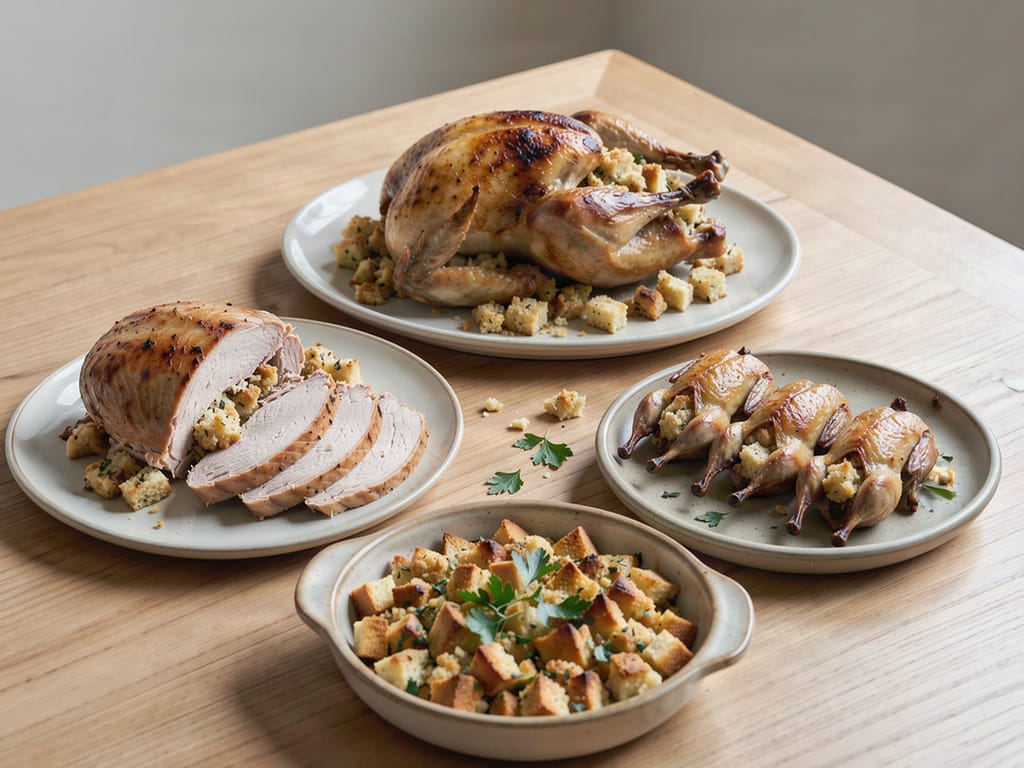
Updated Nov 23, 2026
Stuffing is a mixture of stale bread, eggs, milk and fat that you either put inside poultry or bake separately in a baking dish. The base is always the same: the bread soaks up the liquid, and the eggs bind it as it bakes. What you add decides the flavor: mushrooms, chestnuts, bacon, liver, smoked meat or herbs. Stuffing inside a chicken or turkey must reach at least 74 °C (165 °F) in the center. If you want to be sure, and get a crisp top as well, bake it alongside the bird. Below you'll find ratios that work, plus methods for chicken, turkey, duck and quail.
Classic bread-roll stuffing (Czech žemlová nádivka) rests on a ratio of roughly 200 g stale bread, 2–3 eggs and 200–250 ml milk. Add 40–60 g butter, salt, pepper, nutmeg and a handful of chopped parsley. This amount fills one chicken of about 1.5 kg or makes a small baking dish for four.
The method has three steps, and at each one the stuffing can be spoiled or saved:
Cut the bread into 1–1.5 cm cubes and let them dry out, overnight on a baking sheet if you like. Dry cubes soak up the egg mixture and keep their shape; fresh ones turn to mush.
Whisk the eggs with the milk and melted butter that has cooled to lukewarm. Hot butter would curdle the eggs. Season with salt and pepper and grate in the nutmeg.
Pour it over the bread, mix and leave for 10–15 minutes. Then squeeze a handful in your palm: it should hold together, but no milk should run out. If it crumbles, add a spoonful or two of milk; if it runs, add more bread cubes.
The best choice is a white bread roll (houska) or rohlíky (Czech crescent-shaped rolls), because they have a soft crumb and thin crust. Why it works: the starch in the bread soaks up the liquid, and the egg proteins set at 60–70 °C (140–160 °F) and bind the cubes into a tender whole. That's why the stuffing must be properly cooked through, not just warmed.
Sautéed onion sweetens and softens the stuffing; raw, it would stay sharp and crunchy. Add herbs (parsley, chives, thyme) to the cooled mixture so they stay green.
Fill the chicken loosely, not packed tight, and only right before it goes into the oven. The stuffing expands as it cooks, and a packed one wouldn't cook through in the middle. The US food safety agency FSIS (USDA) recommends filling the cavity with about 3/4 cup of stuffing per pound of meat, which is just under 400 ml per kilo. Never stuff a chicken the day before.
Step by step:
Don't rinse the chicken; just pat it dry inside and out with paper towels. Rinsing spreads bacteria around the kitchen.
Salt the cavity lightly and fill it with a spoon. Put the rest of the stuffing under the skin of the breast, where it moistens the meat and browns to golden by itself.
Close the opening with toothpicks or sew it with kitchen string, and tie the legs together.
Roast in an oven preheated to at least 163 °C (FSIS gives a minimum of 325 °F). At the end, insert an instant-read thermometer into the center of the stuffing, not the meat.
According to FSIS, let the cooked chicken rest for 20 minutes, and only then spoon the stuffing into a bowl.
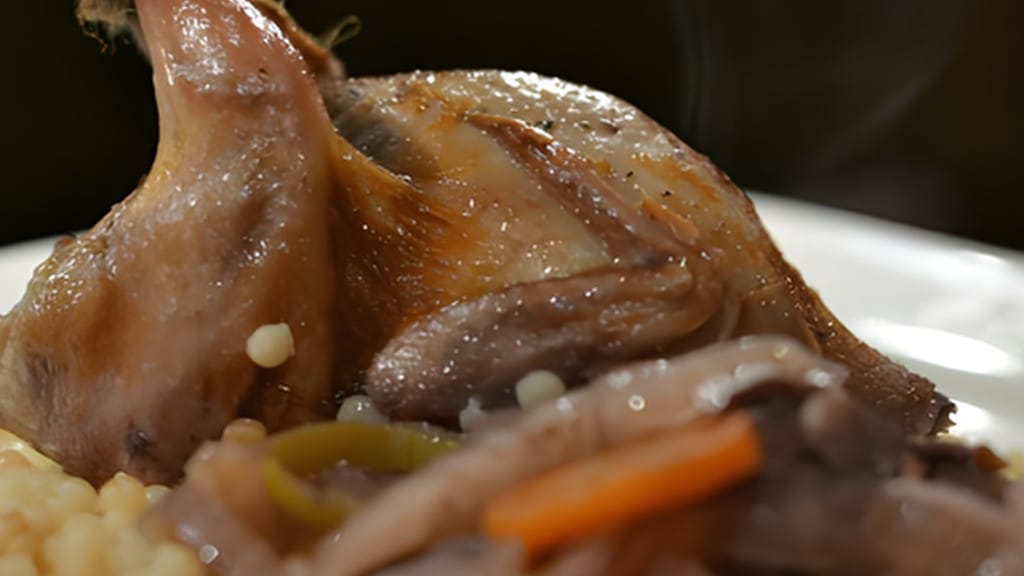
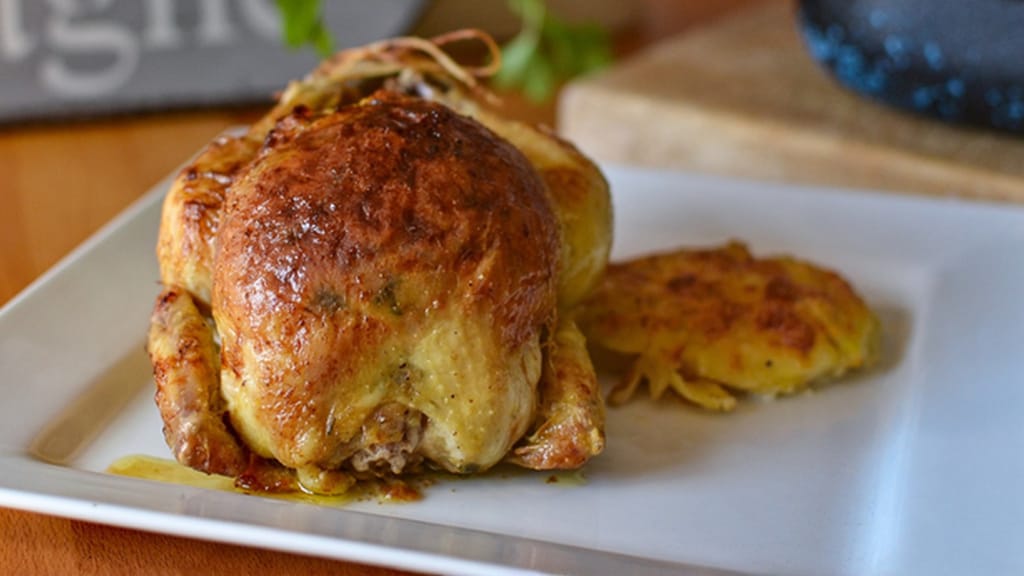
Stuffing for chicken doesn't have to be made of bread. Spring chicken with mushroom and semolina stuffing has a stuffing made from semolina porridge with button mushrooms and wild garlic, which is smoother and denser than bread-roll stuffing and slices well. A caution: this recipe roasts mostly at 150 °C, which is below the 163 °C minimum FSIS gives. If you make it, insert a thermometer into the center of the stuffing and take the chickens out only when it reads at least 74 °C. The skin can look done before the center of the stuffing has heated through.
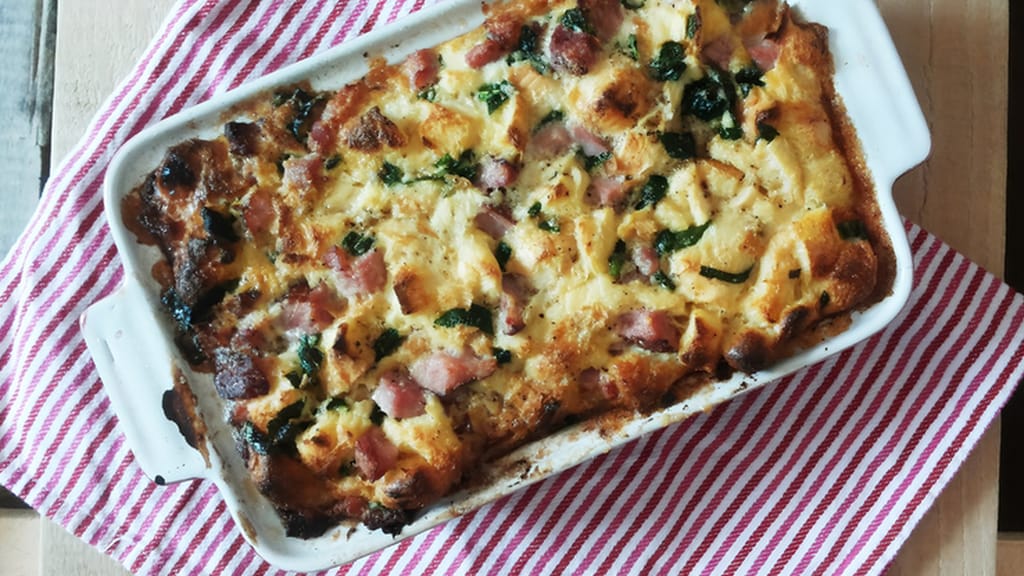
Stuffing baked separately is the surest route: FSIS expressly recommends cooking it outside the bird, because it cooks more evenly and there's no risk of the center staying below a safe temperature. According to FSIS, it's safe at 165 °F, which is 74 °C in the center. Inside a chicken the stuffing heats slowly because it's surrounded by meat. The meat is often done before the stuffing is, and waiting for the stuffing will dry it out.
In a baking dish it's simpler:
Butter a baking dish and spread the stuffing in a layer 3–5 cm deep. A thicker layer takes longer and stays gummy in the middle.
Bake at 170–180 °C (340–350 °F) for about 30–45 minutes, depending on the depth. It's done when the top turns golden, the edges pull away from the sides and a thermometer in the center reads at least 74 °C.
You can give it a poultry flavor from the outside too. For the last 10 minutes, spoon pan drippings from the roasting pan over it, or add a spoonful of strong broth.
Two tried-and-true recipes for stuffing baked separately are Easter ones, but they suit roast chicken all year round:
Easter stuffing with smoked meat and rolls is built on Moravian smoked meat and wild garlic, lightened with beaten egg whites.
Traditional Easter stuffing with wild garlic and nettles goes another way: cubes of stale baguette are first fried in butter until crisp, so the stuffing has a coarser, crunchier texture.
If you want to know more about why eggs and beaten whites make stuffing tender, see the article Easter stuffing: eggs, herbs and a tender texture.
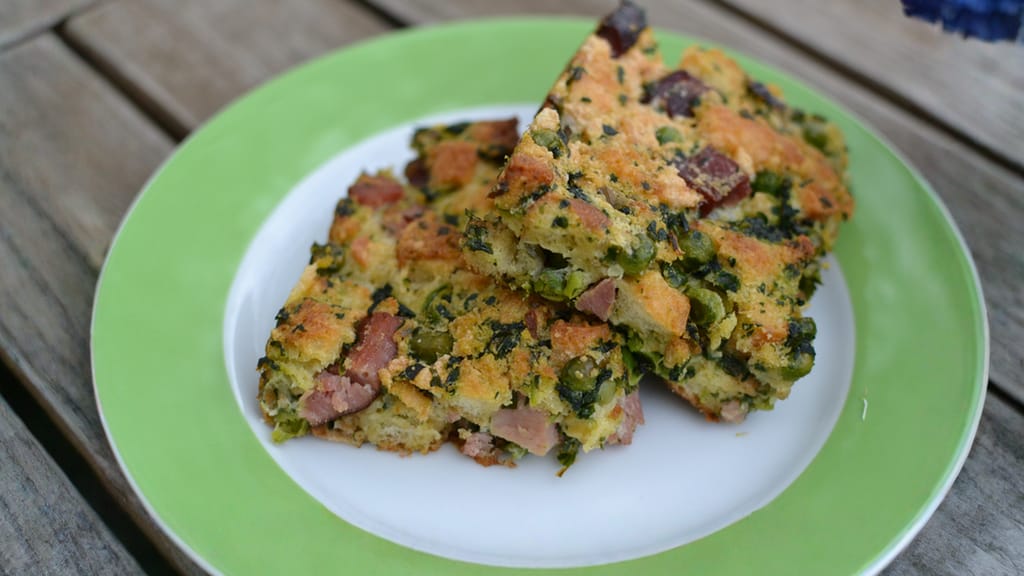
Traditional easter bread pudding with wild garlic
Traditional Easter stuffing with wild garlic and nettles
Rolls or white bread rolls are best for chicken stuffing; sandwich bread makes a softer, moister stuffing, and breadcrumbs a dense one. The difference is how much liquid the bread takes up and how well it holds its shape:
Rolls (rohlíky and housky): the classic. A day or two old, cut into cubes. The crust holds its shape and the crumb soaks up the liquid. The stuffing stays fluffier, with distinct pieces.
Sandwich bread: softer and sweeter. Trim the crusts if you like and dry the cubes on a baking sheet in a 100 °C (210 °F) oven for about 15 minutes, otherwise they turn to mush. Use a quarter less milk, because sandwich bread soaks up liquid quickly. The result is smooth and almost pudding-like.
Baguette: the coarsest texture. You can fry the cubes in butter beforehand so they stay crisp even after soaking.
Breadcrumbs: a stopgap, or a binder in a meat stuffing. On their own they give a dense, compact mass like meatloaf. Allow about 3 tablespoons of breadcrumbs per egg. For a whole chicken, combine them with bread, say half and half.
A general rule: the finer and fresher the bread, the less liquid and the shorter the soaking time. Whatever bread you use, always do the handful test.
You can add four popular flavors to the basic bread-roll stuffing: bacon, mushrooms, ground meat and chicken liver. All four go into the stuffing pre-cooked and cooled. FSIS advises cooking raw meat and poultry before adding it to stuffing.
Bacon. Cook about 100 g of diced bacon (streaky or smoked) in a dry pan until golden, then sauté the onion in the rendered fat. Mix both into the stuffing and halve the butter, because the bacon supplies the fat. Use less salt, since bacon is salty. For more ideas, see bacon recipes.
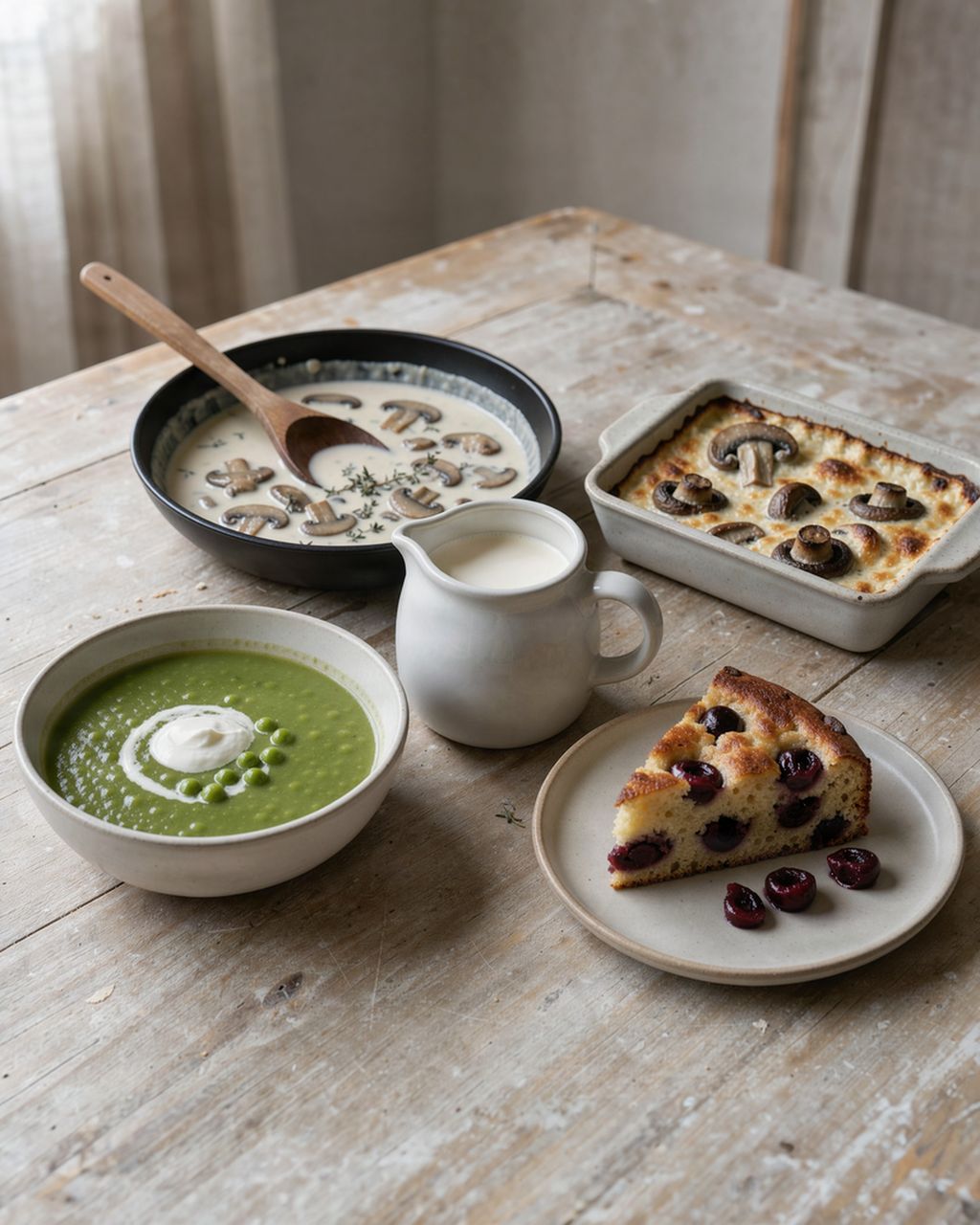
Mushrooms. Finely chop button mushrooms, oyster mushrooms or wild mushrooms (about 200 g) and fry them in butter until they release their liquid and it cooks off completely. Wet mushrooms would make the stuffing soggy. Soak a handful of dried porcini for 20 minutes and use the soaking liquid in place of some of the milk; it gives the stuffing a deep mushroom flavor.
Ground meat. Brown about 250 g of ground pork or chicken in a pan with onion until crumbled, let it cool, and mix it with the bread and eggs. This stuffing needs less milk, because the meat releases juices. The result is richer, almost like meatloaf, so it suits roast chicken mainly as the main side dish.
Liver. Trim chicken livers (150–200 g) of membranes and sinews, sear them briefly in butter, then chop into small pieces or mash with a fork. They give the stuffing a fine, distinctive flavor and a darker color. The liver from the giblet package is traditionally added to chicken too. For what else you can make with liver, read what to cook with livers and hearts.
Savory chestnut stuffing is bread-roll stuffing with cooked or roasted, peeled chestnuts added. Use roughly 200–300 g of chestnuts for a chicken, and double for a turkey. Chestnuts add a sweet, nutty flavor and a starchy texture that suits chicken and turkey as well as goose. Raw edible chestnuts are astringent and tough, so always boil or roast them first for stuffing.
How to prepare them for stuffing:
Cut a cross into the flat side of each chestnut, through the shell only.
Boil them in boiling water for 15–20 minutes (a few minutes longer for larger ones), or roast them on a baking sheet in an oven preheated to 200 °C (400 °F) for about 25 minutes. They're done when a knife pierces them easily.
Peel them while still warm, removing the thin brown skin under the shell too. Once cool they're much harder to peel.
Coarsely chop half and mix into the bread-roll stuffing; mash the other half. The mashed chestnuts bind the stuffing, while the chopped ones stay as pieces.
Thyme, sage, a few cubes of smoked bacon and a little apple go well with chestnuts. Chestnut stuffing for goose can take more pepper and marjoram; for turkey, more butter and thyme.
One caution. The recipe you'll find on Yumsto under the name chestnut filling, a sweet chestnut cream for pastries is a sweet filling for baking, not for poultry. Its boiling and peeling of the chestnuts does match the first steps of the savory version, though.
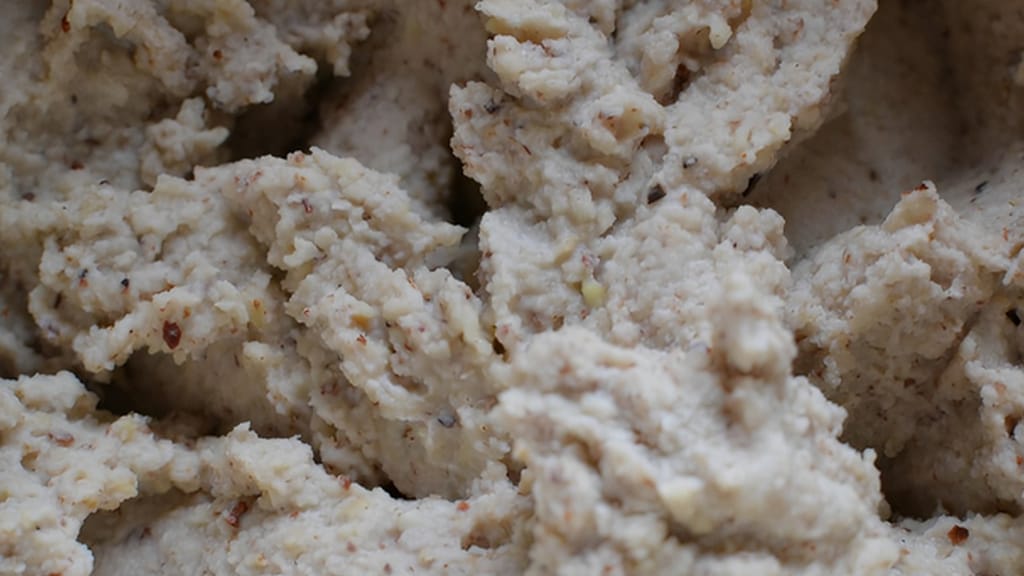
Chestnut filling
Sweet chestnut filling for koláče (Czech filled yeast pastries)
Chestnut, almond or classic bread-roll stuffing all suit turkey, but the rule is stricter here: the surest approach is to bake the stuffing separately. A turkey roasts for hours, and the stuffing in the middle heats more slowly than anything else. FSIS warns that the thigh can reach a safe temperature while the center of the stuffing hasn't.
How much: according to FSIS, about 3/4 cup per pound, so for a five-kilo (11 lb) turkey, just under 2 liters of stuffing for the cavity. That's roughly triple the basic ratio above. Bake whatever doesn't fit in a baking dish.
Almond stuffing for turkey. Mix 80–100 g of sliced almonds, dry-toasted in a pan until golden, the grated zest of one lemon and a tablespoon of chopped thyme into the bread-roll stuffing. Add the almonds right before baking so they keep their crunch. A handful of raisins soaked in a little wine goes well with it too.
The best turkey stuffing is one that stays tender and doesn't overpower the meat. Turkey breast is lean, so give the stuffing a bit more butter and use broth in place of some of the milk. A few cubes of smoked meat add saltiness and depth. Prepare the chestnut version as above, just with double the chestnuts.
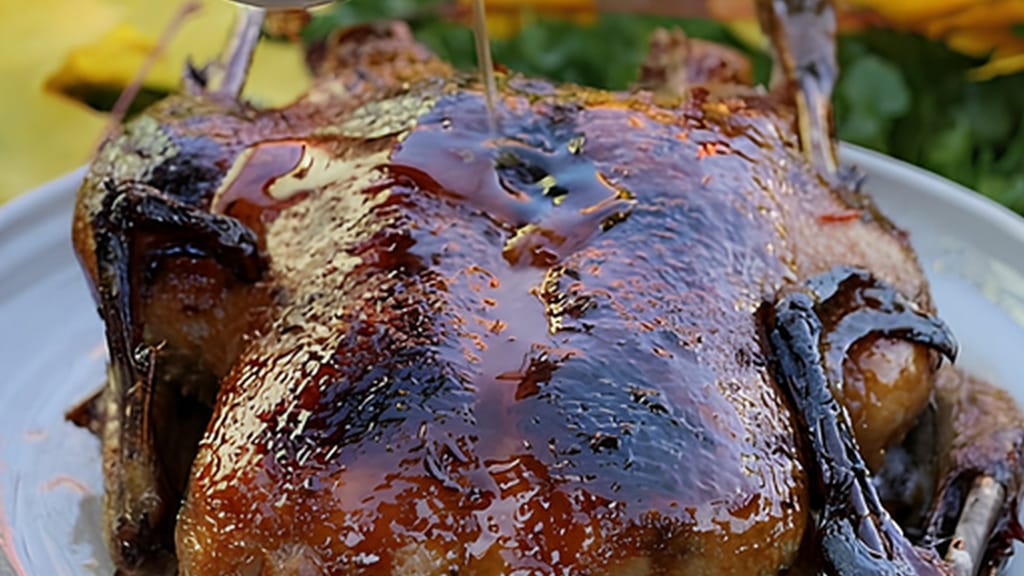
Duck and goose call for a stuffing that balances the fatty meat: apple, chestnut or mushroom, with marjoram and caraway. The fat from the duck or goose soaks into the stuffing in the cavity as it roasts, so it ends up rich and hearty. If you want it crisper and less greasy, bake it separately and just spoon pan drippings over it at the end.
Apple stuffing for duck: mix two diced tart apples and onion sautéed in fat into the bread-roll stuffing. Season with marjoram and a pinch of caraway. The apples soften as they bake, and their acidity balances the rich flavor. You can leave the butter out of the stuffing entirely, since the duck will supply plenty of fat.
If you roast the duck without stuffing, like the slow-roasted honey duck, put the baking dish of stuffing in the oven for the last 30–40 minutes, while the duck finishes crisping. For how long to roast a stuffed goose, see how long to roast a goose.
A spoonful or two of stuffing is enough per quail. Stuffed quail are roasted covered for 15 minutes at 200 °C (400 °F), then covered for another 15–20 minutes at 180 °C (350 °F), and finally uncovered for about 10 minutes until the skin turns golden; the whole recipe, prep included, takes about an hour. They're done when a thermometer in the center of the stuffing reads at least 74 °C (165 °F). A quail is small, so the stuffing cooks through quickly, but here too, don't pack it tight.
Stuffed quail with walnut stuffing and wine have a classic roll stuffing with eggs, thyme, nutmeg and walnuts. The walnuts can be swapped for almonds or chestnuts; the principle stays the same.
Recipe of the week, one tip that saves you time and one deal from the shop. Unsubscribe in one click.
The next issue goes out on Thursday, November 26.
Zucchini stuffing is bread-roll stuffing with grated, squeezed-dry zucchini mixed in. It's softer and more delicate, and it suits chicken as well as working as a dish on its own with a salad. The key step: zucchini is mostly water, so you have to draw the water out first.
Coarsely grate one medium zucchini (about 300 g), salt it, leave for 10 minutes, then squeeze it well in a kitchen towel. Mix it into the basic bread-roll stuffing along with grated hard cheese, garlic and herbs, and use less milk, since even squeezed zucchini will release more liquid. Bake it in a baking dish as stuffing baked separately.
If you don't squeeze the zucchini, the stuffing stays wet in the middle and won't bind, even if you bake it longer.
Gummy stuffing comes from too much liquid or fresh bread, dry stuffing from too little egg and milk, and crumbly stuffing from too little egg or too short a soak. A quick diagnosis:
Gummy and wet in the middle: fresh bread, too much milk, wet mushrooms or zucchini, or too deep a layer in the dish. Next time let the bread dry out and make the layer shallower. For now, finish baking it uncovered.
Dry and crumbly: too little liquid or too long in the oven. Spoon hot broth or pan drippings over it and cover with aluminum foil for 5 minutes.
Falls apart when sliced: too little egg, or you cut it while hot. Let it rest for 10 minutes; the egg finishes setting and the slices will hold together.
Bland: stuffing needs more salt than you'd expect, because the bread soaks up a lot of it. Taste the mixture before adding the eggs and add more salt.
Stuffing for a Sunday roast is just one of the side dishes. You'll find more, from dumplings to gratin potatoes, in the article side dishes for meat and holiday roasts.
You can prepare stuffing a day ahead, as long as you keep the dry and wet ingredients separate until baking. Cube the bread and let it dry out, sauté the onion, mushrooms or bacon, and refrigerate. Mix the eggs and milk into the bread just before baking. Don't put raw stuffing into a chicken or turkey a day ahead; FSIS expressly advises against it.
Baked stuffing keeps 3–4 days in the fridge if you take it out of the bird and store it separately within 2 hours of cooking (according to FSIS). Keep it in a covered container, away from the meat.
The best way to reheat leftover stuffing is in the oven at 170–180 °C (340–350 °F), covered with aluminum foil and drizzled with a spoonful of broth so it doesn't dry out. You can also pan-fry slices of stuffing in butter until golden on both sides. According to FSIS, reheat it until a thermometer in the center reads at least 74 °C (165 °F).
Yes. Cut baked, cooled stuffing into portions and freeze it in a sealed container. Thaw it in the fridge and reheat it in the oven at 170–180 °C (340–350 °F) until a thermometer in the center reads at least 74 °C (165 °F). Don't freeze raw stuffing containing eggs: after thawing it releases water and doesn't hold together well.
A thick semolina porridge cooked in milk, or mashed cooked chestnuts, will bind an egg-free stuffing, so you simply leave the eggs out. The recipe for spring chicken with semolina stuffing does contain eggs, so for an egg-free version cook the semolina porridge a little thicker. Without eggs the stuffing will be softer and hold its shape less well, so let it rest for a while after baking.
As a side dish, allow about 150 to 200 g of finished stuffing per person. The basic batch of 200 g bread, 2 to 3 eggs and a quarter liter (250 ml) of milk feeds four people. If the stuffing is the main side, with no dumplings or potatoes, make half as much again.
One recipe worth heating the oven for, one tip, and one deal from the shop. Nothing else.