Homemade date syrup
Raw Chocolate Desserts: How They Work, Two Recipes, and What to Avoid
Updated Aug 24, 2026
Raw chocolate desserts are no-bake treats made from nuts, dates, and cocoa, held together by a fat that firms up when chilled rather than flour and eggs. They're not a diet miracle — nuts and dates are some of the most calorie-dense ingredients in the kitchen, and a cake made from them can easily pack more calories than a bar of chocolate. What makes them worth making is something else entirely: a clean, intense cocoa flavour, no oven required, and a technique that's genuinely simple once you understand what's holding what together. This article walks you through the four building blocks of every raw dessert, two recipes with the ratios worked out for you, and the mistakes that turn your cake into a puddle on the table.
Raw chocolate desserts are no-bake treats built on three ingredients: nuts, dried fruit, and cocoa. Instead of flour, eggs, and an oven, they're held together by a fat that firms up in the fridge — most often coconut oil or cocoa butter.
A typical raw dessert has two layers:
Base — blended nuts and dates pressed into a tin. The dates act as both glue and sweetener.
Cream — soaked cashews blended with liquid, sweetener, and a setting fat.
From here, everything else follows the same logic. Energy balls are just the base shaped into spheres, bars are the base pressed into a rectangle, and a no-bake "cheesecake" is base plus cream. Master these two layers and you've mastered the whole category.
Seasonal baking plans, tested recipes and kitchen tricks that save you time. Unsubscribe in one click.
Cocoa in raw desserts isn't raw, and it can't really be. After harvest, cocoa beans ferment for roughly two to eight days depending on the variety, and the temperature inside the pile commonly climbs to 45–50°C — well above the 42°C threshold that raw-food advocates themselves set as the cutoff. The beans are then sun-dried. Only after that comes what's called "raw processing" — skipping roasting or roasting much more gently.
The label raw on cocoa therefore means unroasted or lightly roasted, not unprocessed. It's useful information about flavour, not a purity certificate.
Two claims about raw cocoa come up again and again, and neither holds up:
"It preserves enzymes." There's no independent evidence for this claim. And even if enzymes did survive in the food, stomach acid breaks them down like any other protein.
"It has more nutrients." Generally, that's not true. There is one group of compounds where there's a grain of truth to it — see below.
That group is flavanols — natural polyphenols found in cocoa beans. Fermentation alone reduces them (anywhere from a few percent to over 90%, according to the literature), and roasting then strips away roughly another 10–90% depending on temperature and time. Both temperature and time matter: a brief roast under 130°C only knocks off a few percent, but even at 130°C, more than 60% of the epicatechin is gone after twenty minutes; an aggressive, long roast around 200°C wipes out over 90%. So gently processed cocoa genuinely does contain more flavanols than a dark, heavily roasted one. The difference is measurable in a lab — not necessarily in your health outcomes.
A raw dessert is still a dessert — calorie-dense, sweet, and meant to be enjoyed in a modest slice. Here are the actual numbers so you know what you're working with:
Cashews: roughly 553 kcal / 100 g, most of it from fat.
Dates: roughly 277 kcal / 100 g and about 63–67 g of sugar per 100 g (total carbs around 75 g).
For comparison: a bar of milk chocolate sits around 535 kcal / 100 g.
Which brings us to the key point: a raw cake made from nuts and dates isn't lower in calories than regular chocolate — if anything, it's higher. Maple syrup, honey, and dates are all still sugar. Phrases like "guilt-free sweetness" or "no empty calories" are marketing, plain and simple.
Where raw desserts genuinely have the edge:
Fibre. Pure unsweetened cocoa has about 33 g per 100 g, dates around 7 g.
A short ingredient list. You can name every ingredient, and there's no emulsifiers or hydrogenated fats to worry about.
Flavour. This is the real reason to make them. Unroasted cocoa tastes fruitier and tangier than what you know from a box — with notes closer to dried fruit and red wine.
Think of them as a good dessert with a clean ingredient list, not a health supplement.
Every raw dessert rests on four things: the base, the cream, a setting fat, and a sweetener. Nail the ratios on these four and you'll stop needing recipes altogether.
The ratio that works for the base is two parts nuts to one part dates by weight. So for 250 g of nuts, use roughly 120–130 g of dates.
Here's why: dates supply the sugar and pectin that bind the mixture. Too few dates and the base crumbles when you slice it. Too many and it turns sticky, gummy, and overly sweet — and the date flavour drowns out everything else.
You judge the right texture by hand, not by eye. Squeeze a handful in your palm: it should hold its shape and shouldn't look glossy with oil. If it looks glossy, you've over-blended the nuts into butter — mix in a handful of dry-ground nuts to fix it.
Walnuts give the base a bitter depth, almonds add texture and bite, hazelnuts bring the most pronounced aroma. A mix of nuts works better than any single kind.
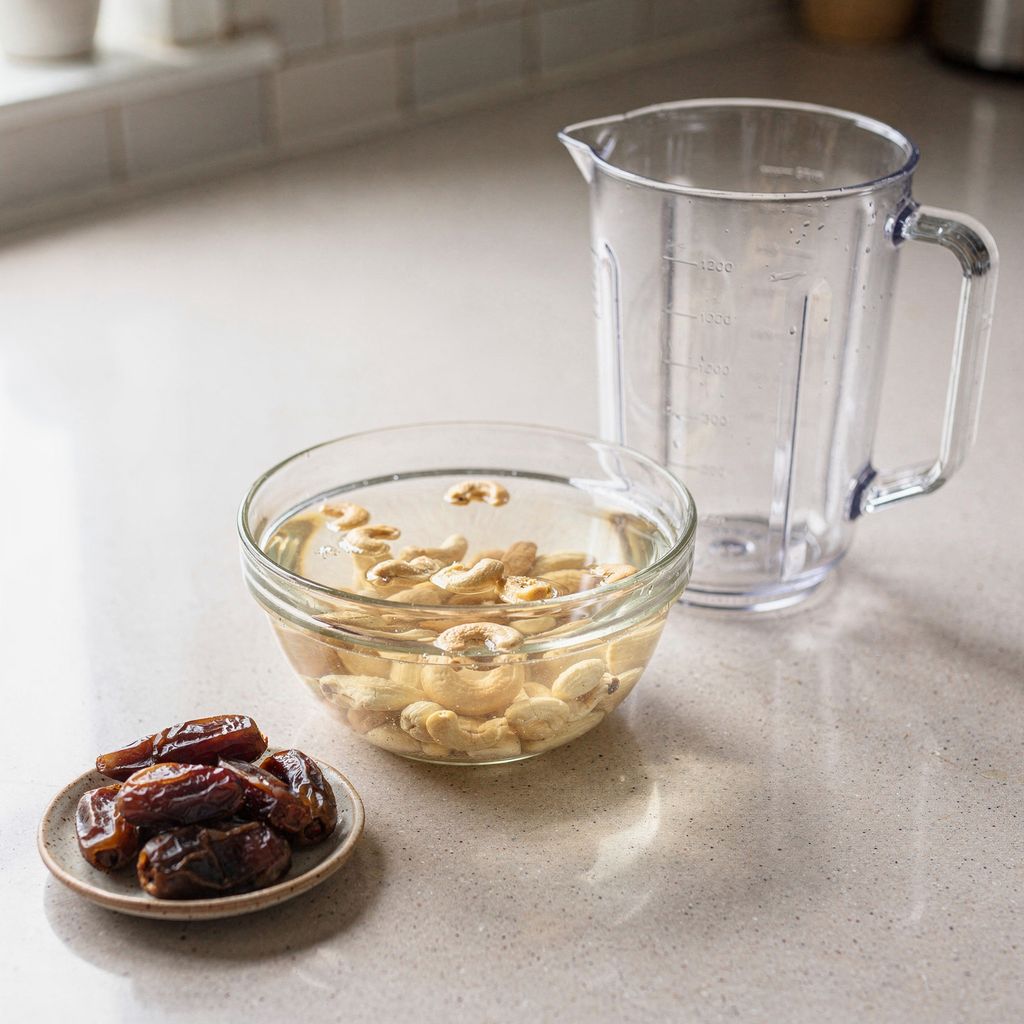
Cashews are soaked to soften them so they blend completely smooth — not for any nutritional reason. Dry cashews are hard, and in a regular blender they turn into a gritty cream that feels chalky on the tongue.
Soaking times that actually work:
Cold water: 4–8 hours, or overnight in the fridge if that's easier.
Boiling water: 20–30 minutes, for when you only remembered at the last minute. The result is nearly identical.
Soaking longer than 12 hours at room temperature adds nothing and starts to smell faintly fermented. Always drain the soaking water and rinse the cashews afterwards — that water tends to taste bitter.
Cashews are the king of raw kitchens because, of all the fatty nuts, they have the least assertive flavour of their own and an unusually high starch content (around 23 g per 100 g), which is what helps the cream hold together. If your blender isn't very powerful, add an extra two tablespoons of liquid and blend in longer bursts with pauses so the motor doesn't overheat.
A setting fat is the only reason a raw cake doesn't collapse into a puddle — and it's also where recipes most often go wrong. Coconut oil sets at around 24°C. That's ordinary summer room temperature, so a cake pulled straight from the fridge will start softening within about fifteen minutes.
What that means in practice:
Fat always belongs in the cream. A cream made from cashews, coconut milk, and syrup with no setting fat will never properly firm up, no matter how long you leave it in the fridge. Aim for 60–80 g of coconut oil per 300 g of cashews.
Cocoa butter is the sturdier choice. It melts at around 34–36°C, so a cake holds its shape even sitting out on a served table. It also brings a subtle chocolate flavour, though it costs more.
Melted fat needs to be lukewarm, not hot. Pour hot coconut oil into a cold cream and the fat will instantly seize into little grains. Let it cool until it's still liquid but comfortable on your finger.
One thing that trips people up: coconut oil can't be tempered like cocoa butter. A raw "chocolate" made from coconut oil will therefore never snap and crack like a real chocolate bar — it simply isn't built that way.
You choose a sweetener based on consistency — they're all sugar in the end, just at different thicknesses and with different flavours.
Dates sweeten and bind at the same time. Medjool are the best choice: soft, juicy, and easy to blend. Soak dry Deglet Nour dates for 20–30 minutes in hot water first, or they'll stay in the mixture like little bits of leather.
Maple syrup and agave are liquid, so they'll thin out the cream. If you add more of them, cut back on the coconut milk so the cream doesn't lose its body.
Honey has a strong flavour and easily overpowers cocoa in chocolate desserts. Reach for it only if that's the flavour you actually want. For the record, on claims about "enzymes in raw honey": there's no approved health claim for honey in the EU register.
A good trick for balancing flavour: a pinch of salt. Salt in chocolate desserts brings out the cocoa and reduces how much sweetener you need. Half a small teaspoon per cake is about right.
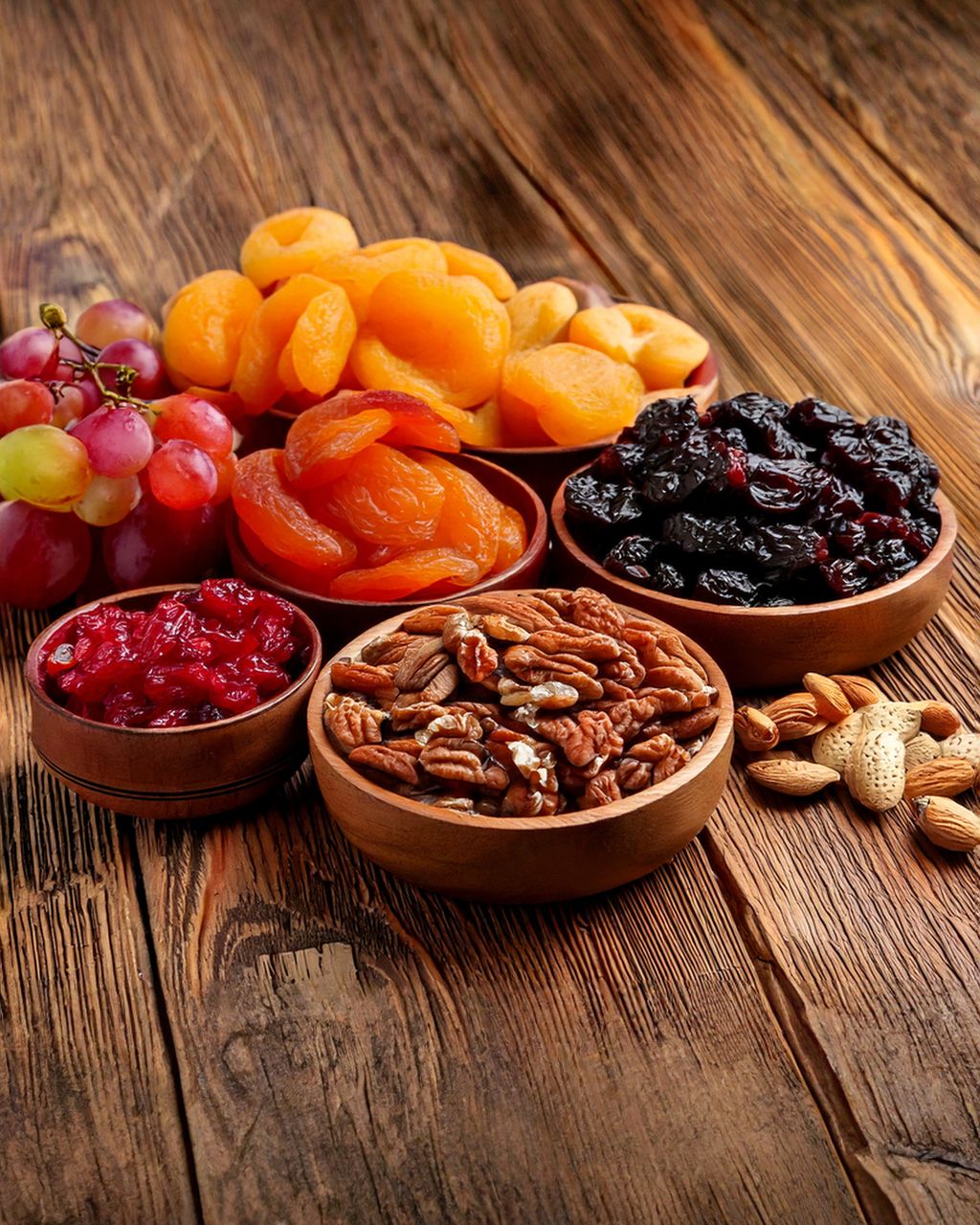
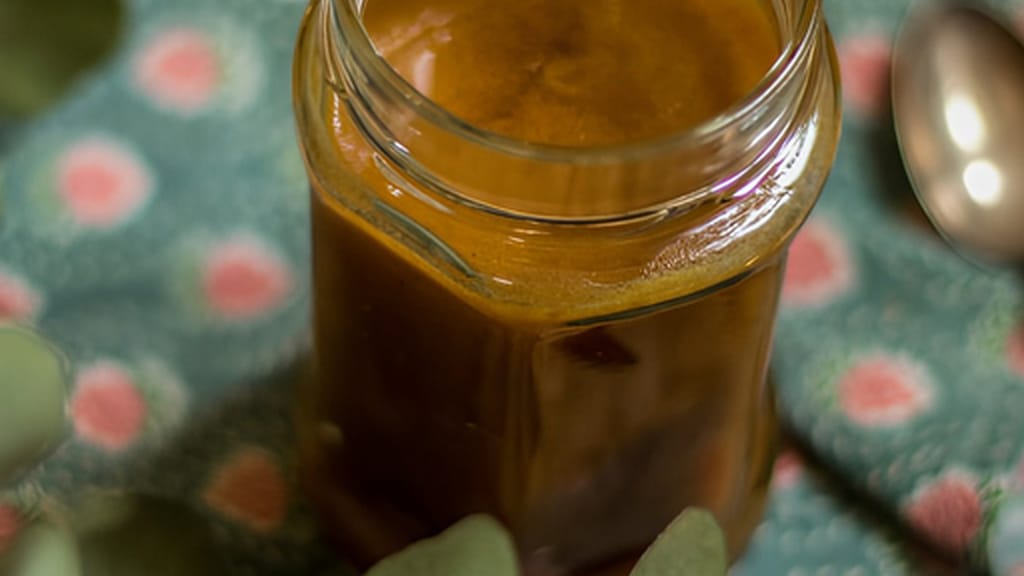
Homemade date syrup
Homemade date syrup — a natural sweetener for raw chocolate desserts you can make yourself
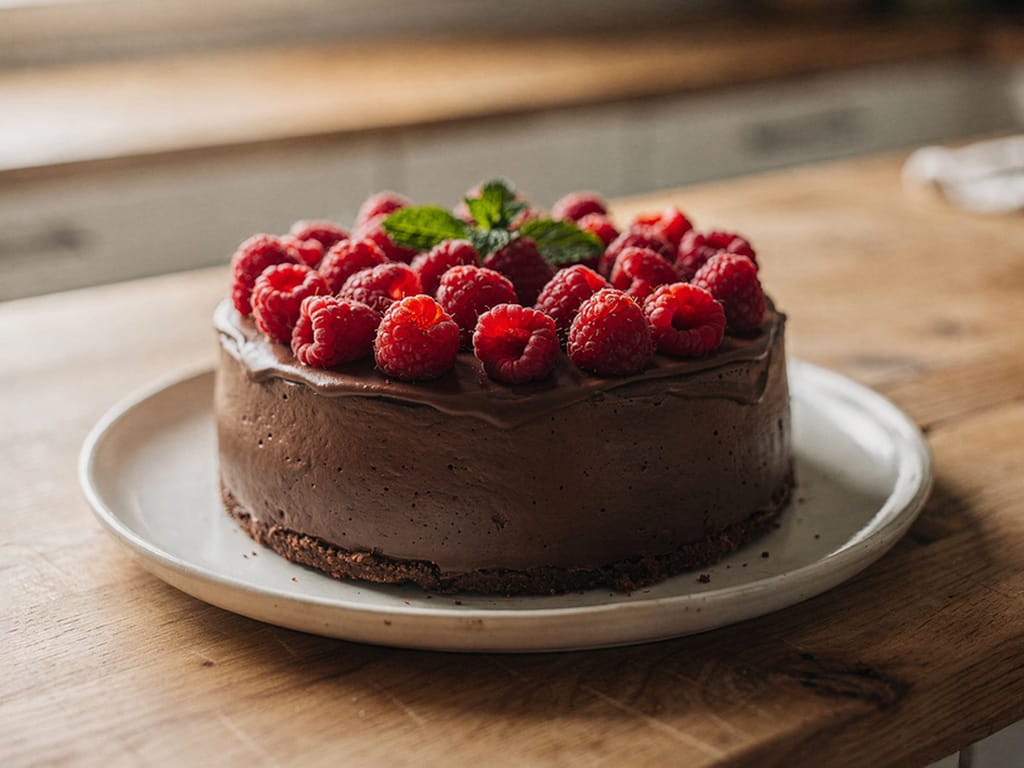
A no-bake cake for an 18–20 cm tin that sets in the fridge in six hours. Active prep takes about 30 minutes; the rest is just waiting.
For the base, you'll need:
150 g walnuts
100 g almonds
120 g pitted dates (if dry, soak 20 minutes in hot water)
3 tablespoons unsweetened cocoa
2 tablespoons coconut oil, melted and lukewarm
½ teaspoon salt
For the cashew cream, you'll need:
300 g cashews, soaked 4–8 hours and rinsed
100 ml coconut milk (full-fat, from a can)
80 ml maple syrup
70 g coconut oil, melted and lukewarm
juice of half a lemon
1 teaspoon vanilla extract
For decoration, have ready 150 g fresh raspberries and mint leaves, if you like.
The base. Blend the walnuts and almonds into a coarse, sand-like crumb — not flour; a bit of texture is what you want here. Add the dates, cocoa, lukewarm coconut oil, and salt, and pulse until the mixture holds together when pressed in your palm.
Shaping. Line the tin with baking paper, tip in the mixture, and press it down firmly with the bottom of a glass — you'll never get it even just pressing with your hands. Freeze for 20 minutes so it firms up before the cream goes on.
The cream. Blend the drained cashews with the coconut milk, maple syrup, lemon juice, and vanilla until completely smooth. Give it 3–5 minutes in a high-powered blender, scraping down the sides with a spatula partway through. The cream needs to be completely grit-free — taste it and rub a bit between your fingers to check.
Adding the fat. Once the cream is smooth, pour in the lukewarm coconut oil slowly with the blender running. Doing it in this order lets the fat disperse evenly instead of seizing up. Blend for another 30 seconds.
Assembly. Spread the cream over the chilled base and smooth the top with a spatula dipped in hot water. Let it set in the fridge for at least 6 hours, ideally overnight.
Finishing. Add the raspberries only just before serving — they'll release juice and make the surface soggy if left too long. Slice with a knife warmed in hot water and wiped dry, reheating it between cuts.
One flavour note: the cake tastes best about 10 minutes out of the fridge. Ice-cold fat mutes the cocoa flavour.
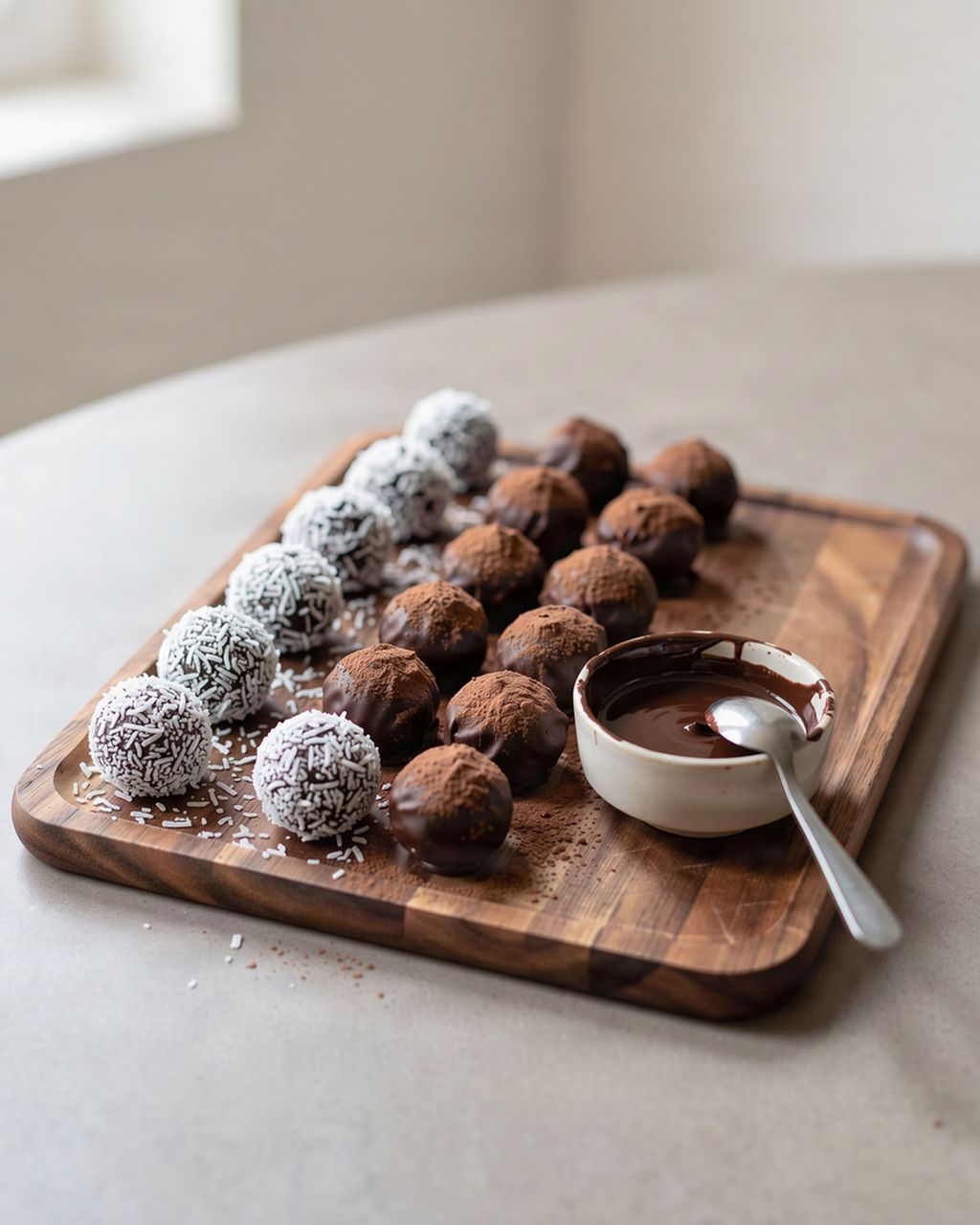
These take 15 minutes to make and keep in the fridge for a week. This batch makes about 20 balls, roughly the size of a walnut.
For about 20 balls, you'll need:
200 g pitted dried dates
100 g desiccated coconut (60 g in the mixture, 40 g for coating)
35 g unsweetened cocoa
2 tablespoons coconut oil
¼ teaspoon salt
Soaking. Cover the dates with hot water and let them soften for 20–30 minutes. Ten minutes, as some recipes suggest, is only enough for soft Medjool dates; dry ones will still be tough.
Blending. Drain the dates, keeping the soaking water. Blend them with the coconut oil, cocoa, and salt into a thick paste. If the mixture is too stiff and the blender struggles, add the soaking water one tablespoon at a time.
Adding the coconut. Add 60 g of desiccated coconut and stir it in by hand, not with the blender. The coconut should stay as texture in the balls, not get pulverised into dust.
Resting. Chill the mixture in the fridge for 15 minutes. The coconut will absorb some moisture and the mixture will be easier to shape.
Shaping. Roll into walnut-sized balls and coat them in the remaining coconut. If the mixture sticks to your hands, dampen your palms with cold water.
Resting again. Let the balls sit in the fridge for at least an hour. The cocoa flavour will meld and stop tasting powdery.
Why just 35 g of cocoa and not 50 g: fifty grams of cocoa to two hundred grams of dates dries out the mixture and creates a strong bitterness that the dates can't balance out. If you want darker, more bitter balls, add cocoa five grams at a time, tasting as you go.
Same technique, different flavours — more no-bake desserts made from nuts, dates, and cocoa from our kitchen.
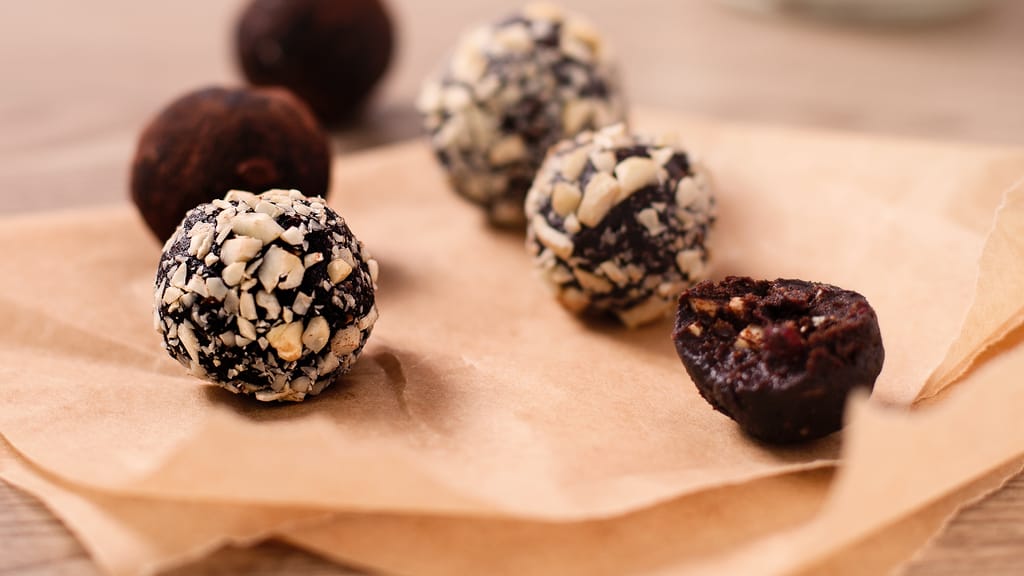
Cocoa date & oat balls
Oat and date energy balls — a no-bake version using oats instead of nuts
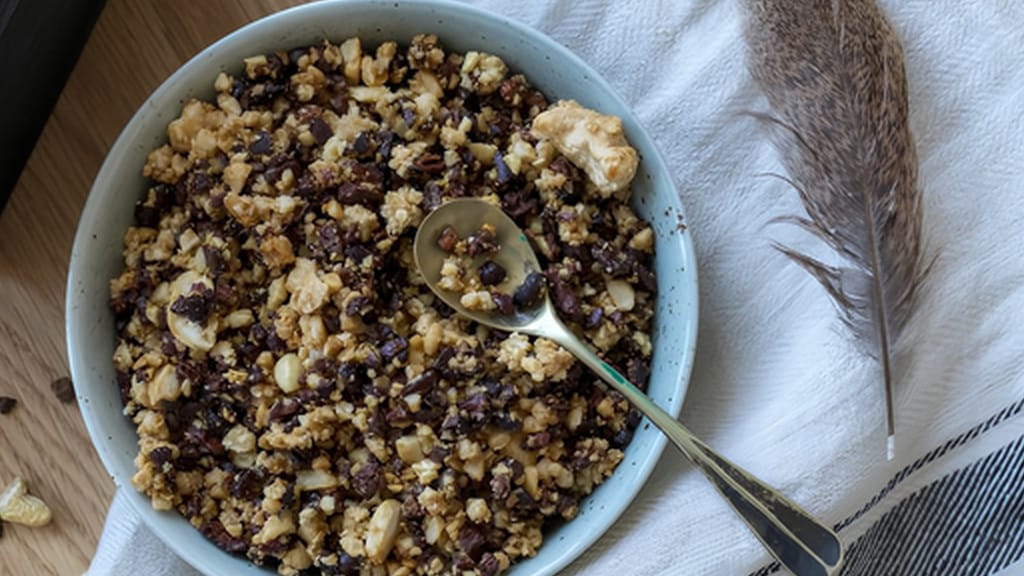
Cashew-cacao snack
Cashew-cocoa snack: a quick no-bake snack made from cashews and cocoa
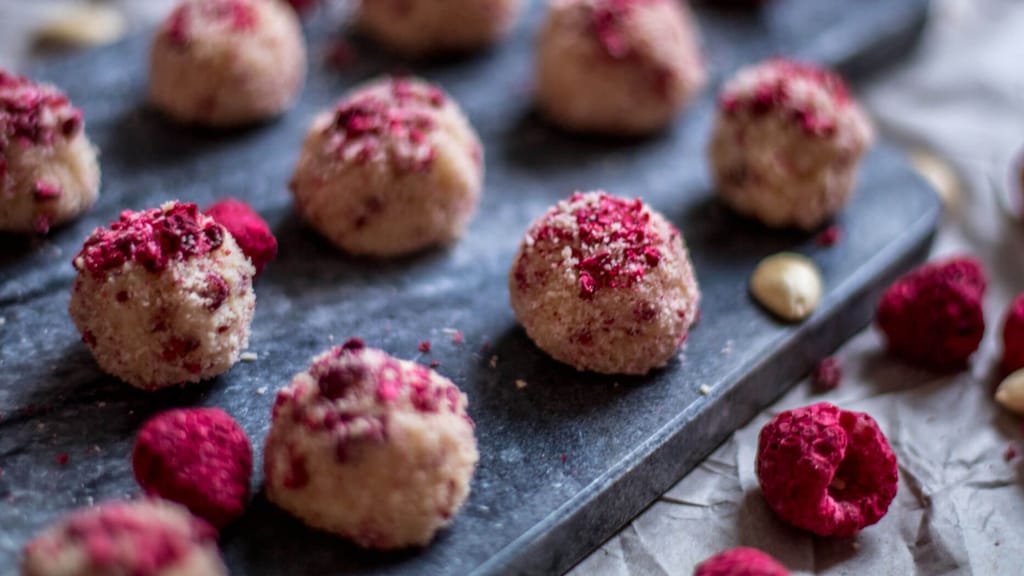
Coconut almond balls with raspberries
Coconut balls with almonds and raspberries — the same flavour pairing as the raw chocolate cake
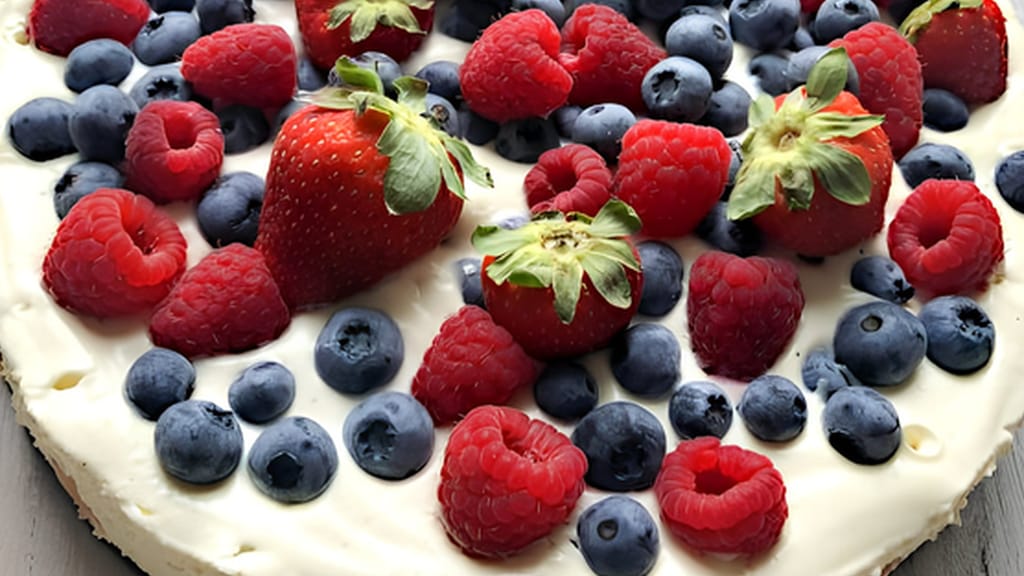
No-bake fruit cake
No-bake fruit cake: the chilled base-and-cream technique without an oven
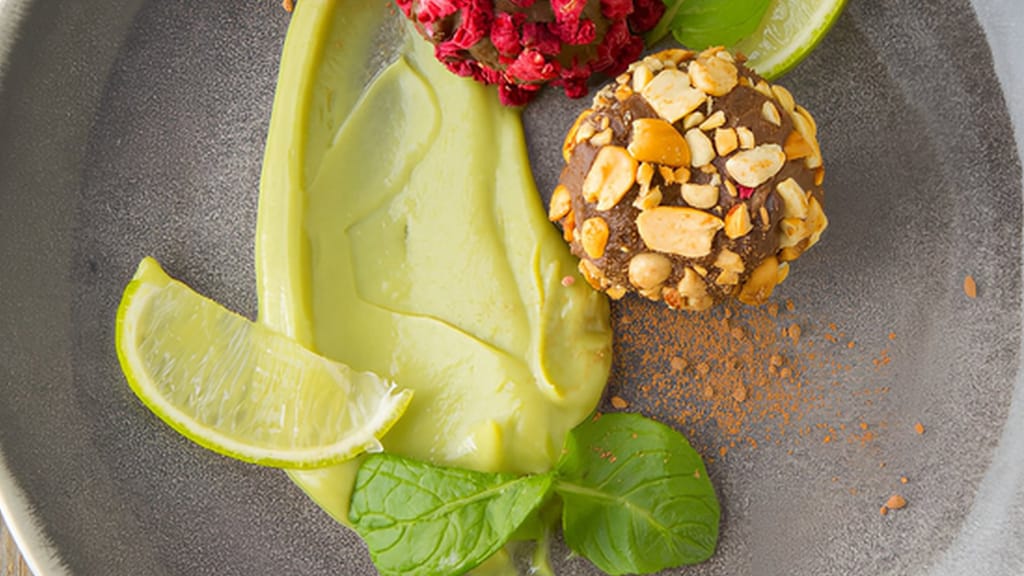
Chocolate avocado truffles with lime & wasabi cream
Chocolate truffles with avocado cream, lime, and wasabi — no-bake pralines for the adventurous
Most failed raw desserts come down to one of five things: a cream with no setting fat, hot fat poured into a cold cream, an over-blended base, too little salt, and slicing a cake that's too cold. In more detail:
Cream with no setting fat. Cashews, coconut milk, and syrup on their own will never set. Without coconut oil or cocoa butter, you get a sauce, not a cake. This is the single most common mistake in recipes floating around online.
Hot fat poured into a cold cream. The fat seizes into little white grains you can't blend back out. Always add it lukewarm, and always with the blender running.
Over-blended base. Nuts hit a point in the blender where they turn into nut butter. You'll spot it by the shine and an oily film on the sides. Pulse and check as you go.
Too little salt. Raw desserts without salt taste flat and one-dimensional, even when they're plenty sweet. A pinch of salt does more for the cocoa flavour than an extra spoon of syrup ever will.
Slicing a cake that's too cold. Fully set fat shatters under the knife and the base crumbles. Let the cake sit for 10 minutes and warm the knife first.
Raw desserts belong in the fridge in an airtight container and keep for 4–5 days. For longer storage, use the freezer.
Fridge: 4–5 days. Eat cream-based desserts topped with fresh fruit within two days — the fruit releases juice and makes the surface soggy.
Freezer: up to 3 months. Freeze the cake uncovered on a tray first so the surface firms up, then wrap it. Slice it into portions before freezing — that way you don't have to thaw more than you'll actually eat.
Thawing: 20–30 minutes at room temperature, not overnight in the fridge. Cashew cream handles repeated thawing fine, but sitting in the fridge too long leaves the surface damp.
An airtight container isn't a minor detail. Fat and nuts pick up fridge odours remarkably easily. A dessert stored next to an open cheese will end up tasting like cheese.
One practical note for summer: because coconut oil melts at around 24°C, a raw cake won't survive a picnic or a long car trip. Take energy balls on outings instead — they hold up far better.
Yes, a raw chocolate cake works fine in a regular blender — you just need to soak the cashews in hot water and blend in batches. Instead of cold water, soak them in boiling water for 30 minutes, then blend in 30-second bursts with pauses so the motor doesn't overheat. Add an extra two tablespoons of liquid so the blades have something to grab. Even a basic chopper can handle the base — roughly chopping the nuts by hand actually gives the cake a nicer texture. What you won't get is a perfectly smooth cream like from a high-powered blender.
The closest swap for cashews in a raw chocolate dessert is hulled sunflower seeds or soaked, blanched almonds. Sunflower seeds have a similarly neutral flavour and blend completely smooth, though the resulting cream can look slightly grey — an extra squeeze of lemon juice fixes that. If you're allergic to all nuts, build the cream on thick canned coconut cream and coconut oil instead; it will taste more pronounced and needs a bit more fat to set properly.
Yes, children can eat raw cocoa energy balls, but keep in mind cocoa contains both caffeine and theobromine. Unsweetened cocoa has roughly 230 mg of caffeine and over 2 g of theobromine per 100 g; with 35 g of cocoa across twenty balls, that works out to about 4 mg of caffeine per ball. So two or three balls contain around 10 mg of caffeine — roughly a third of what's in a 330 ml can of cola — plus about 70–100 mg of theobromine. Now you know how much caffeine and theobromine is in one ball. Whether and when to give them to kids is worth discussing with your paediatrician.
No, raw cocoa and baking cocoa aren't the same — they differ in roasting and alkalisation. Raw cocoa is unroasted or very lightly roasted and tastes fruitier, tangier, and more bitter. Standard baking cocoa is usually alkalised (Dutch-processed), which softens its acidity, darkens it, and gives it that rounded flavour you recognise from a classic sponge cake. In no-bake recipes they can be swapped one for one — just know that raw cocoa will make the dessert tangier and may need a touch more sweetener.
Yes, you can make a raw chocolate cake without dates, but you need to replace two things separately: stickiness and sweetness. For the base, use blended dried figs or soft dried apricots in the same 1:2 ratio to nuts you'd use for dates, or a thick almond paste with two tablespoons of maple syrup — the paste binds the mixture nearly as well. The cream doesn't need dates at all, since the syrup handles the sweetness. Keep in mind figs bring tiny seeds into the texture, while apricots bring a strong tartness that fights with the cocoa — for a chocolate cake, figs are the better choice.
One recipe worth heating the oven for, one tip, and one deal from the shop. Nothing else.