Classic christmas cookies: delicate linzer cookies
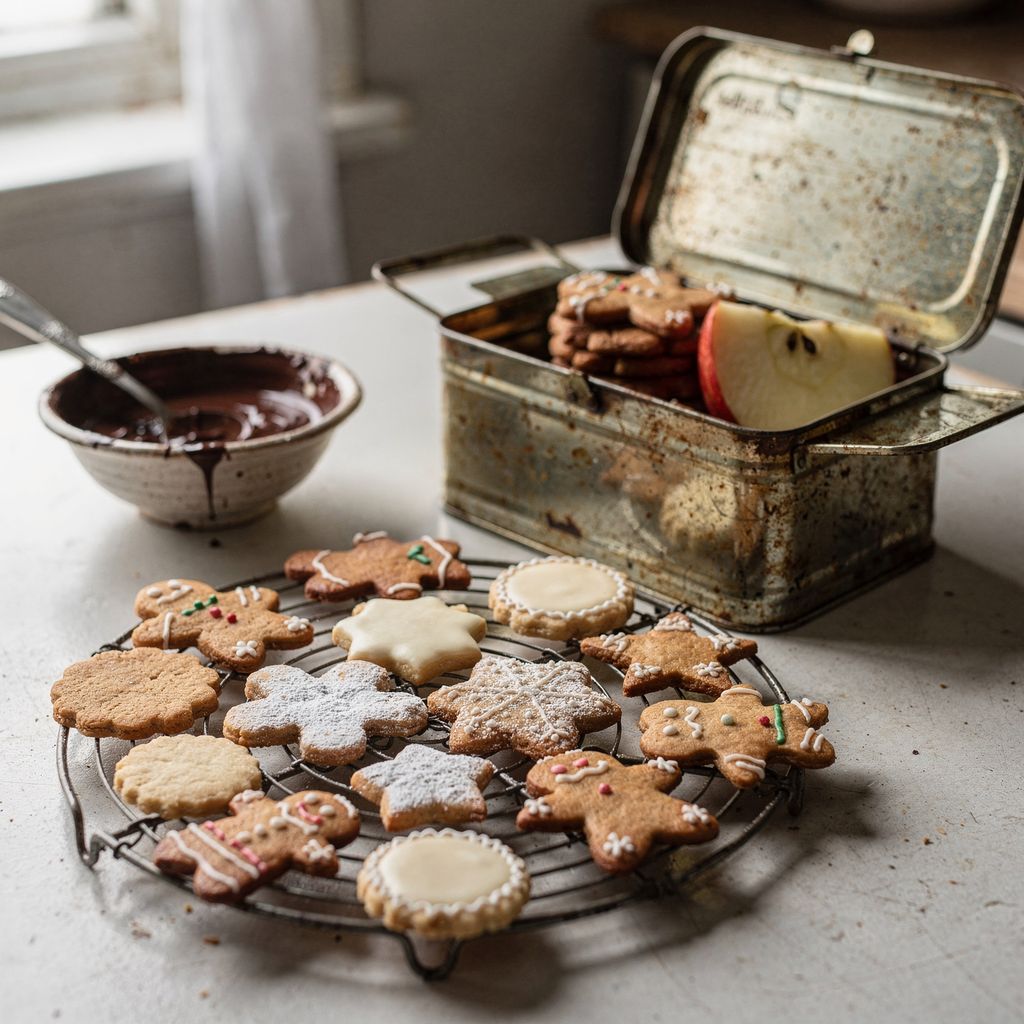
Updated Sep 18, 2026
Overbaked Christmas cookies can usually be saved, and most of the time all it takes is one thing: putting the moisture back in. Rock-hard gingerbread and dry linzer cookies will soften in an airtight container with a slice of apple or bread within 12 to 48 hours. Scrape off a dark bottom with a fine grater and mask any leftover off-flavor with icing. Cookies that are bitter all the way through, though, are beyond saving. Below you'll find a rescue plan based on how badly your cookies are overbaked, broken down by type — and, at the end, why it happens in the first place.
Overbaked cookies fall into one of three categories: dry and hard but still good-tasting, scorched only on the bottom or edges, or bitter all the way through. Take a bite and figure out which one you're dealing with — the rescue plan depends on how deep the damage goes:
Dry and hard, but the flavor's still fine. By far the most common case. All that's missing is moisture, and you can put it right back. Success rate: pretty much 100%.
Dark bottom or edges, everything else fine. Only a thin layer is scorched, often barely a millimeter. Scrape it off and fix the flavor with icing or a chocolate coating.
Bitter all the way through. Dark brown to black color right through the cookie, a sharp burnt smell. The bitterness runs through the whole thing and no icing will cover it up.
One rule applies to all three cases: don't put them in the same container. The burnt smell is volatile, and within a few days a sealed box will let it seep into cookies that were never damaged in the first place.
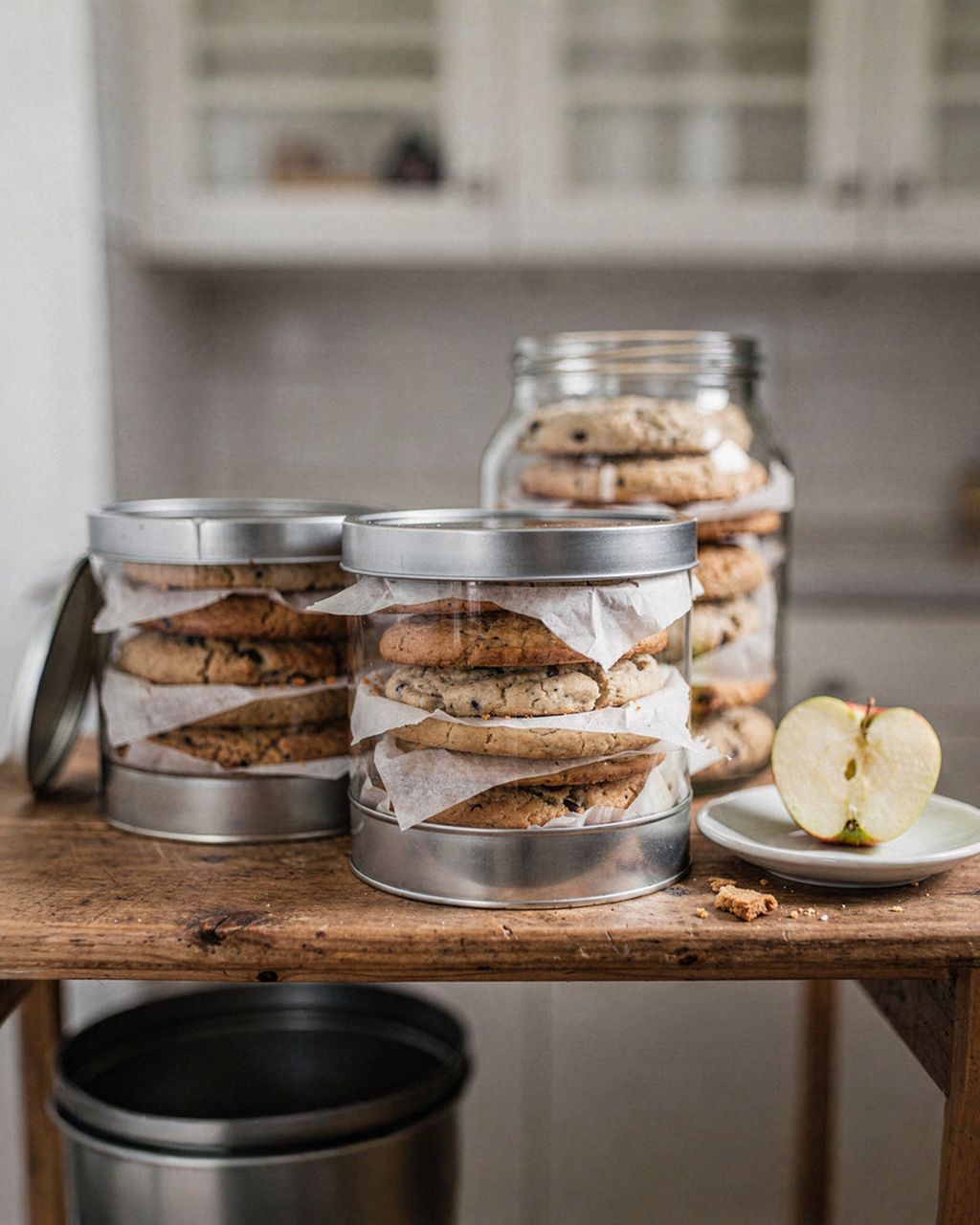
Seal the cookies in an airtight container along with a slice of apple or a piece of toast, and leave them for 12 to 48 hours. That's it. It's not an old wives' tale — it's moisture equalizing: apple and bread both have much higher water activity than baked cookies, and in a sealed space, moisture redistributes until both sides even out. Bread acts almost like a mini humidifier — it releases water that the cookies then soak back up.
Cookies don't harden because of starch the way bread does — they harden through simple moisture loss. That's why putting moisture back is all it takes, and why they'll stay soft longer once sealed in the container.
Soften overbaked gingerbread and honey cookies with a quarter of an apple in an airtight container, over 24 to 72 hours. Apple releases moisture more slowly than bread and suits honey-based dough flavor-wise too — a light fruity note actually complements gingerbread nicely. For a shoebox-sized container, use a quarter apple cut into thicker slices, placed on a piece of baking paper so it doesn't touch the cookies directly.
Hard gingerbread turns soft again in 24 to 72 hours.
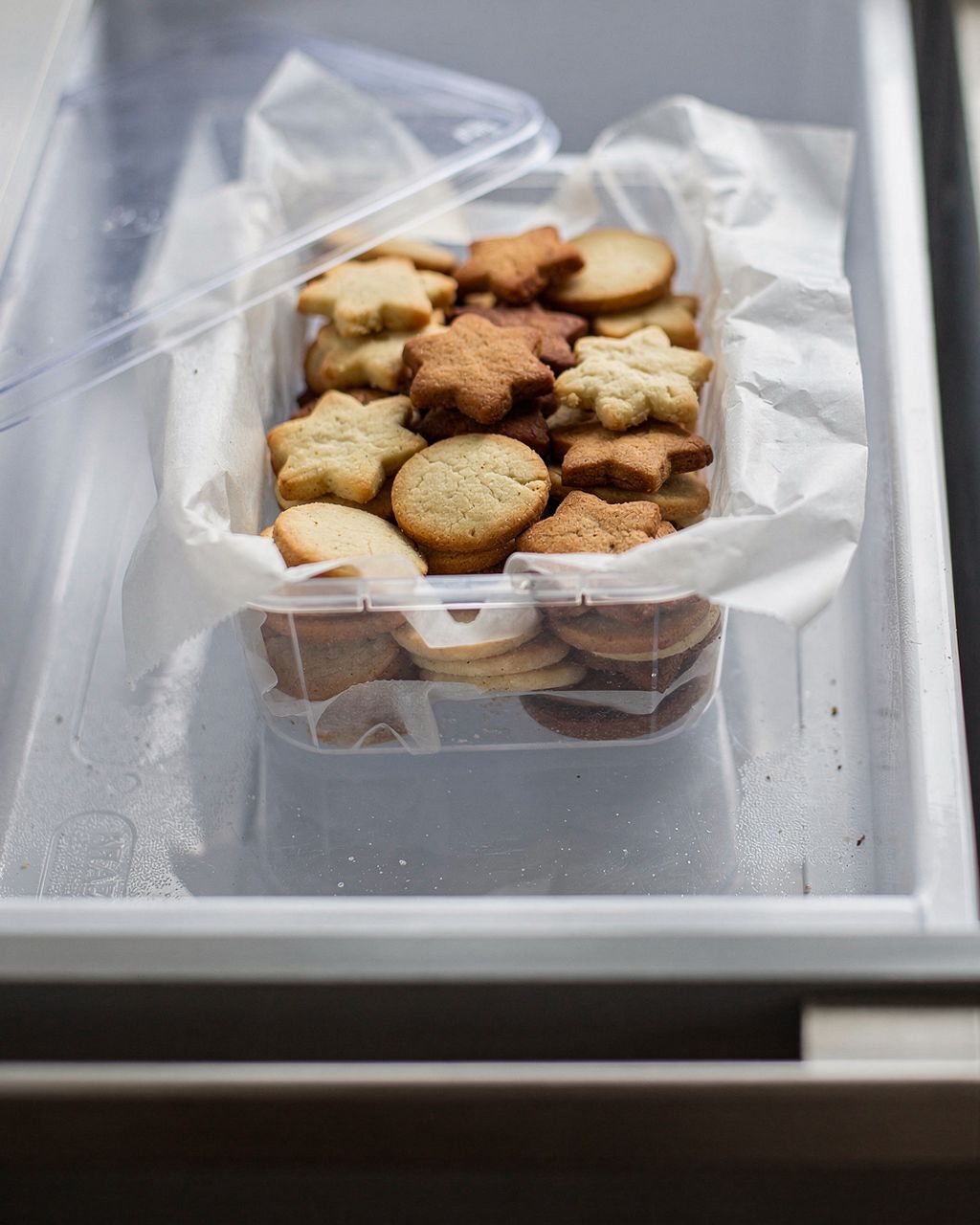
Linzer and butter doughs soften faster, often within 24 hours.
Swap the apple out every other day. A cut surface goes moldy in a warm room, and once that happens, nothing will fix it.
We cover this method in detail in our article on how to store gingerbread cookies so they stay soft.
Soften dry cookies with a slice of toast bread in an airtight container — you'll see results in as little as 12 to 24 hours. Bread works faster than apple and won't pass on any outside flavor, so use it anywhere a fruity note would be unwelcome: vanilla crescents, nut cookies, anything with a buttery flavor profile.
One slice per standard container, placed on top, not tucked between layers.
You'll see results in as little as 12 to 24 hours.
Once the bread goes stale and hard, it's done its job. Swap it out or remove it.
The most common mistake is leaving this running through the whole holiday. It's surprisingly easy to oversoften cookies, and delicate ones can turn chewy almost overnight. We cover how to spot it and what to do next in our article on why cookies go soft and lose their snap.
Scrape a dark bottom off with a fine grater or the flat side of a knife blade — on cut-out cookies you can remove a layer up to a millimeter thick and the flavor evens out instantly. Here's how:
Let the cookies cool completely, ideally overnight. Warm cookies will crumble under pressure.
Hold a cookie bottom-side up in your palm or on a board and work over a bowl — you'll want those crumbs.
Move the grater in short strokes in one direction, not back and forth. Check depth after every three strokes.
Stop as soon as lighter color appears. Grating further just wastes the cookie.
For softer types that would crumble under a grater — gingerbread, tender honey-based dough — use a knife held flat and scrape off the dark layer like buttering toast.
Don't throw out the crumbs in the bowl. They make a great crumble topping for baked apples and a base for the no-bake truffle balls mentioned further down.
Mild bitterness from overbaking can be masked with four things: chocolate, ganache, fruit filling, and fondant-style icing. Each works a bit differently:
Milk and white chocolate mask bitterness better than dark chocolate. They have more sugar and milk fat, which literally coats over the bitter notes. Dip the whole half of the cookie, not just the edge — a half-dip looks deliberate, while a thin stripe looks like a patch-up job.
A cream-heavy ganache (a 1:1 chocolate-to-cream ratio for dark chocolate, or 2:1 for firmer fillings) adds moisture faster than chocolate on its own and works well for cookies that are both dry and slightly scorched.
Jam or fruit butter gives you two things at once: flavor and moisture. Sandwiched linzer cookies soften from the inside within two to three days thanks to the filling, so a dry base can essentially fix itself.
Fondant-style (cocoa) icing is the fastest option: it sets on its own with no tempering needed. Keep in mind it mostly sweetens the surface and masks bitterness less effectively than real chocolate. Worth knowing the terminology too: chocolate can contain at most 5% non-cocoa vegetable fats alongside cocoa butter, and that must be stated on the label. If the fat in an icing is mostly something other than cocoa butter, it's technically not chocolate.
Powdered sugar doesn't belong on this list — it won't fix anything. It masks the look, not the taste. Save it for the very last step.
One tip from experience: apply icing after scraping off the burnt layer, not instead of it. Icing dilutes bitterness but doesn't erase it — and underneath it, you'll actually notice it more, because the rest of the bite is sweet.
Every dough overbakes differently and responds to rescuing differently. Here are the four most common: linzer cookies, gingerbread, vanilla crescents, and meringues.
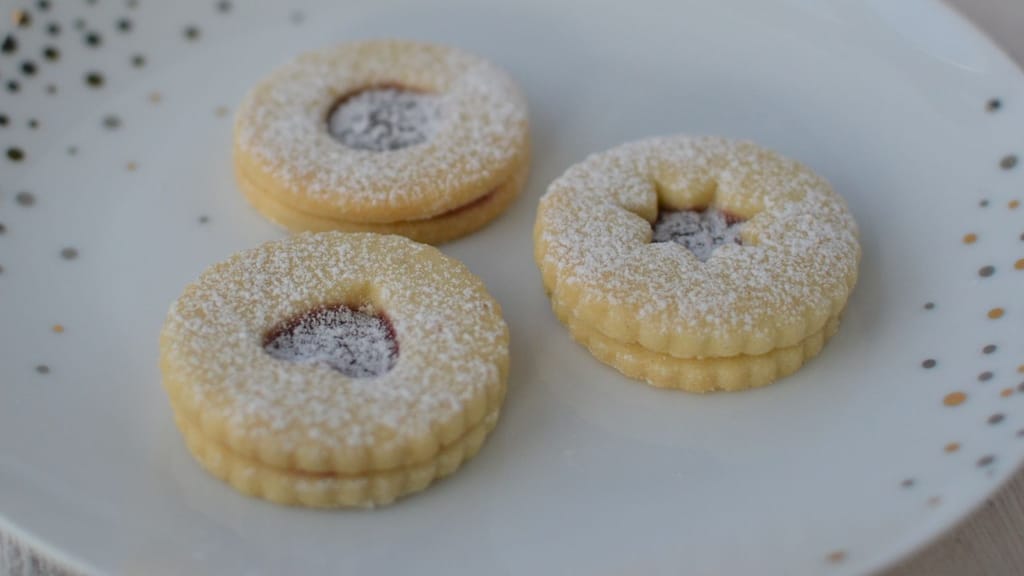
Rescue overbaked linzer cookies by sandwiching them with filling and letting them sit for three days — jam softens the base from the inside more reliably than an apple in a box. This is exactly why linzer cookies are traditionally filled ahead of time and not eaten right away.
Use a thicker jam or fruit butter, not a runny jam. Runny jam soaks through and turns the base to mush.
Fill more generously than you'd think — for a 4cm cookie, half a teaspoon is fine.
In the container, arrange them flat, in a single layer, so the filling doesn't get pushed out.
If your linzer cookies keep going hard on you, the problem isn't the baking, it's the dough — we cover that in our article on why linzer cookies go hard and how to keep them tender.
Classic christmas cookies: delicate linzer cookies
A recipe for tender linzer cookies that won't overbake — classic Christmas cookies, step by step
Gingerbread is the most forgiving of all Christmas cookies — it softens even weeks later, and an apple in a box brings it back almost every time. Honey-based dough is also loaded with invert sugars that bind water on their own, which helps it hold on to moisture.
With overbaked gingerbread, soften it in the box with apple first, decorate afterwards. Royal icing locks in whatever moisture the gingerbread already has, but that same sealed surface stops it from absorbing more — so icing goes on after softening, never before.
Plan on 24 to 72 hours, or even a week for really rock-hard batches.
For gingerbread with a dark bottom, scrape it off with a knife first, decorate after. Once it's iced, you can't get at the bottom anymore.
If your gingerbread hardens every single time, check out why gingerbread goes hard and how to keep it soft — that covers the cause, not just the fix.

Soft honey gingerbread cookies that never go hard
Soft honey gingerbread that never hardens — a recipe where you'll never need a rescue plan
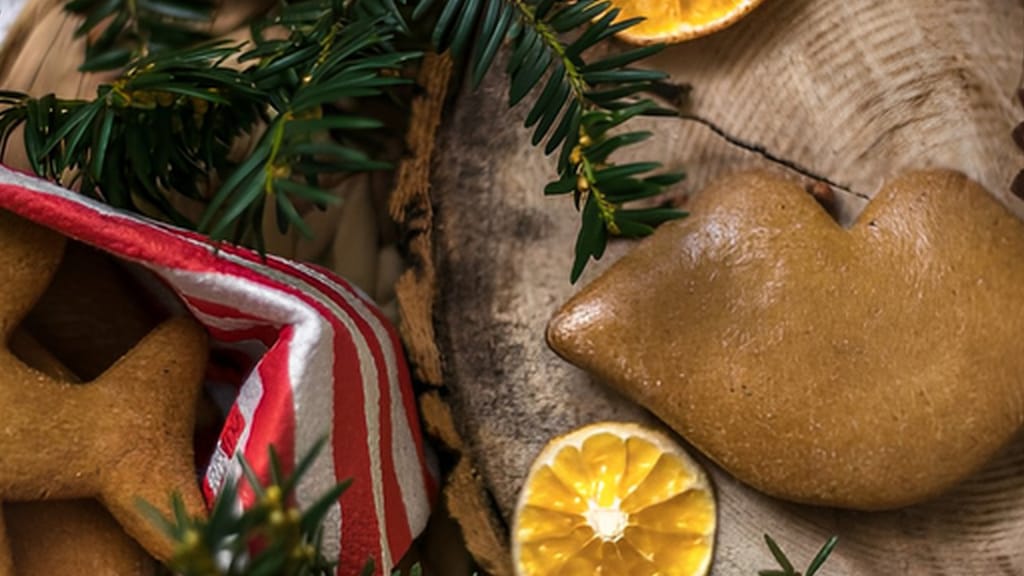
Soft gingerbread cookies
Extra-soft gingerbread: a dough recipe that stays tender all on its own
With crescents, toss them in vanilla sugar while still slightly warm, then seal in a container with a slice of bread — the sugar coating draws in moisture and holds it against the cookie. Skip the apple here; a fruity smell doesn't suit their buttery, nutty flavor.
One thing to watch for: crescents tend to overbake mainly at the tips, since they're thinner than the middle. If only the tips are dark, don't worry about the whole batch — just snap the tips off and save them for crumbs. A crescent without its tips is still a crescent.
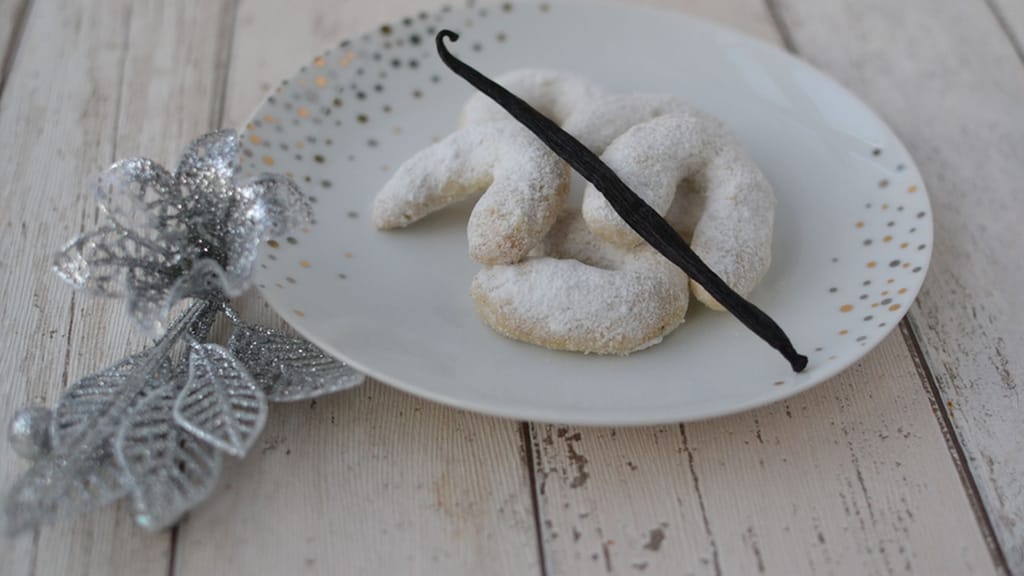
The best christmas cookies? vanilla crescents, of course!
Vanilla crescents: the classic recipe for everyone's favorite Christmas cookie
Overbaked meringues can't be rescued, and it's good to know that going in. Meringue isn't baked so much as dried out at 90 to 110°C (194–230°F) — once it browns, the sugar has caramelized and the egg white has browned, and the flavor changes for good. Softening won't help here, because the problem isn't dryness, it's flavor.
What to do with them instead: crush them and use as a topping for ice cream, whipped cream desserts, or between cake layers. That toasty, slightly nutty flavor actually works beautifully there. And next time, dry them at a lower temperature and let them cool in the switched-off oven with the door cracked open.
The line is clear: once a cookie is bitter all the way through, it's done. You'll know by three things together, not just one:
Taste — bitterness hits immediately and lingers even after a sip of water. Mild overbaking, by contrast, tastes more nutty and fades quickly.
Smell — a sharp, acrid burnt smell instead of a warm, buttery baked aroma.
Color when broken open — snap a cookie in half, and if the dark color isn't just on the surface but goes all the way to the center, that's your answer.
No icing, filling, or chocolate coating will mask that bitterness. Trying anyway just means wasting good chocolate on a cookie nobody's going to finish eating anyway. And yes, throwing out a few trays is annoying — but it's a far better outcome than putting out a plate on Christmas Eve that nobody touches.
Dry, hard cookies you don't feel like rescuing can be crushed into crumbs — and suddenly you've got an ingredient, not waste. Those crumbs work well in four ways:
No-bake truffle balls. Crumbs, softened butter, powdered sugar, a splash of rum. Roughly 3 parts crumbs to 1 part butter, adjust the texture with sugar.
A base for cheesecake or a no-bake dessert. Crumbs mixed with melted butter in a 3:1 ratio, pressed into a pan, chilled in the fridge for an hour.
Crumble topping for baked apples. Sprinkle over sliced apples, bake 20 minutes at 180°C (350°F), and it's done.
A topping for ice cream and yogurt. The quickest option, zero effort.
One condition applies: the crumbs need to come from cookies that are only dry — not scorched ones. Bitterness doesn't disappear when you crush it, it just spreads through a bigger dessert.
For more ideas on what to do with cookie scraps and crumbs, see our article on leftover bits from baking Christmas cookies.
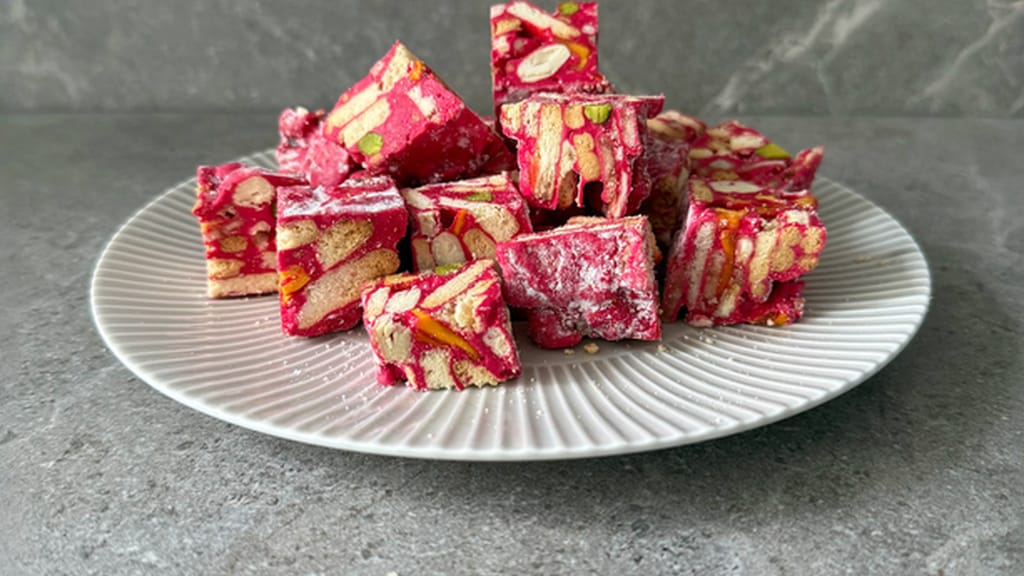
Snowflake crisps – no-bake asian marshmallow cookie bars
Snowflake Crisps: no-bake marshmallow cookies that crushed leftover cookies fit into perfectly
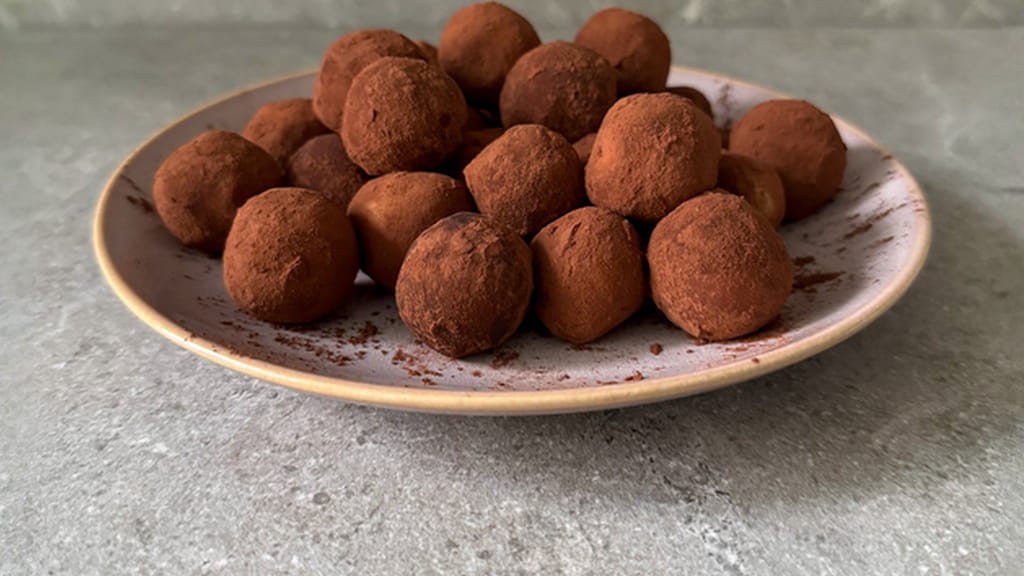
Baileys balls with white chocolate and sponge fingers
Baileys balls with white chocolate and ladyfingers — swap the ladyfingers for crumbs from overbaked cookies
Cookies most often don't overbake in the oven — they overbake on the tray after coming out. Small butter cookies keep cooking from the tray's residual heat for another three to five minutes, and that's exactly the difference between a golden edge and a browned bottom. Six of the most common causes:
Residual heat from the tray. Move cookies to a wire rack within one to two minutes — don't wait for them to cool on the tray.
A hot tray under the next batch. Let the tray cool between batches, or use two trays. Dough placed on a hot tray spreads out and the bottom catches before the top is even baked through.
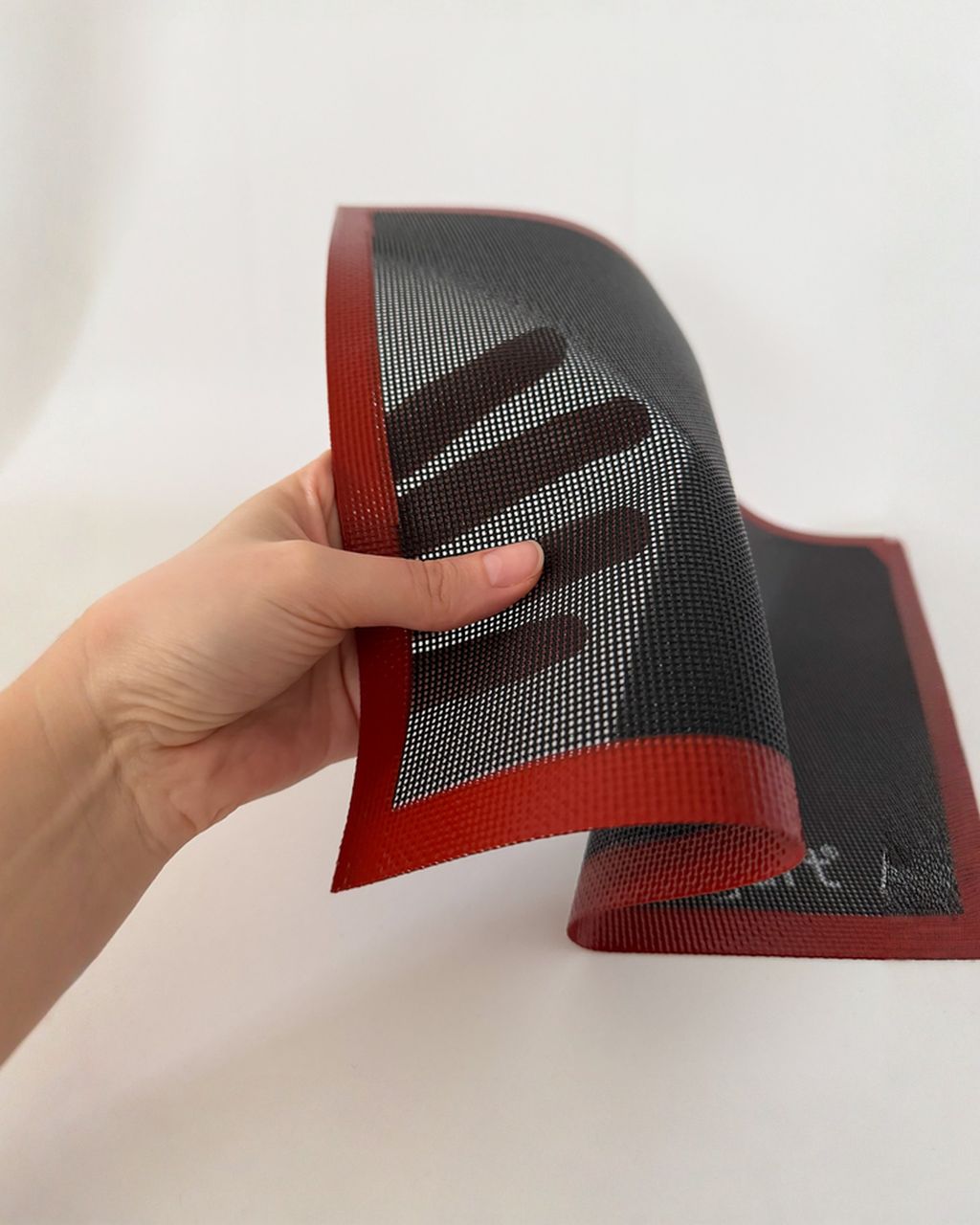
A dark-colored tray. Dark metal absorbs more heat and scorches bottoms. A light-colored tray plus baking paper or a perforated liner is noticeably safer.
An oven that doesn't hold its set temperature. A 15 to 20°C (about 30–35°F) swing from the dial setting is completely normal for home ovens. A cheap oven thermometer will confirm it in five minutes.
Unevenly rolled dough. Thin edges burn before the center finishes baking. Roll using guide strips or aim for one even thickness, erring on the side of a millimeter thicker.
Baking by the clock instead of by eye. Recipe times are just a guide. Start checking from around two-thirds of the stated baking time.
We've laid out temperatures and times by cookie type in our article on what temperature to bake Christmas cookies at, and we get into why cookies bake at a lower temperature than, say, cakes, in why Christmas cookies bake at a lower temperature.
One more connection that's easy to overlook: the more fat and less water a dough contains, the faster it browns. That's why linzer dough uses only egg yolk, and why linzer cookies bake for a shorter time than, say, gingerbread.
No — putting overbaked cookies back in the oven won't soften them. Heat drives moisture out rather than adding it, so you'd only dry them out further. The one exception is cookies that have gone soft and lost their snap: those can be briefly re-dried, 5 to 8 minutes at 110°C (230°F). This is about re-drying already-baked cookies, not baking them again — don't let them brown any further. For dry, hard cookies, always use an apple slice or bread in a sealed container instead of the oven.
Rescued cookies will stay soft for roughly one to two weeks, depending on the type of dough — as long as you keep them in an airtight container and swap out the apple or bread regularly. Without that, the moisture starts evaporating again and the cookies harden right back up. Gingerbread holds its softness longest; buttery and nutty doughs the shortest.
Freezing won't soften overbaked cookies — cold doesn't add moisture, it just stops further drying out. But a combination works well: soften the cookies first with apple or bread, then freeze them, and the softness will hold in the freezer. Thaw them still sealed in the container at room temperature, otherwise condensation will form on the surface.
Anything with higher water activity than the cookies themselves will do the job — the best alternative to apple is a piece of orange peel, which also adds a lovely festive scent. Pear works too, but it softens and browns faster, so you'll need to swap it out more often, and its aroma is stronger than apple's. Don't use a damp cloth in the container: it releases moisture in a rush and leaves damp patches on the cookies.
Oversoftened cookies bend instead of snapping, feel chewy when you bite in, and any icing on top turns soft or starts looking glossy. Take the apple or bread out of the container right away, or it'll just happen again. Then leave the cookies for a few hours in an open container or loose on a wire rack at room temperature — the excess moisture will evaporate on its own. For filled or iced cookies, plan on a full day rather than just an hour.
One recipe worth heating the oven for, one tip, and one deal from the shop. Nothing else.