Mango cheesecake
Flavouring Pastes for Creams and Batters: How Much to Use and What They Suit
Updated Oct 8, 2026
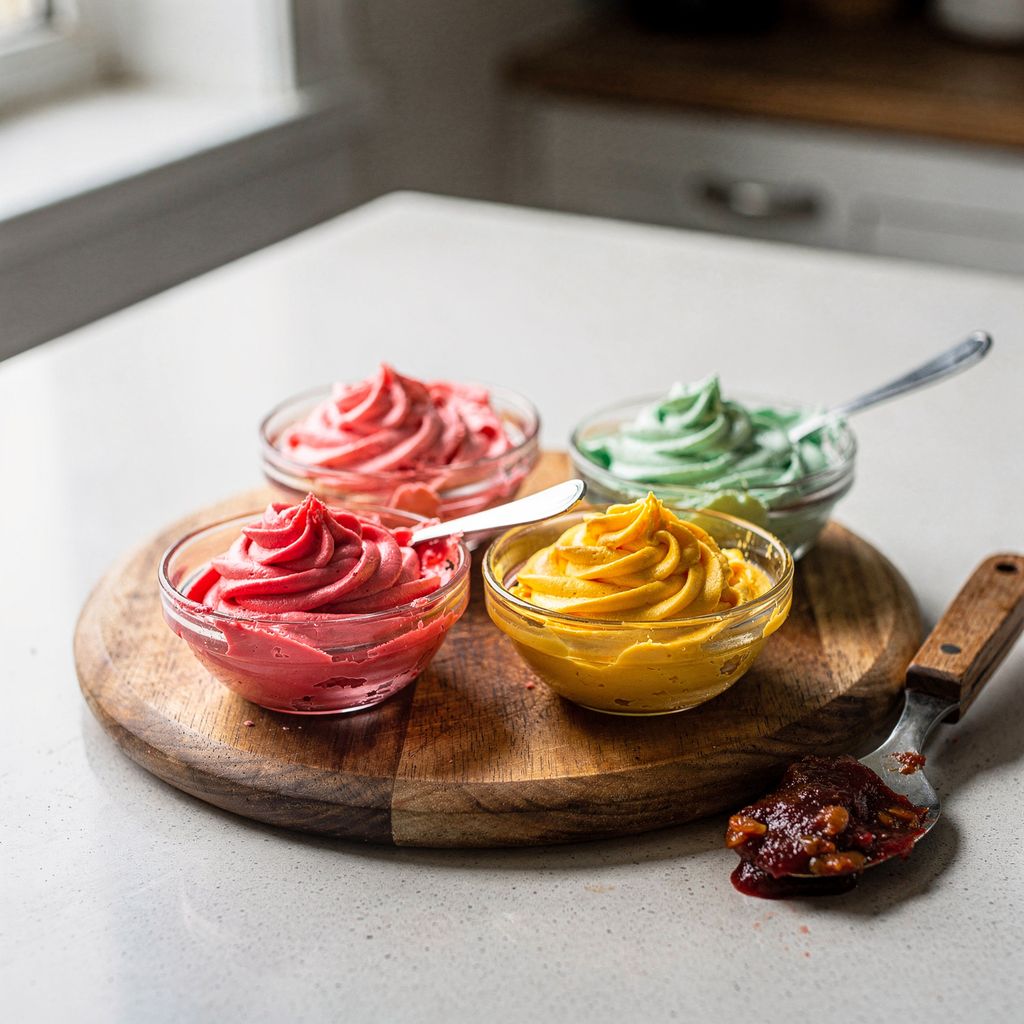
Flavouring paste is a thick fruit or herb flavour in concentrated form, used at roughly **30 g per 500 g of cream or batter** — about 6%. Unlike purée, it adds almost no water, so your buttercream won't curdle and your batter won't turn runny. Here's how much paste to use in what, how to mix it in properly, and which flavours pair well with cherry, mango, watermelon and mint.
Flavouring paste is a thick, sweet concentrate of flavour: fruit or herb extract thickened with sugar, glucose syrup and a thickening agent. An essence, by contrast, is a liquid extract that's measured out in drops and brings nothing else to the mix.
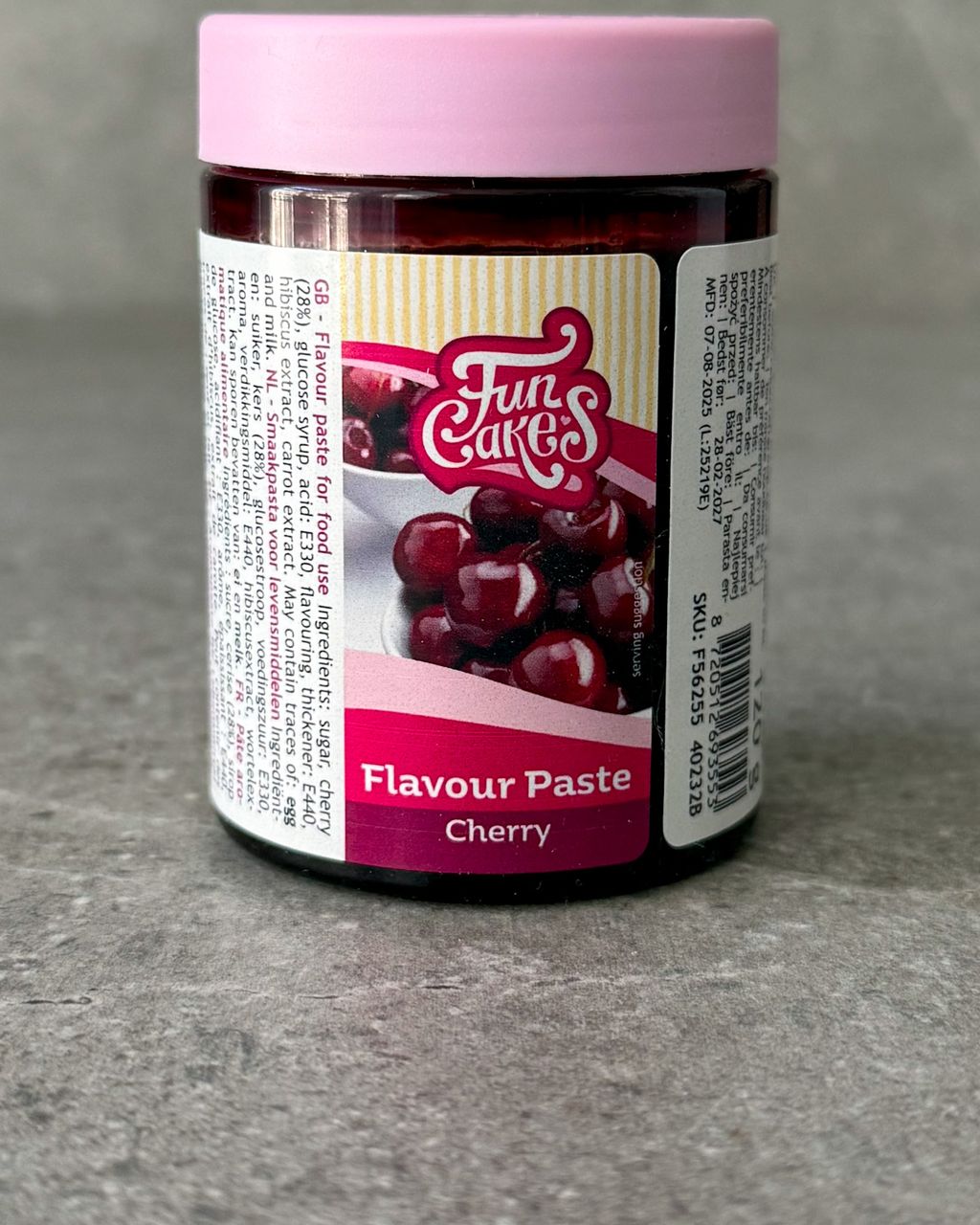
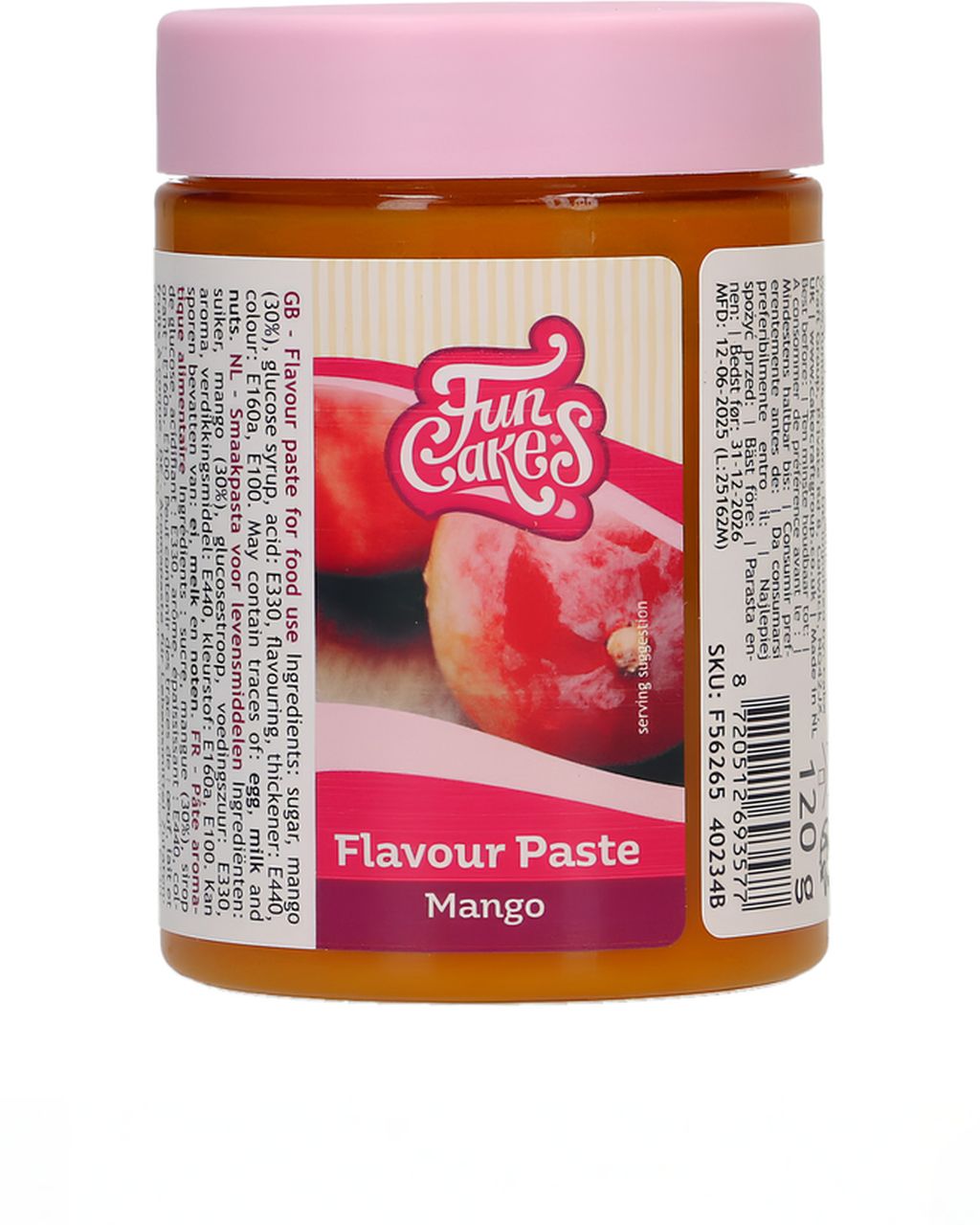
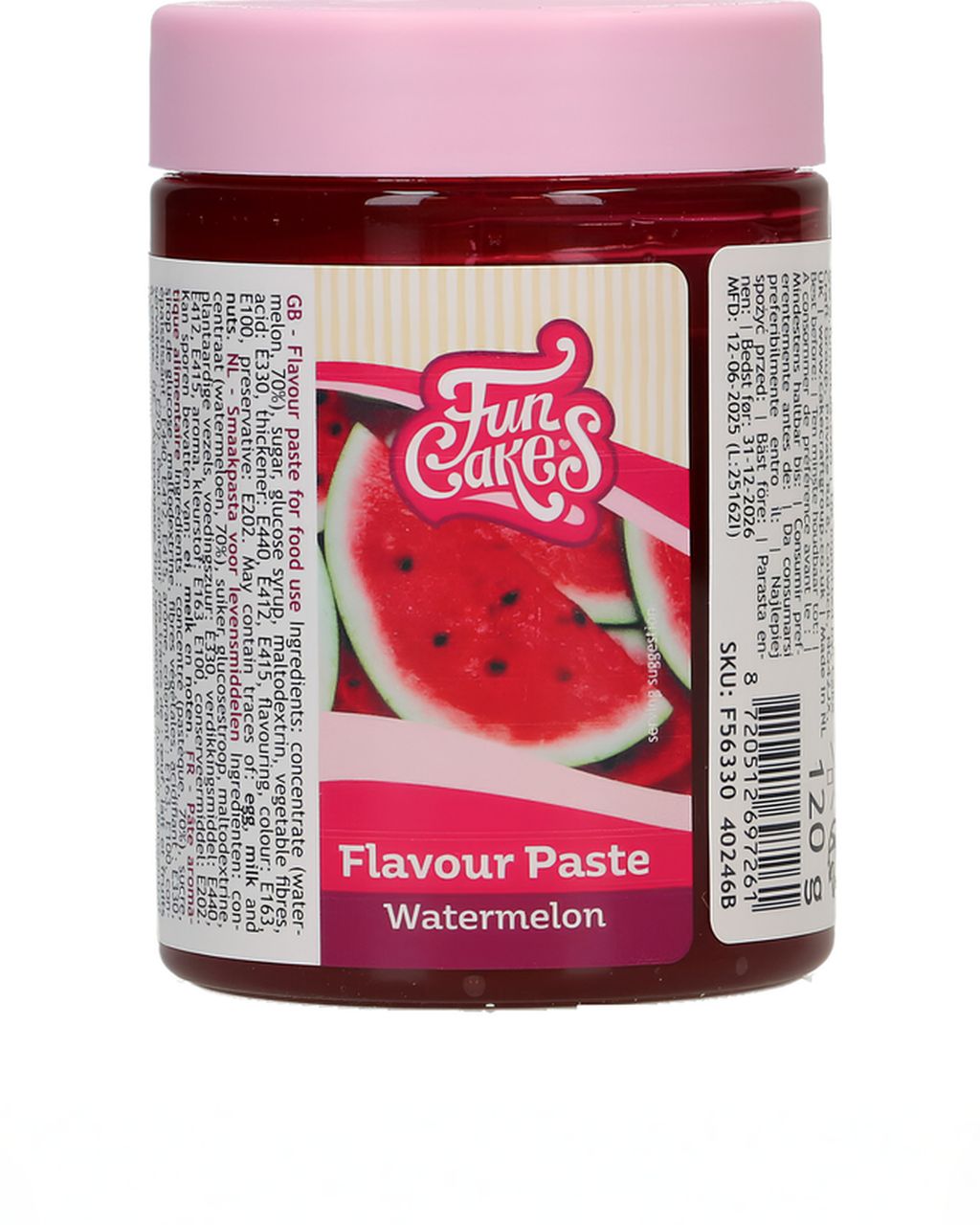
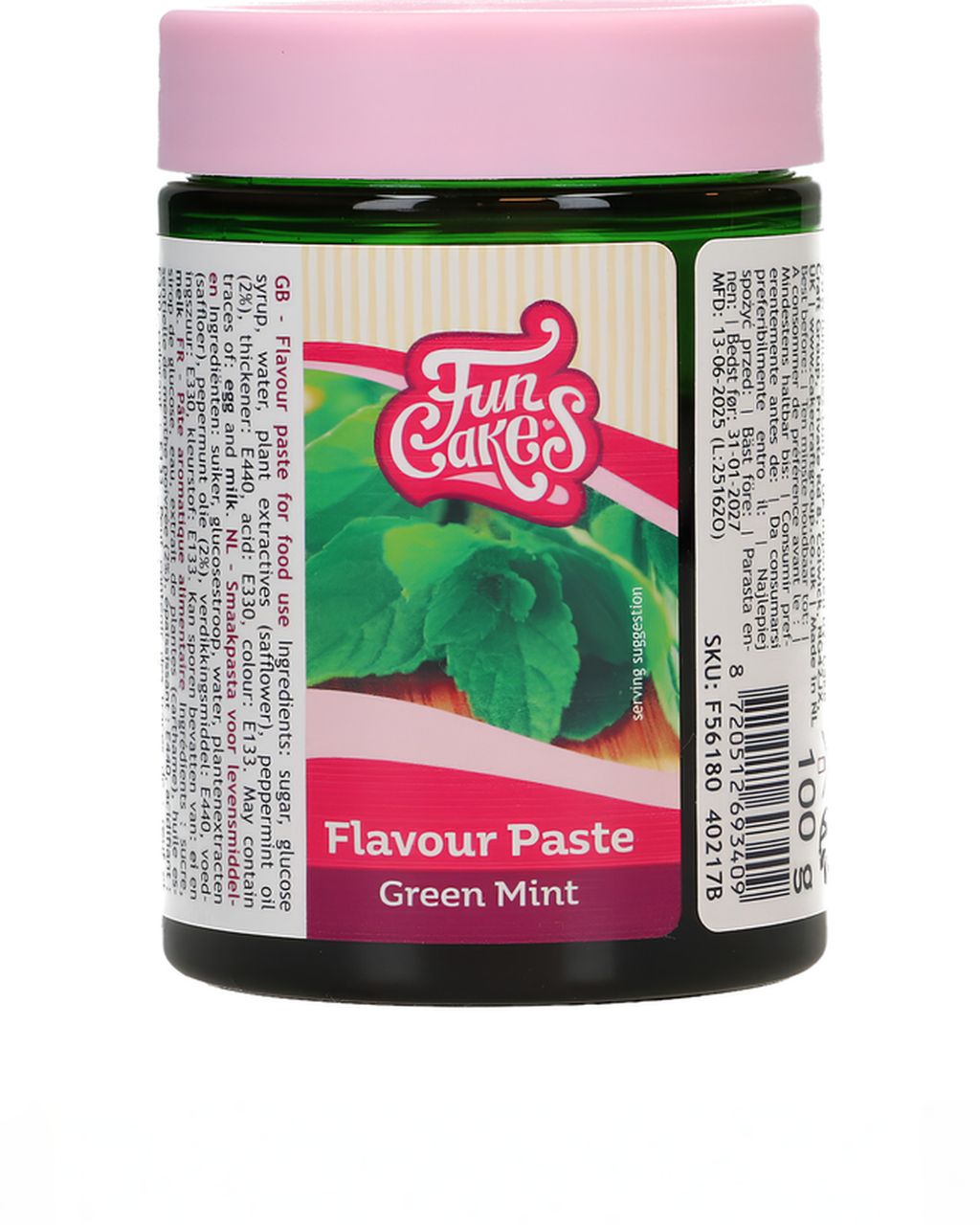
You can see this right in the ingredients list of the pastes we sell. According to the manufacturer FunCakes, both the cherry and mango pastes contain 30% fruit, the watermelon paste is built on watermelon concentrate, and the mint one is flavoured with mint oil. That's why they taste fuller than an essence while bringing so little water that they won't break a buttercream's emulsion.
In practice, that means three things:
Flavour and texture: paste will thicken the cream slightly, essence won't.
Colour: most pastes will also tint the cream (more on that below), while essence stays clear.
Sweetness: paste is sweet, containing sugar and glucose syrup, so you can cut back the icing sugar in your cream by a few grams to compensate.
The standard ratio is 30 g of paste per 500 g of finished cream or batter (about 6%). The manufacturer gives this ratio for the cherry, mango and mint pastes, and it's easy to scale up or down:
250 g of cream (filling and coating for 12 cupcakes): 15 g paste
500 g of cream (filling for a smaller 18 cm/7 in cake): 30 g paste
1 kg of cream (filling and coating for a 22–24 cm/9–9½ in cake): 60 g paste
500 g of batter (about 12 muffins): 30 g paste
Add it to cream gradually. Start with about two-thirds of the amount, mix it in, taste, and only then add the rest. The flavour will develop a bit more in a fatty cream over 15–30 minutes, so what tastes just right straight after mixing can turn out stronger once it's rested.
Add the full amount straight away to batter. You can't taste raw batter, and flavour fades during baking anyway. The manufacturer notes that baking above 200°C (390°F) can weaken the paste's flavour. Cupcakes, muffins and bundt cakes bake at 160–180°C (320–355°F), so the standard 30 g per 500 g is enough there.
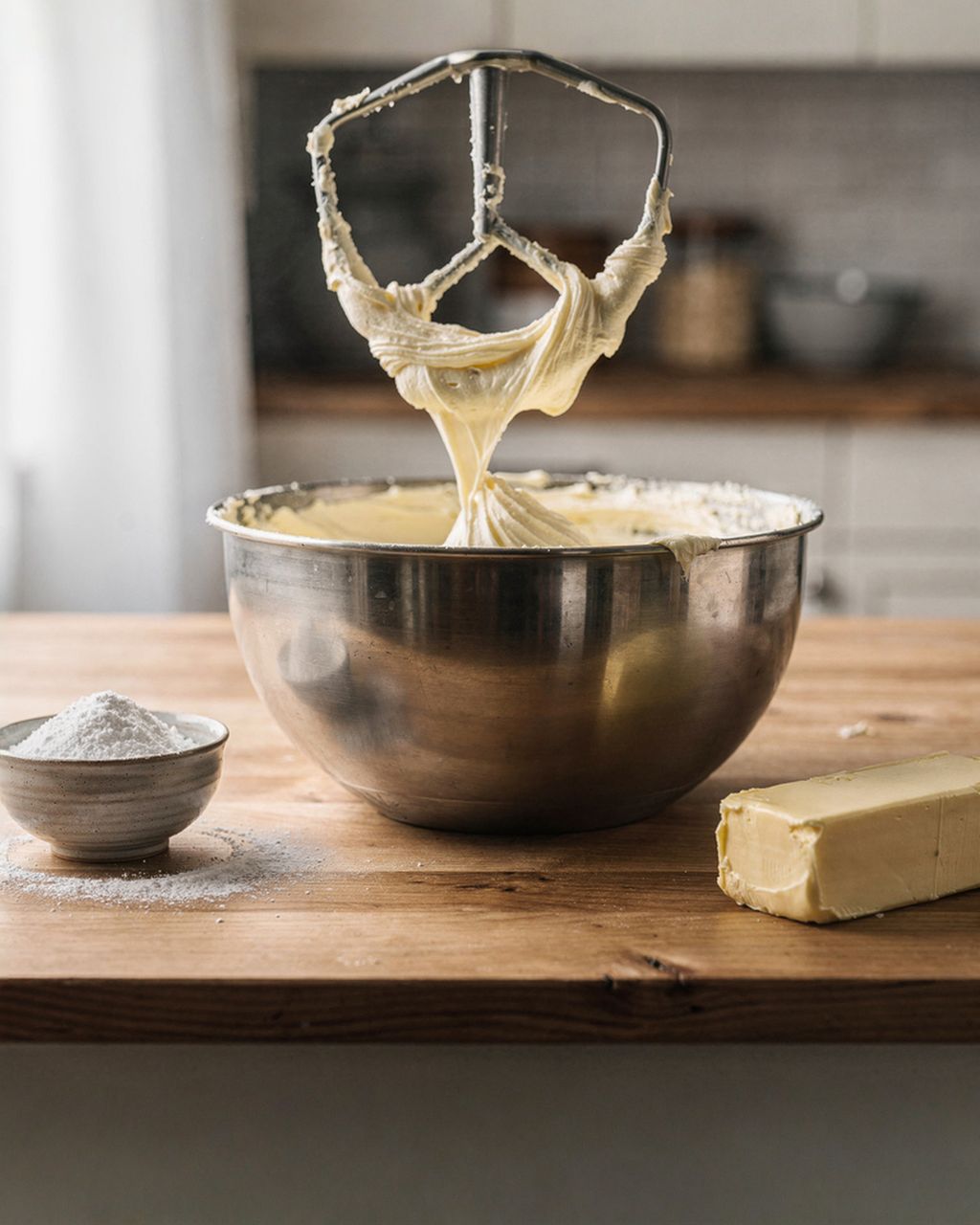
Add the paste only once the cream is fully whipped and at room temperature, then mix it in briefly on a low speed or with a spatula. Most curdled creams aren't actually the paste's fault — it's usually a temperature mismatch or over-whipping.
Bring the paste up to room temperature. If you keep it chilled, let it sit on the counter for 20 minutes first. Cold paste stirred into warm buttercream will form stubborn lumps.
Loosen it with a bit of cream first. In a bowl, mix the paste smooth with 2–3 tablespoons of the cream, then fold this mixture back into the rest. That way the colour spreads evenly and you avoid streaks.
Mix only until the colour is even. Further whipping won't improve anything — it just beats in extra air and starts warming the buttercream up.
Go easy with whipped cream. Add the paste once the cream has reached soft peaks, then finish whipping. A thick paste stirred into thin cream slows the whipping down and risks over-whipping it into butter.
If your buttercream curdles anyway, it's usually too cold: warm a small portion of it, fold it back in, and whip briefly. For the full fix, see our article on how to whip buttercream so it isn't greasy.
Flavouring pastes work well in buttercream, mascarpone and curd cheese creams, whipped cream, white ganache, bavarois and mousse, ice cream, and batters for muffins, cupcakes and bundt cakes. Use them cautiously only in light sponge batters.
Buttercream (American, Swiss, or custard-based) is ideal for them. The fat carries the flavour, and the paste won't water the cream down.
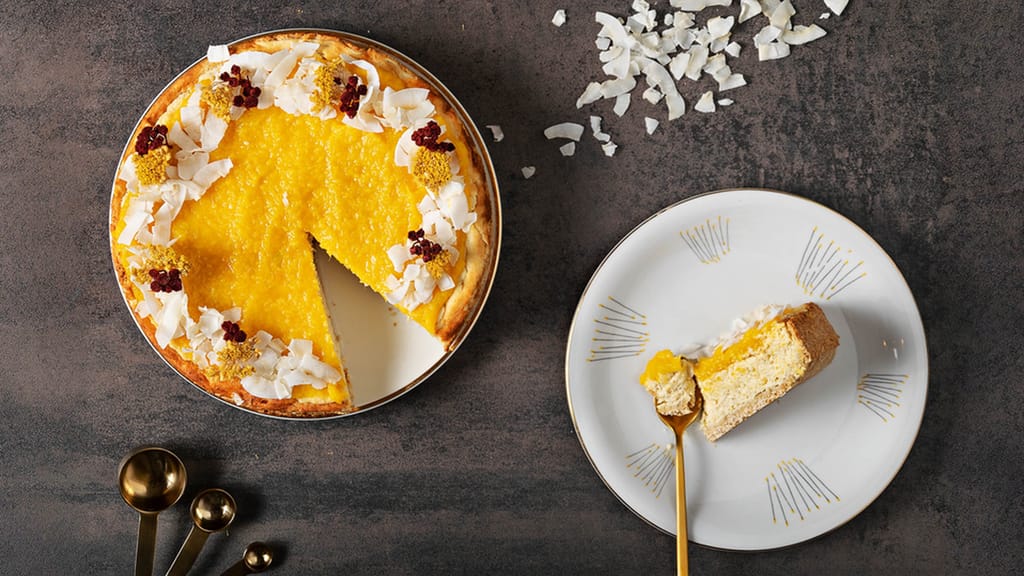
Mascarpone and curd cheese: mango paste, for example, is great for boosting the flavour of the cream in a mango cheesecake when the mango from the shop isn't fragrant enough.
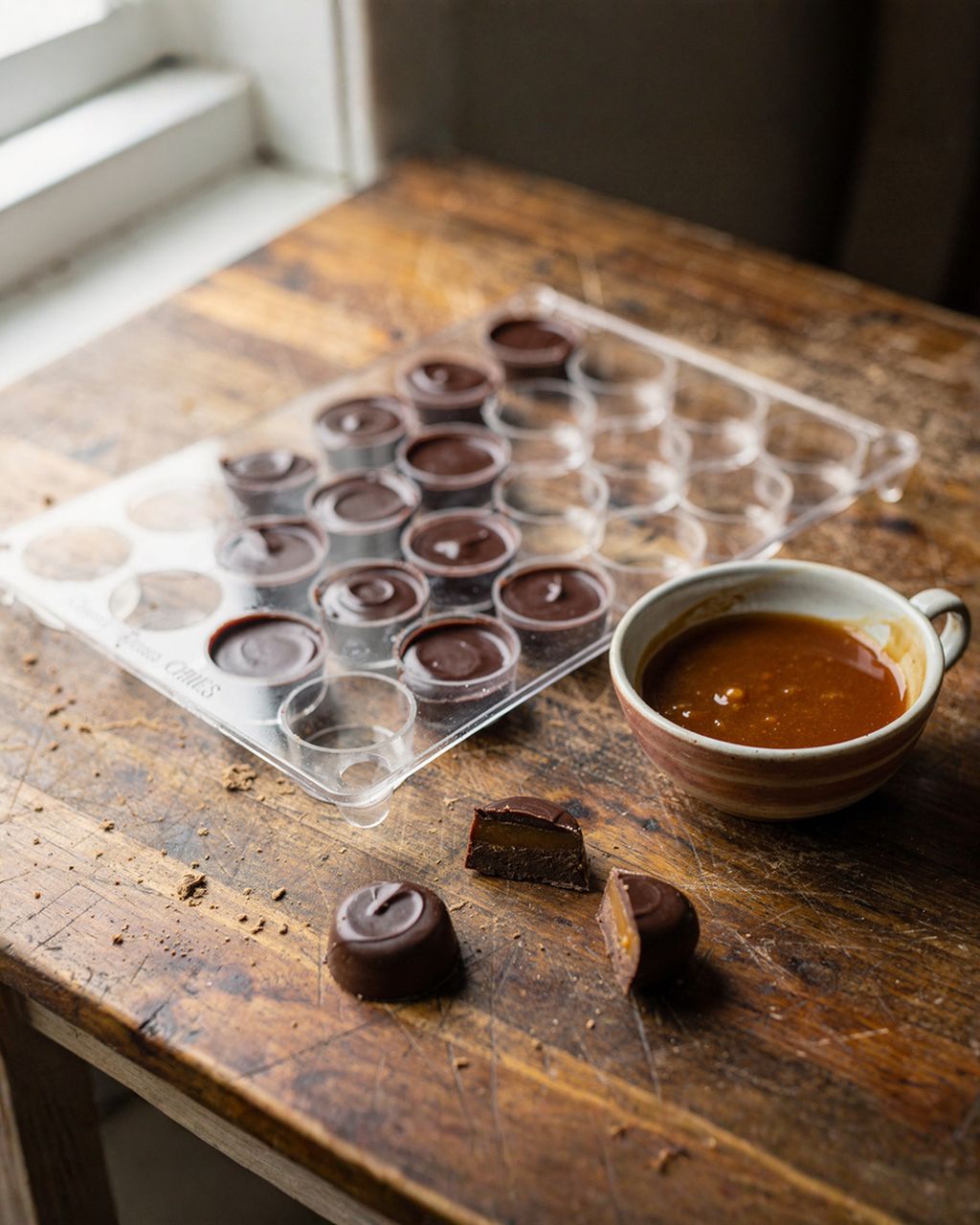
White ganache: stir the paste in once the ganache is finished and lukewarm (around 35°C/95°F), as soon as it's smooth. A good base is our white chocolate cream — not just for macarons recipe, simply swapping the coffee for paste. How fruit pastes work in praline fillings, and how long such fillings keep, is covered in our article on praline fillings: ganache, caramel and fruit pastes.
Ice cream: mix the paste into the base before freezing. A neutral base, like our no-churn vanilla ice cream made without peanut butter, takes well to both mango and mint.
Muffin and bundt cake batter: add the paste to the wet ingredients (eggs, milk, oil) before the flour, so it mixes in evenly.
Sponge cake: go carefully with sponge — a thick paste can weigh down whipped eggs, so it's better to add the flavour through the filling or soaking syrup instead.
Mango cheesecake
Mango cheesecake — boost the cream's flavour with mango flavouring paste
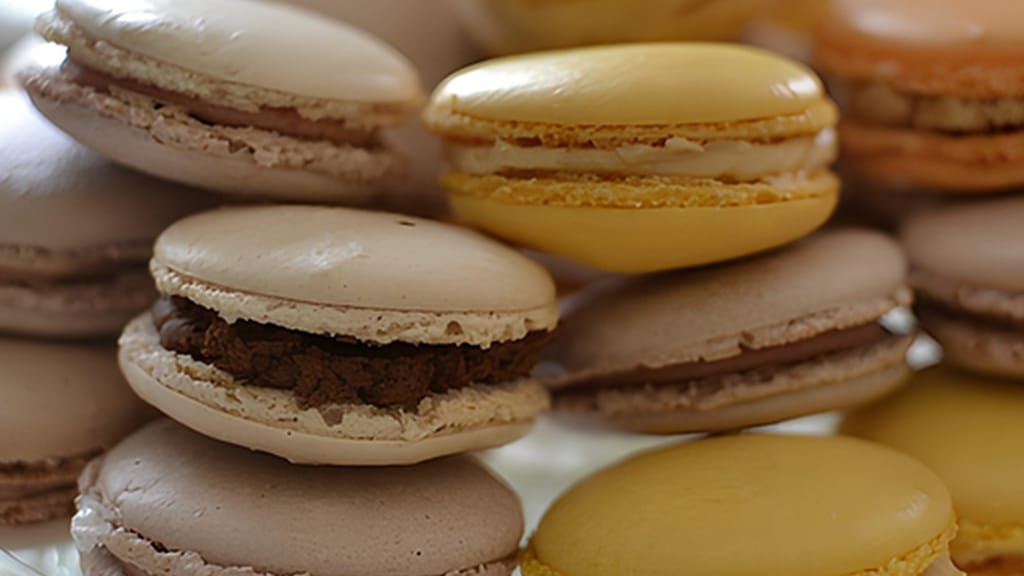
White chocolate and coffee cream - great in macarons and beyond
White chocolate cream — not just for macarons — a base for fruit ganache with paste
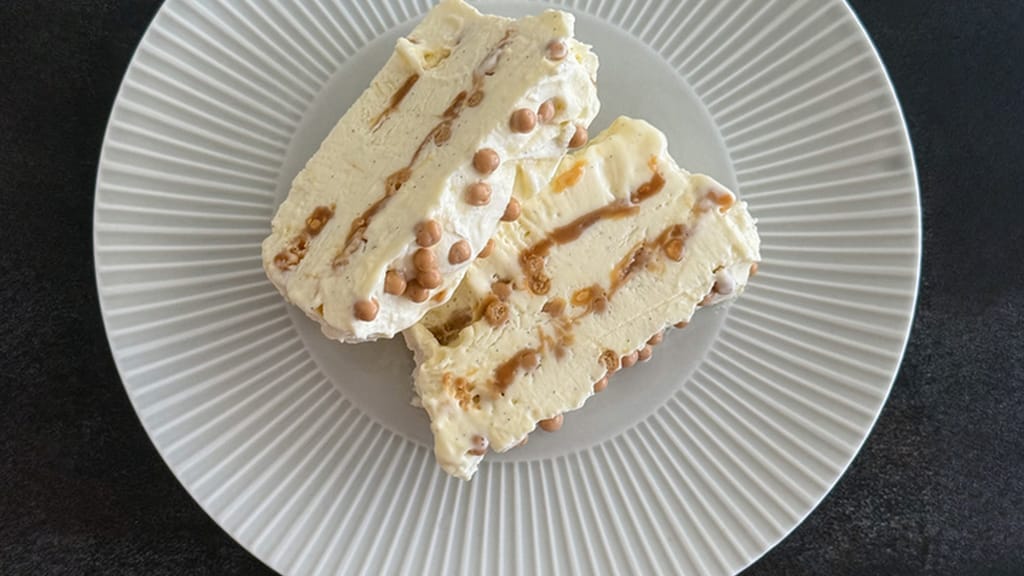
No-churn vanilla ice cream with peanut butter swirl
No-churn vanilla ice cream (no peanut butter) — a neutral base for mango or mint paste
Most pastes will tint the cream, though to a pastel rather than a bold shade. It depends on the ingredients:
Mango contains colourings E160a and E100 (carotenes and curcumin), tinting cream pale yellow to apricot.
Watermelon contains E163 (anthocyanins) and E100, tinting cream pink.
Mint contains E133 and safflower extract, tinting cream pale green.
Cherry, according to the ingredients, has no added colouring. The colour comes only from the fruit itself, so it will tint white cream at most a faint pink.
If you want a bolder shade, boost the colour with gel food colouring. The paste handles the flavour, the gel handles the colour, so you don't need more paste than the flavour can take. For a truly vivid red, see our dedicated guide: red velvet: how to get a deep red colour.
For buttercream that needs to hold its shape, flavouring paste is the best choice; essence suits a light hint of flavour, freeze-dried fruit works well in whipped cream and mascarpone, and purée only in small amounts. Each option has its own strength and weakness:
Flavouring paste: bold flavour, almost no water, lightly tints the cream. On the downside, it's sweet and tastes a touch more "confectionery-like" than fresh fruit. The best choice for buttercream, ganache, and any cream that needs to hold its shape.
Bottled essence: measured out in drops, doesn't colour and adds no sugar. The flavour is flat, though — just an aroma without any real fruit body — and it's easy to overdose into something that tastes chemical. Best where you just want a hint.
Freeze-dried fruit powder: the cleanest fruit flavour and colour, naturally tart. It does draw in moisture, though, thickening the cream, and seeds (raspberry, strawberry) need sieving out. Excellent in whipped cream and mascarpone.
Purée or jam: the most natural option, but carries a lot of water. In buttercream, use no more than 1–2 tablespoons or it will curdle. You can reduce purée by half in a pan first — the water evaporates and the flavour intensifies.
A practical rule of thumb: if the cream needs to hold its shape and pipe well, reach for paste. If it's whipped cream or a light mousse and you want tartness, use freeze-dried fruit. You'll find pastes, essences and other baking ingredients in our baking and decorating ingredients category.
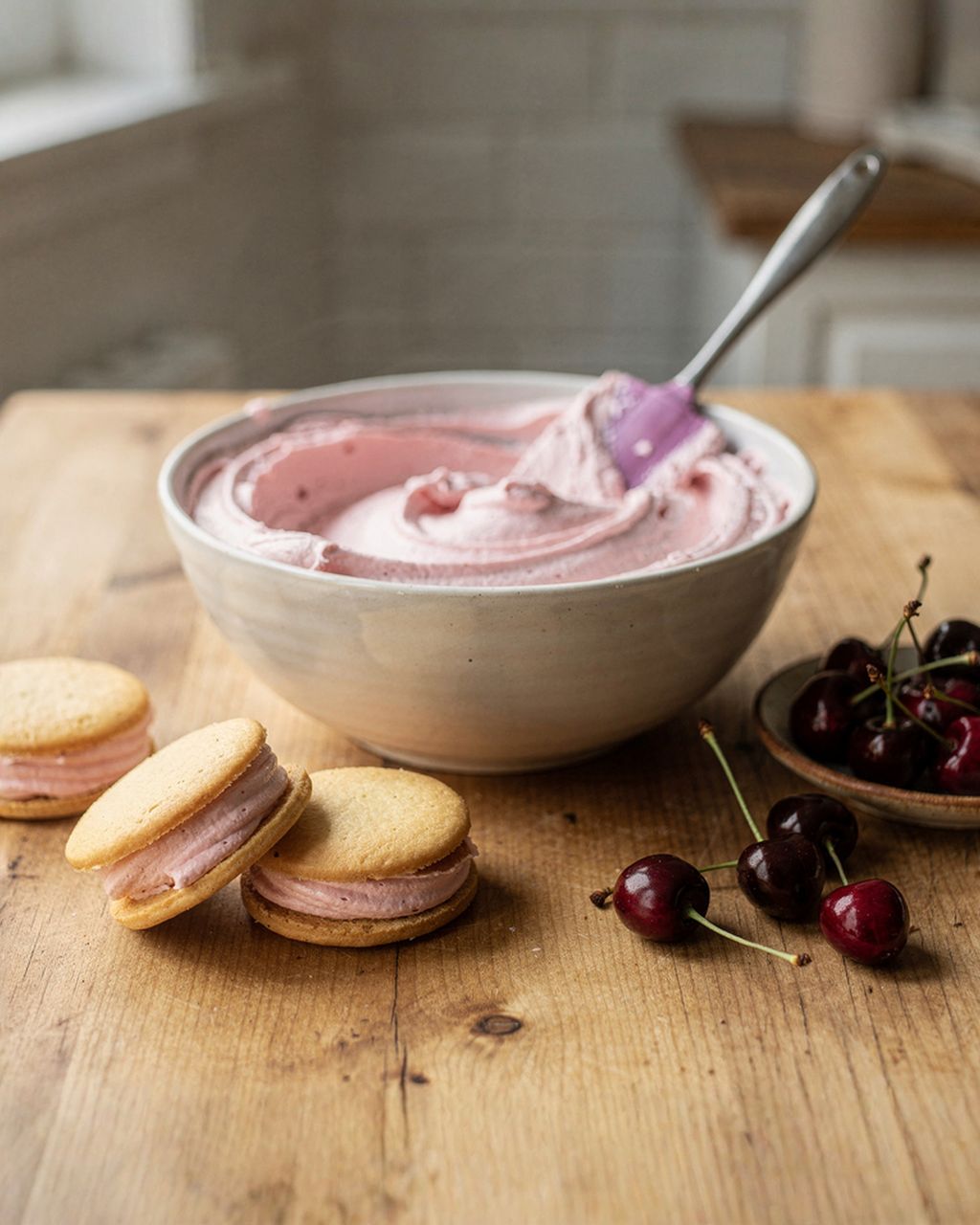
Cherry paste works best with dark chocolate — think Black Forest cake and chocolate cherry pralines. It also pairs well with vanilla, almonds and pistachios.
Christmas baking: cherry buttercream in linzer or almond cookies, chocolate cups with cherry ganache.
Cakes: a cherry cream layer between chocolate sponges, ideally with well-drained sour cherry pieces from a compote.
Cupcakes: a chocolate cupcake topped with cherry cream.
For a full recipe with exact ratios, see our article on cherry cream for cookies and cakes made with flavouring paste.
Mango shines alongside acidity and tropical flavours: lime zest, coconut, white chocolate and passion fruit.
Mango mascarpone cream for a summer cake or cupcakes.
Mango white ganache for macarons, with a dash of lime juice.
Mango ice cream or parfait with coconut milk.
Watermelon paste pairs well with mint, lime and yoghurt and comes through best in light creams like whipped cream, yoghurt or curd cheese cream, and bavarois. In a heavy cream, its delicate summer flavour easily gets lost.
With lime and a touch of mint for a summer cake or dessert in a glass.
In ice cream or an ice lolly, where its pink colour looks best.
On colourful kids' cupcakes, with pink cream and green sprinkles for a "rind" effect.
Mint paste pairs best with dark chocolate, tasting like minty chocolate sweets. It's flavoured with mint oil, making it stronger than the fruit pastes: feel free to start with half the amount (15 g per 500 g of cream) and add more to taste.
Mint buttercream on chocolate cupcakes or between chocolate sponges.
Mint ice cream with chopped chocolate.
Mint filling for chocolate cups and Christmas pralines — more ideas in our article on mint Christmas sweets and chocolate mint candies. The same pairing also works in homemade mint marshmallows with chocolate.
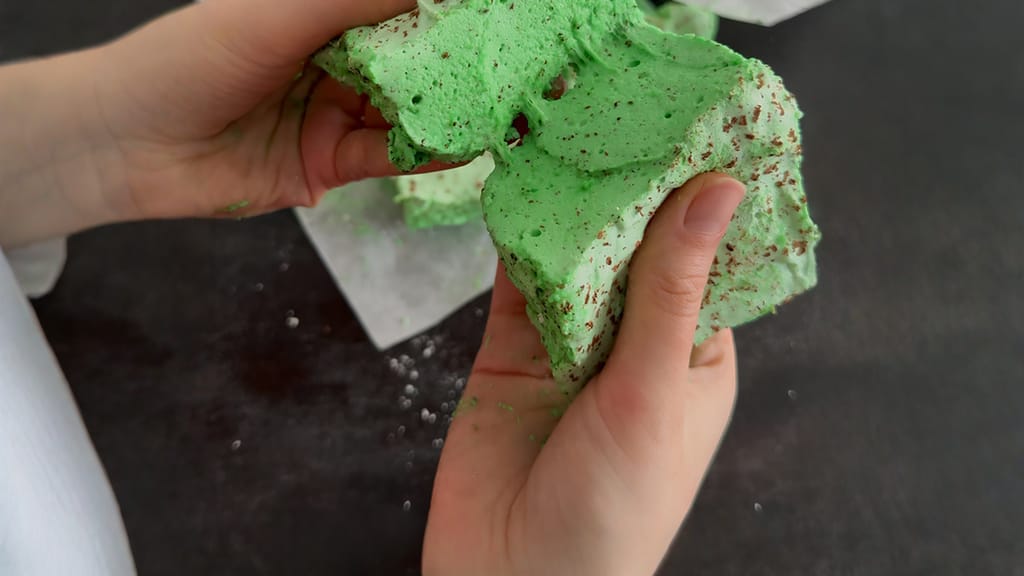
Homemade mint chocolate marshmallows
Homemade mint marshmallows with chocolate — mint and dark chocolate in action
The most common mistake is overdosing: the cream ends up tasting overly sweet and artificial rather than more fruity. Other mistakes include:
Tasting it right after mixing in. The flavour will still develop in the cream, so give it 15–30 minutes.
Cold paste into warm cream. This causes lumps and streaks — always bring the paste to room temperature first.
Flavour clashing with dark chocolate. Fruit pastes (especially watermelon) get lost in dark ganache. Cherry and mint work well with chocolate; save mango and watermelon for white ganache.
Not adjusting the sugar. Paste is sweet, so for a large amount, cut back the icing sugar in the cream by roughly half the weight of paste you've added.
Using paste instead of colouring. If you want a bold shade, add gel food colouring rather than more paste.
A level teaspoon of thick flavouring paste weighs roughly 6–7 g, so the standard 30 g per 500 g of cream works out to about 4–5 teaspoons. This is only a rough guide, as thickness varies between pastes. With mint paste, start with two teaspoons and adjust to taste from there.
Yes, flavouring pastes can be combined, but the total amount should still stay around 30 g per 500 g of cream. Watermelon with mint works well (roughly 4:1), as does mango with a dash of mint. Two bold fruit flavours at full strength tend to cancel each other out.
Yes — add about 1 teaspoon of paste per 100 g of icing sugar, and reduce the water or lemon juice by the same amount so the icing doesn't thin out. The paste will also lightly tint the icing.
Cream with flavouring paste keeps just as long as the same cream without it. At a normal dose, the paste doesn't shorten shelf life — what matters is the cream's base (butter, cream, mascarpone) and storing it in the fridge. Keep an opened paste tightly sealed as directed on the label.
No, flavouring paste is a concentrate used by the gram in cream or batter. Fruit filling for baked goods is used in large amounts as a standalone layer. Paste on its own doesn't work as a filling — it's too sweet and too intense for that.
One recipe worth heating the oven for, one tip, and one deal from the shop. Nothing else.