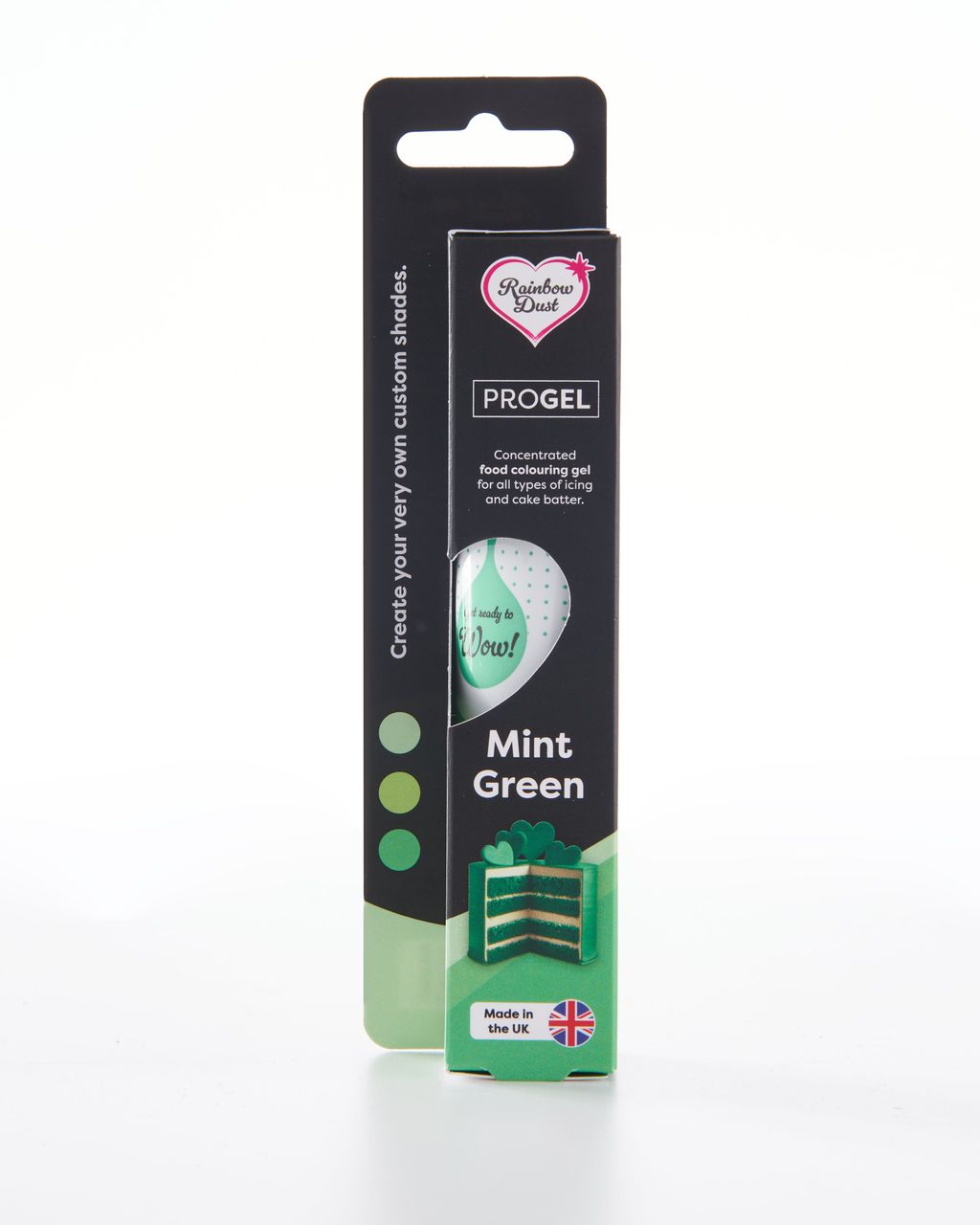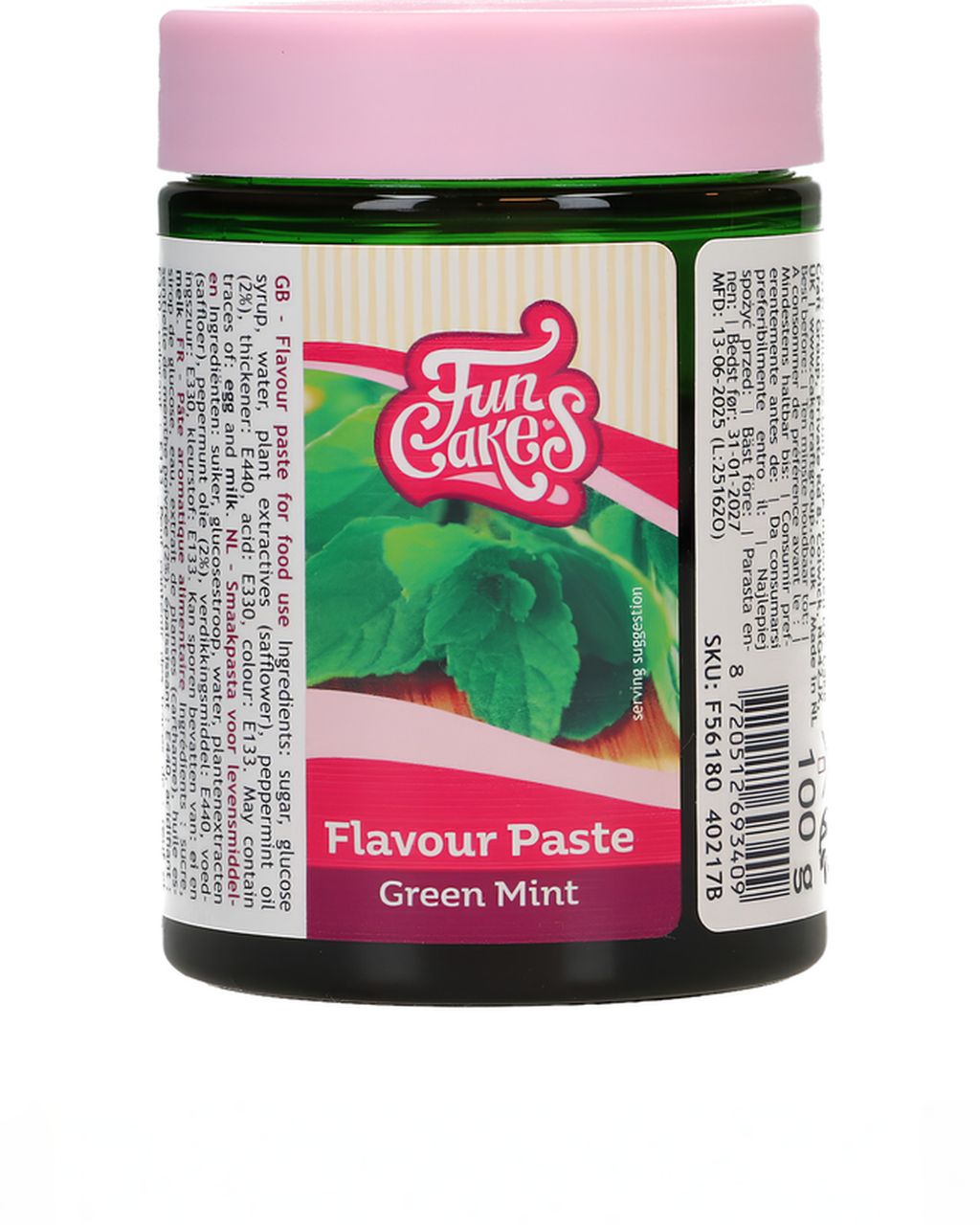
FunCakes Mint Flavouring Paste for Creams and Batters (100 g)
Mint Chocolates and Peppermint Patties: How to Get Mint into Chocolate
Updated Oct 8, 2026
Mint chocolates and peppermint patties come down to one rule: put the mint in the filling, not in the melted chocolate. Most mint flavourings contain water or alcohol, and chocolate seizes into a grainy mess as soon as either touches it. Hide the mint inside a fondant filling, a ganache, or a buttercream instead, and keep the chocolate shell pure — that's how you get the thing everyone loves about mint and chocolate: a cool, soft centre wrapped in a glossy, bitter shell. Below you'll find which flavouring to pick, how much to use, and which chocolate works best for coating.
Four flavourings work for mint chocolates and confectionery. The main difference between them is whether they contain water, and that determines which part of the chocolate they belong in:
Mint flavouring paste: sugar-and-water based, thick, and easy to measure. Use it in fillings, ganache, and buttercreams.
Food-grade mint oil: a pure essential oil with no water, extremely strong. The only flavouring you can stir straight into melted chocolate.
Mint extract (flavouring in alcohol): cheap and widely available, but the alcohol and water will seize the chocolate. Keep it to fillings and batters only.
Fresh mint: the mildest, most herbal flavour. Infuse it in cream for ganache.
FunCakes mint flavouring paste is the easiest option for homemade chocolates: the flavour is strong, but it's easy to measure out in grams. The maker recommends 30 g per 500 g of mixture, so roughly 6 g per 100 g of cream or filling. We don't sell food-grade mint oil. If you want to use it, buy only oil explicitly labelled for food use, and dose it drop by drop — one drop per 100 g of chocolate is a good starting point, and a second drop is already a lot. For a gentler flavour in ganache, reach for fresh mint instead.
Chocolate seizes because even a few drops of water or alcohol dissolve the sugar in the chocolate into a sticky syrup. That syrup then clumps the cocoa particles together. Within seconds the mixture thickens, turns dull, and starts to crumble — and once that happens, there's no bringing it back to a glossy, coat-worthy state.
What this means in practice:
Never add paste or extract to melted chocolate meant for coating. Keep the shell clean and put the mint in the filling instead.
If you want mint flavour directly in the chocolate (say, for mint chocolate bars), use only an oil-based flavouring — never anything water- or alcohol-based.
Don't throw out seized chocolate. Stir in some warm cream and you've got a ganache for truffles or brownies. A large amount of liquid won't seize the chocolate further — it turns it into an emulsion instead.
Watch out for steam. When melting chocolate over a water bath, even condensed steam from the pot can cause it to seize. Let the bowl overhang the rim of the pot, and keep the water just below a simmer.
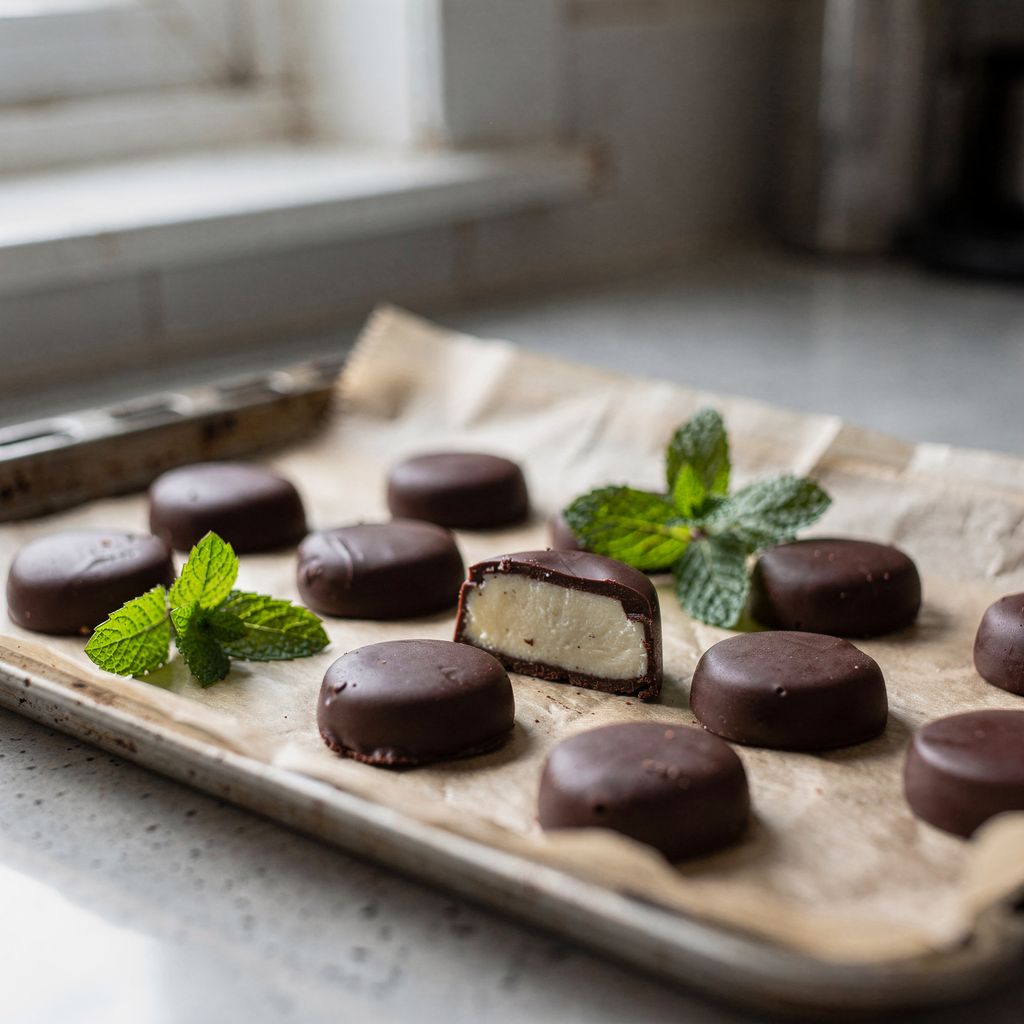
The filling for mint chocolates is a fondant made from icing sugar, softened butter, and cream in roughly a 10 : 1 : 1 ratio, flavoured with mint paste. The classic mint chocolate — known in English as a peppermint pattie — is exactly this: a white mint fondant coated in a thin layer of dark chocolate. For 200 g of icing sugar, use 20 g of butter, 20 ml of 30–33% cream, and 8–12 g of mint paste in total.
Method and things to watch for:
The mixture should have the texture of modelling clay. If it sticks to your fingers, work in more icing sugar a spoonful at a time. If it cracks, add a few drops of cream.
Taste before shaping. Every paste has a different strength: start with 8 g, taste, then add 1–2 g at a time, up to 12 g total.
Roll out to 6–8 mm and cut into rounds about 3–4 cm across. Thinner rounds won't survive dipping, while thicker ones end up more like a sugar brick than a chocolate.
Chill in the freezer for 20–30 minutes so the rounds hold their shape during dipping. Then let them rest on the counter for 5–10 minutes — they should be firm, not frozen solid, or the shell will crack as it sets.
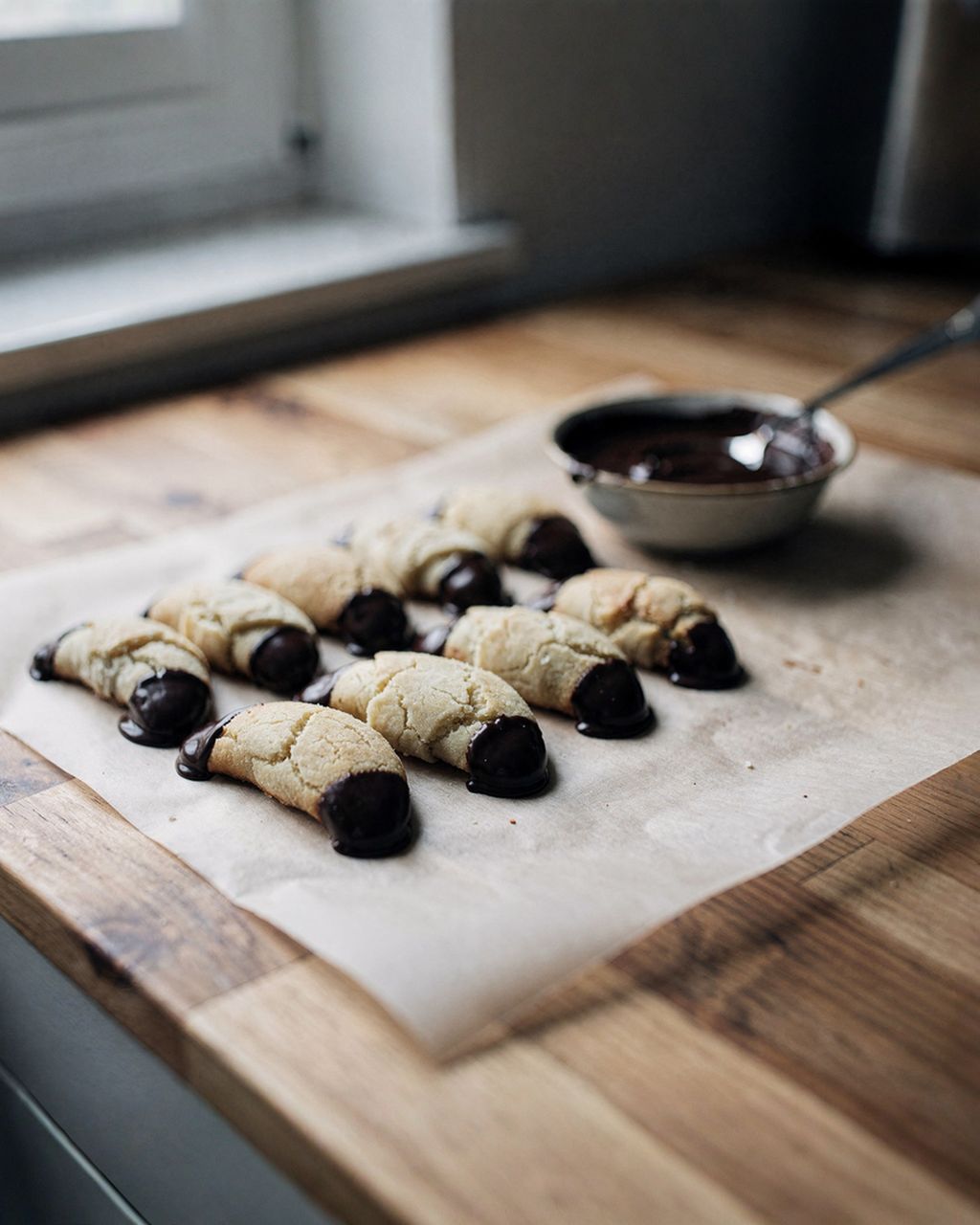
Dip in tempered dark chocolate (use a fork, letting the excess drip off), then let set on baking paper.
If you'd like the filling a soft green, add a touch of gel colouring. Gel colouring is water-based, so it's fine in fondant but not in chocolate. Add it with the tip of a toothpick — a mint filling looks best in a pastel shade.
Mint ganache is simply dark chocolate and hot cream, flavoured with paste or mint-infused cream. The ratio of chocolate to cream determines the texture:
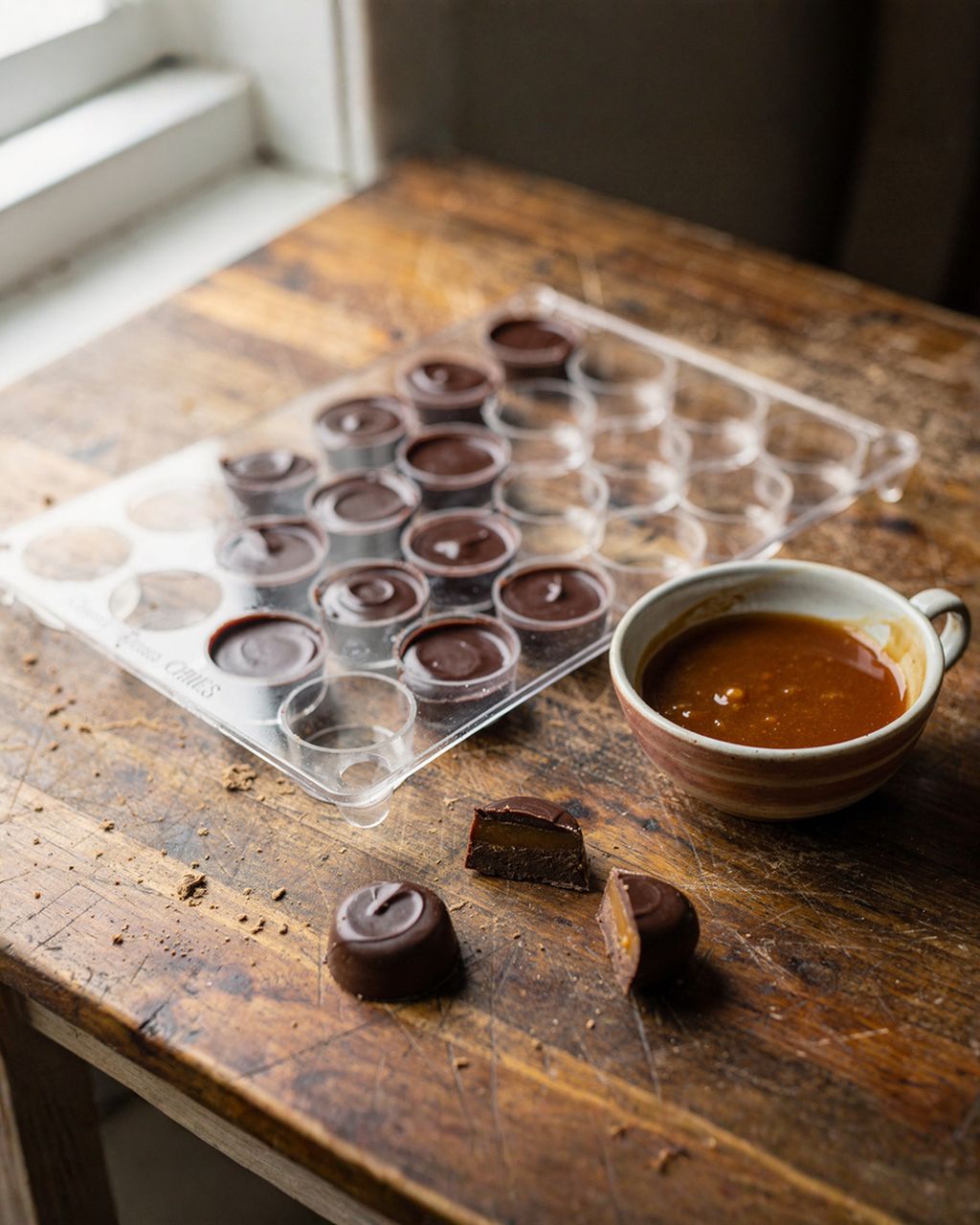
1 : 1 (e.g. 100 g dark chocolate + 100 g 33% cream): a soft filling for praline moulds or little cups.
2 : 1 (200 g chocolate + 100 g cream): a firmer ganache for hand-rolled truffles and sandwiching confectionery.
With paste: once the ganache is made and slightly cooled, stir in 3–6% mint paste by total weight — that's 6–12 g per 200 g of ganache. Paste is fine here, since the ganache already contains water from the cream.
With fresh mint: pour 100 ml of hot cream over 10 g of mint leaves (about two handfuls), cover, and let infuse for 20–30 minutes. Then strain, reheat the cream, and pour it over the chocolate. The flavour is milder and more herbal than with paste. Don't blend the leaves into the cream, or the ganache will turn brown and taste grassy.
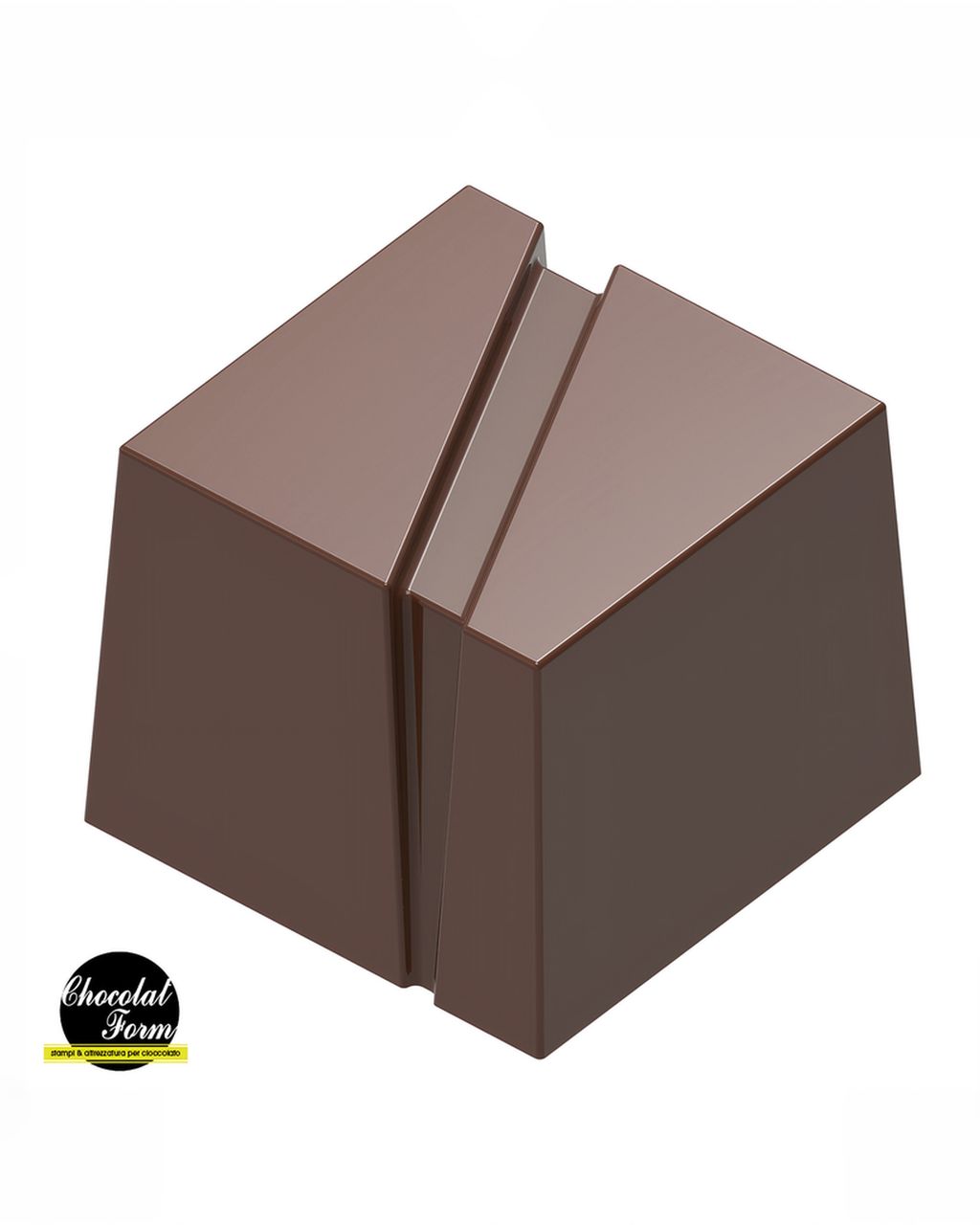
For more detailed ratios for different filling types and how long each one keeps, see our article Praline Fillings: Ganache, Caramel, and Fruit Pastes. The method for hand-rolled mint truffles is the same as for classic chocolate truffles, just with mint infused into the cream. Shaped mint pralines work best in a polycarbonate mould, which gives the chocolate a high shine — the differences are explained in Praline Moulds: Polycarbonate or Silicone?.
Dark chocolate with 50–60% cocoa works best for mint chocolates. It's bitter enough to balance the sweet filling, yet doesn't overpower the mint. Here's how the options compare:
Dark, 50–60%: the classic choice. Callebaut 811 dark chocolate (54.5% cocoa), for example, is a couverture with medium fluidity (3 drops out of 5, per the maker), which gives dipped chocolates a thin, glossy shell.
Dark, 70% and above: for fans of a strongly bitter chocolate. The mint will fade into the background, though, and the shell is more brittle.
Milk chocolate: makes for a sweeter mint flavour, good for kids. Cut back the sugar in the filling by a few grams to compensate.
White chocolate: colour it mint green with a fat-soluble colouring (powder or oil-based chocolate colour) — gel colouring will seize it. It looks great on a platter, but it's sugar on sugar, so pair it with a dark ganache filling inside.
Cocoa coating (compound with vegetable fat): doesn't need tempering and is easy to work with, but tastes less chocolatey and melts more slowly in the mouth. You'll spot it on the label by the words "cocoa coating" or "compound coating" rather than "chocolate." Note: a "chocolate coating" is, confusingly, real chocolate (couverture) — it doesn't contain vegetable fat in place of cocoa butter.
To get a shell that snaps cleanly, shines, and doesn't go dull or streaky as it sets, temper your couverture. For dark chocolate like Callebaut 811, the rule of thumb is: melt to 45–50°C (113–122°F), cool to 27–28°C (81–82°F), and work at 31–32°C (88–90°F). What the numbers 811, 823, and so on actually mean is explained in Callebaut 811, 823, W2, and RB2. For tips on dipping confectionery so the shell stays glossy and doesn't go sticky, see How to Dip Confectionery in Chocolate for a Glossy, Non-Sticky Finish.
Mint works anywhere there's chocolate or a neutral buttercream in your bakes. It's especially good in these four types:
Filled cups and balls: use a 1 : 1 mint ganache in place of the usual chocolate one.
Sandwich cookies: mix about 6 g of mint paste into 100 g of buttercream and use it to sandwich cocoa biscuit rounds.
Meringues: fold 2–4 g of mint paste into a meringue made from 2 egg whites (about 60–70 g) at the end of whipping, then dip the tips lightly in dark chocolate. You'll find the base recipe in Meringue Kisses.
Mint chocolates: served as their own thing on the platter — see the filling instructions above.
Mint has a strong flavour, so one or two mint items on the platter is plenty — you don't need five.
If you'd like mint and chocolate outside of classic confectionery, try After Eight-style chocolate mint cupcakes or homemade mint marshmallows with chocolate. They'll hold their own on a Christmas platter too.
Mint chocolates with a fondant filling will keep in a sealed box in a cool spot (12–18°C / 54–64°F) for about 2–3 weeks, since the filling is mostly sugar. Chocolates and pralines filled with cream-based mint ganache should be eaten within 1–2 weeks and kept in the fridge in a well-sealed box so they don't pick up odours.
Yes, both mint chocolates and ganache-filled treats can be frozen for 2–3 months in a well-sealed box. Thaw them gradually: first overnight in the fridge, then an hour at room temperature, and only open the box after that. Otherwise moisture will condense on the cold chocolate and the shell will turn white.
Peppermint is sharp and cooling thanks to its menthol content, while spearmint is sweeter and milder, without that strong cooling kick. Peppermint gives you the classic flavour of mint chocolates and After Eights, while spearmint tastes more like chewing gum. Peppermint works best for mint chocolates coated in dark chocolate, while spearmint is a fine choice for delicate ganaches made with fresh leaves.
One recipe worth heating the oven for, one tip, and one deal from the shop. Nothing else.