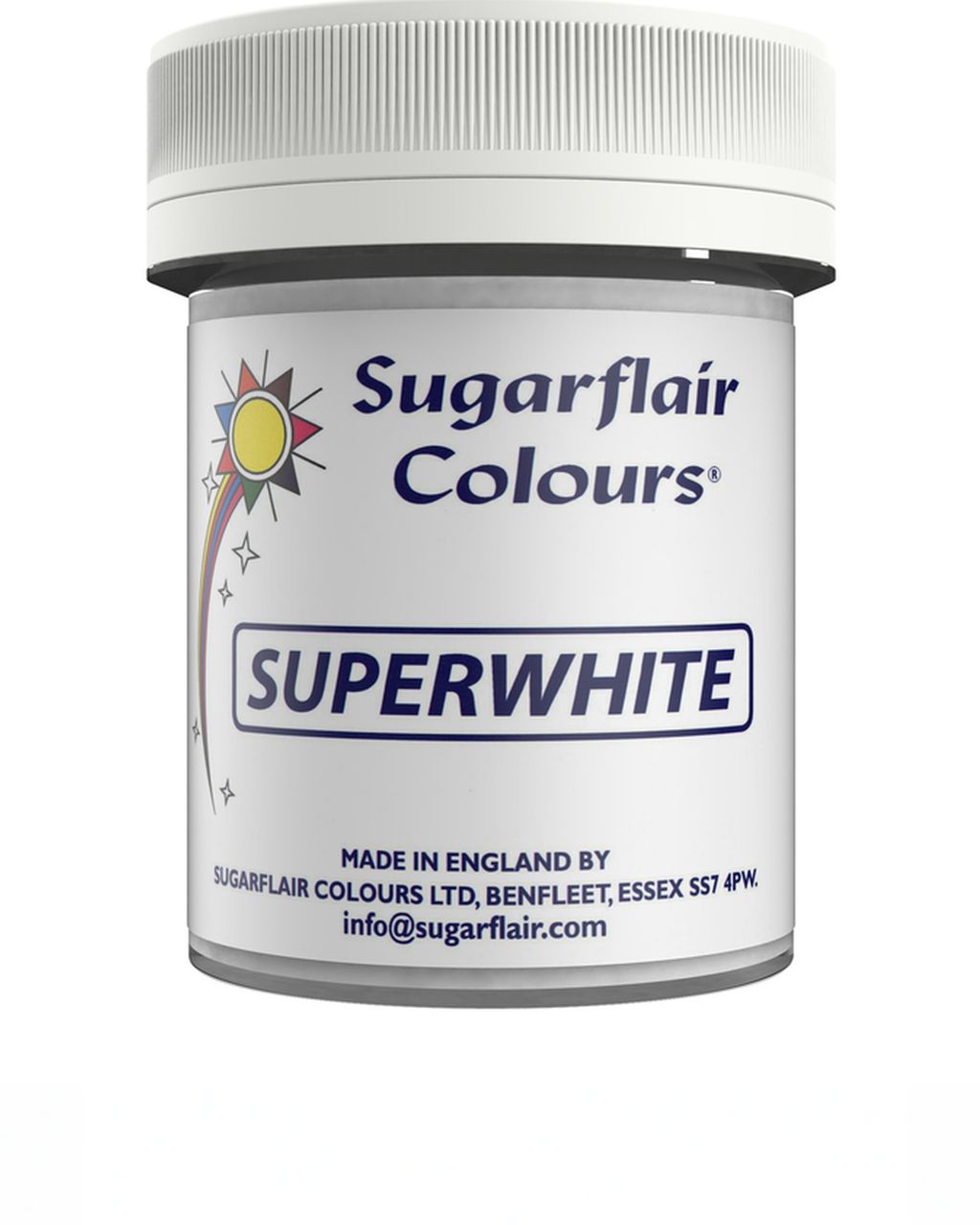
Superwhite Icing Colour Sugarflair (20 g)
Buttercream That Isn't Greasy: How to Whip It Right
Updated Oct 8, 2026
Buttercream isn't greasy when you whip butter at 18–20°C (64–68°F) for at least 5 minutes until it's pale and fluffy — only then do you add the sugar and flavouring. That greasy mouthfeel almost never comes from "too much butter" — it comes from butter that's too warm, under-whipped, or a frosting with no salt or bold flavour, where all you taste is fat. Below you'll find the temperatures, ratios, timings, and fixes for split or runny frosting.
Buttercream turns greasy for four reasons: butter that's too warm, under-whipping, an unbalanced ratio, and flat flavour. Usually it's a combination of two of these.
The butter is too warm. Above about 22°C (72°F), the fat starts softening into an oily mass that can't hold air. The result is a shiny, heavy frosting that leaves a film on your tongue.
The butter isn't whipped enough. Beating butter works tiny air bubbles into it. These lighten the frosting, make it fluffier, and break up the fat — skip this step and you're basically eating sweetened butter.
Not enough sugar or liquid relative to the fat. Sugar and a splash of milk or cream give the frosting structure; without them, fat dominates.
No salt or bold flavour. Without a pinch of salt and a decent amount of flavouring, the frosting tastes "like plain butter" — and your brain reads that as greasiness.
Interestingly, butter itself rarely causes that greasy film. Milk fat melts just below body temperature, so it dissolves cleanly in your mouth. That waxy coating on the roof of your mouth is typically left by hydrogenated vegetable fats, which don't melt until above 37°C (99°F) — as the baking blog Joe Pastry explains.
Butter for buttercream should be 18–20°C (64–68°F) — soft, but still cool to the touch. This is the temperature at which it holds air best.
How to tell without a thermometer:
A finger pressed into a cube leaves a clean indent without sinking through, and the butter doesn't stick to your finger.
A cube bends without snapping, but doesn't flop over either.
There's no shiny, greasy sheen on the surface.
Take the butter out of the fridge about 1–2 hours ahead and cut it into 2 × 2 cm (¾ × ¾ in) cubes so it warms up evenly. Don't soften it in the microwave — the edges will melt while the centre stays hard, and once butter has melted it won't hold air again even after chilling.
Kitchen temperature matters too: on a hot day at 26°C (79°F), the bowl and whisk will warm the frosting as you beat it. Chilling the bowl in the fridge for 10 minutes, or whipping in shorter bursts, helps keep things cool.
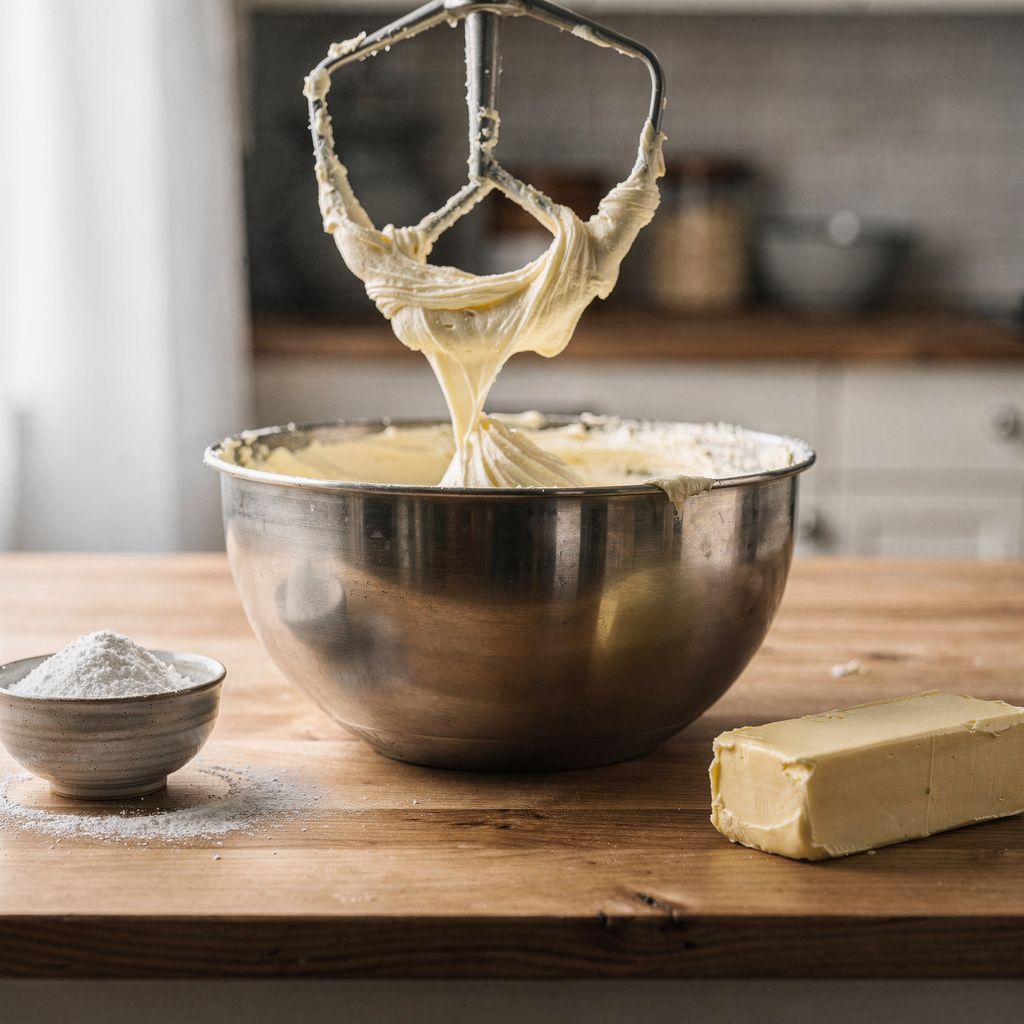
Beat the butter alone for 5–8 minutes on medium-high speed, until it turns almost white and visibly increases in volume. Only then add the sugar. This is the step people skip most often, yet it makes the biggest difference.
A method that works:
Beat the butter (at 18–20°C/64–68°F) for 5–8 minutes. Scrape down the bowl once or twice along the way.
Sift the powdered sugar and add it a spoonful at a time on low speed so it doesn't fly everywhere. Then increase the speed and beat for 2–3 minutes.
Add the liquid (milk or cream, 1–2 tablespoons per 250 g/9 oz of butter) last, a teaspoon at a time.
Mix in the salt and flavouring, then finish beating on low speed for 1–2 minutes. This knocks out the large air bubbles, so the frosting spreads and pipes more smoothly.
As for appearance: a finished frosting is pale cream-coloured, matte, and fluffy, falling off the spatula in soft waves. A deep yellow, glossy frosting is either under-whipped or too warm.
For classic American buttercream made with powdered sugar, aim for 1 part butter to 1–2 parts powdered sugar by weight (most commonly 1 : 1.5–2), meaning 250–500 g (9–18 oz) of sugar per 250 g (9 oz) of butter.
1 : 1 – the least sweet, but softest and most "buttery." Good for fillings, too soft for piped decoration.
1 : 1.5 – a sensible middle ground for frosting a cake.
1 : 2 – firm, holds piped shapes well, the sweetest of the three.
If your frosting feels greasy, finish whipping it and add salt first — only then add more sugar. Adding sugar straight away just stiffens and oversweetens the frosting without fixing the greasiness.
Salt is the quiet hero here: a pinch (about 1 g) per 250 g (9 oz) of unsalted butter won't make the frosting taste salty — it just cuts the flat buttery flavour and brings out the vanilla or fruit. A few drops of lemon juice do the same job.
Swiss meringue buttercream feels the least greasy and least sweet, powdered sugar buttercream is the simplest to make, and custard (pastry cream) buttercream is easiest on the wallet. Each has its own way of turning greasy:
Powdered sugar (American) – the quickest and firmest, but also the sweetest. It usually turns greasy from under-whipped butter.
Swiss (egg whites + sugar heated to 71°C/160°F, whipped to a meringue, then butter added) – silky and light. It turns greasy and runny if you add butter to a meringue that's still warm: the meringue needs to cool to below 25°C (77°F) (the bowl should feel only just lukewarm).
Custard-based (cooked pastry cream + butter) – delicate, less sweet. The pastry cream and butter need to be the same temperature, or the frosting will split. Warm pastry cream will melt the butter.
If you want a frosting for cupcakes that holds crisp edges even in warm weather, we cover that separately in our article on which frosting holds its shape on cupcakes.
What about using something other than butter? Hydrogenated vegetable fats (like Palmarin or baking margarines) hold their shape even in heat and cost less, but they melt above body temperature — which is exactly what causes that waxy film on the roof of your mouth. If you want a frosting that isn't greasy, butter with 82% fat is the better choice.
A split frosting is almost always too cold, while a runny, greasy one is too warm. The fix is the opposite in each case, so first figure out which one you've got.
Frosting looks like cottage cheese or curdled (it's too cold):
Keep beating for 2–3 more minutes — with Swiss buttercream, this "curdled" stage is normal and often comes back together on its own.
If that doesn't work, warm the outside of the bowl with a hair dryer or over hot water for 10–20 seconds, then beat again.
Or scoop out about 100 g (3.5 oz) of the frosting, melt it gently in the microwave (just until melted, not hot), and pour it back in while the mixer is running.
Frosting is shiny, runny, greasy (it's too warm):
Put the whole bowl in the fridge for 10–15 minutes, then beat again.
Repeat until the frosting turns matte and starts holding its shape.
Don't add more sugar until it's cooled down — that just oversweetens it needlessly.
The best way to flavour buttercream is with vanilla paste, freeze-dried fruit, or a flavouring paste — meaning flavour without added water — plus a pinch of salt. A frosting with a bold flavour doesn't register as greasy. A lot of added liquid, on the other hand, thins it out and can cause it to separate.
Comparing your options:
Vanilla pod or vanilla paste – the best classic choice, adds no liquid.
Extracts and flavourings – strong, so a few drops go a long way, but the flavour can taste flatter and any alcohol in them can turn slightly bitter.
Fruit purées and jams – real fruit flavour, but the water in them loosens the frosting. Stick to 1–2 tablespoons per 250 g (9 oz) of butter, or reduce the purée first to thicken it.
Freeze-dried fruit powder – strong flavour without water, though it adds a slightly grainy texture.
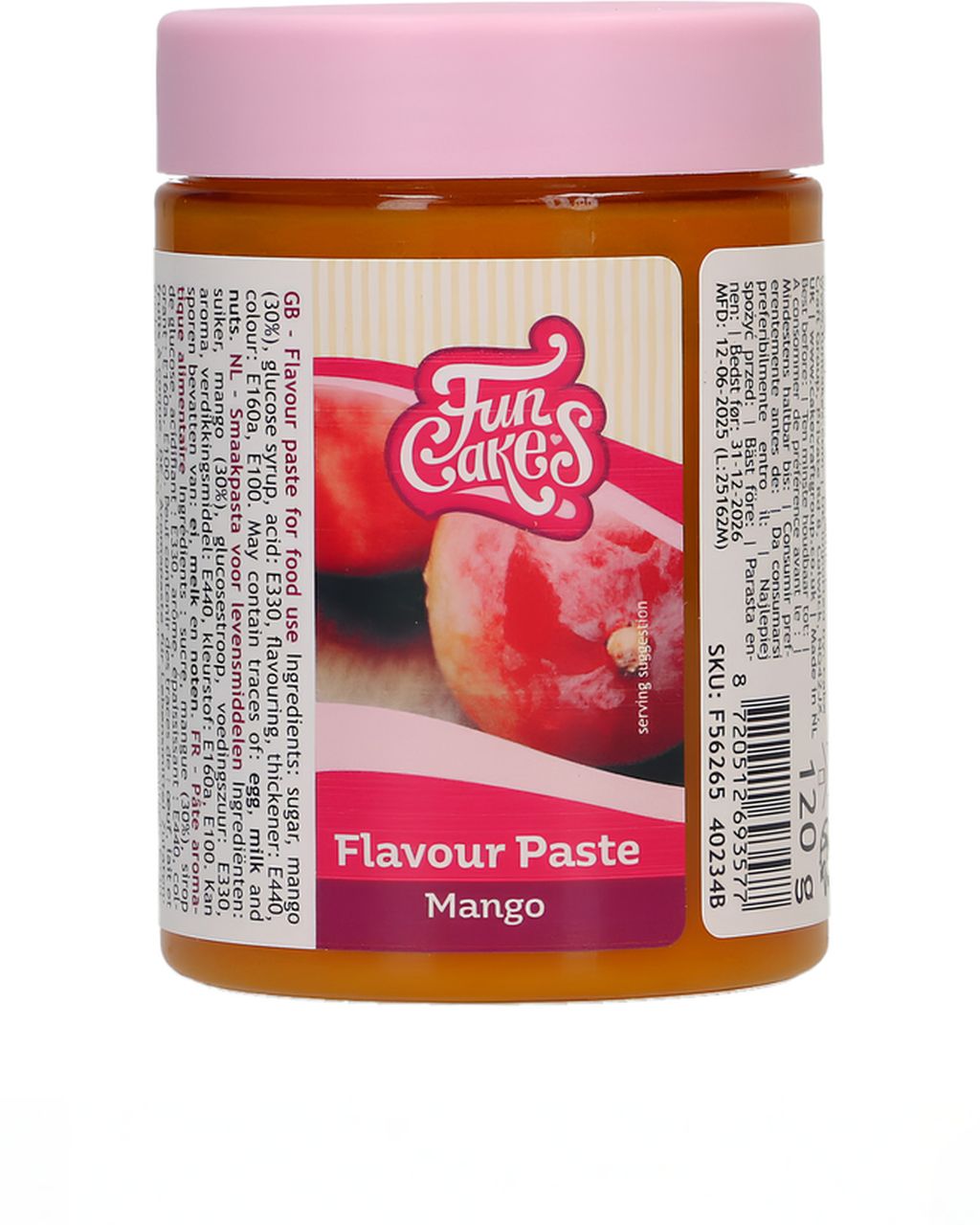
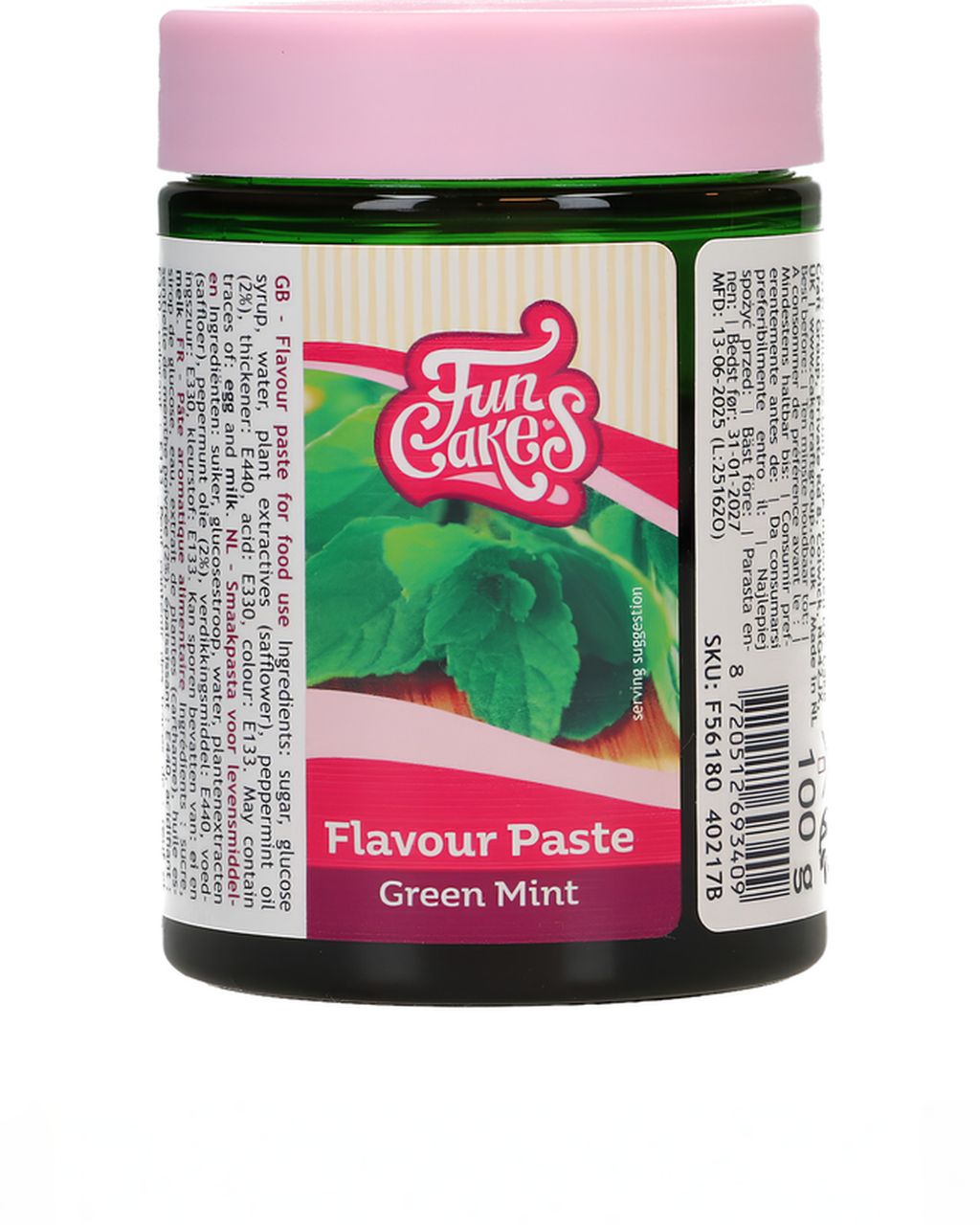
Flavouring pastes – concentrated flavour and colour in a thick form, so they barely affect the texture. FunCakes recommends roughly 30 g (1 oz) per 500 g (18 oz) of frosting for most pastes, though the amount varies by flavour, so check the packaging. Add gradually and taste as you go.
You can find pastes like mango, melon, or mint, among others. We cover what pairs with what and how to dose them in our article on flavouring pastes for frostings and batters.
Buttercream is yellow because of a natural pigment (beta-carotene) in the butter. It lightens on its own the longer you whip it, since the air dilutes the colour. A yellow, glossy frosting also tends to look greasier than it actually is.
Three ways to get a whiter frosting:
Whip it longer – 8 minutes instead of three turns yellow into cream-coloured.
A tiny touch of purple gel colour – just a toothpick-tip's worth. Purple visually cancels out yellow, giving the frosting an off-white tone. Overdo it, though, and it turns grey.
Super-white colouring – a white pigment that masks the frosting into true white. It's the most reliable route when you need a snow-white base for colourful decorations or a wedding cake. Start with a small amount and build it up gradually.
We go into whitening in detail in our article snow-white buttercream: how to whiten it.
Buttercream holds a piped shape when it's around 18–20°C (64–68°F) and firm, like softened butter: a line left by a spoon shouldn't sink back in. If the frosting is too soft, chill it for 10 minutes; if it's too stiff, beat it again.
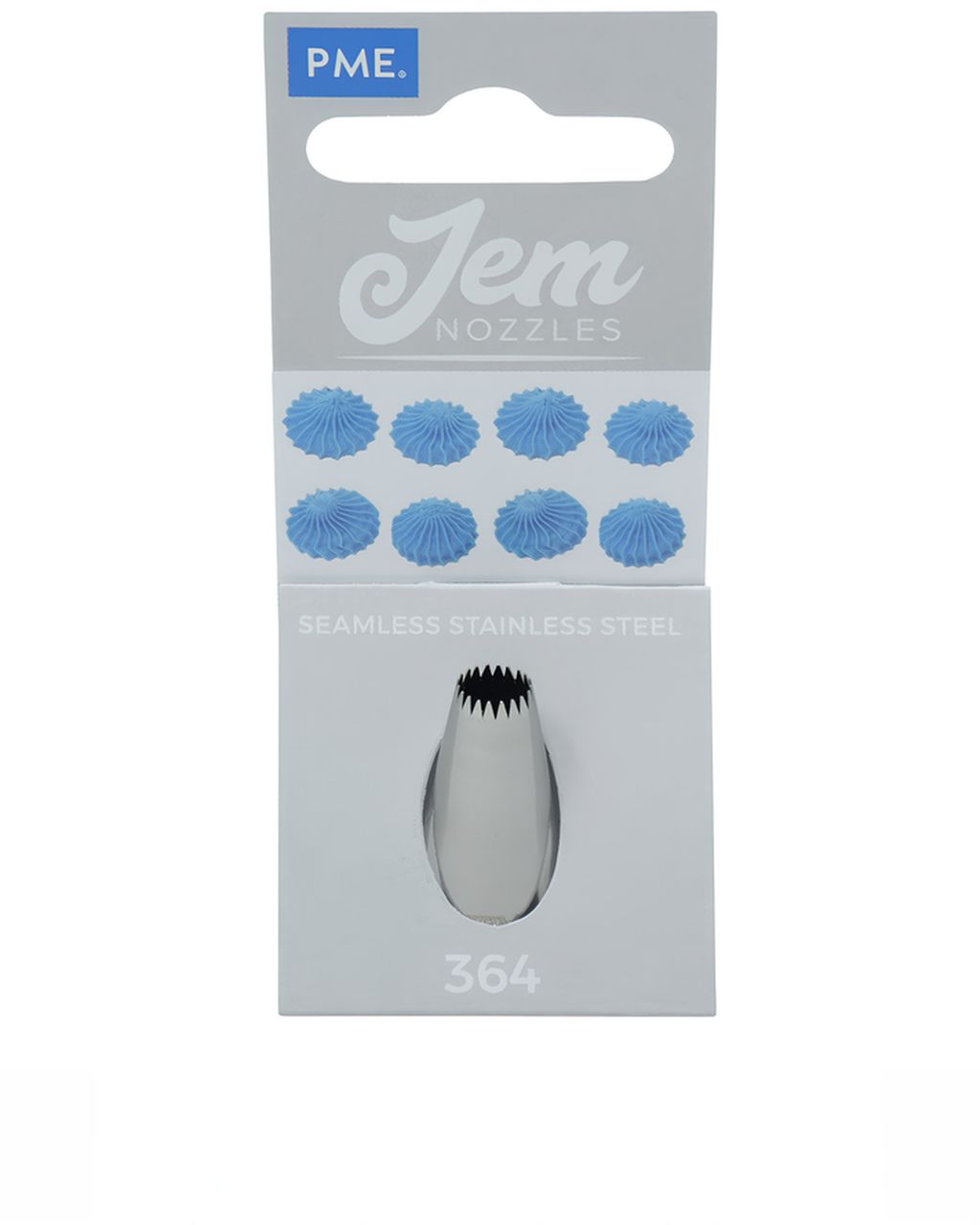
Open star tip – classic rosettes for cupcakes and decorative borders. The most versatile choice to start with.
Closed star tip – tighter ridges for sharper rosettes and swirls.
Round tip – dots, pearls, lettering, and "blobs."
Specialty tips (petals, ruffles) – for flowers and ruffled borders; these need a firmer frosting (closer to a 1 : 2 ratio).
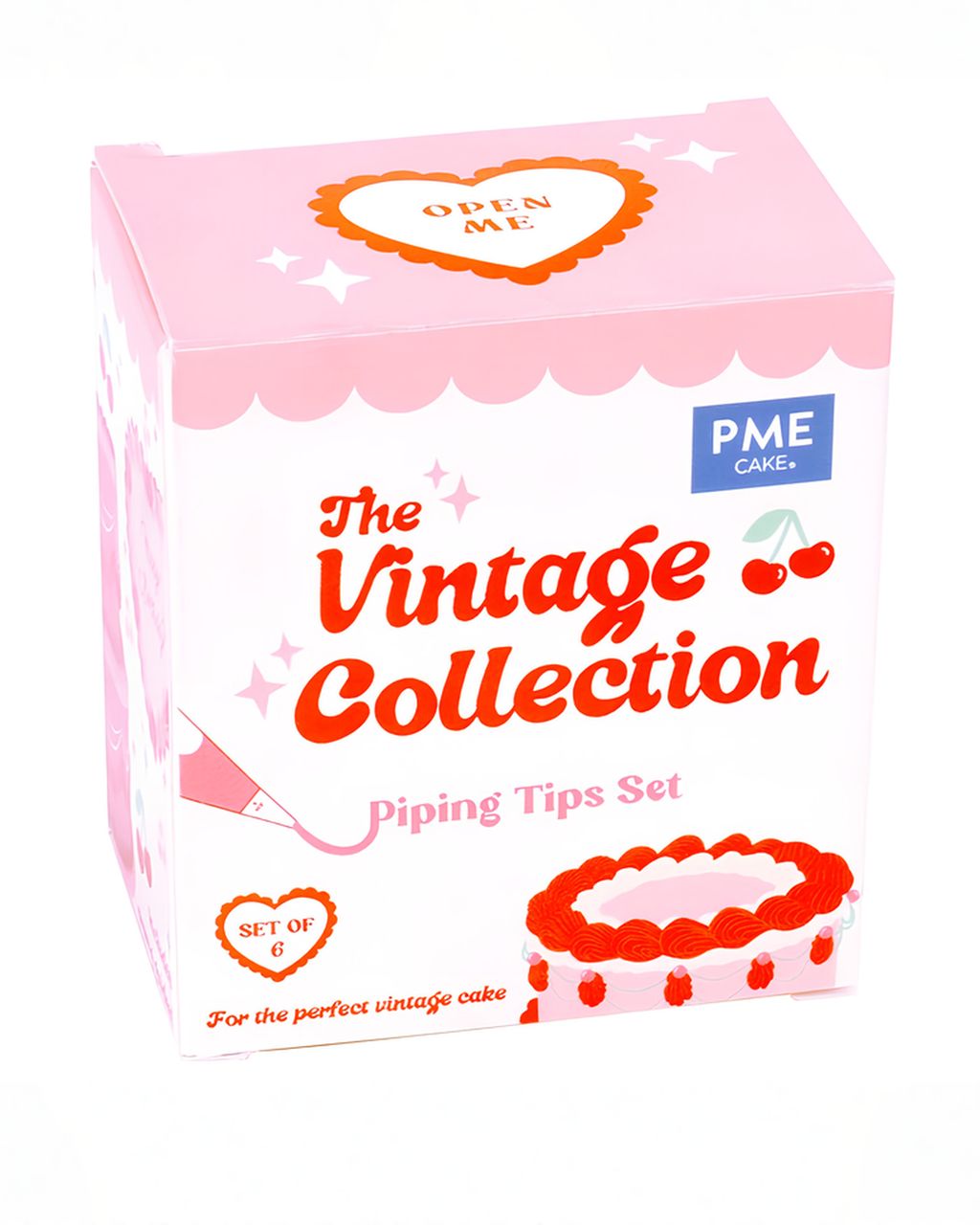
The warmth of your hands heats up frosting in a piping bag quickly, so fill the bag only two-thirds full and hold it by the top, not with your whole palm wrapped around it. You'll find piping tips and other decorating tools in our cake and cupcake decorating category. Our article on how to pipe a buttercream rosette on a cupcake walks through the process step by step.
Yes, you can use salted butter in your frosting — just skip adding extra salt. Salt content varies between brands, which is why bakers usually prefer unsalted butter and season to taste, roughly 1 g per 250 g (9 oz) of butter.
Buttercream made with powdered sugar keeps in a sealed container in the fridge for about 5–7 days; custard- or egg-white-based frostings keep for a shorter time, around 3 days. Frozen, it lasts up to 2–3 months. Let it come to room temperature before use and re-whip it.
Frosting made from butter and powdered sugar can safely sit in a cool room for a full day, but for the best appearance, don't leave it in warmth for more than a few hours. A cake with custard- or egg-white-based frosting should go in the fridge within 2 hours.
Grainy buttercream usually means undissolved sugar — either granulated sugar or unsifted powdered sugar. Use fine powdered sugar, sift it, and keep beating for 2–3 minutes after adding it; a teaspoon of milk can also help the sugar dissolve better.
Yes, a hand electric mixer works fine for buttercream — just allow more time, closer to 8–10 minutes for the butter alone. Whisking by hand takes a lot of effort and won't incorporate as much air, so the frosting will turn out denser.
One recipe worth heating the oven for, one tip, and one deal from the shop. Nothing else.