Red velvet – mini desserts for sweethearts
Red Velvet: How to Get a Deep Red Cake Batter
Updated Oct 8, 2026
A deep red red velvet batter comes down to three things: concentrated gel food colouring, a small amount of natural (non-alkalised) cocoa, and an acidic environment from buttermilk and vinegar. Leave one of these out and your cake turns brick-brown, pink, or bitter. Below you'll find out why this happens, how much colouring to use, and how to bake it so the red survives the oven.
Red velvet turns brown because the red colouring has to compete with the brown colour of cocoa, and both the alkaline environment created by baking soda and the high heat of the oven dull the red. Specifically, four things can rob you of a vibrant colour:
Too much cocoa – every extra spoonful pushes the batter from red toward brown.
Dutch-process (alkalised) cocoa – it's darker and neutralised, so it muddies the colour.
Too little acid, too much soda – an alkaline batter dulls red tones toward brick.
High heat and long baking times – the surface caramelises to brown, and the crust hides the red crumb underneath.
Fun fact: the original red velvet, as baked in the US in the first half of the 20th century, was only reddish. The story goes that this was down to anthocyanins in non-alkalised cocoa, which turn red in the acidic environment created by buttermilk and vinegar — though the result was more rusty brown than true red. The deep red you know from bakeries today always comes from added colouring.
For a deeply red red velvet, concentrated gel colouring is your best bet: you only need a tiny amount, it won't thin out the batter, and it won't leave any aftertaste. Here's the comparison at a glance:
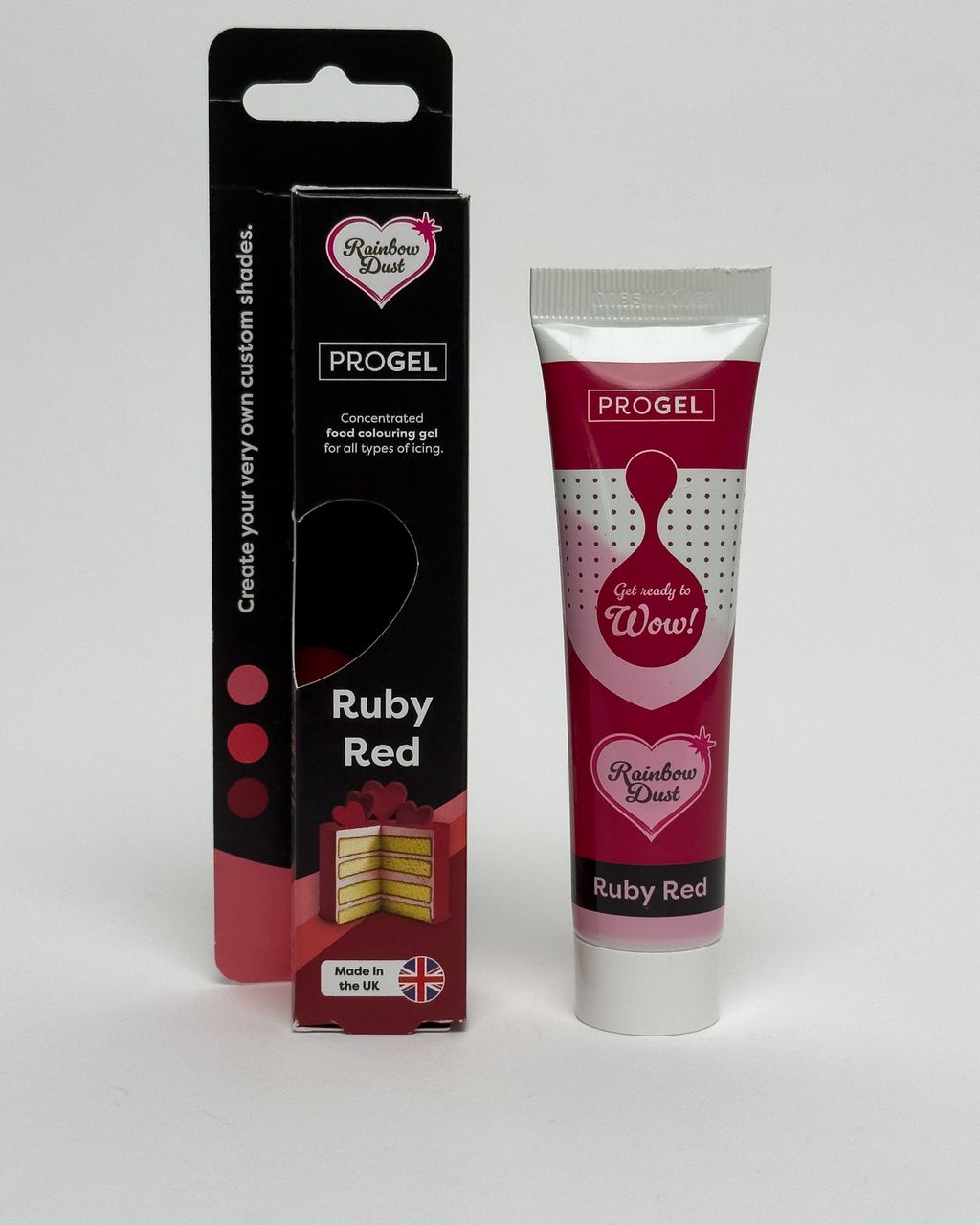
Gel colouring – highly concentrated, measured in grams, won't change the batter's consistency. The first choice for red velvet. One popular option is ProGel Ruby: a deep ruby red with a slightly wine-toned undertone, which comes out more as a rich pink in small doses. In cocoa batter, expect to use about 2–3 g per cake, and a shade that leans more wine-red than bright true red.
Supermarket liquid colouring – weak, so you need tens of millilitres of it. It thins the batter and, in large quantities, often leaves a bitter aftertaste.
Powder colouring – highly concentrated and water-free, works well, but needs to be dissolved in a little liquid first, or it leaves speckles in the batter.
Beetroot (juice or powder) – a natural option, but the pigment betanin is sensitive to heat and alkaline conditions. It easily browns when combined with soda in the oven, has an earthy flavour, and the colour tends to come out more wine-red to purplish-brown.
You'll find the full range of gel, powder, and oil-based colourings in our baking colours and food colouring category. Use gel colours for batter and buttercream; oil-based ones are for chocolate.
For one 20 cm cake (roughly 1.2–1.5 kg of batter), you'll typically need 2–3 g of gel colouring — no more than 3 g per 1 kg of batter — added gradually to the finished batter until it's a shade deeper than you want the final result to be. Cocoa batter "absorbs" colour, so the first addition will look more pinkish-brown; that's completely normal.
Here's how to get an even colour throughout:
Add the colouring to the finished batter, not to the liquid beforehand — that way you can keep checking the shade as you go.
Add it a little at a time using a toothpick or the tip of a knife, mixing thoroughly after each addition.
Aim one shade darker. The crumb will tighten and darken slightly during baking, but batter that's only pink while raw won't turn deep red once baked.
Stick to the maximum dose on the packaging. For ProGel, that's no more than 3 g per 1 kg of batter. A dose of 2–3 g for 1.2–1.5 kg of batter stays within that limit — adding more colouring beyond that won't improve the red, it'll just add an aftertaste.
Tip: red velvet made with oil comes out a cleaner red than when made with butter. Butter's yellow tint pushes the red slightly toward orange.
Use natural (non-alkalised) cocoa in red velvet, and only a little: typically 1–2 tablespoons, or about 8–15 g per 300 g of flour. Red velvet isn't a chocolate cake — the cocoa is only there to add a subtle note and depth of flavour.
Natural cocoa is lighter, more acidic, and works well with the red colouring.
Dutch-process (alkalised) cocoa is dark and neutral — great for purely chocolate bakes, but it pushes red velvet toward brown.
More cocoa doesn't mean better flavour. Add extra cocoa and you'll need to add more colouring too — and that's never worth it.
Check the ingredients list for "acidity regulator" (most commonly potassium carbonate) — that's the giveaway for alkalised cocoa. If it's not listed, you're looking at natural cocoa. Note that stores don't use the label "Dutch-process" consistently.
Buttermilk and vinegar keep the batter acidic, and red tones stay brighter in an acidic environment. They also react with the baking soda, which leavens the batter and gives it that signature velvety texture — hence the name, "velvet."
Classic ratio: roughly 250 ml buttermilk and 1 teaspoon vinegar for every 1 teaspoon of baking soda.
Don't add extra soda. Any excess soda the acid doesn't "use up" makes the batter alkaline, muddies the colour toward brown, and leaves a soapy taste.
No buttermilk on hand? Mix 250 ml milk with 1 tablespoon lemon juice or vinegar and let it sit for 10 minutes. It will thicken and work just the same.
Acidity matters even more with beetroot. Betanin is stable at roughly pH 3.5–7; in alkaline batter it breaks down toward brown.
Bake red velvet at a lower temperature, around 160–170°C (320–340°F), without the fan setting, and only until a skewer comes out clean. The longer and hotter you bake it, the stronger the brown crust will be.
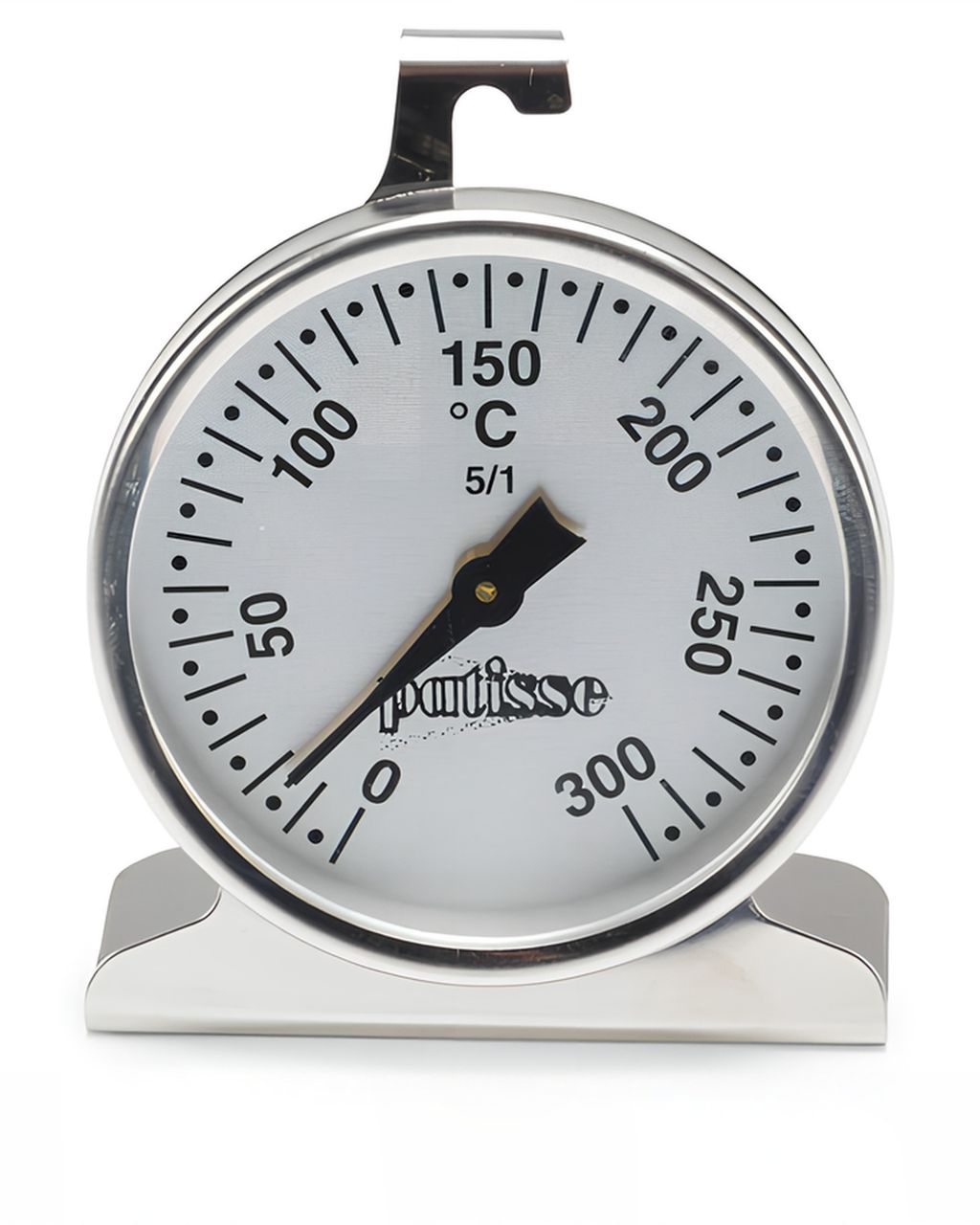
Check the actual oven temperature. Many ovens run 10–20°C (18–36°F) hotter or cooler than their setting — we explain why in Oven thermometers: why your oven doesn't show the real temperature.
Don't overbake. The cake is done when it springs back under your finger and a skewer comes out clean or with a few moist crumbs; every extra minute dries it out and darkens it further.
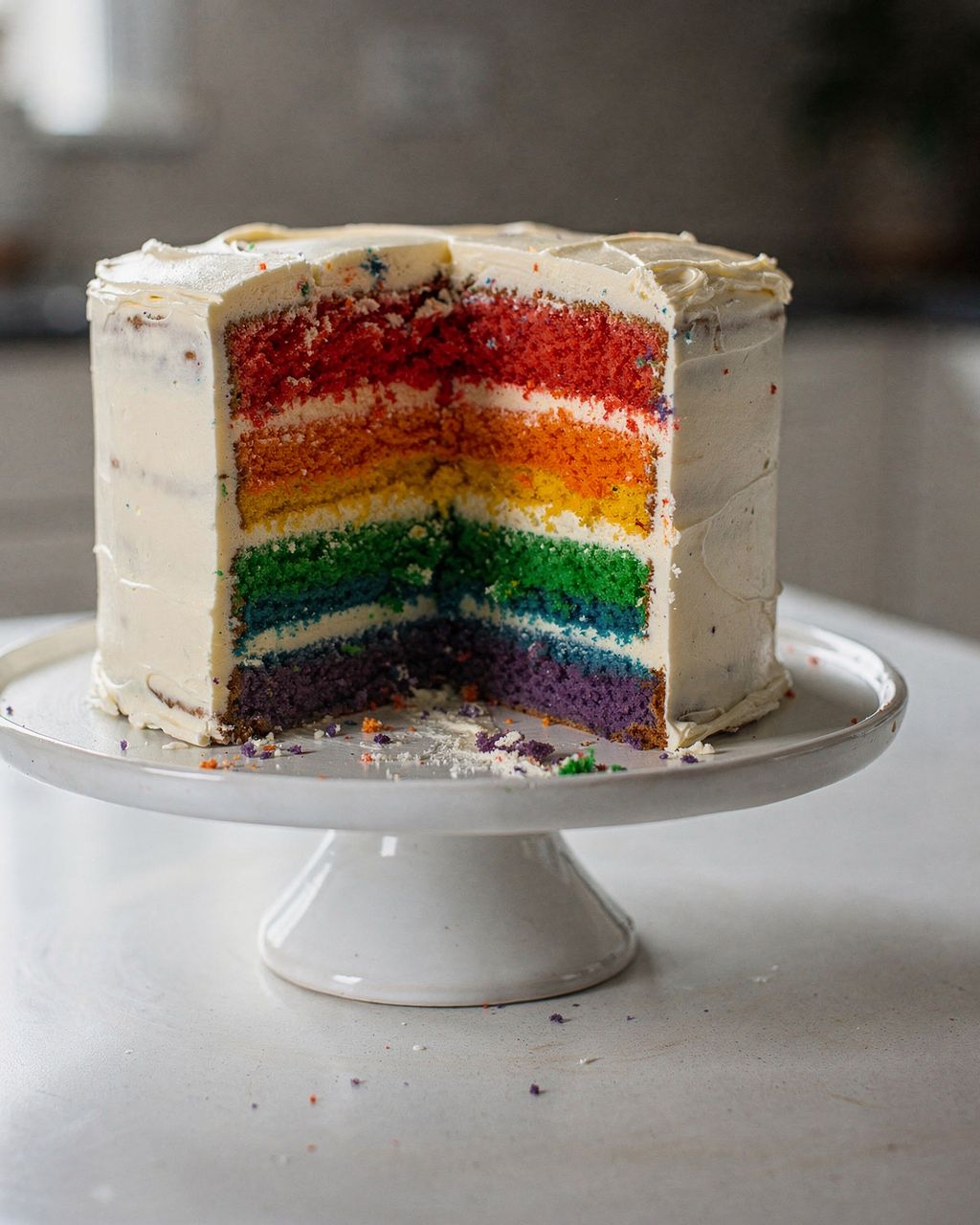
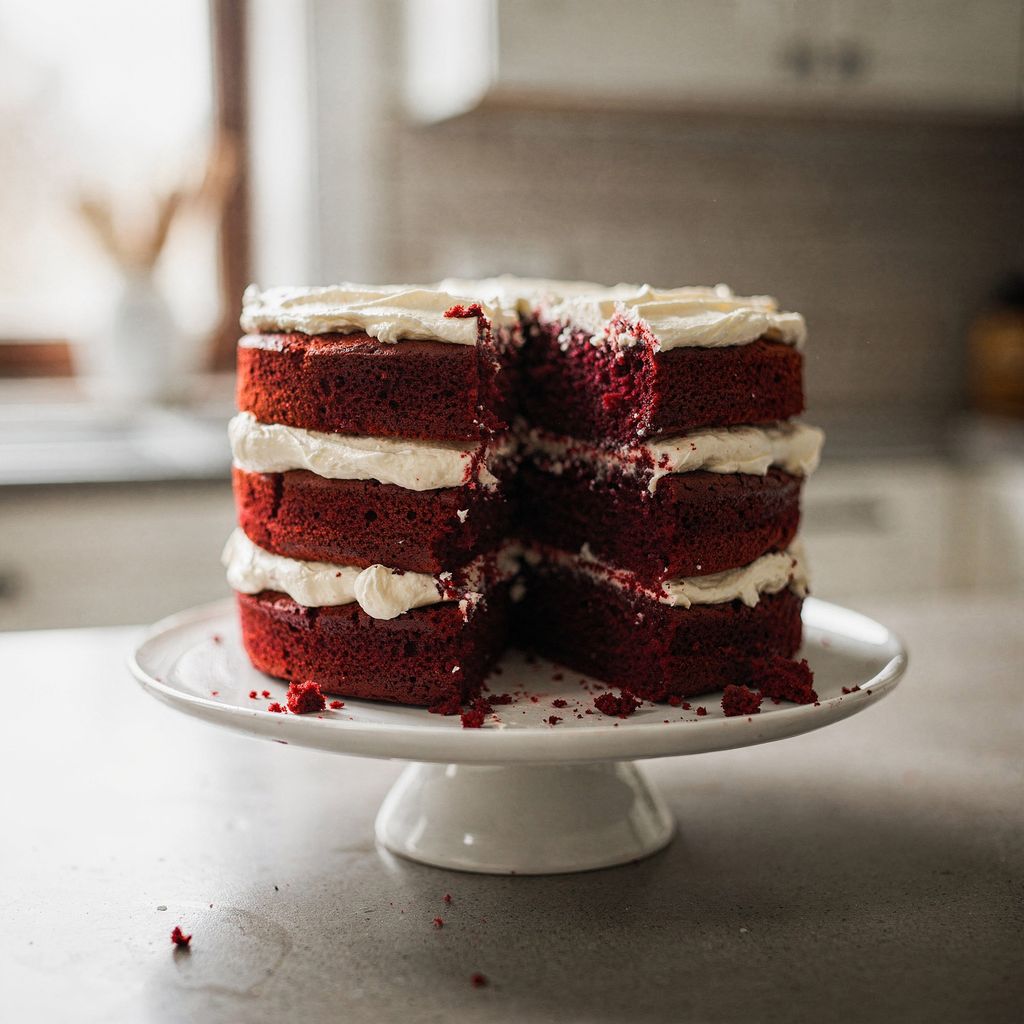
Trim off the crust. Once cooled, trim the thin brown layer from the top and sides — underneath, you'll find a deep red crumb. Crumble the trimmings and use them as a red coating for the sides of the cake.
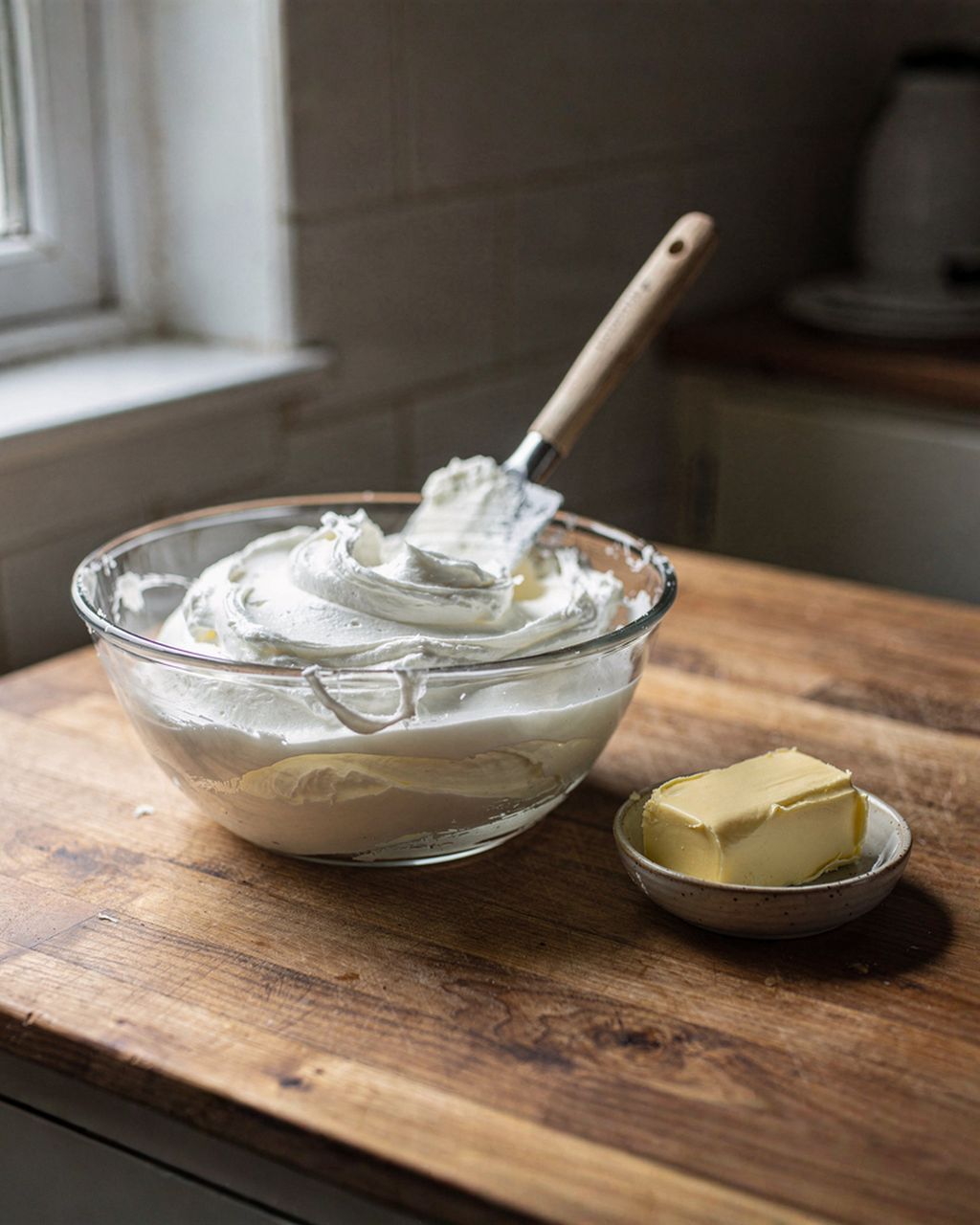
The classic choice is a white cream cheese frosting made with butter and powdered sugar — a snow-white layer next to the deep red crumb is exactly the contrast that makes red velvet look so striking.
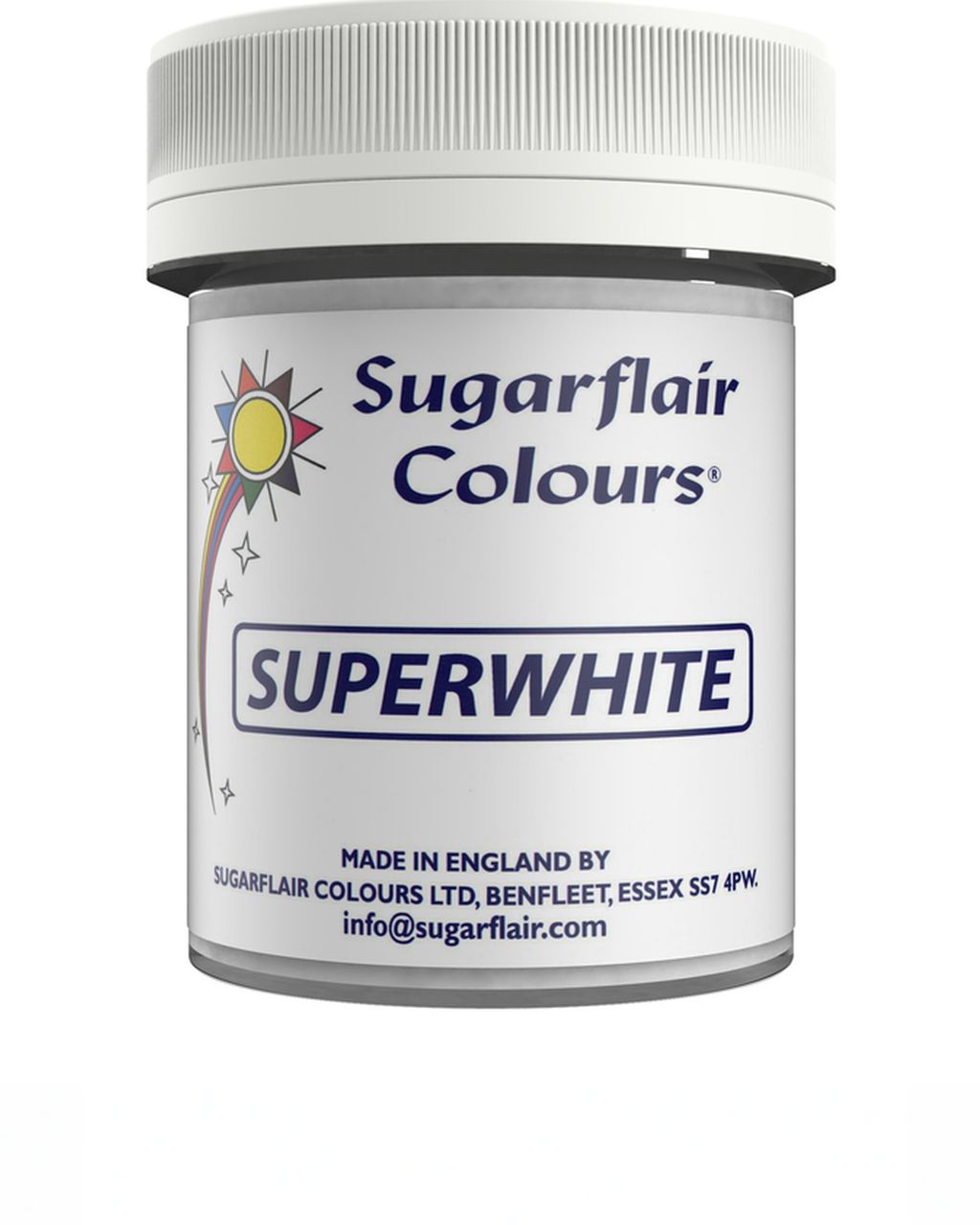
A drop of white colouring brightens the frosting. Butter gives frosting a yellowish tint; we cover how to get it to a true white in Snow-white buttercream: how to whiten it.
Crumb-coat first. Otherwise, red crumbs will tint your frosting pink. Spread a thin first layer of frosting over the cake (a crumb coat) to seal in the crumbs, chill for 20–30 minutes, then apply the final layer of frosting.
Inspiration for smaller portions: Red velvet – adorable mini desserts is a ready-made recipe where you can test out the colouring without baking a whole cake.
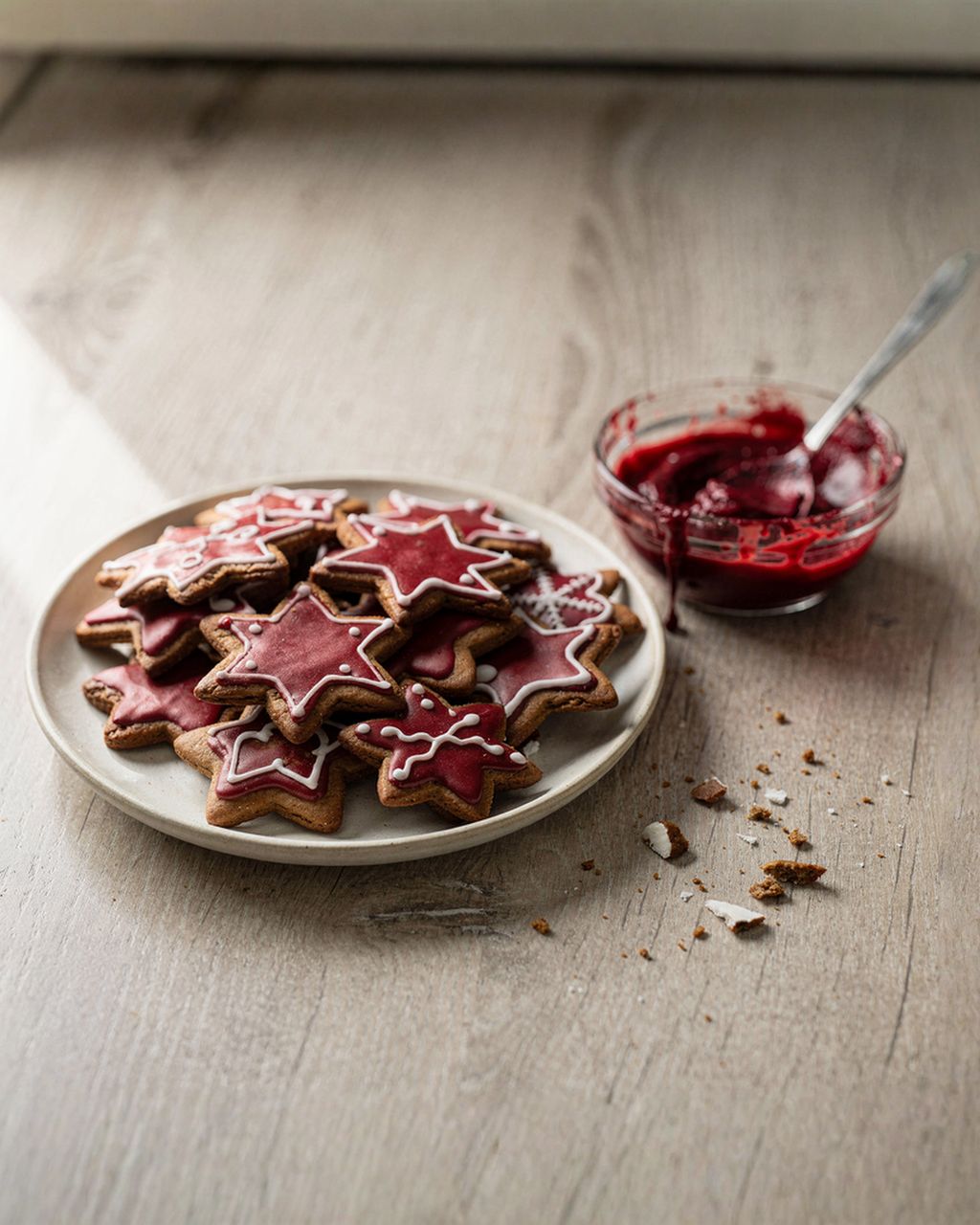
Planning red decorations too? Icing follows slightly different rules — see Deep red icing for gingerbread cookies: how to make it without bitterness.
Red velvet – mini desserts for sweethearts
Red velvet mini desserts – a recipe for deep red bites with white frosting
A bitter, chemical taste in red velvet is usually caused by using too much weak liquid colouring or too much baking soda. Switch to a concentrated gel colour — about 2–3 g per cake is enough (no more than 3 g per 1 kg of batter) — and measure the baking soda exactly as the recipe states, so the buttermilk and vinegar can fully neutralise it.
Red velvet coloured with gel food colouring won't fade in the fridge or freezer — synthetic red is stable there. Only a surface exposed to direct light for a long time might fade. A cake coloured with beetroot, on the other hand, loses colour more easily and tends to darken to brown over time.
The red colourings E122 and E129 are approved for use in the EU, but foods containing them must carry a warning that they 'may have an adverse effect on activity and attention in children.' Stick to the dose stated on the packaging. If you'd rather avoid synthetic colourings altogether, you can use beetroot instead — though the shade will come out more wine-red than true red.
Yes, you colour red velvet cupcake batter exactly the same way as cake batter — you just bake it for less time, around 18–22 minutes at 170°C (340°F). Since cupcakes are small and have no crust to trim away, keeping the oven temperature low and timing them precisely matters even more.
One recipe worth heating the oven for, one tip, and one deal from the shop. Nothing else.