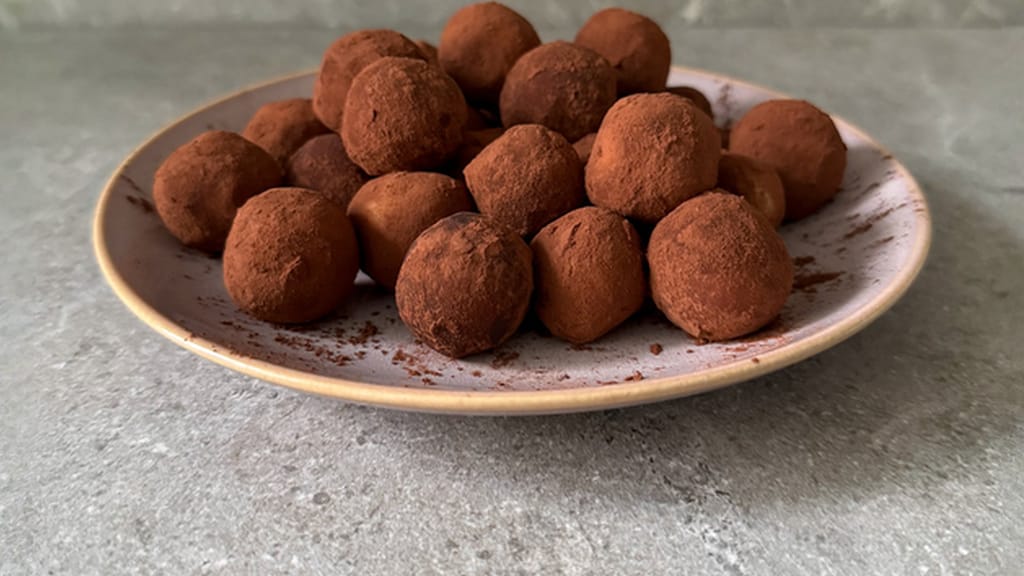
Baileys white chocolate truffles with sponge biscuits
No-Bake Christmas Cookies: Types, What Holds Them Together, and Which Ones Kids Can Make
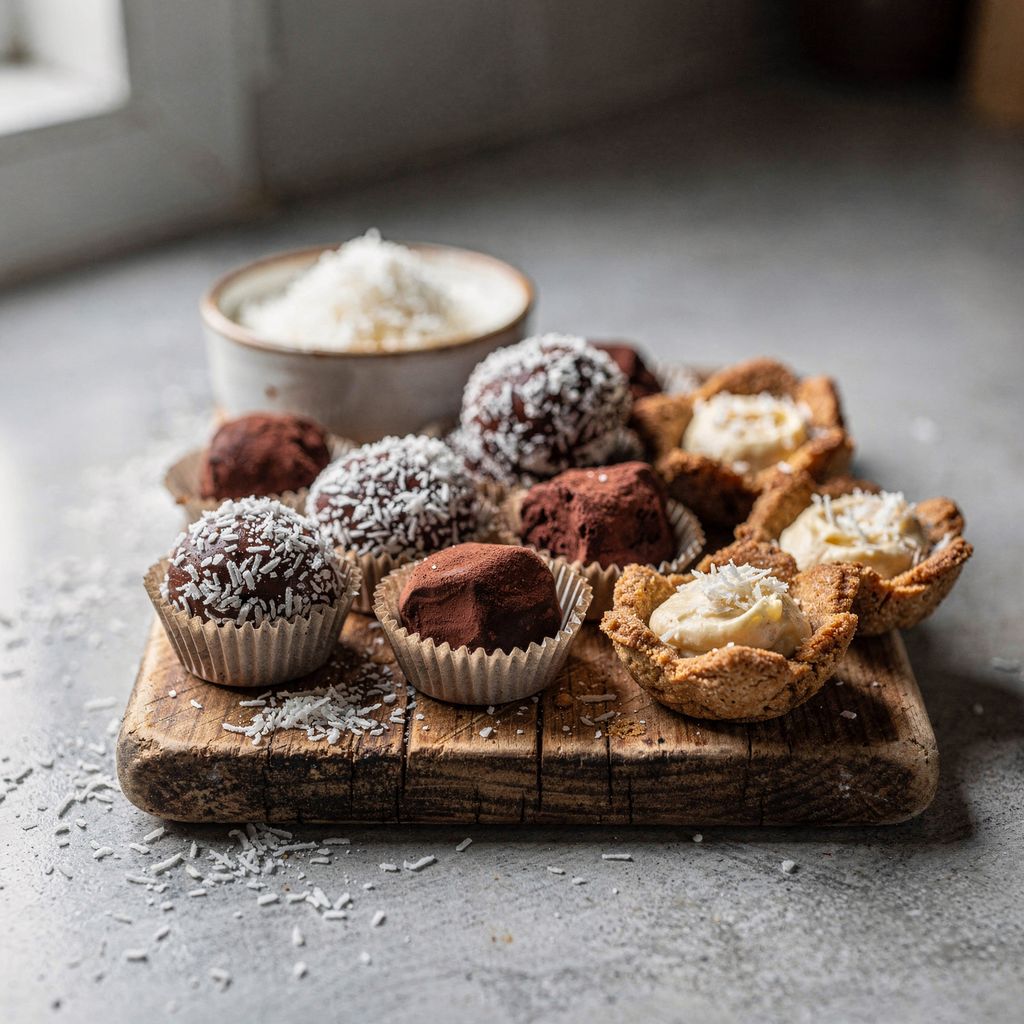
Updated Nov 3, 2026
No-bake Christmas cookies fall into six main types: balls, wasp's nests, truffles and pralines, rolls and "salamis," filled shapes like little cigars, and no-bake bars. None of them needs an oven. Fat, chocolate, honey, or dried fruit holds them together, followed by 1–2 hours in the fridge (ganache truffles ideally overnight). That makes them perfect for last-minute baking, small kitchens, and cooking with kids. Below, you'll find how the types differ, why they crumble or turn sticky, and which ones even the youngest helpers can handle.
No-bake Christmas cookies come in six main types: balls, wasp's nests and beehives, truffles and pralines, rolls and "salamis," filled shapes, and no-bake bars. You can sort them by what holds them together and by their shape:
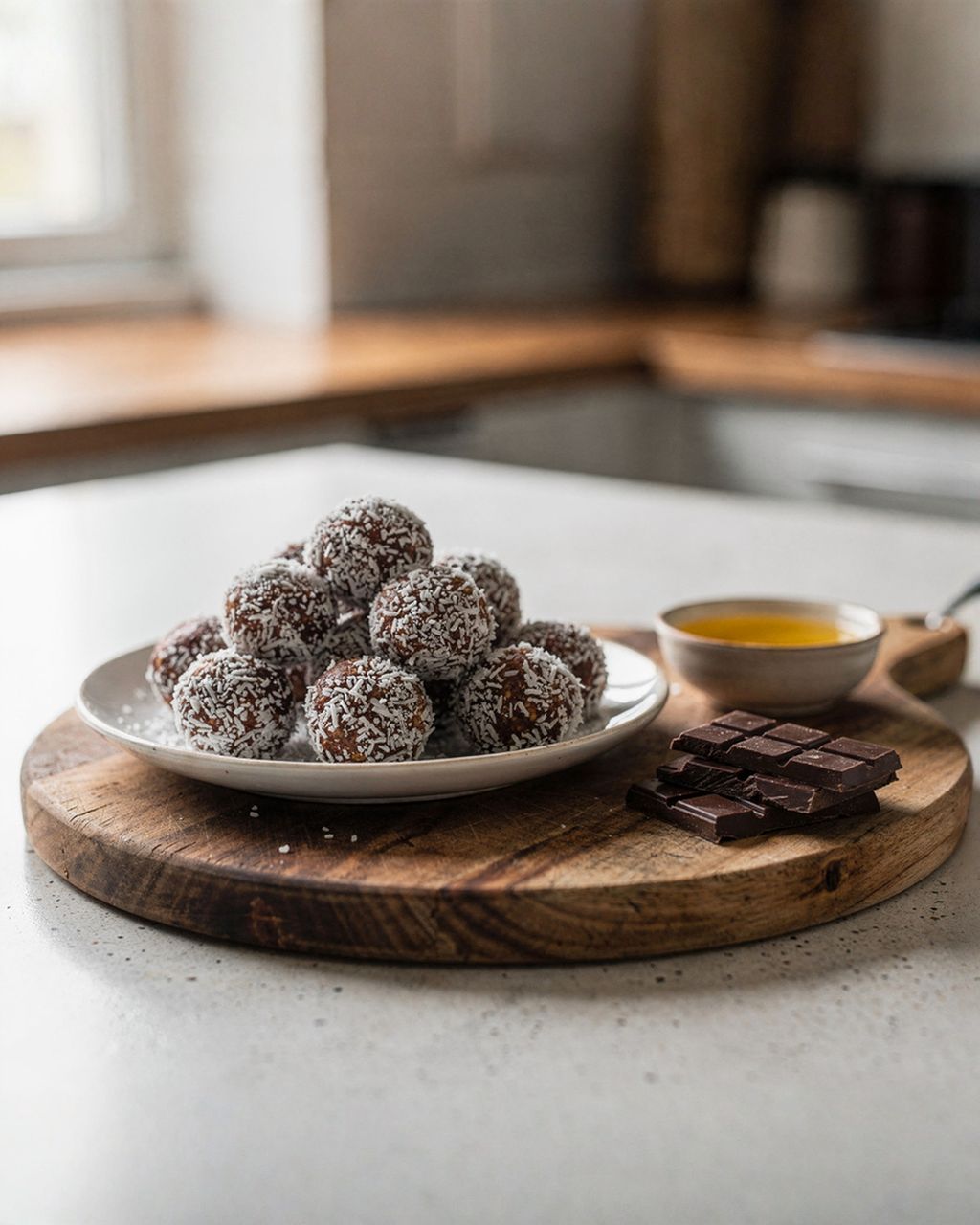
Balls – rum, coconut, nut, or date. Crushed cookies or nuts bound with fat, honey, or dried fruit.
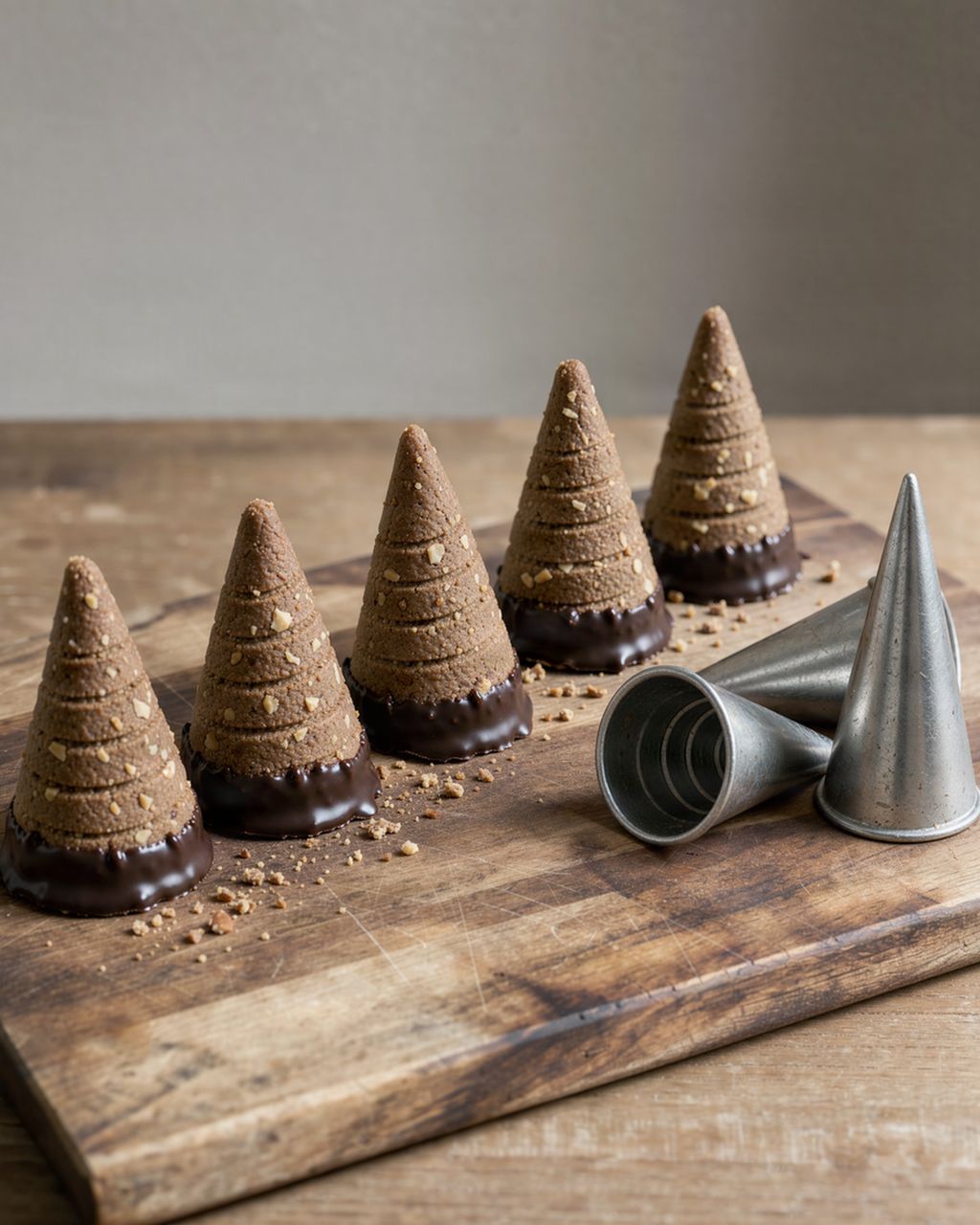
Wasp's nests and beehives – shaped in a small mold and filled with cream.
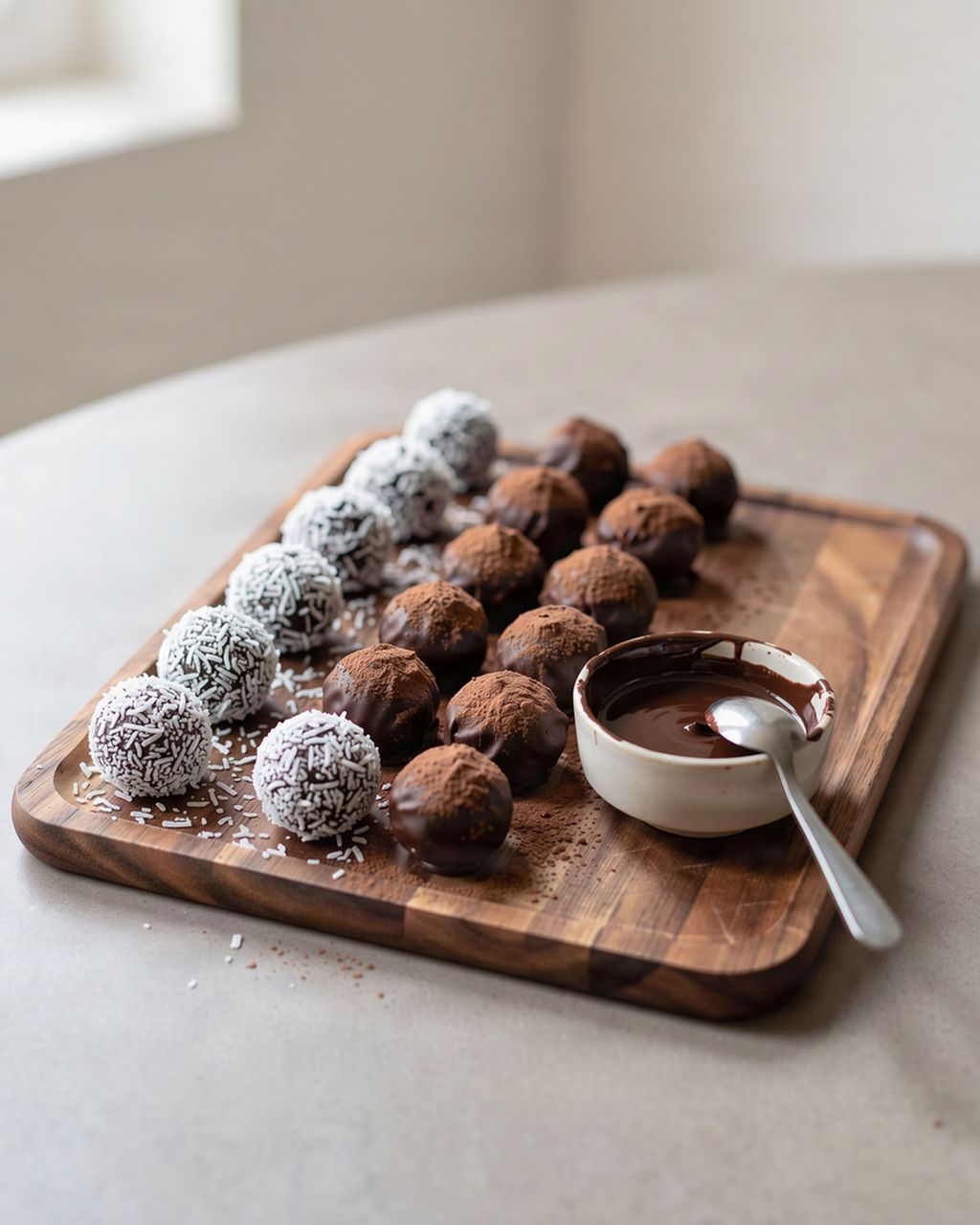
Truffles and pralines – ganache made from chocolate and cream, rolled in cocoa or coated in chocolate.
Rolls and "salamis" – coconut roll, chocolate salami, sliced before serving.
Filled shapes – little cigars, wafer tubes, prunes filled with marzipan and dipped in chocolate.
No-bake bars – a mixture pressed smooth into a pan, set, and cut into squares.
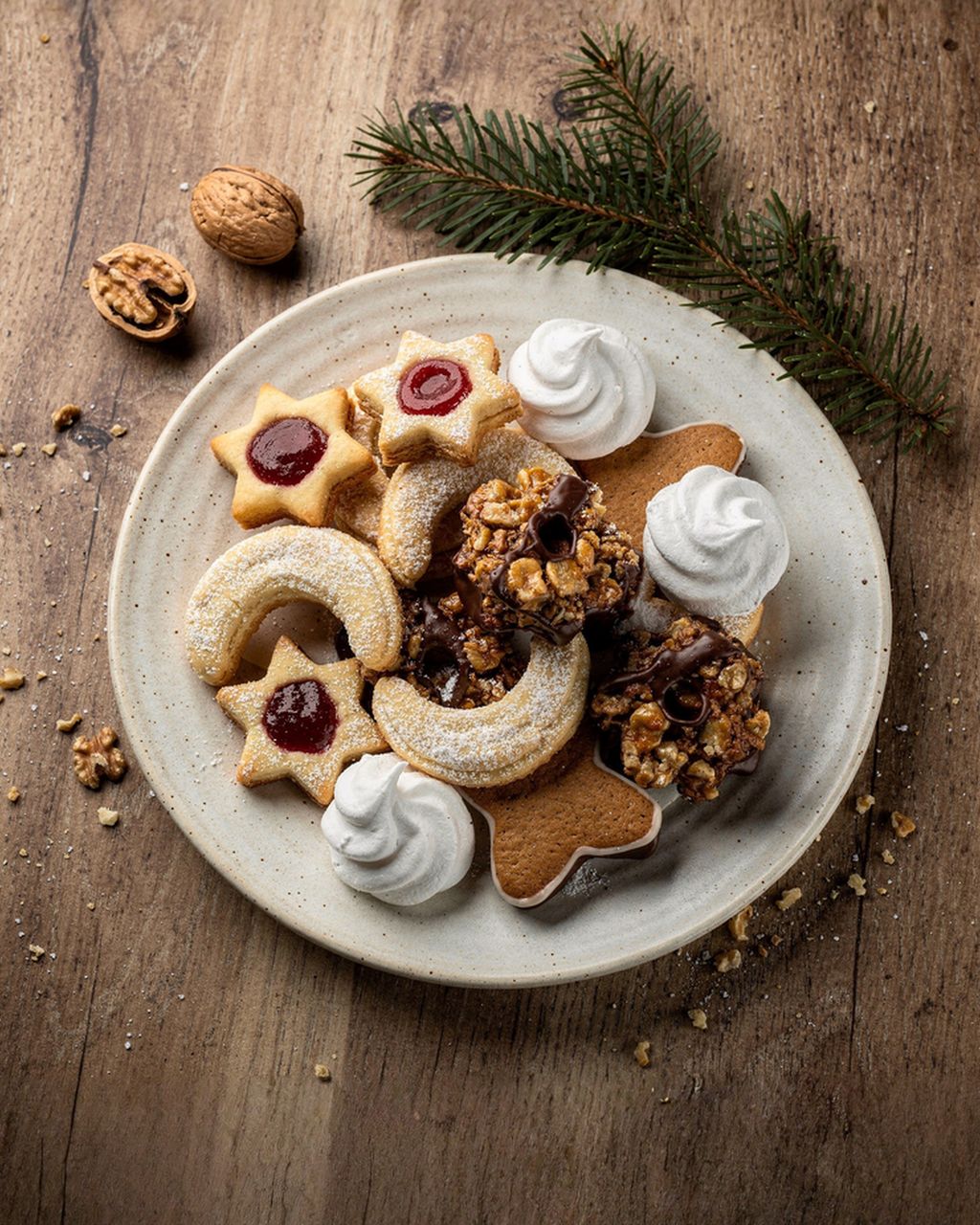
On a Christmas cookie platter, no-bake treats play a balancing role: where delicate linzer cookies and soft honey gingerbread bring butter and spice, balls and truffles add juiciness, a little booze, and chocolate. You'll find the full range of classics, baked ones included, in our Christmas cookie overview.
Seasonal baking plans, tested recipes and kitchen tricks that save you time. Unsubscribe in one click.
Balls are the quickest and easiest no-bake cookies – you mix the dough in one bowl in a few minutes and then just shape it. The base is crushed sponge fingers, cookies, or ground nuts; the binder is softened butter, coconut oil, honey, melted chocolate, or blended dates.
Rum balls – sponge fingers, cocoa, fat, and rum. The rum gives them their signature flavor.
Coconut balls – shredded coconut with fat or condensed milk, often with a whole nut hidden inside.
Nut and almond balls – ground nuts with honey, rolled in cocoa or powdered sugar.
Date and oat balls – blended dates provide the sweetness. Try these cocoa oat and date balls.
For a creamier version with liqueur, see the recipe for Baileys white chocolate balls with sponge fingers.
The key moment: the mixture should have the consistency of modeling clay. If it crumbles, add a spoonful of binder (fat, honey, liqueur). If it sticks to your hands, chill it for 20–30 minutes before shaping.
Baileys white chocolate truffles with sponge biscuits
Baileys white chocolate balls – no-bake cookies in minutes
Wasp's nests are no-bake cookies that need a small mold: you press a mixture of crushed sponge fingers, nuts, and cocoa into a wasp's nest mold, tap it out, and fill the hollow with cream. Beehives are made the same way, just shaped like a beehive and with a thicker wall.
The wall must be firm but not dry – it shouldn't crack when you turn it out. If it cracks, the mixture needs more fat.
Dust the mold with powdered sugar or cocoa before each one and the nest will slip right out.
Pipe the cream only into fully chilled nests, otherwise the wall will go soft.
The classic with rum cream is in the recipe for traditional wasp's nests with grandma's rum cream. If you'd like something fresher, try white chocolate wasp's nests with mango and passion fruit.
Older cream recipes often call for raw egg yolks. What to use instead so the cream holds and stays safe is covered in detail in our article on what to use instead of raw eggs in no-bake cookies.
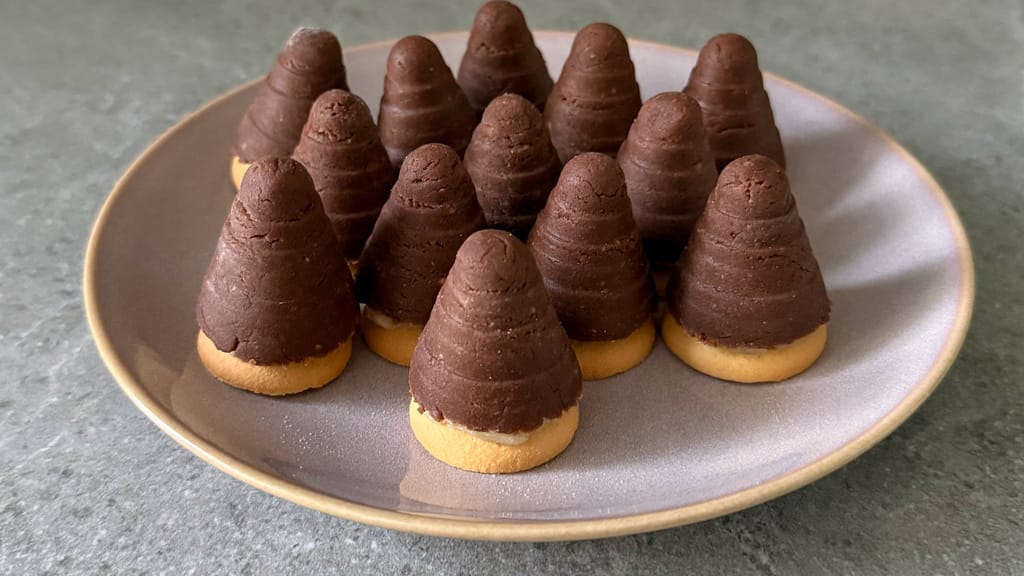
Grandma's traditional wasp's nest cookies with rum cream
Traditional wasp's nests with rum cream – a classic no-bake cookie
Truffles are no-bake cookies made from ganache, which is chocolate melted into hot cream. Once cooled, the mixture is rolled into balls and coated in cocoa or chopped nuts, or dipped in chocolate.
For shaping you need a firmer ganache: with dark chocolate, roughly 2 parts chocolate to 1 part cream. With milk and white chocolate, use even less cream, because they set less firmly.
Just bring the cream to a near-boil and pour it over chopped chocolate. Let it sit for a minute and only then stir, otherwise the fat can separate.
Let the ganache set in the fridge for at least 2 hours, ideally overnight. Shape with cold hands, and work quickly.
You'll find an interesting variation in the recipe for chocolate truffles with peanut butter.
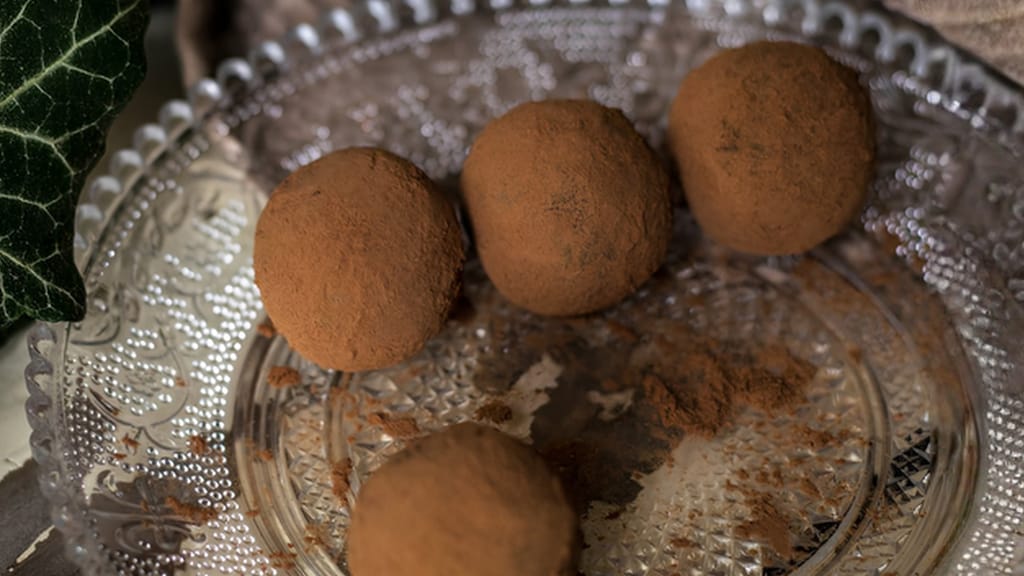
Chocolate peanut butter truffles
Chocolate truffles with peanut butter
Rolls and salamis are no-bake cookies made in a big batch and sliced at the end. The mixing takes longer than for balls, but you don't have to shape every piece separately – a single roll gives you dozens of slices. For the work you put in, you get the most pieces on the platter.
Coconut roll – a cocoa mixture rolled out between two sheets of foil, spread with coconut filling, rolled up, and sliced once chilled.
Chocolate salami – chocolate with butter, broken cookies, and nuts, shaped into a log. When sliced, it looks like salami.
Little cigars and tubes – store-bought wafer tubes filled with cream and dipped in chocolate, or a nut mixture wrapped in wafer.
Filled prunes – dried prunes stuffed with marzipan or a nut, dipped in chocolate.
One rule applies to rolls: slice them chilled, with a sharp knife dipped in hot water. A warm roll gets squashed under the knife.
No-bake bars are made by pressing a mixture – cookies with fat, cereal with marshmallow, or nuts with honey – smooth into a paper-lined pan, letting it set, and cutting it into squares. They're ideal when you don't have time to shape every piece separately.
A modern tip beyond the classic Czech platter is Snowflake Crisps, Asian no-bake marshmallow cookies. You melt marshmallows with butter, stir in crackers and cereal, and cut it into pieces.
No-bake cookies are held together by fat or chocolate that firms up in the cold, or by sticky ingredients like honey and dates. Which binder you choose determines how the cookies behave:
Butter – the best flavor; it firms up in the fridge and softens at room temperature.
Coconut oil – melts at around 24 °C (75 °F), so the cookies are firm in the fridge but quickly turn shiny and soft on a warm table.
Chocolate – holds best and adds a crisp coating. Milk and white chocolate set less firmly than dark.
Honey, dates, condensed milk – they stick but don't firm up. Cookies made with them stay soft, but turn sticky in the warmth.
Alcohol (rum, liqueur) – this is mainly about flavor and moisture. It won't firm up the mixture, but it helps the cookies stay soft for longer.
In practice, that means no-bake cookies made with butter or coconut oil belong in the cold. Take them out for the holiday table only just before serving.
No-bake cookies crumble when the mixture has too little binder or is too cold, and turn sticky when it has too much binder or is warm. You can fix most problems with an extra spoonful of binder, or, the other way around, with twenty minutes in the fridge:
The mixture is crumbly and the balls crack: add a spoonful of softened butter, honey, or liqueur and knead the mixture briefly.
The mixture sticks to your hands: chill it for 20–30 minutes and shape with dampened or cold hands.
The balls stick together in the box: roll them in something dry (cocoa, powdered sugar, coconut) and place them in paper cups.
The cookies turn shiny and soft: the fat in them has loosened in the warmth. Put them back in the cold; they won't last long on the table.
All the causes are covered step by step in our article on why no-bake cookies fall apart.
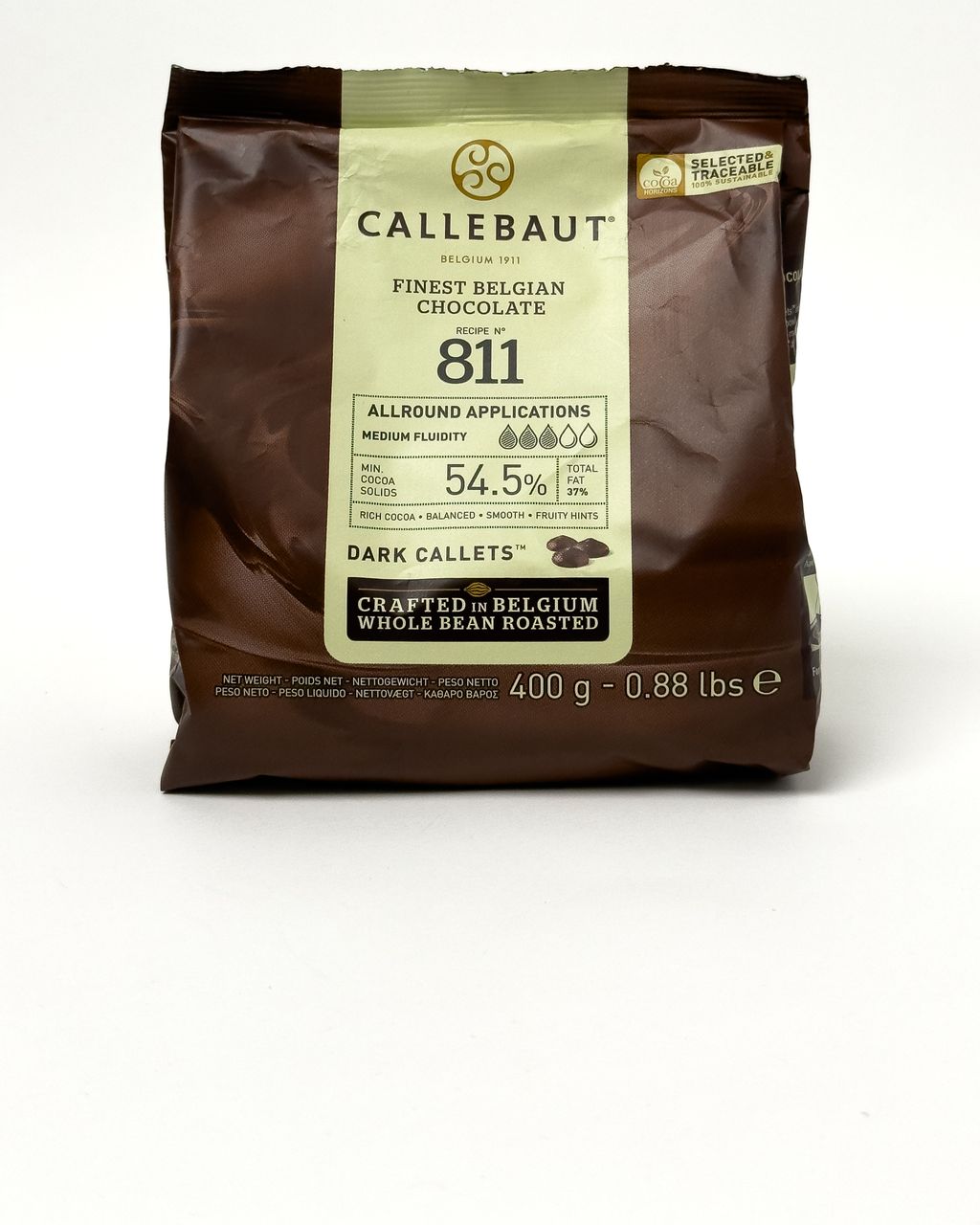
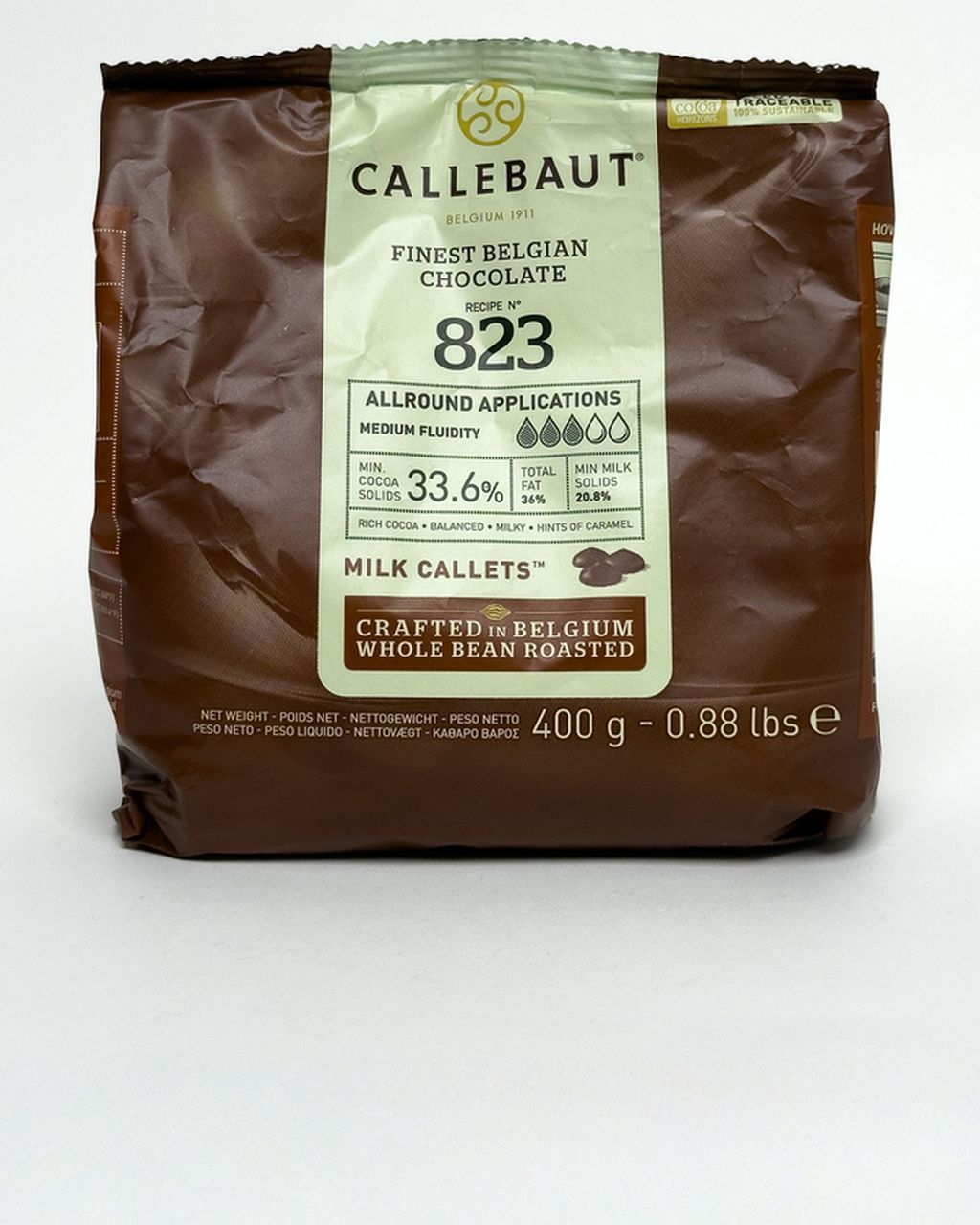
For dipping no-bake cookies, use real chocolate, ideally in chips or callets, which melt evenly with no chopping. Dark chocolate sets the firmest, while milk and white are milder and soften sooner in the warmth.
Melt it slowly: over a water bath, or in the microwave in 20–30 second bursts, stirring in between. Overheated chocolate thickens and turns lumpy. How to keep that from happening is in our article on how to melt chocolate without lumps.
Dip chilled pieces. A cold ball pulls the chocolate onto itself quickly and the coating sets evenly. Let the excess drip off over a fork.
Want shine and snap? Temper the chocolate. Untempered chocolate sets too, but it stays dull and softer, and in the warmth it develops a gray bloom. You'll find the method in our guide to tempering chocolate.
Chocolate and chocolate coating aren't the same thing. Chocolate coating usually contains vegetable fat and sets even without tempering, but its flavor and shine are weaker than real chocolate.
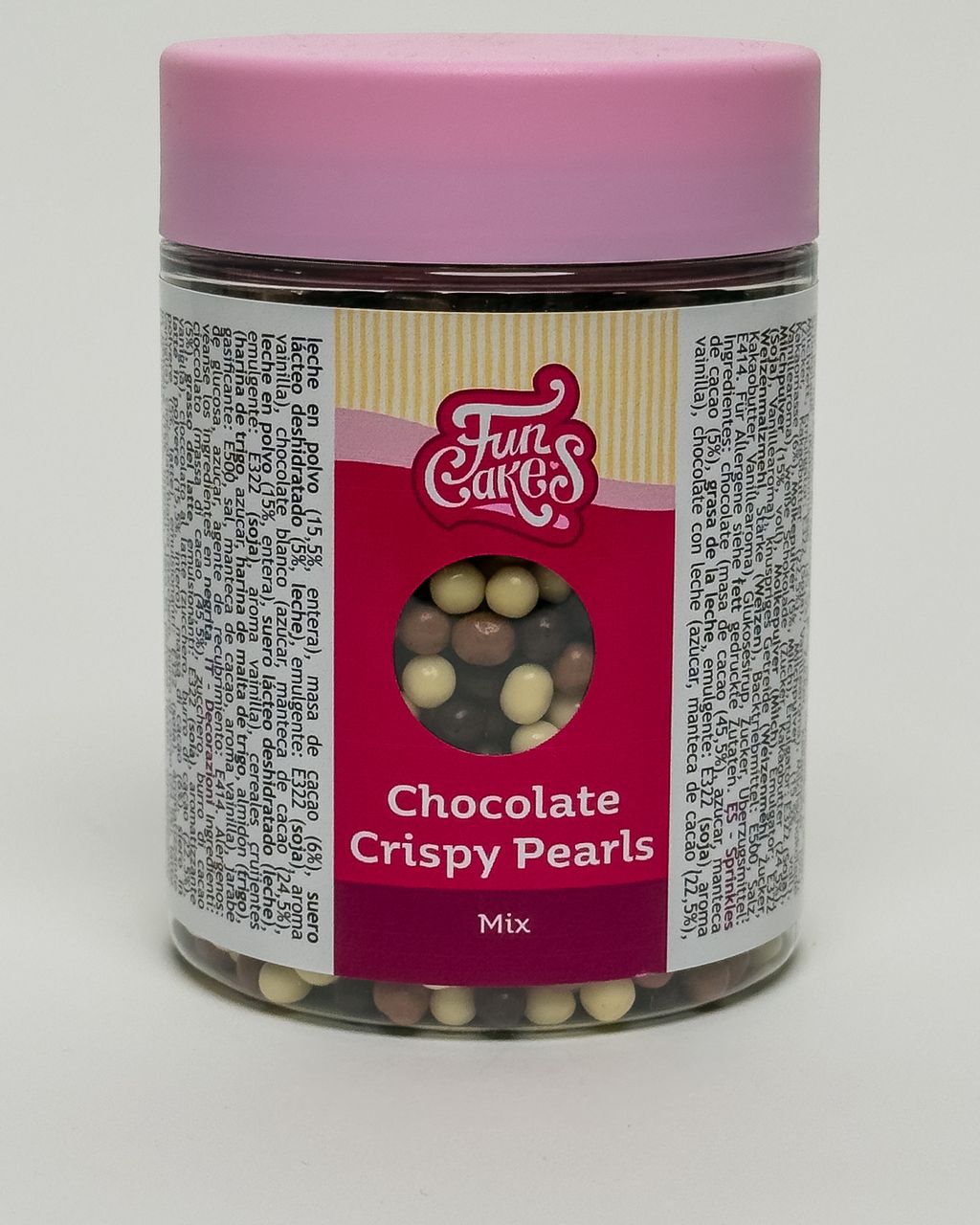
Coat while the chocolate is still wet. Chopped nuts, coconut, sprinkles, or crunchy chocolate pearls only stick to a fresh coating.
For other cookies that suit dipping, and how to work with it in large batches, see our article on dipping cookies in chocolate. You'll find chocolate chips in the baking and dipping chocolate category.
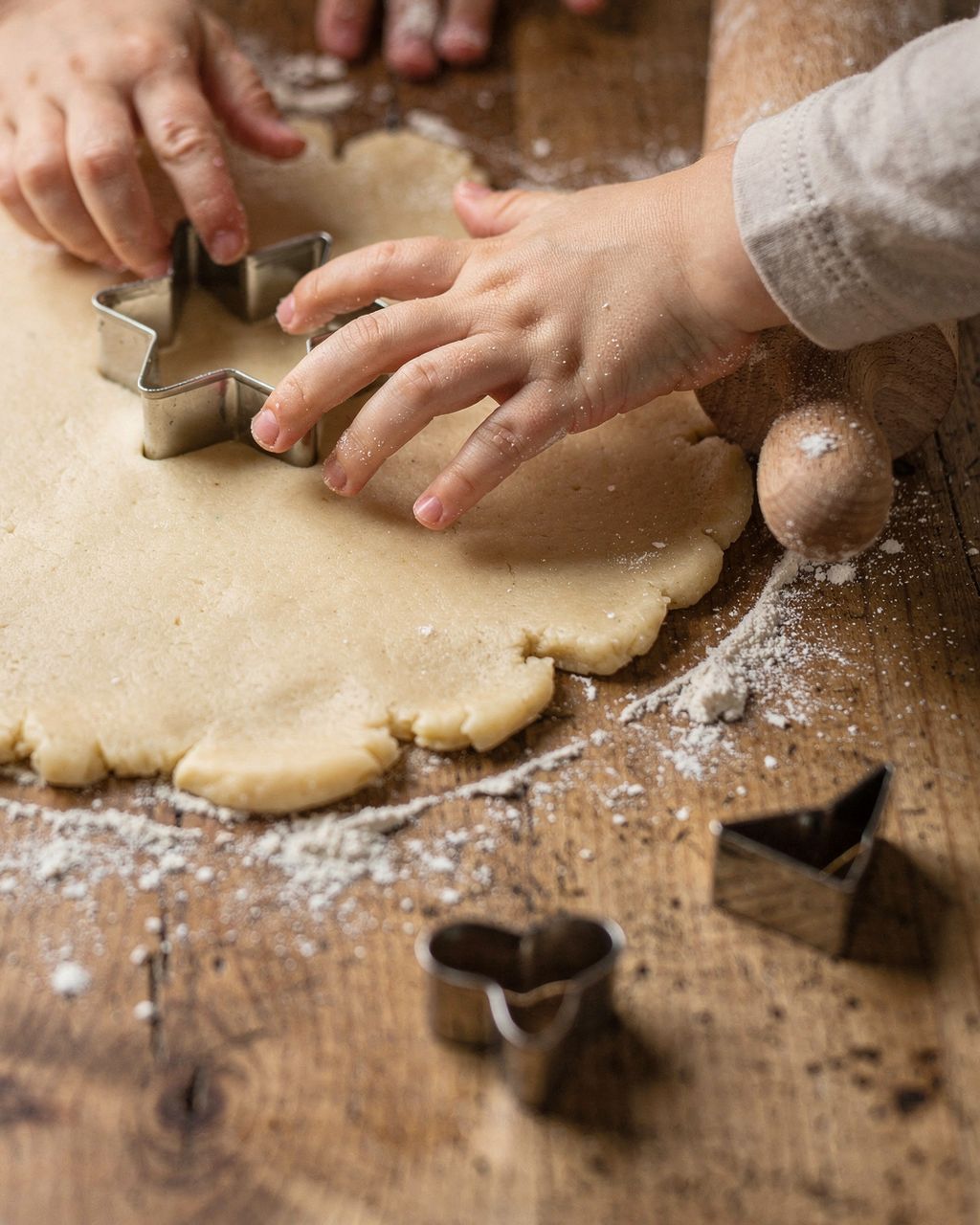
Small children can manage mainly balls and coating. You prepare the mixture, and they roll, coat, and arrange the cookies in paper cups. These jobs work best for kids:
Rolling balls (from about age 3) – give them the mixture in small pieces so they don't have to measure anything.
Coating in coconut, cocoa, sprinkles, or crunchy pearls – the most fun part, and nothing can go wrong.
Filling paper cups and arranging cookies on a platter.
Crushing cookies in a bag with a rolling pin – kids love it, and it saves the grown-up some work.
Dipping in chocolate (more from age 5–6) – you melt the chocolate, over a water bath or in the microwave. The child dips only once it's lukewarm.
The best types for kids are coconut balls (without a whole nut inside), date and oat balls, and no-bake cereal bars. Truffles are less suitable (they melt in warm hands), as are wasp's nests (tapping them out of the mold takes a delicate touch).
Nuts are a common allergen in cookies. Pediatric guidance (including the UK's NHS) advises against giving whole nuts to children under 5 because of the choking risk – so leave them out of balls for small children or use only ground nuts. If your child can't have nuts, replace them with seeds or oats.
Make no-bake cookies last, in the final week before Christmas, and cream-filled types only in the last two or three days. In a sealed container in the fridge or in a cellar (up to 8 °C / 46 °F), they keep roughly like this:
Rum balls and balls without cream (cookies, fat, chocolate) – about 2 weeks.
Ganache truffles – about 1–2 weeks, because they contain cream.
Wasp's nests and beehives with buttercream – about 1–2 weeks.
Cookies with quark, whipped cream, or fresh cream – only 2–3 days in the fridge.
At room temperature, all of these times get much shorter. For exact timings by type, see our overview of how long Christmas cookies keep. When to start on each type is covered by the Christmas baking calendar. How to store no-bake treats separately from baked ones is explained in our article on storing Christmas cookies. Some types can also be frozen; the details are in how to freeze cookies and thaw them.
No-bake cookies made with butter, coconut oil, or cream filling will keep on the table for about 2 hours, then they start to soften and turn shiny. Put out only as many as will be eaten during the evening and return the rest to the cold.
Yes, you can make no-bake cookies without butter or eggs. Dates, nut butter, coconut oil, or dark chocolate then act as the binder. Date balls and dark chocolate truffles tend to be vegan, with coconut cream standing in for the dairy cream. Check that your chocolate doesn't contain milk, and reach for one labeled vegan. Honey isn't vegan, so swap it for dates or a syrup.
To keep no-bake cookies from sticking together, roll them in something dry: cocoa powder, powdered sugar, shredded coconut, ground nuts, or sprinkles. Then pack them in paper cups, or in a single layer separated by parchment paper.
Most no-bake cookies can be frozen: balls, salamis, rolls, and truffles keep for about 2–3 months in a well-sealed container. Thaw them slowly in the fridge and open the container only once they've come to room temperature, otherwise moisture will condense on them. It's best not to freeze cookies made with whipped cream or quark, because the filling releases water after thawing.
One recipe worth heating the oven for, one tip, and one deal from the shop. Nothing else.