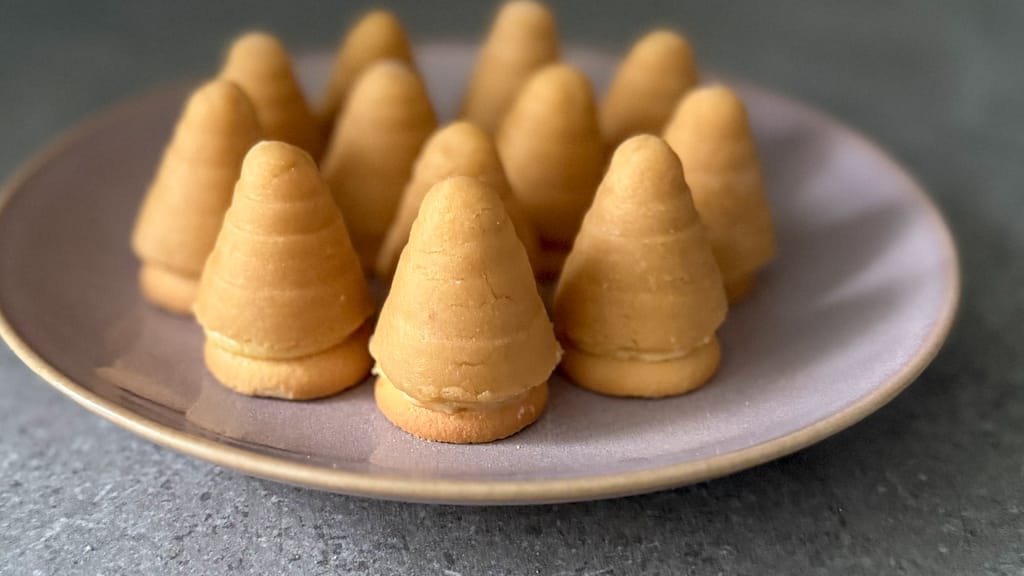
White chocolate wasp nests with mango and passion fruit
What to Use Instead of Coconut Fat in No-Bake Treats: Substitutes and Ratios
Updated Oct 6, 2026
The best substitute for coconut fat in no-bake treats is ghee (1:1), regular butter (same weight plus 1–2 extra tablespoons of a dry ingredient), or chocolate. For coatings, reach for cocoa butter. Coconut fat's main job is holding the mixture together: it sets firm in the fridge and melts quickly in the mouth. So any substitute needs to firm up when chilled too — which is why oil doesn't work but butter does, with a small adjustment.
In no-bake treats, coconut fat works as a binder that sets firm in the cold. Before you swap it out, it helps to know exactly what job it's doing:
It sets firm and holds its shape. It melts around 24°C (75°F), so in the fridge it goes rock-hard and keeps the mixture of crushed biscuits, nuts and cocoa from falling apart.
It contains no water. It's almost pure fat, so the biscuits in the mixture don't turn soggy and the treats keep longer.
It melts quickly in your mouth. That's where the classic cooling sensation in coconut and rum balls comes from.
It's flavour-neutral, at least the refined block version. Virgin coconut oil has a distinct coconut aroma.
Any substitute mainly needs to tick off the first two points. You can be a bit more relaxed about flavour and mouth-melt.
These five swaps work for coconut fat in no-bake treats. Ratios below are per 100g of coconut fat in the recipe:
Ghee (clarified butter): 100g. The closest match, since it's also water-free.
Butter (82% fat): 100g, plus 1–2 extra tablespoons of a dry ingredient (crushed biscuits or nuts).
Cocoa butter: 70–80g. It sets firmer, so you need less.
Melted chocolate: 150–200g in place of the fat, with a third less sugar.
Sticky binders (nut butter, dates, sweetened condensed milk): nut butter 100g (1:1), date paste or condensed milk roughly 100–150g, with no added sugar. Good when you want a binder without a solid fat. The treats will come out softer.
Swap coconut fat for butter at the same weight (1:1), just add 1–2 extra tablespoons of a dry ingredient, since butter contains around 16% water. The mixture will be softer and stickier, the biscuits will soften a touch, and the treats won't keep as long.
Weigh the same amount as the coconut fat, not more. More butter means more water.
Add 1–2 tablespoons of crushed biscuits, nuts or desiccated coconut until the mixture stops sticking to your hands.
Let the mixture rest in the fridge for 30–60 minutes before shaping. Butter needs longer than coconut fat to firm up.
Keep the finished balls in the fridge — they soften faster at room temperature.
The flavour will be richer and more buttery, which works well with cocoa and rum. The coconut cooling effect disappears, though. For what butter does in baked treats and how to replace it there, see our guide on what to use instead of butter in baked treats.
Ghee is the best 1:1 substitute for coconut fat. Clarifying removes the water and milk proteins, leaving almost pure fat, just like coconut fat. The mixture won't go soggy and will set nicely in the fridge.
It has a slightly nutty, caramel flavour, which works beautifully with nut and cocoa balls, less so with delicate vanilla ones. You can buy it ready-made, or clarify your own: melt butter slowly, skim off the foam, then carefully pour off the clear fat, leaving the white sediment behind.
Replace coconut fat with cocoa butter at 70–80g per 100g of fat. You need less because it melts around 34–35°C (93–95°F), roughly ten degrees higher than coconut fat. Use the full amount and the balls would turn out hard and waxy; cut back and they stay firm, even at room temperature.
Neutral (deodorised) cocoa butter is mainly a coating/glaze solution. In the balls themselves, it's worth using when you need treats that hold up outside the fridge — for travel, say, or a gift box for guests.
Replace coconut fat in cocoa balls with 150–200g of melted chocolate per 100g of fat, and cut the sugar by a third. This works because chocolate is largely cocoa butter, which firms up in the cold, and it already brings its own sugar and cocoa to the mix.
Dark chocolate (60–70%) gives the firmest mixture and the boldest flavour.
Milk chocolate is softer and sweeter.
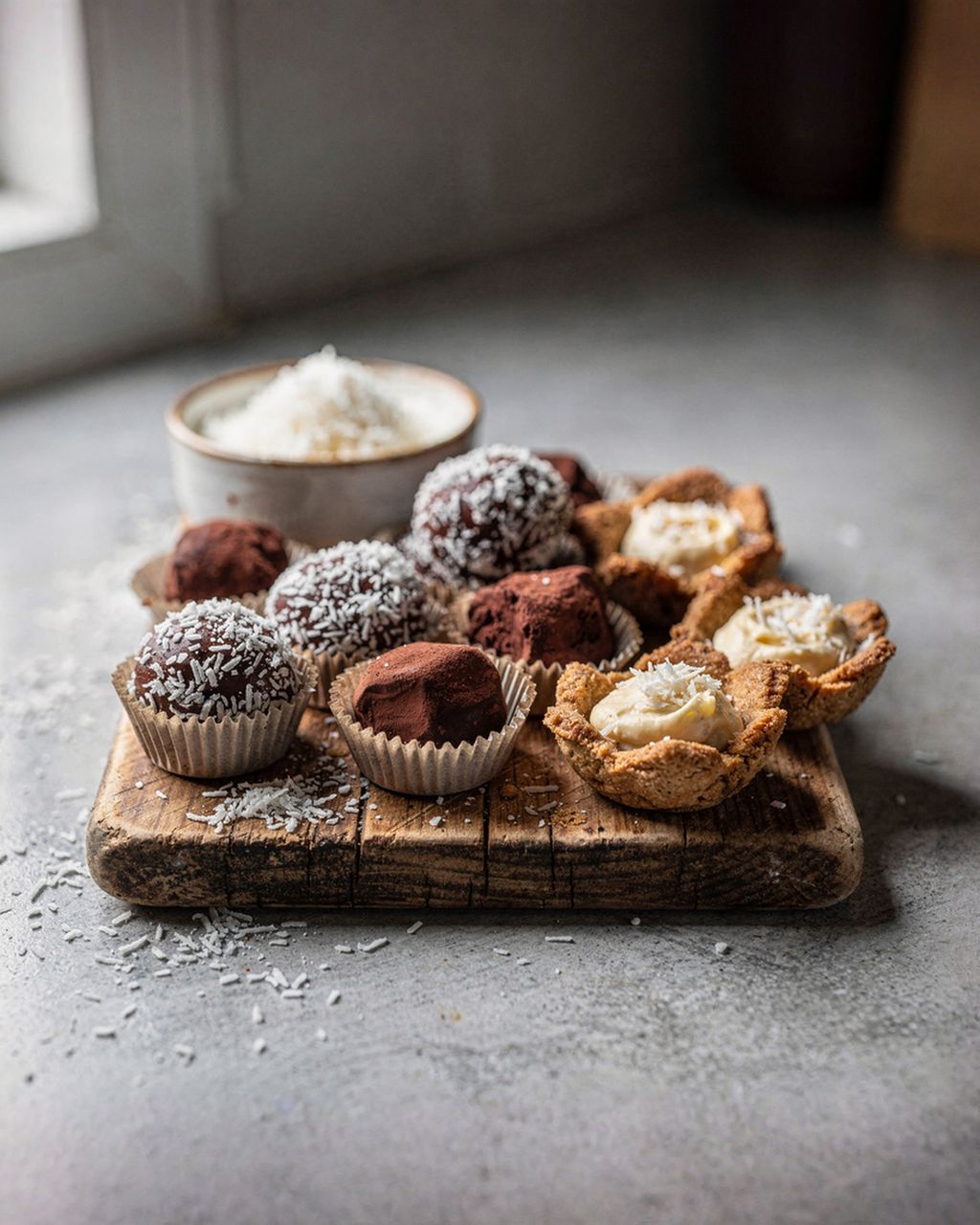
White chocolate sets the softest and suits pale mixtures. It's what holds together, for instance, these white chocolate wasp nests with mango and passion fruit.
The difference between couverture and regular baking chocolate mostly shows up in coatings. For the mixture itself, good-quality cooking chocolate is enough.
White chocolate wasp nests with mango and passion fruit
White chocolate wasp nests with mango and passion fruit: no-bake treats without coconut fat
Nut butter, dates and sweetened condensed milk replace coconut fat as a sticky binder, not as a fat that sets firm. They hold the mixture together through stickiness rather than firming up, so treats made with them stay softer and chewier even once chilled.
Peanut, almond or hazelnut butter: swap 1:1 for coconut fat. Strong nutty flavour, soft texture, store in the fridge.
Dates: roughly 100–150g of date paste per 100g of coconut fat, with no added sugar. Blended into a paste, dates replace both the fat and the sugar at once. This is how it works in cocoa and oat balls with dates, for example.
Sweetened condensed milk: roughly 100–150g per 100g of coconut fat, with no added sugar. The classic coconut-ball binder — very sweet.
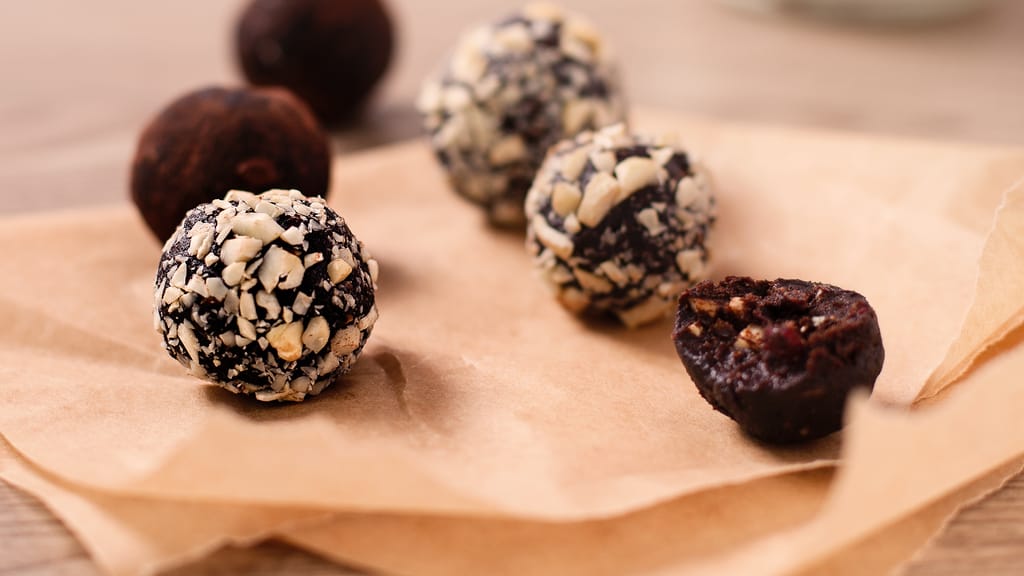
Cocoa date & oat balls
Cocoa and oat balls with dates: dates as a binder instead of coconut fat
Cocoa butter is the best substitute for coconut fat in a chocolate coating, and you need less of it: instead of roughly 20–25g of coconut fat per 100g of chocolate, just 10–15g of cocoa butter will do.
Coconut fat goes into a coating for three reasons: it thins the chocolate so balls dip easily, it stops the coating from cracking when sliced, and it skips the need for tempering. Cocoa butter thins the chocolate just as well, but sets with a nice snap. The shine lasts longest if you temper the chocolate at least loosely: melt it, stir in some finely chopped chocolate right at the end, and let it melt in off the heat while stirring.
Other options:
Butter: one tablespoon (about 15g) per 100g of chocolate. The coating stays softer and matte, and needs to be kept in the fridge.
Cream (ganache): a completely different, creamy-style coating. Not suited to dipping balls, but fine for coating/spreading on top.
For a full rundown of coatings and their ratios, see our guide to types of coatings for treats and cakes. For more inspiration, browse our Christmas treat recipes and articles.
Hydrogenated fat is a vegetable fat firmed up through industrial hydrogenation — look for "fully hydrogenated" or "partially hydrogenated" on the label. Coconut fat and palm kernel fat are naturally solid; they aren't hydrogenated. Older no-bake recipes that call for "hydrogenated fat", though, usually mean block coconut fat, so all the swaps above still apply.
Fats used to be hardened through partial hydrogenation, which created trans fats. Under EU Regulation 2019/649, since April 2021 foods sold to consumers can contain no more than 2g of industrial trans fats per 100g of fat. So today's block hydrogenated fats are made differently to the ones grandma used to bake with.
If a recipe calls for "hydrogenated fat" and you don't have any, reach for coconut fat 1:1. If you don't have that either, use ghee 1:1.
Oil doesn't firm up enough in the fridge to hold the mixture's shape, so it stays sticky and the balls lose their form. Sunflower and rapeseed oil don't set in the fridge at all, and olive oil just thickens and turns cloudy. None of them firms the mixture up enough for no-bake treats to hold together.
The exception is a coating: a teaspoon of oil per 100g of chocolate thins it enough for easy dipping. Don't add more, or the coating will stay soft and greasy on your fingers.
With butter or nut butter, no-bake treats keep in the fridge for about 1–2 weeks; with ghee, cocoa butter or chocolate, 2–3 weeks — similar to coconut fat. The water in butter shortens shelf life, while pure fat extends it.
See how other types compare in our guide to how long different treats keep. Butter-based balls can also be frozen — check how to freeze treats and dough — just thaw them in a sealed container in the fridge so condensation doesn't form on them.
Yes, margarine can replace coconut fat in no-bake treats, but because of its water content it's a worse choice than butter. By law, margarine contains 80–90% fat. Reduced-fat margarine (60–62%) and low-fat margarine (39–41%), or spreads with an even lower fat content, contain more water, so the mixture turns out soft and the biscuits in it go soggy. If you do use margarine, pick one with at least 80% fat — not a reduced- or low-fat version — add extra dry ingredients, and store the treats in the fridge.
Coconut oil and coconut fat are the same fat, just processed differently. Refined block coconut fat is flavour-neutral, while virgin (cold-pressed) coconut oil smells and tastes of coconut. You can swap one for the other 1:1 in no-bake treats. Choose the virgin version only when you actually want that coconut flavour coming through.
One tablespoon holds roughly 12–14g of melted coconut fat. For the solid block form, a tablespoon isn't an accurate measure, so always weigh your substitutes — the ratios in this article are given in grams for that reason.
One recipe worth heating the oven for, one tip, and one deal from the shop. Nothing else.