Greek yogurt pancakes with blueberries
What to Substitute for Baking Powder
Updated Sep 18, 2026
The most reliable way to replace baking powder is with baking soda and cream of tartar — for every teaspoon of baking powder, use ¼ teaspoon baking soda and ½ teaspoon cream of tartar. If you don't have cream of tartar on hand, an acidic liquid already in the batter can do the job: buttermilk, yogurt, vinegar or lemon juice. And for sponge cake, you don't need any leavener at all — well-whipped eggs are enough. Below you'll find exact ratios for one teaspoon and for a whole 12 g sachet, plus three "substitutes" that get passed around online but don't actually work.
You can replace baking powder in six ways: baking soda with cream of tartar, baking soda with buttermilk or yogurt, baking soda with vinegar or lemon, baking soda with citric acid, baker's ammonia (hartshorn) or well-whipped eggs. Ratios given below are calculated for 1 teaspoon of baking powder (≈ 4 g):
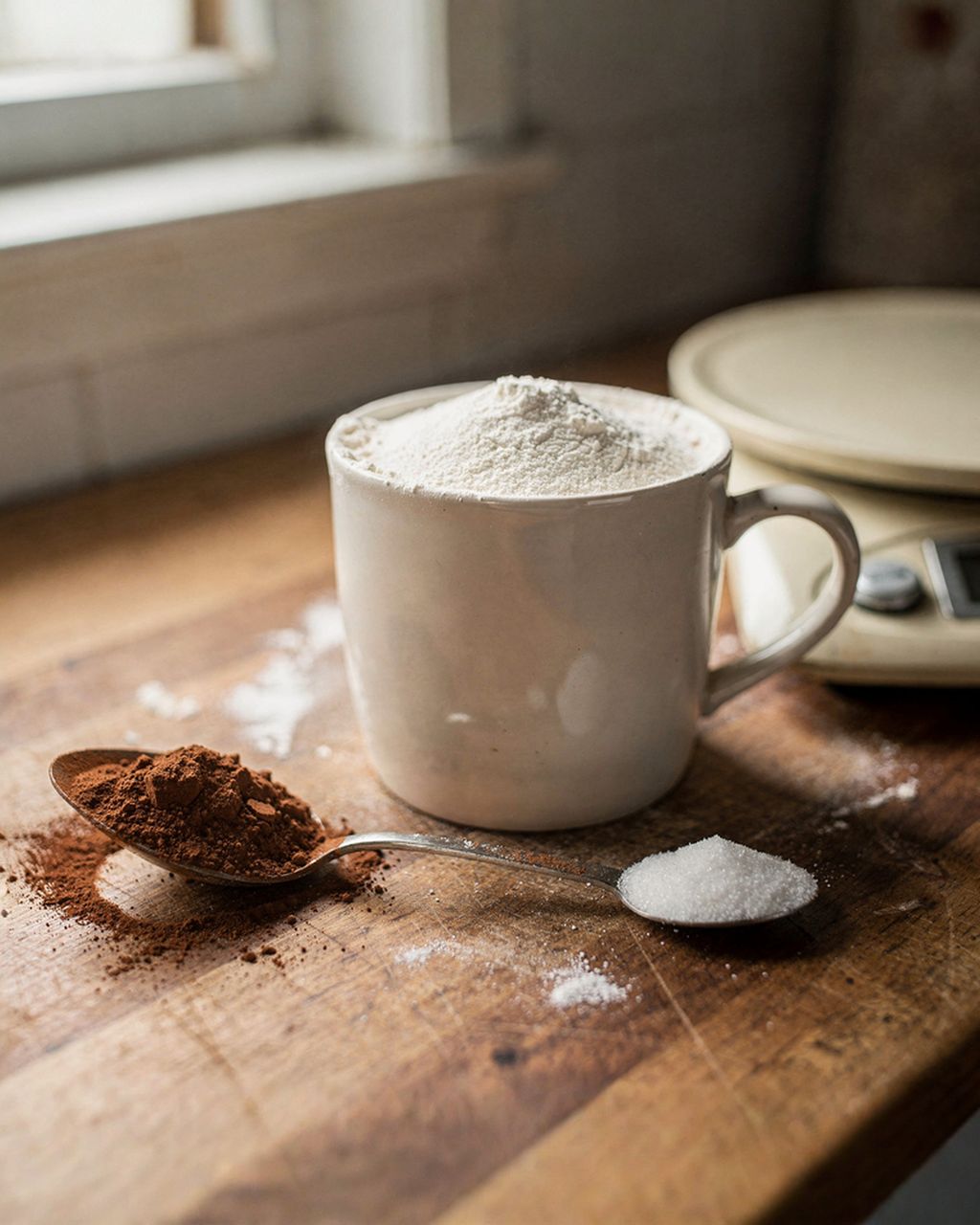
Baking soda + cream of tartar — ¼ tsp soda + ½ tsp cream of tartar. The closest match, works in any batter, and you don't need to change anything else in the recipe.
Baking soda + buttermilk, yogurt or kefir — ¼ tsp soda + 120 ml of a cultured dairy product. Cut the same 120 ml from another liquid in the recipe.
Baking soda + vinegar or lemon juice — ¼ tsp soda + 1 to 1½ tbsp (15–22 ml) vinegar or lemon juice. Also cut the same amount from another liquid.
Baking soda + citric acid — ¼ tsp soda (about 1.1 g) + roughly 1 g citric acid, so almost 1:1 by weight.
Baker's ammonia (hartshorn) — for thin, dry baked goods only: 10 g per 500 g flour. Not for bundt cakes or sponge layers.
Whipped eggs — no leavener needed at all. Sponge cake, roulade, Génoise, Easter lamb cake.
And one bonus: if you have self-rising flour, it already has a leavener built in — so skip the baking powder entirely and just swap the flour cup for cup.
Baking powder is a ready-made blend of three things: a base (baking soda), a dry acid, and a starch that keeps the two apart while they're sitting in the packet. As soon as they meet liquid, the acid breaks down the soda and releases carbon dioxide — and the gas bubbles expand the batter.
Most store-bought powders are double-acting: they release a first burst of gas as soon as they hit liquid, and a second once they reach the oven, at roughly 50–60°C. That's why you can let the batter sit for a bit and the cake will still rise. Most powders you'll find are based on sodium acid pyrophosphate, while pricier "clean-label" versions use cream of tartar.
The standard dose is a 12 g sachet per 500 g flour, about 2.5% of the flour's weight. If you're mixing your own leavener, that's the number everything else is measured against.
That's also the logic behind every substitute: you need to combine a base plus an acid yourself at home. You almost certainly already have baking soda. All that's missing is the acidic half.
Baking soda with cream of tartar is the most precise substitute for baking powder: for every teaspoon of baking powder, use ¼ teaspoon baking soda and ½ teaspoon cream of tartar. It behaves in the batter almost exactly like store-bought powder, and it's the only substitute where you don't need to touch the rest of the recipe — no added liquid, so the batter's ratios stay untouched.
Conversions worth memorizing:
1 teaspoon baking powder = ¼ tsp baking soda + ½ tsp cream of tartar
A whole 12 g sachet (per 500 g flour) = by volume, ¾ tsp soda + 1½ tsp cream of tartar (about 3.4 g and 4.5 g), or by weight, 4 g soda and 8–9 g cream of tartar (≈ 3 tsp). The weighed version fully neutralizes the soda; the volume version leavens a touch more gently.
For a stash to keep on hand = 1 part soda + 2 parts cream of tartar + 1 part cornstarch, so the mix doesn't pick up moisture
One thing that's easy to get wrong: the 1:2 ratio is given by volume (¼ : ½ tsp). Because cream of tartar is less dense than soda, by weight it actually works out to only about 1:1.3 — roughly 1.1 g soda to 1.5 g cream of tartar. Chemically, fully neutralizing the soda needs a 1:2.2 ratio by weight, so when weighing out a full sachet's worth, go with 4 g soda and 8–9 g cream of tartar.
Cream of tartar is potassium bitartrate (E336(i)), a byproduct of winemaking. You'll find it at baking supply shops, drugstores, and better-stocked grocery stores, sold in small 20–50 g packets. It's fine and powdery and completely flavorless, so you won't taste it in the finished bake.
Feel free to mix up a batch in a screw-top jar and measure it out just like store-bought powder. Just keep it dry and use it within three months — moisture from the air will quietly trigger the reaction with no oven involved.
A cultured dairy product is the easiest acid to reach for: ¼ teaspoon baking soda plus 120 ml buttermilk, yogurt, kefir or sour cream replaces 1 teaspoon of baking powder. For a whole 12 g sachet, that works out to about 4 g soda and 350 ml of a cultured dairy product.
The key point is that you're swapping the liquid, not adding to it. If the recipe calls for 350 ml of milk, replace it with buttermilk — don't pour buttermilk in on top. Otherwise you'll throw off the liquid-to-flour ratio and the batter will turn runny.
How to put it together so it works:
Mix the soda into the dry ingredients, not into the buttermilk. That way it's evenly distributed and won't start reacting before you want it to.
Combine wet and dry at the very end and stir just until combined, a few folds with a spatula. Overmixed batter won't hold onto the gas.
Have the oven already preheated and bake right away. The reaction is already underway.
Pay attention to acidity. The tangier the liquid, the better: buttermilk and kefir work more reliably than mild plain yogurt.
Other things that can stand in as the acidic ingredient: honey, molasses, brown sugar or natural (non-alkalized) cocoa. Just watch out for "dutch process" cocoa — that's alkalized, meaning it's basic and won't trigger the soda at all.
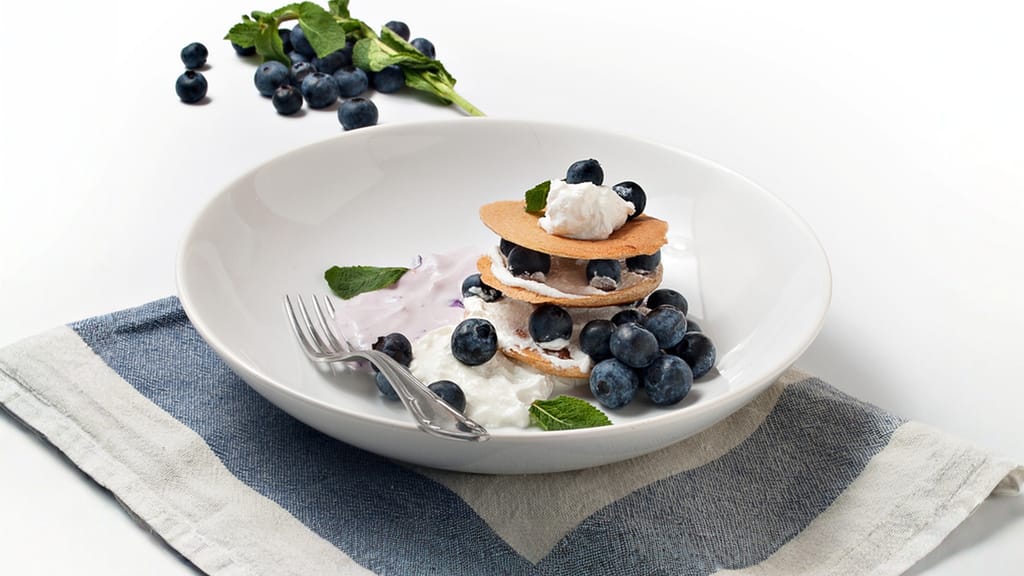
Greek yogurt pancakes with blueberries
Greek yogurt and blueberry pancakes — a good example of baking soda leavening thanks to acidic yogurt
If you don't have cream of tartar or anything cultured on hand, reach for vinegar or lemon instead: ¼ teaspoon baking soda plus 1 to 1½ tablespoons (15–22 ml) vinegar or lemon juice replaces 1 teaspoon of baking powder. For a 12 g sachet, use about 4 g soda and 45–65 ml (3–4½ tbsp) vinegar or lemon juice, and cut the same amount from another liquid.
Stick to the most neutral vinegars — apple cider or white wine vinegar. Balsamic will discolor the crumb and its flavor will come through. Lemon juice works well in sweet bakes where its aroma fits right in — lemon bundt cake, muffins, gingerbread.
The method that works: soda into the flour, vinegar or juice added right at the end. Pour vinegar into the soda ahead of time and it'll fizz away in the bowl, sending the gas into the air instead of into the batter.
Citric acid in powder form is a cleaner version of the same trick and doesn't add anything wet to the batter: for ¼ teaspoon of soda (about 1.1 g), use roughly 1 g citric acid, so almost 1:1 by weight. For a whole 12 g sachet, that's 4 g soda and 3 g citric acid. It's quite potent, so weigh it rather than measuring by spoon — and mix it in with the dry ingredients so it doesn't hit water before the rest of the batter does.
Sponge cake, roulade and Génoise sponge don't need any leavener — whipped-in air does all the work. The egg protein wraps around the bubbles, sets in the oven, and holds them in place. This is the oldest baking powder substitute there is, and the only one that gives you that light, springy crumb.
What has to go right:
Eggs should be at room temperature. Cold eggs whip up less easily and trap less air.
Whip egg yolks with sugar for 4–5 minutes, until pale and thick enough to fall from the whisk in a ribbon.
Whip egg whites only to soft peaks, not stiff. Over-whipped whites tear when folded in and let the air escape.
Fold in the flour with a spatula in three additions, using wide strokes from the bottom up. No stand mixer, no circular stirring.
Bake in a preheated oven at 170–180°C (340–355°F) and don't open the door for the first 20 minutes. A draft will collapse the structure before it sets.
For Génoise, whole eggs and sugar are warmed over a water bath to about 40°C, then whipped for 8–10 minutes. The warm mixture traps more air and holds it more stably — which is why Génoise rises so high without a gram of leavener.
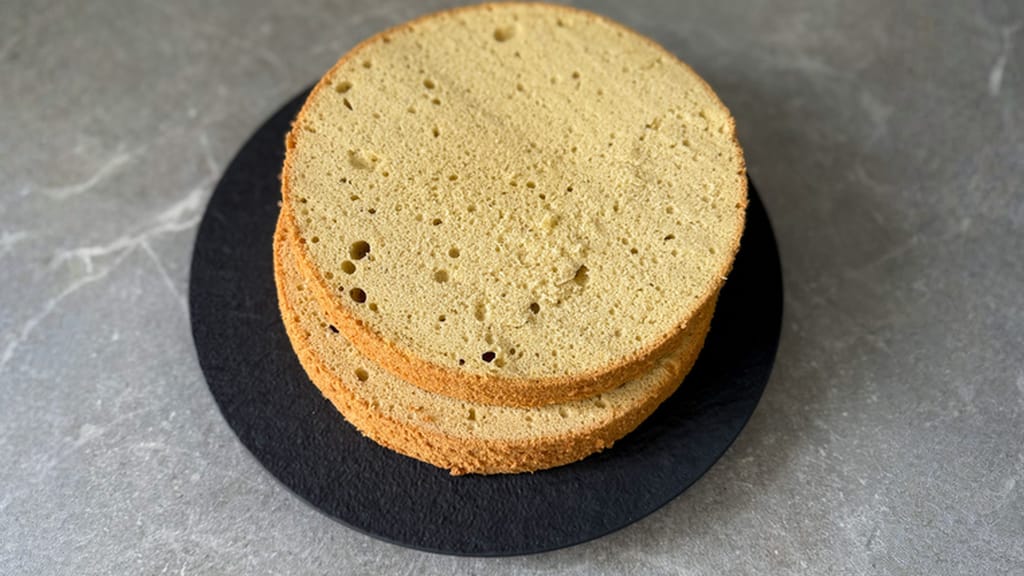
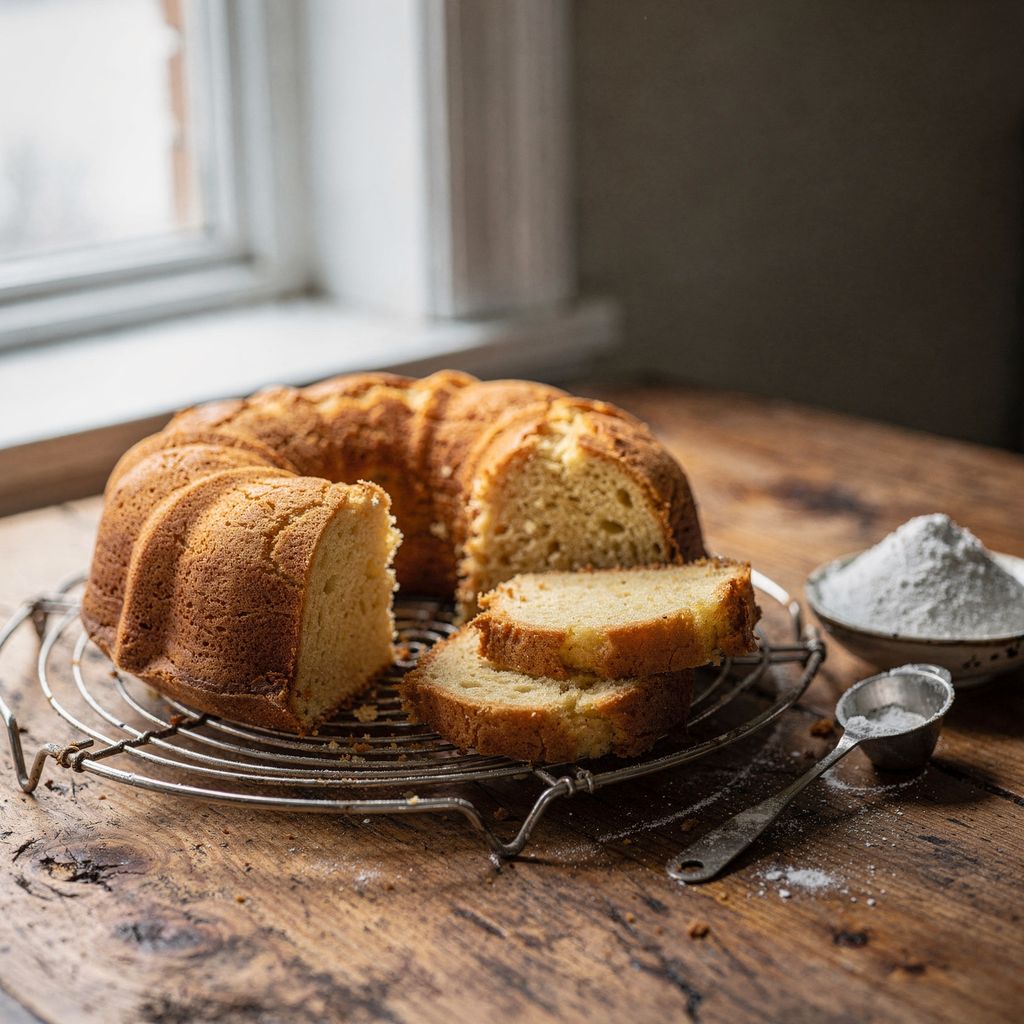
Light and airy génoise sponge cake
A fluffy Génoise sponge — a tall cake with not a single gram of baking powder
Baker's ammonia, also called ammonium carbonate, is a leavener for thin, dry baked goods: cookies, gingerbread biscuits, wafer rolls, crisp wafers. Use 10 g per 500 g flour (or 20 g per kilo), mixed into sifted flour, never into liquid.
Why it's different from baking powder: it doesn't need an acid. Above about 60°C, it breaks down on its own into carbon dioxide, ammonia and water, and because it produces two gases at once, it lifts the dough more forcefully than soda does. The result is that classic crisp, crumbly texture with irregular holes you want in cookies.
The catch is exactly that ammonia gas: it needs somewhere to escape to. In a thin layer of dough under 1 cm, it bakes off completely. In a bundt cake, a sponge layer or tall muffins, it doesn't — it stays trapped inside and the bake will smell of it. That's why baker's ammonia should never be treated as a general baking powder substitute, but as a specialist for cookies and confections.
In gingerbread, baker's ammonia and baking soda are often combined: the soda reacts with the honey for softness, while the ammonia keeps the gingerbread from turning into a brick.

Soft gingerbread cookies
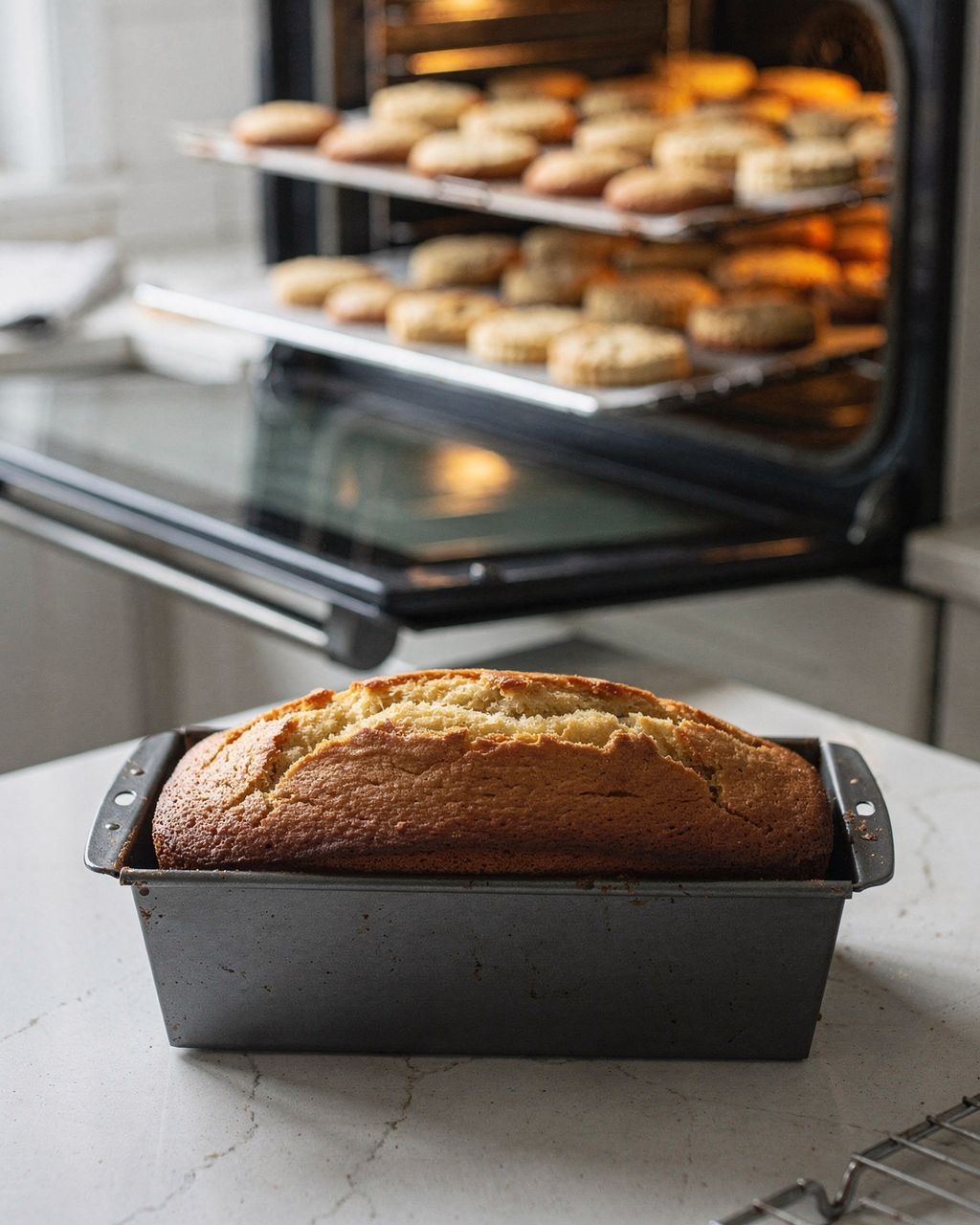
Soft gingerbread cookies — a dough where the leavener decides between tender gingerbread and a brick
Yeast, sparkling mineral water and effervescent tablets can't properly replace baking powder. They circulate online as clever hacks, but the science behind them doesn't hold up.
Yeast is a living organism, not a chemical leavener. It needs sugar, warmth, and one to three hours to rise, and crucially, it needs a gluten network to hold the gas in. In a creamed bundt cake batter or a thin muffin batter, there's nothing for it to hold onto — you'll end up with a sour, flat pancake instead. It doesn't work the other way either: baking powder can never replace yeast in a raised dough.
Soda water and mineral water already have carbon dioxide dissolved in the liquid. It escapes during mixing and in the first few minutes of baking, long before the structure has a chance to set. In pancakes or tempura batter it adds lightness, because those cook in a matter of seconds. In a bundt cake, it won't give you any extra rise.
Effervescent tablets (fizzy tablets or powders) are the least bad of the three, because they really are a soda-and-acid combo. The trouble is you don't know the ratio or the strength, and they also bring along sugar, flavoring and coloring. Treat this as an absolute last resort, not a real plan.
The simple rule: you need a base and an acid that only meet once they're in the batter. Anything that's already reacted (soda water) or reacts in a completely different way (yeast) can't do that job.
You can replace one 12 g sachet of baking powder (per 500 g flour) with any of these amounts:
4 g baking soda + 8–9 g cream of tartar (≈ 3 tsp) — nothing else in the recipe changes; the volume version, ¾ tsp soda + 1½ tsp cream of tartar, leavens a touch more gently
4 g baking soda + 350 ml buttermilk, kefir or yogurt — cut 350 ml from another liquid
4 g baking soda + 45–65 ml (3–4½ tbsp) vinegar or lemon juice — cut the same volume from another liquid
4 g baking soda + 3 g citric acid — both mixed into the dry ingredients, weighed rather than measured
10 g baker's ammonia — for cookies and thin confections only, never for a bundt cake
4 eggs whipped to a foam — replaces the leavener in sponge cake batter, but this is a different kind of recipe, not a direct swap
One teaspoon of baking soda weighs about 4.5 g (so ¼ teaspoon is about 1.1 g), a teaspoon of baking powder about 4 g, and a teaspoon of cream of tartar about 3 g. For soda and citric acid, though, it's worth weighing — the difference between a level and a heaped teaspoon can easily be double the dose, and with soda, you'll taste that difference.
Most failed substitutions come down to one of five things:
Measuring by spoon instead of weighing. With 12 g of baking powder, there's a lot of wiggle room; with 4 g of soda, there's very little. Get out the scale.
Letting the batter sit. A homemade mix has no second burst to save it in the oven. Preheat the oven before you start mixing, not after.
Too little acid for the amount of soda. Unreacted soda stays in the batter and you'll taste it. Stick to the ratios above rather than eyeballing the soda.
A cold oven, or opening the door. Heat is what expands the gas; if the temperature dips, the structure sets too early and then sinks.
Stale leavener. An opened packet of baking powder, or a box of soda that's been in the drawer for a year, loses noticeable strength — the only way to know is to test it (see the FAQ below for how). Don't rely on the date on the package.
And one more thing that holds true across the board: no substitute will save a badly mixed batter. If it's overmixed, the flour is too tightly bound, or the fat is too cold, even store-bought powder won't save it.
Stir ½ teaspoon of baking powder into 60 ml of hot water — it should fizz up instantly and vigorously. Test baking soda differently: stir ½ teaspoon into a tablespoon of vinegar or lemon juice; the reaction should be sharp and immediate. If it just bubbles lazily, toss it. An opened packet of baking powder keeps for about a year in a dry spot, and soda lasts longer in a sealed container, but both lose strength from moisture, not from the date on the pack.
Homemade baking powder keeps for about three months if you add one extra part of cornstarch to the mix and seal it in a screw-top jar. The starch soaks up moisture from the air and stops the soda and cream of tartar from quietly reacting inside the container. Store it somewhere dry — not above the stove or next to the kettle, since steam is a worse enemy than time. Give the mix a shake before using it, and it's worth testing it first.
Baked goods taste soapy or metallic when unreacted baking soda is left in them — either there was too much of it, or it didn't have enough acid to pair with. Soda is about 3–4 times stronger than baking powder, so a straight one-to-one swap is almost always the culprit. Stick to ¼ teaspoon of soda per 1 teaspoon of baking powder and always pair it with an acidic ingredient. There's no fixing the batch you've already baked, but next time, weigh the soda and add an extra tablespoon of lemon juice.
Yes, baking powder substitutes work in gluten-free batter too, and the ratios stay the same — timing just matters more. Gluten-free batters don't have a gluten network to trap the gas bubbles, so whatever escapes is gone for good. It's best to use a store-bought double-acting powder here, and if you do reach for a homemade soda-and-cream-of-tartar mix, get the batter into a preheated oven the moment it's mixed. An extra splash of acidic liquid — yogurt or buttermilk in the recipe — helps too.
Don't change the temperature — stick to the recipe. What changes is the timing before the oven: with a homemade mix, or soda plus an acid, the batter needs to go into the oven within five minutes of mixing, whereas with store-bought powder you can afford to wait a bit. Check the bake a few minutes early with a skewer, since soda-leavened batter tends to look a bit darker on top and can seem done before it actually is.
One recipe worth heating the oven for, one tip, and one deal from the shop. Nothing else.