Spring lyonnaise salad
Pickled Eggs: How to Make Them, Brine Recipes, and How Long to Wait

Updated Jul 19, 2026
Pickled eggs are hard-boiled eggs cured in a cold, acidic brine of vinegar, water, salt and spices — they keep in the fridge for 3 to 4 months and take on a bold, spiced flavour. You can have them ready in a few minutes of hands-on work, with one non-negotiable rule: the brine must be acidic enough, and the eggs must stay cold at all times. In this guide you'll find the basic method, three tried-and-tested brines (classic vinegar, sweet tea, and spicy chilli), how long to let the eggs cure, and how to avoid the one real risk — botulism.
Making pickled eggs comes down to four steps: hard-boil the eggs (10 minutes) and peel them, make the brine from equal parts vinegar and water with salt and spices, pour the cooled brine over the eggs in a sterilised jar, and let them cure in the fridge for at least 1–2 weeks. The whole trick lies in the brine's acidity — use vinegar with at least 5% acidity so the pH drops below 4.6. That's what stops bacterial growth and makes pickling a genuinely safe way to preserve the eggs.
Put the eggs in a pot of cold water, bring to the boil, lower the heat and simmer for 10 minutes. Transfer them straight into ice water — the shock of the cold loosens the membrane from the white and makes peeling much easier. Peel under running water. Use eggs that are 7–10 days old rather than very fresh ones, since fresh eggs are much harder to peel. The white needs to stay whole and smooth, as any crack lets the brine seep in unevenly.
The base is equal parts vinegar and water, plus salt and a spoonful of sugar for balance. Bring it all to a brief boil (about 5 minutes) so the salt and sugar dissolve and the spices release their aroma. The brine must cool completely before you pour it over the eggs — hot brine will turn the whites rubbery. Don't skimp on the vinegar: acidity isn't just about flavour, it's the main safeguard for shelf life.
Layer the peeled eggs into a sterilised jar and pour over the cooled brine so they're fully submerged — any bit that pokes above the surface risks spoiling. Seal the jar and put it straight in the fridge. Start the curing process right away, not left sitting on the counter: pickled eggs have no business at room temperature.

The brine is what makes a pickled egg. Here are three reliable options: a classic spiced vinegar brine, a gently sweet tea brine, and a spicy chilli brine. All quantities are for roughly 6–8 eggs, and the brine should always cool fully before it goes over the eggs.
A classic with a bold, spiced flavour. You'll need:
500ml white wine vinegar (min. 5% acidity)
250ml water
1 tbsp sugar
1 tbsp salt
5 allspice berries
5 black peppercorns
2 bay leaves
1 small onion, sliced
Method: Put everything in a pot, bring to the boil and simmer for 5 minutes. Let it cool completely, pour over the eggs in the jar, and cure in the fridge for at least 1 week (large eggs can happily go 2–3 weeks).
An unusual take inspired by Asian tea eggs — gently sweet, with notes of tea and ginger. You'll need:
4 black tea bags (or the loose-leaf equivalent)
500ml water
100g brown sugar
a few slices of fresh ginger
pinch of salt
Method: Pour boiling water over the tea, let it steep for 5 minutes, then remove the bags. Stir in the sugar, ginger and salt until the sugar dissolves, then let it cool. Pour over the eggs and leave to cure for at least 2 weeks. This brine is only mildly acidic, so it's really a flavour choice rather than a preserving one — keep it especially cold and eat the eggs sooner rather than later.
For heat-lovers — with chilli, honey and cider vinegar. You'll need:
500ml cider vinegar (min. 5% acidity)
250ml water
2 tbsp honey
fresh chillies to taste, sliced
1 garlic clove
1 tsp salt
Method: Briefly boil the vinegar, water, honey, chillies, garlic and salt together. Let it cool, pour over the eggs and cure for 3–4 weeks. A note on garlic: fresh garlic submerged in brine creates a low-acid, oxygen-free environment where the bacteria that cause botulism can potentially grow. Only add it to a sufficiently acidic brine, always keep the eggs refrigerated, and use them up within a month — or leave the garlic out altogether.
Small eggs are ready in 1–2 weeks, while medium and large ones need 2–4 weeks to pick up full flavour. That's down to how the brine works its way through the egg: the white absorbs flavour and colour in about a day, but the acid reaches the yolk much more slowly — anywhere from 5 to 7 days. That's why an egg cut open after two days tastes flavourless in the middle, while after two weeks it's seasoned right through.
A shorter cure (1–2 days) gives a milder, fresher taste and a firmer white. A longer cure brings out the spices more and softens the texture. If the white turns rubbery after a long cure, the brine was either too strong or the eggs sat too long — next time, shorten the curing time or dilute the brine with a bit more water.
Store pickled eggs exclusively in the fridge below 4°C, and use them up within 3–4 months. According to the National Center for Home Food Preservation, there is no safe way to can pickled eggs for room-temperature storage — every safe recipe relies on refrigeration. Old advice about shelf-stable, no-fridge preservation is a myth when it comes to eggs, and it has genuinely led to cases of botulism.
Three rules that keep it safe:
Acidity. Use vinegar with at least 5% acidity, and never dilute the brine more than the recipe calls for — the goal is a pH below 4.6.
Cold. Jars go straight in the fridge, and once served, eggs shouldn't sit out for more than 2 hours.
Cleanliness. Sterilise jars and lids by boiling for at least 10 minutes, and use fresh ingredients throughout.
If you want your eggs at their freshest before you even start pickling, take a look at how to store eggs properly and check they're fresh.

Pickled eggs work as a snack in their own right and as a versatile ingredient. The quickest way to serve them is halved with a bit of wholegrain mustard or spicy mayo, pub-style in the British tradition. Chopped up, they liven up sandwiches, add a sharp edge to salads, and can stand in for a poached egg in warm salads too. On a white plate, they look great alongside radishes, rocket or cherry tomatoes, and they can handle bolder pairings — kimchi or pickles complement their tang nicely.
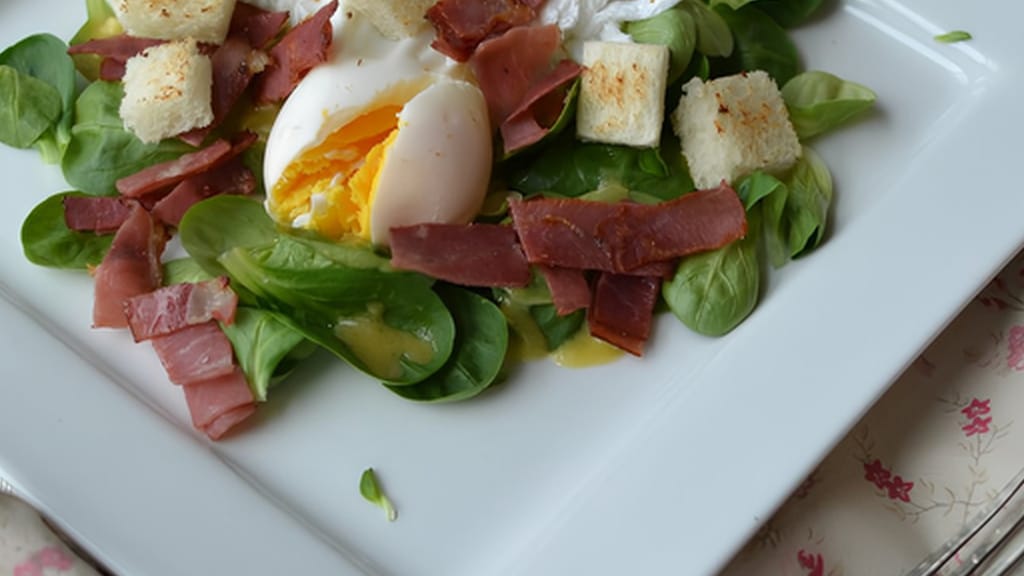
Spring lyonnaise salad
Pickled eggs standing in for a poached egg in a spring lyonnaise salad
Pickling eggs developed independently in both Asia and Europe as a way to preserve eggs while giving them extra flavour. In ancient China, boiled eggs became tea eggs — marinated in a mix of tea, soy sauce and spices that gave them a marbled look and deep flavour. In Europe, vinegar-pickled eggs spread during the Middle Ages as a way to stock up for winter and pair with meat and cheese. Victorian-era British pickled eggs — cured in vinegar with onion and spices — went on to become a classic pub snack, and a practical option for sailors on long voyages too.
You can make pickled eggs at home in just a few minutes of work: hard-boil, peel, pour over cooled acidic brine, and leave to cure in the fridge. Choose between a classic vinegar, sweet tea, or spicy chilli brine, allow 1–4 weeks depending on egg size, and keep an eye on two things — a properly acidic brine and constant refrigeration. The reward is a long-lasting, punchy treat for salads, sandwiches and party spreads alike.
Pickled eggs will keep in the fridge for 3 to 4 months, as long as they're fully submerged in the acidic brine and kept consistently below 4°C. Never store them at room temperature, and never can them — there's no safe way to preserve eggs without refrigeration.
You'll know pickled eggs have spoiled if they smell off or fermented, the brine looks cloudy, there are bubbles, or the lid is bulging. If any of that happens, throw them out without tasting — botulism risk can't always be judged reliably by taste or smell.
Only add fresh garlic if the brine is sufficiently acidic (vinegar at least 5%), and always keep the eggs refrigerated. Raw garlic submerged in brine creates a low-oxygen, low-acid environment where Clostridium botulinum can potentially grow; if in doubt, leave it out.
A rubbery white happens when the brine is too strong, the eggs have cured for too long, or they were covered with brine while it was still hot. Always let the brine cool completely first, and for small eggs, shorten the curing time or dilute the brine slightly with water.
Yes — the eggs are hard-boiled and peeled before pickling, since the shell would stop the brine from reaching the egg white. Eggs that are 7–10 days old peel most easily, especially if plunged into ice water right after cooking.
One recipe worth heating the oven for, one tip, and one deal from the shop. Nothing else.