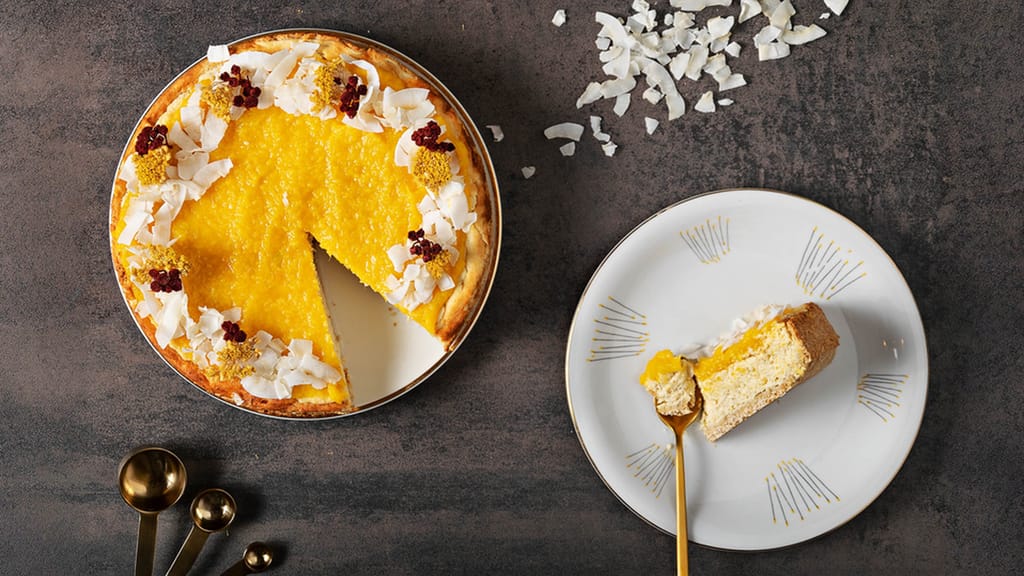
Mango cheesecake
Fruit Cake Filling That Won't Weep: Strawberry, Raspberry & Cherry
Updated Oct 17, 2026
Fruit cream for a cake won't leak water when you add the fruit with no free liquid: as a reduced purée, a freeze-dried powder or a flavoring paste, and then firm the cream up with gelatin. Fresh blended strawberries or raspberries stirred straight into whipped cream give a weak flavor and a soggy cake layer within a few hours. Here you'll find all four routes with gram amounts, plus which cream bases can handle fruit and how to keep a strawberry cream pink.
Fruit cream leaks water because fruit is 82–91% water and the cream can't hold on to it. Whipped cream, mascarpone and buttercream have nothing to bind the free juice, so over time it runs into the cake layer or separates at the bottom of the bowl.
Three mistakes are behind it most often:
Raw purée straight into the cream. 100 g of blended strawberries brings in over 90 g of water. The cream thins out and the flavor is weak anyway, because the water dilutes it.
Sugared fresh fruit in a layer. Sugar draws juice out of fruit (osmosis), so sliced strawberries will leave a puddle overnight.
Acid in a dairy cream. Acidic purée and long whipping make mascarpone and whipped cream split. The cream turns grainy and then weeps whey.
So the fix has two parts: get the water out of the fruit, or bind it firmly. Only then do you worry about flavor and color.
There are four ways to get fruit into cream: reduced purée, freeze-dried fruit, flavoring paste and gelatin, which firms up a cream containing juice. The first three supply flavor, while gelatin holds the shape. In practice you combine them, for example raspberry purée with a spoonful of freeze-dried raspberries and a little gelatin.
Reduced purée: the most natural flavor, but it costs you time at the stove. Works well for strawberries and raspberries.
Freeze-dried fruit: the most flavor and almost no water. It's pricier, though, and with raspberries you add the seeds to the cream as well.
Flavoring paste: quick, with a steady flavor and color. It's an aroma, not fresh fruit. Use it where fresh fruit lets you down: cherries, mango, melon.
Gelatin: it has no flavor of its own, but it lets the cream take more fruit and lets you slice the cake cleanly.
Reduced fruit purée for cream is made by simmering blended fruit down to about half to 60% of its original weight, so the flavor is concentrated and the cream isn't thinned. The water that would have diluted the cream evaporates in the pot instead.
Strawberries: blend 400 g of strawberries (fresh or frozen), add 20–30 g of sugar and a teaspoon of lemon juice. Cook over medium heat, stirring constantly, for 10–15 minutes until about 200 g remains. The purée is ready when a spatula dragged across the bottom of the pot leaves a clean trail for a second.
Raspberries: cook down 300 g of raspberries and press them through a fine sieve. You'll get about 200 g of seedless purée, which you simmer down to 110–120 g. Skip the sieve only if you don't mind seeds in the cream.
Cooling: let the purée cool completely, ideally in the fridge with cling film pressed directly onto the surface. Warm purée melts whipped cream and splits buttercream.
As a starting ratio, use 1 part reduced purée to 3–4 parts cream. A larger share needs gelatin.
Freeze-dried fruit is the most powerful natural source of fruit flavor, because only the dry matter of the fruit is left. Grind it to a fine powder in a coffee grinder and fold it into the finished cream. For 250 g of cream, 10–20 g of powder is enough.
The powder also binds a little of the water in the cream, so you can add it to reduced purée as well to boost the flavor further. Sift raspberries after grinding, or the seeds will stay between your teeth. We don't sell freeze-dried fruit yet. You'll find it in health food shops and baking supply stores, just make sure it has no added sugar or flavoring.
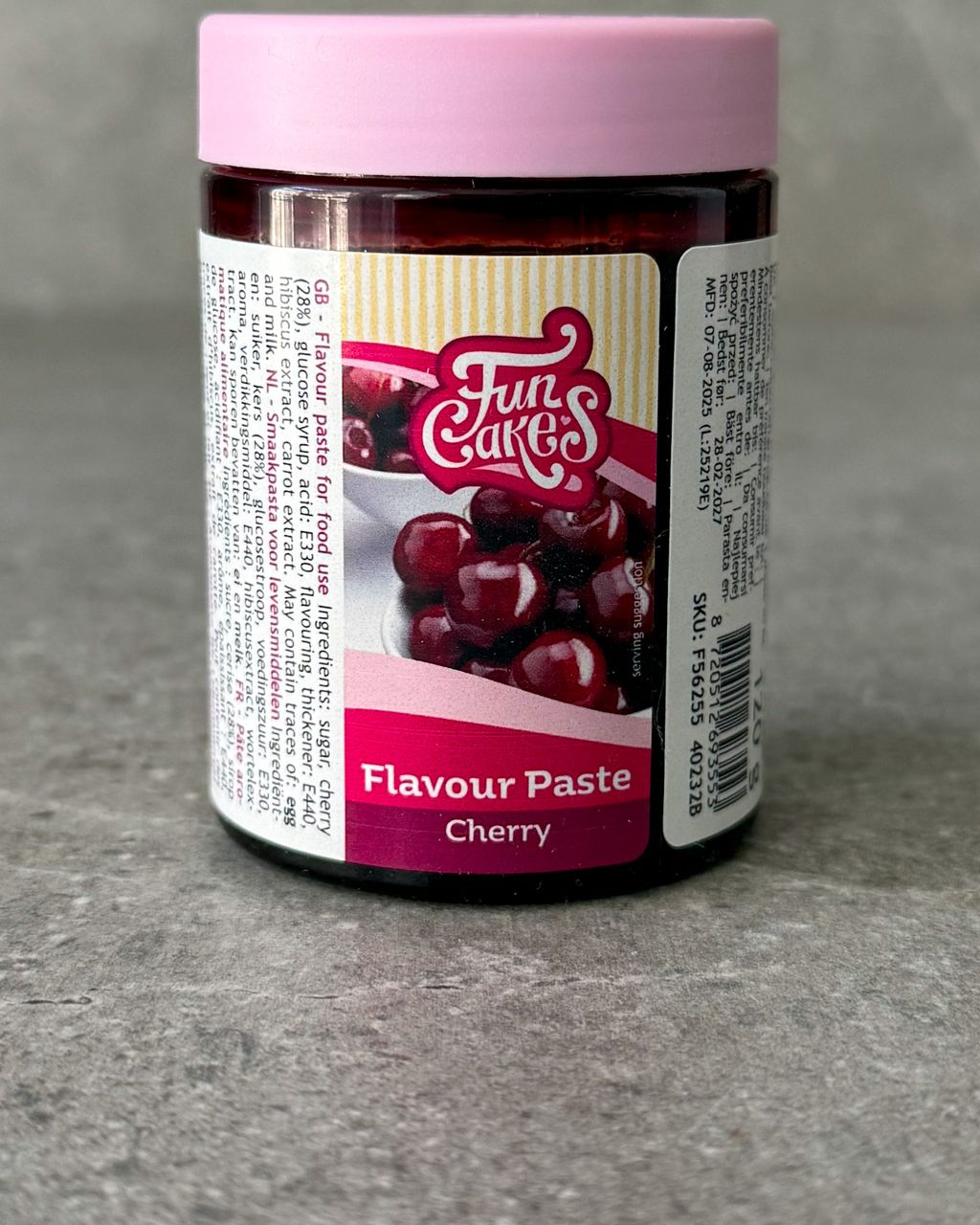
Flavoring paste is a concentrate of flavor and color that doesn't thin the cream at all. That makes it the most reliable route where fresh fruit lets you down in cream. Cherries lose their color and turn brown when cooked, and their delicate flavor gets lost in dairy. For cherry cream, reach for FunCakes cherry flavoring paste, which gives you flavor and a deep pink color in one go.
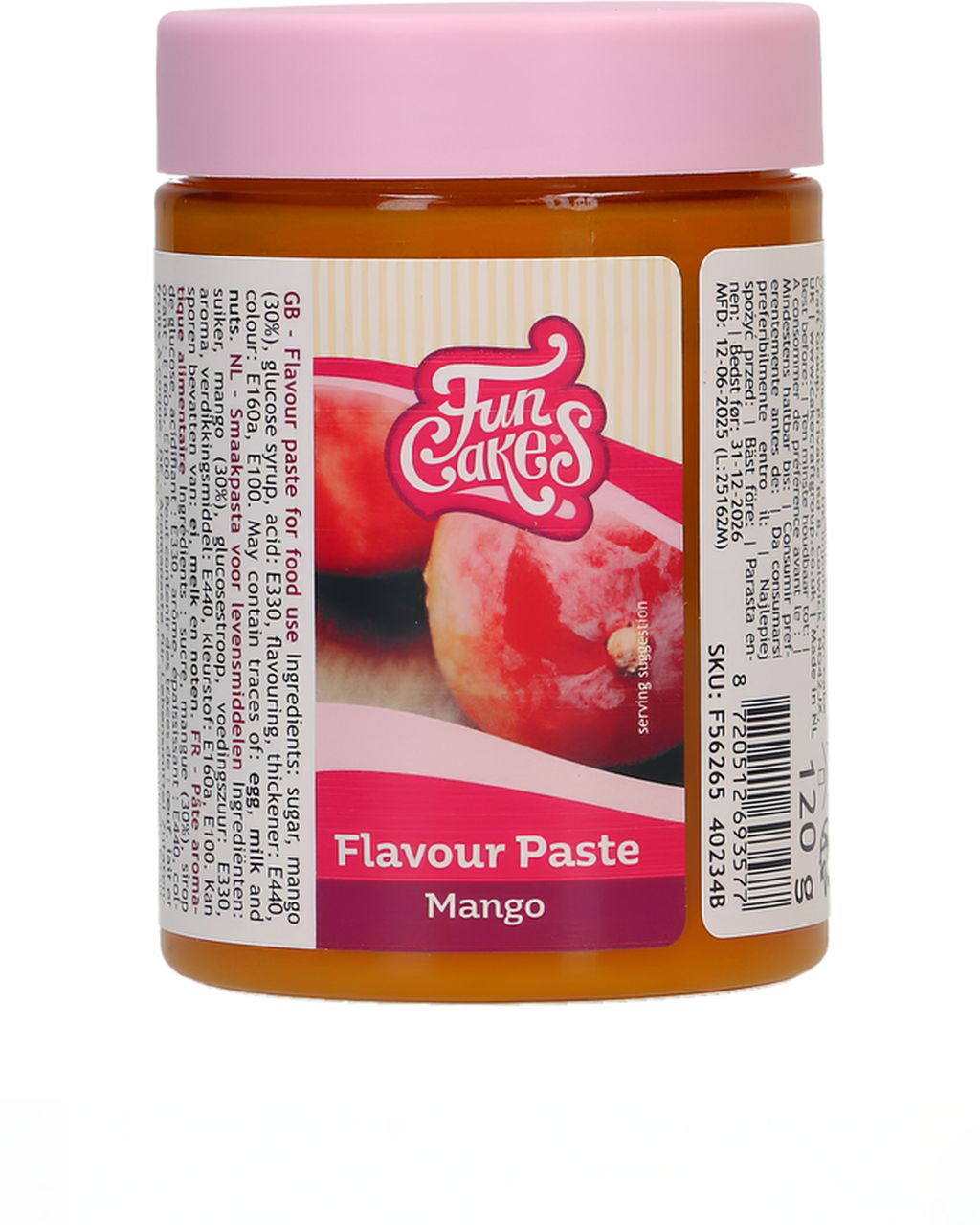
Mango is similar. Fresh purée is fibrous and watery, and on top of that it has to be cooked (see the warning below). Without cooking, FunCakes mango flavoring paste does the job.
Dose the paste according to the package, add it by the teaspoon and taste as you go, because cream chilled on a cake tastes milder than it does in the bowl. To be honest: paste is an aroma, not fruit. You'll get the best result by pairing it with a little reduced purée or freeze-dried fruit. The paste brings strength and the fruit brings authenticity. The individual flavors are covered in detail in cherry cream from flavoring paste and mango cake cream from paste or from purée. To see how fruit cream looks in a finished cake, check out the mango quark cake.
Mango cheesecake
Mango quark cake with fruit cream
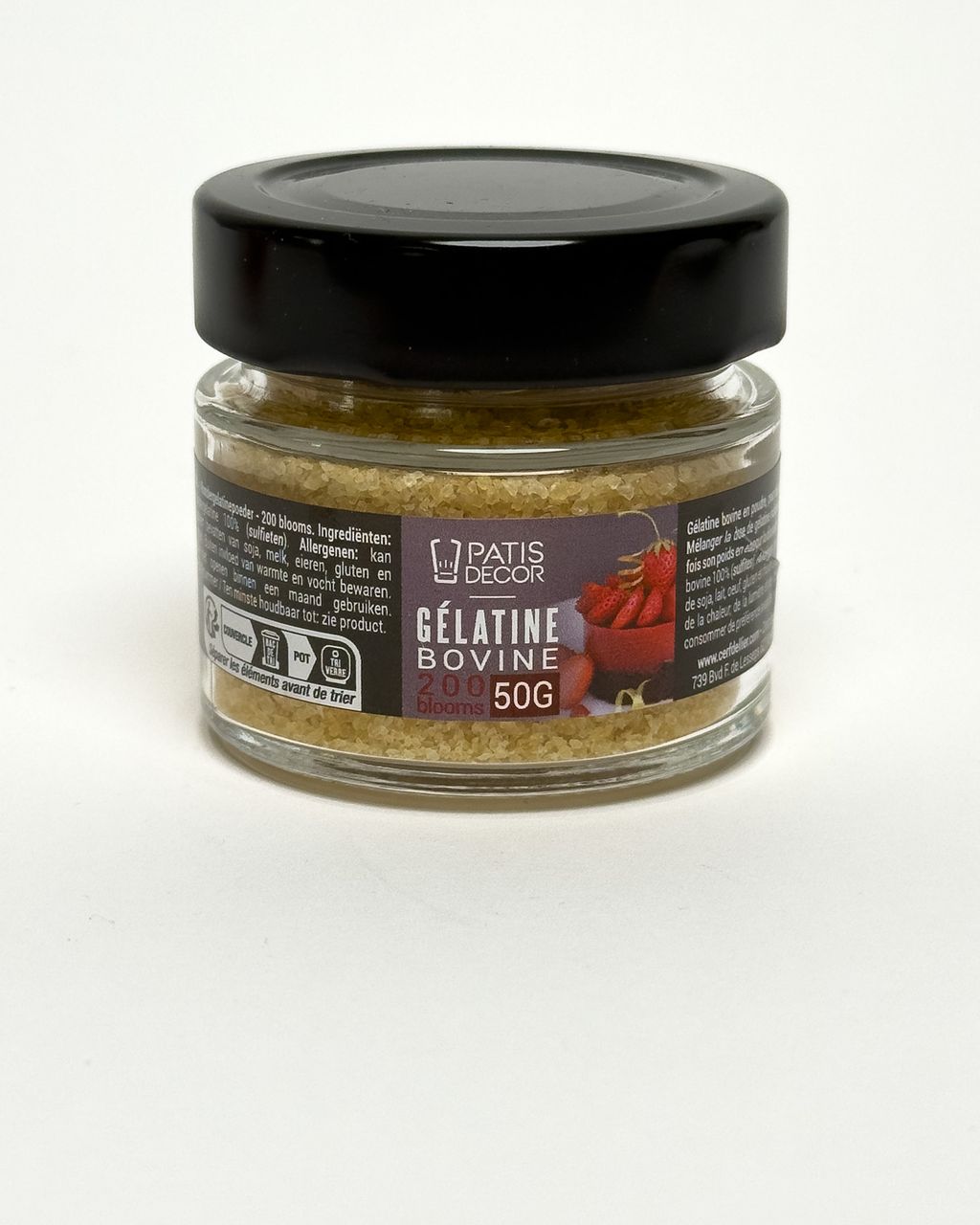
Gelatin binds the water from the fruit into a firm gel. The fruit cream then holds its shape, doesn't leak juice, and the cake slices cleanly. For 500 g of finished cream with powdered gelatin of 200 bloom, use:
4–6 g for a cream that just needs to stay put between layers without running,
8–10 g for a thick fruit layer or mousse that has to stand on its own inside a cake ring.
Method:
Sprinkle the gelatin into five times its weight in cold water (about 30 g for 6 g) and leave it to bloom for 10 minutes.
Dissolve it in a small portion of warm purée or briefly in the microwave. Don't boil it, as boiling weakens it.
Stir this warm mixture first into 2–3 tablespoons of the cream to even out the temperature, and only then into the rest. Otherwise it will seize into rubbery strings in the cold whipped cream.
Use the cream right away and leave the cake in the fridge for at least 6 hours, ideally overnight.
Powdered beef gelatin, 200 bloom is easy to dose by the gram, and you don't have to convert sheets of different strengths. You'll find other ways to firm up cream among the gelling agents and binders. If you're curious how beef and pork gelatin differ, read beef or pork gelatin. The whole method for whipped cream is covered in firm whipped cream filling with gelatin.
Fruit works best in whipped cream and mascarpone firmed up with gelatin, and in white chocolate ganache. Buttercream takes only a little purée, or it splits. A quick look at how each base behaves:
Whipped cream with gelatin: the lightest and freshest. Fold the purée into the already whipped cream, or you won't be able to whip it. If your cream is giving you trouble, see cream won't whip.
Mascarpone cream: firmer and creamy. Acidic purée makes it split, though, so add it last and work it in with just a few turns. More in mascarpone cream: why it splits or thins out.
Quark cream: handles acidic fruit well. Without gelatin it holds poorly, though, see quark cake cream that holds its shape.
Buttercream: max. 1 part reduced purée to 4 parts cream, both at the same temperature of around 20 °C (68 °F). A fatty cream can't take more water and will split. This is where paste and freeze-dried fruit pay off most. For a comparison of buttercreams, see buttercream for cakes: classic, Swiss meringue or custard-based.
White chocolate ganache: the cocoa butter holds the fruit firmly, see the next section.
Raspberry ganache is made by replacing part of the cream in a ganache with reduced raspberry purée. As a starting point for a cake filling, stick to roughly 2.5 parts white chocolate to 1 part reduced purée, for example 250 g of chocolate and 100 g of purée. For a smoother texture, add another 30–50 g of cream.
Heat the purée to 50–60 °C (122–140 °F), pour it over the chopped chocolate, let it sit for a minute, then blend until smooth with a stick blender. Leave the ganache to mature in the fridge overnight, and it will set to a spreadable thickness. The tartness of raspberries nicely balances the sweetness of white chocolate, so this ganache is noticeably less cloying than the classic one. If you want to turn it into a fluffy cream, the ratio and chilling are explained in whipped white chocolate ganache.
Reduced strawberry purée tends to look salmon-colored to brownish in cream, because the red pigment of strawberries (anthocyanins) breaks down with cooking and in light. The flavor is fine, and you can fix the color with a drop of gel food coloring.
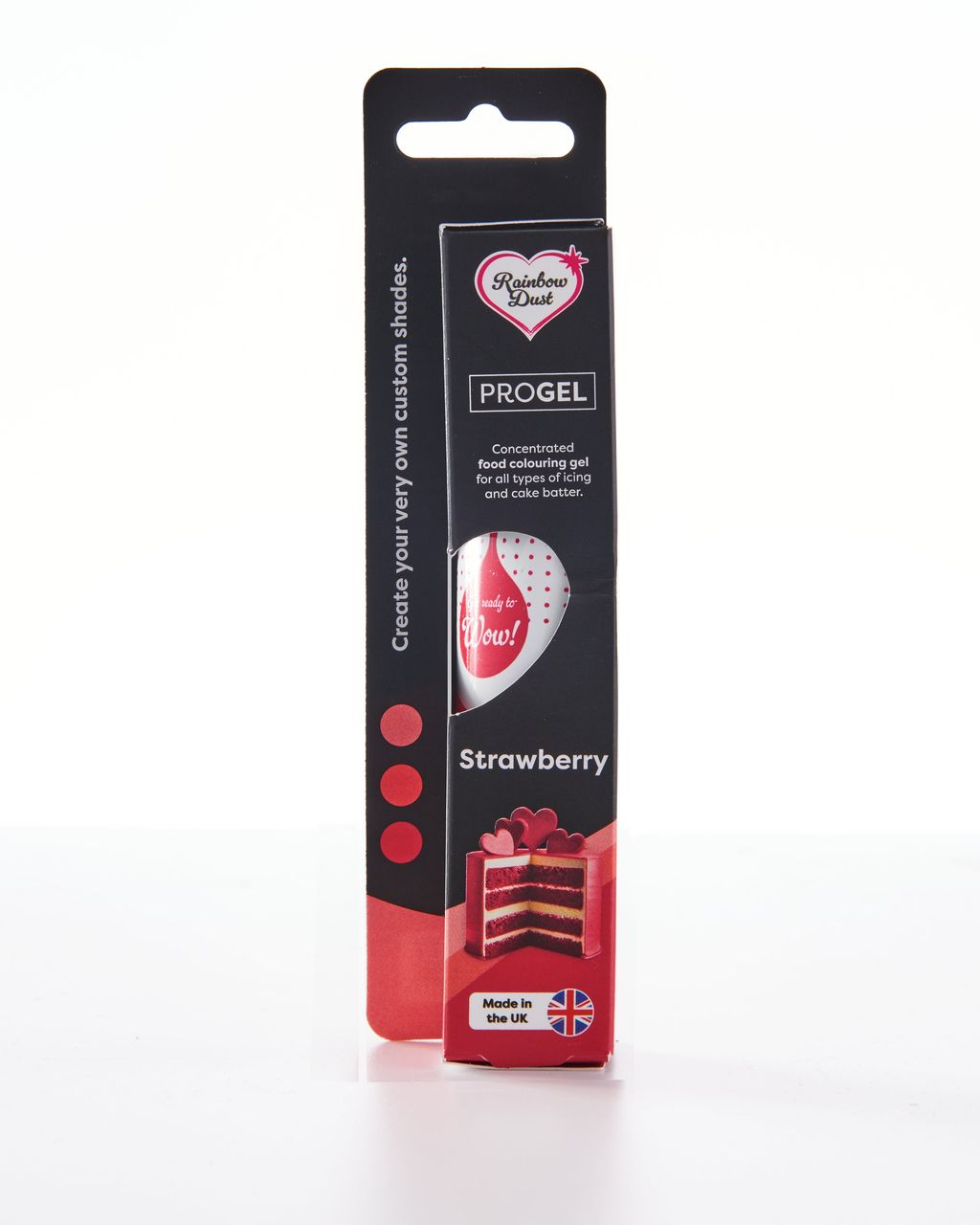
Gel coloring doesn't thin the cream, so it won't threaten its firmness. For 500 g of cream, a toothpick tip of ProGel strawberry gel coloring is enough. Stir it in and let the cream rest for 10 minutes, because the color deepens over time. A drop of lemon juice in the purée helps strawberries and raspberries keep a livelier shade naturally.
Fresh fruit between layers won't soak the sponge if you enclose it in a firm cream and don't sugar it beforehand. Here's how:
Dry the fruit. Let washed strawberries dry on a towel and slice them only right before assembling the cake. Don't sweeten them, as sugar draws out their juice.
Build a dam. Pipe a firmer cream around the edge of the layer, ideally one with gelatin or a ganache. Put the fruit and softer cream inside, so the juice can't run out to the sides.
Coat the fruit in cream. Don't leave pieces of fruit lying directly on the sponge. A thin layer of cream under and over the fruit works as a barrier.
Let the cake set. In the fridge for at least 6 hours, so the gelatin sets before the fruit starts releasing juice.
Don't put frozen fruit in a layer, as it will release juice once it thaws. For a layer, cook it down first and reduce it into a purée.
For a 20 cm (8-inch) cake with two layers of filling and a thin coating, plan on roughly 600–800 g of fruit cream. If you only fill the cake and leave the sides bare, 400–500 g will do.
Yes, agar can replace gelatin, but the cream will be more brittle and less creamy. Agar has to be boiled briefly and sets at roughly 35–45 °C (95–113 °F), so stir it quickly into cream at room temperature. Use about a quarter to a fifth of the weight of gelatin (1 g of agar in place of 4–5 g of gelatin), and test it first on a small batch.
A cake with fruit cream keeps in the fridge for 2–3 days and tastes best on the second day, once the cream has set and the flavors have come together. If it has fresh fruit inside, eat it within 48 hours, after which the fruit starts to release juice even through the cream.
A cake with a gelatin-set cream or ganache can be frozen for up to a month, well wrapped in cling film. Thaw it slowly in the fridge overnight. Fresh fruit in a layer turns watery after thawing, though, so for freezing use only purée, freeze-dried fruit or paste.
Yes. A thick jam with a high fruit content is essentially a ready-made reduced purée, just sweeter. Use roughly 1 part jam to 4 parts cream, cut back on the sugar in the cream, and sieve raspberry jam to remove the seeds before using it.
One recipe worth heating the oven for, one tip, and one deal from the shop. Nothing else.