Sugar Sprinkles: Pastel Party
Dessert Table for a Party: What to Serve and How Much to Make
Updated Oct 8, 2026
For a party dessert table, plan on 3–4 small bites per guest if there's also a cake, and 5–6 bites if desserts are the main event. As for variety, 3–4 types work for 10 guests, 4–5 for 20, and 5–6 for 40 — add one more type if there's no cake. Below you'll find what to put on the table so everything balances out, exact numbers for parties of different sizes, and what to bake ahead versus what you can simply buy.
Plan on 3–4 pieces per guest when there's also a cake at the party, and 5–6 pieces when the dessert table is the main event of the afternoon. After a filling lunch or dinner, 2–3 pieces are enough. A full guest will eat less, so the fuller the earlier meal, the lower end of the range you should aim for.
A "piece" here means one or two bites: a cupcake, a 5–6 cm tartlet, a 4 × 4 cm square of brownie, two meringues, or one praline. A large cake is counted separately, as one slice per guest.
Add a buffer on top of that:
up to 15 guests: 2–3 extra pieces,
over 15 guests: roughly 10% extra,
kids' party: children eat with their eyes, not their stomachs. Lean towards the upper end of the range, but keep the pieces smaller.
For 20 guests with a cake, prepare the cake plus 65–90 small pieces across 4–5 types. Here are the numbers for other party sizes, worked out using the rule above and including the buffer:
10 guests with a cake: cake + 32–43 pieces, 3–4 types.
20 guests with a cake: cake + 65–90 pieces, 4–5 types.
20 guests without a cake (desserts are the main event): 110–130 pieces, 5–6 types.
40 guests with a cake: cake + 130–175 pieces, 5–6 types.
The number of types depends on the size of the party, not on pieces per guest: 3–4 types for 10 guests, 4–5 for 20, 5–6 for 40, and add one more type if there's no cake. Seven types is the ceiling. More variety doesn't mean happier guests — a crowded table makes it harder for people to choose, and it means a lot more work for you. Five types in generous quantities beat ten types with six pieces each.
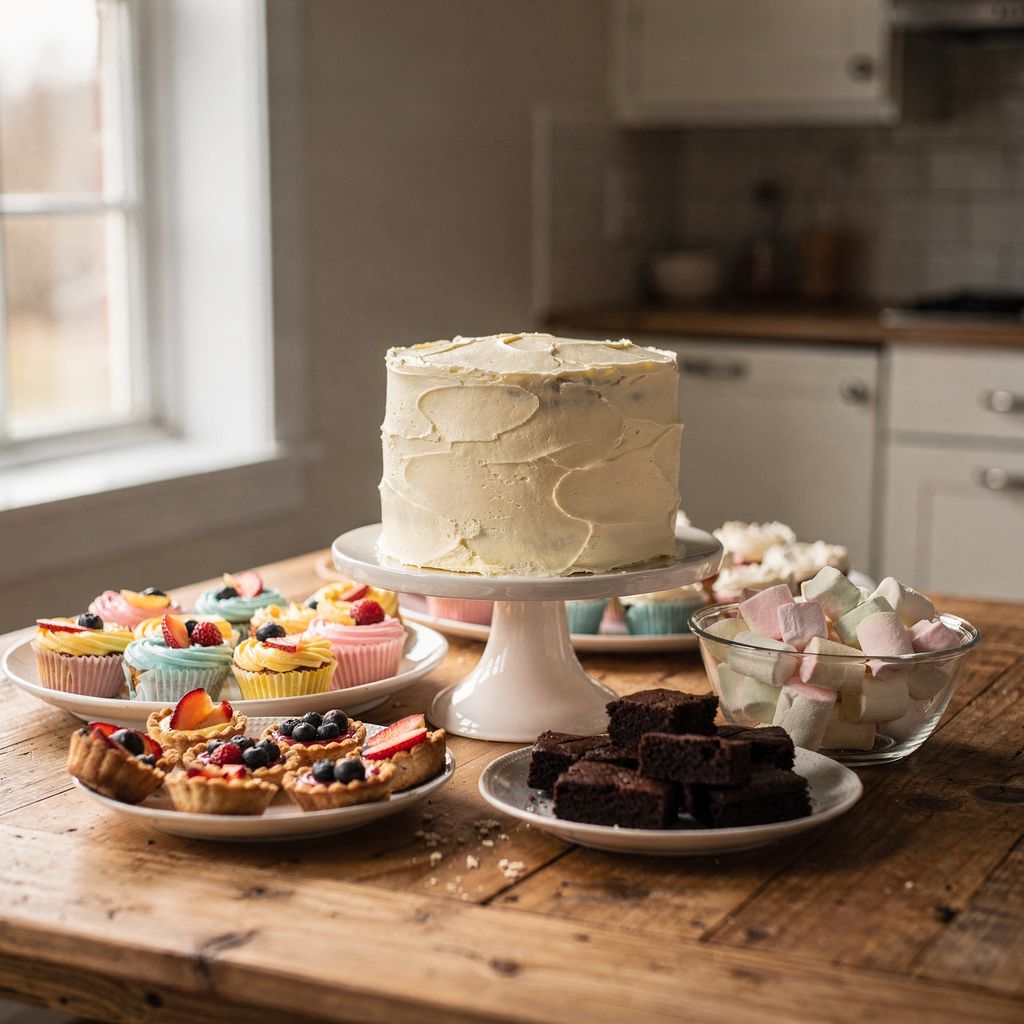
A good dessert table rests on five roles: something chocolatey, something fruity and fresh, something crunchy, something playful, and something store-bought. That way each type brings a different flavour and texture, and no one leaves feeling like they ate the same thing five times over. At a small party with 3–4 types, one item can easily cover two roles at once — store-bought pralines, for instance, are both chocolatey and store-bought.
Chocolatey and rich: brownies, chocolate cupcakes, truffles. The most filling pieces, so cut them smaller. Reliable options include Yumsto's fudgy brownies with sprinkles or chocolate cupcakes with caramel frosting.
Fruity and fresh: tartlets, fruit, cheesecake-style creams. These balance out the chocolate and tend to disappear from the table fastest. Try mascarpone and strawberry tartlets, for example.
Crunchy and dry: cookies, meringues, caramelised nuts. These hold up on the table all afternoon and balance out the softer creams. Chocolate cookies with fleur de sel work well here.
Playful: marshmallows, cupcakes piled with sprinkles, anything colourful. For kids, this is often the main reason they come to the table at all.
Store-bought: good-quality pralines, fruit, chocolate-covered nuts. No one expects you to make everything from scratch. One bought item frees up your whole evening.
The cake, if you're having one, is the sixth role and the table's centrepiece. If you're wondering how to pull one off at home, check out birthday cake without a baking course.
For most parties, buy the pralines. A good bakery or chocolate shop will make them better than you'll manage on your first try, and you'll add a piece to the table that looks luxurious without costing you a single evening.
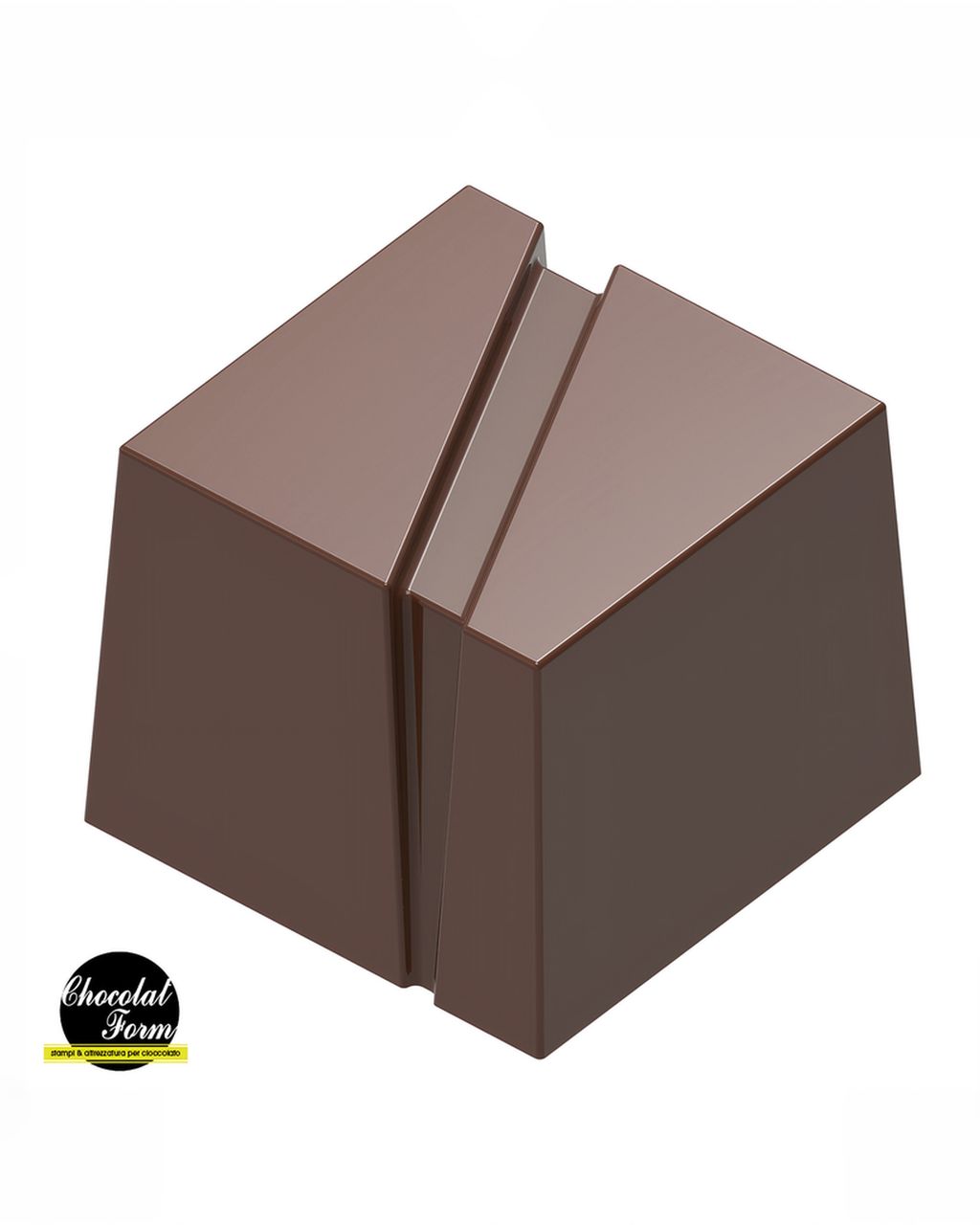
Making your own pralines makes sense if you enjoy working with chocolate and have 3–5 days to spare. You'll need a polycarbonate mould, tempered chocolate and a filling. One mould typically yields 21–28 pieces per pour (depending on the number of cavities), so one or two batches are enough for a party of 20. We cover how to choose a mould in polycarbonate vs silicone praline moulds, and fillings and their shelf life in ganache, caramel and fruit pastes for pralines. Without a mould, you can still make chocolate truffles — just roll the ganache in cocoa powder, and they're just as impressive.
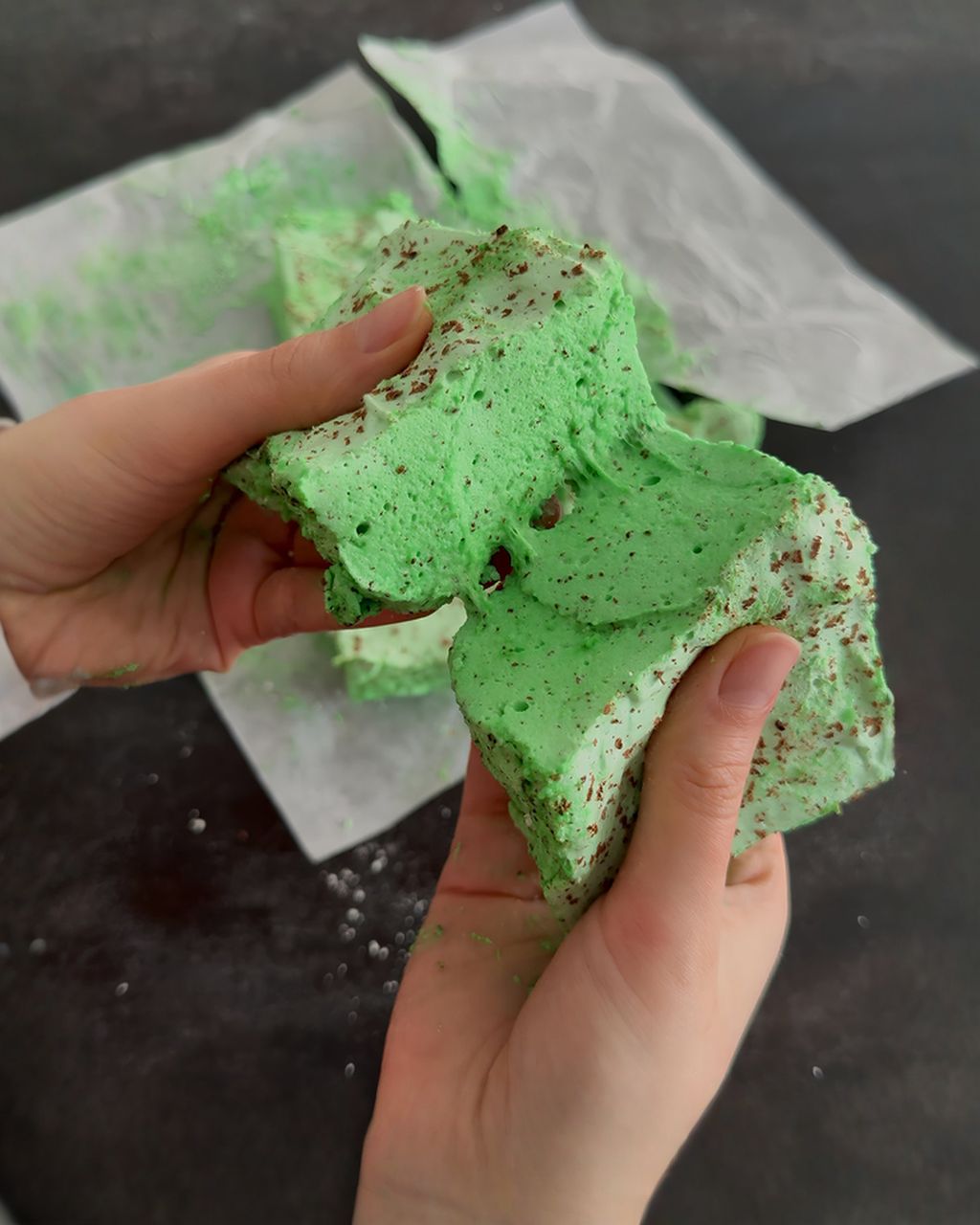
Marshmallows are the cheapest "wow" factor for a dessert table: light, colourful, and you can make them up to two weeks ahead and keep them in an airtight container. Homemade ones are a different league from store-bought bags — try homemade mint and chocolate marshmallows. Serve them on skewers or in bowls, and if you have leftovers, see the article what to do with leftover marshmallows.
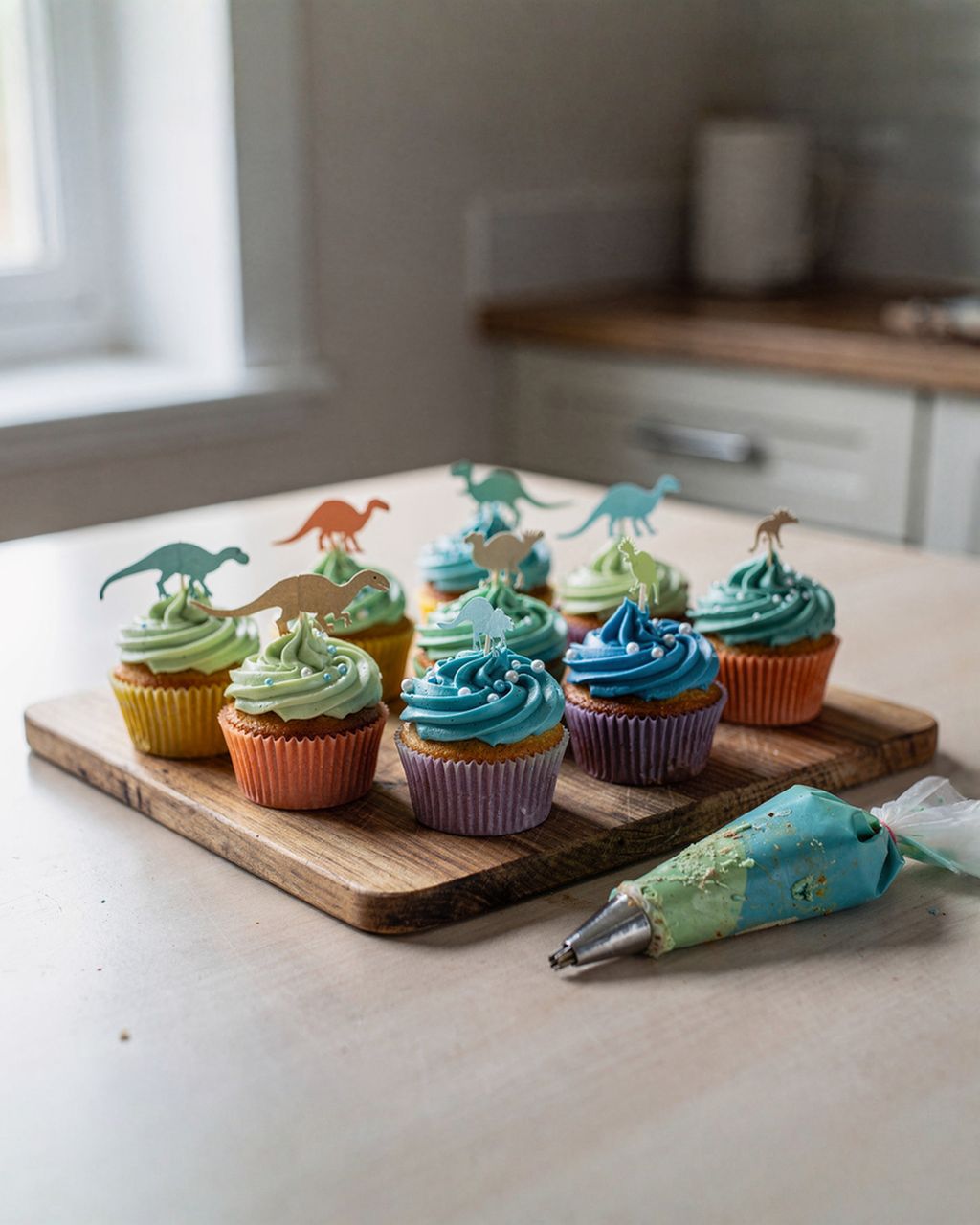
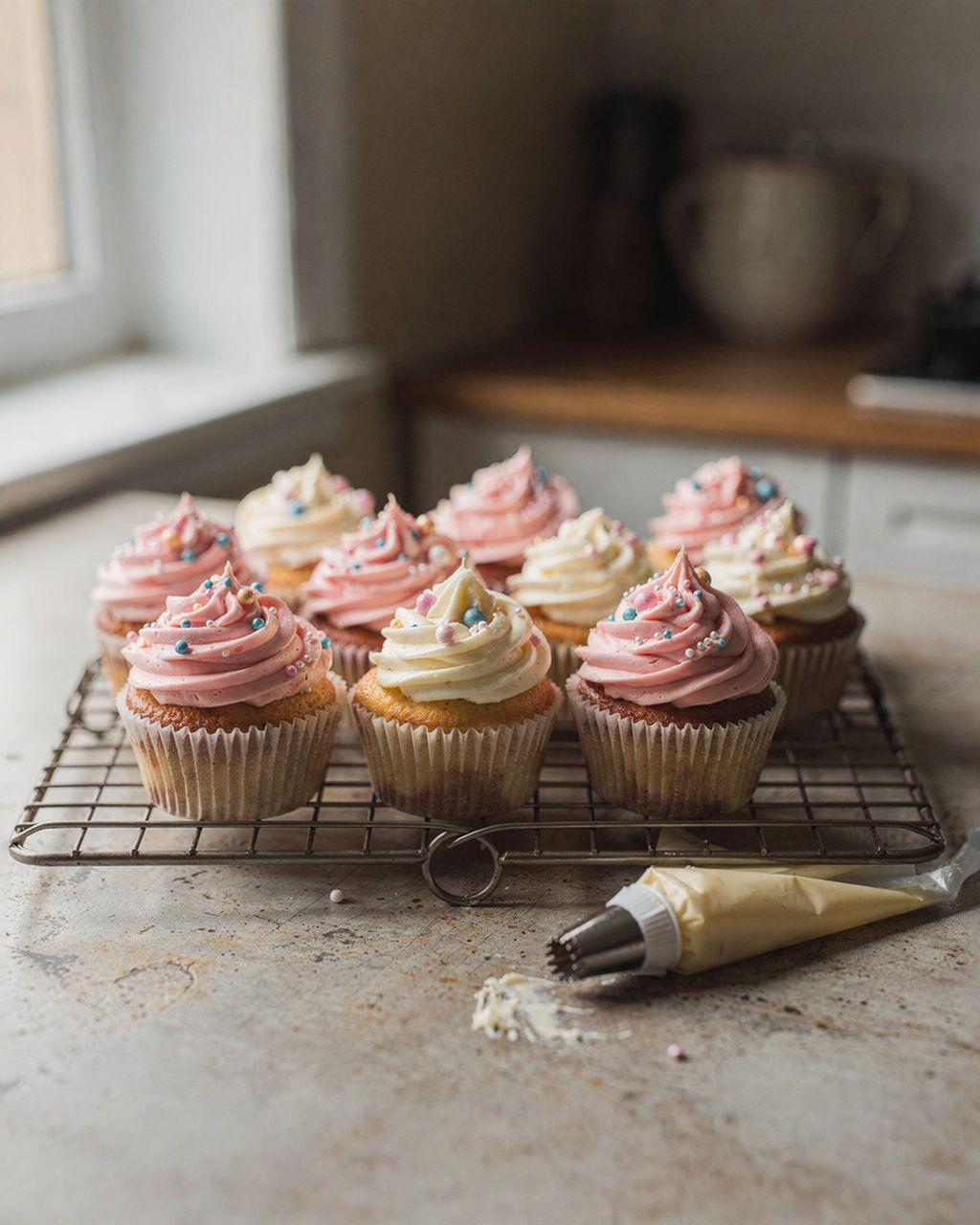
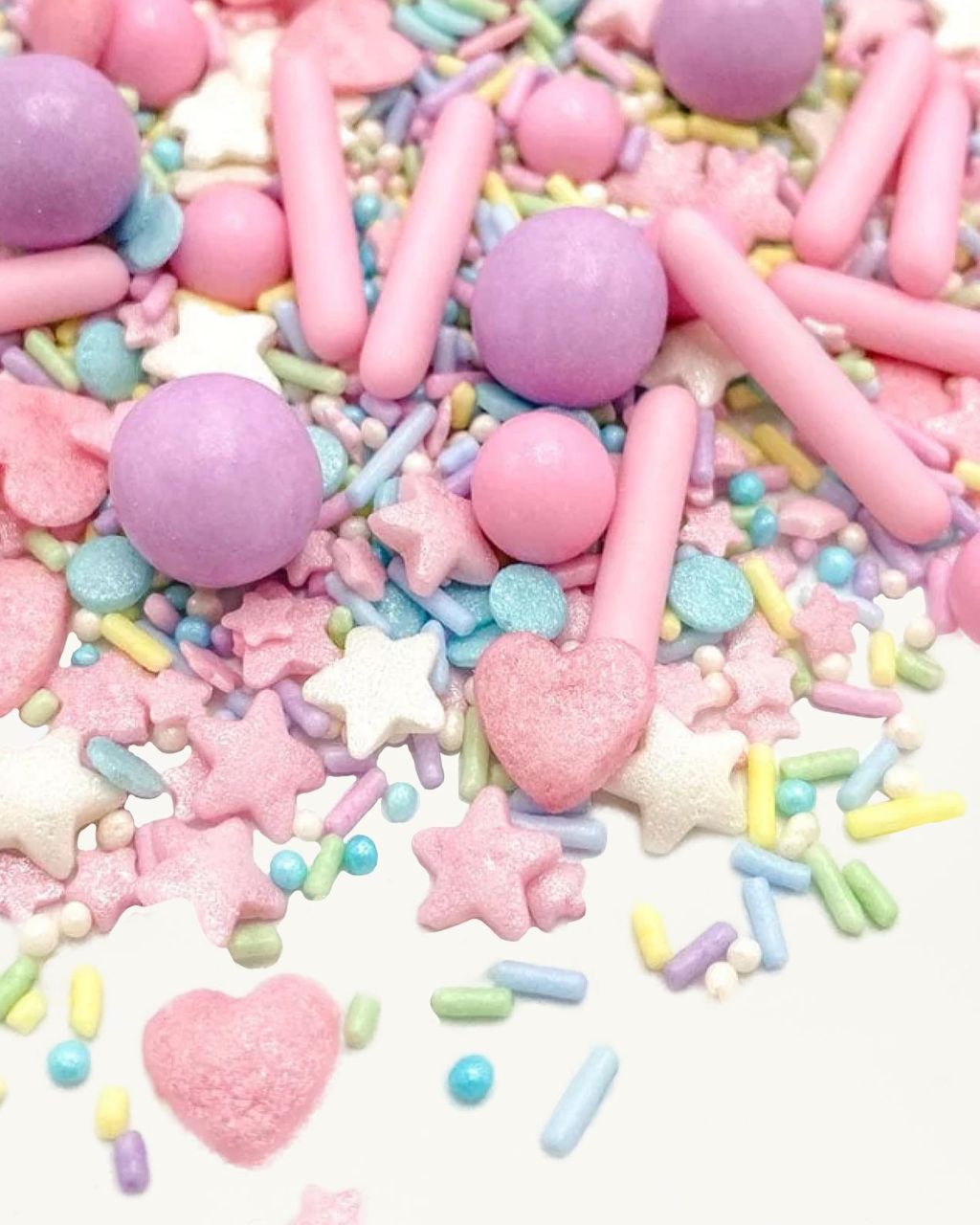
Sprinkles tie the table together visually. Pick one colour scheme to match the party and use it across cupcakes, the cake's edge and brownies. The table then looks pulled together even if each dessert came from somewhere different. Add sprinkles while the frosting or icing is still fresh and tacky, and don't store sprinkled pieces in the fridge under plastic wrap, as the colours will bleed in the condensation. More on this in how to decorate a cake with sprinkles.
You can make most of a dessert table 2–14 days in advance. Leave only the creams, fruit and final decorating for the day itself. A rough timeline:
10–14 days ahead: make marshmallows, cookies (store in a tin), brownies and cake bases — freeze the latter two.
3–5 days ahead: pralines and ganache truffles. They'll keep for 1–2 weeks in a sealed container at 15–18°C (59–64°F). Store meringues in a dry container.
1 day ahead: bake cupcakes and tartlet shells, make the creams, and thaw the brownies in the fridge.
Morning of the party: decorate the cupcakes and add sprinkles right away, cut the brownies.
2–4 hours before serving: fill the tartlets. Not any earlier, or the shells will go soggy.
An hour before guests arrive: prep the fruit and set up the table.
If your home runs warmer than 18°C (64°F), keep the pralines and truffles in the fridge in a sealed container. Let them come up to room temperature for 30–60 minutes before serving, and only then open the container — otherwise the chocolate will fog up and lose its shine.
For a detailed cupcake-specific plan, see cupcakes ahead of time: when to bake, decorate and store them.
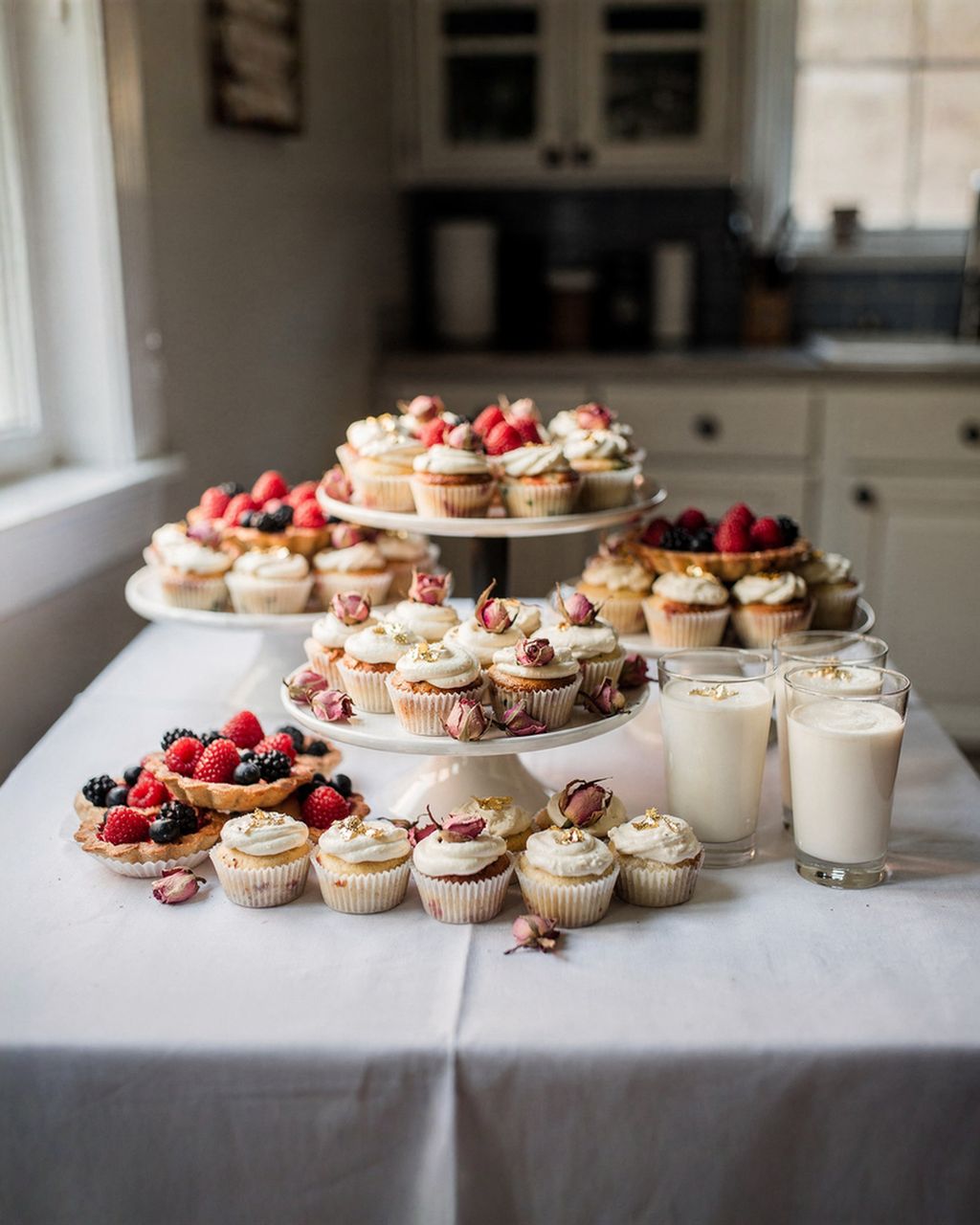
A table looks generous thanks to three rules, not the number of desserts on it: three height levels, each type grouped together, and every piece in its own case.
Three levels. Don't put everything at the same height. Place the tallest piece at the back (cake on a stand), a tiered stand or upturned bowls with a board in the middle, and flat trays at the front.
Each type grouped together. Twelve matching cupcakes lined up together look abundant; three pieces each of six types look like leftovers.
Every piece in its own case. A paper case turns each dessert into a portion a guest can pick up without a plate — nothing sticks together, and the table keeps a consistent look. Classic paper cases suit cupcakes and muffins, while mini cases work for pralines, truffles and small brownie squares. You'll find the full range in our cases and paper goods category. The difference between paper, foil and tulip cases is covered in cupcake and muffin cases.
Add small cards naming each dessert and its main allergens (nuts, gluten, dairy, eggs). It'll save you from answering the same question twenty times, and guests with allergies can find their way around faster.
Keep off the table any dessert that needs a plate, cutlery, or a trip back to the fridge every half hour. Specifically:
Large, uncut cakes or slab bakes that you'd have to cut on the fly. Slice them ahead into 4 × 4 cm pieces.
Ice cream and semifreddo. These last about 10 minutes on the table.
Delicate whipped-cream cakes left in the heat or sun. The cream will collapse within the hour.
Five types of chocolate dessert. Without fruity or crunchy pieces to balance them out, guests will be done after the second bite.
As a rough estimate, a homemade dessert table for 20 guests with a cake (around 70 small bites, not counting the cake) will cost roughly 700–1,500 CZK in ingredients, or about 35–75 CZK per guest. The same number of mini desserts from a bakery usually costs two to three times more. Good chocolate and butter tend to be the priciest items, while marshmallows, meringues and brownies give you the cheapest 'wow' factor.
For a kids' dessert table, go for smaller, colourful, hand-held bites: mini cupcakes in cases with sprinkles, marshmallows on skewers, cookies and fruit. Skip any alcohol in creams, whole nuts (a choking risk for small children), and dark chocolate above 70%.
Set the table up in the shade and keep cream-based desserts in a cooler box with ice packs until serving, putting out only small batches that will be eaten within an hour. Cover dry items with glass domes or mesh covers to keep wasps off, and place sweet drinks and fruit at the opposite end of the table so insects aren't drawn straight to the desserts. Bring out pralines and chocolate only right before serving — they'll melt within minutes in the sun.
Hand out leftover brownies, cookies and marshmallows to guests to take home, or freeze them — they'll keep for 2–3 months. Eat cream-based desserts and tartlets within 1–2 days, kept in the fridge. If a cream dessert has been sitting out for more than 2 hours, it's safer to throw it away.
No, the cake is just the centrepiece, not a requirement. Without a cake, plan on 5–6 small bites per guest instead of 3–4, add one extra type of dessert, and give the table's highest spot to a tiered cupcake stand or a meringue tower so the display still has a clear focal point.
One recipe worth heating the oven for, one tip, and one deal from the shop. Nothing else.