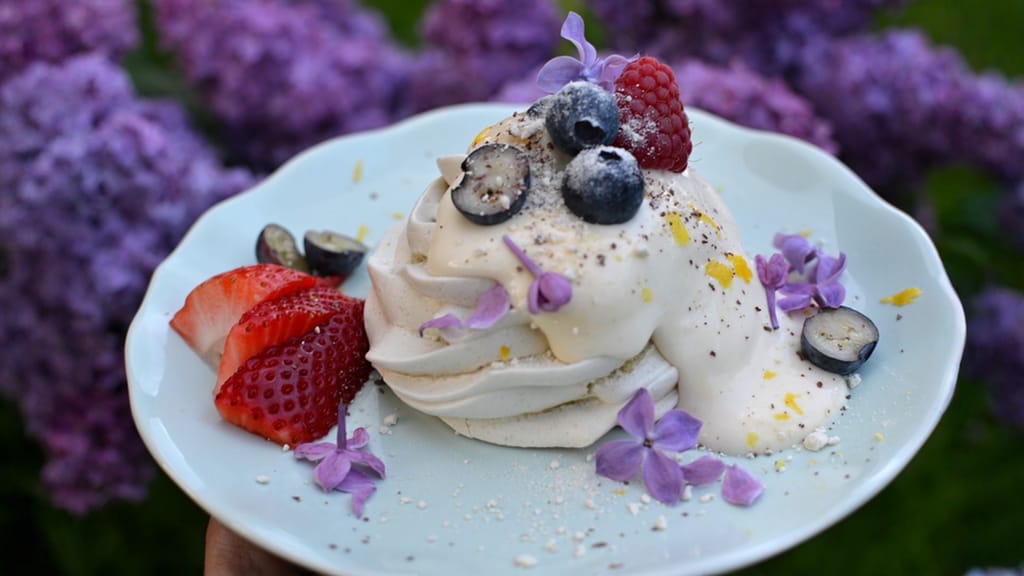
Lilac meringue kisses with lemon curd cream and fresh fruit
Meringue Kisses: How to Bake Them Crisp, Even from Dried Egg White
Updated Oct 8, 2026
Meringue kisses turn out crisp when you use two grams of sugar for every gram of egg white, dissolve the sugar completely in the meringue, and dry them rather than bake them: 90–100°C (195–212°F), 1–2 hours depending on size, then let them cool fully in the oven. Here's why this works, what properly whipped meringue should look like, how to make meringue kisses from dried egg white, and what to do if they stick, crack, or weep.
Crisp meringue kisses come down to five things: a 2:1 ratio of sugar to egg white, sugar added gradually and fully dissolved, a stiff glossy meringue, drying at 90–100°C (195–212°F), and slow cooling in the oven.
The 2:1 ratio – 200 g sugar for every 100 g egg whites. Less sugar means softer, moister meringues.
Dissolved sugar – undissolved crystals draw in moisture later and make the meringues "weep" sticky droplets.
Stiff meringue – glossy, dense, and holding a peak on the whisk that just barely droops.
Low heat, long time – meringues shouldn't bake to a golden finish, they should dry out all the way through.
Cooling in the oven – a sudden temperature drop and humid kitchen air will crack them and let moisture back in.
For classic (French) meringue, use double the weight of sugar to egg white – a 2:1 ratio. A medium (M) egg white weighs around 30–35 g, so for 4 egg whites (about 130 g) you'll need roughly 260 g sugar.
Caster sugar is fine-grained, dissolves easily, and gives meringues a firm, crisp structure.
Granulated sugar is coarser and dissolves slowly – if it's all you have, blitz it briefly in a blender.
Icing sugar dissolves instantly, but often contains starch (up to 3%) or another anti-caking agent – check the label. You can swap in up to a third of the total sugar, but don't use it entirely, or the meringues turn brittle and powdery.
For stability, add a pinch of acid per egg white: about ⅛ teaspoon cream of tartar, or roughly ¼ teaspoon lemon juice or vinegar. The acid firms up the egg-white foam, making it harder to overwhip.
Properly whipped meringue is dense, silky-glossy, doesn't feel grainy between your fingers, and holds a peak on the whisk. Here's how to get there:
Degrease the bowl and whisk. Even a trace of fat or yolk will stop the meringue from whipping up. Wipe the bowl with a paper towel dipped in a little vinegar. Plastic holds onto grease, so metal or glass is the better choice.
Bring the egg whites to room temperature. Warmer whites (around 20°C/68°F) gain volume faster than cold ones straight from the fridge.
Start on medium speed until the whites turn foamy and opaque, then add the acid.
Add the sugar a spoonful at a time once the whites hold soft peaks, waiting 10–15 seconds between additions. Dumping it all in at once will deflate the meringue.
Whip on high speed until the sugar dissolves – this takes 8–12 minutes. Rub a bit of the meringue between your thumb and finger: if you feel sugar grains, keep whipping.
Pipe straight away. Don't let finished meringue sit, as it will start to loosen.
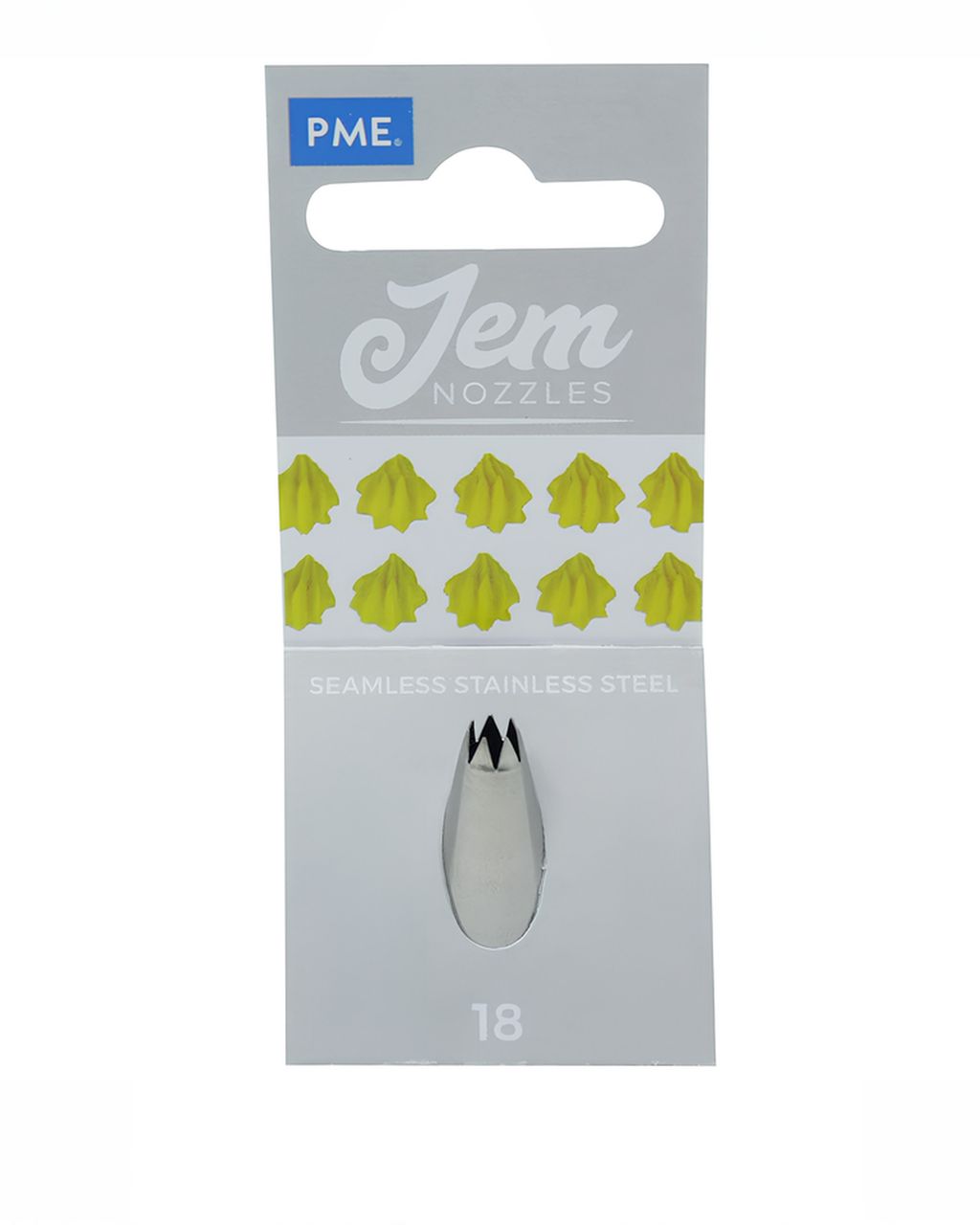
A piping bag fitted with an open star tip or a round tip around 10–12 mm works well. If you're not sure which bag to use, check out our guide to piping bags and their sizes. Line the tray with baking paper and anchor the corners with a dab of meringue so it doesn't shift while you pipe.
Dry meringue kisses at 90–100°C (195–212°F) with top and bottom heat. Small meringues (2–3 cm) need 60–80 minutes, larger ones (4–5 cm) 1.5–2 hours. Then turn off the oven and leave them inside with the door slightly open to cool for at least an hour, or even overnight.
Top and bottom heat below 90°C dries meringues much more slowly and they're more likely to stay chewy inside.
Above 110°C (230°F) they turn golden, puff up, and then crack. The protein also tightens and squeezes out syrupy droplets.
Fan (convection) mode dries faster since the fan compensates for the lower temperature. If you use it, drop the temperature by 10°C, to 80–90°C.
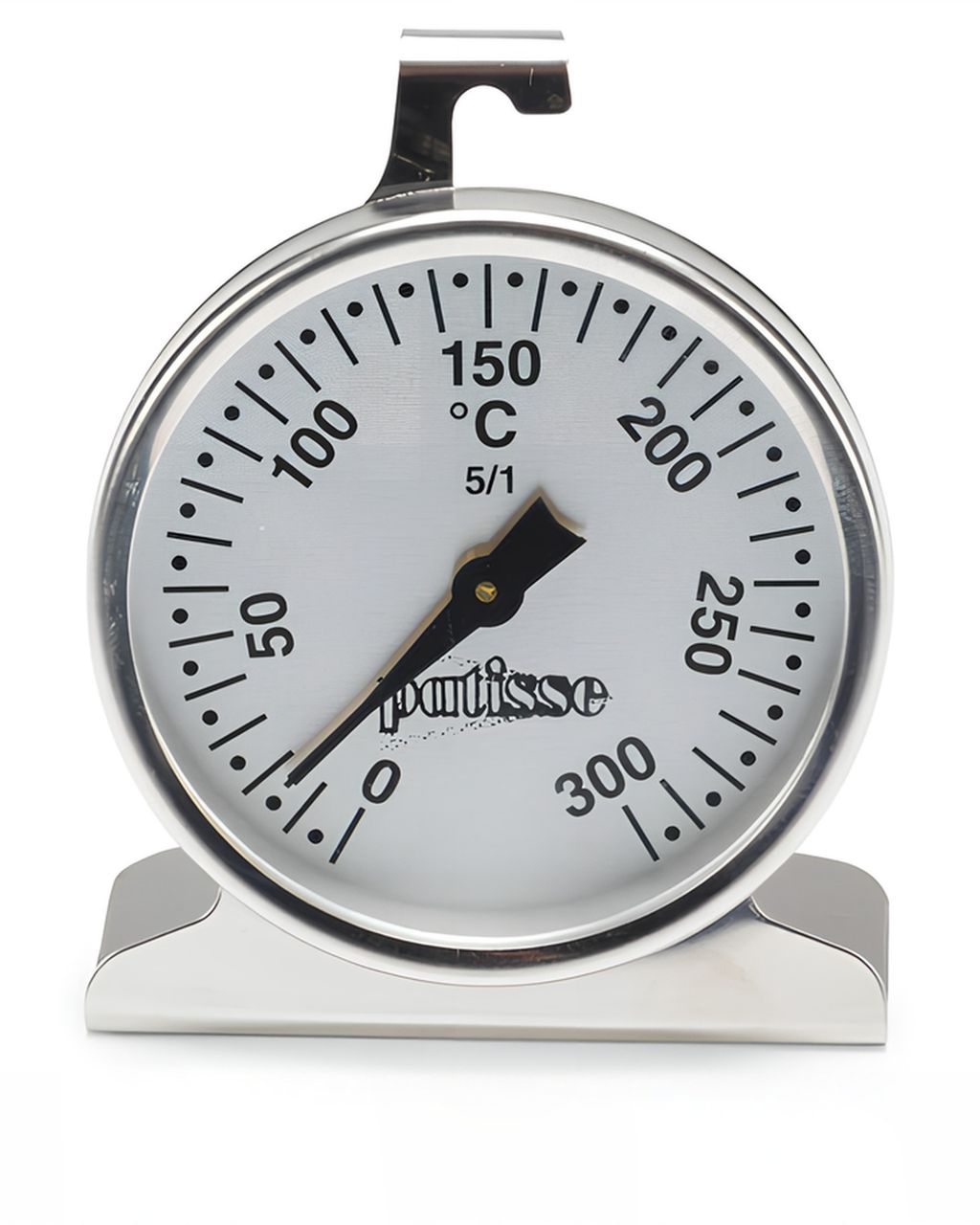
Keep in mind that home ovens are often off by 10–20°C. Since meringues depend on just a few degrees, it's worth checking the actual temperature with a thermometer. We explain why your oven display doesn't match reality in our article Oven thermometers.
How to tell they're done: the meringue lifts cleanly off the paper on its own, feels light, and sounds hollow when you tap the bottom. If it's still sticking, dry it for another 15–20 minutes.
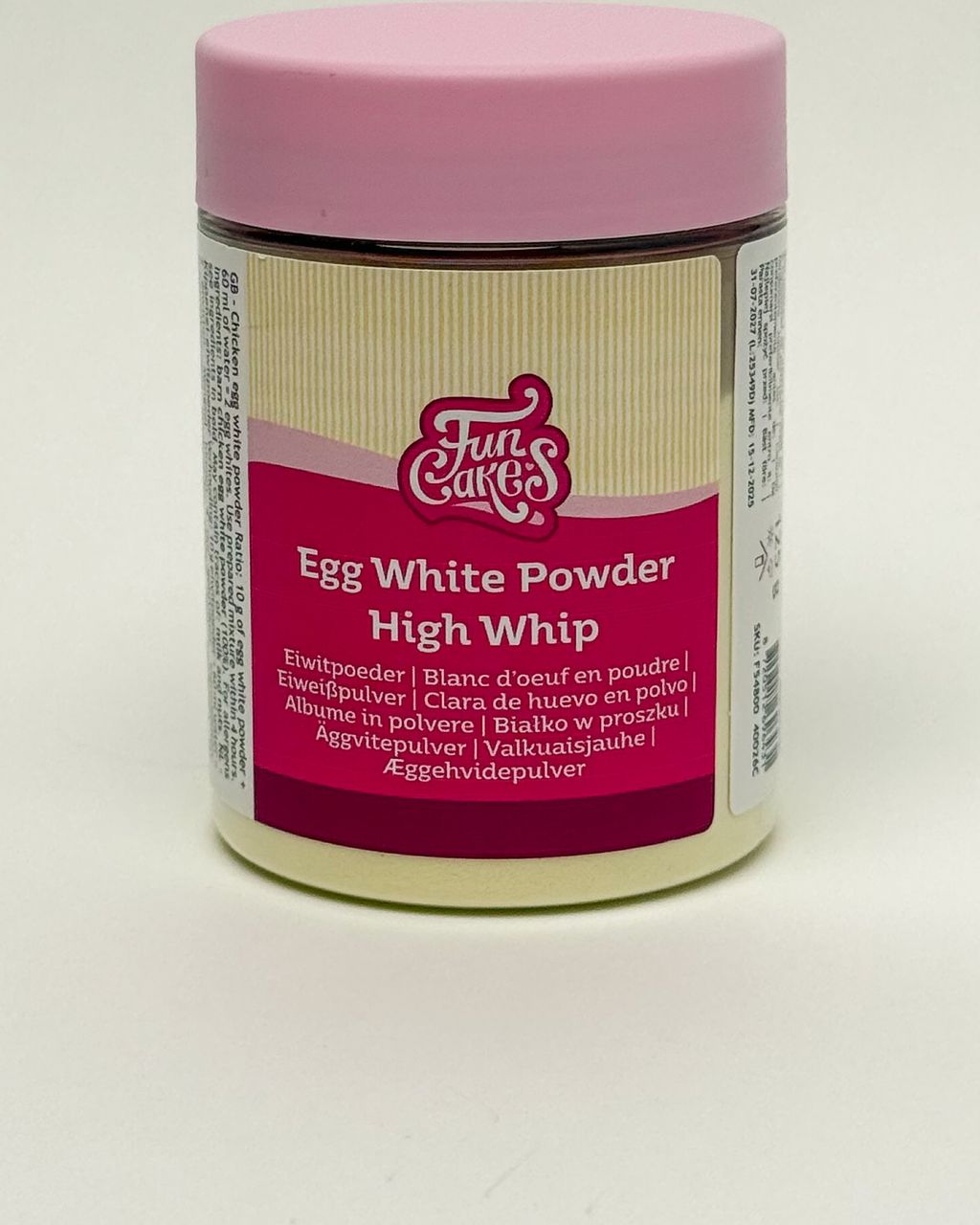
Meringues made from dried egg white turn out just as good as those made from fresh. 10 g of dried egg white plus 60 ml water replaces 2 fresh egg whites, meaning you dilute the dried egg white at a 1:6 ratio. This ratio comes from the manufacturer FunCakes.
Sprinkle the dried egg white into lukewarm water and whisk to avoid lumps.
Let it sit for a few minutes so the powder fully dissolves, then stir once more. Use the rehydrated egg white within 4 hours.
From here, proceed as with fresh egg whites: whip to a foam, add the acid, add sugar a spoonful at a time, and calculate the 2:1 ratio based on the weight of the finished mixture (70 g mixture = 140 g sugar).
Why reach for it:
No leftover yolks you then don't have a recipe for.
More stable results. Meringue made from dried egg white holds its shape even through longer piping sessions.
Often pasteurized, so it's suitable for things you don't bake, like royal icing.
Keeps for months in the pantry, so it's always on hand.
You'll find dried egg white among our baking ingredients.
Meringue kisses work with both fresh and dried egg white. Liquid egg white from a carton is the least reliable option. A comparison:
Fresh egg whites – free if you have leftovers from other baking. But you need to separate them carefully, since even a drop of yolk will ruin the meringue.
Dried egg white – precise, gram-accurate dosing, no leftover yolks, stable meringue. Just needs rehydrating first.
Pasteurized liquid egg white from a carton – convenient, but the heat treatment weakens the protein, so it takes longer to whip and the meringue tends to be looser. According to pastry chef Rose Levy Beranbaum, it won't whip into a stiff meringue at all without acid, so add about ¼ teaspoon cream of tartar per egg white instead of the usual ⅛, and expect a longer whipping time. Carton liquid egg white isn't sold here.
Two other, less common options are also worth mentioning:
Dried egg white blended with sugar (sold online as meringue powder) – contains added stabilizers. It works well, but since sugar is already included, you'll need to adjust the sugar amount per the instructions. We don't stock this one either.
Aquafaba (chickpea water) – a vegan option. It takes longer to whip, and the meringues turn out more fragile and more sensitive to humidity.
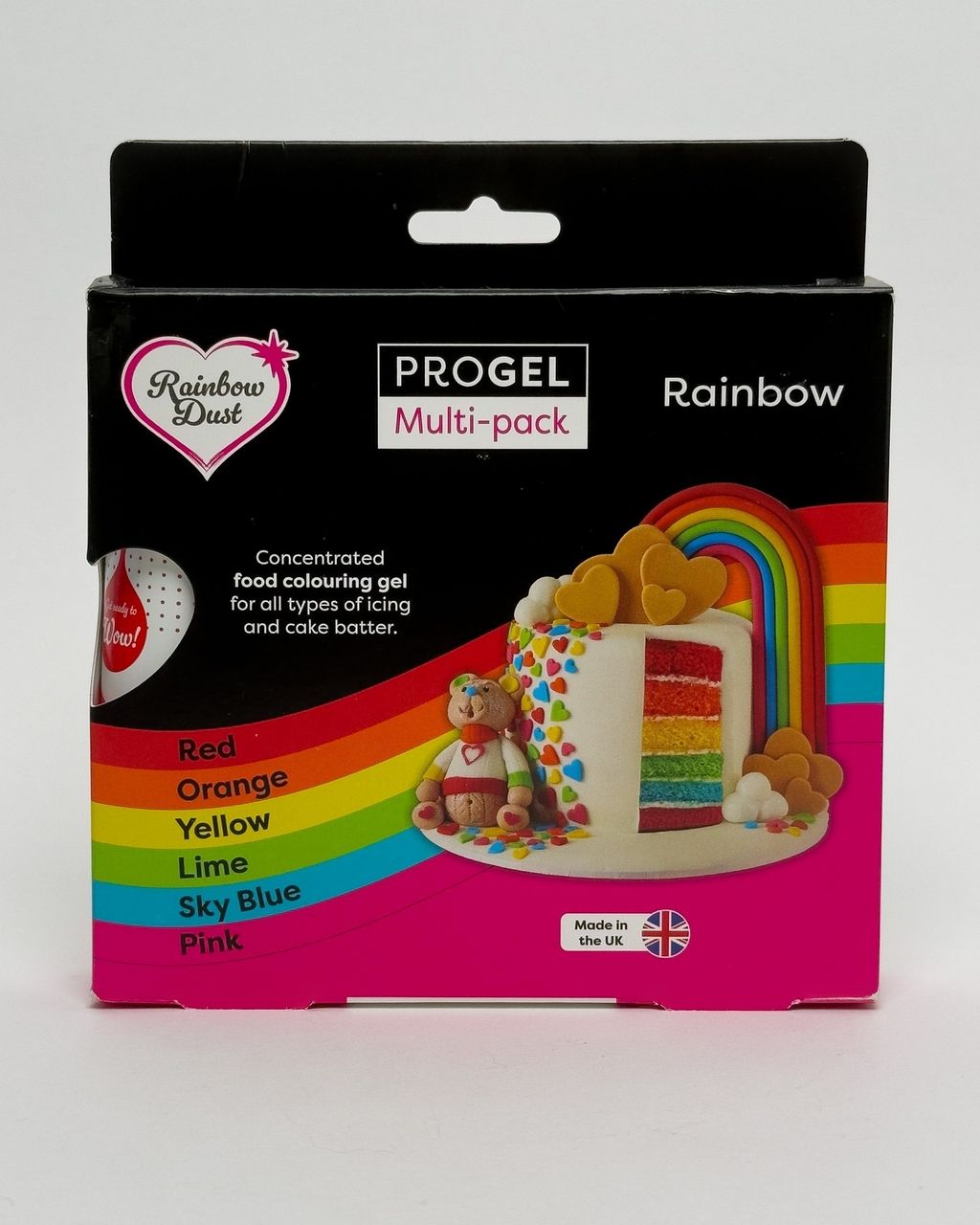
The best way to color meringue kisses is with concentrated gel coloring, added right at the end into the finished, stiff meringue. Gel colors, like ProGel, are so concentrated that a dot on the tip of a toothpick is enough. They won't thin out the meringue or cause it to deflate. You'll find colorings among our baking ingredients.
Gel coloring (ProGel) – intensely pigmented, a small amount goes a long way, won't thin the meringue. Ideal for meringues.
Liquid food coloring from the shop – you need a lot to get even a pastel shade, and the extra water will thin out the meringue.
Oil-based chocolate coloring – don't use it in meringue. The fat breaks down the egg-white foam. We cover when it's the right choice instead in our article How to color white chocolate.
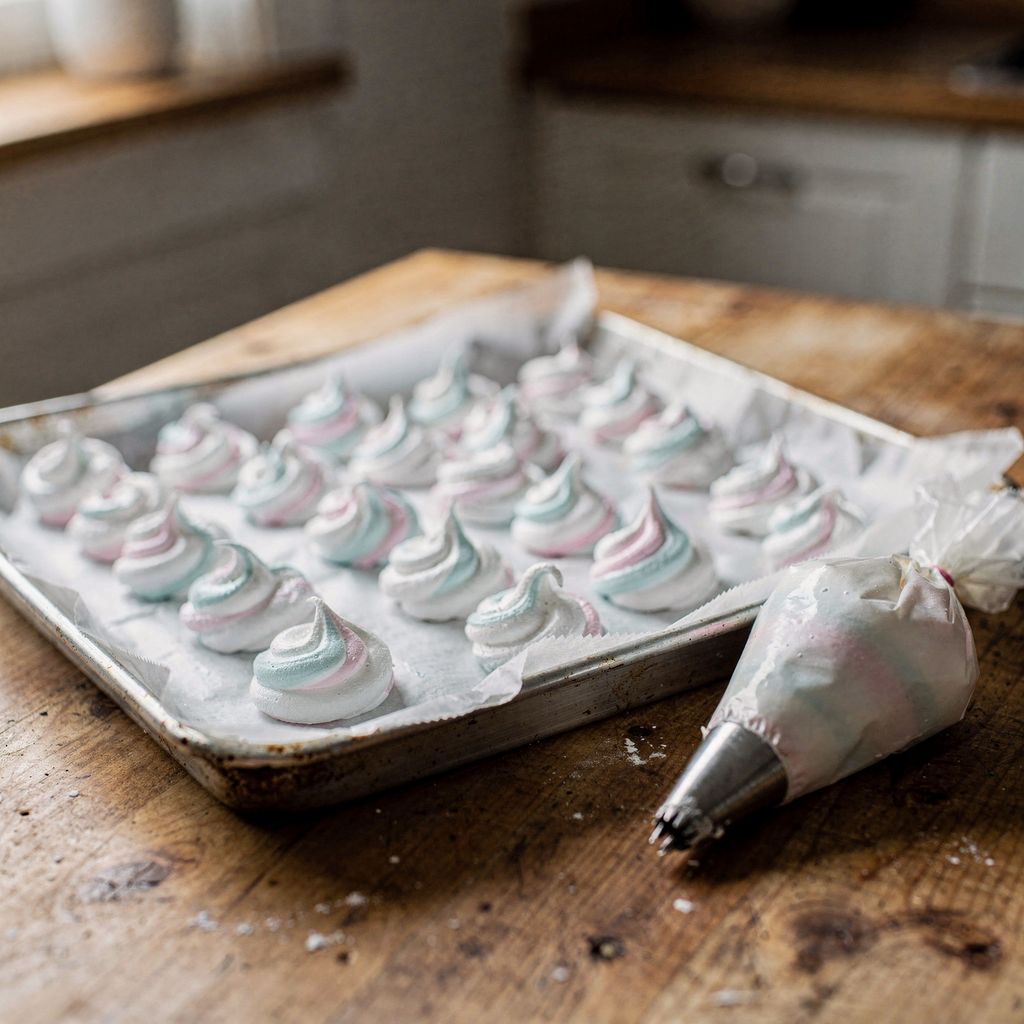
Striped meringue kisses: turn an empty piping bag inside out and use a small brush to paint 3–4 vertical stripes of gel color on the inside. Then turn the bag right-side out again, fill it with white meringue, and pipe. The first couple of meringues tend to come out over-colored, but the rest will have clean, defined stripes.
Color lightens slightly during baking and can turn yellowish at higher heat. For pure white or vividly pastel meringues, stick closer to 90°C.
Most meringue problems come down to one of three causes: moisture, undissolved sugar, or too high a temperature.
Sticky and chewy inside – not dried enough, or they've absorbed moisture from the kitchen air. Dry them longer and let them cool in the oven. On rainy or humid days, expect a longer drying time.
Weeping syrup droplets – undissolved sugar remained in the meringue, or they were overbaked and the protein tightened up. Whip until the sugar is fully dissolved and you no longer feel any grains between your fingers, and keep an eye on the temperature.
Cracking – too high a temperature or cooling too fast. Lower the heat and let the meringues cool in the switched-off oven with the door slightly open.
Turned yellow – the oven is running hotter than it shows. Lower the set temperature by 10°C, or check the actual temperature with a thermometer.
Collapsed, shapeless – the meringue wasn't stiff enough, or you let it sit too long before piping. Whip to firm peaks and pipe right away.
These issues show up even more with a large meringue base like a pavlova shell. We go into detail on that in our article Why pavlova cracks and why it sticks.
Meringue kisses are best balanced with tangy lemon cream and fresh fruit – like in our recipe for lilac meringue kisses with lemon cream and fresh fruit. The lemon's tang and the fruit offset the sweetness of the meringue.
Lilac meringue kisses with lemon curd cream and fresh fruit
Lilac meringue kisses with lemon cream and fruit
Properly dried meringue kisses keep for 2–3 weeks in a sealed container in a dry spot. Don't put them in the fridge, as the moisture there will soften them within a few hours. If they're filled with cream or whipped cream, eat them within 1–2 hours.
You can re-dry softened meringues: pop them in the oven at 90°C (195°F) for 20–30 minutes, then let them cool inside the oven. They'll crisp back up, as long as they haven't started weeping syrup in the meantime.
Yes, thawed egg whites whip up just as well as fresh ones. Thaw them overnight in the fridge and let them come to room temperature before whipping. You can freeze them for several months without any issue.
Yes, lemon juice or vinegar can replace cream of tartar, about ¼ teaspoon per egg white. With fresh egg whites, you can even skip the acid entirely, though the meringue will be less stable and easier to overwhip. If you're using pasteurized egg white from a carton, don't skip the acid.
Yes, but fold them in only once the meringue is fully whipped and stiff, using just a few gentle folds with a spatula. Sift the cocoa first (about 1 tablespoon per 2 egg whites). Ground nuts contain fat, so they'll make the meringues less crisp and cause the mixture to deflate slightly.
One recipe worth heating the oven for, one tip, and one deal from the shop. Nothing else.