Chocolate peanut butter truffles
Chocolate Truffles: Ganache Ratios, Coating & Shelf Life
Updated Oct 8, 2026
Chocolate truffles are balls of ganache — a rich emulsion of chocolate and cream — rolled in cocoa, tempered chocolate, or another coating. For dark chocolate, use a 2:1 ratio (chocolate to cream); let the ganache firm up in the fridge, shape it into 10–15 g balls, then coat them. Because they contain cream, store them in the fridge. Below you'll find the ratios for all three types of chocolate, how to rescue split ganache, six coating methods, and what Callebaut and the US food safety agency (USDA) say about shelf life.
For truffles, mix dark chocolate with cream in a 2:1 ratio, milk chocolate at 2.5:1, and white chocolate at 3:1 (by weight, chocolate to cream). In grams:
dark chocolate, 50–60%: 2:1, for example 200 g chocolate to 100 g cream
milk chocolate: 2.5:1, for example 250 g chocolate to 100 g cream
white chocolate: 3:1, for example 300 g chocolate to 100 g cream
Why the difference? Ganache sets mainly thanks to cocoa butter and cocoa solids. Dark chocolate has the most of both, while milk and white chocolate have less — so you need more chocolate to keep the truffle from collapsing between your fingers. Use whipping cream with 30–33% fat. A richer cream gives a fuller ganache, but one that's more prone to splitting.
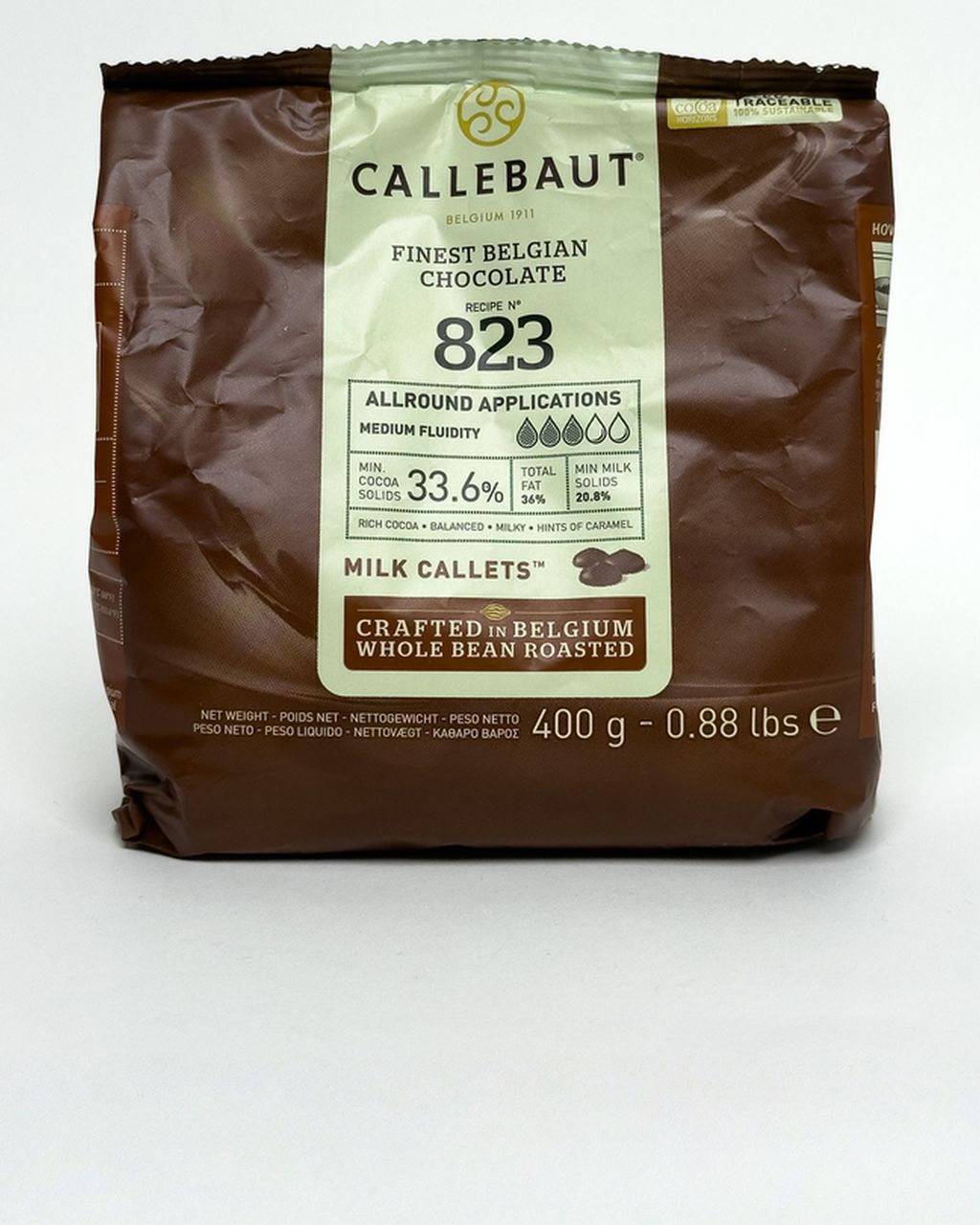
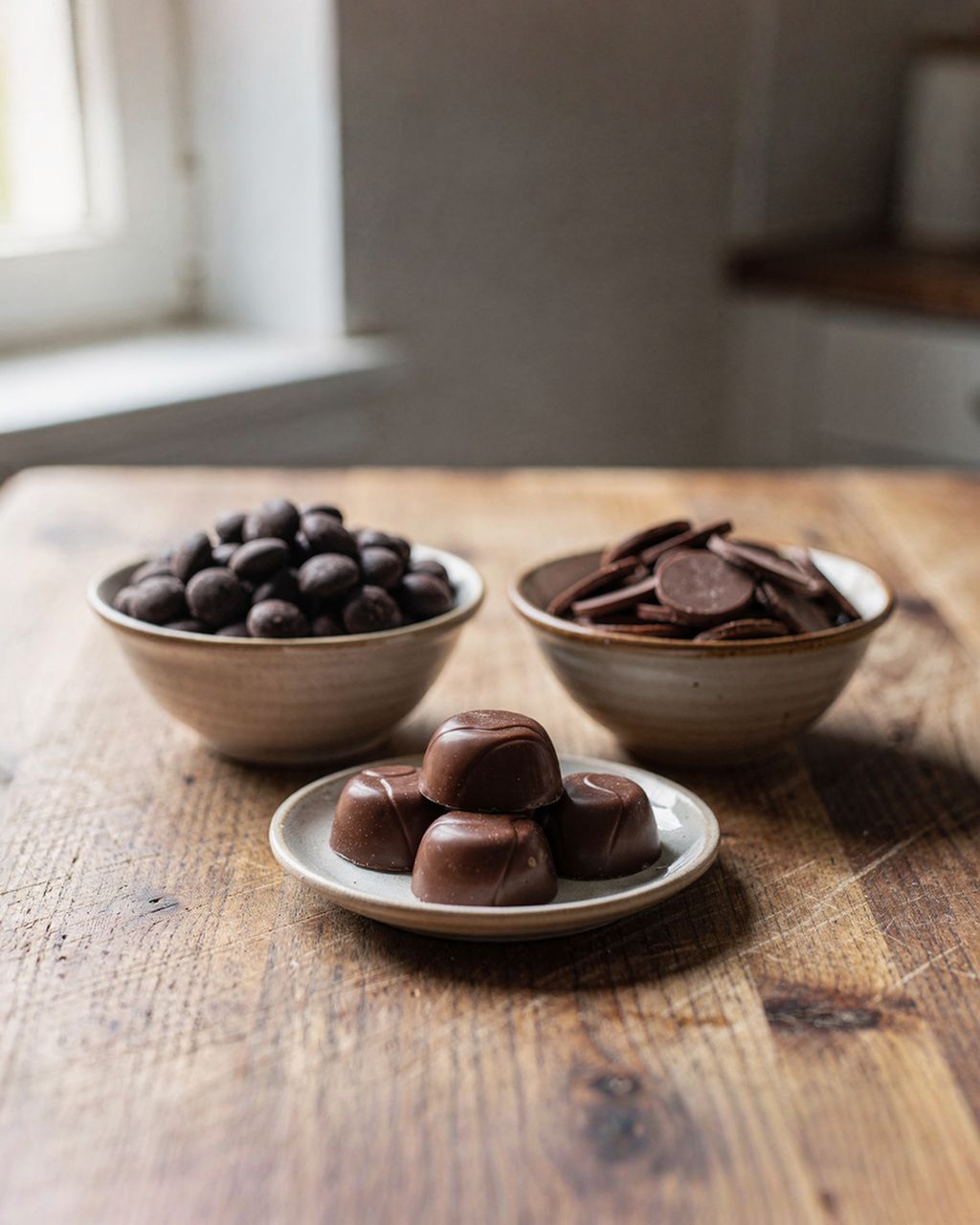
These ratios are calibrated for couverture — chocolate with a higher cocoa butter content. From our range, that means Callebaut 811 (dark, 54.5% cocoa), Callebaut 823 (milk), and Callebaut W2 (white). We break down what those numbers mean in Callebaut 811, 823, W2 and RB2: which chocolate for what. A good quality bar from another brand — Lindt or Valrhona, say — works just as well. What matters is the composition, not the label. You'll find the full range under baking and truffle chocolate.
What won't work: "chocolate coating" or "compound coating" made with vegetable fat instead of cocoa butter. Ganache made with it turns gluey, tastes flat, and won't melt properly in the mouth. If vegetable fat appears early in the ingredients list, skip it for truffles.
Ganache won't split if it comes together gradually without overheating: pour hot cream over chopped chocolate, let it sit for a moment, then stir from the centre outward. Here's the method:
Chop the chocolate finely, or use callets, which melt evenly.
Heat the cream just until small bubbles appear at the edge. Don't let it boil for long, or water will evaporate out of it and throw off the ratio.
Pour it over the chocolate and leave it undisturbed for 1–2 minutes so the chocolate warms through.
Stir with a spatula in small circles, working from the centre outward. A glossy "core" of emulsion forms in the middle first and gradually draws in the rest.
If you like, stir 10–20 g of softened butter into the lukewarm ganache per 300 g of mixture. It makes the truffles silkier and glossier.
The safest tool is an immersion blender, submerged head and all so it doesn't whip air into the ganache. It produces the smoothest emulsion.
If the ganache splits (fat pooling on the surface, the mixture looking grainy or oily), it's usually too hot or short on liquid. Add 1–2 tablespoons of warm cream or milk and blend briefly with the immersion blender. The emulsion will usually come back together.
Flavouring: You can infuse the cream for 20 minutes beforehand with vanilla, orange zest, or coffee beans, then strain it. Add alcohol (rum, liqueur) only once the ganache is lukewarm, 1–2 tablespoons per 300 g — and reduce the cream by the same amount, or the truffles will be too soft. Flavour pastes work too; for dosing guidance, see Flavour pastes for creams and doughs.
Truffle ganache takes roughly 2–3 hours to set in the fridge. It's ready when you can scoop it with a spoon and it holds its shape without cracking. Press plastic wrap directly onto the surface so it doesn't form a skin or let condensation form.
Portion evenly. Use a small ice cream scoop or two teaspoons to measure out 10–15 g per truffle. Even-sized truffles look neater in the box.
Roll quickly, with cold hands. Warm palms melt the ganache. Disposable gloves help, as does rinsing your hands in cold water and drying them well.
Chill before coating in anything dry. Before rolling truffles in cocoa, nuts, coconut, or freeze-dried fruit, chill them for 15–20 minutes so they hold together during coating.
Let them warm up before dipping in tempered chocolate. Take the truffles out of the fridge and let them sit at room temperature for 10–15 minutes. A cold centre will expand in warm chocolate and crack the shell.
200 g of dark chocolate and 100 g of cream yields about 25 truffles at 12 g each.
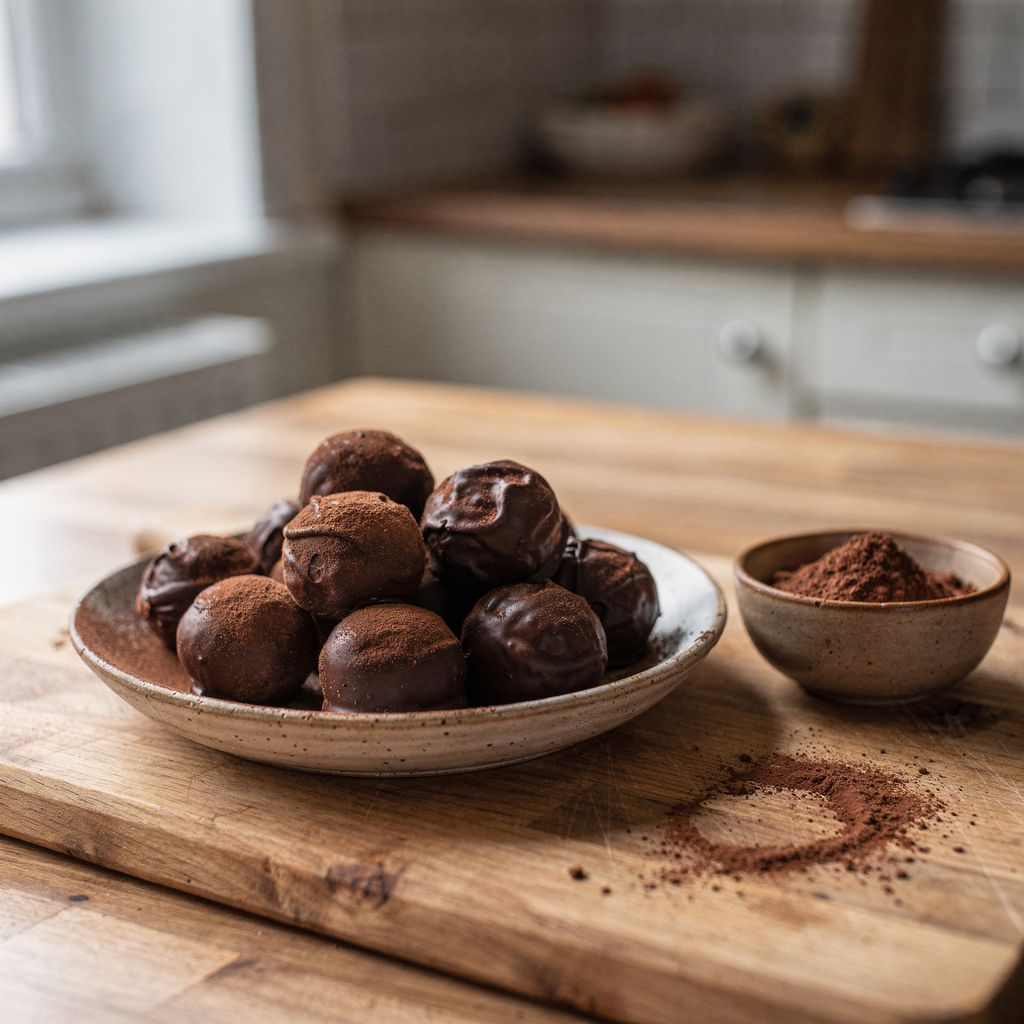
There are six ways to coat chocolate truffles: cocoa powder, tempered chocolate, chopped nuts, desiccated coconut, freeze-dried fruit, crunchy pearls. Each suits something different:
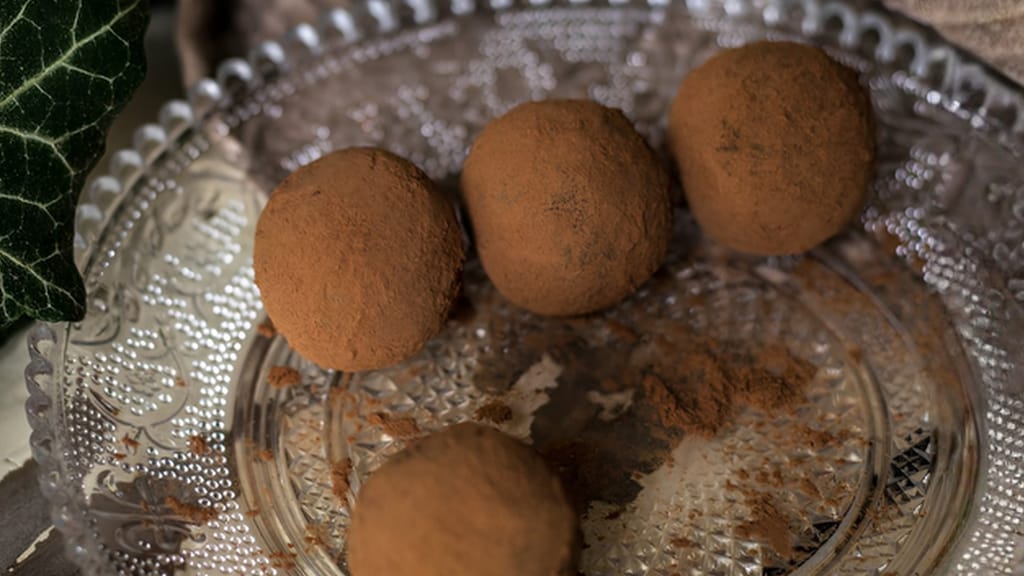
Cocoa powder – the classic, quickest option. Choose Dutch-process (alkalised) cocoa; it's darker, milder, and has no sour edge. Sift it before coating. Cocoa gradually draws in moisture, so coat the truffles on the day you're serving them, or dust them again just before serving.
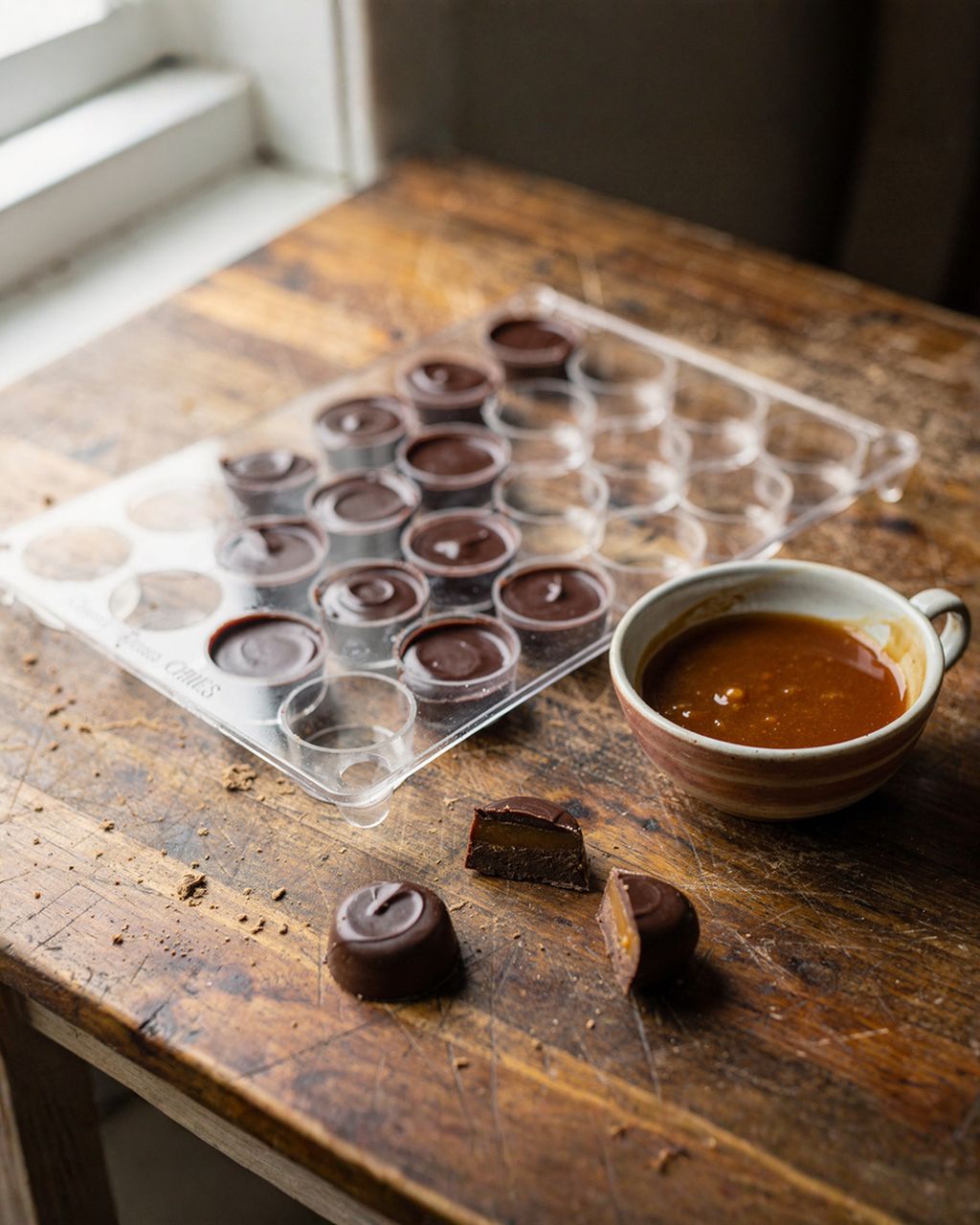
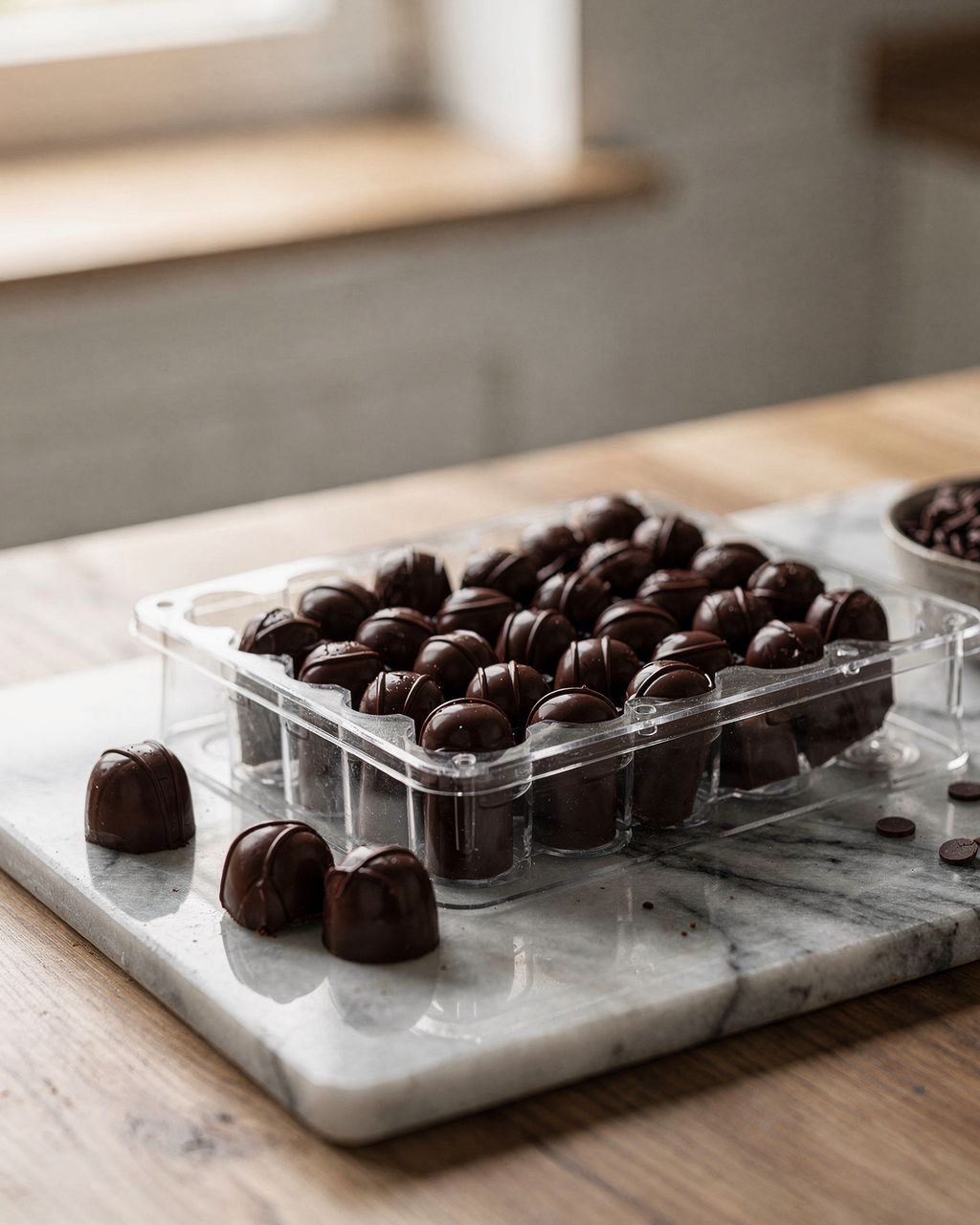
Tempered chocolate – forms a thin, crisp shell that protects the soft centre and gives the truffle a lovely snap. Don't dip the truffles straight from the fridge: let them sit at room temperature for 10–15 minutes first, or the shell will crack. The easiest approach is a double coat: roll the truffle in your palm in a thin layer of chocolate, let it set, then dip it a second time with a fork. Working temperatures per Callebaut: dark 31–32°C (88–90°F), milk 29–30°C (84–86°F), white 28–29°C (82–84°F). Untempered chocolate stays dull, turns grey, and smears. We cover how to get a glossy finish in How to dip cookies in chocolate so it's shiny and doesn't smear. Want the classic matte "truffle" look? Roll the truffle in cocoa right after dipping, before the chocolate sets. You'll get a firm shell with a velvety finish.
Chopped nuts – roasted hazelnuts, almonds, or pistachios. Ganache is sticky enough to hold them without a chocolate layer. Roasting brings out the flavour and keeps the nuts crunchy for longer.
Desiccated coconut – a fine white coating that pairs best with white and milk chocolate. Use finely desiccated coconut, not flakes. It sticks better if you warm the truffle briefly in your palm first, softening the surface slightly. For a bolder flavour, dry-toast it in a pan until golden and let it cool.
Freeze-dried fruit – crushed freeze-dried raspberries or strawberries add tartness and colour that work beautifully with white and milk chocolate. Fruit also draws in moisture, so again, coat on the day of serving.
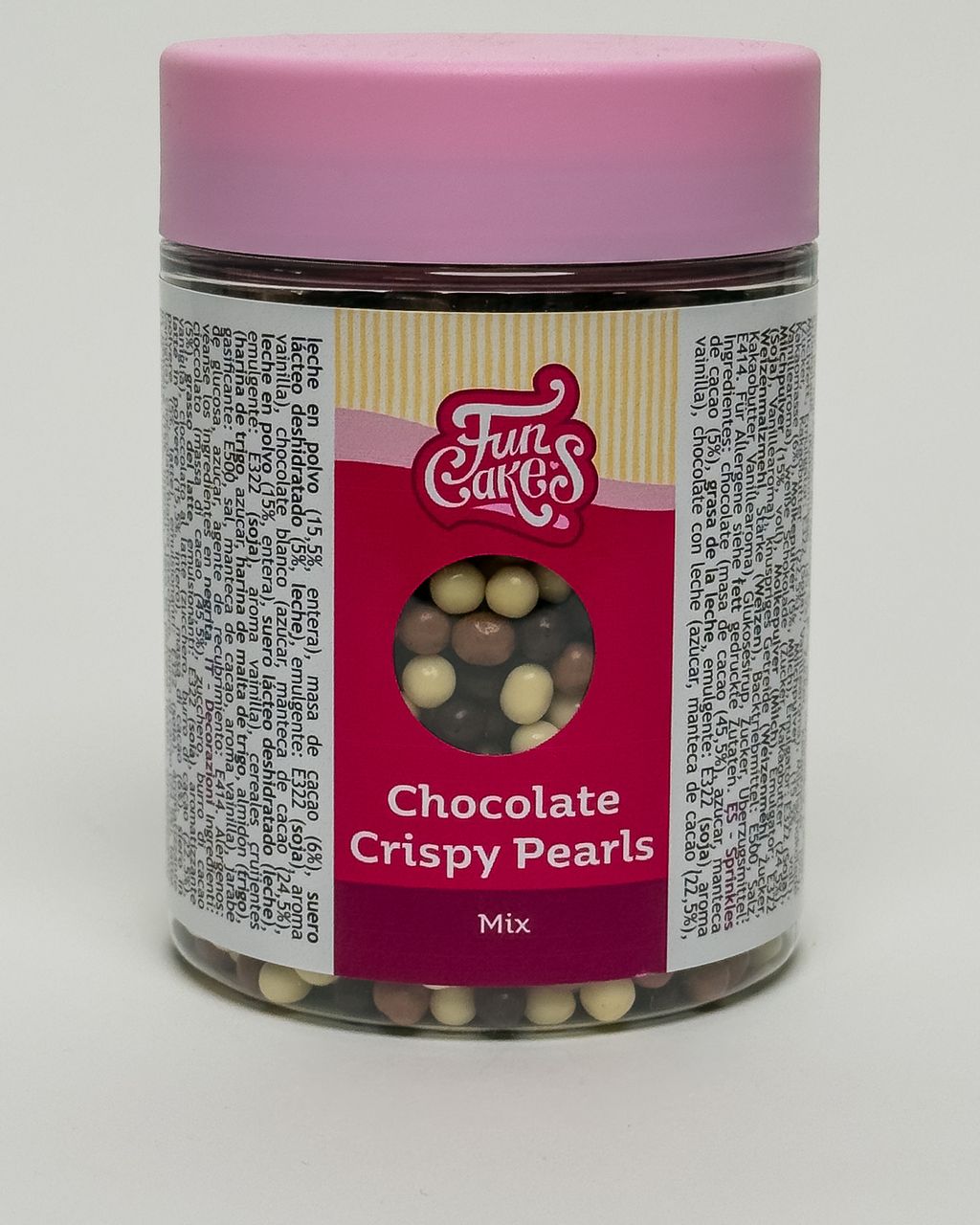
Crunchy pearls – add crunch. To keep them from going soft, coat only truffles that already have a chocolate shell — more on this in Crunchy pearls: how to use them without them going soft.
There's no official shelf life for homemade chocolate truffles; keep them in the fridge below 4°C (39°F) in a sealed container and use them within the window your cream's packaging states for after opening (usually a few days). The use-by date on cream packaging only applies to the unopened container — long-life cream can be dated weeks or even months ahead. Cream ganache holds enough water to support microbial growth, so treat it like any other cream-based dessert.
Here are the specific figures and where they come from:
Callebaut's professional truffle recipes state a shelf life of 3 weeks at 8–16°C (46–61°F). Note: those recipes include invert sugar, glucose syrup, or sorbitol, which bind water, and the ganache sits sealed inside a chocolate shell. That figure does not apply to a simple cream-and-chocolate ganache.
For homemade truffles made from cream and chocolate, neither the US USDA/FSIS nor the Czech SZPI issues an official shelf life. So stick to the general rules for perishable foods.
Fridge: USDA/FSIS recommends keeping food below 4°C (39°F).
Room temperature: USDA/FSIS advises that perishable food shouldn't sit out for more than 2 hours — or just 1 hour above 32°C (90°F).
Freezer: according to USDA/FSIS, food stays safe indefinitely at −18°C (0°F), though quality drops over time. Freeze truffles without their cocoa coating, in a well-sealed container. Thaw them overnight in the fridge, and only move them out into room temperature afterwards. That way condensation won't form on the surface, dissolve the sugar there, and leave a white film behind.
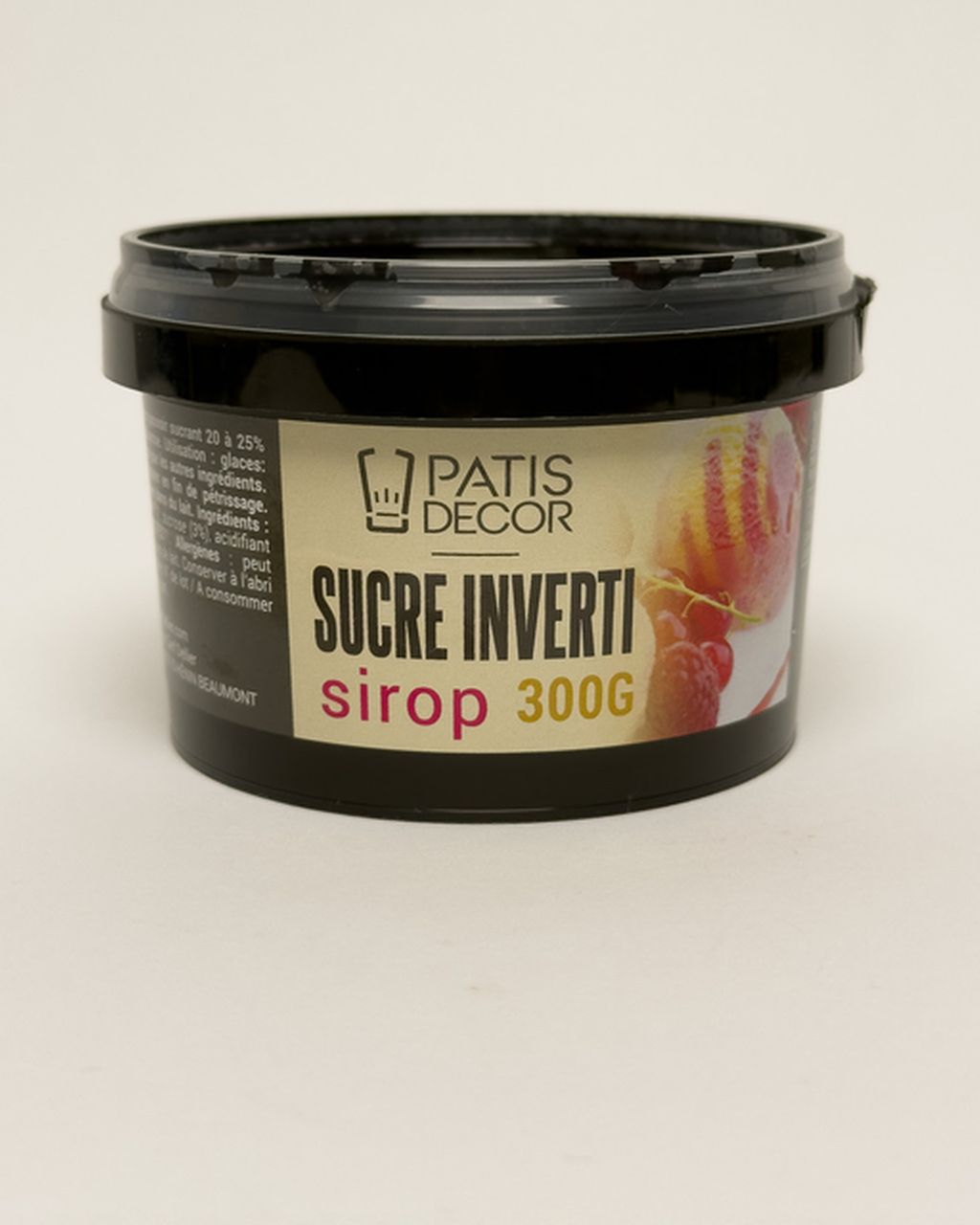
What extends shelf life (for professionals): less water in the ganache (a higher ratio of chocolate), invert sugar or glucose replacing part of the cream, alcohol, and sealing the truffle inside tempered chocolate. At home, these tweaks mainly improve texture and flavour. They don't mean you can safely store truffles outside the fridge — you can't gauge safety without measuring water activity.
Before serving, take the truffles out of the fridge 20–30 minutes ahead. Cold ganache is firm, and the flavour only opens up once it warms slightly.
Yumsto has two chocolate truffle recipes: peanut butter chocolate truffles with a salty, nutty centre, and the bolder avocado, lime and wasabi chocolate truffles. Both are built on the same ganache principles you've just learned.
Chocolate peanut butter truffles
Peanut butter chocolate truffles
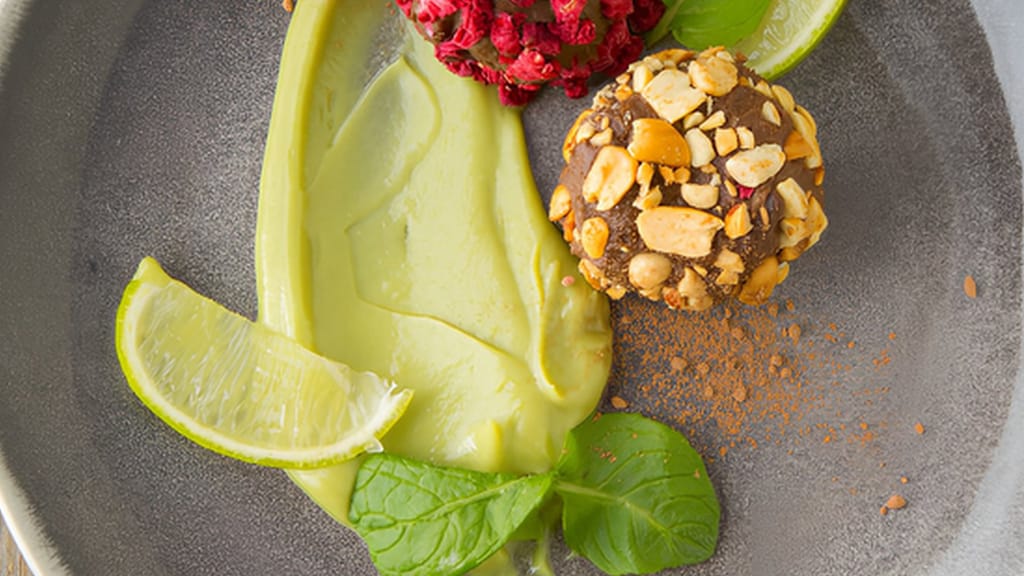
Chocolate avocado truffles with lime & wasabi cream
Avocado, lime and wasabi chocolate truffles
From 200 g of milk chocolate and 80 g of cream (a 2.5:1 ratio), you'll get about 23 truffles at 12 g each; from 200 g of white chocolate and about 67 g of cream (3:1), roughly 22. There's less cream than with dark chocolate, so the ganache yield is slightly smaller too.
Yes — swap in full-fat tinned coconut milk, just use a bit less, around a fifth less. Coconut milk has less fat and more water than 30–33% cream, so the ganache could turn out softer at the same ratio; if it's still soft, let it chill longer in the fridge. The truffles will have a light coconut flavour. For a vegan version, check the chocolate's ingredients: milk and white chocolate always contain milk, while dark chocolate only sometimes does.
No — alcohol gets added to the ganache once it's lukewarm, so it doesn't evaporate and stays fully in the truffles. For kids, flavour the ganache with vanilla, orange zest, or an alcohol-free flavouring paste instead.
Cream-based truffles aren't suited to regular mail, since without refrigeration they only last a couple of hours (USDA/FSIS states perishable food is safe for just 2 hours outside the fridge). Hand them over in person in a cool bag with an ice pack, and note on the box that they need to go in the fridge.
A white or grey film on a chocolate shell is usually bloom: fat bloom, when the chocolate wasn't tempered properly or went through temperature swings, or sugar bloom, when condensation forms on cold truffles taken out of the fridge and dissolves sugar on the surface. Fat bloom feels greasy to the touch; sugar bloom feels dry and slightly rough. Prevent it with properly tempered chocolate, a steady temperature, and letting truffles warm up inside a closed container. If the coating looks fuzzy or the truffles smell off, don't eat them.
One recipe worth heating the oven for, one tip, and one deal from the shop. Nothing else.