Homemade Mint Marshmallows with Chocolate
What to Do with Marshmallows: From Hot Chocolate to Rice Krispie Treats
Updated Oct 8, 2026
There are five great ways to use marshmallows: drop them into hot chocolate, toast them, melt them with butter for rice krispie treats, dip them in chocolate, or chop them into no-bake desserts. It all comes down to one thing — that gelatine foam melts in your mouth and turns gooey with heat. Below you'll find exactly how much to use, how hot things should get, and which flavour to pick so the result is sweet but still interesting.
A marshmallow is sugar syrup whipped with gelatine into a foam — and that one fact explains everything that happens to it in the kitchen.
It melts right in your mouth. Gelatine gel sets and softens at around 35°C (95°F), according to food science sources — just below body temperature. That's why it turns soft and gooey within a minute in a hot drink.
It puffs up with heat. The air trapped in the foam expands when warmed, the gelatine loosens, and the piece swells. From there it either melts (think butter and rice krispies) or browns on the surface.
Both the sugar and the gelatine brown. That golden crust comes from the Maillard reaction between gelatine and sugar, plus caramelisation once you pass roughly 160–170°C (320–340°F). That's why you toast marshmallows over direct heat, not in a warm oven.
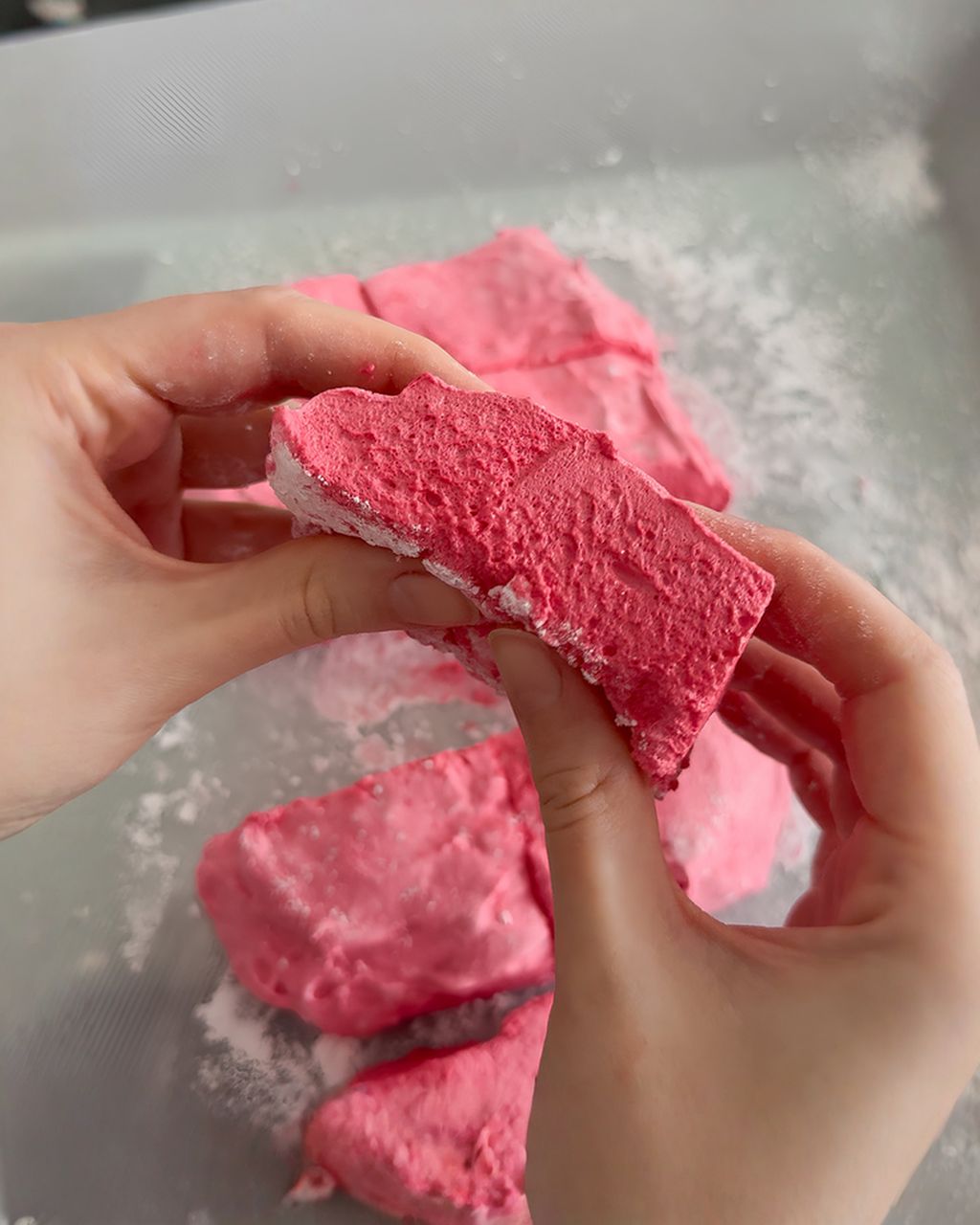
Moisture is its enemy. Sugar on the surface draws in water, which makes the pieces stick together — that's exactly why they're dusted in a cornstarch-and-icing-sugar coating.
If you'd rather make your own, you'll find the full method with syrup cooked to 115–118°C (240–245°F) in how to make marshmallows at home.
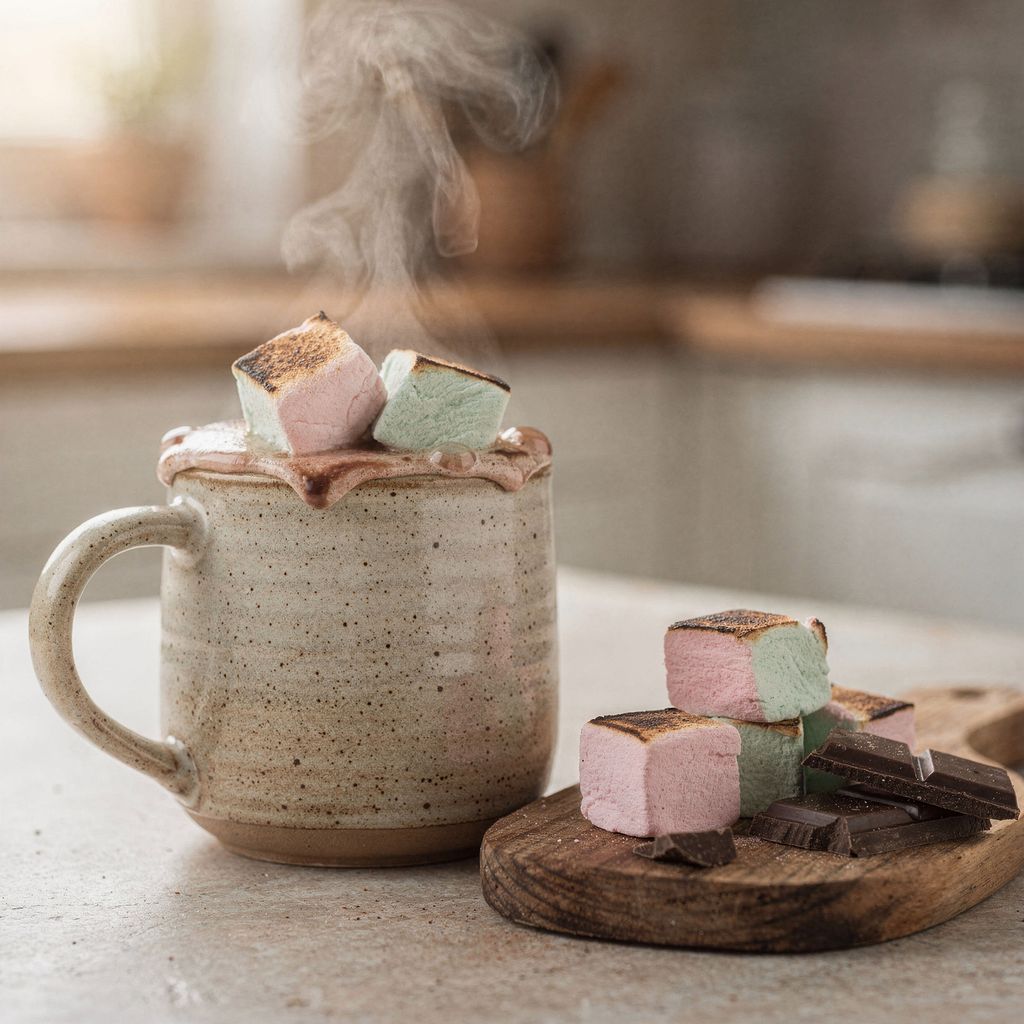
For a mug (250 ml) of hot chocolate, use 2–3 large marshmallows or a handful of mini ones — dropped on top rather than stirred in, so the bottom melts while the top stays foamy.
Use real, thick chocolate. Watery drinking cocoa gets overpowered by the marshmallow's sweetness. Couverture callets, like Callebaut 811 (dark) or 823 (milk), give you a drink rich enough to balance it out. For ratios per mug and how to thicken it, see hot chocolate made with real chocolate.
Add the marshmallows just before serving. In a piping-hot drink they'll melt completely, leaving just a sweet foam on top.
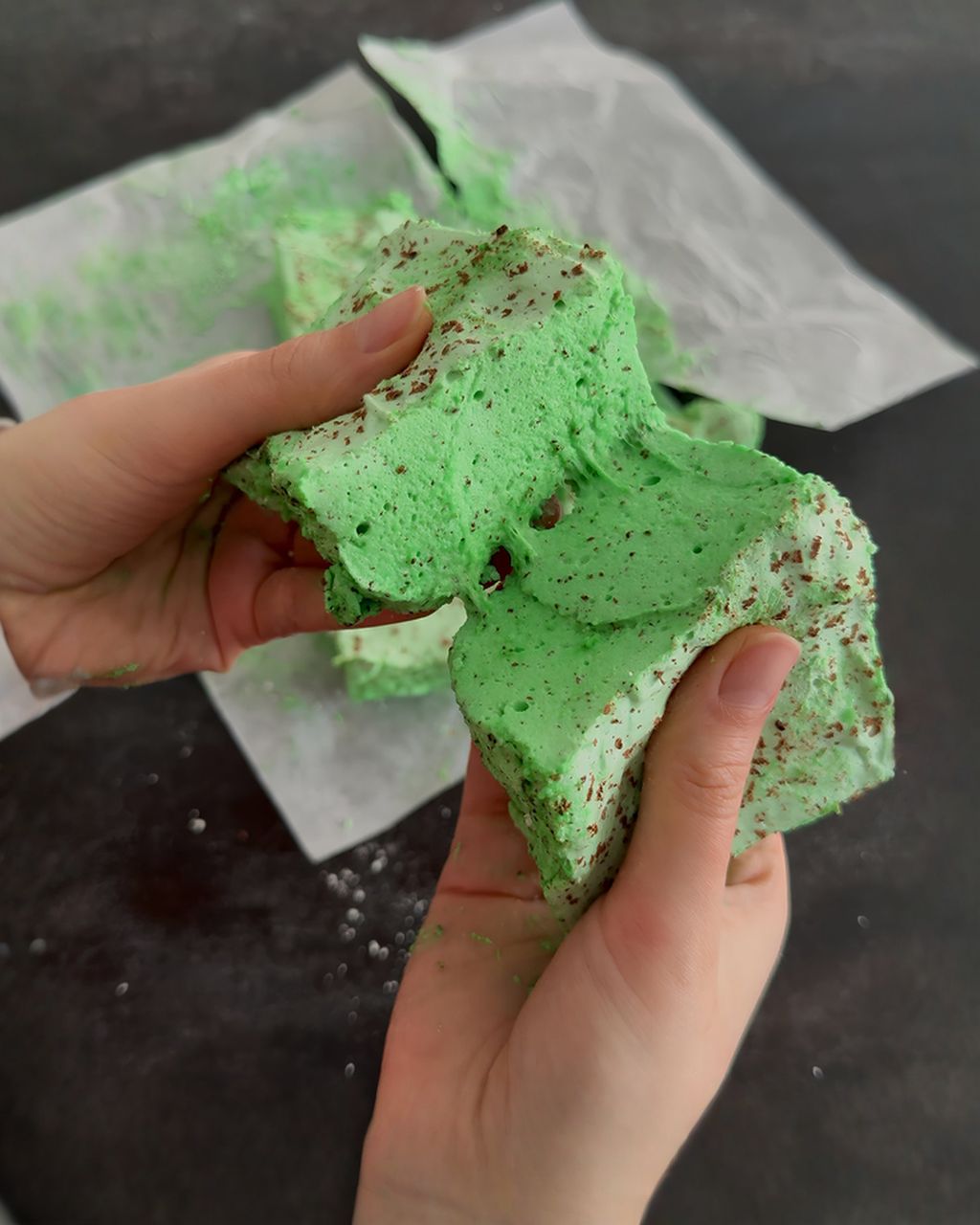
Match the flavour to the chocolate. Mint marshmallows with dark chocolate is the classic "after eight" in a mug; cherry works with both dark and milk; mango and watermelon pair well with white chocolate or vanilla milk.
Want a toasted crust? Torch them right on the mug with a kitchen blowtorch, 5–10 seconds from about 5–8 cm (2–3 in) away.
Flavoured marshmallows — like our mint, cherry, mango and watermelon ones — bring actual flavour to the drink, not just sweetness. Plain vanilla ones from the supermarket work too — they're cheaper and smaller, so they melt faster. Browse the full range in the marshmallows category on Yumsto.
You can toast marshmallows at home three ways: with a kitchen blowtorch, under the oven grill, or on a skewer over a gas flame. The goal is always the same — fast, strong heat that browns the surface before the whole piece melts through.
Kitchen blowtorch — the most precise option. Hold the flame 5–8 cm (2–3 in) from the marshmallow and keep it moving, or it'll catch and char.
Oven grill — place the marshmallows on a lined baking tray, top shelf, for 1–2 minutes. Don't walk away; the gap between golden and burnt is a matter of seconds.
Gas stove — thread one onto a metal skewer and rotate it 5–10 cm (2–4 in) above the flame. Watch for drips — melted sugar runs well over 100°C (212°F) and sticks to skin.
You'll know it's ready when the surface is evenly golden-brown, the marshmallow has puffed up by about a third, and it feels gooey inside when pressed.
S'mores are the classic American campfire treat: a toasted marshmallow and a piece of chocolate sandwiched between two biscuits. The heat from the marshmallow melts the chocolate, so you never need to melt it separately.
Biscuit: the original uses graham crackers; the closest substitutes here are wholegrain butter biscuits or digestives.
Chocolate: a thin square or 3–4 callets — milk (Callebaut 823) is closest to the original, while dark (811) cuts the sweetness.
No fire needed: put the biscuit, chocolate and marshmallow in the microwave for 15–20 seconds. Once the marshmallow puffs up, top with the second biscuit and press together.
Variations worth trying: mint marshmallow with dark chocolate, cherry with milk chocolate, mango with white chocolate and a pinch of salt.
For a 20 x 20 cm pan of rice krispie treats, you'll need roughly 20–25 g butter, 140–160 g marshmallows, and 85–100 g rice puffs (rice krispies). For a large 33 x 23 cm pan, double it. More marshmallows gives you a softer, stickier bar; more rice puffs makes it drier and crumblier.
Melt it low and slow. Warm the butter and marshmallows over gentle heat, just until combined. Overheating sets the mixture rock-hard.
Hold back a handful of marshmallows and stir them in right at the end — they'll stay as soft, gooey pockets in the finished bars.
Don't press down. Just smooth the mixture into the pan with a greased spatula. Packed-down treats turn tough.
Flavoured marshmallows will tint and flavour the whole batch: melon ones give you pink bars, mint ones a pale green. If you're using larger homemade marshmallows, cut them into quarters before melting so they melt more evenly.
For a similar idea with an Asian twist and cookies thrown in, check out the recipe for Snowflake Crisps — no-bake marshmallow cookies.
Chocolate-dipped marshmallows are the quickest homemade sweet you can make: skewer a marshmallow, dip it halfway in chocolate, and let it set on baking paper.
Couverture or coating chocolate? Chocolate coating sets on its own but tastes mostly of sugar. Real couverture (Callebaut 811, 823, W2) tastes better, but needs tempering first so it sets glossy and doesn't smear. The method is covered in how to dip in chocolate so it stays glossy and doesn't smudge.
Marshmallows need to be at room temperature and dry. Cold ones from the fridge cool the chocolate too fast and leave streaks; damp ones won't coat properly.
For fondue, marshmallows are one of the best things to dip — they hold well on a fork and don't cool the chocolate down. For which chocolate to use and how to keep it fluid, see chocolate fondue at home.
Rocky road: chopped marshmallows, nuts and biscuits stirred into melted dark chocolate, then set and cut into squares. Add the marshmallows only once the chocolate has cooled to under 40°C (104°F), or they'll melt completely.
For which Callebaut chocolate suits which use, see Callebaut 811, 823, W2 and RB2.
For melting in bulk, cheap mini marshmallows from the supermarket do the job fine; for hot chocolate, toasting and gifting, homemade flavoured ones are worth the effort.
Shop-bought mini marshmallows — cheap, small, and quick to melt. Perfect for a big batch of rice krispie treats for a classroom. The flavour is just sweet and vanilla.
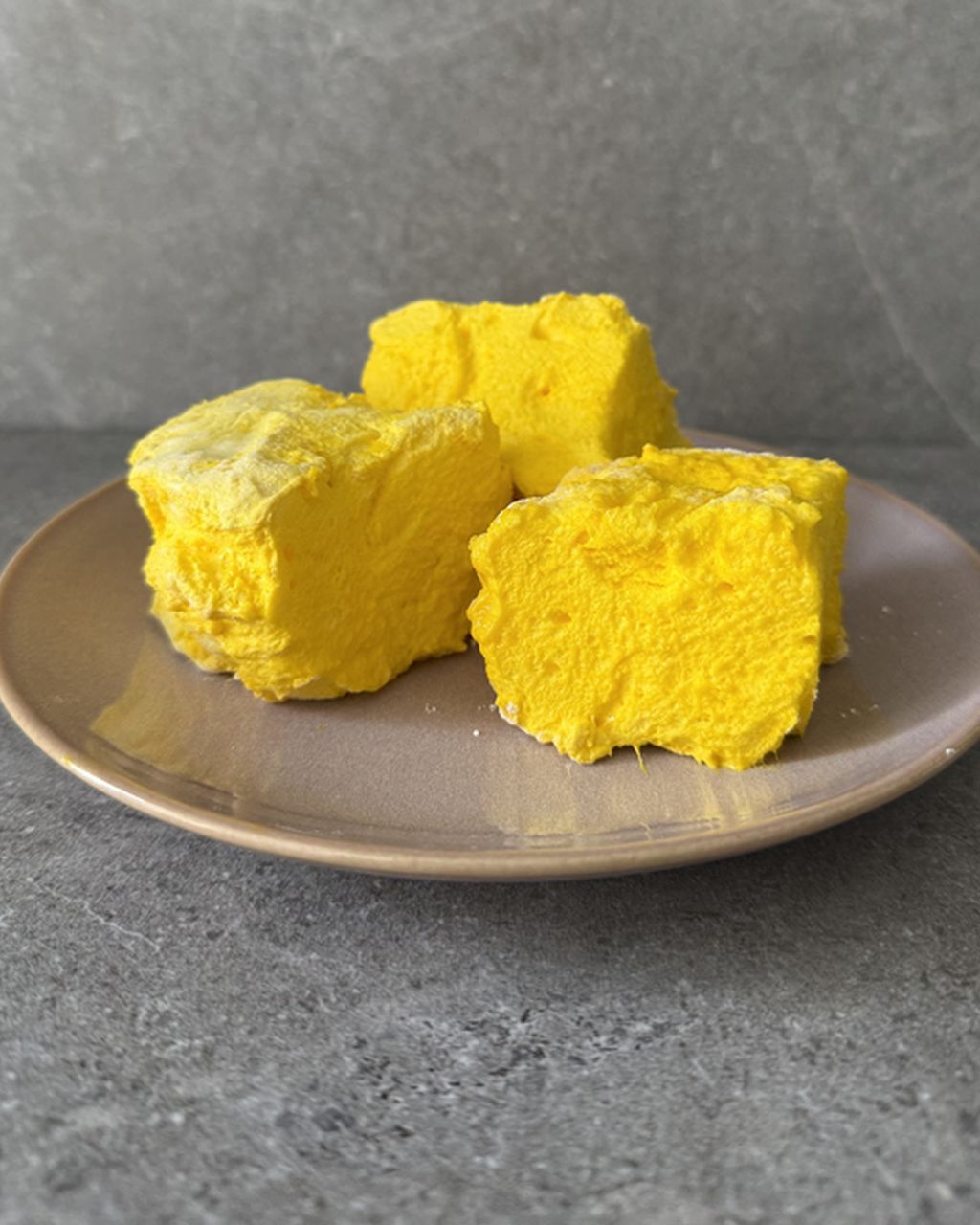
Homemade flavoured marshmallows (like our mint-chocolate, cherry, mango and watermelon ones) — larger gelatine-based pieces with real fruit or mint flavour. They shine wherever the marshmallow itself is the star — in a mug of hot chocolate, in s'mores, or on a dessert table.
Vegetarian and vegan options — classic marshmallows are made with animal gelatine. Versions made with agar or carrageenan do exist; we don't carry them, and they toast and melt a little differently.
Making your own — the most work, but you control the flavour and colour. Find the method in how to make marshmallows at home.
Keep marshmallows in a sealed container at room temperature, not in the fridge — fridge moisture dissolves the sugar on the surface and makes the pieces clump. If that happens, just re-coat them in a roughly 1:1 mix of icing sugar and cornstarch.
Yes, marshmallows freeze well as long as they're in a well-sealed bag or container. Thaw them still sealed so no condensation forms on them and makes them sticky.
Don't throw out hardened marshmallows — they'll melt down just fine in hot chocolate, on rice krispie treats, or in rocky road, same as fresh ones. They're just no longer good for toasting or eating on their own, since they've lost their softness.
Melted marshmallows turn hard when you overheat them: the water evaporates, the sugar concentrates, and the mixture sets firm once it cools. Melt them gently over low heat or in short microwave bursts, with a bit of butter, and take them off the heat the moment they're combined.
Marshmallows puff up in the microwave because the air and water vapour trapped in the foam heat up while the gelatine softens at the same time. They deflate and firm up again as they cool, so microwave them for just 15–20 seconds and use them right away.
One recipe worth heating the oven for, one tip, and one deal from the shop. Nothing else.