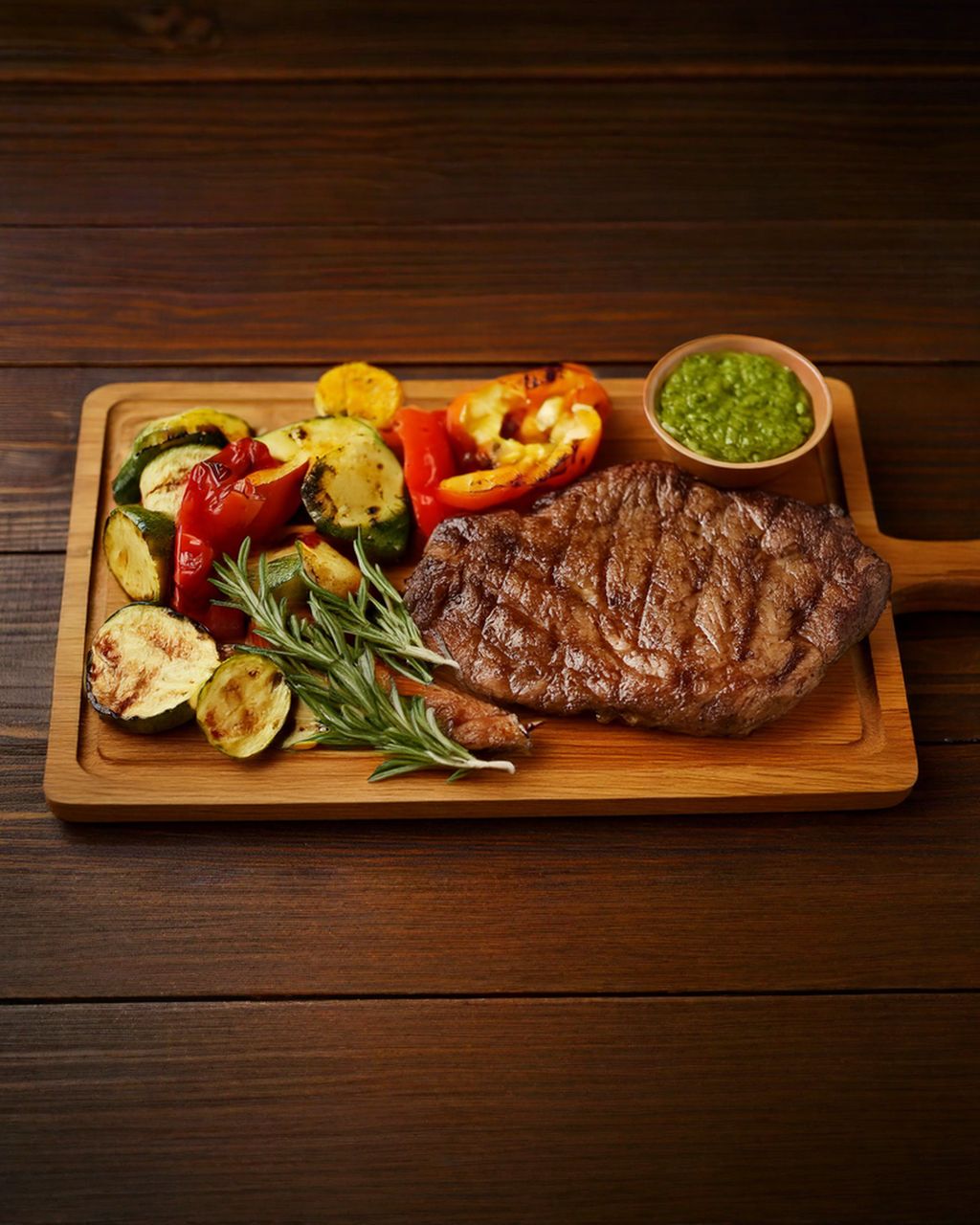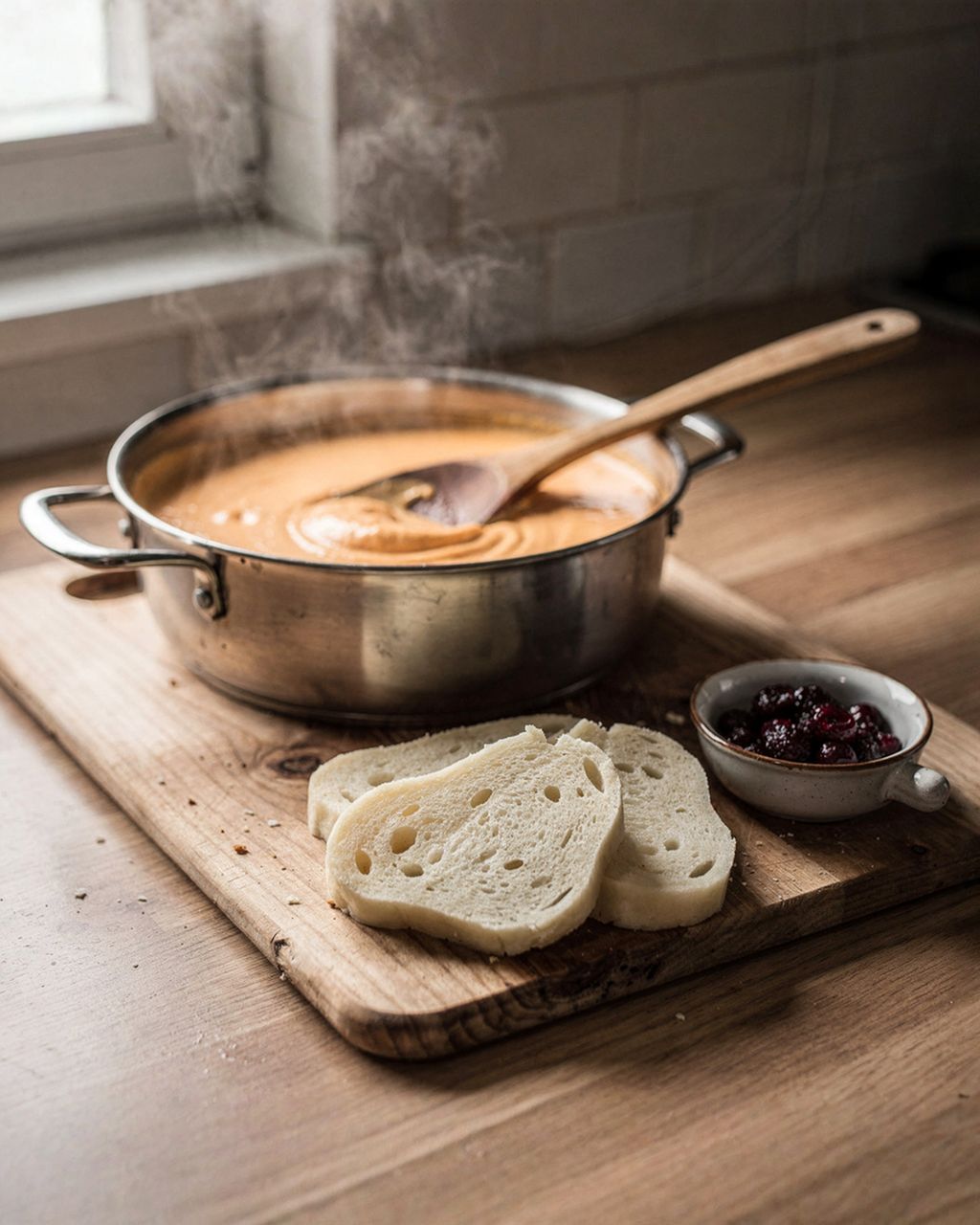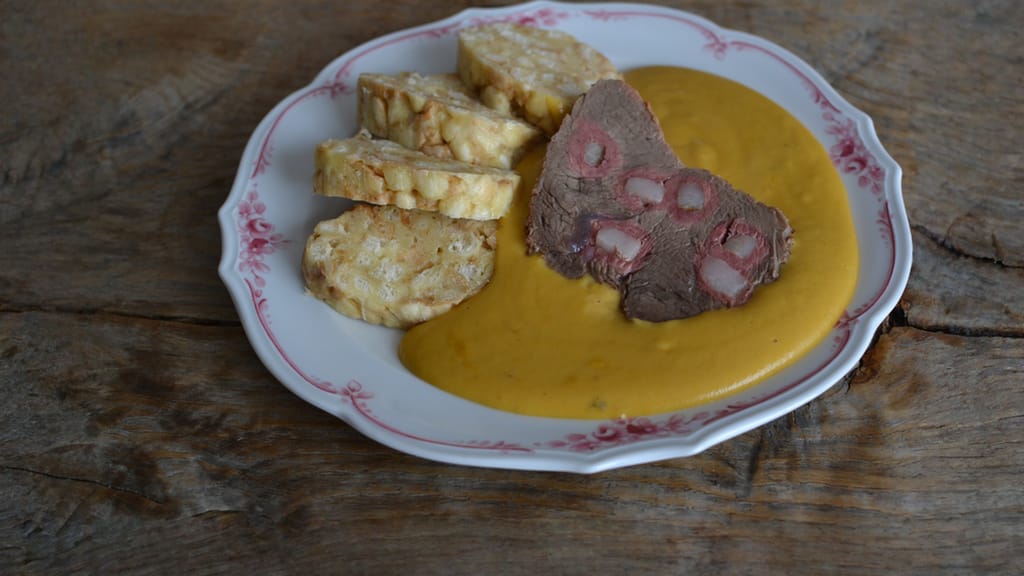
Beef sirloin in cream sauce (svíčková)
Svíčková na smetaně (Czech Beef in Cream Sauce): Step-by-Step Recipe, Plus a Pork Tenderloin Version
Updated Nov 19, 2026
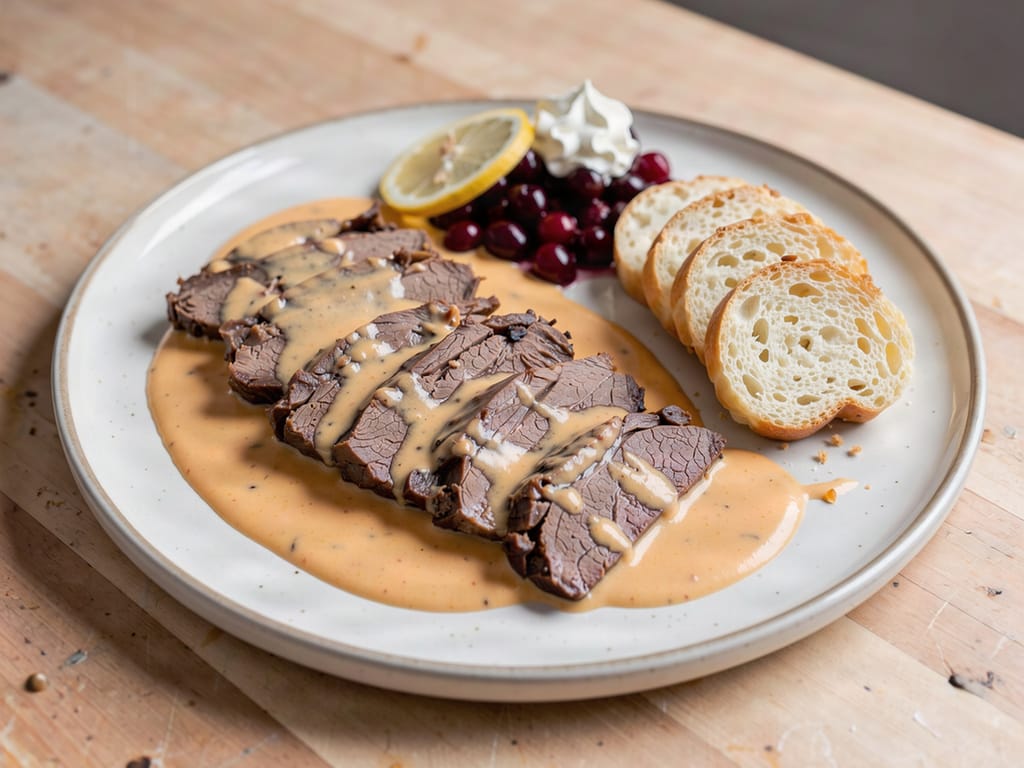
Svíčková na smetaně (Czech beef in a root-vegetable cream sauce) is beef larded with bacon, marinated overnight in root vegetables with vinegar and spices, slow-roasted, and served with a blended cream sauce, bread dumplings, cranberries, a slice of lemon and a spoonful of whipped cream. It takes two days: you marinate the first evening, then on the second day you roast for about 2–2.5 hours and blend. Below you'll find the whole method step by step: which cut to use, how many vegetables, what temperature and how long to roast, and how to season the sauce so it doesn't turn out sour. You'll also find versions made with pork tenderloin and other pork cuts, the sauce made separately, and how to store and freeze the finished dish safely.
Classic svíčková comes down to six steps: choose the meat, lard it, marinate it overnight in vegetables and vinegar, roast it slowly, blend the vegetables into a sauce, and finish with cream. Each step has a reason, and none of them is worth cutting short. For a faster version made with real beef tenderloin and no overnight marinating, see our recipe for homemade svíčková na smetaně. Here you'll find why each step is done and what to watch out for.
For 6 servings, you'll need roughly the following:
1–1.2 kg beef (tenderloin or round)
100–150 g bacon (streaky or smoked), for larding
500 g carrots, 250 g parsley root, 250 g celeriac (a 2 : 1 : 1 ratio, about 1 kg in total)
1–2 onions
10 allspice berries, 15 black peppercorns, 3–4 bay leaves, a pinch of thyme
50–80 ml vinegar (8%), 1–2 tablespoons sugar, salt
500–750 ml broth or water
350 ml whipping cream, 31–33% fat, for the sauce
150 ml whipping cream, 31–33% fat, for the whipped cream topping (about 500 ml in total)
1 tablespoon full-fat mustard, lemon
Beef sirloin in cream sauce (svíčková)
Homemade svíčková na smetaně made with real beef tenderloin, no overnight marinating
Seasonal baking plans, tested recipes and kitchen tricks that save you time. Unsubscribe in one click.
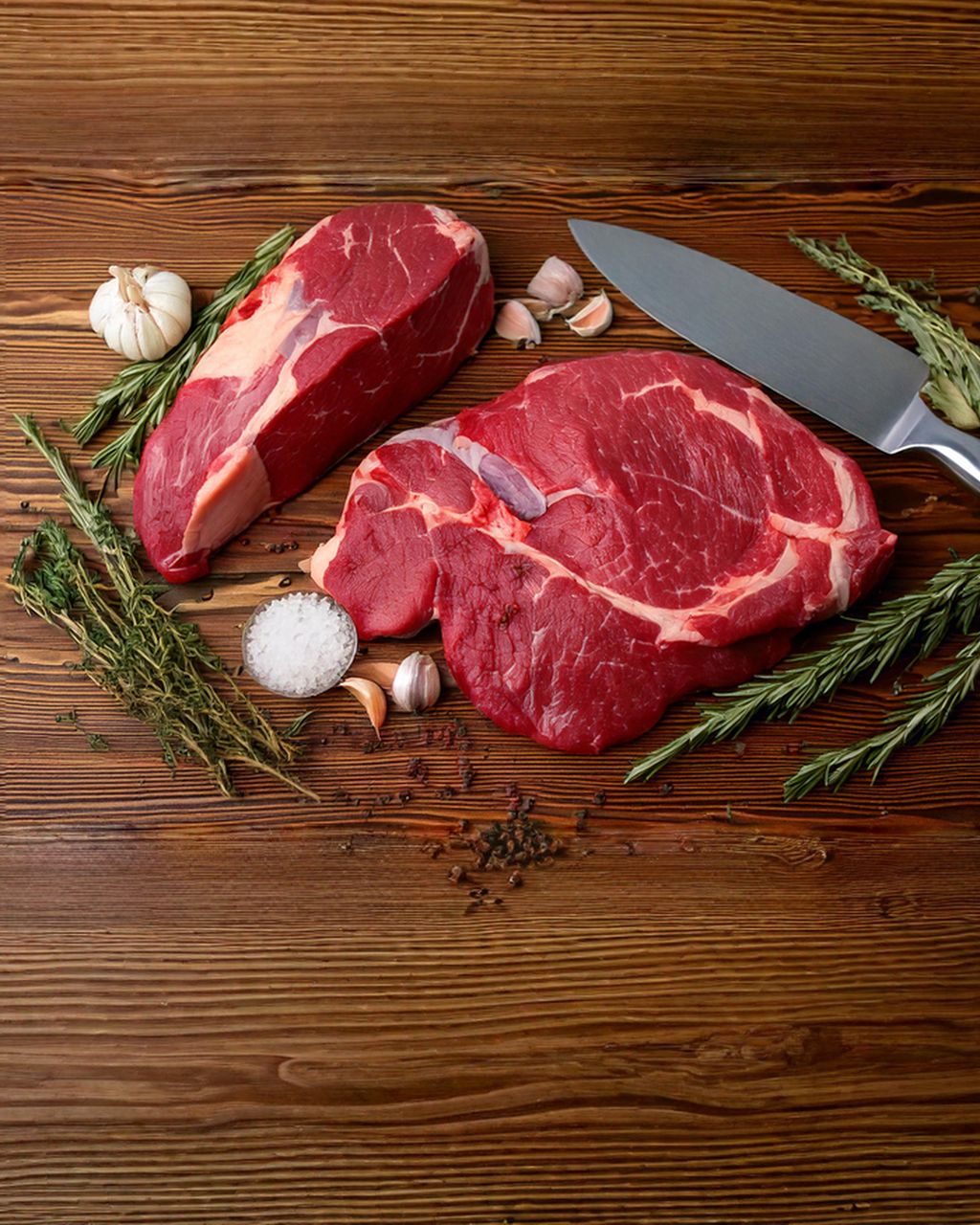
You can use either true beef tenderloin or beef round for svíčková. Tenderloin is more delicate and tenderizes faster; round stays juicier during long roasting, costs less, and is the cut most people use at home today.
Beef tenderloin is the long muscle along the spine that hardly works at all. That makes it very lean and tender. The dish got its name from it, but it dries out easily in long roasting. If you use it, cut the roasting time to about half and keep an eye on it, or an expensive piece of meat will turn into dry strands.
Beef round (the cuts called válec, šál, ořech and květová špička) has more connective tissue. During slow roasting it turns to gelatin, so the meat stays juicy and holds its shape when sliced. For a classic Sunday svíčková, it's the most reliable choice. Válec gives the neatest slices, while květová špička is juicier. We go through which part of the round suits which purpose in Beef round: cuts, uses and how to prepare it.
Whichever you choose, trim off the membranes and sinew. The silvery skin tightens in the oven, twists the meat and stays tough.
To lard svíčková, thread strips of firm bacon (about 5 mm thick) through the meat with a larding needle, along the grain, 2–3 cm apart. This gives the lean meat fat from the inside so it doesn't dry out as it roasts. With round it's tradition; with true tenderloin it's almost essential.
Cut the bacon into strips as long as your larding needle and freeze them for 15–20 minutes. Firm strips are much easier to pull through and don't tear. If you don't have a larding needle, cut slits with a narrow knife and push the strips in with your finger or a wooden spoon.
Larding isn't mandatory. If you use well-marbled round and roast it covered, the meat won't dry out without bacon. But svíčková gets a slightly smoky flavor precisely from the bacon, so without it the sauce will be milder and less pronounced.
The marinade brings the meat and vegetables together: overnight, the vinegar, spices and onion work into the meat, and the vegetables release the sugars that become the sauce. Marinate for 12–24 hours, always in the fridge. According to the US food safety agency USDA FSIS, meat should be marinated only in the refrigerator, never on the counter at room temperature.
Method:
Cut the root vegetables and onion into cubes or slices about 1 cm.
Season the meat with salt and pepper and rub it with mustard.
Put a layer of vegetables in a bowl or roasting pan, add the meat, and top with the remaining vegetables.
Add the whole spices and pour over vinegar diluted with a little water (roughly 1 part vinegar to 3 parts water), enough to moisten the vegetables rather than drown them.
Cover with plastic wrap and refrigerate. Turn the meat once.
How much vinegar you use decides whether the svíčková turns out sour. For a kilo of meat, 50–80 ml of 8% vinegar is enough; you don't need more. Anyone who pours vinegar "by eye" ends up with a sour sauce and tries to fix it with sugar.
Use roughly as much root vegetable as the weight of the meat, in a carrot : parsley root : celeriac ratio of 2 : 1 : 1. For 1 kg of meat, that's 500 g carrots, 250 g parsley root, 250 g celeriac, plus 1–2 onions. With this amount, the sauce thickens on its own.
The sauce for svíčková is really just blended roasted vegetables, and each one has its job. Carrot brings sweetness and color, parsley root a sweetish, spicy note, celeriac depth, and onion body.
Watch the celeriac. It gives the sauce depth, but too much makes it bitter and overpowers the sweetness of the carrots. If your celeriac bulb is large, use just the weighed 250 g in the sauce, not the whole thing.
Before roasting, sauté the vegetables in a little fat or in the bacon fat until golden. Caramelization adds sweetness and color. This step gives the sauce depth that vinegar and cream alone can't.
Roast beef round for svíčková covered at 160–170°C (320–340°F) for about 2–2.5 hours for 1–1.2 kg of meat, until a fork slides into the meat without resistance. Roast true tenderloin at the same temperature for only about 60–80 minutes.
Roasting method:
Take the meat out of the marinade, pat it dry and brown it on all sides in hot fat.
Drain the vegetables from the marinade (keep the liquid) and sauté them in the same fat.
Put the vegetables in the roasting pan, set the meat on top, and pour over the marinade liquid and broth so the meat is submerged by about a third.
Cover the pan with a lid or aluminum foil and roast. Every 30–40 minutes, baste the meat and check there's enough liquid. If it cooks away, add more broth.
For the last 15–20 minutes you can roast uncovered; the vegetables brown a little and the sauce darkens.
You can tell the meat is done when it's tender and a fork or skewer goes in without resistance. Round needs to be roasted until tender, not just until cooked through. The safe minimum USDA FSIS gives for whole cuts of beef (63°C / 145°F inside and 3 minutes of rest) is long behind it by then, but the fibers only relax with longer roasting. Ovens often run differently from what the dial says. If your svíčková keeps going wrong, an oven thermometer is worth it, so you can see what temperature you really have.
Take the roasted meat out, wrap it in aluminum foil and let it rest for at least 15 minutes. Then you have two options:
Serving the same day: slice it warm after resting, into thicker slices of around 1 cm. Thinner ones would fall apart.
Want thin, clean slices: let the meat cool and slice it cold, ideally the next day. That's exactly what Option B in the timeline below is for.
We cover slow overnight roasting of meat separately in Overnight roast meat: what temperature for pulled meat, svíčková and duck.
For beef round roasted slowly on carrots and celeriac, with just red wine instead of cream, see the recipe for oven-braised beef in red wine.
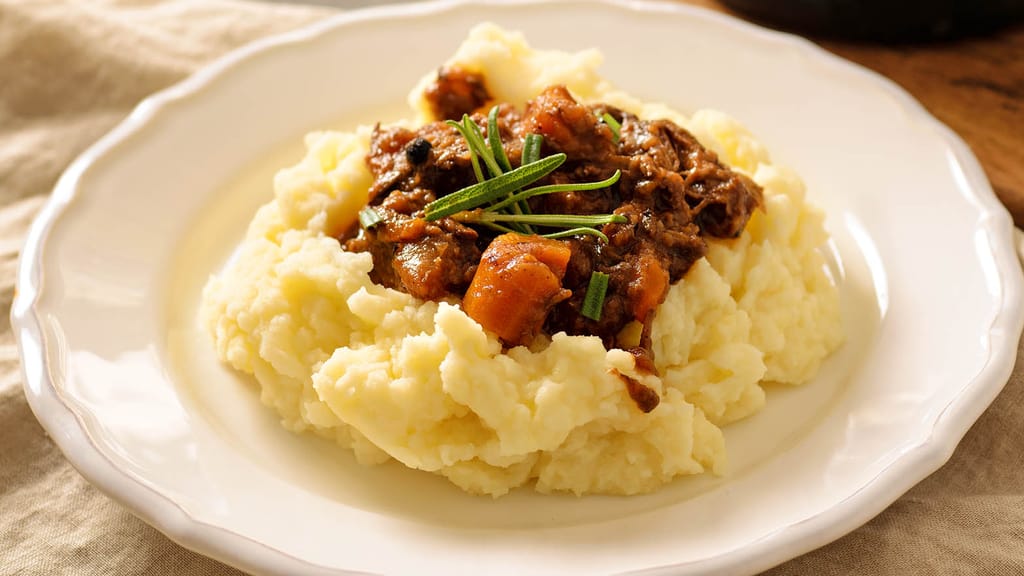
Oven-braised beef in red wine with vegetables
Oven-braised beef in red wine
The sauce is made by simmering the vegetables together with the pan juices, removing the spices, and blending until smooth. Then you thin it with broth to the thickness you like and finish with cream.
Fish the bay leaf, allspice and peppercorns out of the pan. Blended into the sauce, the berries turn bitter and crunch between your teeth.
Move the vegetables and pan juices to a pot, add broth and simmer for 10 minutes.
Blend with an immersion blender until smooth. For a truly velvety sauce, press it through a sieve as well.
Thin with broth to the thickness of cream. The sauce should run off a spoon, not drop from it.
The classic approach is to thicken the sauce with a roux. But there are so many vegetables in the sauce that they usually thicken it on their own. When to skip the roux and what to use instead is covered in Svíčková without a roux.
Svíčková calls for whipping cream with 31–33% fat, about 250 ml per liter of sauce. Add it at the very end and just warm it through; don't boil.
Rich cream doesn't curdle when heated, and it makes the sauce smooth and glossy. Be careful with 12% cooking cream. It thins the sauce, tastes watery, and can curdle in an acidic sauce. Sour cream or yogurt don't belong in svíčková at all; they add acid instead of softening it.
After adding the cream, taste the sauce and adjust. Not sweet enough? Add a teaspoon of sugar. Not tangy enough? A few drops of lemon or vinegar. Needs salt? Salt gets lost in a rich sauce, so add more. If the sauce is too thick, thin it with broth, never with water.
Svíčková is plated in this order: slices of meat, sauce over them, 4–6 slices of bread dumpling (houskový knedlík) alongside, and on top a slice of lemon, a spoonful of cranberries and a dollop of whipped cream.
Bread dumpling (houskový knedlík) is the foundation; it soaks up the sauce. Make a steamed bread dumpling. Steamed, it keeps its shape and doesn't get soggy.
Cranberries add a sweet-sour contrast to the cream. Cranberries preserved in sugar work best.
Lemon goes on the plate so everyone can add more tang to taste.
Whipped cream is whipped from 31–33% whipping cream (about 150 ml is enough for 6 servings), either unsweetened or lightly sweetened. On the plate it mixes with the sauce and softens it.
How much per person: allow 150–200 g raw meat per serving. Beef shrinks by roughly a quarter to a third in roasting, so a kilo of raw round gives 650–750 g cooked, which makes 5–6 servings. Allow 200–250 ml of sauce per person, plus 4–6 slices of dumpling. The sauce disappears first, so if you're cooking for guests, add an extra half kilo of vegetables.
How to slice: cut the meat across the grain with a sharp knife. Slice chilled meat 5–8 mm thick, warm meat closer to 1 cm. If you slice along the grain, the slices stretch and tear on the fork. Lay the sliced meat in sauce heated to just below a boil and leave it covered over low heat for 5–10 minutes, until hot all the way through (74°C / 165°F). Don't boil it; boiling dries the meat out again.
Cranberries for svíčková: store-bought preserved cranberries are fine. If you want to make them at home from fresh or frozen berries, simmer 300 g cranberries with 100–150 g sugar and a little water for about 10 minutes, until they burst. They set on their own as they cool, thanks to the pectin in them.
Karlovy Vary dumplings (karlovarský knedlík) or a homemade yeast dumpling also go well with svíčková. Serving it with potato dumplings is more of a regional variation.
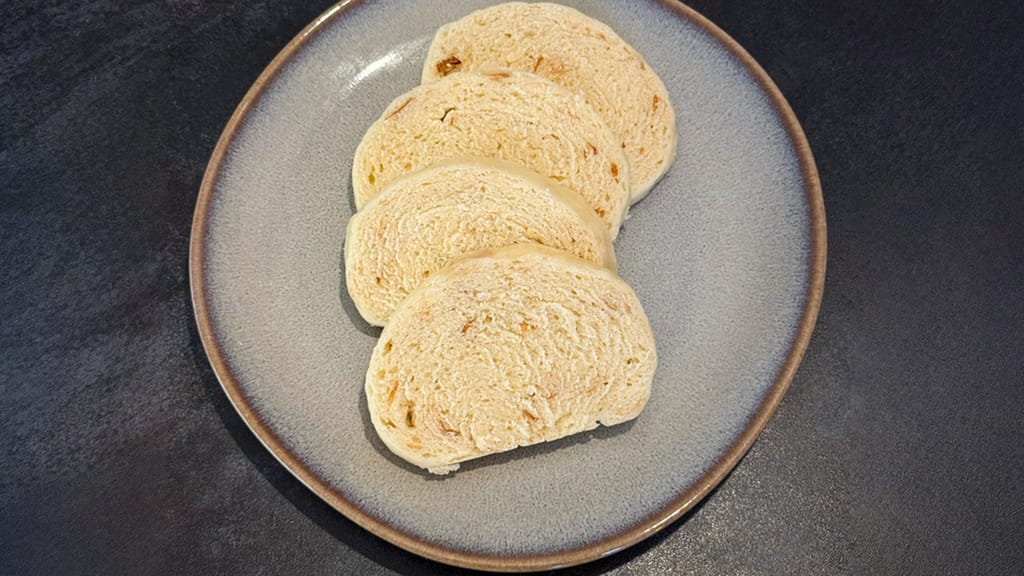
Steamed czech bread dumplings (houskové knedlíky)
Steamed bread dumpling for svíčková
Svíčková is a two-day dish. The day before, you marinate the meat; on the day you serve it, you roast and blend. If you want a calm lunch day, roast it all a day early. Svíčková that has rested tastes even better.
Option A, the classic over two days:
Evening the day before (about 30 minutes of work): trim the meat, lard it, chop the vegetables, marinate, refrigerate.
On the day, 4 hours before the meal: brown the meat, sauté the vegetables, put it in to roast (2–2.5 hours).
1 hour before: cook the dumpling; the meat rests wrapped in aluminum foil.
30 minutes before: blend the sauce, add the cream, season, whip the cream. Slice the meat warm, after resting at least 15 minutes, into thicker slices of around 1 cm.
Option B, a holiday without stress (and thin slices):
Two days before: marinate the meat.
The day before: roast, blend the sauce without the cream, chill the meat and refrigerate both.
On the day (about 40 minutes): slice the cold meat into thin slices, bring the cream-free sauce to a boil, add the cream, put in the meat slices and heat until hot all the way through (74°C / 165°F). Meanwhile, cook the dumpling.
What you can make ahead, and what you can't:
Yes: marinated meat (up to 24 hours), roasted meat and the sauce without cream (2–3 days in the fridge), cranberries (a week in the fridge), dumpling (the day before, reheated by steaming).
No: whipped cream (whip it right before serving) and cream in a sauce you'll be reheating several times. With repeated reheating the cream can separate, greasy spots appear on the surface and the sauce loses its sheen.
Option B is the smarter choice when you're cooking for guests. Cold meat slices thinly without falling apart, and the flavors in the sauce come together overnight.
You can make svíčková with pork too. The method is the same, only shorter. Pork tenderloin roasts for just 15–20 minutes at 180°C (350°F), while pork leg or shoulder, covered, takes about 1.5–2 hours at 160°C (320°F). Pork only needs 4–12 hours of marinating in the fridge, not a whole night.
Pork tenderloin is small (roughly 300–600 g) and very lean, so you don't roast it with the vegetables. Make the sauce separately and finish the meat separately.
Marinate the vegetables as for the classic, roughly the same weight as the meat (for 2 tenderloins, about 800 g vegetables and 40–60 ml vinegar).
Trim the membrane from the tenderloin, salt it, rub it with mustard and marinate it with the vegetables in the fridge for 4–12 hours. You don't have to lard it; wrapping it in slices of bacon is enough.
Sauté the vegetables, add the marinade liquid and broth, and braise covered for 40–50 minutes until tender. Blend and finish with cream.
Sear the tenderloin hard on all sides and roast at 180°C (350°F) for 15–20 minutes, until it reaches 63°C (145°F) inside. That's what USDA FSIS recommends for whole cuts of pork, with a rest of at least 3 minutes.
Let it rest for 5–10 minutes and slice it 1.5 cm thick. Serve it in the sauce, but don't cook it in the sauce. It will overcook and dry out.
Once marinated, svíčková from tenderloin is ready in about an hour and a half. It tastes milder and is done faster, so it suits a weeknight too. It does lack the pronounced beefy flavor, though.
Pork leg or shoulder is roasted like beef round, just for a shorter time.
Lard a 1–1.2 kg piece or just rub it with mustard, and marinate with the vegetables for 6–12 hours in the fridge.
Brown it, set it on the vegetables, and add the marinade liquid and broth.
Roast covered at 160°C (320°F) for 1.5–2 hours, until the meat is tender.
Continue as with beef: rest, blend, cream.
The pork sauce will be lighter and sweeter, so add less sugar to it. Beef has a more pronounced flavor; pork leg is juicier and cheaper.
You can leave out the roux entirely; the vegetable sauce thickens on its own. A sour sauce is almost always the result of too much vinegar in the marinade or too little sweetness, not of sour cream.
Without a roux: If you put in as much vegetable as the weight of the meat and blend it until smooth, it will usually thicken by itself. A piece of gingerbread or a stale roll blended into the sauce helps too, as does a short reduction without the lid. You'll find all the options, and how to rescue a thin sauce, in Svíčková without a roux: how to thicken the sauce so it's velvety.
Why it's sour: Most often there's too much vinegar in the marinade, too little carrot, or too little sugar and cream. The fix isn't more cream but balancing with sugar and a longer simmer, which mellows the acidity. We describe how to balance the sauce step by step in Why svíčková is sour and how to balance the sauce.
Without an oven, svíčková can be made in a cast-iron pot on the stovetop or in a slow cooker. In a pot on the stovetop, braise it covered over low heat for 2–2.5 hours; in a slow cooker, 7–8 hours on LOW.
In a pot on the stovetop: brown the meat and vegetables right in the pot, add the marinade liquid and broth to halfway up the meat, cover, and keep it at a gentle bubble. Turn the meat every half hour and watch the bottom, because vegetables like to stick. A heavy cast-iron pot that holds heat evenly is ideal.
In a slow cooker: brown the meat and vegetables in a skillet first, because a slow cooker doesn't brown anything itself and the flavor suffers without it. Then move everything to the cooker and use less liquid (roughly up to a third of the way up the meat), since almost none evaporates. After 7–8 hours on LOW, the beef round is tender, and you just blend the sauce and finish it with cream.
A long braise of beef in red wine with vegetables, just covered in the oven at 130°C (265°F), is also shown in the recipe for Provençal braised beef with root vegetables.
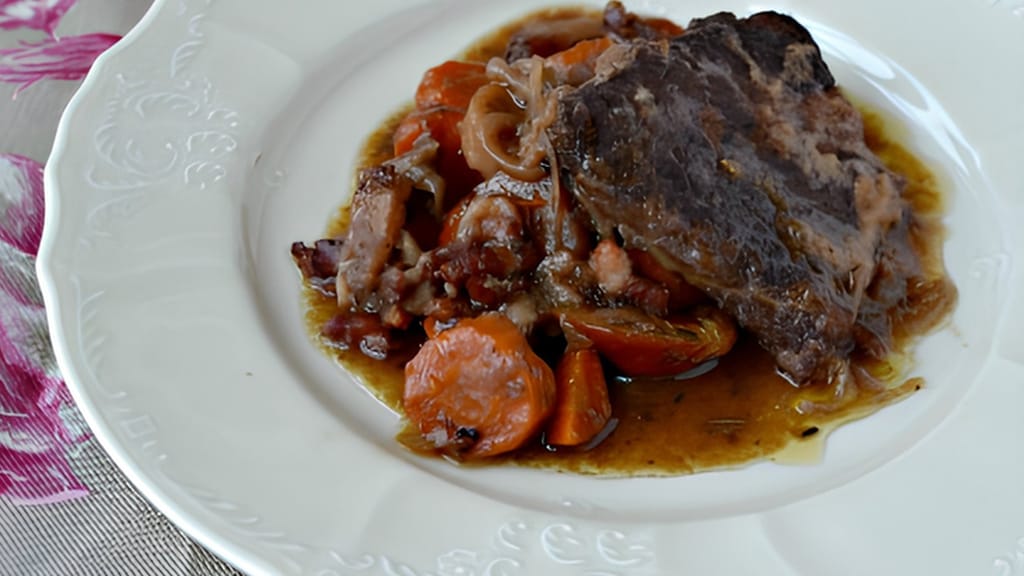
Provençal beef with root vegetables
Provençal braised beef with root vegetables
You can make svíčková sauce without roasting the meat in it. Marinate the root vegetables overnight, sauté them, braise for 40–50 minutes in broth, blend, and finish with cream. Prepare the meat separately, however you like.
This makes sense in three cases:
When you cook the meat another way: sous vide, on the grill, or as a quick tenderloin. The sauce and the meat then each get their ideal time.
When you want extra sauce: there is never enough svíčková sauce, and when you make it separately, one piece of meat is enough for more people.
When you're making a meatless version: a root vegetable sauce is also good with dumplings and egg or with seared tofu.
Method for a liter of sauce:
Chop 500 g root vegetables and 1 onion, mix with the spices, 30–40 ml vinegar and a tablespoon of sugar, and leave overnight in the fridge.
Sauté in butter or lard until golden.
Add 700 ml strong beef broth and braise covered for 40–50 minutes until tender.
Fish out the spices, blend, press through a sieve, add 200–250 ml whipping cream and season.
Because the sauce has no pan juices from the meat, the flavor comes from the broth. Use a strong homemade one, not a bouillon cube. You'll find how to make it in How to make beef broth that's clear and strong.
Another Czech cream sauce for slow-roasted beef is made in a similar way: modern dill sauce with slow-roasted beef.
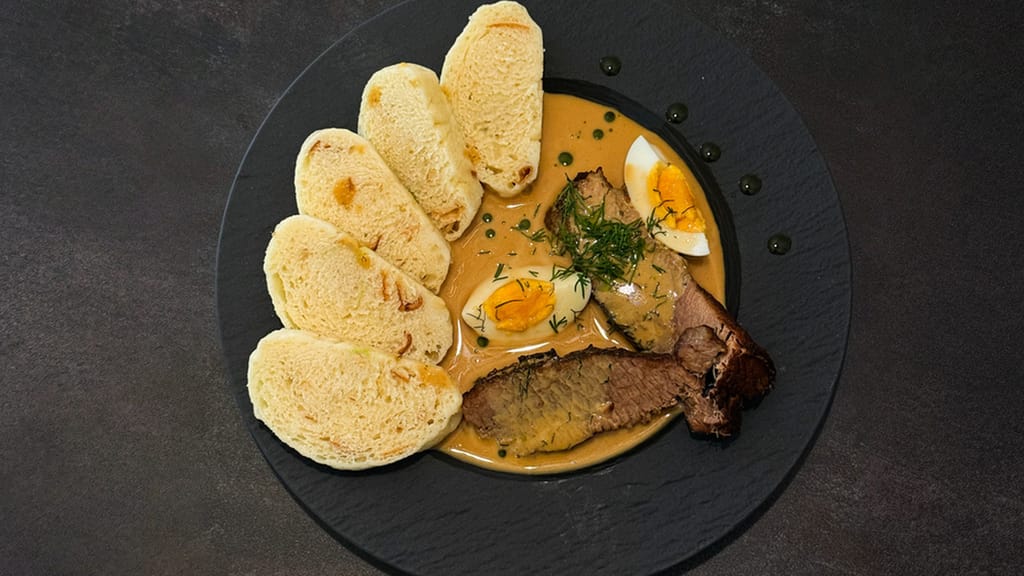
Dill sauce with slow-roasted beef
Modern dill sauce with slow-roasted beef
Refrigerate cooked svíčková within 2 hours of finishing and use it within 3–4 days. According to USDA FSIS, frozen it keeps its best quality for about 3–4 months.
What USDA FSIS says about cooked leftovers:
The 2-hour rule: refrigerate leftovers within 2 hours of cooking. When the room is over 32°C (90°F), the limit is 1 hour.
Shallow containers: divide large amounts into shallower containers so they cool quickly.
Fridge, 3–4 days: that's how long cooked leftovers keep in the fridge.
Freezer, 3–4 months: at −18°C (0°F), leftovers stay safe indefinitely, but over time they lose flavor and moisture. They're best within 3–4 months.
Reheat to 74°C (165°F): heat leftovers to 74°C inside, or until they steam and bubble.
What this means for svíčková in practice:
Don't put the whole pot in the fridge: a full pot of hot sauce takes hours to cool. Pour it into two or three shallow containers.
Freeze the meat and sauce together: put the slices in the sauce so they're submerged and don't dry out. Svíčková with cream freezes well; just whisk it after thawing if the sauce separates a little.
Or freeze the sauce without cream: add the cream after thawing and reheating. The result is better.
Thaw in the fridge overnight, not on the counter. Then reheat slowly over low heat, stirring.
Don't freeze the whipped cream or the dumpling with the sauce. Freeze the dumpling separately, sliced, and reheat it by steaming.
Planning svíčková for the holidays and want it ready in the freezer? You'll find how to plan your freezer before Christmas in Freezer before Christmas: what to freeze, when and how to organize it.
Svíčková most often goes wrong in five ways: too much vinegar, dry meat, a bitter sauce, curdled cream and a bland flavor. Each has a simple cause.
Sour sauce: vinegar added "by eye" and too short a roast. Measure 50–80 ml per kilo of meat, and after blending, simmer the sauce for another 10 minutes to mellow the acidity.
Dry meat: true tenderloin roasted as long as round, or a roasting pan without a lid. Roast lean meat for less time, always cover the pan and keep topping up the liquid.
Bitter sauce: blended allspice berries and peppercorns, too much celeriac, or scorched vegetables. Always fish out the spices, use celeriac for no more than a quarter of the vegetables, and brown only to golden, not black.
Curdled cream: a weak cream, or cream boiled in an acidic sauce. Use 31–33% whipping cream and only warm the sauce through once it's in.
Bland flavor: vegetables braised instead of sautéed, water instead of broth, too little salt. Browning and a strong broth are the foundation; add salt at the end, after the cream.
One more tip: taste the sauce twice, after blending and after adding the cream. Cream tames both acidity and salt, so what was spot on before it tastes flat after. Do your final adjusting at the end.
Svíčková is named after the beef tenderloin (hovězí svíčková), the long, delicate muscle running along the spine. Today the name covers the whole dish with its root-vegetable cream sauce, whether you make it with tenderloin, beef round, or pork.
Yes. You can replace the vinegar with lemon juice, using about a third to a half more lemon juice than vinegar, because it is weaker than 8% vinegar. Dry white wine gives only a mild acidity. Use it as part of the marinade and adjust the acidity with lemon at the end. Svíčková with no sour element at all tastes flat and sweet, so don't leave it out entirely.
Yes, just use lactose-free whipping cream with the same 31–33% fat. It behaves the same way in the sauce and won't curdle. Plant-based cooking creams (oat, coconut) work too, but the sauce will be thinner and coconut adds a foreign flavor.
You can. A frozen root vegetable mix works mainly in a sauce made separately. Don't thaw it first; sauté it straight from frozen, otherwise it releases water and won't caramelize. For the overnight marinade fresh is better, because frozen vegetables are soft and turn mushy in the brine.
Yes, venison leg (roe deer or red deer) is a traditional and excellent choice for svíčková. The method is the same as for beef round. Game is leaner, so always lard it, marinate for 24 hours and roast covered at 160°C (320°F) for about 2–2.5 hours, depending on the size of the piece. A few crushed juniper berries go well in the marinade.
One recipe worth heating the oven for, one tip, and one deal from the shop. Nothing else.