How to Freeze Fruit So It Stays Loose, Not Clumped
Can You Freeze Milk, Cream and Yogurt? What Changes After Thawing
Updated Nov 17, 2026
You can freeze milk, whipping cream, sour cream and yogurt, and it's safe. But the texture changes once they thaw: the fat and water separate, the cream no longer whips into stiff peaks, and yogurt turns thin. That makes them a poorer choice for drinking or topping, but perfectly fine for cooking and baking. Below you'll find what freezing does to each product, how to freeze and thaw them, and what to use them for afterward.
You can freeze milk, whipping cream, sour cream and yogurt, but each one turns out differently once thawed:
Milk – handles the freezer well. It may separate a little after thawing, but a good shake and it's as good as new for cooking.
Whipping cream – refrigerated cream from the chiller cabinet can be frozen, but it usually won't whip after thawing. It's good in sauces and soups. If you want whipped cream, whip it before freezing.
Sour cream – grainy after thawing, and it releases whey. It's no longer right for spreading or dips, but it's fine for baking and hot dishes.
Yogurt – separates and turns thin. It's still good in smoothies, batters or marinades.
Safety isn't a worry. According to the USDA FSIS, food kept in the freezer at a constant 0°F (−18°C) stays safe indefinitely. Only its quality declines over time.
Seasonal baking plans, tested recipes and kitchen tricks that save you time. Unsubscribe in one click.
Milk, cream and yogurt separate after thawing because ice crystals tear apart their emulsion or protein gel. Milk and cream are emulsions: tiny droplets of fat and protein dispersed in water. Yogurt and sour cream are a delicate protein gel that holds water inside. When they freeze, ice crystals grow from the water and rip the structure apart. Once the ice melts, the fat, protein and water don't fully come back together. The USDA FSIS puts it plainly: emulsions like cream separate after thawing and look curdled.
The more fat and the more delicate the structure, the more you'll notice the change:
In whole milk you'll see at most a few yellowish flecks of fat. They disappear when you shake it.
In whipping cream, the fat globules that trap air during whipping are damaged. That's why the whipped cream then won't hold.
In yogurt and sour cream, the protein gel collapses. The result is grainy and releases water.
You'll barely notice a difference in flavor. It's mainly the texture that changes, and that's what decides what you use the thawed product for.
The easiest way to freeze milk is in portions, in a container with some free space at the top. Water expands as it freezes, so a full glass bottle can crack and a full carton will bulge and burst open.
Portion by use. Put 250–500 ml into a sturdy plastic container or freezer bag. For coffee or sauces, pour it into an ice cube tray.
Freeze it fresh, not on the use-by date. Freezing doesn't improve anything; it only pauses the milk in the state it was in.
Write the date on the package. According to the FoodKeeper chart (USDA FSIS together with Cornell University), milk keeps its best quality in the freezer for 3 months. After that it tastes flatter and can pick up freezer odors.
After thawing, shake it well or give it a quick whisk. Straight from the glass, it can taste a little watery. But for cooking and baking that doesn't matter: in oatmeal with fruit, béchamel, pumpkin pancakes or the batter for a fluffy oven-baked Dutch baby pancake, you won't notice the difference.
Kefir and buttermilk behave differently. FoodKeeper doesn't recommend freezing kefir at all. Buttermilk keeps for 3 months in the freezer, but you have to stir it again before using. If a recipe calls for it and you're out, see our article on what to substitute for buttermilk.
Use thawed whipping cream (at least 30% fat) for cooking. It usually won't turn into whipped cream. Freezing damages the fat globules that form the framework of the foam during whipping. The cream will get frothy, but it won't reach stiff peaks, or it will quickly turn to butter.
Which cream to freeze: in the store you'll find two kinds. There's no point freezing shelf-stable whipping cream (sold on the shelf, not in the fridge), because unopened it keeps for months at room temperature. Put any opened leftovers in the fridge and use them by the date on the package. It makes sense to freeze refrigerated whipping cream from the chiller cabinet. High-fat cream (at least 35% fat) behaves the same way. After thawing, both are for cooking only.
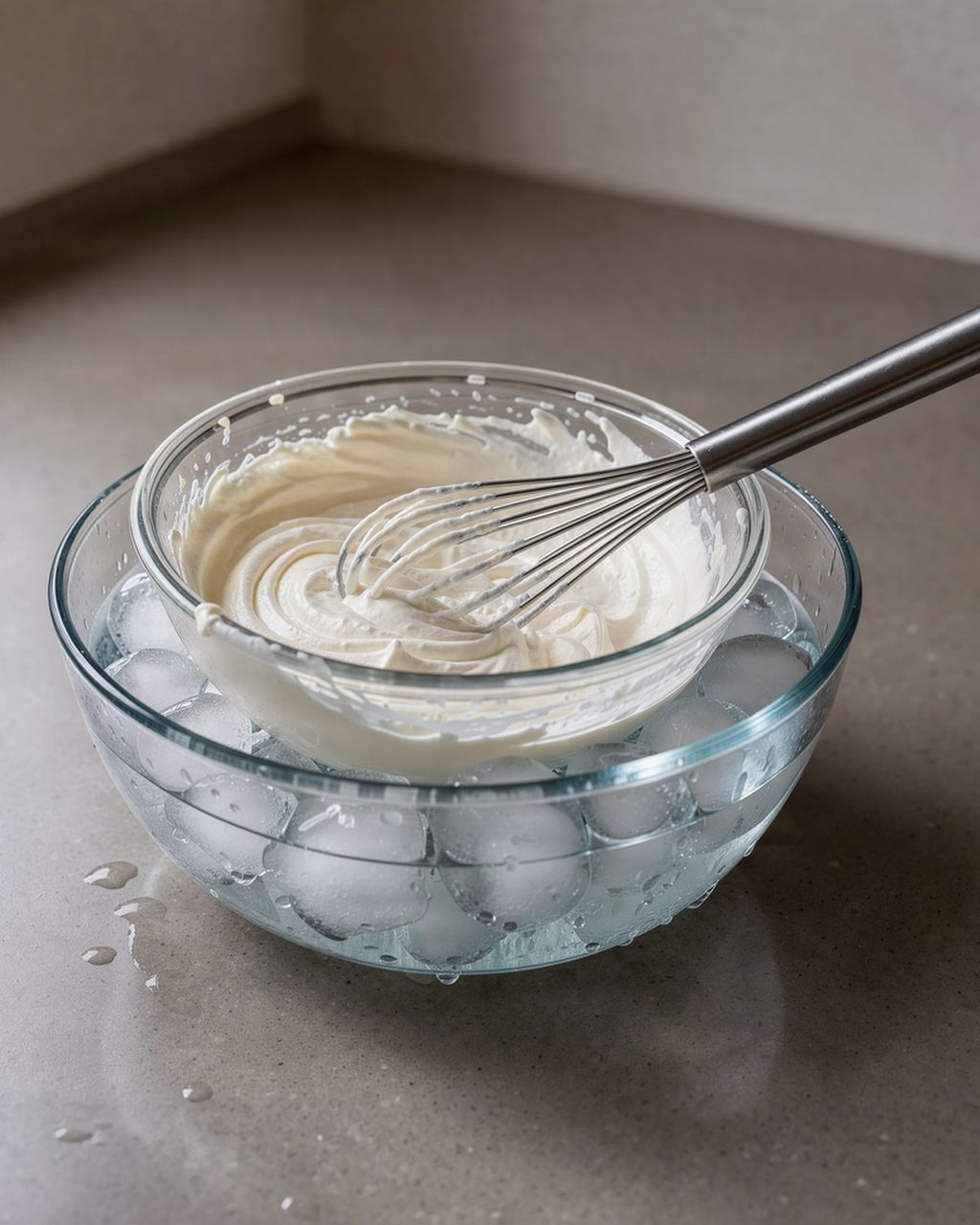
Thawed refrigerated cream has one destination: a hot dish. Use it in a cream sauce such as slow cooker rabbit in cream sauce, to mellow a dill soup, in classic baked potatoes or in a batter. Whisk it before using so the fat and water come back together. In a hot dish it melts in with no trouble.
Want whipped cream on hand? Whip it ahead of time. Spoon or pipe whipped, sweetened cream in dollops onto a baking sheet lined with parchment paper. Let them firm up in the freezer, then move them to a bag or container. According to FoodKeeper (USDA), they keep in the freezer for 1–2 months. Put a dollop straight onto hot chocolate, coffee or a dessert, and it thaws in a few minutes.
If even fresh cream won't whip for you, you'll find the causes and a rescue in our article on why whipped cream won't whip.
You can freeze sour cream, but after thawing it will be grainy and release whey. The FoodKeeper chart (USDA) says it "doesn't freeze well." That applies if you want it as a topping for traditional potato pancakes or in a cold sauce. Where the cream is baked or stirred into something warm, the result holds up.
In batters. In bundt cakes, muffins and gingerbread, such as a raspberry white chocolate sour cream bundt cake, currant yogurt muffins or soft gingerbread cookies. In a batter you can't tell it's grainy.
In warm sauces and soups. Whisk it, stir it with a spoonful of the hot base, and fold it in at the end. Don't boil it afterward, or it will curdle even more.
In baked dishes, such as baked pasta or scalloped potatoes.
For dips, dressings and spreading, buy it fresh. FoodKeeper (USDA) doesn't recommend freezing sour cream dips at all.
You can freeze yogurt. After thawing it will be thinner, with whey on top. According to the Kansas State University Extension chart, yogurt may separate when frozen. FoodKeeper (USDA) gives it 1–2 months of best quality in the freezer.
Thawed yogurt is a poorer choice for a bowl of granola. But it works well:
in smoothies, where you can even use it frozen in place of ice. For example in a peanut butter banana smoothie,
in batters, such as a yogurt bublanina with fruit (a Czech fruit sponge cake) or yogurt dough pizza,
in a yogurt marinade for chicken, where the texture doesn't matter.
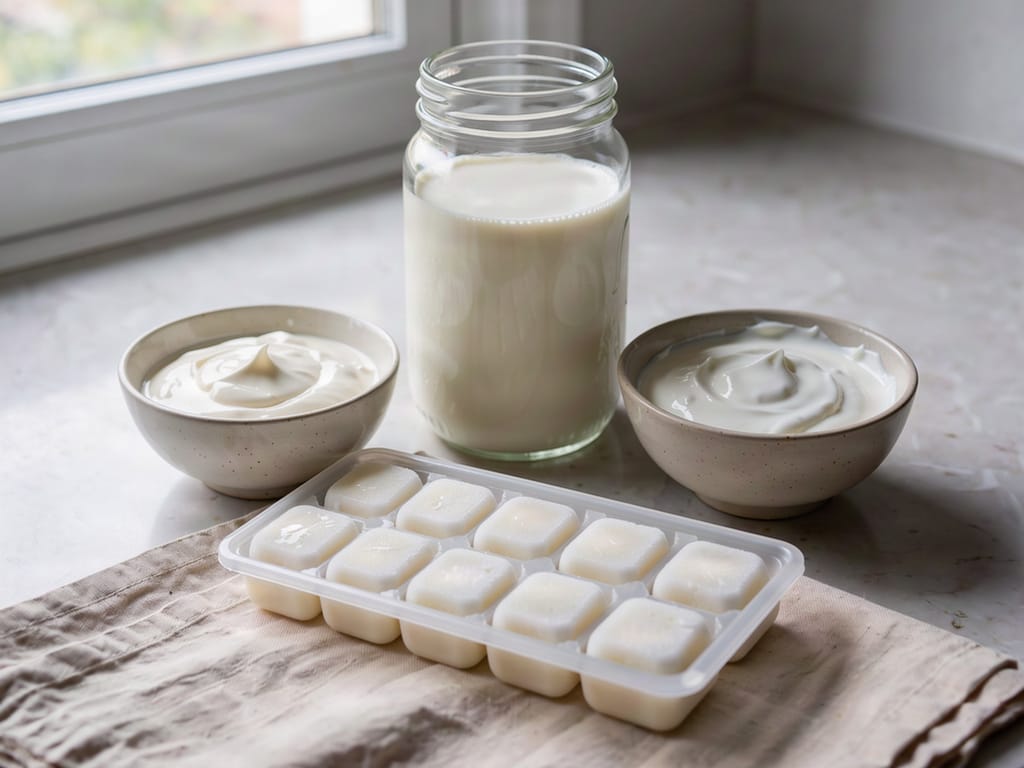
Tip: freeze yogurt right in an ice cube tray. Then you can toss cubes into the blender one at a time and don't have to thaw a whole tub.
Greek yogurt and skyr behave similarly, but because they contain less water they release less whey.
Thaw dairy in the fridge, not on the counter. The UK Food Standards Agency (FSA) recommends a fridge at 0–5°C (32–41°F) and a freezer at around −18°C (0°F). According to the FSA, thawed food should be eaten within 24 hours of being fully thawed.
Overnight in the fridge. According to the USDA FSIS, smaller portions thaw in the fridge overnight. A liter of milk may need a full day.
On a bowl or plate. The container will sweat, and if it leaks, you'll save yourself cleaning the fridge.
Don't rush it with warmth. The USDA FSIS explicitly warns against thawing on the kitchen counter. The surface warms to temperatures where bacteria multiply while the center is still frozen.
Shake or whisk after thawing. That brings the fat and water back together.
Ice tray cubes can go straight from frozen into a hot sauce or porridge.
Refreeze? According to the USDA FSIS, food thawed in the fridge can safely be refrozen without cooking. But dairy would take a second hit to its texture, so don't do it. Freeze smaller portions instead.
Milk and buttermilk keep their best quality in the freezer at −18°C (0°F) for 3 months, yogurt and whipped cream for 1–2 months, and kefir isn't recommended for freezing. This comes from the FoodKeeper chart (USDA FSIS and Cornell University) and refers to best quality, not a safety limit:
Milk: 3 months
Buttermilk: 3 months
Whipped sweetened cream: 1–2 months
Yogurt: 1–2 months
Refrigerated whipping cream and high-fat cream: can be frozen, but only for cooking after thawing
Shelf-stable whipping cream: no point freezing it; unopened it keeps outside the fridge
Sour cream: doesn't freeze well, only for baking and cooking
Kefir: freezing isn't recommended
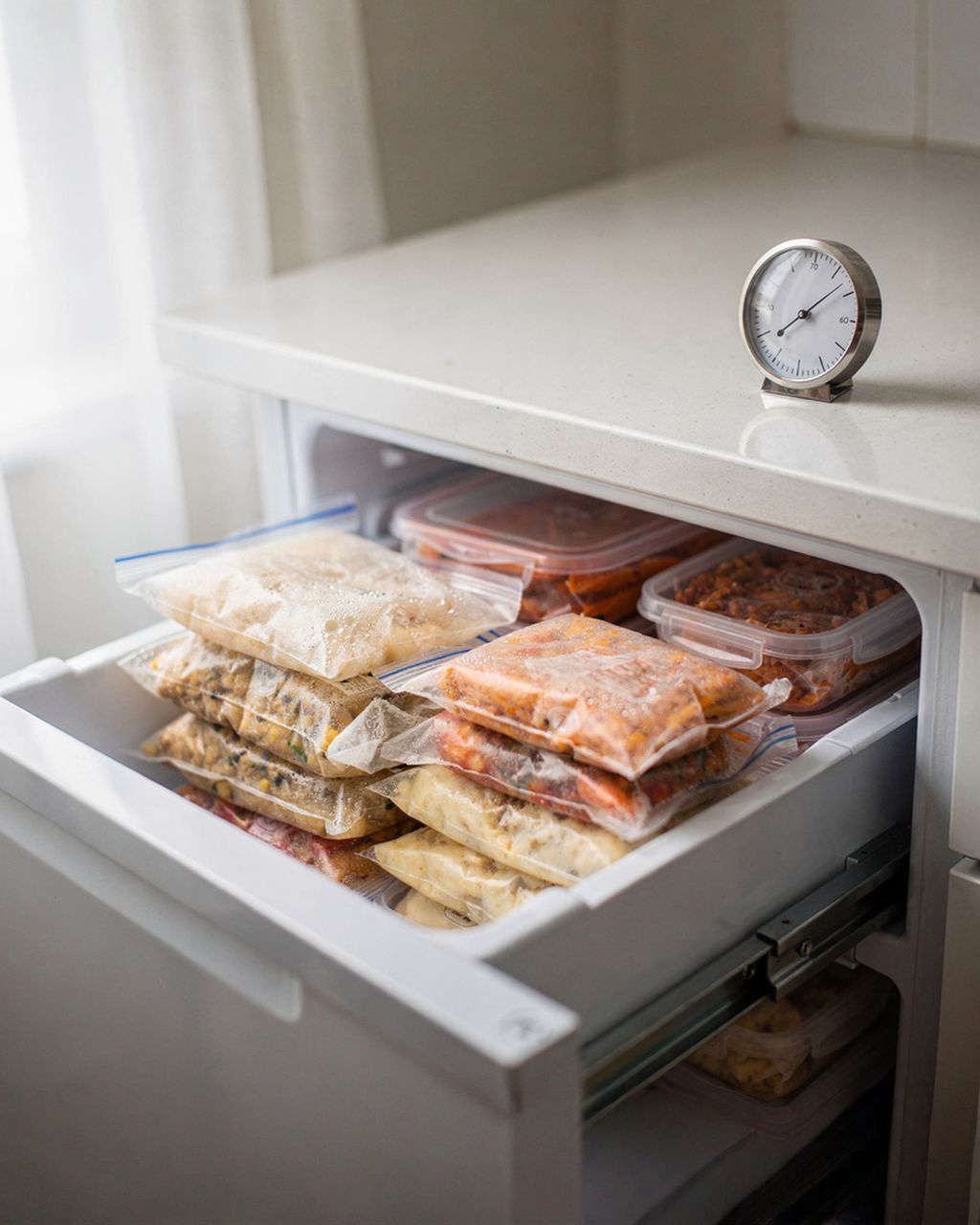
For how to pack food and how long other foods keep, see our overview of storing food in the freezer.
Leave about a tenth of the volume free, because water expands by roughly 9% as it freezes. From a 1-liter carton or plastic bottle, pour off about 1 dl (100 ml); for a half-liter container, around half a deciliter (50 ml) is enough. Don't fill a freezer bag right up to the seal. Press out the air and freeze it lying flat, so the milk spreads out and freezes and thaws faster.
You can, but the foam from thawed milk is usually thinner and collapses faster than foam from fresh milk. Freezing damages the proteins and fat droplets that hold the foam together. Pour thawed milk into coffee warmed, or use it in a latte, where you only need a little foam. For a cappuccino with firm foam, use fresh milk.
You can freeze quark (tvaroh, a Czech fresh curd cheese), and it works well afterward in baking; mascarpone handles freezing less well. Thawed quark is more crumbly and releases some water, so drain it and stir it before using. It suits fillings for buchty (Czech filled sweet yeast buns) or a grated quark pie, but it's less suited to a no-bake cream. Thawed mascarpone turns grainy and separates, so use fresh for tiramisu or cake filling, and put the frozen kind into a warm sauce or batter.
You can, but a frozen tub of yogurt will be as hard as ice rather than creamy like ice cream. Ice cream is creamy because it's churned while it freezes. It's better to blend the yogurt with fruit and freeze it in popsicle molds, or spread it on a baking sheet with fruit and break it into pieces once it's firm. Frozen yogurt cubes are also good in smoothies in place of ice.
One recipe worth heating the oven for, one tip, and one deal from the shop. Nothing else.