Unconventional linzer cookies with pistachios
3:2:1 Linzer Cookie Dough: What the Ratio Means and How to Adapt It for Nuts or No Eggs
Updated Oct 17, 2026
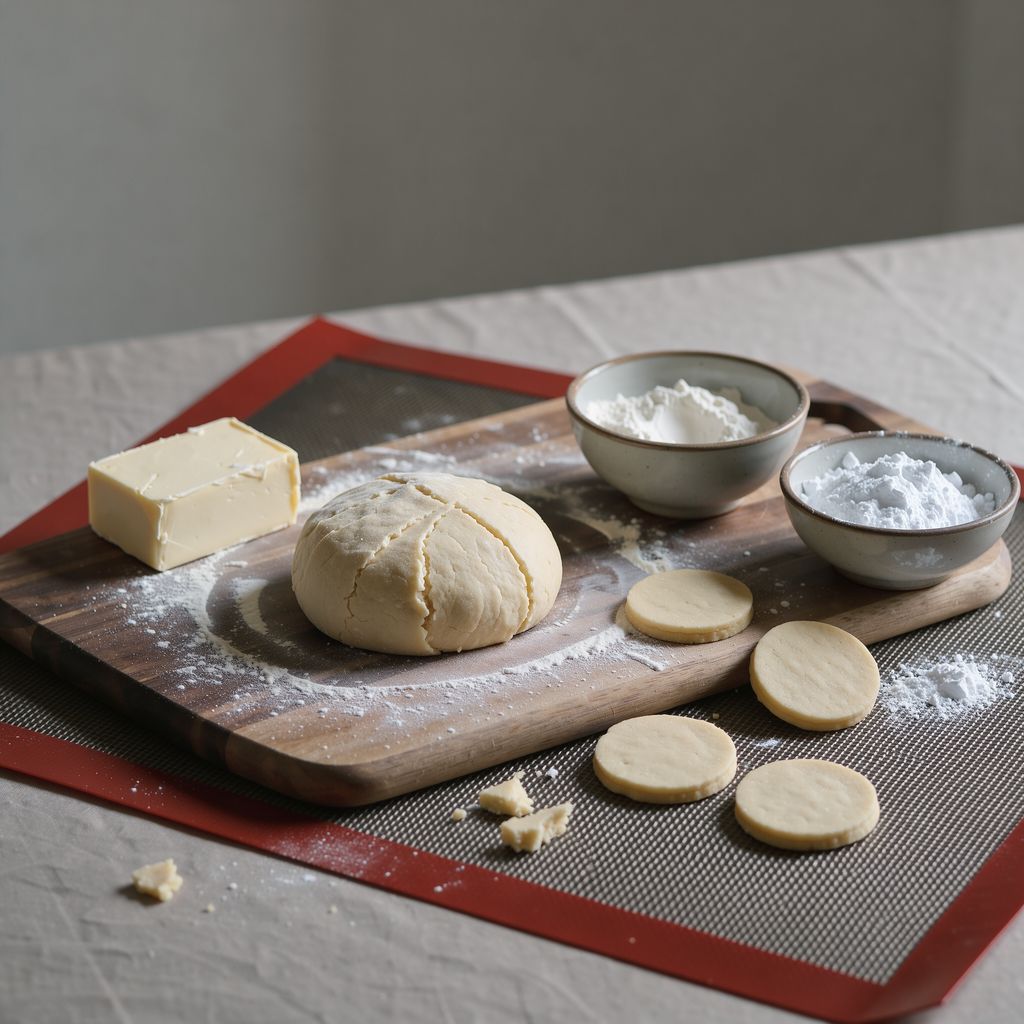
3:2:1 Linzer dough means 3 parts plain flour, 2 parts butter and 1 part icing sugar, all measured by weight, for example 300 g flour, 200 g butter and 100 g sugar. It's a ratio you can rely on: the dough rolls out easily, holds its shape in the oven and bakes up tender and crisp-short. Once you understand what each ingredient does, you can adapt it yourself: add nuts, leave out the egg, or make it more delicate, all without it spreading across the baking sheet.
The 3:2:1 ratio refers to the weight of the ingredients: for every 3 parts flour you add 2 parts butter and 1 part sugar. You choose the size of one part. Most often it's 100 g, which gives you 300 g flour, 200 g butter and 100 g sugar.
3 parts: plain flour. It forms the backbone of the dough.
2 parts: cold butter. It brings tenderness and flavour. The butter is two thirds of the weight of the flour.
1 part: icing sugar. It sweetens and softens. The sugar is a third of the weight of the flour.
It's common to add 1 egg yolk, vanilla and grated lemon zest as well. The yolk isn't part of the ratio, though, and the dough holds together without it. What matters is to weigh, not use cup measures. A cup of flour can weigh 120 g, but just as easily 160 g, depending on how you scoop it, and that throws the whole ratio off.
The ratio works because the dough contains a lot of fat and almost no water, so no strong gluten forms in the flour. Gluten needs water and kneading. The butter coats the flour particles and shields them from the little moisture the dough has, and instead of an elastic network you get a structure that crumbles when you bite it. That's why it's called short dough.
Two thirds butter to flour is the limit where the dough is still rich enough to be tender but still holds its shape. More butter and the dough spreads in the oven; less butter and the cookies turn hard.
Icing sugar dissolves in the dough almost instantly. It leaves no granules that would melt during baking and pull the dough outwards, so the result is fine and delicate. With granulated sugar the cookies come out coarser, crunchier and spread more.
Cold butter and quick handling protect the structure. Warm butter merges with the flour into a greasy mass, the dough turns sticky and the baked cookies tend to be hard.
If your Linzer cookies turn hard, the fat-to-flour ratio is only one of several causes. We cover the others in our article Hard Linzer Cookies: Why They Toughen and How to Make Them Tender.
Scaling Linzer dough is simple: choose the size of one part and multiply it by 3, 2 and 1. Add roughly one egg yolk for every 300 g of flour.
1 part = 50 g: 150 g flour, 100 g butter, 50 g sugar. A small test batch, about one baking sheet.
1 part = 100 g: 300 g flour, 200 g butter, 100 g sugar, 1 yolk. The classic, making about 2–3 baking sheets depending on the size of your cutters.
1 part = 150 g: 450 g flour, 300 g butter, 150 g sugar, 1–2 yolks.
1 part = 250 g: 750 g flour, 500 g butter, 250 g sugar, 2–3 yolks. A batch for the whole Christmas season.
Divide a larger batch into 2–3 balls. A smaller piece chills faster and more evenly in the fridge, and it won't warm up in your hands while you roll it.
Replace no more than a third of the flour with ground nuts, which for the basic batch means 100 g out of 300 g. Keep the butter and sugar the same: 200 g flour, 100 g ground nuts, 200 g butter, 100 g sugar.
Nuts add flavour, but also fat of their own. According to nutrition tables, almonds are roughly 50% fat, hazelnuts around 60% and walnuts around 65%. Nut dough is therefore richer and crumbles more. What to do about it:
Walnuts and hazelnuts are the fattiest, so stick to about a quarter of the flour (75 g) with them, or reduce the butter by 10–20 g.
Almonds can take a full third. Almond flour made from defatted almonds behaves differently from ground almonds and absorbs more moisture; we explain the difference in the article Almond Flour.
Grind the nuts dry and finely. If you blitz them for too long, they release oil and turn into a paste. How to toast and grind them so that doesn't happen is in our article Nuts for Baking.
Let the dough rest for at least an hour, or overnight for nut dough. The fat from the nuts needs to firm up, otherwise the dough tears when you cut out the shapes.
If you add even more nuts, it's no longer Linzer dough but something closer to vanilla crescent dough. Those aren't cut out but shaped by hand. You can learn how in our article Vanilla Crescent Cookies, and the full method is in the vanilla crescent cookies recipe. A ready-made recipe with nuts is these unconventional Linzer cookies with pistachios.
Unconventional linzer cookies with pistachios
Linzer cookies with pistachios: a nut version of the dough
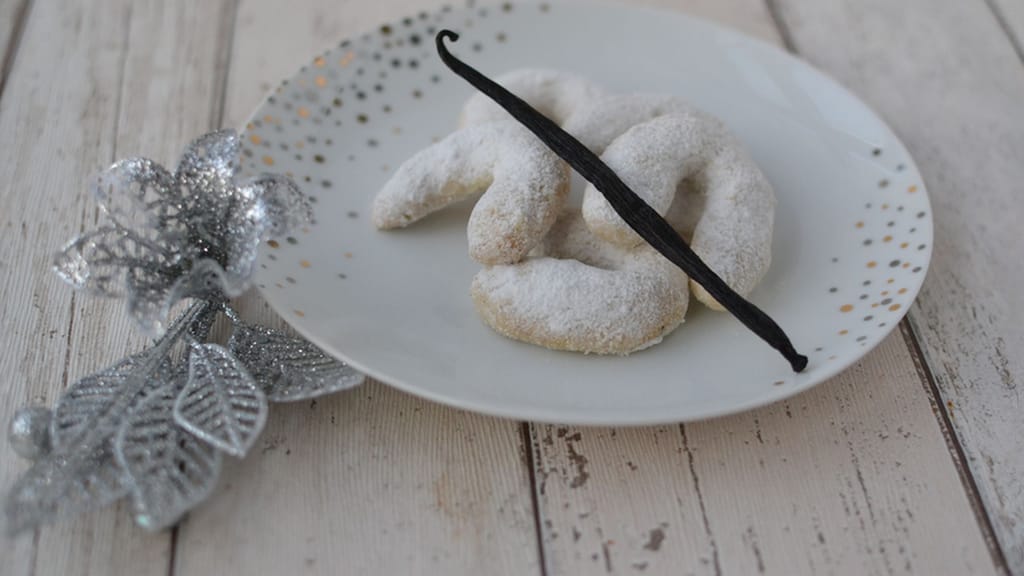
The best christmas cookies? vanilla crescents, of course!
Vanilla crescent cookies: nut dough shaped by hand
You can bake Linzer dough without eggs using the plain 3:2:1 ratio. The yolk isn't essential; it just makes the dough more pliable and easier to roll. Without it the dough is a little more tender and crumbles more, but it holds its shape just as well.
What the yolk does in the dough is explained in our article Linzer Dough and the Egg Yolk. In short: the emulsifiers and fat in the yolk bind the dough and make it smoother. Without eggs, you can make up for it like this:
1–2 tablespoons of cold cream or milk per 300 g of flour. They help the dough come together. Add it a spoonful at a time; any more liquid and gluten starts to form.
1 tablespoon of plant-based drink (oat, almond) if you're baking without dairy too. Then replace the butter with a good-quality block plant-based fat with a high fat content, not a spread.
Let the dough rest for at least 2 hours, or overnight. During that time the flour hydrates evenly and the dough stops breaking at the edges.
If your eggless dough falls apart in the bowl, it's most often because the butter is so hard that it won't blend with the flour. It should be cold, but not rock hard: leave it for 5–10 minutes at room temperature to soften, then knead the dough briefly, only until it comes together. There's a rescue method in our article Crumbly Linzer Dough.
You don't get more delicate Linzer cookies by adding butter, but by weakening the gluten in the dough. More butter mainly makes the dough spread in the oven. This is what works:
Replace 10–15% of the flour with starch. For the basic batch that's 30–45 g of cornstarch or potato starch in place of the same amount of flour. Starch doesn't form gluten, so the cookies then melt on the tongue.
Stick with icing sugar. Some icing sugars contain a small amount of starch as an anti-caking agent, others silicon dioxide (E551). Check the ingredients; either works fine.
You can add only a little more butter. A shift to roughly 3:2.2:1 (220 g butter to 300 g flour) is the upper limit. Beyond that, Linzer cookies lose their sharp edges; more on this in our article Why Linzer Cookies Spread When Baking.
Bake them pale. Every extra minute dries out and firms up the cookies; more on that in the baking section.
And the other way round: if you want firmer Linzer cookies, for example for Linzer banana cookies that get dipped in chocolate, or for large shapes, add 10–20 g more flour and use a whole egg yolk. The dough will be sturdier and won't break when you handle it.
Bake Linzer cookies at 160–170 °C (320–340 °F) with top and bottom heat (around 150–160 °C / 300–320 °F with a fan oven) for roughly 7–10 minutes, depending on thickness. They're done when the edges are barely golden and the tops stay pale. Dough rolled out to 2–3 mm bakes evenly and stays tender after baking.
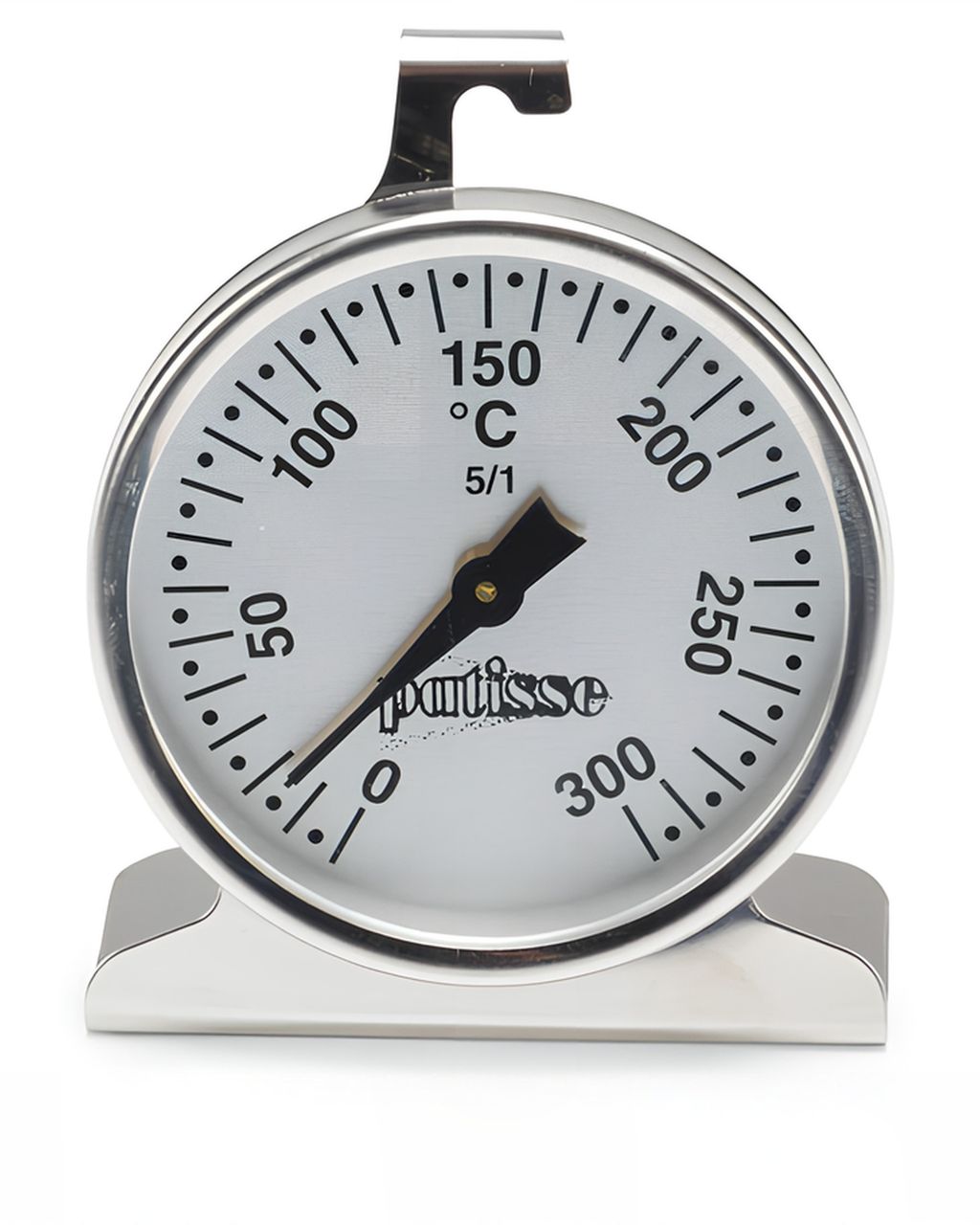
Home ovens often differ from the set temperature by 10–20 °C, and the temperature inside also varies from spot to spot. Linzer cookies are sensitive to this because you bake them briefly and at a low temperature. A few degrees too hot and you get brown edges; a few degrees too cool and the cookies are pale and gummy. An oven thermometer, such as the Patisse oven thermometer, will show you what you really have, and you can adjust the dial once and for all.
What to bake on:
Baking paper is cheap and does the job. It just tends to wave when you bake several trays, and the bottoms bake according to how dark and thick your baking sheet is.
A solid silicone mat lasts for years, but it doesn't let air under the dough, so the bottoms tend to be paler and less crisp.
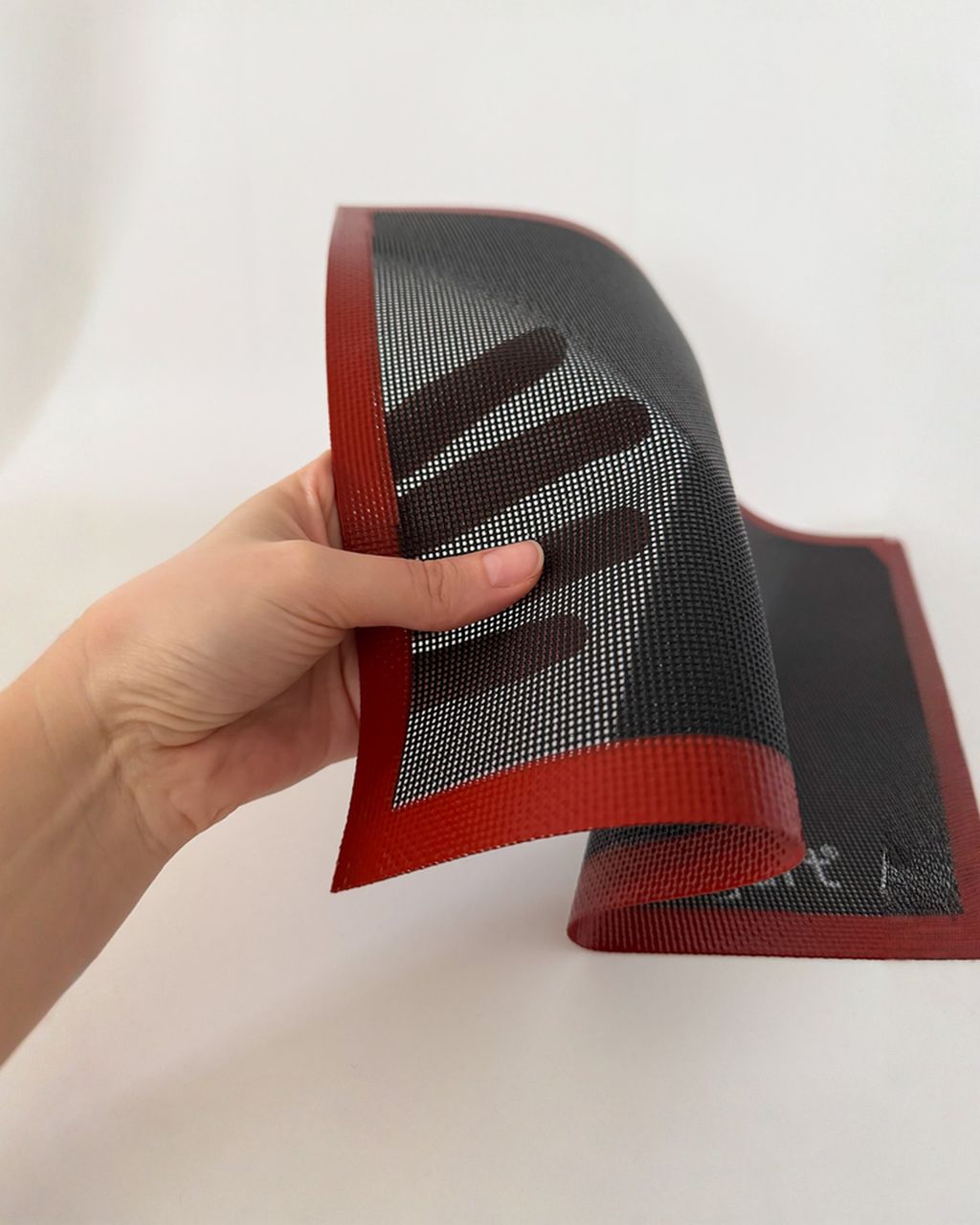
A perforated silicone mat has tiny holes that let hot air flow straight to the bottoms. The cookies bake evenly from below: the bottoms cook through as quickly as the edges and don't brown first. We sell a perforated silicone baking mat from Silikomart. If you bake many trays in a row, it really pays off.
You'll find cutters, moulds and other seasonal supplies in the Christmas cookies category.
The classic filling for Linzer cookies is a thick, tarter jam, most often redcurrant, because it balances the sweet buttery dough. Warm the jam briefly before filling and press it through a sieve so it's smooth and spreads easily. Sandwich the cookies 2–5 days before serving and let them rest in a sealed box so they soften.
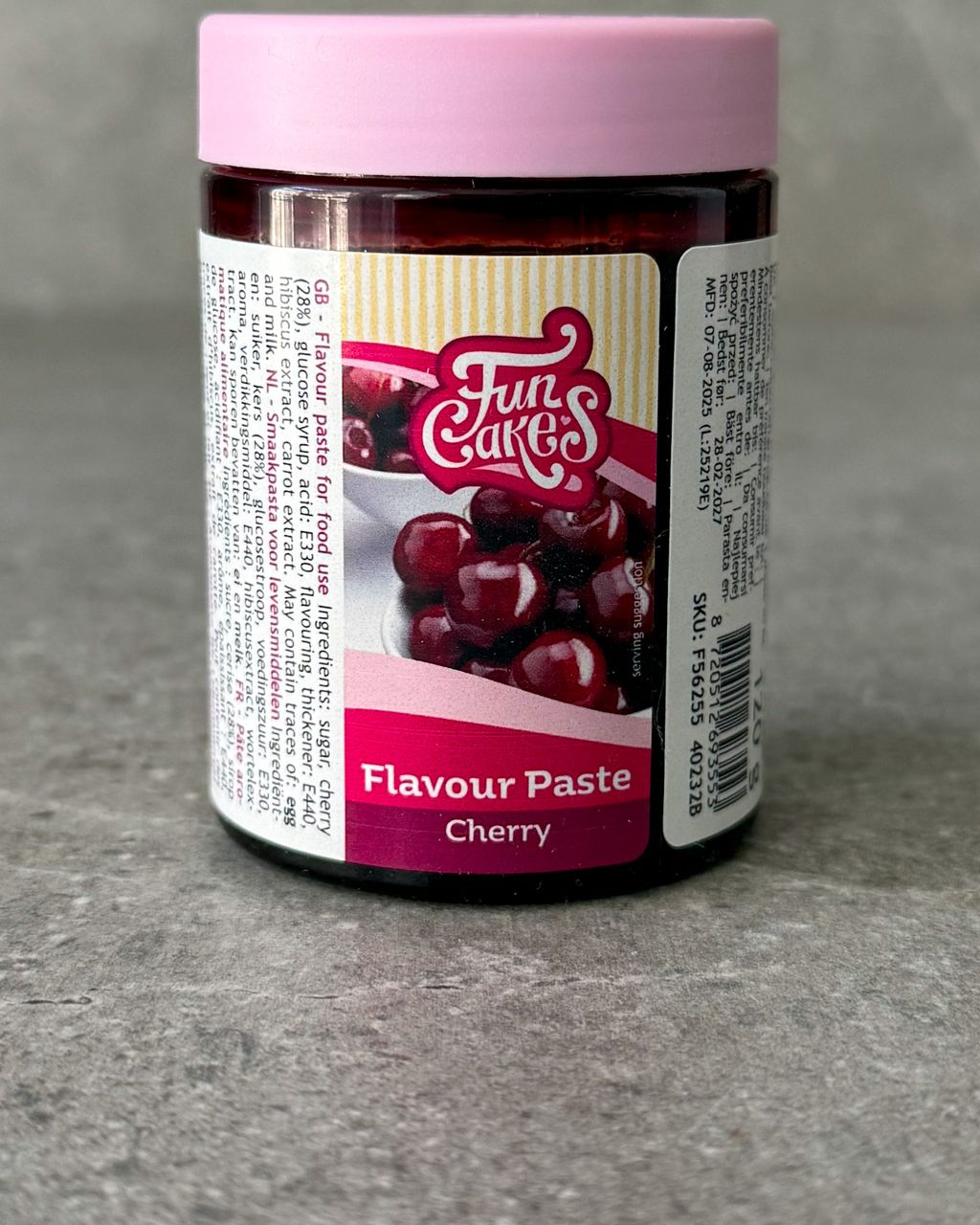
If you want to flavour the jam or make it stand out, mix a flavouring paste into it. FunCakes cherry flavouring paste gives strawberry or redcurrant jam a darker cherry note and a little colour. Start with a small teaspoon per 200 g of jam and add more to taste, as the paste is concentrated. Plain sour cherry jam or a few drops of cherry liqueur work just as well; the paste is mainly quicker and doesn't add liquid.
Which jam to choose and how to apply it so it doesn't leak out is covered in our article What to Fill Linzer Cookies With. How long the cookies keep is in Linzer Cookies: How Long Do They Last. A complete, tested method from dough to sandwiching is in the recipe for classic tender Linzer cookies. For an unconventional variation with caramel inside, try Linzer cookies filled with salted caramel.
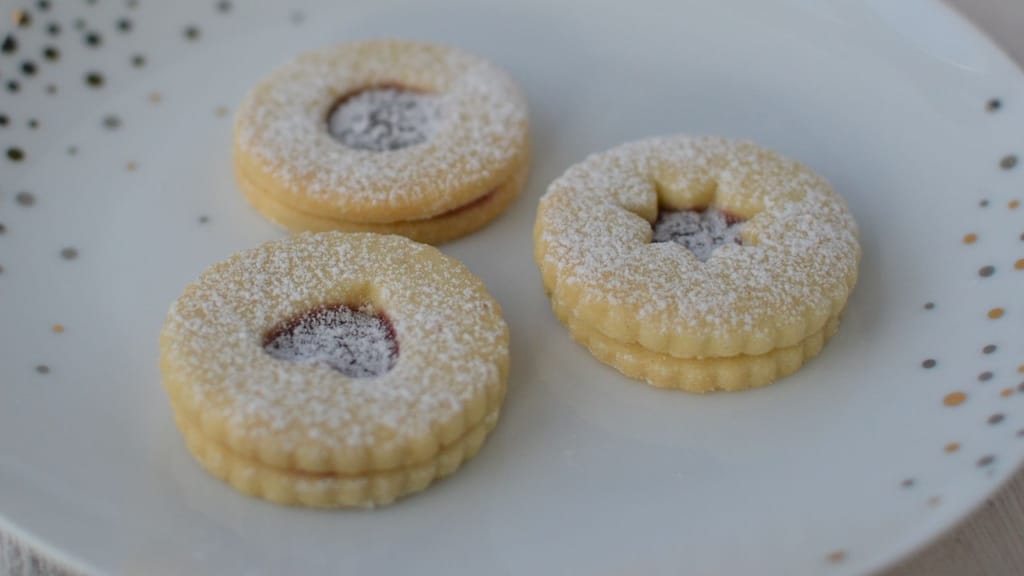
Classic christmas cookies: delicate linzer cookies
Classic tender Linzer cookies made with the 3:2:1 ratio

Linzer cookies filled with salted caramel
Linzer cookies filled with salted caramel
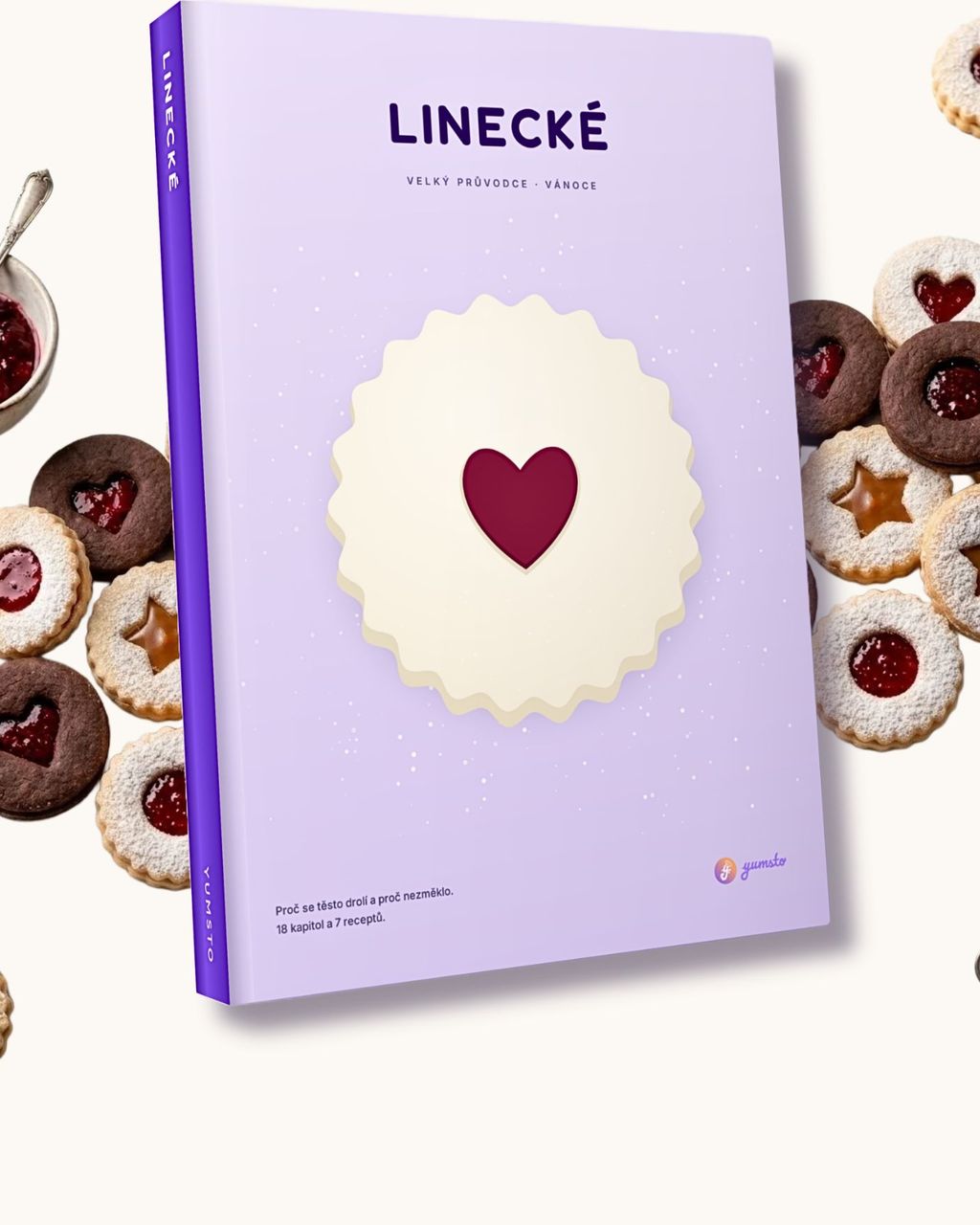
Linzer dough in detail, including crumbling, softening and working with different flours and fats, is covered by the e-book Linzer Cookies: The Big Guide to the Dough (18 chapters). Each chapter tackles one specific problem, such as why the dough crumbles, why the cookies didn't soften, or how the dough behaves with a different flour or fat.
Linzer dough calls for plain wheat flour, ideally a very fine plain flour (Czech hladká 00 extra). It's fine and blends evenly with the butter, so the dough is smooth and rolls out well. With semi-coarse flour the cookies turn out coarser and crumble more, so it isn't suitable for cut-out cookies. You'll find the differences between flour types in our article [Types of Flour and What They're Good For](/cs/articles/druhy-mouky).
You can replace the butter in Linzer dough with a block baking fat, but the cookies will taste different and usually have a worse texture. Butter is about 80–82% fat and has a distinctive flavour that is key to Linzer cookies. If you do swap it, use a block baking fat with a similar fat content, and never a plant-based spread from a tub: it contains more water and the dough turns sticky.
Linzer dough should rest in the fridge for at least 30–60 minutes, wrapped in cling film. During that time the butter firms up and the flour hydrates, so the dough rolls out without sticking and holds its shape in the oven. Dough with nuts or without eggs can happily rest overnight. Before rolling, let it sit at room temperature for 10 minutes, otherwise it cracks.
Yes, raw Linzer dough freezes without any problem for up to 3 months. Wrap it in cling film as a disc 2–3 cm thick, then put it in a freezer bag as well. Thaw it overnight in the fridge, not on the counter, so the butter doesn't start to run. Then work with it just like fresh dough.
You can make gluten-free Linzer dough by replacing the wheat flour with a gluten-free baking blend, because a short, tender dough doesn't need gluten. Use a mix of gluten-free flours, such as rice flour and starch, or a ready-made gluten-free baking mix. Also check the ingredients of your icing sugar, as some contain wheat starch. The dough crumbles more, so it helps to add an egg yolk and roll it out between two sheets of baking paper. Which flours and starches work, and in what proportions, is covered in our article [What to Use Instead of Flour in Gluten-Free Cookies](/cs/articles/cim-nahradit-mouku-v-bezlepkovem-cukrovi).
One recipe worth heating the oven for, one tip, and one deal from the shop. Nothing else.