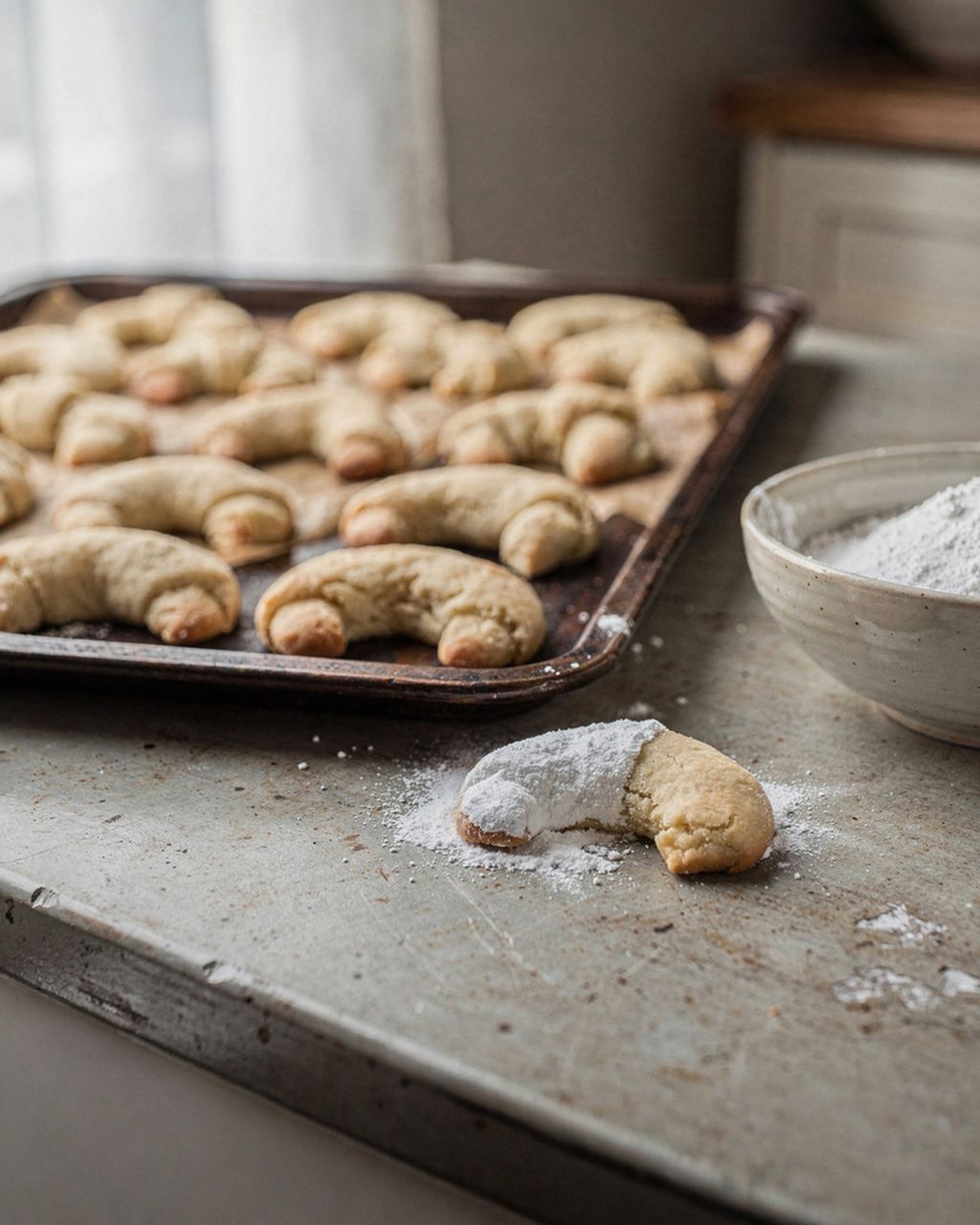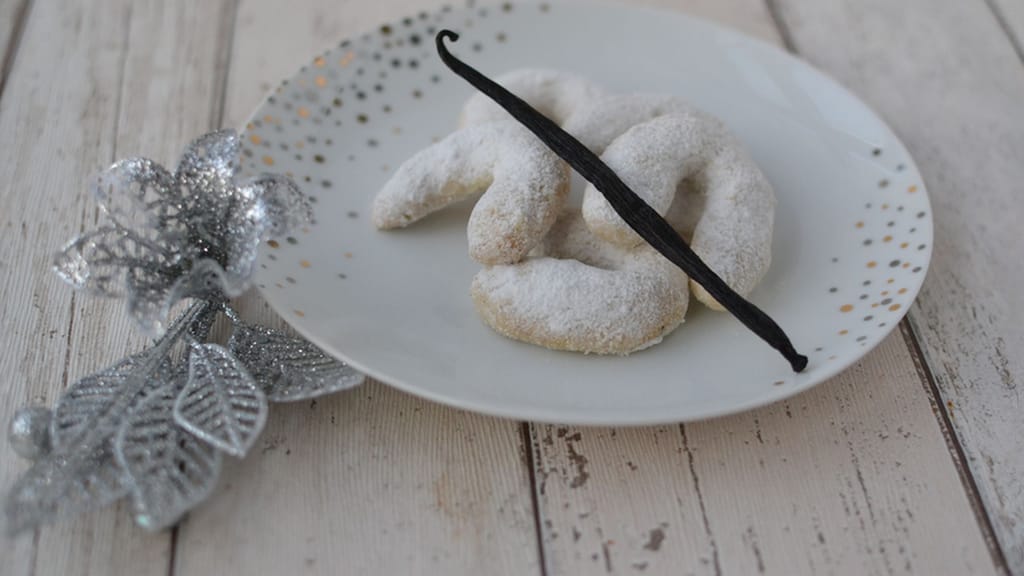
The best christmas cookies? vanilla crescents, of course!
Vanilla Crescent Cookies: Which Nuts and Flour for a Tender, Vanilla-Scented Bake
Updated Oct 17, 2026
Vanilla crescent cookies turn out tender when the dough has plenty of butter relative to flour (roughly 3 parts butter to 4 parts flour), finely ground nuts, at least an hour's rest in the fridge, and a bake at 160–170 °C (320–340 °F) until just pale. They smell of vanilla when you put the seeds of a real vanilla pod into the dough and roll the baked cookies in vanilla sugar that has sat with a pod for at least a week. Below you'll find a comparison of walnuts, hazelnuts, almonds and almond flour, an explanation of why the dough crumbles, and a method for homemade vanilla sugar.
The most tender vanilla crescents are made with walnuts, while almonds give the strongest vanilla aroma. You can choose from four ingredients, and each changes the dough differently:
walnuts: the most fat, the most tender, the most pronounced flavor with a slightly bitter edge,
hazelnuts: nutty, toasted notes and a firmer structure,
almonds: the mildest flavor, so the vanilla stands out most,
almond flour: the finest and palest, but the most prone to breaking.
The difference comes mainly down to fat. According to USDA nutrition data, walnuts have about 65 g of fat per 100 g, hazelnuts roughly 61 g, and almonds around 50 g. The more fat a nut brings, the more it coats the gluten in the flour and the more tender the cookie becomes. At the same time, a nut with a stronger flavor of its own will overpower the vanilla.
The classic recipe uses nuts at about a third of the weight of the flour (around 100 g of nuts to 280 g of plain flour). If you add more, the dough melts better in the mouth but is harder to shape. You'll find a tested base in our recipe for the best vanilla crescent cookies.
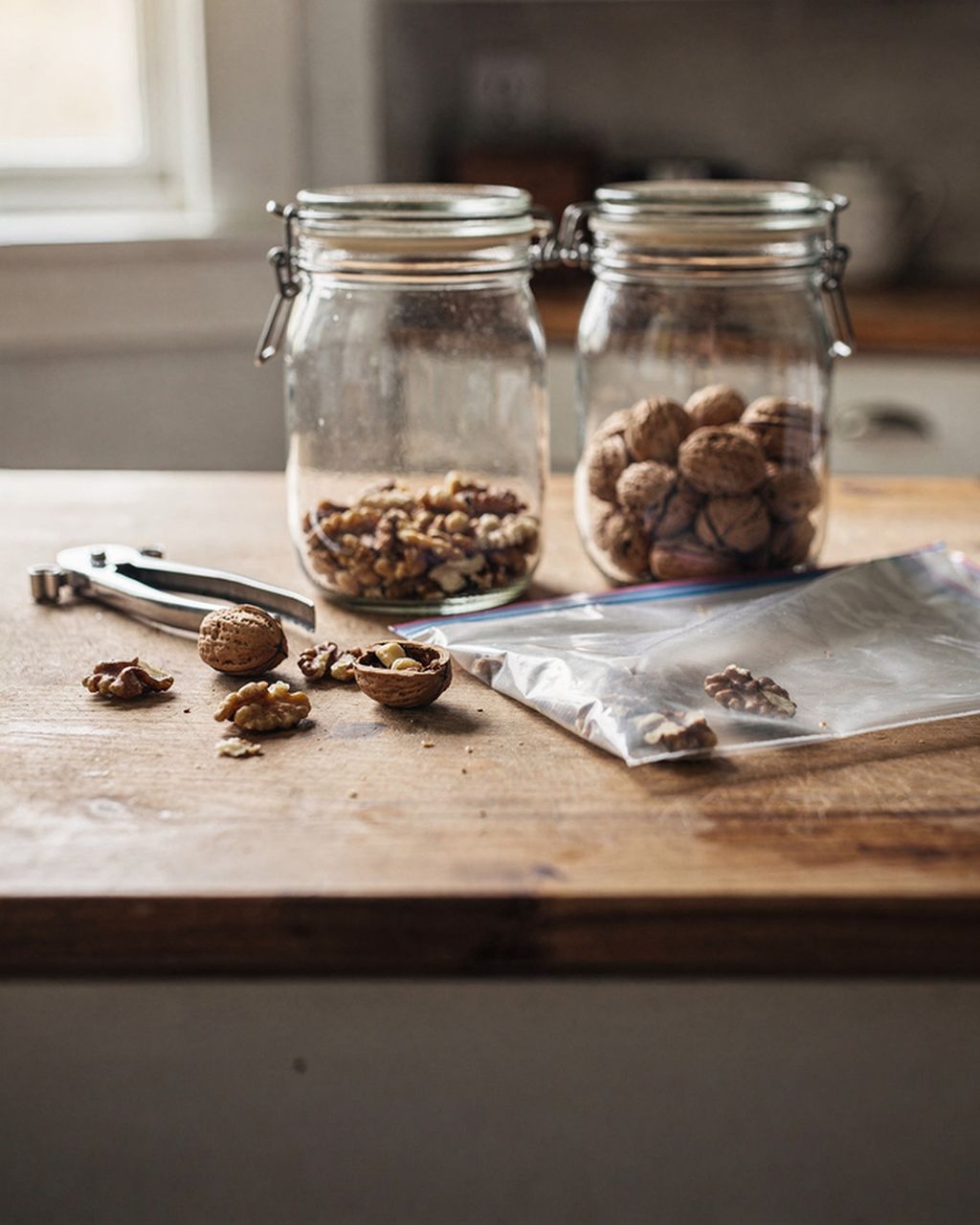
Walnuts give the most tender, almost melt-in-the-mouth crescents with a slightly bitter, "Christmassy" flavor. They have the most fat, and a large part of it is polyunsaturated fatty acids, which go rancid quickly. So buy them fresh, taste them first, and don't grind a stockpile in advance. We cover how to handle them at home in the article how to store nuts so they don't go rancid.
What to watch for: the brown skin is bitter and turns the dough grayish. The paler the dough, the more visible this is.
Grinding: grind in short bursts and in batches. With long grinding, walnuts release their oil and you end up with a paste instead of a powder.
Once toasted, hazelnuts give the strongest roasted, nutty flavor. The crescents are a bit firmer and break less, so they're easier to coat.
Toasting: about 10–12 minutes at 160 °C (320 °F), until they smell fragrant. While still warm, rub them in a tea towel and most of the skins will fall off. Let them cool completely before grinding, or they'll release oil.
Flavor: toasted hazelnut is strong and the vanilla gets lost in it. If you want the cookie to smell mainly of vanilla, mix the hazelnuts half and half with almonds.
Almonds give the most delicate crescents, and the vanilla stands out most because almonds themselves taste only mild. They have the least fat of these three nuts, so the dough is slightly firmer and holds its shape better.
Blanched or unblanched? Blanched (skinned) almonds give a pale cookie with no dark flecks. Unblanched ones taste stronger, and the cookie is speckled.
Almond flour is ground so finely that it almost disappears in the dough. The crescents are smooth, pale and delicate, but they also break the most. Some almond flours are partly defatted. Dough made with such flour is drier and may need an extra egg yolk.
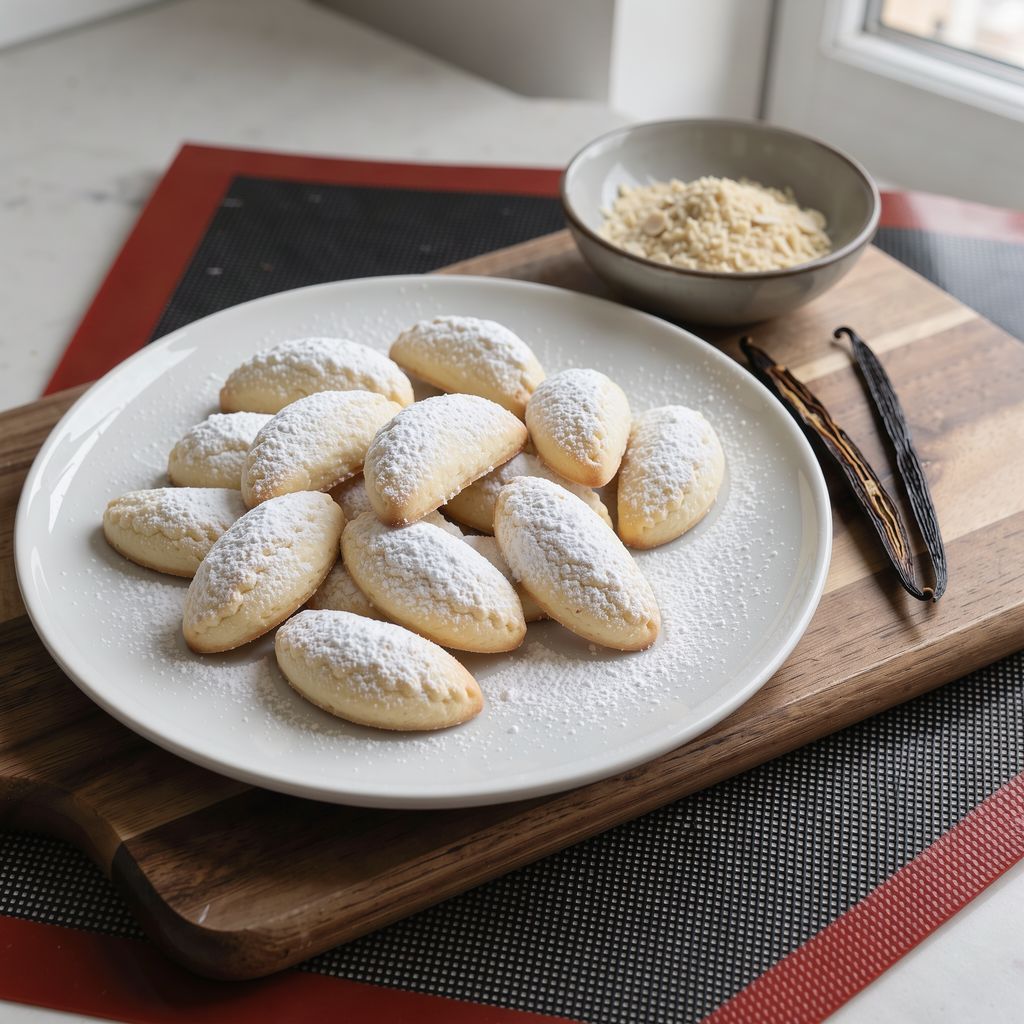
The best christmas cookies? vanilla crescents, of course!
Recipe for the best vanilla crescent cookies with nuts and real vanilla
For tender vanilla crescents, use plain, pale, finely milled flour and roughly 75 g of butter per 100 g of flour (about 210 g to 280 g), powdered sugar, and optionally one egg yolk. A tender cookie melts in the mouth, while a crumbly one falls apart in your hand. What decides it is the ratio of butter to flour and what holds the dough together.
Flour: plain, pale, finely milled (Czech type 00 or T530; the closest equivalent is all-purpose flour). Coarser flour has a larger grain, so the cookie turns sandy and holds its shape less well.
Butter: always real butter with at least 80% fat. Hydrogenated fat lacks its flavor, and the cookie would otherwise melt away.
Sugar in the dough: powdered, not granulated. Granulated sugar crystals won't dissolve in such a dry dough, and the cookie turns grainy.
Egg yolk (optional): one yolk per 280 g of flour. It helps the dough hold together without getting tough. It's handy when you bake with almond flour or if your crescents keep breaking.
Why the dough crumbles: either it has too many nuts and too little flour, or the butter is too cold and hasn't combined with the flour. Work the dough quickly with your hands, but all the way until it's smooth and cohesive. Don't knead it for long, so the butter doesn't warm up and start to sweat out of the dough.
Butter dough with nuts behaves much like linzer dough. You'll find more rescue tricks in the article Crumbly linzer dough: why it happens and how to save it.
Chill the dough for at least 1 hour in the fridge, ideally overnight. In that time the flour absorbs moisture, the butter firms up, and the nuts bind with the dough. The crescents are then easier to shape and won't spread in the oven.
Wrap the dough in plastic wrap and shape it into a flat block or a log, not a ball. It chills more evenly.
Let it stand in the kitchen for 10–15 minutes before shaping. Completely cold dough cracks under your fingers.
While shaping, take out only part of the dough and keep the rest in the fridge. Warm hands soften the butter, and the crescents lose their sharp tips.
You can put the shaped crescents on the baking sheet back in the fridge for another 15 minutes. They'll hold their shape best in the oven.
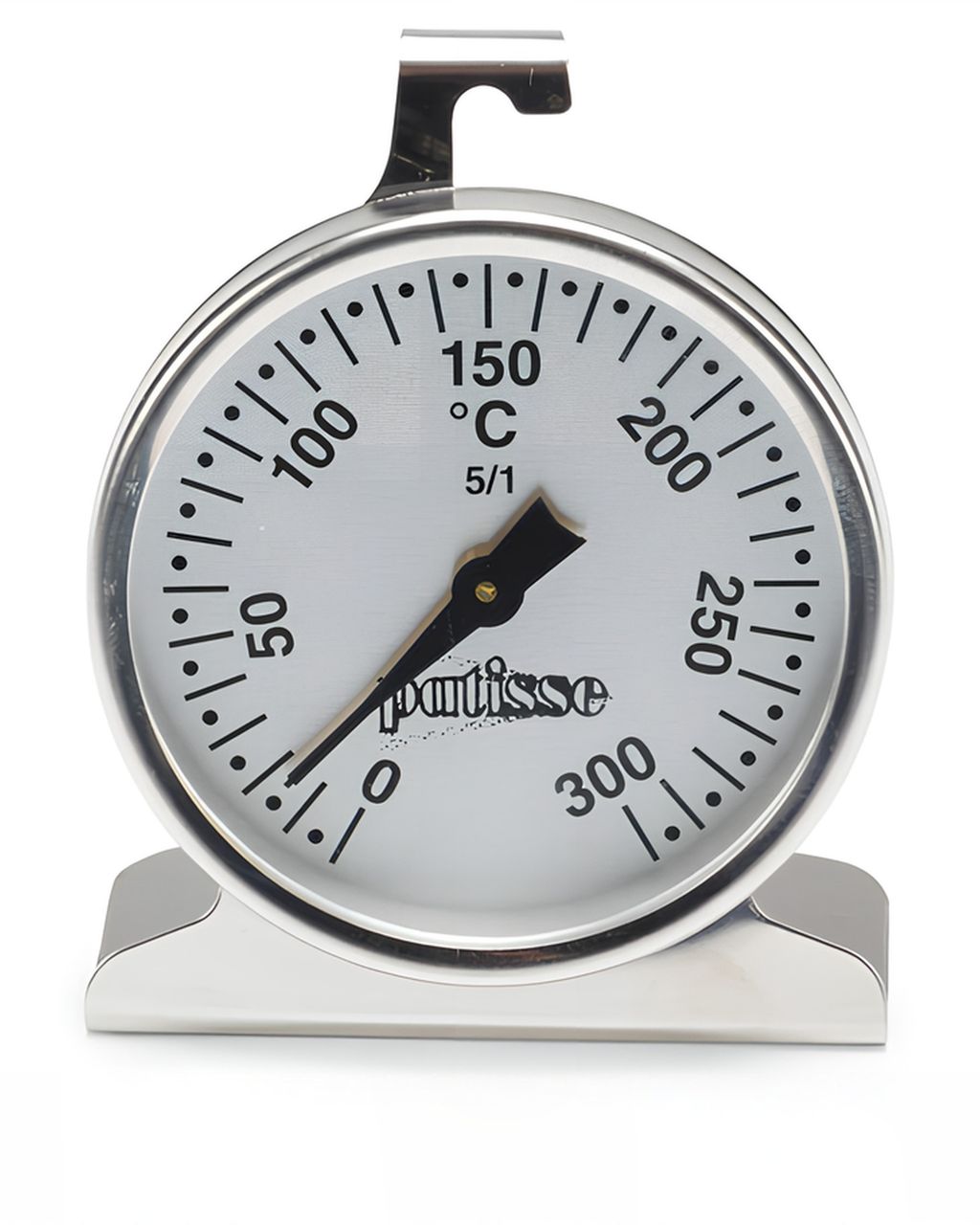
Bake vanilla crescent cookies at 160–170 °C (320–340 °F), or 150–160 °C (300–320 °F) with a fan oven, for roughly 10–14 minutes, depending on size. They should stay pale, with only the bottoms and tips turning lightly golden. If they brown all over, the toasted nuts and caramelized sugar overpower the vanilla and the cookie is harder.
At such a low temperature, a few degrees make a big difference, and home ovens often show a different temperature from what's really inside. Put a separate Patisse oven thermometer in the oven and adjust the dial once based on it. Then you'll know what to set your oven to for other cookies as well.
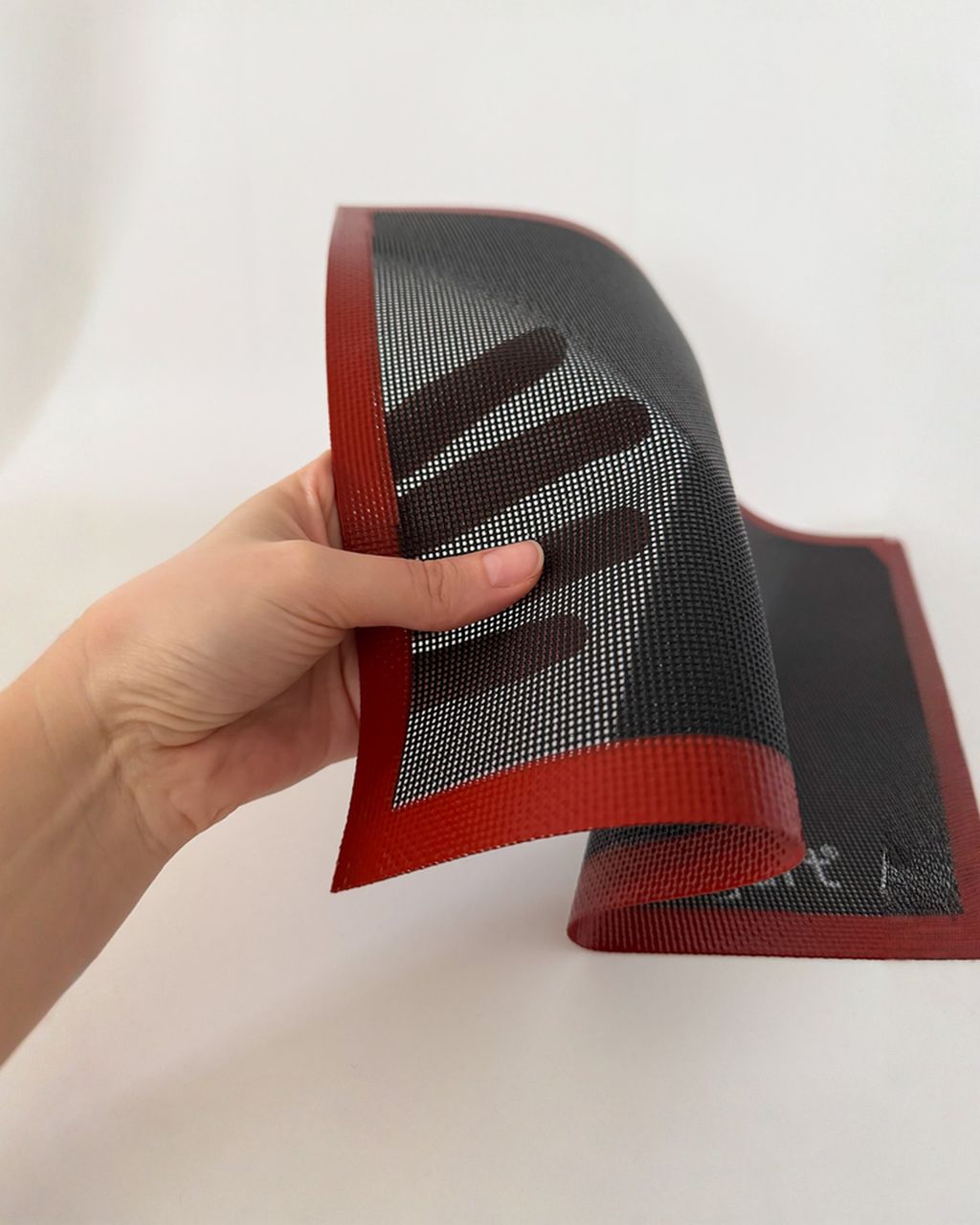
On a plain baking sheet, the bottom bakes faster than the top. On a perforated silicone mat, hot air flows under the crescents too, so they turn golden evenly, the bottoms don't burn, and you don't need to grease or line the sheet. Ordinary baking paper works just as well, but keep an eye on the bottoms.
After baking, leave the crescents on the sheet for 2–3 minutes before you move them. Hot, they're so tender that they break even under your fingers. We explain how to coat them without breaking them in the article Why vanilla crescents break when you roll them in sugar.
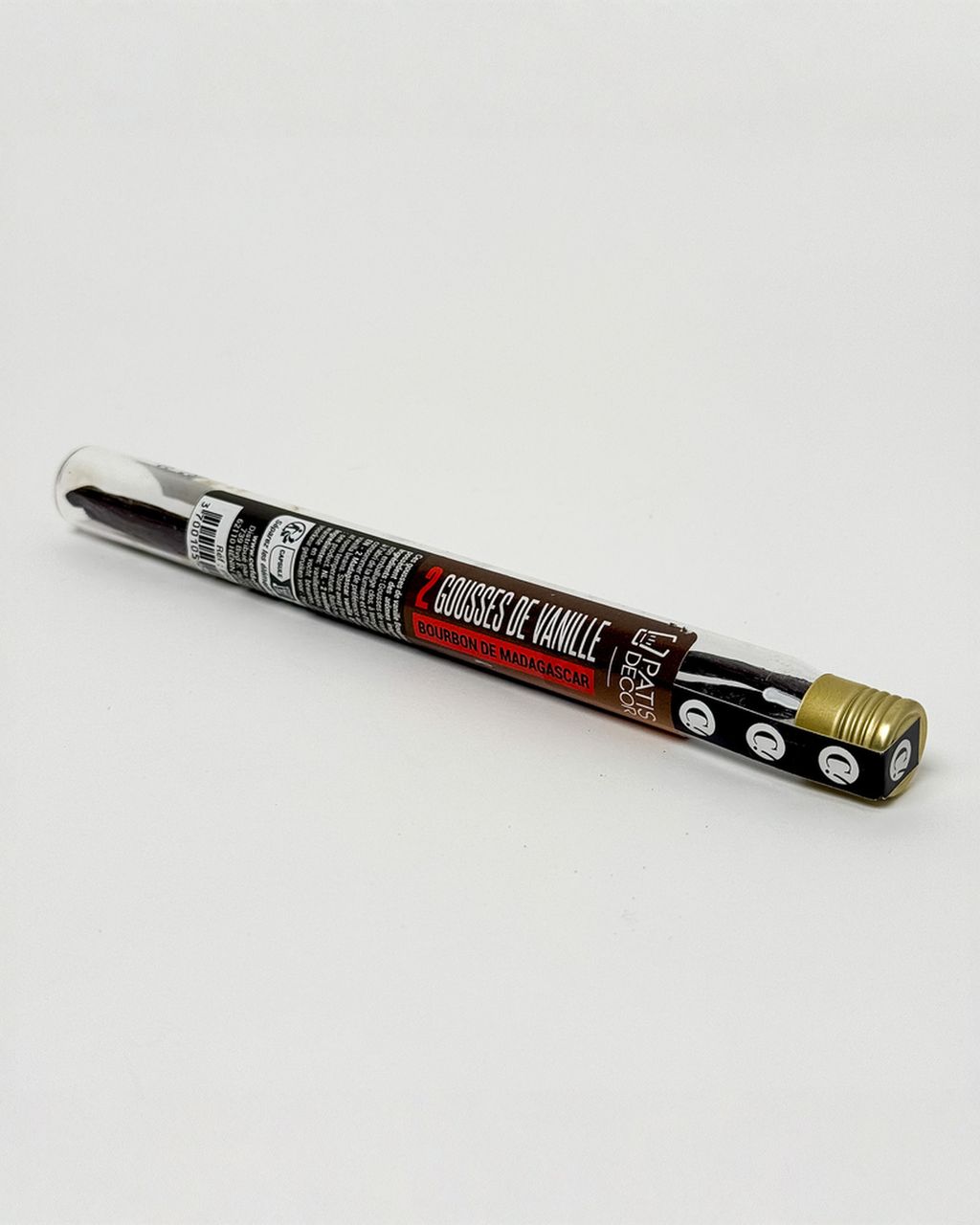
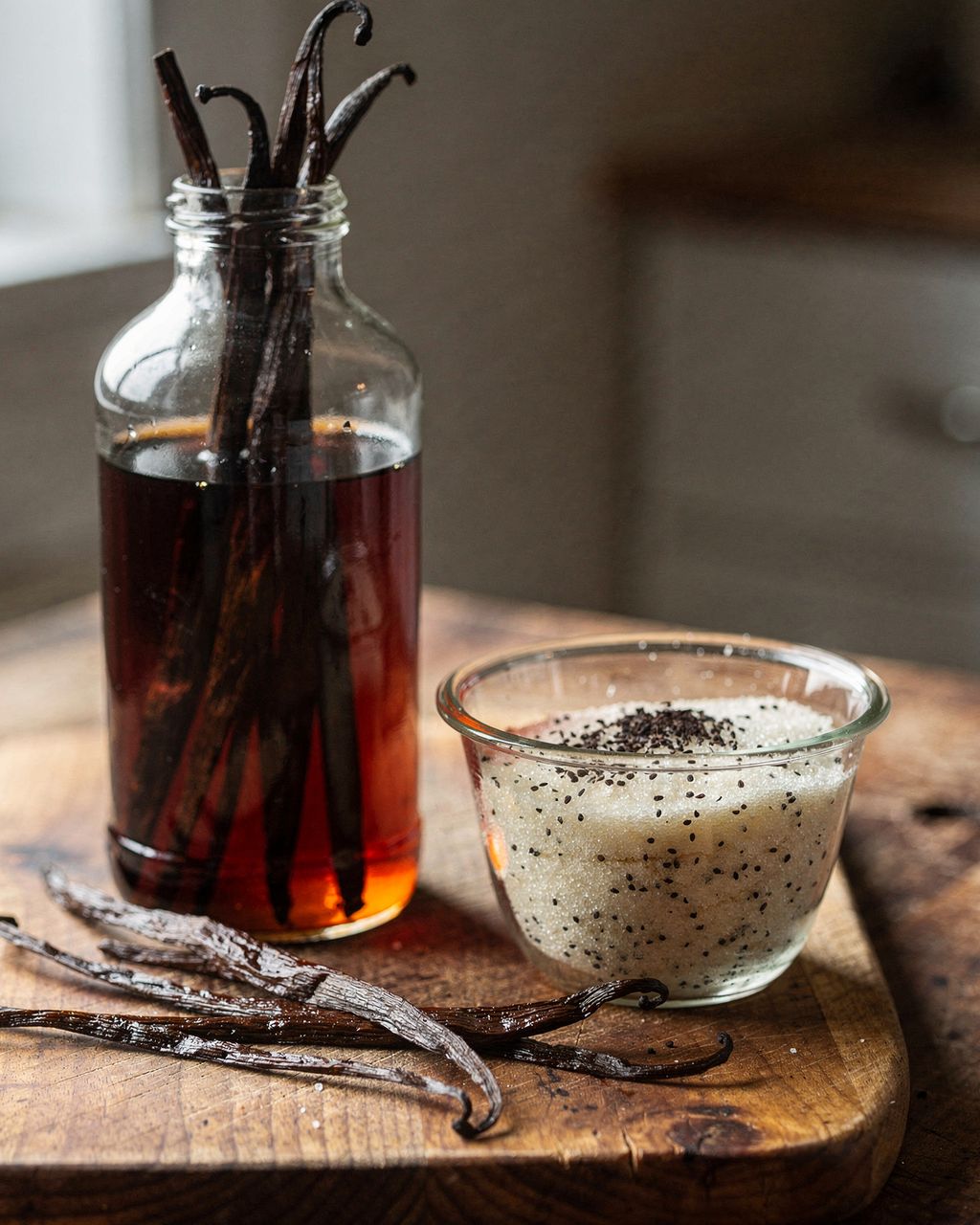
To make real vanilla sugar, mix powdered sugar with the seeds from a vanilla pod, add the scraped pod too, and let the sugar rest in a closed jar for at least a week, ideally two. The little sachet from the shop is mostly vanillin sugar, meaning sugar with the aroma compound vanillin and none of the other notes of real vanilla. You can tell vanilla sugar made with real vanilla by the name and ingredients on the package. On crescents, where sugar is the main flavor, you'll notice the difference. We write more about making it at home in the article Homemade vanilla extract and vanilla sugar.
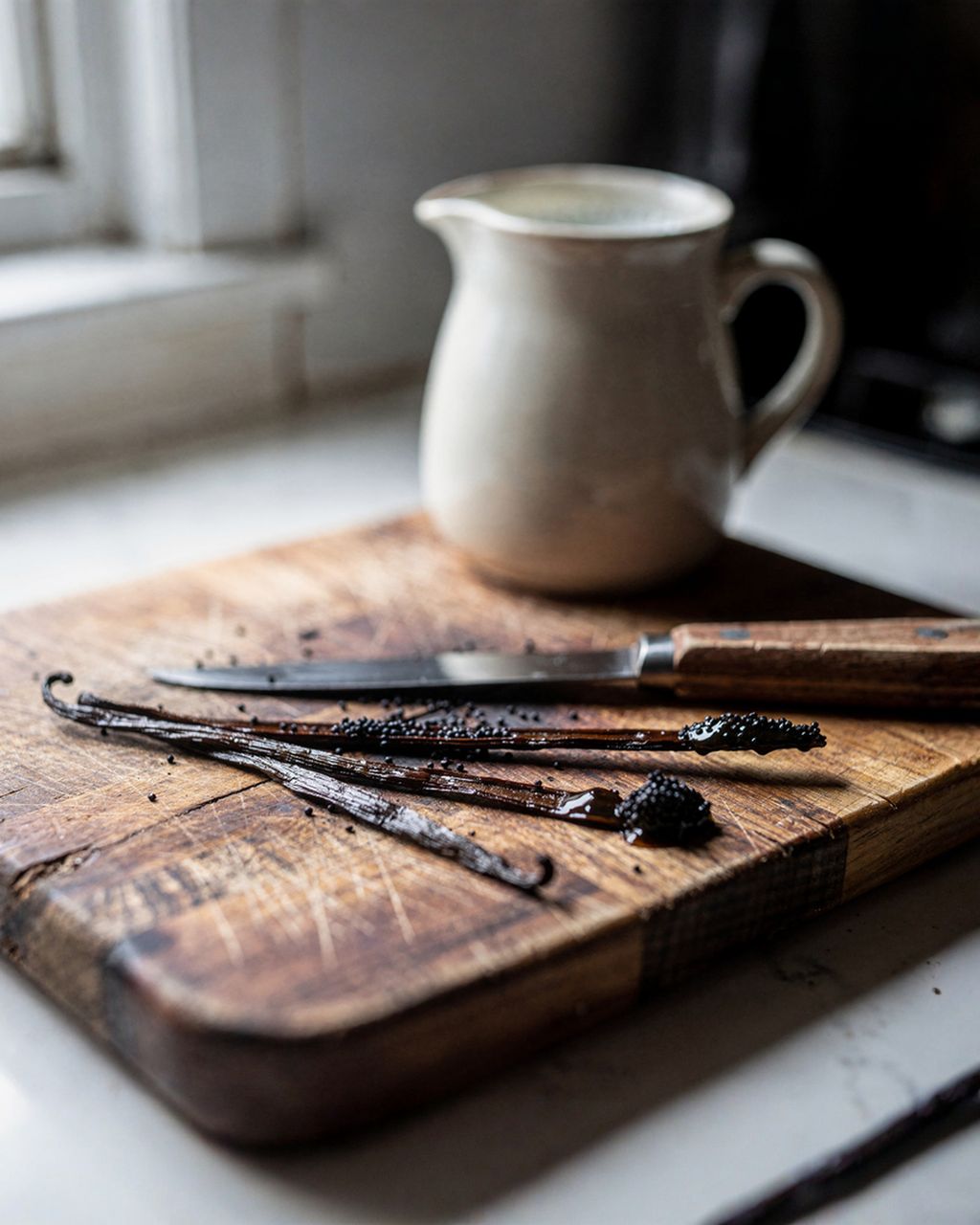
Slit the pod lengthwise and scrape out the seeds with the back of a knife.
Rub the seeds into 250 g of powdered sugar. The best way to break them up is to press them against the side of the bowl with a spoon, so no clumps remain in the sugar.
Cut the scraped pod into pieces and push them into the sugar.
Close the jar tightly and leave it in a dry place for at least a week, ideally two. Shake it now and then.
Before coating, sift the sugar and remove the pod pieces.
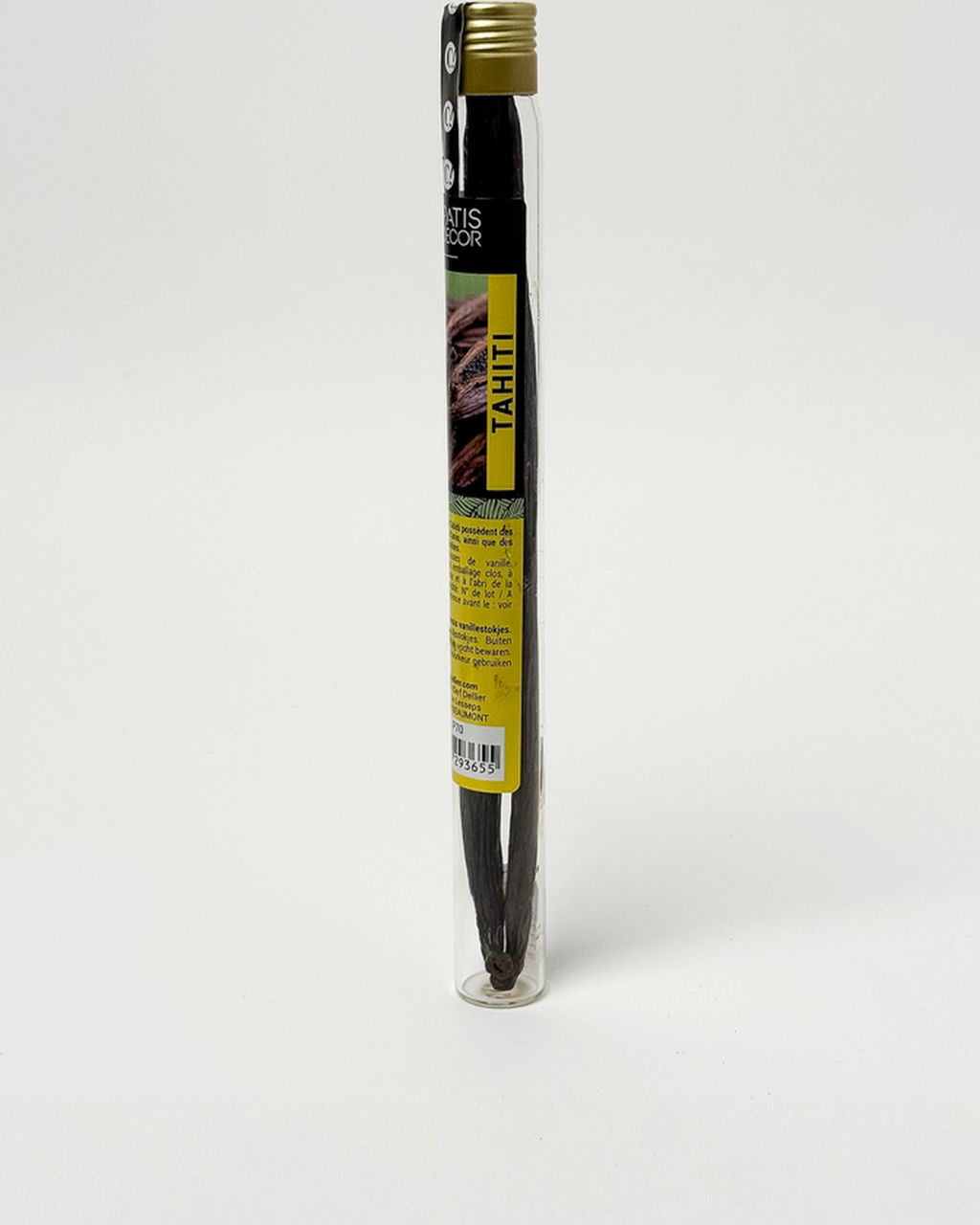
That way, each pod gives you seeds for either the dough or the sugar. For full vanilla flavor, count on two pods per batch: one for the dough (mix the seeds into the butter) and the other for the coating sugar.
Which pod to choose: Madagascar Bourbon vanilla (Vanilla planifolia) has more vanillin, according to available analyses, and tastes classic, sweet and creamy. That's the flavor you expect from Christmas crescents. Tahitian vanilla (Vanilla tahitensis) has less vanillin and more floral and fruity notes reminiscent of cherry or anise. Bourbon is the traditional choice for crescents, and Tahitian is an interesting variation with almonds. You'll find a comparison of the types in the article Vanilla pods: types, prices and how to use them, and a selection of pods and other vanilla ingredients on the vanilla page.
In an airtight tin at room temperature, vanilla crescent cookies keep for 2–3 weeks. In the freezer they hold their quality for several months (USDA says up to 8–12). Both timeframes refer to flavor and tenderness, not safety. Store them in a metal or glass tin in a cool place, not in the fridge, where they would turn soft and absorb odors. After thawing, roll them in vanilla sugar again.
Yes, you can replace the nuts in vanilla crescent cookies with the same weight of plain (all-purpose) flour. The cookies will be firmer and will melt in the mouth a little less. An extra egg yolk and a few more grams of butter bring the tenderness back. If someone has a nut allergy, watch out for almond flour too, since almonds are an allergen.
Let the scraped vanilla pod dry out and grind it with sugar for other cookies, or simmer it in milk for pudding or custard. It still has plenty of aroma, so don't throw it away.
Yes, you can use vanilla paste (depending on the brand, 1 teaspoon to 1 tablespoon per pod) or extract instead of a pod in vanilla crescent cookies, but use extract only in the dough, not in the coating sugar. For paste, follow the instructions on the package. Extract would make the sugar damp and clumpy, so for rolling always use dry sugar with vanilla seeds or a pod.
Vanilla crescent cookies most often turn out hard because they were baked too long or at too high a temperature, so the sugar caramelized. The other cause is overworking the dough: gluten develops in the flour and the dough toughens. Bake them to a pale golden color at 160–170 °C (320–340 °F) and bring the dough together only briefly.
One recipe worth heating the oven for, one tip, and one deal from the shop. Nothing else.