Classic christmas cookies: delicate linzer cookies
Linzer Banana Cookies: How to Shape, Sandwich and Dip Them in Chocolate
Updated Oct 17, 2026
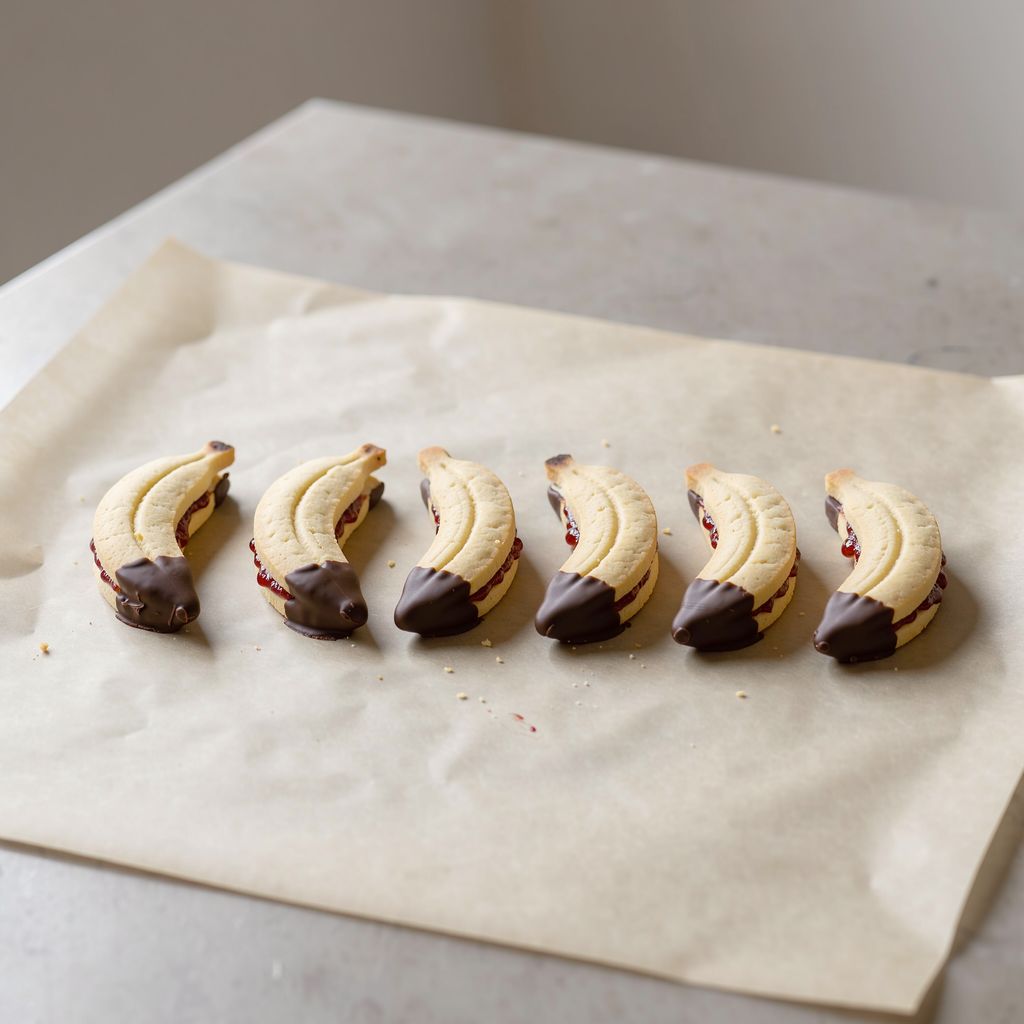
Linzer banana cookies come together in three steps: shape halves of identical length and thickness, sandwich them once cool with a thin layer of thick filling, and dip just the ends, about 1–1.5 cm (½ in), in tempered chocolate. Most failures happen at the points between those steps: halves that don't match up, filling that leaks or turns the dough soggy, chocolate that runs onto the tray and dries dull and grey. Here's how to avoid all of that.
Use a classic Linzer dough in a 3 : 2 : 1 ratio (flour : butter : sugar) with an egg yolk, chilled for at least 1 hour. The cookie is thin and curved, so the dough has to be firm and not sticky. Soft dough tears at the ends when you shape it and spreads into a flat disc in the oven.
Cold butter, cut into cubes. Work the dough only briefly so the butter doesn't melt in your hands.
Icing (powdered) sugar, not granulated. Crystals in such a thin cookie burst and leave speckles on the surface.
Chill for 1–2 hours in the fridge, wrapped in cling film. While you shape, keep the rest of the dough cold and take it out in portions.
You'll find the base in the recipe for classic tender Linzer dough. For why only the yolk goes into the dough, see Linzer Dough and the Egg Yolk, and for what to do if your dough crumbles while shaping, read Crumbly Linzer Dough. If you want to know why dough crumbles, turns hard or spreads, it's all in the e-book Linzer Cookies — The Complete Guide to the Dough.
Classic christmas cookies: delicate linzer cookies
Classic Tender Linzer Dough: The Base for Linzer Banana Cookies
The halves will match if you roll the dough into ropes of the same diameter and cut them to the same length with a ruler. You sandwich the halves in pairs, so any difference in length or thickness shows. You have three options: a cookie press, hand-rolled ropes, or a creamed dough piped from a bag.
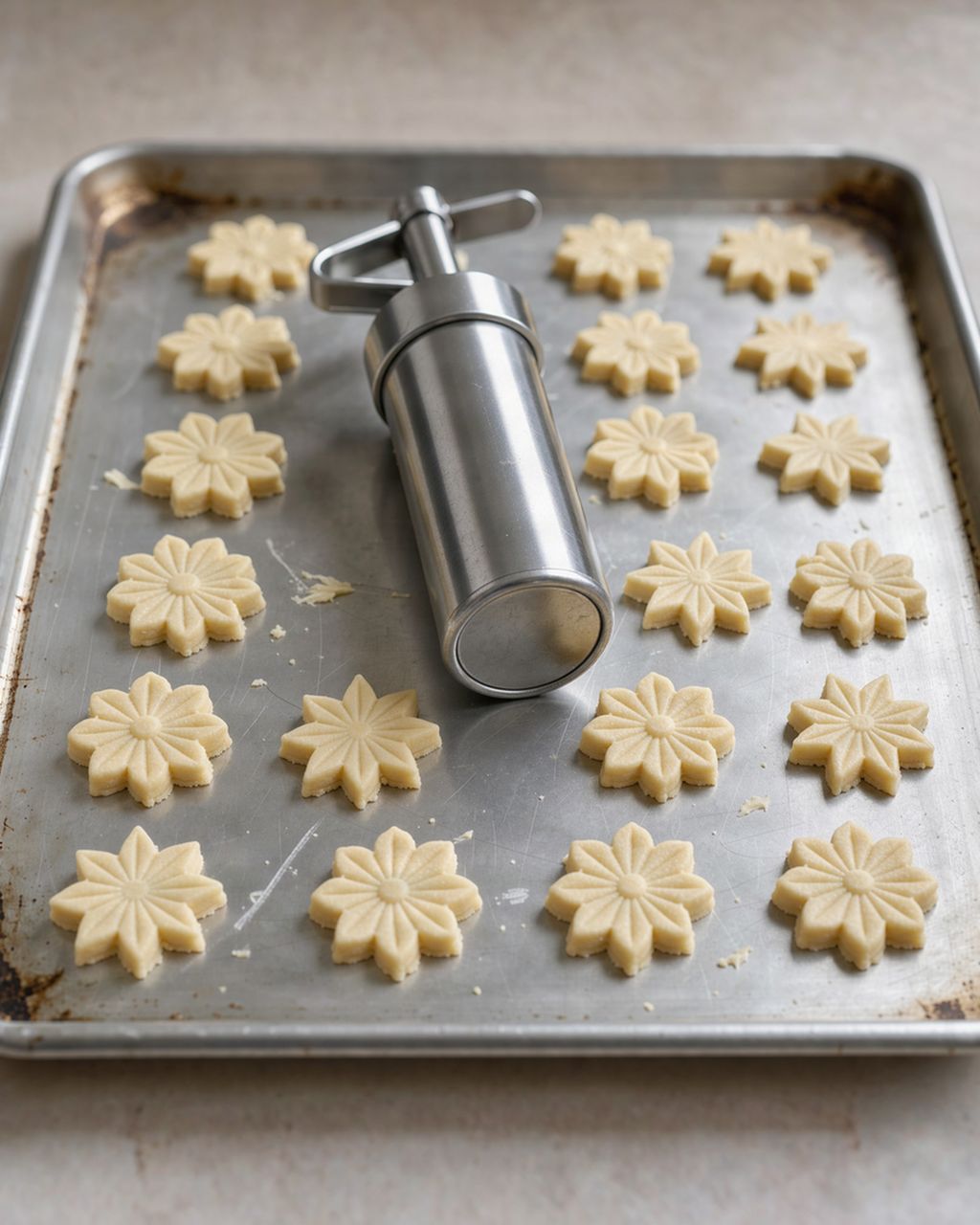
Cookie press (a mincer attachment) with a banana-cookie profile. Press out a long strip, lay it on the tray and cut it up. This is the fastest method and gives the most uniform halves. The dough must be chilled but not rock-hard, or the press will jam.
By hand: ropes about 1 cm in diameter, cut into pieces 5–6 cm long, with the ends slightly tapered and gently curved into an arc. It helps to weigh: a piece of 6–7 g makes one half.
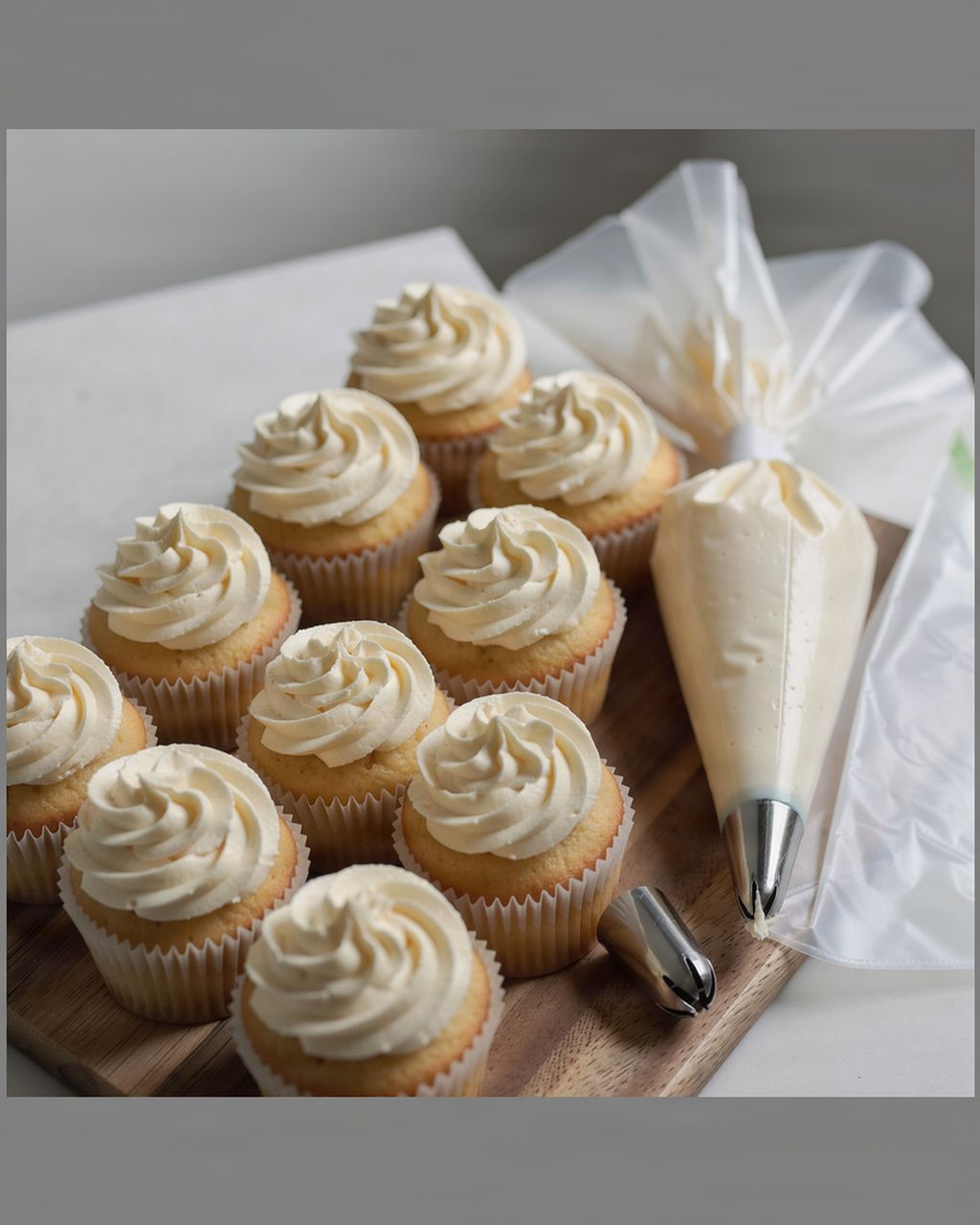
Creamed dough piped from a bag with a star nozzle. It's softer and more delicate, but needs a different ratio of ingredients (more butter, often with egg white), and you have to chill it before baking so it keeps its ridges.
A few things that apply to all three methods:
Always an even number. Count the halves on the tray before it goes into the oven.
Bend gently, and on the tray. If you move a finished curve, it changes shape and the halves won't fit together.
Neaten the ends. Trim frayed ends with a knife, since you'll be dipping them and the chocolate will show every uneven edge.
Bake Linzer banana cookies at 160–170 °C (320–340 °F), conventional (top and bottom heat), for 8–10 minutes, until only the ends begin to turn lightly golden. They're thin, so they burn faster than cut-out Linzer cookies. One extra minute shows in both colour and flavour.
Put the tray of shaped cookies in the fridge for 10 minutes before baking. They'll hold their shape and ridges.
Bake one tray at a time on the middle shelf. Check the temperature with an oven thermometer, as the oven display is often off by 10–20 °C.
After baking, let them set on the tray for 5 minutes before moving them. A warm cookie breaks.
If the shape spreads in the oven, the causes are summed up in Why Linzer Cookies Spread When Baking.
Sandwich the cookies with a thin layer of thick filling and only once the halves are completely cool. Runny jam and warm halves are the two most common reasons for filling oozing out the sides and the dough turning to mush.
Thicken the jam. Simmer redcurrant or strawberry jam over low heat for 3–5 minutes, until a drop on a cold saucer doesn't run. Press it through a sieve so there are no seeds in the thin layer. Spread it lukewarm, not hot.
A little goes a long way. About ¼ teaspoon per cookie, spread on the flat side of one half and leaving a little space before the edge. When you press the second half on, it spreads by itself.
Thicker alternatives: plum butter (povidla), nougat or cooled ganache. Jam and plum butter soften the cookie slightly and evenly, while nougat and ganache leave it crisper.
Let the filling set for 1–2 hours at room temperature before dipping. Otherwise the halves slide apart when you dip them in chocolate.
For which jam suits Linzer cookies and why, see What to Fill Linzer Cookies With.
For dipping the ends of Linzer banana cookies, the best choice is real couverture (chocolate with a higher proportion of cocoa butter), because it's fluid and thin, and once tempered it sets glossy and snappy. You have three options, each with its own merits:
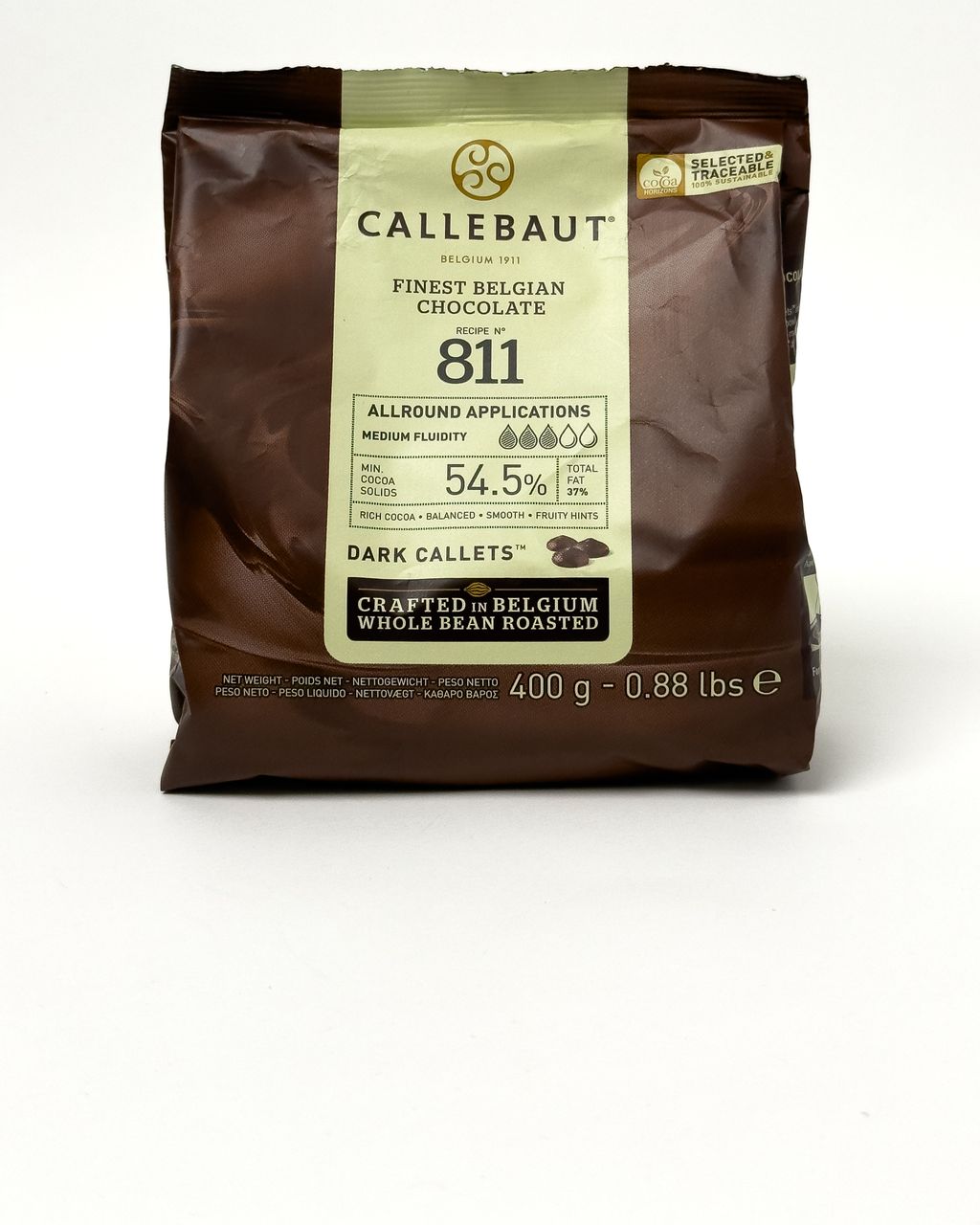
Dark couverture, such as Callebaut 811 (54.5% cocoa). Dark balances the sweetness of the jam and gives the nicest contrast against pale dough. You can find more dark chocolates for dipping cookies in the shop.
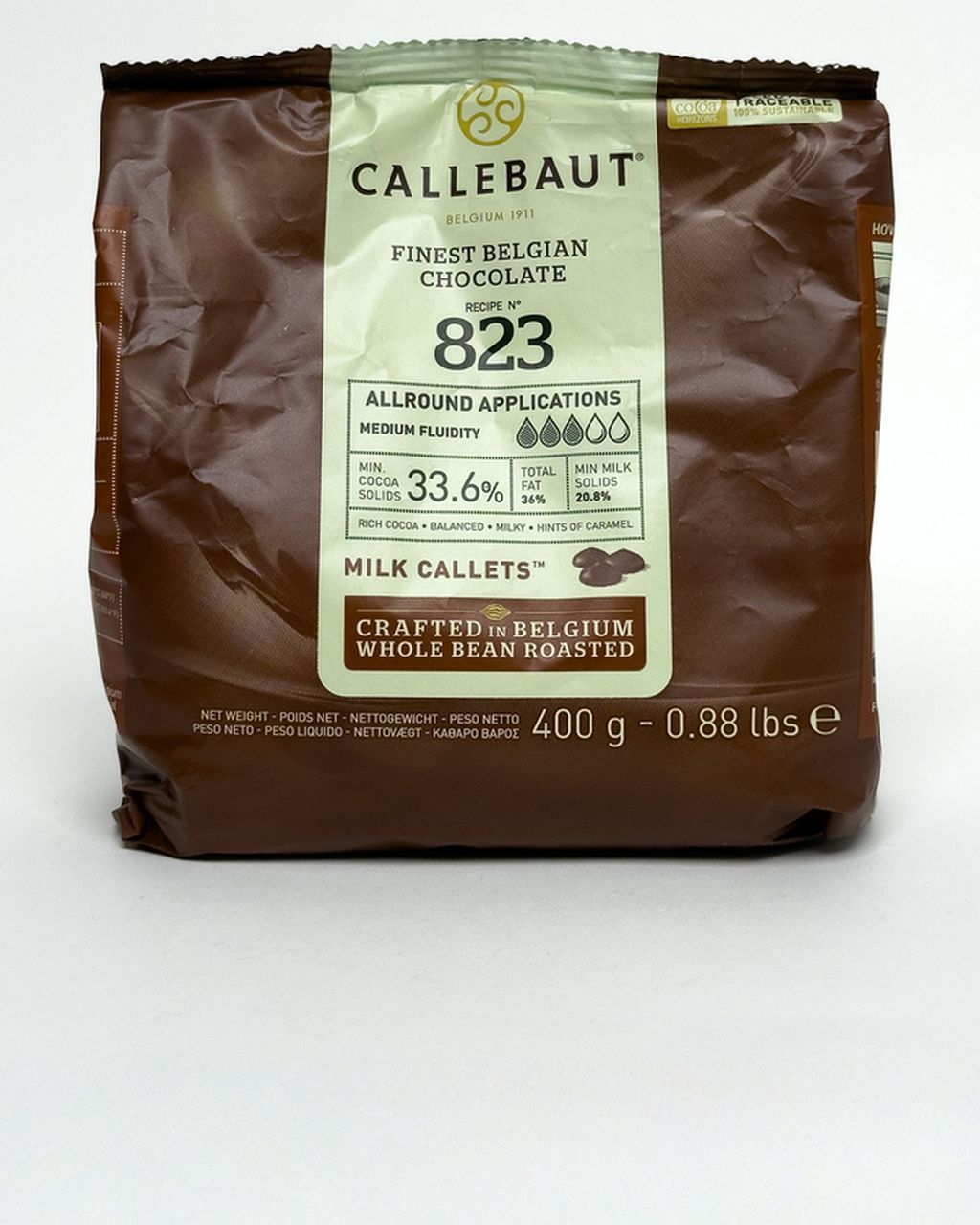
Milk couverture, such as Callebaut 823. It's sweeter and milder, and especially popular with children. It works better with tart redcurrant jam than with sweet strawberry.
Cocoa coating (a fat-based coating from the supermarket, which we don't sell; it isn't chocolate). You don't have to temper it and it nearly always sets, so it's the easiest route. But it contains other vegetable fats instead of cocoa butter, so it's less glossy, waxier on the tongue and tastes less of chocolate.
Baking chocolate in bars works too, but it tends to be thicker, so you get a heavier layer on the ends. Chocolate buttons (callets) have the advantage of melting evenly and being easy to weigh out by the gram, which comes in handy for tempering.
The easiest way to temper chocolate for Linzer banana cookies is the seeding method: melt two thirds of the callets to 45–50 °C (113–122 °F), stir in the remaining third and keep stirring until the chocolate drops to working temperature. According to Callebaut, the working temperatures are:
dark 811: 31–32 °C
milk 823: 29–30 °C
Melt it over a water bath (the bowl must not touch the water) or in the microwave in 20–30 second bursts, stirring in between. A drop of water or steam will turn the chocolate into a thick paste.
Melt at least 300 g, even though you'll use less for the ends. A small amount cools quickly and the temperature gets away from you. Let the rest set on baking paper and use it next time.
You can tell whether the chocolate is tempered with a simple test: dip the tip of a knife and set it on the counter. In a room at around 20 °C, tempered chocolate should set in roughly 3–5 minutes, glossy and without streaks.
For a detailed look at tempering, including why chocolate streaks, see Dipping Cookies in Chocolate.
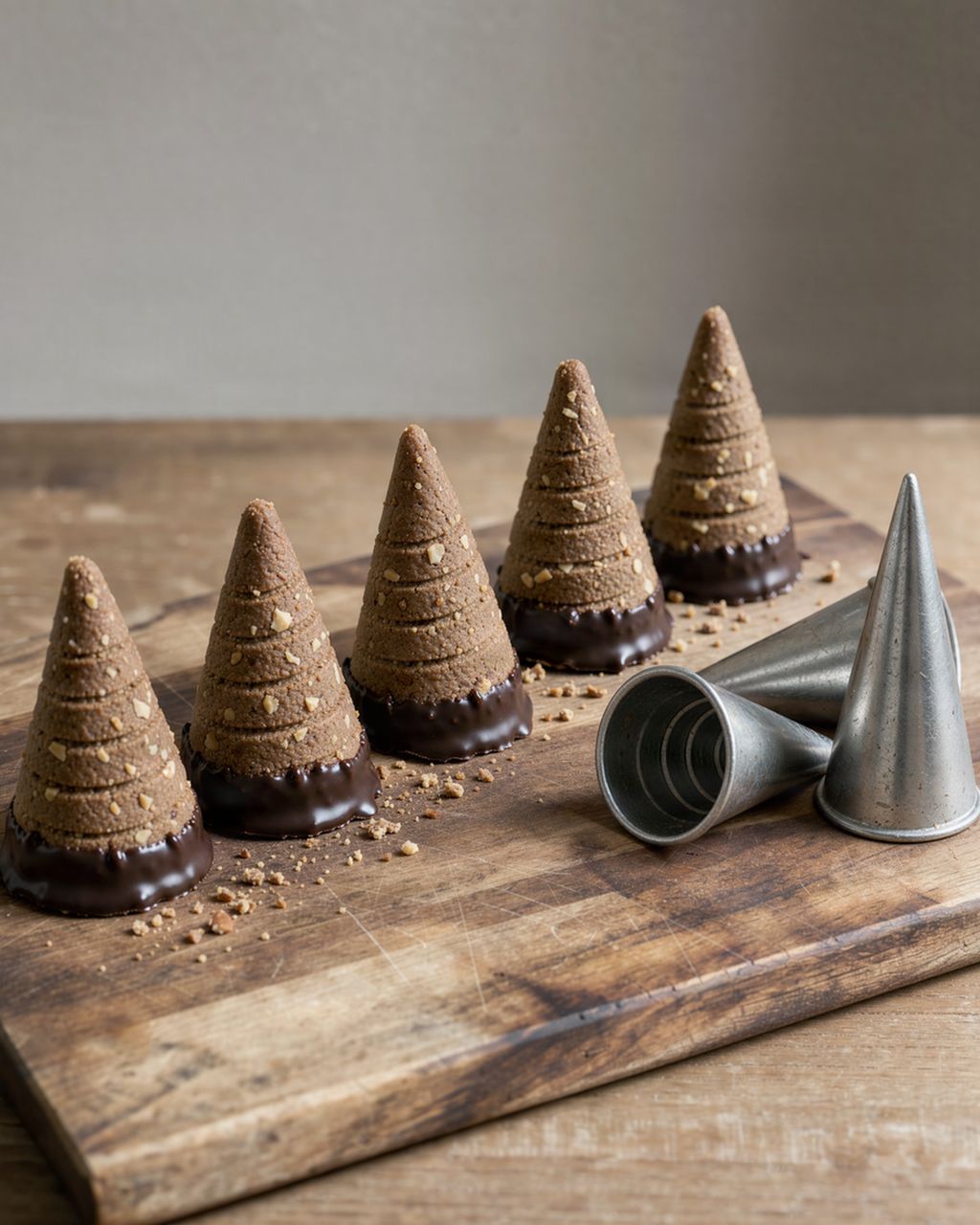
Hold the cookie in the middle with your fingertips, dip one end at an angle to a depth of 1–1.5 cm (½ in), let the excess drip off and wipe the underside on the rim of the bowl. Then set it on baking paper and dip the other end. Clean ends don't come from skill, but from three conditions:
A deep, narrow container. Pour the chocolate into a small cup so it's at least 3 cm deep. In a wide bowl with a thin layer, you can't dip the end evenly.
Drip and wipe. After lifting the cookie out, hold it over the container for a few seconds and tap it gently on the rim. Wipe the underside on the edge, or a chocolate "foot" will form under it on the paper.
The same depth. For a straight edge, choose a fixed point, such as the end of the filling, and always dip up to it.
Work in a cool room (ideally 18–20 °C) and keep checking the chocolate with a thermometer. If it thickens, warm it briefly by 1–2 °C, no more, or you'll lose the temper. Don't set the cookies in the fridge: once you take them out they sweat, and a whitish sugar film is left on the chocolate.
Store Linzer banana cookies in a sealed tin in a cool place (10–15 °C, or 50–59 °F), layered with baking paper. That keeps the chocolate glossy, and in 3–5 days the jam softens them evenly. Don't store them next to gingerbread or other soft cookies, as moisture transfers. For how long Linzer cookies keep and when they taste best, see Linzer Cookies: How Long Do They Keep.
A batch made with 300 g flour, 200 g butter and 100 g sugar yields roughly 90–100 halves of 6–7 g each, which makes about 45–50 sandwiched cookies. The exact number depends on how thick your rolls are and how much dough is left in the cookie press.
Yes. It's best to freeze the baked, unfilled halves in a sealed container, where they keep for 2–3 months. Thaw them in the container at room temperature, and only then fill and dip them. We don't recommend freezing finished chocolate-dipped cookies, because the chocolate gets condensation on it as it thaws and turns white.
Chocolate turns grey for two different reasons: either it wasn't tempered or it got overheated, or the cookies were set in the fridge and sweated. Grey, greasy streaks are cocoa butter that has risen to the surface (untempered or overheated chocolate). A dry, whitish film after the fridge is sugar that condensation has dissolved on the surface. It's perfectly safe to eat, it just doesn't look nice. Next time, temper the chocolate and let it set in a cool room, not in the fridge.
Bake Linzer banana cookies 1–2 weeks before Christmas. The jam needs 3–5 days to soften them, and in a tin in a cool place they keep for about 3–4 weeks. You can prepare the baked, unfilled halves even earlier and freeze them.
Yes. A thick ganache, a hazelnut spread or nougat melted with a little butter all work in place of jam. The cookies then stay crisper, because a fat-based filling doesn't soften the dough the way jam does. Spread it on cool so it doesn't run.
One recipe worth heating the oven for, one tip, and one deal from the shop. Nothing else.