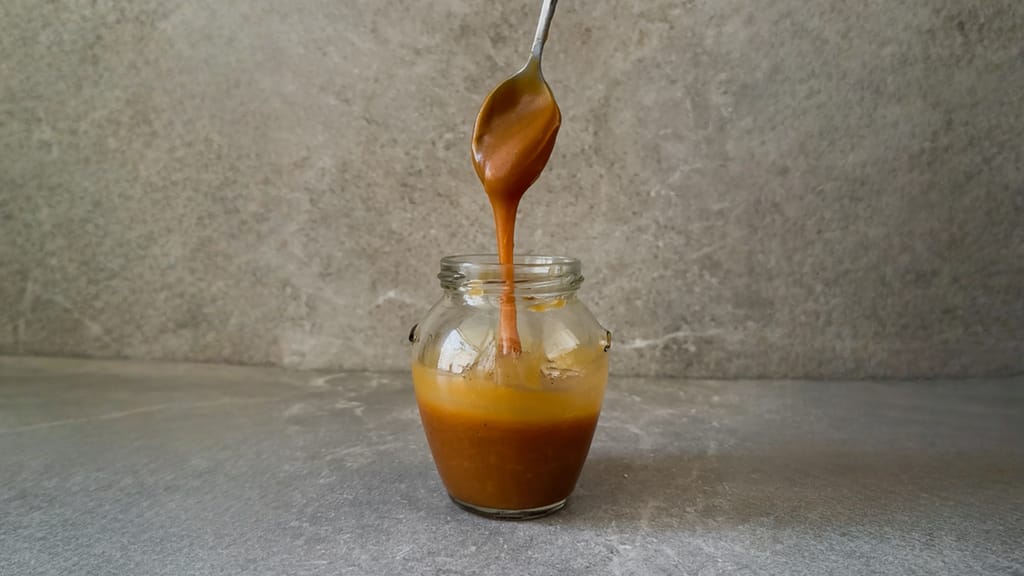
Homemade caramel sauce with just 4 ingredients
Liquid Caramel Without Cream: How to Make It So It Stays Pourable When Cold
Updated Oct 24, 2026
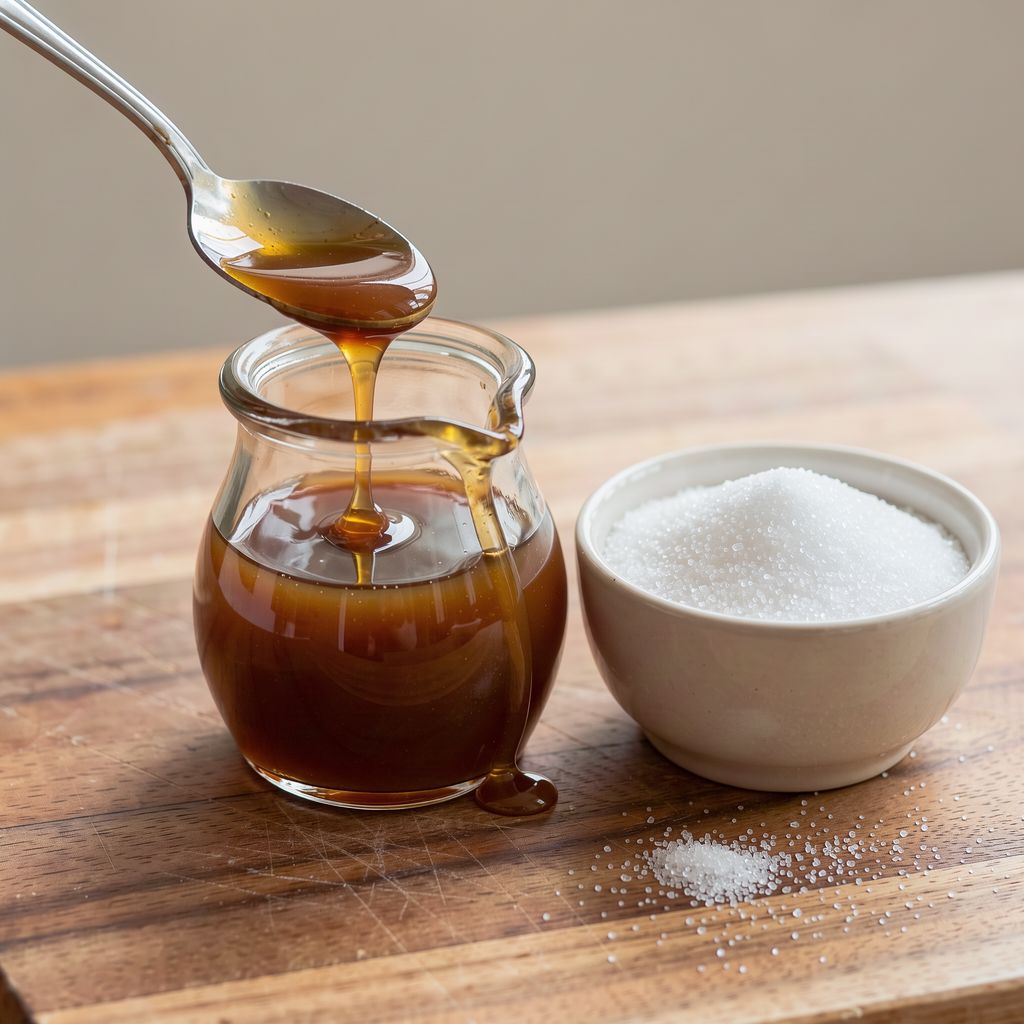
You can make liquid caramel without cream from just sugar and water: caramelize the sugar to an amber color, then stir in hot water, roughly 60–75 ml for every 100 g of sugar (about ¼–⅓ cup per ½ cup sugar), and simmer briefly. To keep it pourable straight from the fridge and stop it from crystallizing, add glucose syrup or invert sugar at the start, about 15% of the sugar's weight. You'll get a clear, glossy syrup that pours like maple syrup, ready for coffee, pancakes, ice cream, or cake.
You can make liquid caramel without cream in 15 minutes in a saucepan, using just three ingredients: sugar, water, and glucose syrup. Here's a basic batch that makes about 300 g of syrup:
200 g granulated sugar
50 ml water to dissolve the sugar
30 g glucose syrup (or 20–30 g invert sugar)
120–150 ml hot water to thin the caramel once it has colored
Put the sugar, 50 ml of water, and the glucose in a heavy-bottomed saucepan. Stir over medium heat only until the sugar has dissolved and the syrup is clear.
Then stop stirring. Wipe down the sides of the pan with a wet pastry brush so no crystals are left clinging to them. A single grain can set off crystallization in the whole pot.
Cook until the syrup turns the color of amber or dark honey, around 175–180 °C (347–356 °F). Just swirl the pan; don't stir.
Take the pan off the heat and add the hot water a little at a time. It will spit and hiss, which is perfectly normal.
Return the pan to low heat and simmer for 1–2 minutes so any hardened bits dissolve. The syrup is ready when it's smooth and clear.
Hot caramel looks thin as water, but it thickens considerably as it cools. Don't judge the consistency in the pan. Drip a little onto a cold plate and in a minute you'll see how it will pour.
For how to judge the right color, what temperature to aim for, and why caramel turns bitter, see our separate guide on how to make caramel from sugar without it turning bitter.
For liquid caramel without cream, add 60–75 ml of hot water for every 100 g of sugar once it has colored; 40–50 ml gives a thick, honey-like caramel, and 90–100 ml gives a thin syrup. The consistency depends mainly on how much water you add after the sugar has colored. Measure per 100 g of sugar:
40–50 ml water: thick like honey. It pours at room temperature but is sluggish straight from the fridge. Good for drizzling over a cake or layering in a dessert.
60–75 ml water: pourable like maple syrup, even when cold. The all-rounder for coffee, pancakes (such as pumpkin pancakes with salted caramel), ice cream, and flan.
90–100 ml water: a thin syrup for soaking cake layers or for iced coffee and cocktails.
After adding the water, always simmer for 1–2 minutes. Boiling evaporates a little of the water and, more importantly, dissolves the sugar lumps that form when the caramel meets the water.
Caramel that's too thick is easy to fix: warm it and stir in 1–2 tablespoons of hot water. If it's too thin, simmer it for a few more minutes, checking a drop at a time on a cold plate.
Darkness matters too. The darker the caramel, the more of the sucrose has broken down and the less likely the syrup is to thicken and crystallize, but the more bitter it tastes. Light golden caramel is sweeter but more prone to setting.
Caramel sets for two different reasons: it doesn't have enough water, or the sucrose has reverted to crystals. Each problem needs a different fix.
It sets glassy or into a hard mass: there's too little water in it. Caramel with no water added is basically hard candy, and the less water, the closer it gets to a lollipop. The fix: add more water after the sugar colors (see the ratios above).
It turns white, cloudy, and grainy: it has crystallized. Sucrose molecules rearrange into crystals in the cold and when left undisturbed, typically after a few days in the fridge. The trigger is usually a crystal on the side of the pan, stirring during cooking, or an unclean spoon.
Only one thing reliably prevents crystallization: mixing in a different type of sugar. Glucose and fructose have a different molecular shape from sucrose, so they wedge in between the sucrose molecules and keep them from forming a crystal lattice. 10–15% invert sugar by weight is enough to keep the result non-crystalline.
Four ingredients slow down caramel crystallization: glucose syrup, invert sugar, lemon juice, and honey. Glucose syrup is the most reliable. Here's an overview for 200 g of sugar:
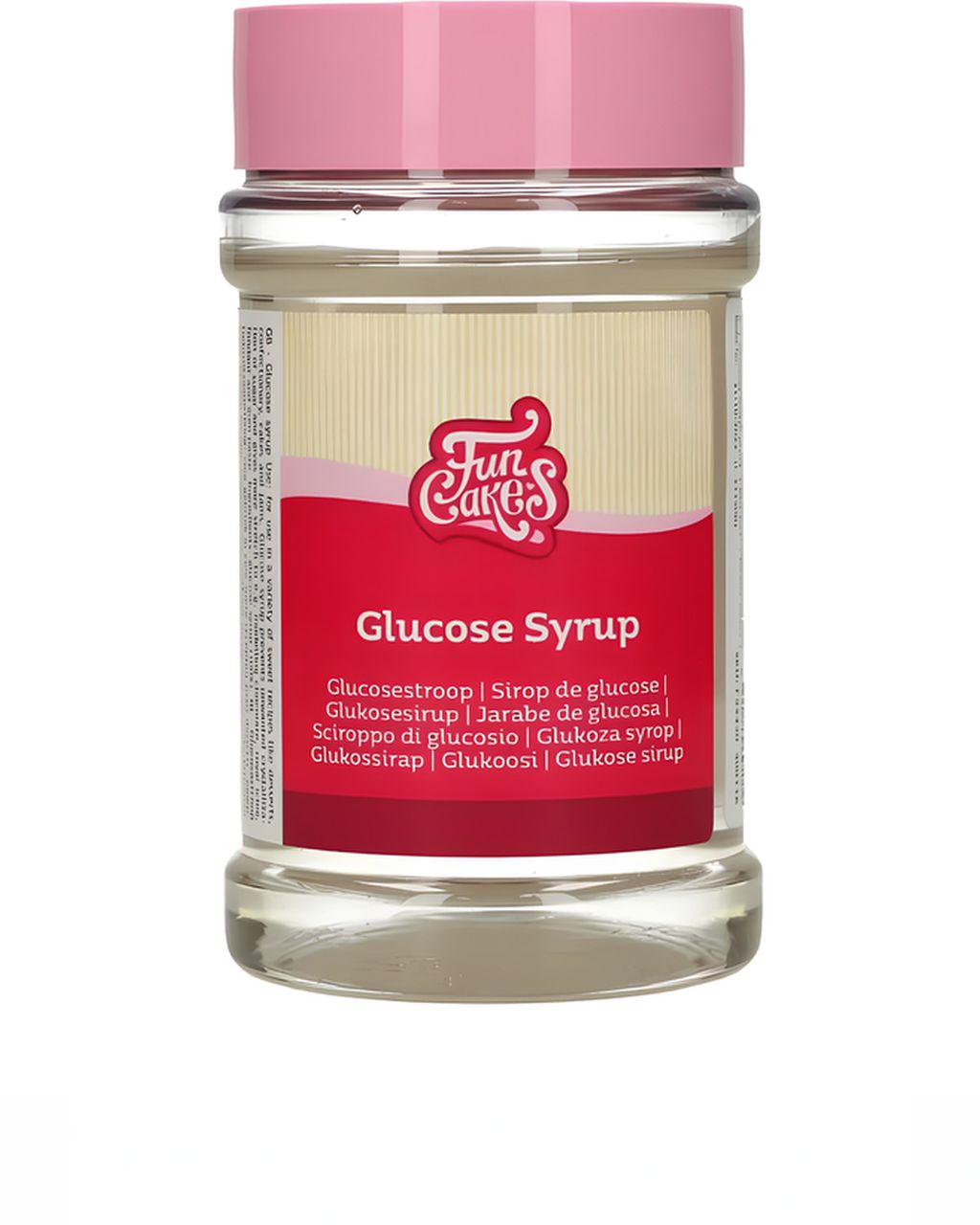
Glucose syrup: 30–40 g (15–20%). The surest choice. It's neutral in flavor, keeps the syrup liquid and clear even after weeks in the fridge, and adds shine. We use FunCakes glucose syrup (375 g), and one pack lasts for about ten batches of caramel. Corn syrup in American recipes is essentially glucose syrup too, so you can swap it 1:1 with glucose.
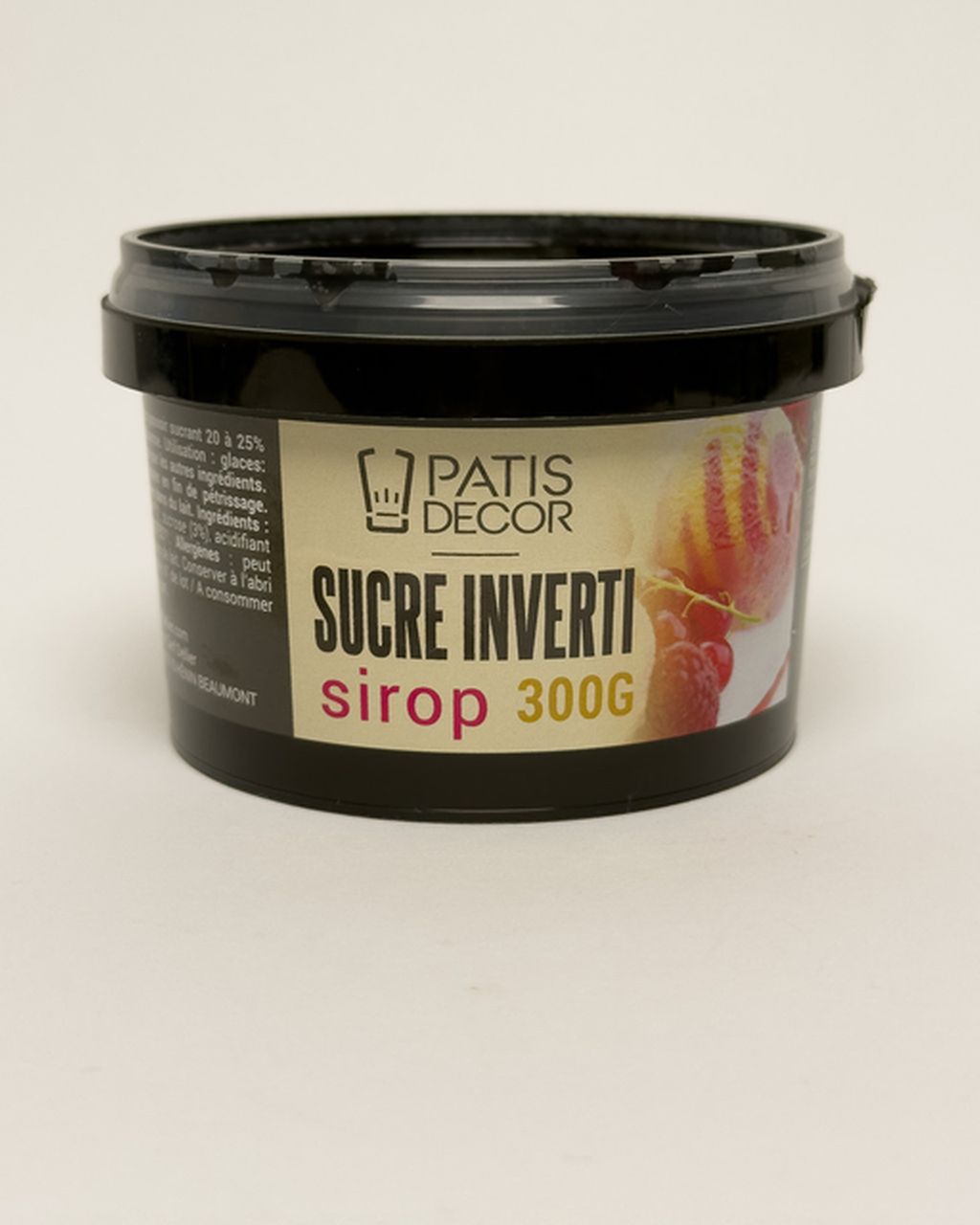
Invert sugar: 20–30 g (10–15%). It works much like glucose, though you need a bit less. It's sweeter and makes the caramel darken faster, so watch the color a touch earlier. Liquid invert sugar for baking comes in handy elsewhere too. For why and how much to use in gingerbread or ice cream, see our article on invert sugar instead of sugar.
Lemon juice: ½ teaspoon. The acid breaks down some of the sucrose into glucose and fructose during cooking. It works if you have nothing else, but the result is less predictable and not enough for longer storage.
Honey: 30 g. It slows crystallization too (honey is largely fructose and glucose), but it brings its own flavor, and caramel made with it darkens faster and burns easily.
You'll find glucose and invert sugar, along with other sugars, in the sugars and syrups category. Add either one at the start with the sugar and water, not into the finished caramel.
Butter and milk give caramel without cream a fuller, toffee-like flavor. Butter can't replace the water, but milk can, and you'll end up with a milky sauce. For 200 g of sugar:
With butter: make the caramel with water as described above, then stir in 30–40 g of cold butter at the end. Without water, caramel with butter would set into a hard toffee once cooled. The water is what keeps it liquid.
With milk: instead of water, pour in 150 ml of hot whole milk once the sugar has colored and simmer for 2–3 minutes. The milk may curdle for a moment; keep stirring and simmering and it will come back together. You'll get a lighter, milky sauce.
With plant-based milk: full-fat coconut milk (150 ml) works best. It has enough fat that it doesn't curdle, and the caramel turns out creamy. Oat or almond milk are thin and give more of a milky syrup.
Store milk and butter versions in the fridge and use them within a week. Caramel made only from sugar, water, and glucose keeps for several weeks in a sealed jar in the fridge.
To make salted caramel without cream, stir 1–2 g of fine salt for every 100 g of sugar into the caramel-and-water mixture after adding the water. Start with a pinch and taste a cooled sample, since hot caramel masks the salt. For a rounder flavor, add 30 g of butter at the end.
For classic salted caramel with cream, a cake filling made from it, and what else to do with it, see our article on homemade salted caramel. If you want caramel with cream as a thick sauce, go straight to the recipe for homemade caramel sauce with 4 ingredients.
You can rescue both hardened and crystallized caramel with water and heat, so don't throw anything away.
It has set into a hard mass: put it in a saucepan with 2–3 tablespoons of water for every 100 g and heat, stirring, until it dissolves. Then simmer briefly.
It has crystallized in the jar: warm it with 1 tablespoon of water and 1 tablespoon (15–20 g) of glucose (or invert sugar) for every 100 g of caramel so the crystals dissolve and don't come back. Sterilize the jar in boiling water or rinse it with hot water before pouring the caramel in.
It has crystallized in the pan while cooking (the syrup turns white and lumpy): add 100 ml of water, dissolve it into a clear syrup, and start caramelizing again, this time with glucose and without stirring.
Caramel without cream is a clear syrup, while caramel with cream is an opaque, creamy sauce. Choose by how you'll use it:
Without cream: for coffee and cocktails, for soaking cake layers, with flan and crème caramel, on ice cream when you want a lighter flavor, and anywhere the caramel needs to last longer outside the fridge. Caramel made only from sugar, water, and glucose is lactose-free and vegan; versions with butter or cow's milk contain lactose.
With cream: as a glaze, filling, and cake frosting, in pralines, and anywhere you want a buttery, milky richness. It keeps for a shorter time and thickens in the fridge.
We cover caramel syrups for coffee (including vanilla versions) in our article on homemade coffee syrups. Use your finished liquid caramel on an upside-down cherry cake with caramel or with caramelized peach ice cream.
Use liquid caramel or caramel sauce in these recipes from Yumsta.
Homemade caramel sauce with just 4 ingredients
Homemade Caramel Sauce With 4 Ingredients
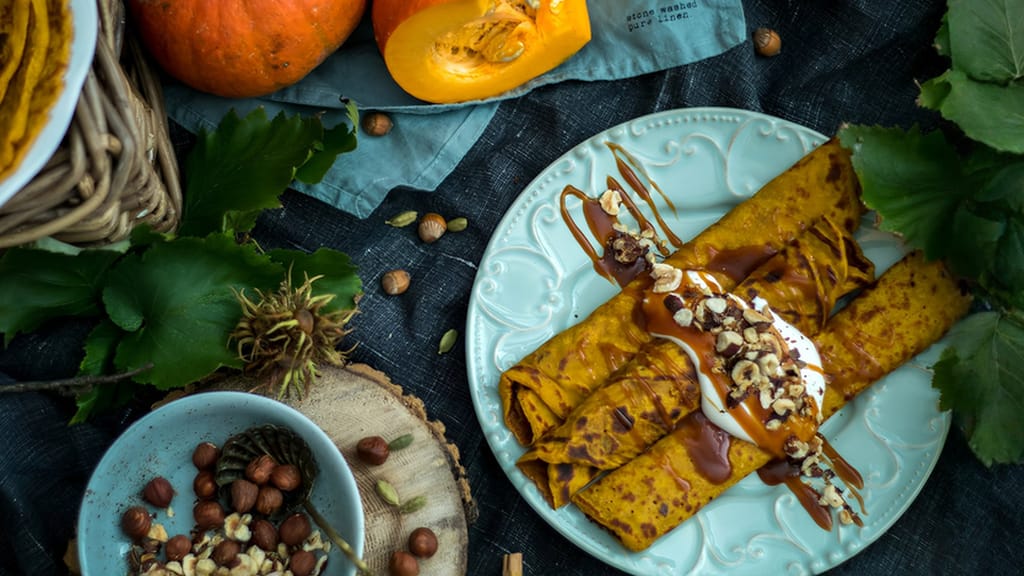
Pumpkin pancakes with salted caramel
Pumpkin Pancakes With Salted Caramel
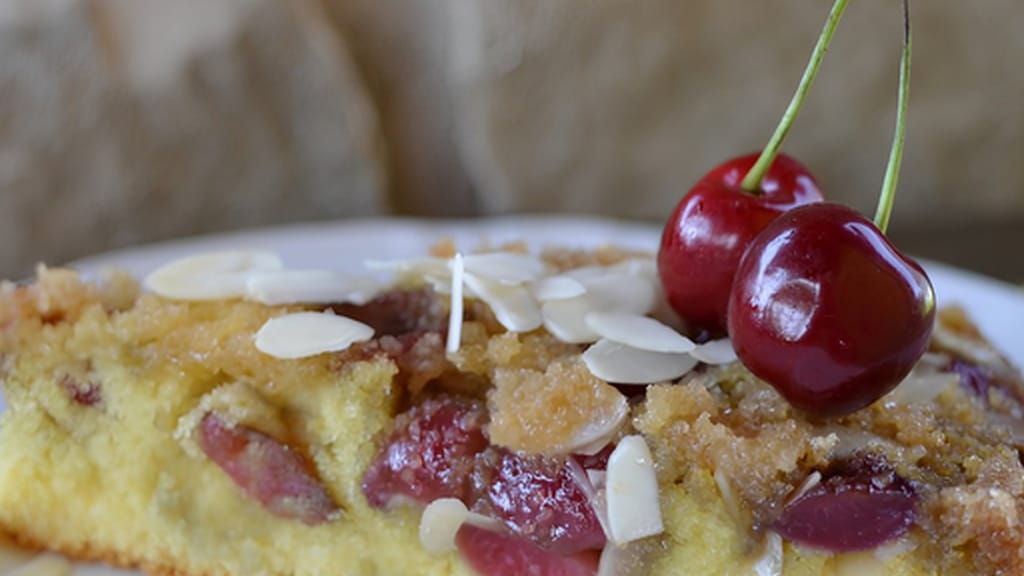
Upside-down cherry cake with caramel
Upside-Down Cherry Cake With Caramel
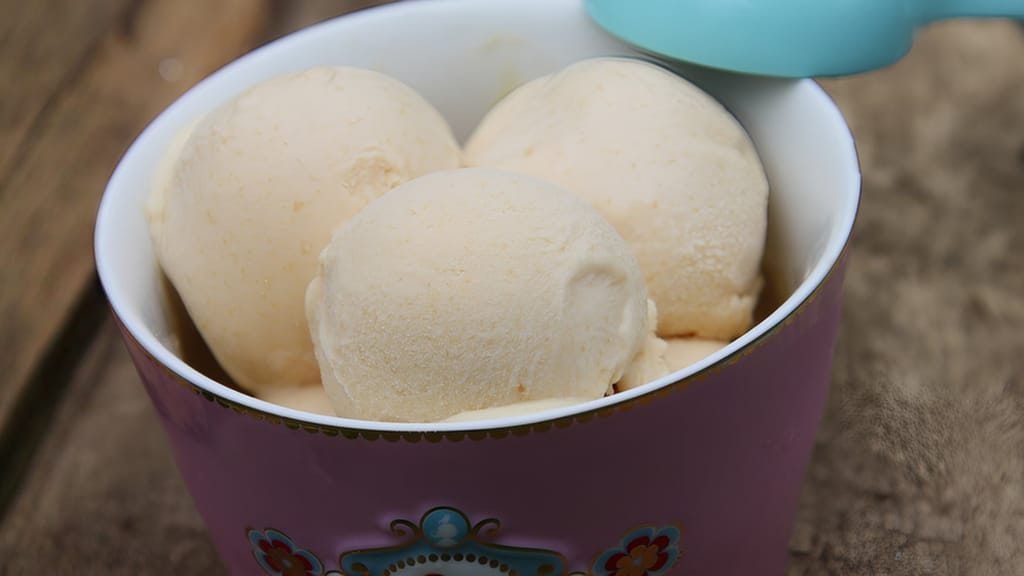
Caramelized peach ice cream
Caramelized Peach Ice Cream
Caramel made only from sugar, water, and glucose keeps for several weeks in a clean, sealed jar in the fridge. Versions made with butter or milk should be used within a week. Always scoop with a clean spoon, because crumbs and stray crystals shorten the shelf life and set off crystallization.
Yes, caramel made from sugar and water is vegan and lactose-free. Versions with butter or milk are not vegan and do contain lactose. For a creamier vegan version, pour in full-fat coconut milk instead of water once the sugar has colored; leave out the butter or replace it with plant-based margarine or coconut oil.
You can, but the color is harder to judge because the sugar is dark from the start. Caramelize by aroma and temperature (up to 175–180 °C / 347–356 °F) and expect a stronger, molasses-like flavor. White granulated sugar gives the cleanest, most predictable result.
You can, but there's not much point. Thanks to its high sugar content it won't freeze solid, and it keeps for weeks in the fridge anyway. Milk-based versions can be frozen for up to 3 months; warm them and stir well before using.
One recipe worth heating the oven for, one tip, and one deal from the shop. Nothing else.