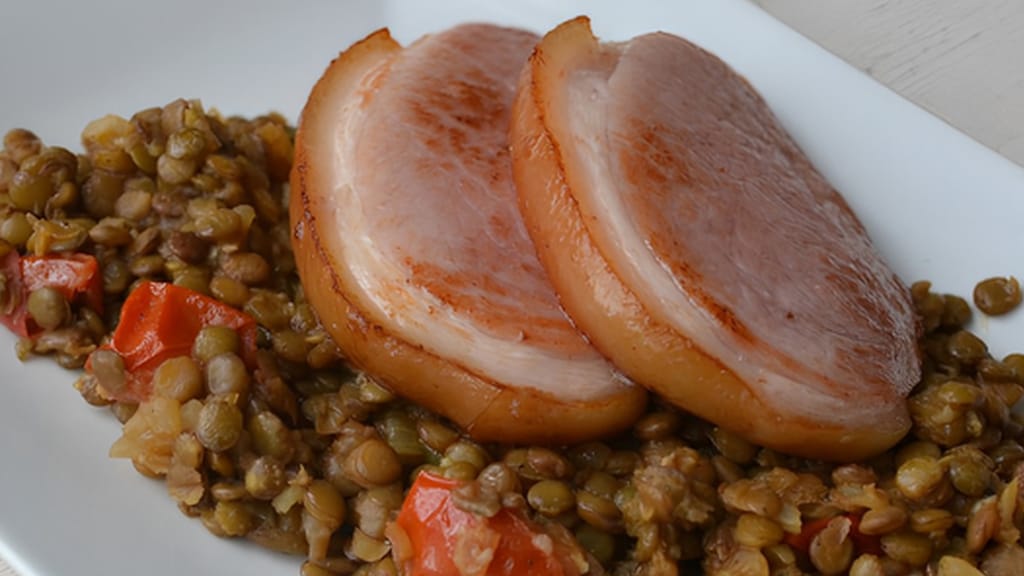
Prague ham with warm lentil salad
Winter Salads: Warm Salads and Salads with Roasted Vegetables, Beets and Citrus
Updated Nov 20, 2026
Winter salads are built on what actually grows and keeps in the cold months: roasted and boiled root vegetables, beets, pumpkin, celeriac, fennel, hardy greens like lamb's lettuce (corn salad), and citrus, which is in season right now. Unlike summer salads, they often warm you up and are hearty – warm lentils, melted goat cheese or squash straight from the oven turn them into a full lunch. Below you'll find how to make warm salads, roasted vegetable salads and beet salads, raw winter combinations, how to use citrus, dressings, and how to prep a winter salad two days ahead.
The best winter salads fall into five types: warm salads with legumes or melted cheese, roasted vegetable salads, beet salads, raw root vegetable and fennel salads, and citrus salads. They all share one principle – winter root vegetables are firm and often sweeter after frost, so they stand up to roasting, a bold dressing and a stay in the fridge.
Specifically, from the Yumsto recipes:
Warm: Prague ham with warm lentil salad, salad with grilled goat cheese, apples and nuts
Roasted vegetable: salad with roasted squash, bell pepper and feta
Beet: roasted beets with walnuts and blue cheese, roasted beets with ginger dressing, lentils with beets and feta, beet and orange carpaccio
Raw winter: celeriac Waldorf with Greek yogurt, fennel salad with orange, salad with apple, nuts and gorgonzola
Citrus: salad with blood oranges, beets and goat cheese
Below, each one comes with a short tip and a link to the full recipe. Choose by time: the quickest, the lentil salad with beets, is on the table in 13 minutes, while roasted beets with blue cheese take 1–2 hours, though the oven does most of the work.
Seasonal baking plans, tested recipes and kitchen tricks that save you time. Unsubscribe in one click.
A warm winter salad is one where at least one component is served warm – legumes, roasted vegetables, seared meat or melted cheese – and is tossed with cold greens or raw vegetables just before eating. That contrast of warm and cold, soft and crunchy is what makes it a meal rather than a side.
Three rules make all the difference:
Combine the warm component with the dressing before the greens. Warm lentils or roasted squash soak up dressing much better than cold ones, so season them while they're lukewarm. Add the greens at the end.
Choose sturdy greens. Lamb's lettuce, arugula, spinach or romaine can handle the heat for a few minutes. Delicate butter lettuce wilts instantly under hot lentils.
Add the crunchy component last. Toasted nuts, seeds or toast would quickly go soft in a warm, moist mix.
The heartiest warm salad in our collection is Prague ham with warm lentil salad. Cook the lentils until tender but not mushy, and just briefly sear the slices of ham off the bone on both sides – they're already cooked, so the point is only to warm them through and lightly brown the edges.
The other warm classic is the salad with grilled goat cheese, apples and nuts, ready in 17 minutes. Put the toasts with rind-ripened goat cheese under a hot broiler and don't walk away from the oven – the cheese melts and turns golden quickly, but burns just as fast.
Prague ham with warm lentil salad
Warm winter lentil salad with fried onion, tomatoes and seared Prague ham
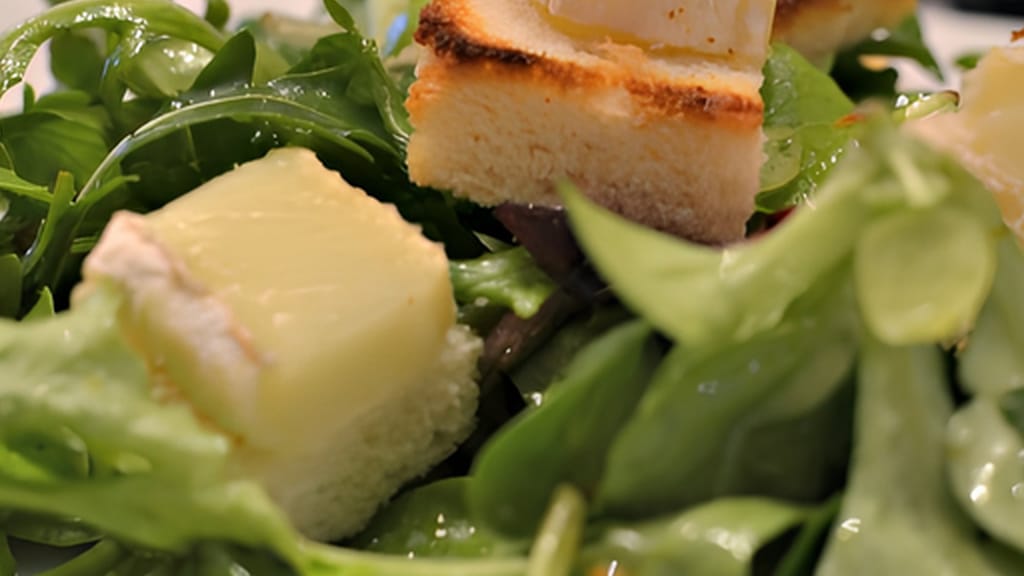
Salad with grilled goat cheese, apple and walnuts
Warm winter salad with grilled goat cheese on toast, seared apple and walnuts
You make a winter roasted vegetable salad by roasting root vegetables, squash or bell peppers until tender with lightly caramelized edges, letting them cool to lukewarm, then tossing them with greens, a bold dressing and a salty cheese or seeds. Roasting drives off moisture and concentrates sweetness, so the vegetables then need acid and salt to balance them.
What roasts best in winter (at 200–220°C / 400–425°F):
hokkaido squash – no need to peel it; tender in 25–35 minutes
beets – slowly, whole and wrapped in foil (more in the next section)
carrots, parsley root, parsnips – cut into fries or lengthwise quarters, about 30–40 minutes
celeriac – diced so the edges have time to brown, about 35–45 minutes
red onion – in wedges; it mellows and sweetens, about 25–30 minutes
The most common mistake is an overcrowded pan: the vegetables steam in their own moisture instead of roasting and stay pale and watery. Spread them in a single layer with gaps between, using two pans if needed. Cut pieces to the same size so they finish together, and put hard vegetables (beets, celeriac) in the oven before soft ones (peppers). Ovens also often "fib" a little about temperature – if your vegetables regularly scorch or never brown, it's worth checking the real temperature with an oven thermometer. For the full details on roasting technique, temperatures and textures, see our article on how to roast perfect vegetables – there as a side dish, here we turn them into a salad.
A showcase winter roasted vegetable salad is the salad with roasted squash, bell pepper and feta, ready in an hour, most of which is oven time. The recipe's best trick: cover the hot roasted pepper with plastic wrap in a bowl; the steam loosens the skin, and once cooled it peels off easily.
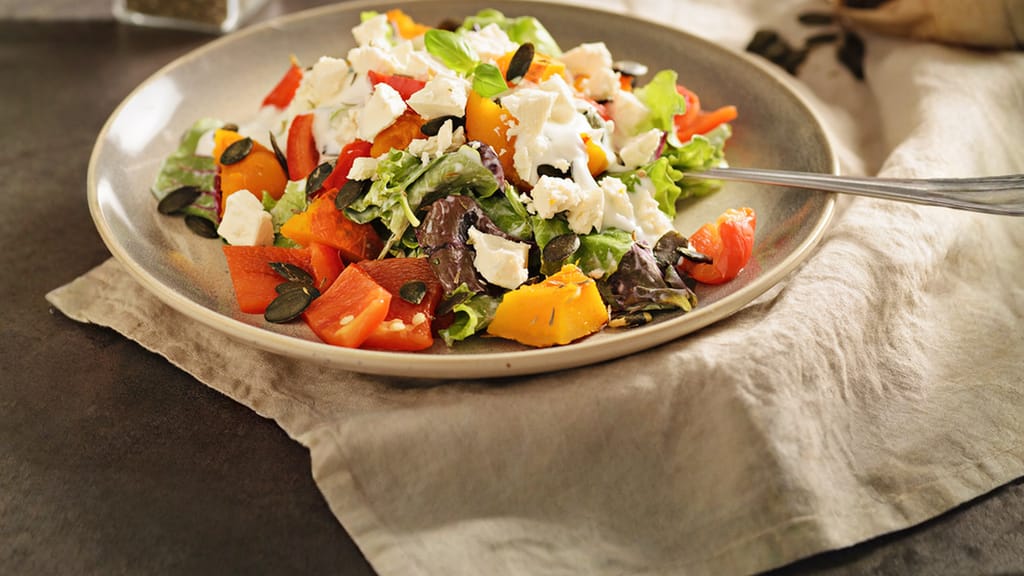
Roasted vegetable salad with feta
Winter salad of roasted hokkaido squash and bell pepper with yogurt dressing, feta and pumpkin seeds
A winter beet salad tastes best with roasted beets: whole, unpeeled and wrapped in foil, the beets roast in their own steam, stay juicy, and their earthy sweetness concentrates more than when boiled in water. If you're in a hurry, reach for precooked or jarred beets – they make a great salad in a quarter of an hour too. For more on the vegetable itself, how to choose and store it, see our page on beets.
Beets need three things: acid (lemon, balsamic vinegar, orange), fat (olive oil, nuts) and salty contrast (blue cheese, feta, goat cheese). Without them they taste flat; with them they make one of the best winter salads there is.
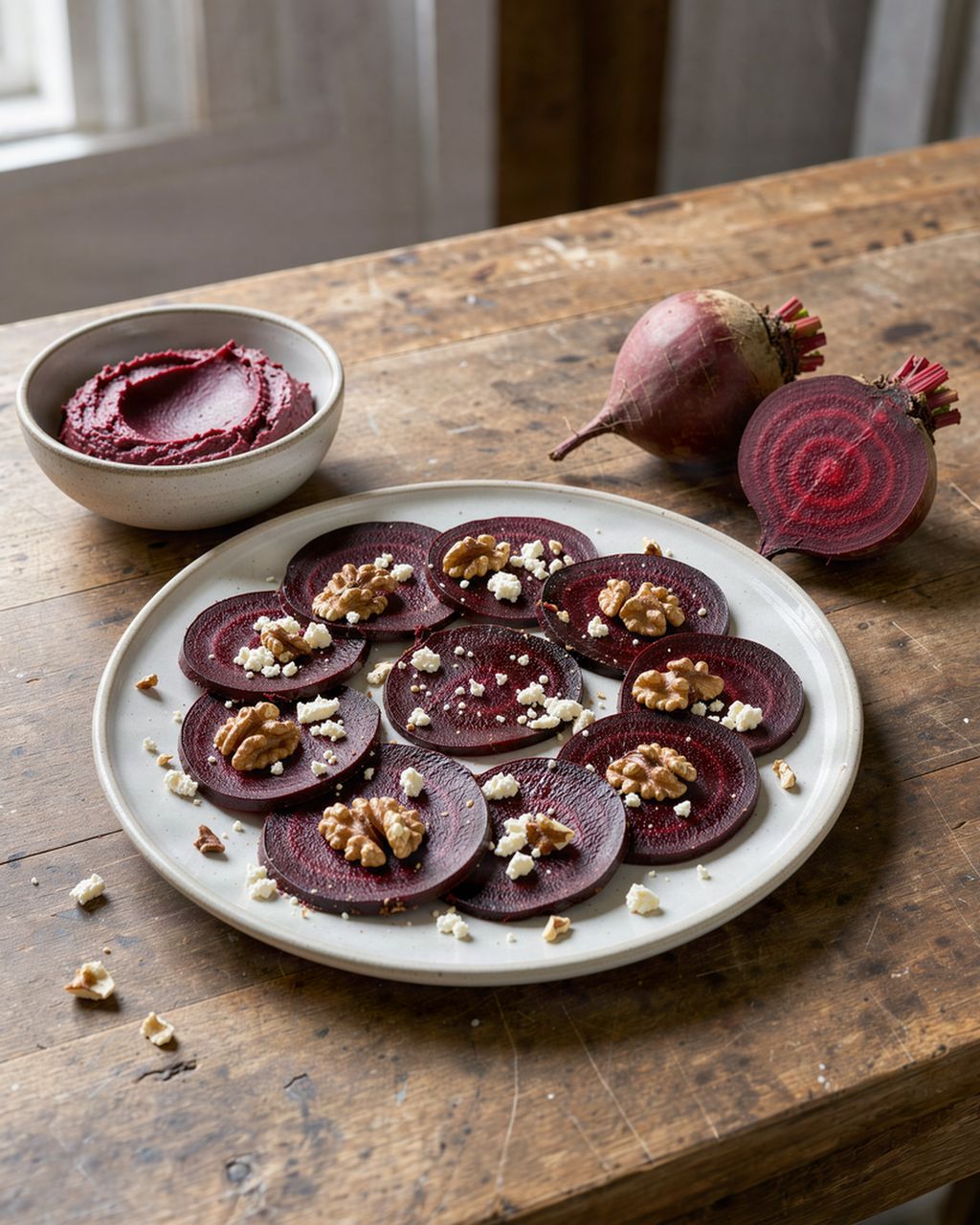
Roasted beets with walnuts and blue cheese. In the roasted red beet and walnut salad, you scrub the beets well, wrap each in two layers of foil and roast at 200–220°C (400–425°F) for roughly 1–2 hours depending on size, until a skewer slides easily to the center; the skin then comes off almost on its own. The recipe's best trick is the blue cheese: put thin slices on the foil under the broiler for a moment until they start to melt and turn golden at the edges, and once cooled they set into crunchy crisps.
Roasted beets with ginger and cilantro. The roasted red beet salad is vegan, according to the recipe. Slice the roasted beets thinly and toss them in a dressing with finely grated ginger – it gives the beets the sharpness that cheese would otherwise provide.
Quick lentils with beets and feta. The lentil salad with red beet and feta is ready in 13 minutes using jarred lentils and jarred beets. Add the feta and sunflower seeds just before serving – otherwise the feta turns pink from the beets and the seeds go soft.
Beet and orange carpaccio. In the red beet and orange carpaccio recipe, you slice cooked beets as thinly as possible and let them rest in an orange marinade – the thinner the slice, the more marinade it soaks up.
If you want more from beets than salads – gnocchi, a spread or whole roasting – have a look at our roundup of what to cook with beets.
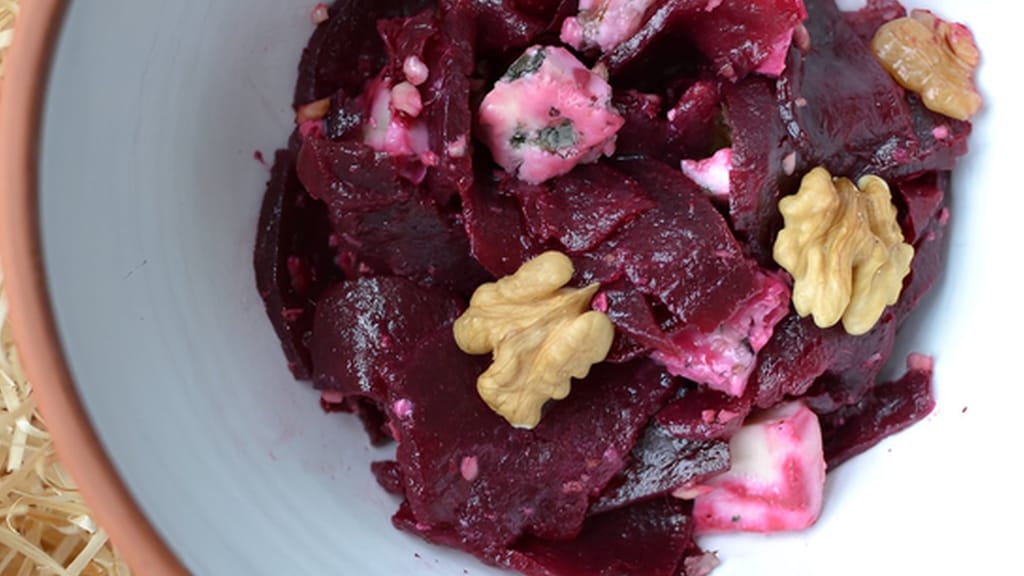
Roasted beetroot and walnut salad
Winter salad of roasted red beets with walnuts and crisp melted blue cheese
A winter vegetable salad doesn't always have to be roasted: raw celeriac, fennel, carrot and apple are firm and juicy in winter, and cut into thin strips or slices they make a salad that stays crunchy even after a day in the fridge. The key is the knife, not the recipe – cut tough root vegetables as thinly as possible, ideally with a mandoline or a peeler, and season them right away with acid so they don't brown and soften a little.
Celeriac Waldorf with Greek yogurt. Bulb celeriac is the base of the classic Waldorf, and in the celeriac Waldorf salad with Greek yogurt you turn it, with chicken breast, into a full lunch in 32 minutes. Cut the celeriac and apple into the thinnest possible strips, sprinkle them with lemon straight away, and make the yogurt dressing bold – celeriac "swallows" a lot of flavor.
Fennel salad with orange dressing. The fennel salad with orange dressing is vegan, according to the recipe. Slice the fennel lengthwise as thinly as possible and leave the salad to rest in the fridge for at least an hour – the fennel softens and soaks up the orange flavor.
Salad with apple, nuts and gorgonzola. The salad with apple, nuts and gorgonzola is ready in 18 minutes. Above all, dry the greens well, or the balsamic dressing will run to the bottom, and add the nuts and gorgonzola just before serving so the nuts stay crunchy.
We cover the general formula for building any vegetable salad from greens, vegetables, protein and dressing in how to make the best vegetable salads. The same applies here, just with different vegetables and a longer shelf life.
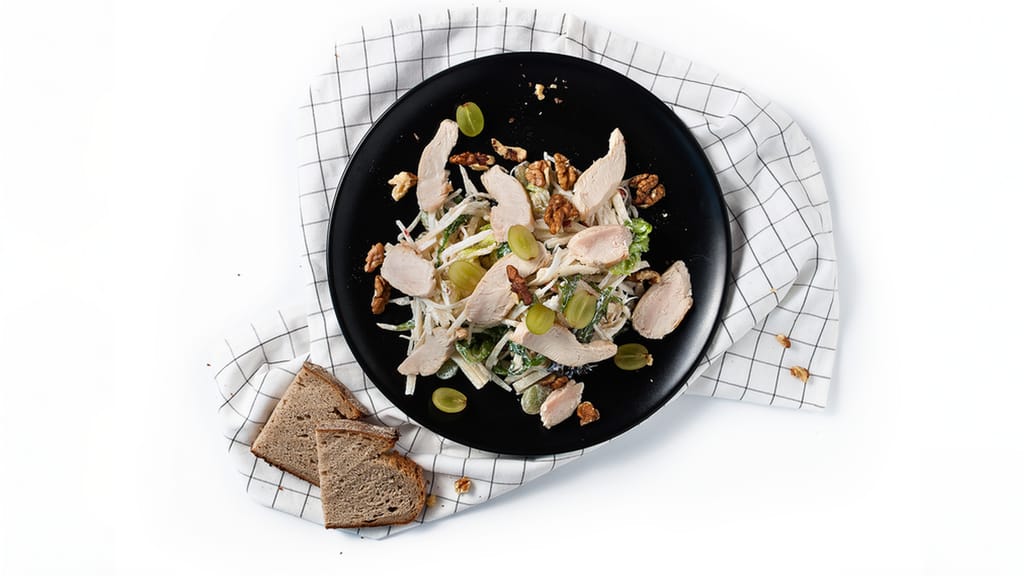
Celery waldorf salad with greek yogurt
Raw winter salad: celeriac Waldorf with apple, walnuts and Greek yogurt dressing
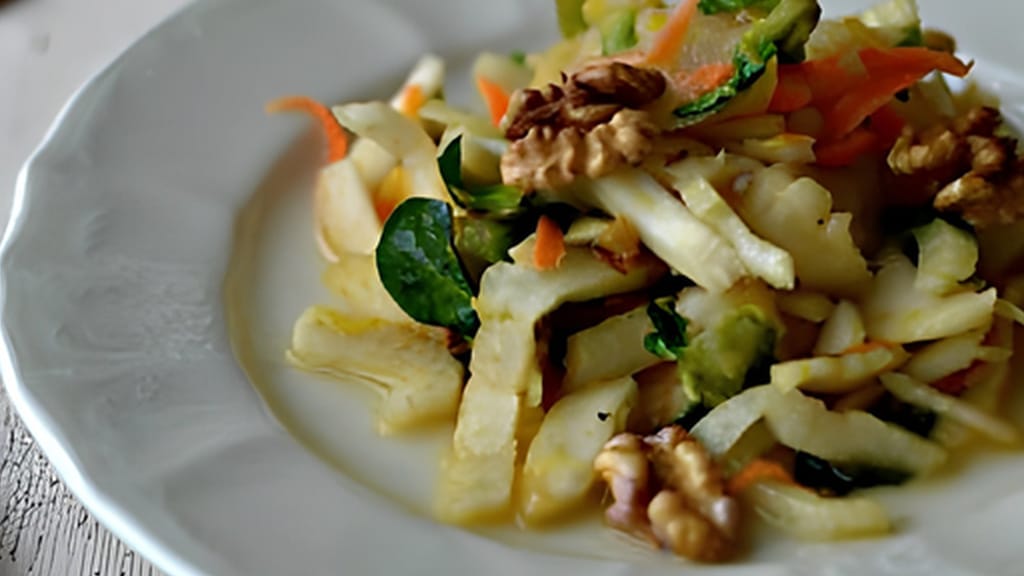
Fennel salad with orange dressing
Vegan winter fennel salad with orange, carrot, lamb's lettuce and walnuts
Citrus is the best acid you can get for a salad in winter: oranges, blood oranges, grapefruit and mandarins are in season exactly when fresh vegetables are scarce, and their juice and flesh do the job of vinegar and fruit at once. They shine most next to something earthy (beets, fennel) and salty (goat cheese, feta).
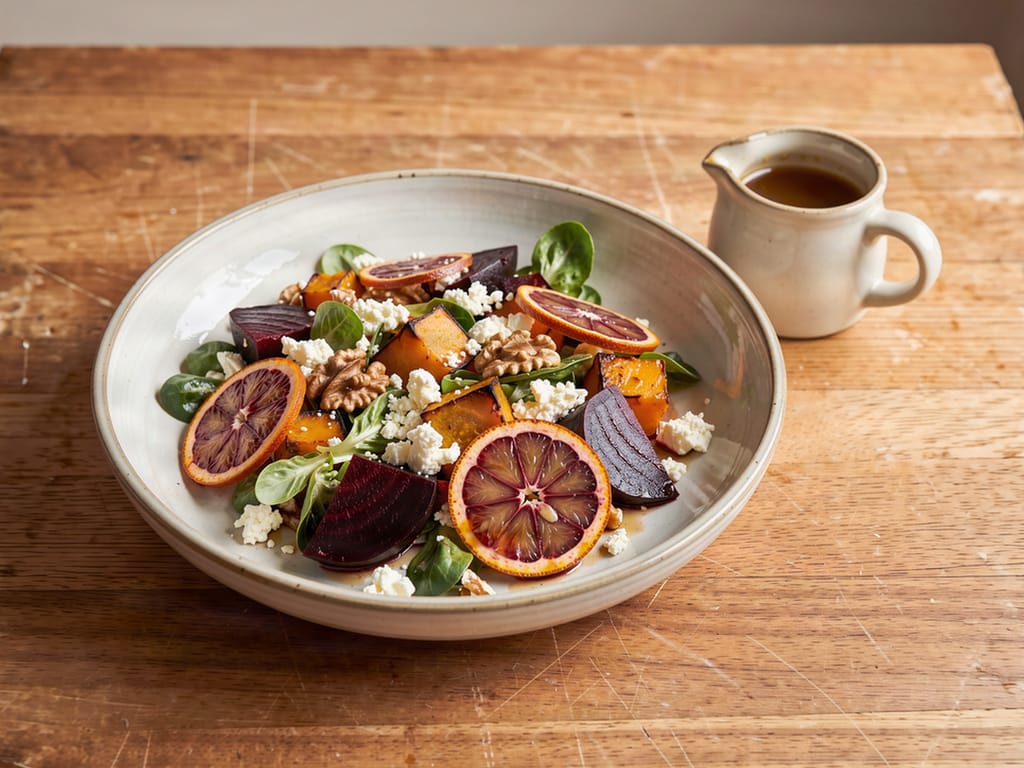
Blood oranges have deep red flesh and a sweeter flavor with a berry note, so in a salad they act almost like berries. The salad with blood oranges, beets and goat cheese, ready in 18 minutes, shows this: rounds of oranges with the peel cut away meet spinach, beets, apple, goat cheese and walnuts under a honey-mustard dressing.
How to cut citrus for salad. Slice the top and bottom off an orange, stand it up and cut away the peel along with the white pith – it's bitter and unpleasantly rubbery in a salad. Then either slice it into rounds or cut out the individual segments from between the membranes (known as supremes). Catch the juice that runs out in a bowl: it's the base of your dressing.
Winter fruit salad. A sweet winter fruit salad works on the same principle – citrus as the tart, juicy base, with apple or pear for crunch, pomegranate seeds for color and kiwi for zing. Cut the fruit into similar-sized pieces, pour over the juice that ran out of the citrus, and add a drop of honey and chopped mint or a little grated orange zest. Sprinkle apples and pears with juice right after cutting so they don't brown. We don't have a standalone winter fruit salad recipe in our collection yet. If you'd rather bake with citrus, find inspiration in what to bake with oranges and lemons.
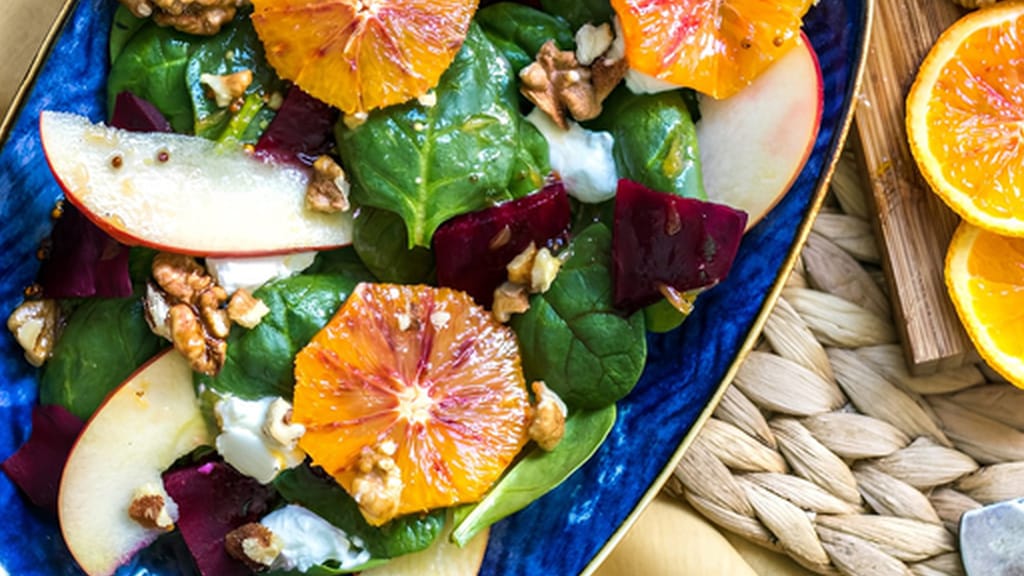
Light salad with blood oranges
Winter salad with blood oranges, beets, spinach and goat cheese
A winter salad needs a bolder dressing than a summer one: roasted vegetables, beets and celeriac are sweet and dense, and a delicate dressing disappears in them. The basic ratio is 3 parts oil to 1 part acid; for winter salads feel free to push it toward 2:1 for a tangier dressing.
Four dressings that cover most winter salads:
Honey-mustard – olive oil, vinegar or lemon, honey and Dijon mustard. The mustard stabilizes the dressing so it doesn't separate as quickly. Good with beets, goat cheese and citrus.
Balsamic with honey – oil, balsamic vinegar, honey. For apples, nuts and blue cheeses.
Citrus – juice of an orange or blood orange, olive oil, salt and pepper. For fennel, carrot, beets.
Yogurt – plain or Greek yogurt with salt, lemon or oregano and a drop of oil. For roasted squash and celeriac.
Two technical details that make a difference:
Dissolve the salt in the acid, not the oil. Salt doesn't dissolve in oil and stays in the dressing as grains. First whisk the vinegar or juice with the salt, then add the rest.
Taste on a leaf, not from a spoon. A dressing that tastes a little too sharp and salty on its own is usually just right on vegetables.
Honey dissolves into a dressing more easily at room temperature, or if you stir it into the acid first. You can make the dressing in a jar with a lid and keep it in the fridge; just shake it before using.
Winter salads can be prepared ahead better than summer ones – just store separately whatever would make each other soggy. Make the roasted vegetables, cooked lentils and dressing a day or two in advance; add the greens, nuts, seeds and cheese when serving.
What can sit and what can't:
Gets better: fennel salad with citrus dressing, marinated beets, lentils in dressing. They soak up flavor.
Keeps well: roasted squash, beets, celeriac – especially in a sealed container.
Add at the end: lamb's lettuce, arugula, spinach, toasted nuts, seeds, feta (it turns pink from beets), toasts.
A practical plan for two lunches: roast a tray of vegetables and cook a pot of lentils on Sunday evening, store them in separate containers and put the dressing in a jar. In the morning, put a handful of greens in a container, add the vegetables, and pour on the dressing only at work. The recipe for the warm lentil salad with ham even assumes you'll turn the leftovers into a cold salad the next day.
If you'd like more ideas for packed lunches for two days, check out our roundup of what to cook for lunch.
In the garden, "winter lettuce" means winter-hardy, overwintering varieties of head lettuce that are sown in late summer, survive the winter as small plants and are harvested in early spring. According to the Czech magazine Naše krásná zahrada (NKZ), head lettuce for autumn growing is sown from about mid-August to mid-September and planted out from September to mid-October; the variety 'Humil' can overwinter.
What that means for your garden:
Sowing: mid-August to mid-September (depending on region; later in warmer areas)
Over winter: the plant should have only a few leaves – large plants are more easily damaged by frost
Harvest: early spring, roughly April–May, before the first spring sowings
Risk: gardening sources warn that overwintering is uncertain – weather, game and birds can damage the plants, so expect some losses
For winter head lettuce, grow overwintering (winter-hardy) varieties such as 'Humil'; the most reliable winter salad green, though, is lamb's lettuce. For summer and autumn sowing, NKZ recommends the varieties 'Červánek', 'Deon', 'Faraon', 'Král Máje' and the iceberg 'Ledano'. For overwintering it also mentions the red chicory-type 'Rossa di Verona'. On the seed packet, look for the label winter-hardy or overwintering and a sowing date in August to September – spring and summer varieties wouldn't survive the winter.
Lamb's lettuce (corn salad) is sown shallowly, about 0.5–1 cm deep (up to 2 cm depending on the packet), from August to the end of September. It tolerates cold well and, according to gardening sources, in a mild winter it just slows down and keeps growing. You harvest the leaves gradually or the whole rosette at once – and it's the ideal leaf for all the winter salads above, because it doesn't collapse right away under warm vegetables or a bold dressing.
Sturdy greens work best in a winter salad: lamb's lettuce, arugula, baby spinach, romaine and bitter chicories like radicchio. They stand up to warm vegetables and a bold dressing without wilting right away. Save delicate butter or head lettuce for cold salads, and dress the salad just before serving.
Most of the winter salads from Yumsto are meatless: the salad with grilled goat cheese, apples and nuts, the salad with apple, nuts and gorgonzola, roasted beets with walnuts and blue cheese, squash with feta, the blood orange salad and the fennel salad. The fennel salad with orange dressing and the roasted red beet salad with ginger are even vegan, according to their recipes. The celeriac Waldorf with chicken breast and the lentil salad with Prague ham do contain meat.
You can replace blood oranges with regular oranges, pink grapefruit or mandarins. A regular orange is slightly more tart and lacks the berry note, while grapefruit brings a bitterness that suits fennel and goat cheese. To make up for the missing color, add roasted red beet or pomegranate seeds.
Protect your hands with disposable gloves, and your cutting board by slicing the beets on a plate or on a board reserved just for them. Roasted beets also practically peel themselves – just push the skin off with your fingers or a knife. Add them to the salad at the very end, or they'll stain the cheese and other vegetables.
We don't recommend freezing a finished beet salad. The leaves, nuts and cheese lose their texture after thawing. You can freeze roasted or boiled beets on their own, without dressing; they'll be softer once thawed, so they suit a spread or a salad with a bold dressing better.
For a main course, plan on about a handful of leaves and 200–250 grams of vegetables per person, plus a hearty component such as lentils, cheese or meat. For a side dish, about half that is enough. Warm salads with legumes are more filling than salads made only of leaves and raw vegetables.
One recipe worth heating the oven for, one tip, and one deal from the shop. Nothing else.