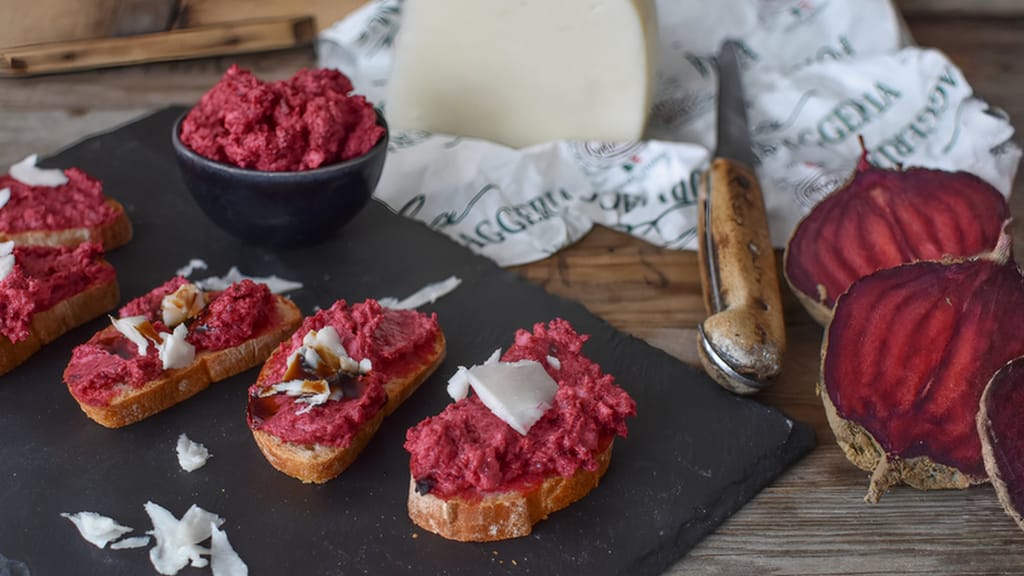
Roasted beetroot spread with ricotta and goat cheese
What to Cook with Beets: Salads, Carpaccio, Gnocchi, Spread and Baking
Updated Nov 20, 2026
What can you cook with beets? Almost anything – from a salad in fifteen minutes to gnocchi, soup and even chocolate brownies. Beets are sweet and earthy at the same time, keep for a long time, and in precooked form they're in your meal in a few minutes. Here you'll find what to make with them raw, boiled, roasted and precooked, how to roast them so they're sweet and juicy, and how to store them safely for winter.
With beets you can make salads, carpaccio, gnocchi, a spread, soup, patties, a cabbage salad for winter and even sweet bakes like rolls or brownies. What to make depends mostly on the form you have at home:
Precooked, from a pouch or jar – carpaccio, lentil salad, gnocchi, soup. Dinner is on the table in 15–30 minutes.
Raw roots – roast them in aluminum foil for a salad or spread, boil them for a purée to go into batter, or grate them raw.
A big haul from the market or garden – a refrigerator cabbage salad, or beets pickled in a vinegar brine following a tested method.
A sweet tooth – beet purée in a yeast dough or in chocolate brownies.
Beets are sweet and earthy at the same time, so you almost always need to balance them with something: acid (lemon, vinegar, orange), salty cheese (feta, blue cheese, goat cheese) and something crunchy (nuts, seeds). This trio runs through nearly all the recipes below. Once you get it, you can improvise with beets freely.
How to soften gingerbread that’s gone hard, when to fill Linzer cookies and how to tell the carp is done. One recipe and one tip a week. Unsubscribe in one click.
With precooked beets, the quickest options are carpaccio, a lentil salad, gnocchi or soup – no need to boil them for an hour or roast them for two; you just slice or blend them. Jarred (sterilized) beets are cooked until tender, so you can slice or cube them straight away, or blend them into a purée. The flavor is a little milder than home-roasted beets, but for a weeknight it's the most convenient route.
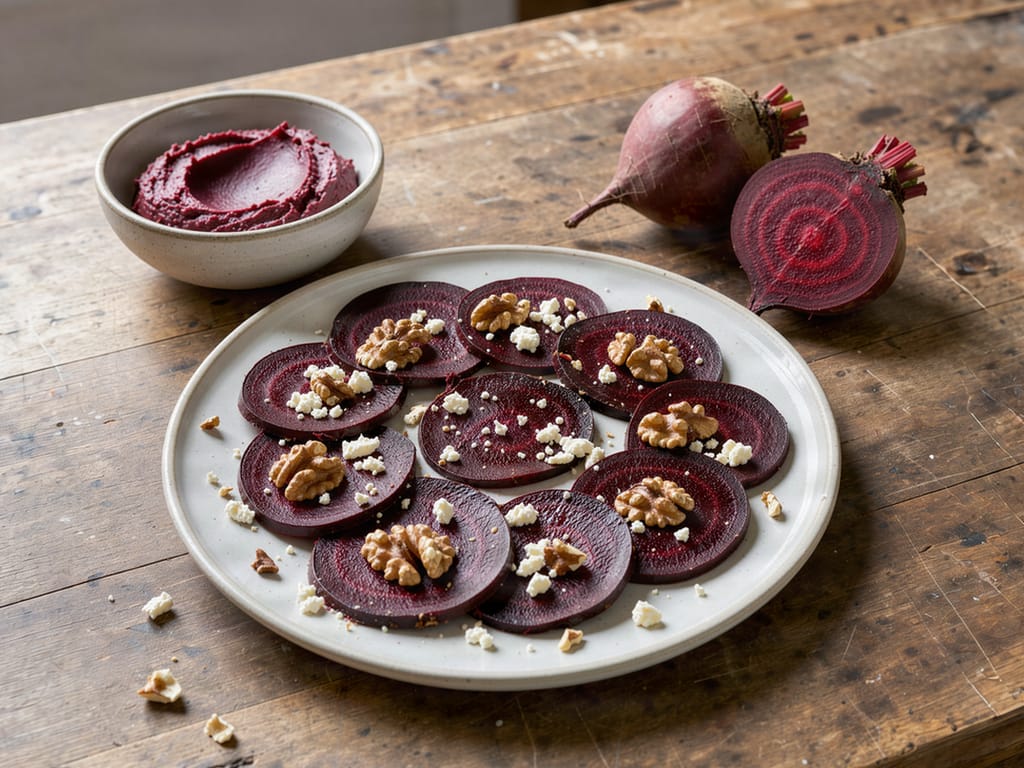
Beet and orange carpaccio. For beet and orange carpaccio, thickness is what matters: slice the beets as thin as you can, because the thinner the slice, the better it soaks up the orange marinade. The beets sit in it for about 24 hours, so make the carpaccio a day ahead – the next day you just arrange it on a plate with orange slices.
Lentil salad with beets and feta. Lentil salad with beets and feta is ready in 13 minutes and works as a light dinner for two. One trick: dry the lamb's lettuce thoroughly and add the feta with seeds only right before eating – otherwise the feta turns pink from the beets and the seeds go soft.
Gnocchi and a winter soup can also be made with precooked beets – you'll find them below under lunches and soups. Keep an opened package in the fridge and use it according to the manufacturer's instructions on the label.
Boiled beets are the best base wherever you need them puréed or grated: in the dough for gnocchi and rolls, in brownies, or in a cabbage salad. Boiling softens the beets evenly all the way through, and they blend easily until smooth. Roasted beets, by contrast, have a more concentrated, almost caramel flavor – save that for salads and spreads, where the beets are on show.
Three things boiled beets are best for:
Purée in dough – adds color and moistness to the dough (rolls, brownies, gnocchi).
Grated into a salad – coarsely grated, they combine well with the brine (beets with cabbage).
Cubes in warm dishes – added toward the end of cooking so they don't release all their color (soup).
Boil beets whole and unpeeled, with a bit of stem and the root tip left on – the skin holds the color and flavor inside the beet, so it doesn't end up in the water. Scrub the beets with a brush, put them in a pot, cover with cold water so they're submerged, and simmer. Smaller beets are tender in about 40 minutes, big ones can take an hour and a half; they're done when a knife or skewer slides into the center without resistance.
Drain the cooked beets, let them cool briefly and slip off the skin with your fingers – it comes away almost by itself. Put on disposable gloves and cut on a plate or on parchment paper, not on a light wooden board. Cook several beets at once: refrigerate whatever you don't use right away within two hours and use it within 3–4 days (USDA FSIS, cooked foods).
A beet salad is built on contrast: a sour dressing balances the sweet beets, along with something salty or crunchy. Three tried-and-true combinations are:
roasted beets with a ginger dressing,
roasted beets with walnuts and broiled blue cheese,
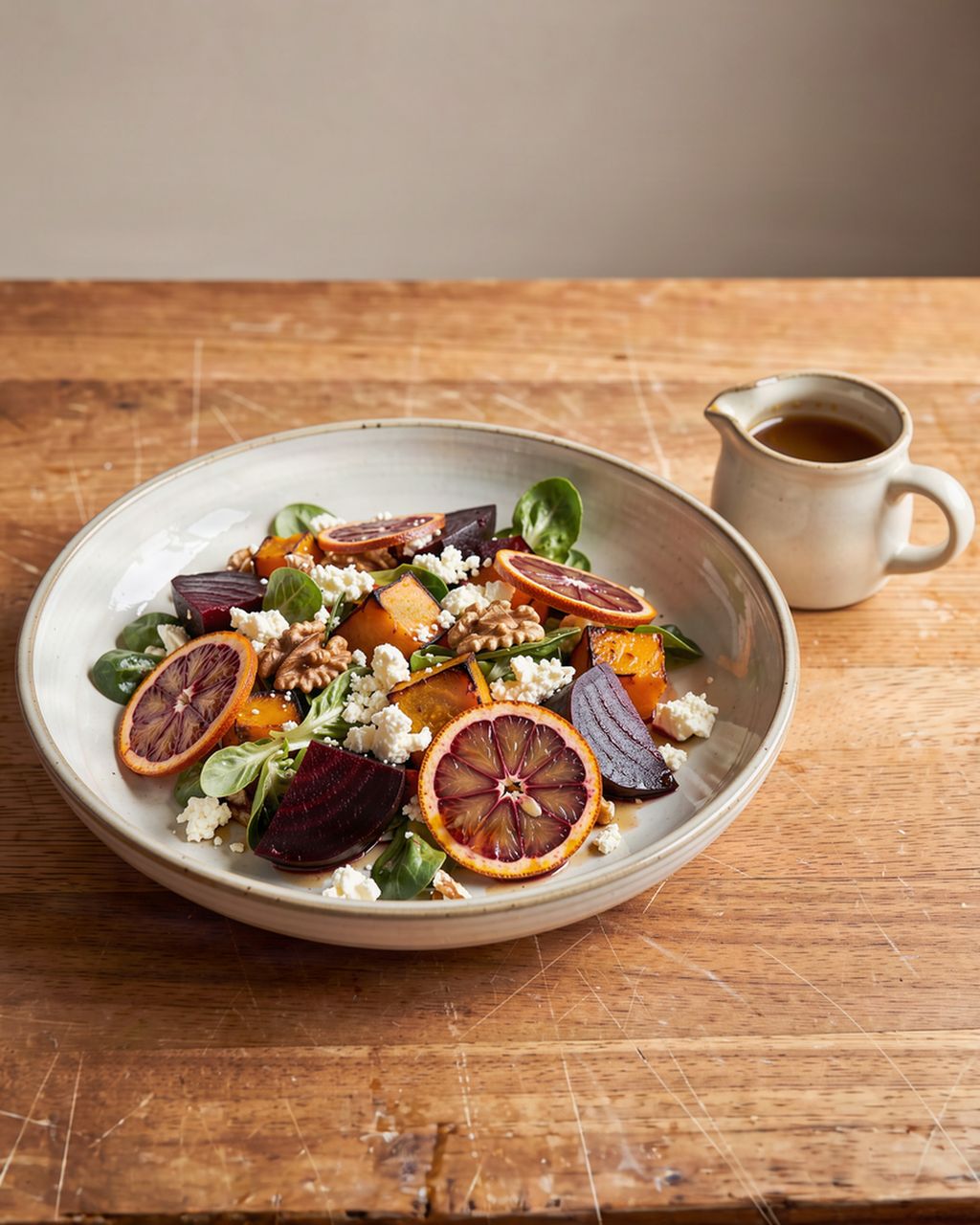
beets with spinach, blood oranges and goat cheese.
Roasted beet salad with ginger. Roasted beet salad is vegan and needs only a few pantry ingredients. The beets roast whole and unpeeled in foil at 200°C (400°F), so they steam in their own juices, and are then sliced and tossed in a tangy dressing with finely grated ginger. Count on 100 minutes in total, most of which is just waiting for the oven.
Roasted beet, walnut and blue cheese salad. Roasted beet and walnut salad rests on two ideas: wrap each beet separately in two layers of foil so it doesn't tear during the long roast, and put the blue cheese under the broiler for a moment, until the edges start to turn golden. Broiled blue cheese is salty and crisp – exactly the counterweight to sweet beets.
Fresh salad with blood oranges. Fresh salad with blood oranges and beets with spinach, apple, goat cheese and nuts is ready in 18 minutes. It's a good example of how citrus brightens earthy beets – you'll find the same principle in the article on winter salads of roasted vegetables, beets and citrus.
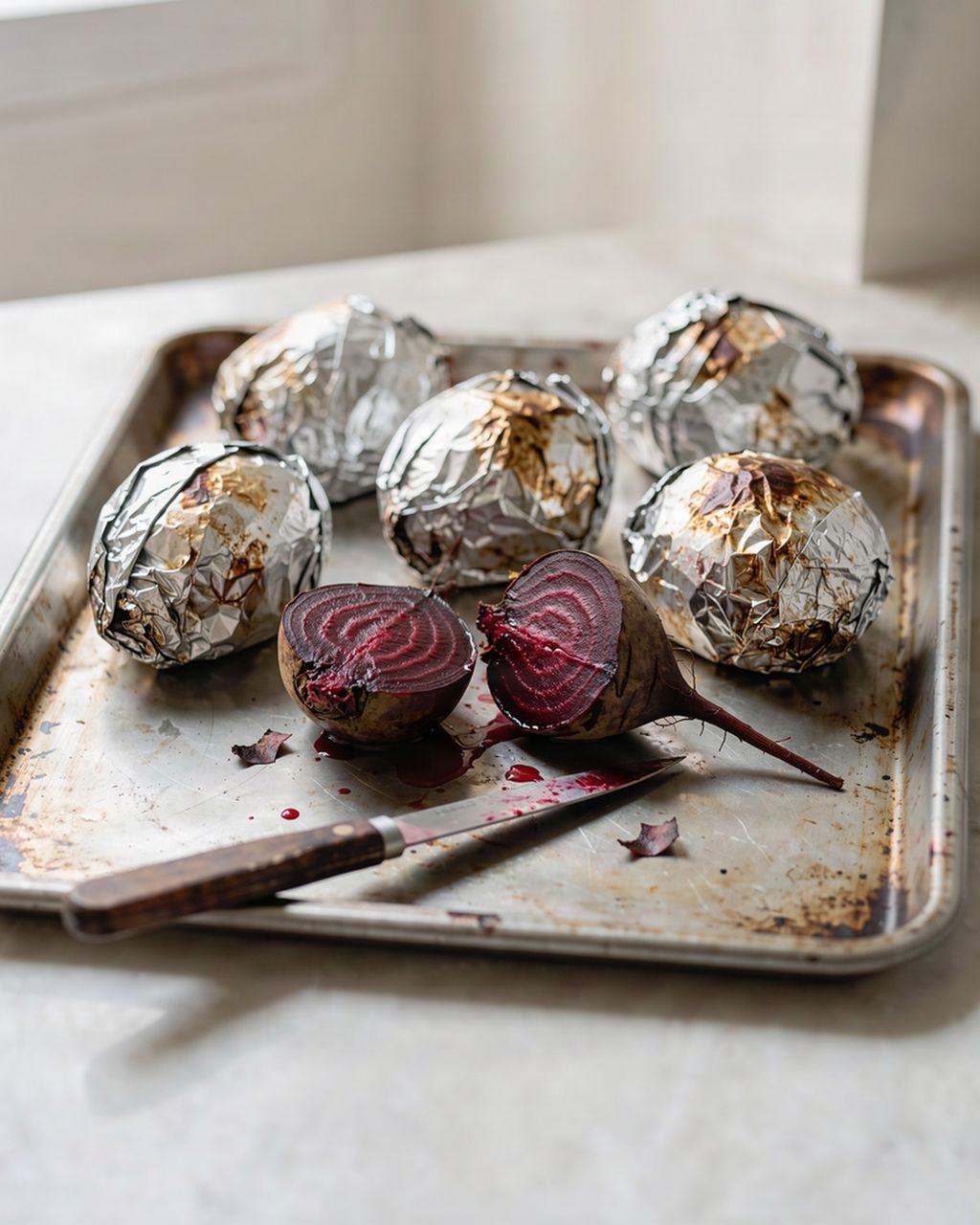
Beets roast best whole, unpeeled and wrapped tightly in foil, at 200–220°C (400–425°F), for about 1–2 hours depending on size. The foil traps steam, so the beets don't roast dry but braise in their own juices: the flavor concentrates, and they're sweeter and deeper than boiled beets, with nothing leaching into water.
Step by step:
Scrub the beets under running water with a brush so no soil stays on the skin, and pat them dry.
Wrap each one separately – with a drop of oil and a pinch of salt, in two layers of foil if you like.
Roast on the oven rack at 200–220°C (400–425°F) – smaller beets about an hour, large ones up to two hours.
Check with a skewer – it has to slide into the center without resistance. If it drags, return the beets to the oven for another 15–20 minutes.
Peel while still warm – the roasted skin pushes off with your fingers or a knife.
The most common mistakes: beets wrapped loosely (the foil opens, the juice runs out and burns onto the pan), too low a temperature (the beets are still tough after two hours) and slicing straight out of the oven – let them rest a few minutes so you don't burn yourself and the slices don't tear. Once you've heated the oven for two hours, roast more beets at once: one for a salad, one for a spread.
Roasted diced beets as a side. If you want beets for meat or a warm salad faster, peel a raw beet, cut it into roughly 2 cm (¾ in) cubes, toss in oil with salt and roast spread out on a baking sheet at 200°C (400°F) for about 35–45 minutes, stirring once halfway. The edges caramelize lightly and the inside stays tender. Thyme, caraway or a drop of balsamic at the end go well with it.
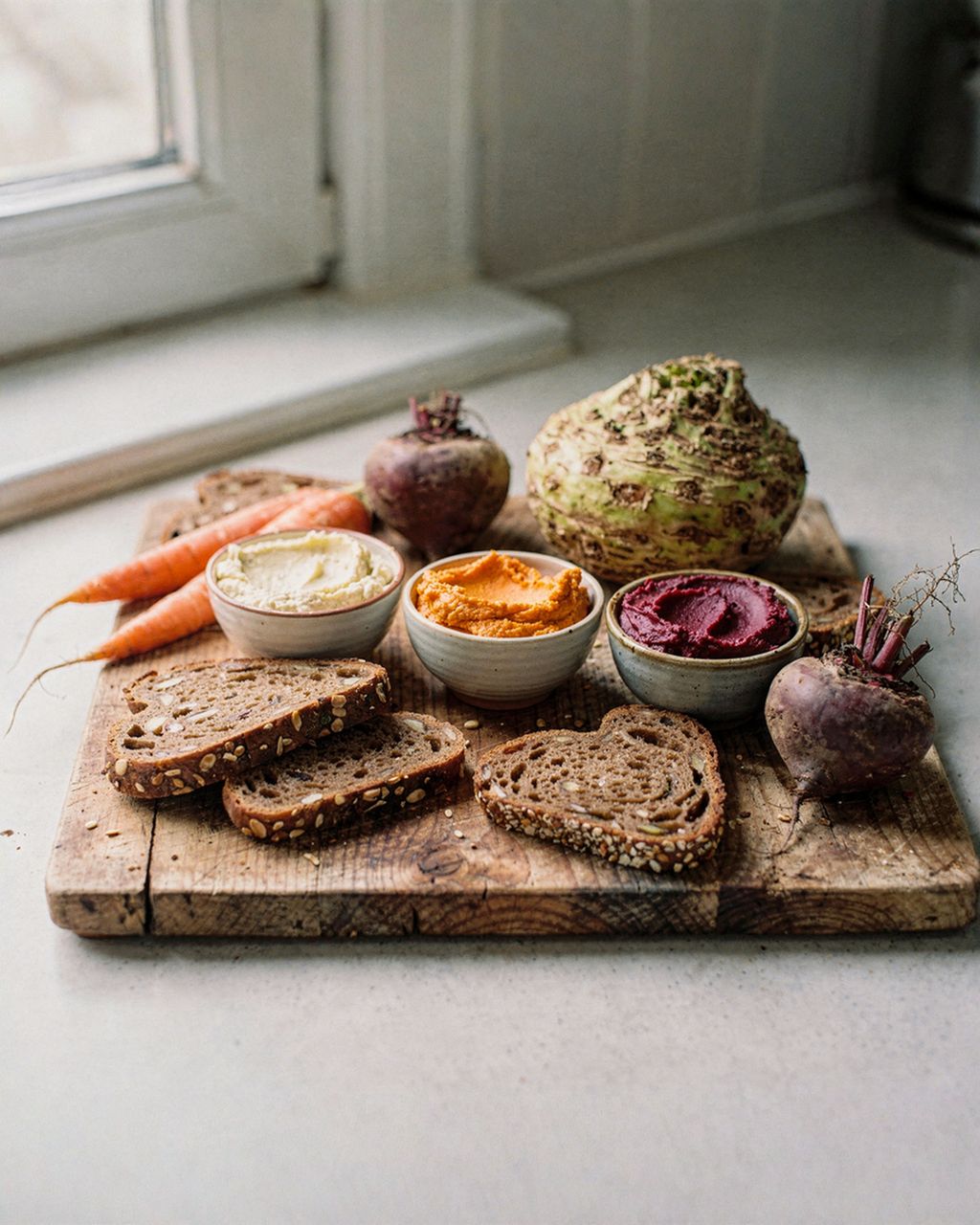
The best beet spread is made from roasted beets blended with a soft cheese and nuts. Roasted beets are drier and sweeter than boiled ones, so the spread isn't runny and doesn't taste watery.
In the roasted beet spread with ricotta and goat cheese, fresh goat cheese adds a pleasant tang and saltiness and ricotta adds creaminess, so you need no butter or mayonnaise; the walnuts can stay subtly noticeable. Spread it on a baguette or on open-faced party sandwiches (chlebíčky).
If you're after a purely vegetable version, where beets meet carrot and celery, have a look at the celery, carrot and beet spread.
Roasted beetroot spread with ricotta and goat cheese
Roasted beet spread with ricotta and goat cheese
For lunch, make beet gnocchi with arugula, or grind beets with ground beef into patties – in both cases the beets aren't a side but right inside the dish. The gnocchi take half an hour; the patties are a two-day weekend project. You'll find more ideas for weekday and Sunday lunches in the article what to cook for lunch.
Beet gnocchi with arugula salad. Beet gnocchi with arugula salad are ready in 30 minutes from jarred beets. The main tip: the dough will be soft – don't add flour, or the gnocchi won't be tender.
Beef patties with beets. Beef patties with beets are a recipe for a weekend grill for six people. Marinate the beets with the meat a day ahead in the fridge – ground together with it, they give the patties juiciness and a deep color. Grill the patties until they reach at least 71°C (160°F) in the center.
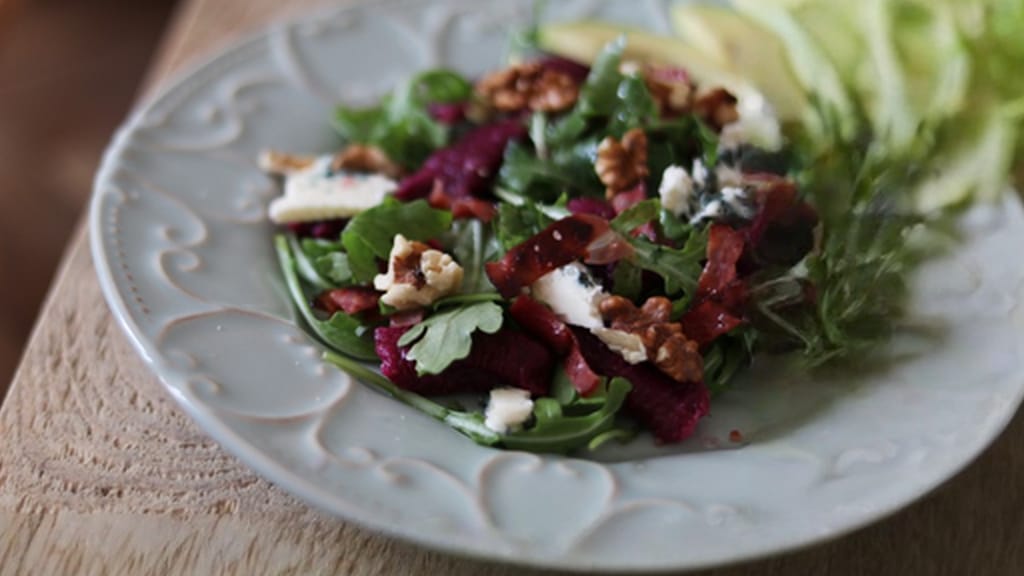
Beetroot gnocchi with light arugula salad
Beet gnocchi with arugula salad
The best-known beet soup is borscht; on Yumsto you'll find a Czech winter version with sauerkraut and smoked meat. Both follow the same rule: add the beets toward the end of cooking so they don't overcook and the soup keeps a rich color.
Winter red soup with sauerkraut and smoked meat. Winter red soup is ready in 50 minutes and works as a main course. Salt carefully – bacon, smoked ribs and sauerkraut are all salty already – and add the jarred beets only once the potatoes are almost tender.
Borscht. Classic borscht is a thick vegetable soup in which beets, carrots, onion and cabbage simmer in broth, most often beef, seasoned with a drop of vinegar or lemon and sour cream. The acid balances the sweetness of the beets and, according to cooking practice, also helps keep their bright red color. We don't have our own borscht recipe on Yumsto yet – it's on the list.
At home you can keep beets for winter in two common ways: as a salad in the fridge, or pickled in a vinegar brine following a tested recipe. Without vinegar, beets can go in the pantry only after pressure canning in a pressure canner – ordinary canning in a pot, a water bath or the oven isn't enough for them.
Refrigerator beets with cabbage. Beets with cabbage is a vegan salad of a kilo of beets, a kilo of red cabbage and onion, covered in a hot sweet-and-salty brine with no vinegar. The recipe is unambiguous about storage: the jars belong in the fridge only, at 4°C (40°F) at most, and aren't sterilized, because without vinegar even sterilization wouldn't, according to the recipe, ensure safe storage outside the fridge. It's a cooked dish, so use it within 3–4 days (USDA FSIS, cooked foods). Refrigerate cooked beets you don't grate right away within two hours of cooking.
Pickled beets in a vinegar brine. If you want jars for the pantry and don't have a pressure canner, reach for a recipe with vinegar that has been tested. According to Penn State Extension, beets are a low-acid food on their own and can be safely pressure canned, frozen, dried, or acidified with vinegar and pickled. The US National Center for Home Food Preservation (NCHFP) has a tested recipe for pickled beets with a brine of 2 parts 5% vinegar to 1 part water, in which jars are processed in a boiling water bath for 30 minutes up to 300 m (1,000 ft) elevation; higher up the time increases: 35 minutes up to 900 m, 40 minutes up to 1,800 m, 45 minutes above that. Never reduce the amount of vinegar or the processing time by eye – safety depends on exactly those.
You can eat raw beets – finely grated or cut into very thin shavings, best in a salad with a tangy dressing. Raw, they're crunchier, less sweet and more distinctly earthy than boiled or roasted beets; acid and oil soften them. Small, young roots suit this best, as they're milder and less fibrous.
Grated raw beet salad with apple. Finely grate a peeled raw beet, add a grated tart apple and dress with lemon juice, oil and a pinch of salt. Let the salad sit for 10–15 minutes so the beets soften a little in the dressing and release some juice. Chopped walnuts or parsley leaves go well with it. We don't have a recipe for this salad on Yumsto yet.
Raw shavings in a leafy salad. Cut a small raw beet into translucent slices with a peeler or on a mandoline and toss them in the dressing right away – thin slices are tender and don't seem hard. Add them to a leafy salad with goat cheese or feta. They bleed less color if you mix them in just before serving.
Kids most often come to like beets hidden in something they know: in brownies, in sweet rolls or in a pink spread on bread. The color is often a bigger draw for them than the taste – a pink spread or wine-red gnocchi are an experience in themselves.
What to try:
Beet brownies – the chocolate overpowers the beets, leaving only moistness (recipe below under sweet baking).
Beet rolls – yeast dough with a pink tint, cinnamon and ginger.
Roasted beet spread – mild, slightly sweet, for party sandwiches or a baguette.
Beet gnocchi – vivid color and a soft texture that kids like.
Let the kids help: blending the purée or rolling up the rolls is more fun for them than the eating itself. Just give them an apron – beets stain hands and clothes.
For the youngest there's one restriction. Beets are among the vegetables that naturally contain a lot of nitrates, and the American Academy of Pediatrics (AAP), in its 2005 clinical report, recommended not giving homemade foods made from such vegetables, including beets, to infants younger than three months. With older children, introduce beets like any other vegetable, and if you're unsure, ask your pediatrician.
In sweet baking, add beets as a purée: in batter it works much like carrots in carrot cake, adding moistness and natural sweetness and tinting it from pink to wine red. With chocolate the flavor almost disappears; with cinnamon and ginger it stays mildly earthy.
Beet rolls with cinnamon and ginger. In beet rolls with cinnamon and ginger, the beet purée makes the yeast dough soft and lightly pink. Count on roughly two and three-quarter hours including rising time; it makes 20 rolls.
Gluten-free beet and walnut brownies. In gluten-free beet and walnut brownies, the beets add moistness and the chocolate completely hides their earthy flavor. They're ready in 56 minutes and make 8 servings.
Beet sheet cake. A classic cake made from beet batter with a sour cream or quark (tvaroh, a Czech fresh curd cheese) glaze isn't on Yumsto yet. The principle is the same as with brownies: beet purée replaces part of the liquid in the batter, so the batter tends to be denser and bakes a little longer than an ordinary simple cake – watch it with a skewer. For more winter baking, see the article on baking with oranges and lemons: orange and beets get along in sweet dishes too.
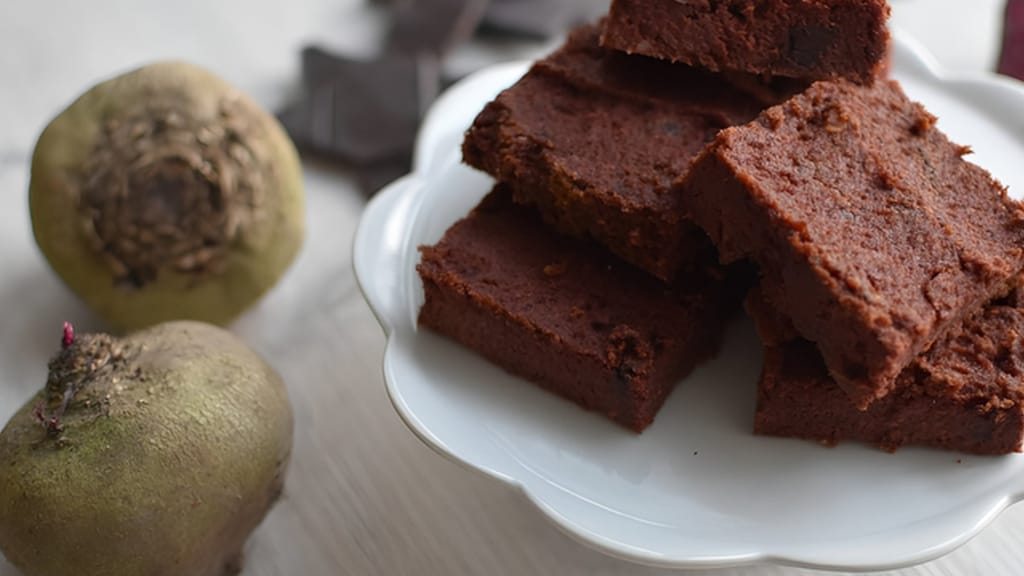
Gluten-free beetroot and walnut brownies
Gluten-free beet and walnut brownies
Beets pair best with acid, salty cheese, something crunchy, spices and herbs, sweet ingredients, and meat or smoked meat – these six groups stand behind all the recipes above. When you improvise, pick at least one item from the first two lines:
Acid: lemon, orange, apple, balsamic vinegar, fermented vinegar.
Salty cheese: goat cheese, feta, blue cheese, Balkan-style white cheese.
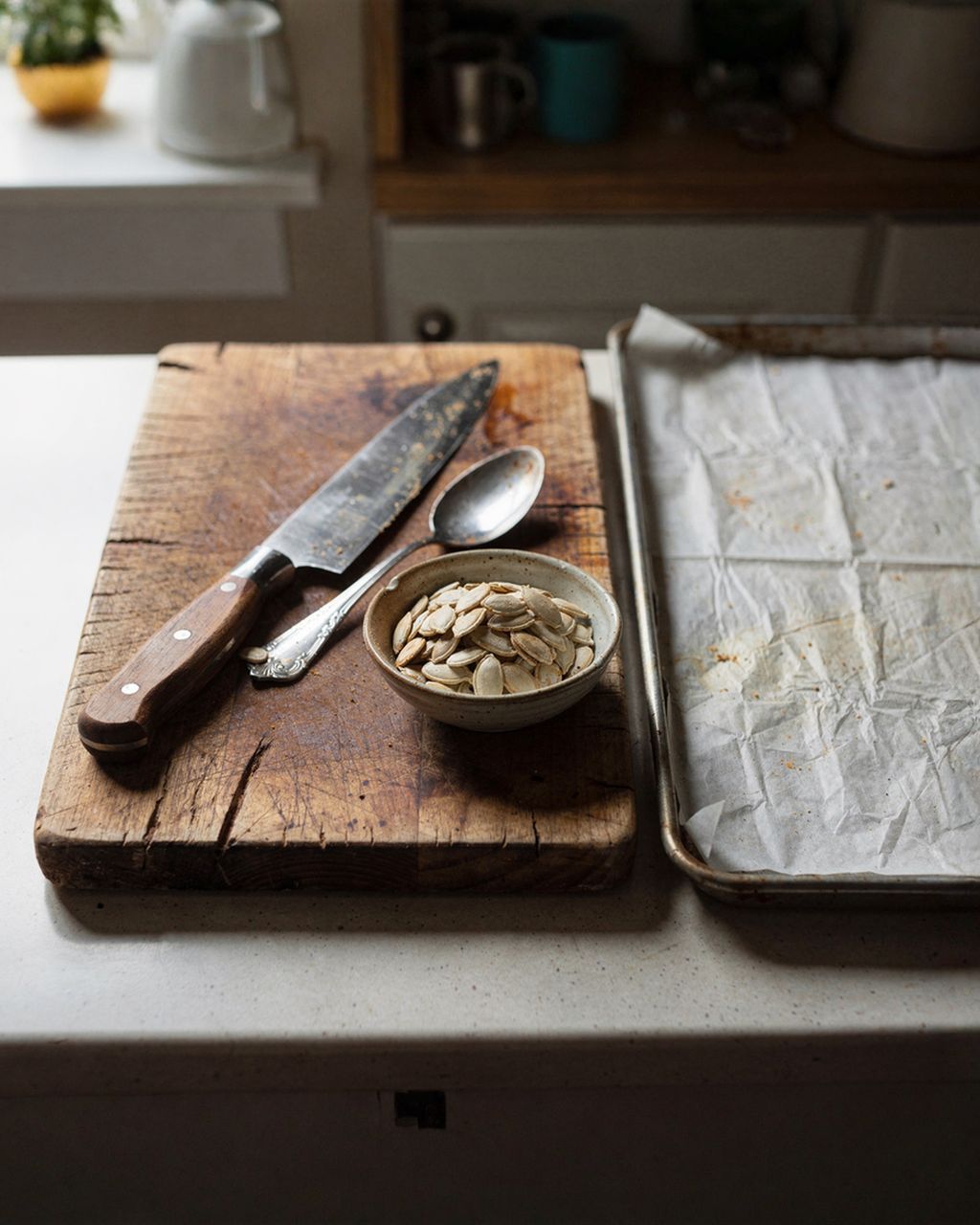
Crunchy: walnuts, pumpkin and sunflower seeds.
Spices and herbs: ginger, thyme, dill, caraway, coriander, cinnamon.
Sweet: honey, chocolate, ripe banana.
Meat and smoked meat: beef, bacon, smoked ribs.
Why it works: beets have a lot of natural sugar and an earthy note that, without a counterweight, comes across flat, even "dirt-like." Acid brightens them, the salt in cheese highlights the sweetness, and the fat from nuts or cheese rounds out the flavor. Ginger, cinnamon and caraway then turn the earthiness into spiciness – which is why beets work as well in rolls as in a salad.
Unwashed raw beets keep in the fridge for a long time; just check whether the roots are going soft. Cut the greens off a few centimeters above the root, because the leaves draw moisture out of it and the beet wilts faster. Store the roots in a bag or container so they don't dry out, and wash them only right before cooking.
Yes, young beet greens are edible and you can cook them much like spinach or Swiss chard. Sauté them briefly in oil with garlic, or add them raw, cut into thin strips, to a leafy salad. Older leaves have tougher stalks, so slice those separately and braise them a few minutes longer.
Pink to red urine after eating beets is called beeturia, and it's estimated to affect roughly 10 to 14 percent of people. It's caused by the red pigments in beets, which in some people pass through digestion unbroken down. It's usually harmless, but if you're not sure it's the beets or you have other symptoms, see a doctor.
Yes, you can freeze beets; Penn State Extension lists freezing among the safe ways to preserve them. It's best to boil or roast them until tender first, then peel and cut them into cubes or slices. After thawing they're softer, so they suit soups, purées, spreads and batters best.
Beet stains come off hands best with lemon juice and salt: rub them in, then wash with soap. Rinse the cutting board straight after chopping and scrub the stain with a paste of baking soda and water. The easiest fix is prevention: cut in disposable gloves, on a plate or on parchment paper.
Beets naturally contain sugars, which make them mildly sweet, and also nitrates. Both the root and the leaves also contain oxalates. It's that gentle sweetness that makes beets a versatile vegetable for savory and sweet dishes alike.
One recipe worth heating the oven for, one tip, and one deal from the shop. Nothing else.