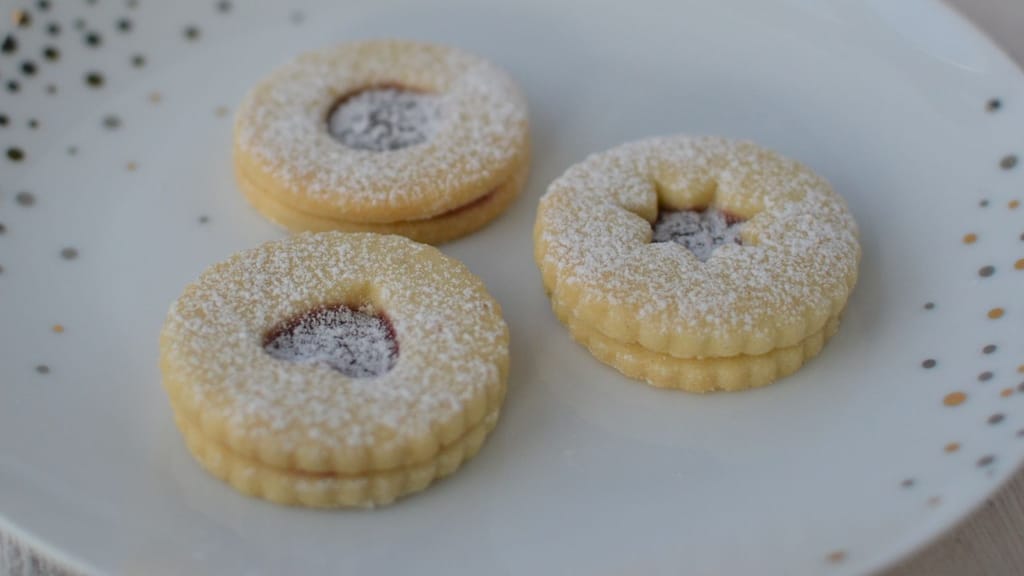
Classic christmas cookies: delicate linzer cookies
What to Use Instead of Butter in Christmas Cookies (and How It Changes the Crumb)
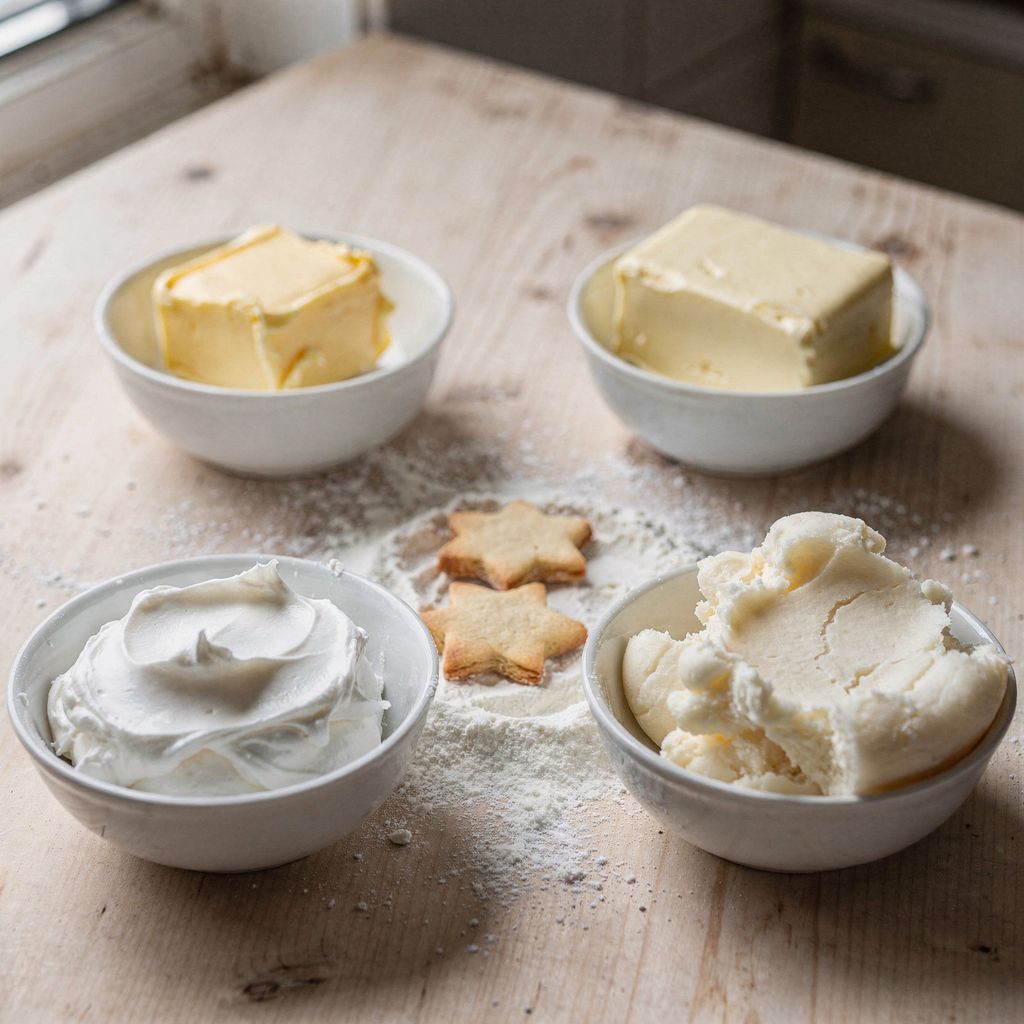
Updated Aug 29, 2026
You can swap butter in Christmas cookies for shortening, lard, or block baking margarine — and the real difference between them isn't flavour, it's melting point and water content. Those two numbers decide whether your cookie bakes up tall or flat, crumbly or short, and whether it melts on your tongue or leaves a greasy film in your mouth. Here's what each fat does to the structure, where the swap is obvious, where it disappears completely — and how to rework your ratios so the dough doesn't crack under the rolling pin.
Butter starts to soften around 15°C and fully melts somewhere between 32 and 38°C depending on its composition; block baking margarine melts around 33–35°C; lard melts anywhere from about 30 to 48°C depending on the type; and baker's shortening can hold out until 40–50°C. The second big difference is water: butter contains up to 16%, block baking fat roughly 15–28% depending on its fat content, while lard and shortening contain virtually none.
Butter — 80–90% milk fat, at most 16% water, and at most 2% non-fat milk solids; anything above 90% fat technically stops being 'butter' under EU Regulation 1308/2013 — that kind of product is legally called butter concentrate, and above 99.3% fat it's called anhydrous milk fat. It softens as early as 15°C, melts across a wide range, and fully liquefies somewhere between 32 and 38°C depending on composition. It carries both the flavour and the golden colour, but has the least structural stability of the bunch.
Block baking fat (70–85% fat) — the rest is mostly water. Only a block with 80–90% fat can legally be called margarine; 60–62% is three-quarter-fat margarine, 39–41% is half-fat margarine, and everything else is labelled 'vegetable fat spread X%'. A baking block melts around 33–35°C, while laminating (puff pastry) fat melts noticeably higher than a standard baking block — above 40°C. It behaves almost like butter, but its flavour comes from added aromas rather than dairy.
Lard — around 99% fat, water is negligible. Depending on the type, lard melts anywhere from about 30 to 48°C; leaf lard tends to render firmer than back fat lard, and you can feel the difference — back fat melts around 30–40°C, leaf lard 43–48°C. It gives large crystals and a flaky shortness.
Baker's shortening — 99–100% fat, zero water. Melting point runs roughly 40–50°C depending on type; a standard European baker's block sits around 44–47°C. It holds its shape, doesn't brown, and is essentially flavourless.
Everything else in this article follows from those two numbers. Once you know when a fat melts and how much water it brings along, you can predict exactly how your cookies will look and taste.
Melting point determines how long a fat can hold a cookie's shape in the oven before it starts to spread. As long as the fat stays solid, the dough keeps its shape. The moment it melts, the dough spreads outward, and from then on it's only held together by starch and egg protein — assuming those have had time to set.
Butter melts early, often before the cookie's edges have had a chance to firm up. That's why butter cookies come out flatter, with softer edges and a crispier crust. Shortening, with its 44–47°C melting point, stays solid far longer: the flour and egg have time to set, so the cookie stays taller, the edges sharper, and any cut-out shape stays crisp and legible. With lard, it depends on the type — leaf lard renders firmer than back fat, so it holds shape slightly better.
And then there's a side effect nobody talks about much. Butter finishes melting at roughly mouth temperature; shortening finishes well above it. A fat that fully melts in your mouth dissolves on the tongue. A fat that doesn't leaves a coating you register as greasiness. So a shortening-based cookie can look beautifully tall and crisp-edged and still feel 'waxy' in the mouth. This is the one difference no amount of vanilla or chocolate can mask.
There's roughly 32g of water in 200g of butter that no recipe ever counts as liquid — and that water is exactly what activates gluten in the dough. Water plus flour plus any kneading at all builds a gluten network, and a gluten network is the exact opposite of crumbliness.
That's why butter shortcrust can only handle minimal handling, and why every recipe keeps repeating 'work fast, with cold hands'. Lard and shortening have nothing to activate gluten with: they simply coat the flour in a film of fat and that's the end of the story. Dough made with them is crumblier from the start, harder to bring together, and more prone to falling apart once baked.
So if you swap butter for a water-free fat 1:1, here's what happens: you add roughly a fifth more fat to the dough — butter carries 80–82g fat per 100g, a water-free fat carries the full 100 — while removing all the water. The dough turns greasy, won't come together into a ball, cracks when rolled, and the baked cookie crumbles apart at a touch. You're not short on fat — you're short on water. It's the single most common reason linzer-style dough falls apart while rolling, and reaching for more flour at that point is the worst thing you can do.
Each fat produces a different kind of breakdown — butter gives a clean, snapping crumbliness, shortening gives a sand-like shortness, and lard gives fine, delicate layers. The difference isn't about how much fat you use, but the shape and size of its crystals.
Butter has fine crystals but stays workable only within a narrow temperature window (roughly 15–20°C) — hard from the fridge, soft again within minutes on the counter. The result is a short, clean snap: the cookie breaks cleanly rather than crumbling across the table.
Shortening forms very fine, uniform crystals (β′) and stays workable across a wide temperature range. It coats flour perfectly and evenly, giving a smooth, sandy texture that almost dissolves into powder in the mouth. It's also the easiest of the four fats to whip and holds the most air — which is exactly why commercial bakeries love it.
Lard has the opposite: large, stable crystals (β). These create gaps between layers of flour that turn into fine, delicate flakes in the oven. That's exactly why lard is the traditional fat for shortcrust pastry, pie crusts, and Spanish polvorones and mantecados, which crumble the moment you touch them.
Block baking margarine mirrors butter closely, just with a bit more structural stability. Of all the substitutes, it leaves the smallest mark on the final texture.
Then there's colour and flavour: the non-fat milk solids in butter (up to 2%) contain proteins and lactose — exactly the fuel the Maillard reaction needs. That's where the golden colour and nutty note of browned butter come from. Lard and shortening have no milk solids at all, so cookies made with them stay pale even when fully baked.
You'll notice a fat swap wherever butter is the main flavour and the recipe has little else going on aromatically: linzer cookies, plain butter cookies, spritz biscuits, buttercream. It disappears completely wherever something else carries the flavour — nuts, poppy seed, coconut, honey, spices, or cocoa. Decide based on that, not on the price of the fat.
Don't swap out butter in four cases: linzer and cut-out dough, spritz cookies and moulded shapes, buttercreams, and anything that isn't baked until crisp.
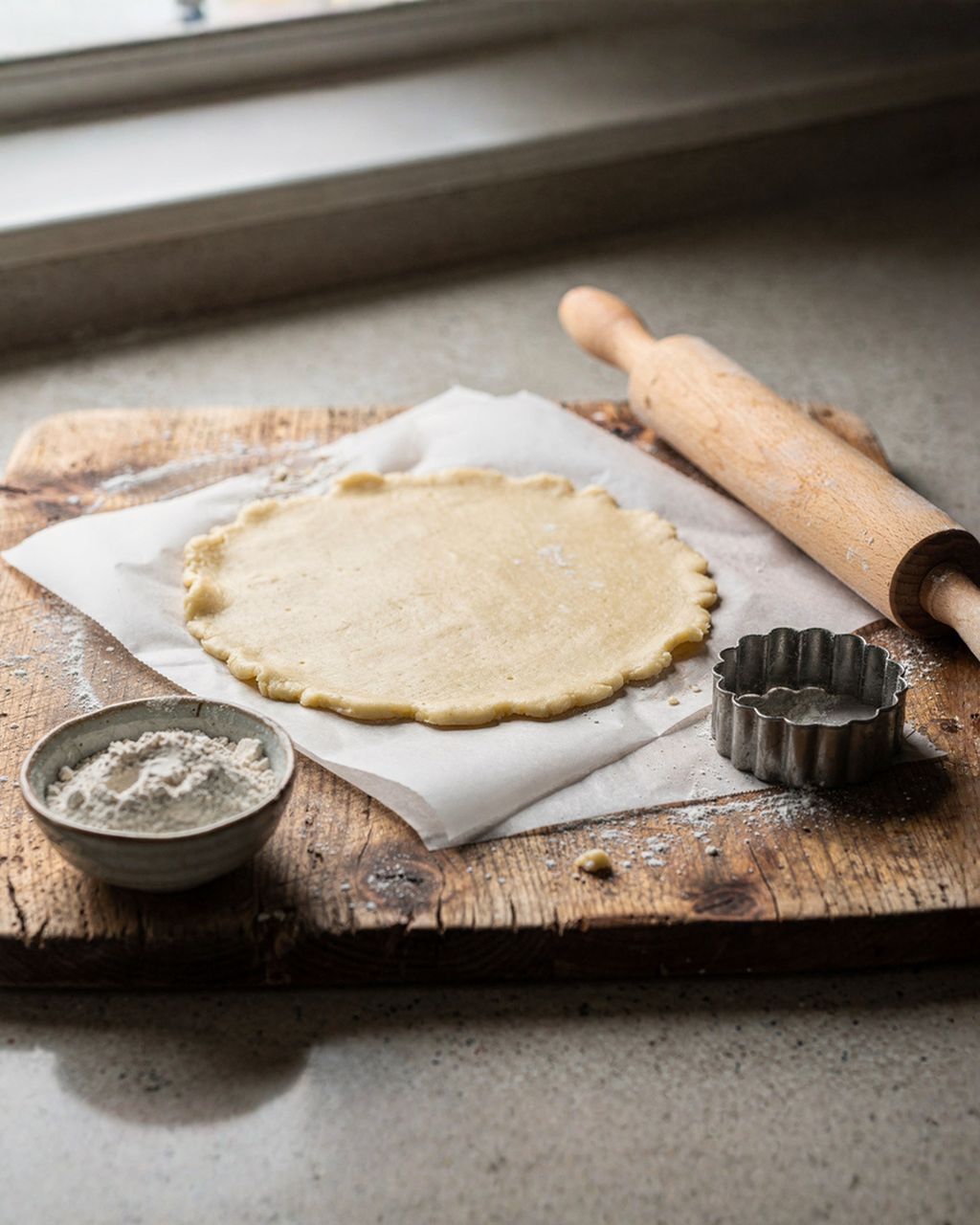
Linzer and cut-out butter dough — high fat content, minimal other flavours, a thin sheet of dough. Here, butter is both the flavour and the texture, and there's nothing else to hide behind.
Spritz cookies and moulded shapes — fat holds the shape and carries the flavour. Shortening might hold the shape better, but the result tastes hollow.
Buttercreams and fillings — here melting point is everything. A filling made with shortening won't melt in the mouth and will leave a coating behind.
Anything that isn't baked until crisp — filled pastries, soft cups, sandwich-style cookies. There's no crunch to override the difference.
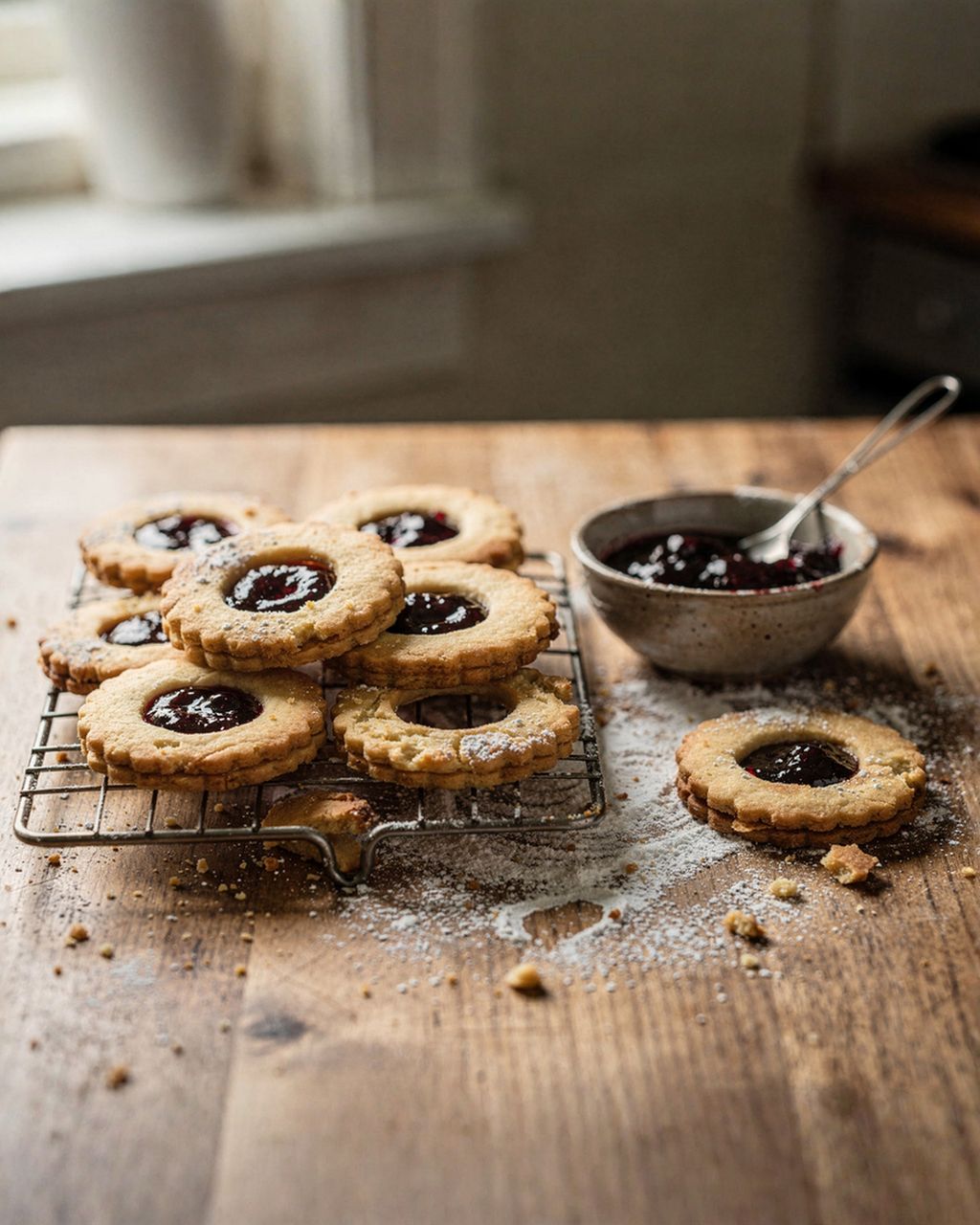
Classic christmas cookies: delicate linzer cookies
Classic buttery linzer dough — where you'll notice a butter swap first
You won't notice a butter swap in five types of Christmas cookies: nutty doughs (including vanilla crescents), gingerbread, coconut and poppy seed or cocoa cookies, filled and dipped cookies, and anything baked to a deep colour.
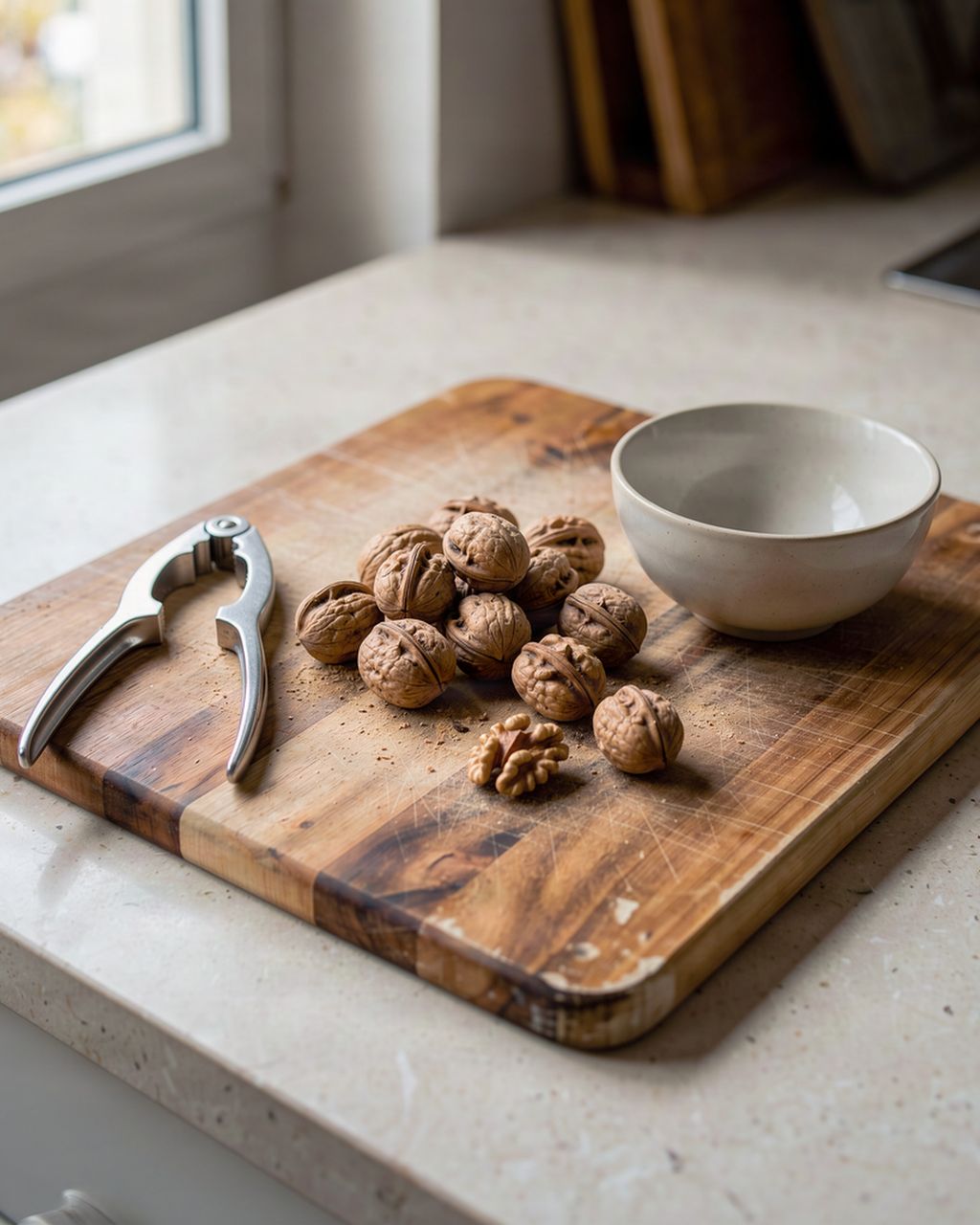
Vanilla crescents and nut-based cookies — ground nuts bring their own fat and strong flavour that reliably overpowers any substitute.
Gingerbread — there's very little fat in the dough to begin with; honey and spice do the work. The difference here is practically unmeasurable, so this is exactly the kind of soft, honeyed gingerbread where you can swap without worry.
Coconut, poppy seed, and cocoa cookies — the strong aroma masks everything else.
Jam-filled and chocolate-dipped cookies — the filling and coating dominate the flavour of the dough's fat entirely. But watch out for the caveat from earlier: the mouth-coating film that shortening leaves behind isn't masked even by chocolate — the coating hides the flavour, not the mouthfeel.
Cookies baked to a deep, dark colour — the caramelised notes make up for whatever the fat is missing.
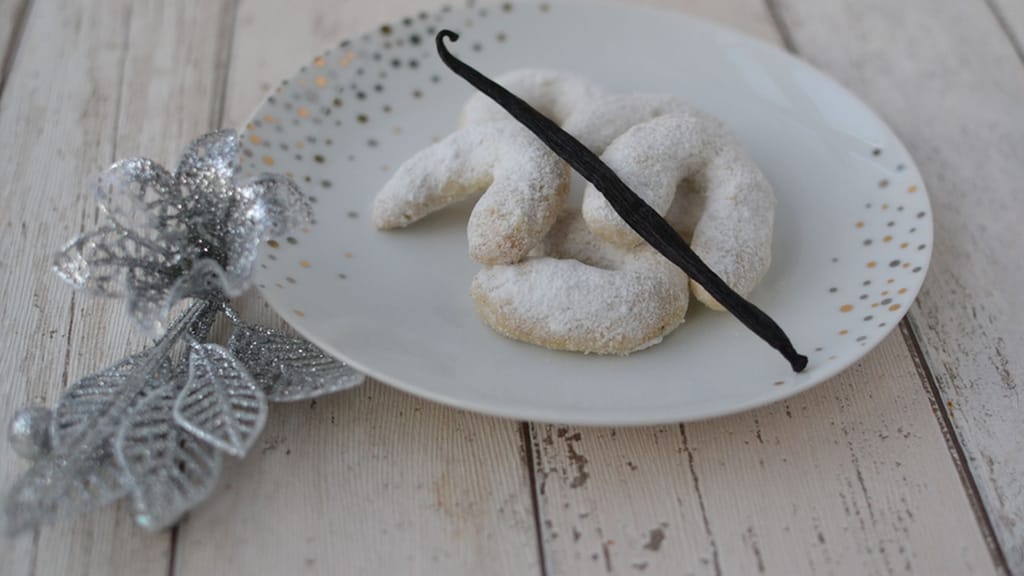
The best christmas cookies? vanilla crescents, of course!
Vanilla crescents with ground nuts — dough that forgives a fat swap
The basic rule of thumb: replace 100g butter with 85g water-free fat plus 15g cold liquid. Strictly speaking, butter has 80–82g fat, up to 16g water, and up to 2g non-fat milk solids per 100g, so the literal conversion would be 82g fat plus 18g combined water and solids — in practice it's rounded up to 85/15, since home bakers measure in whole tablespoons and some liquid evaporates in the oven anyway. If your dough still crumbles, add back that leftover half-tablespoon of liquid — the 82/18 split works just as well. Swap 1:1 for lard or shortening without adjusting, and you strip the dough of water while adding extra fat at the same time. That's the root cause of almost every failed batch.
The swap breaks down into five steps: use 85% of the original fat weight, add back 15% cold liquid, add a pinch of salt, restore the colour with milk powder, and chill the dough longer.
Weigh out 85% of the original fat weight. Instead of 200g butter, use 170g lard or shortening.
Add back 15% liquid, meaning 30g (about 2 tablespoons) of cold water, milk, or cream. Alternative: add one extra egg yolk — it brings both water and fat, and helps the dough come together better.
Add 1–2g salt per 500g flour. Butter carries its own flavour from milk solids; lard and shortening are flavour-neutral, so a pinch of salt balances that out.
Restore colour and flavour with 10–20g milk powder per 500g flour. Milk solids are exactly what drives the Maillard reaction in butter — without them, cookies stay pale.
Chill longer. Water-free fat is softer and stickier at room temperature. Plan on two hours in the fridge instead of one, and roll the dough out in batches, keeping the rest chilled.
And one rule that holds no matter what: don't add extra flour. Reaching for flour when the dough won't come together is the fastest route to tough, hard cookies.
When converting lard or shortening back to butter, add roughly a fifth more fat and remove the same amount of liquid: instead of 170g shortening, use 200g butter and leave out 2 tablespoons (30g) of water from the recipe. Expect the cookies to spread more in the oven. So roll the dough slightly thicker — 4–5mm instead of 3 — and leave more space between pieces on the tray.
A 1:1 ratio of butter to shortening is standard in professional baking and, of all the swaps, works best at home too. You get the flavour and colour from butter along with the structural stability of shortening, and since half the fat still carries water, the conversion stays simple. Just note that 1:1 refers to the original amount of butter: you keep half the butter and replace the other half — so the total fat in the dough stays roughly the same, not double.
If your recipe calls for 200g butter, keep half (100g) and replace the other half with 85g shortening plus 1 tablespoon cold water. This is the version I'd recommend trying before going all-in on a full substitution — with cut-out cookies, the sharper edges are immediately visible, while the flavour barely shifts at all.
Oil, tub spread, coconut oil, and cottage cheese/quark all have no place in shortcrust — each fails for a different reason.
Tub spreads and 'light' spreads typically contain only 40–60% fat, the rest being water and emulsifiers. That's two-and-a-half to nearly four times more water than butter: it activates gluten, the dough turns sticky, the cookies bake up tough, and they weep liquid while baking. Stick to block baking fat with at least 70% fat.
Oil isn't plastic. It can't hold air, can't be whipped, and won't form layers or gaps in the dough. In linzer dough it produces a greasy, sticky mess and a flat, tough cookie. Oil can work in batter-type bakes like sheet gingerbread or muffins, but not in shortcrust.
Coconut oil melts around 24°C and shifts from solid to liquid almost instantly. It isn't workable across any useful temperature range — it's either rock-hard or completely liquid. Dough made with it cracks while rolling and spreads all at once in the oven.
Quark or yoghurt in place of some of the fat won't give you crumbliness. They bring water and protein — exactly what gluten needs to toughen the cookies up.
Don't lower the oven temperature — instead, add 1–2 minutes to the baking time and stop watching for colour as your cue. High-melting-point fats hold their shape longer, so the centre heats through more slowly, and without milk solids, the cookies won't brown even once fully baked.
Don't wait for golden colour. A shortening-based cookie will stay pale even after it's fully done. Watch the edges instead: once they darken by a shade, it's ready. Colour simply stops being a reliable cue here.
Let the cookies finish setting on the tray. Water-free fats set at a higher temperature, so the cookies are still soft straight out of the oven. Give them two to three minutes on the tray before moving them to a rack, or they'll break.
Expect less spread. The same cutter will give you a taller, smaller cookie with shortening than with butter. If size matters to you, roll the dough a touch thinner.
Resting still works, just more slowly. Linzer cookies soften as moisture from the jam migrates into the dough, and that happens regardless of the fat used. But the crumblier dough from a water-free fat tends to bake up drier, so give it a few extra days to come round.
Ghee is the closest substitute for butter you'll find. It's a water-free fat with a melting point around 32–35°C, so it keeps that buttery flavour but behaves in the dough like lard: replace 100g of butter with 85g of ghee plus 15g of cold liquid. What it's missing is milk solids, so the cookies won't brown as much — fix that with a teaspoon of milk powder.
A block plant-based spread with at least 70% fat will work as a butter substitute in Christmas cookies; a tub spread won't. Block plant 'butters' typically run 75–80% fat (Naturli at 75%, Flora at 79%) — and because anything under 80% fat legally can't be called margarine, the label often just says '75% vegetable fat spread'; that's still the right block, even without the word margarine on it. It carries a bit more water than butter (which caps out at 16% by law), so for a short, crumbly dough cut back a tablespoon of liquid; otherwise it behaves almost exactly like block baking fat. Tub spreads with only 50% fat have no place in shortcrust — far too much water.
You'll know by touch, not by the label: a block of proper baking fat stays firm after a night in the fridge and can be grated, while a tub spread stays soft and sticky even after a full night in the cold. Marketing buzzwords on the pack are actually a warning sign — 'light', 'reduced fat', 'with yoghurt', or 'for bread' all mean the maker replaced some of the fat with water, and that kind of fat has no business in shortcrust dough.
Shortening-based cookies keep the longest — no water and no milk solids to change the flavour over time. Lard and butter spoil in different ways: lard is prone to oxidation — it has around 10% polyunsaturated fatty acids and virtually no natural antioxidants of its own (which is why it's usually industrially stabilised), while butter spoils via the water it contains. So store lard cookies cold, dark, and in a sealed tin; exactly how long they'll last depends on the fat's quality, the packaging, and the temperature.
Yes, and they actually handle freezing better than butter cookies. These water-free fats have nothing to release as they thaw, so the surface doesn't get as damp and any icing keeps its shine. Freeze in a sealed container with baking paper between layers, and thaw unopened at room temperature so any condensation forms on the outside of the box, not on the cookies themselves.
One recipe worth heating the oven for, one tip, and one deal from the shop. Nothing else.